Category Archives: Shortwave Radio

Sony ICF-SW100: Whip vs. DE31MS active vs. Sony AN-LP1

Click here to view on YouTube.

Guest Post by: Troy Riedel

It’s been a while since I posted a video on my YouTube Channel (but I’ve gotten the urge to make several more videos as I’ve been recently comparing my equipment – 16 portable receivers & many antennas).

I try to tune in to Radio Prague via WRMI on many weekday East Coast USA mornings from 1300-1325 UTC. Yesterday I encountered bad propagation but today was much better.  The video linked to this post is from today – 30JAN2019 recorded around 1310 UTC.

[Sorry, no tripod for this one]

People often ask, “are amplified antennas helpful” – as evidenced by this post from Thomas from a few years ago.

Without repeating the debate, just take a look at this one example.  As stated, reception was pretty good today off the little whip – but – there is an improvement using an amplified antenna.  My question: is there a difference between the two amplified antennas?  And if so, is the difference worth the price?

My TG34 is a clone of the DE31MS – purchased from Tquchina Radio & Component (ebay user: Tao Qu … they used to have an eBay store “Sino Radios” if I recall, but they stopped selling on eBay when the Post started cracking down on shipment of batteries – I actually exchanged an email with a frustrated Tao Qu when they closed the store).

I paid about $21 if I recall for my TG34 (the DE31MS is available today on eBay for as little as $17.28).  I paid over $100 for the Sony AN-LP1 (out of production now and can be listed for as high as $300 on eBay).  So … $21 versus “over $100”.  Is there a difference – and if so – is it 5x the difference – 5x better?!

You be the judge.

P.S. Just a quick slightly over 1-minute video recorded inside my house (sitting in my breakfast nook) … typically “okay” reception but not my usual Listening Post.
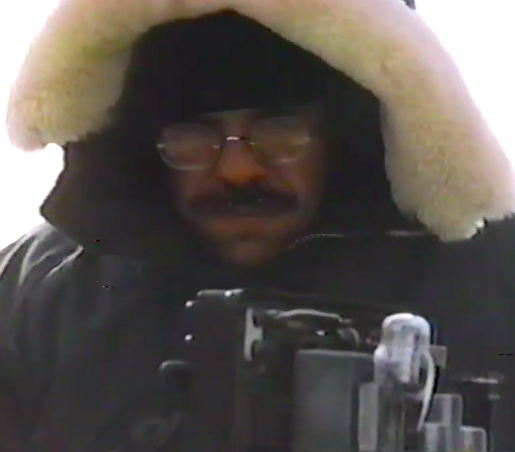

Emilio’s favorite scene from “Never Cry Wolf”

Many thanks to SWLing Post contributor, Emilio Ruiz, who writes:

I [note you] have published movies scenes with radios and I remember one of my favorite movies about nature, science, silence, wolves and Inuit culture called “Never Cry Wolf” I’m sharing with you and all readers of SWLing Post blog a radio (I don’t know what brand is, I think is military radio) appear in Never Cry Wolf movie.

I love this scene because the heterodyne sound is a particular sound that drives us crazy to everyone who loves radio!! jaja 😛

The video was extracted from the original Beta format movie, sorry for
the quality.

https://www.youtube.com/watch?v=rhz0kzRaWlY

Thank you for sharing, Emilio!

That heterodyne sound leads me to believe they obtained it using a regenerative receiver. I’ve heard that squeal so many times tuning regen receivers!

I’ll add this post to our ever growing archive of radios in film!

Fascinating episode of The Antarctic Sun podcast

McMurdo Station, Antarctica. (Source: USAP.gov)

Many thanks to SWLing Post contributor, Justin Moore (KE8COY), who shares the following:

[T]here is an interesting podcast] that I’m sure you would like as well as anyone with an interest in radio might enjoy, especially in this weather.

It’s the Antarctic Sun podcast and this episode is about the communications staff at McMurdo Station, the MacOps department, and the things they do to stay in touch with scientists, researchers, and workers in the field, using their radio communications skills to keep everyone safe.

Listening to this is great while there is still snow on the ground, as there is up here in Cincinnati, and may be a bit of inspiration for ham radio folks who participate in Winter Field Day.

My favorite part is when they talk about using HF to sing Christmas carols to each other at the different Antarctic camps and stations.

[Here’s the description of the episode:]

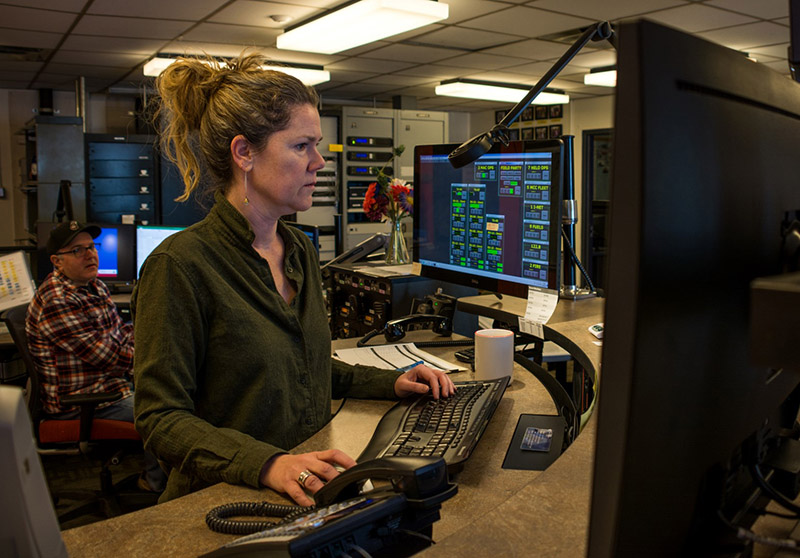
Communications operator Rebecca Ricards (foreground) calls up field camp information at the MacOps control console. Josh Young looks on. (Source: NSF)

“Antarctica is a vast and potentially treacherous continent and the safety of researchers and support staff is of the utmost concern for everyone. Just knowing what’s happening is a critical first step towards keeping everyone safe, but keeping the lines of communication open between the station and people working in the field requires a lot of effort. It takes a multitude of high frequency and very high frequency radios, a veritable forest of signal repeaters, a constellation of satellite phones and more to keep tabs on everyone.

All of those communication systems are routed through the nerve center of the station, MacOps. Short for “McMurdo Operations,” it’s the central communications hub where operators keep tabs on everyone off the station. Communications operators are in almost constant contact with the numerous field camps and sea ice groups, ready to send in search and rescue teams in an emergency or just say a friendly “hello” after a long hard day of work in a remote field camp.”

Click here to download the podcast.

Thanks for taking the time to share this, Justin! This episode combines two things that fascinate me: radio and Antarctica! Certainly a win-win. I’ve also now subscribed to this podcast–thanks again!

Click here for more details at The Antarctic Sun Podcast.


Do you enjoy the SWLing Post?

Please consider supporting us via Patreon or our Coffee Fund!

Your support makes articles like this one possible. Thank you!

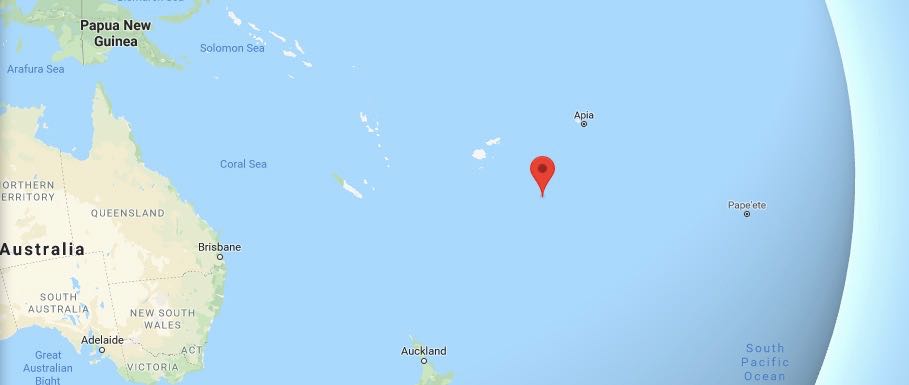
Shortwave is an alternative source of news while Internet and phone service to the Kingdom of Tonga are cut

Many thanks to SWLing Post contributor, DanH, who writes:

Internet and phone service between the Kingdom of Tonga and the outside world was disabled after an undersea cable was cut between Tonga and Fiji.

(Source: Radio New Zealand)

“Tonga’s submarine cable to Fiji was severed on Sunday night, meaning there were no phone or internet services for several days.

Interim satellite links have since been provided but the bandwidth is nowhere near what Tonga needs.

The deputy chief executive of Tonga Communications Corporation, Sione Veikoso, said the company is now providing extra capacity.

[F]ull restoration may be possible within a week but it could take a month.”

Speaking on the Radio New Zealand Pacific program Dateline Pacific (evening edition for 25 January 2019) deputy chief executive of Tonga Communications Corporation, Sione Veikoso said that two cables were cut. Click here to listen to the audio.

I heard the RNZ Dateline Pacific program on RNZI (shortwave), 9700 kHz at 11:13 UTC 1-25-2019.

Thanks for sharing, Dan. Yes, in times like these, shortwave radio makes for an easy, accessible way to get information directly from the source. Radio New Zealand International should be an easy catch in Tonga.

I’m filing this under the tag: Why shortwave radio?

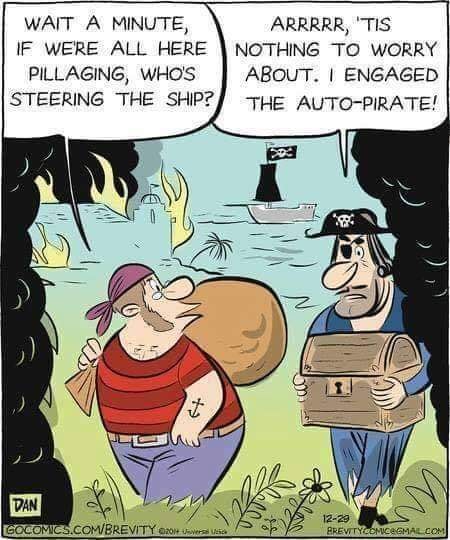
Are government shutdowns a potential haven for pirate radio stations?

Photo by Michael Maasen

SWLing Post Bill Patalon sent me this piece from the ARRL stating that amateur radio applications have been on hold at the FCC as most of the agency has been closed in the US government shutdown. It appears the government will reopen now, at least for the next three weeks.

Thinking about the closure of the FCC and its effect on licensed operators, also made me think about unlicensed radio operators: a.k.a. pirate radio stations.

Are government shutdowns a potential broadcast opportunity for pirates that might not otherwise take to the air?

I’m curious if anyone noted new shortwave or FM pirate stations during the US government shutdown. Did the respite from FCC enforcement bring anyone out of the woodwork?  Please comment!

PS: Can you do us a favor? In comments, please stay on topic (radio) and refrain from political arguments. Many of us appreciate the SWLing Post as a refuge from the toxic back-and-forth prevalent on so many other sites. If you would like to engage in political discourse, please check out Reddit. Thank you!

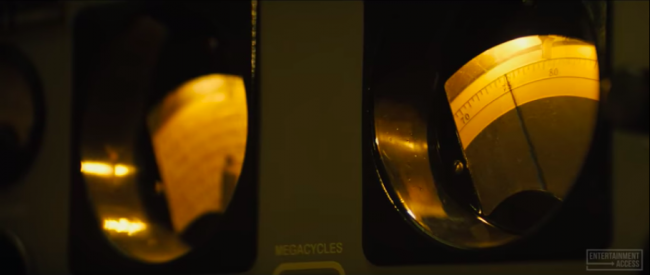
Radios in Godzilla 2 trailer

Many thanks to SWLing Post contributor, Ron Chester (W6AZ), who notes that the new Godzilla film contains a number of boat anchors.

What I think is so funny is how they’ve altered the logging/fine tune dial of the Hammarlund SP-600 to look like signal strength meter! For someone who has owned an SP-600, this is a little strange to say the least!

https://youtu.be/DXrQiN0ei5s

Click here to view on YouTube.

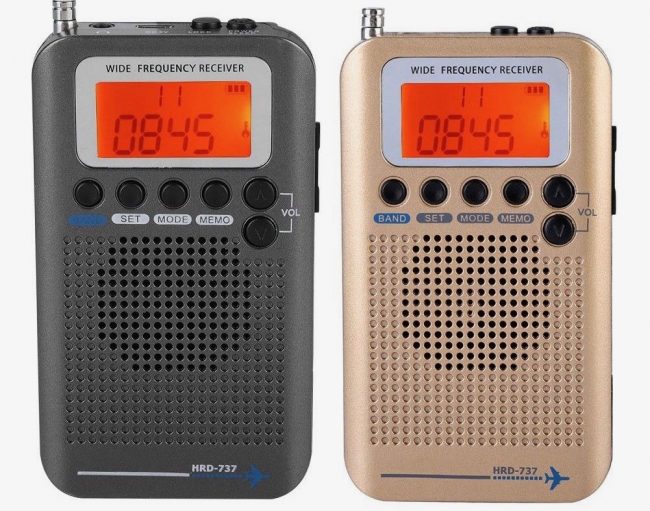
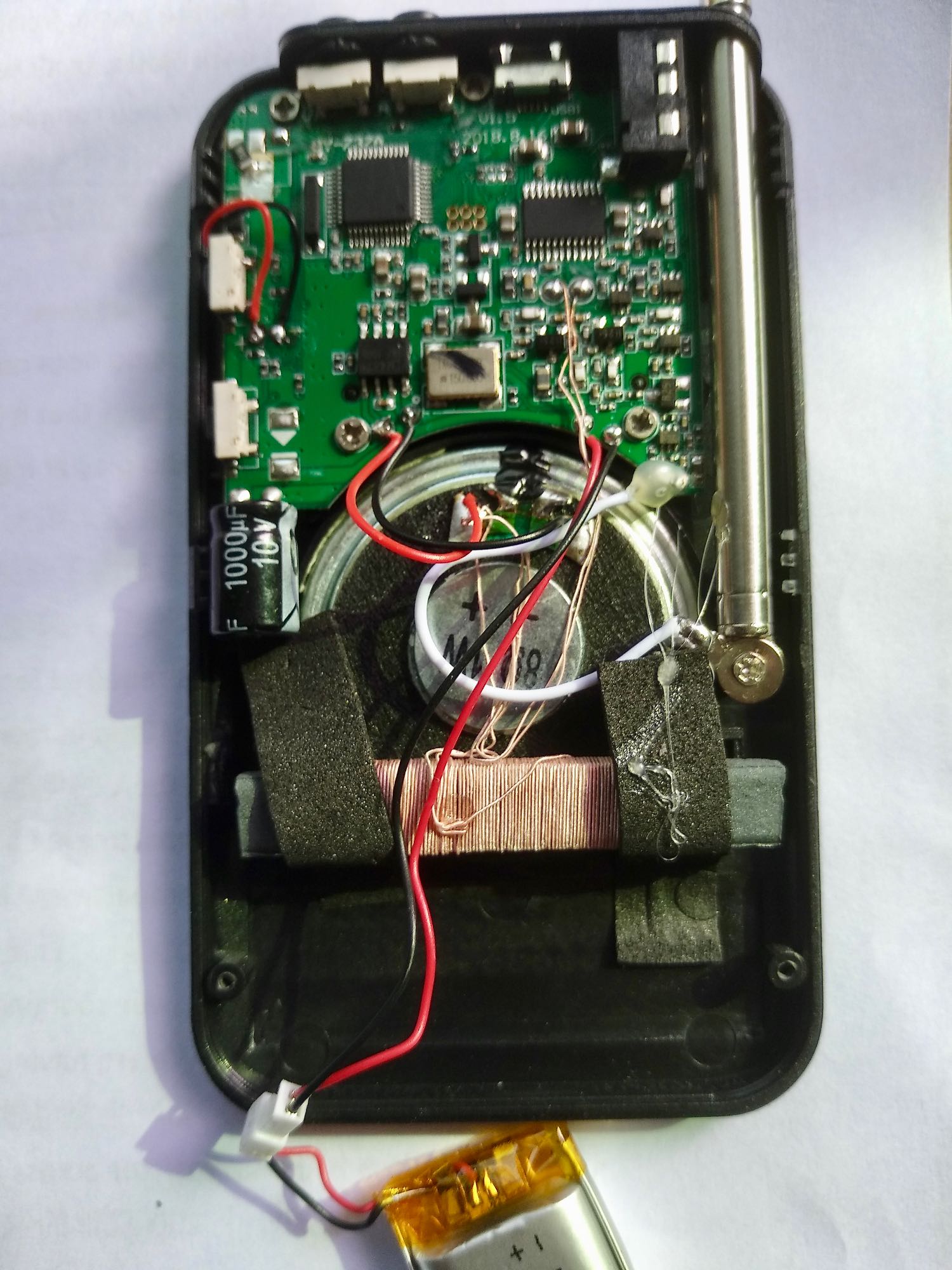
Inside the HanRongDa HDR-737 wide frequency receiver

Many thanks to SWLing Post contributor, Nad, who writes:

I bought an HRD-737 a few weeks ago off AliExpress. Was going to write a review but now feel there is no point because it has so many major and minor problems beyond those already reported.

Decided to take mine apart. The photo is attached.

Click to enlarge.

It appears to me that the HRD-737 could be the first attempt at an SDR-based pocket sized receiver. Wondering if you or someone the experts at SWLing Post can offer any insight in this regard. Identifying marks on the ICs have been removed. The metal can in the middle could be a wideband programable oscillator of some kind?

Thank you for sharing, Nad!

Readers: can you shed some light on the HDR-737 receiver design based on this internal photo?  Please comment!