Category Archives: Shortwave Radio

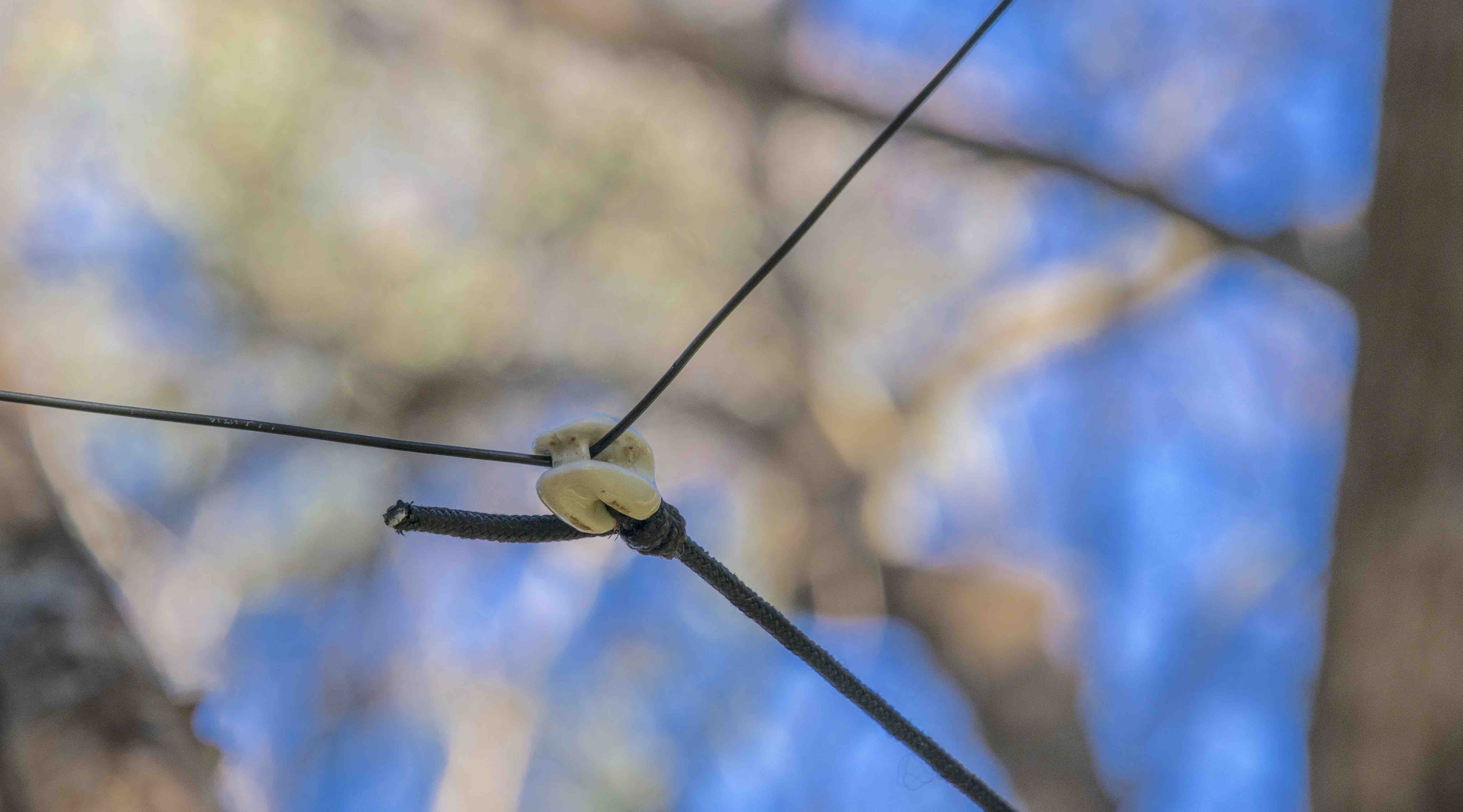
Horizontal Loop Antenna Experiments

Man-made RF noise levels have increased dramatically at my place in the past six months. It has become much harder to hear weaker shortwave signals. Even the stronger stations are getting covered in all types of hash from all manner of electrical appliances.

So, I have been looking at ways to reduce the noise problem. I’m currently researching a few possible solutions, including trying a different antenna.

The HF horizontal loop has been around for many years now, but it’s a new antenna for me. I’ve never had a need to try one…..until now! There is some documentation out there praising this antenna’s low noise capabilities. So, it was time to find out for myself and start building an experimental version. So far, the results have been really quite pleasing!

I have prepared a YouTube video (below) in which I discuss the reasons for looking at this antenna, its design, and its installation. I also do some on-air comparisons of my experimental rectangular (!) version of the horizontal loop against my three regular double bazooka (coax) dipoles and the Par SWL End-Fed antenna.

Have you tried this antenna before? Your thoughts and feedback would be most appreciated.

73 and good DX to you all,

Rob VK3BVW

Rob Wagner, VK3BVW, is the author of this post and a regular contributor to the SWLing Post. He also blogs at the Mount Evelyn DX Report.

Video: The Digitech AR-1780 on single sideband

[UPDATE: Click here to read our full review of the Digitech AR-1780.]

With travels, solar eclipse events and family activities this week, I’ve had very little time to play radio.

Yesterday was a gorgeous day though, so I took the family to the Blue Ridge Parkway and (of course) packed a couple portable radios.

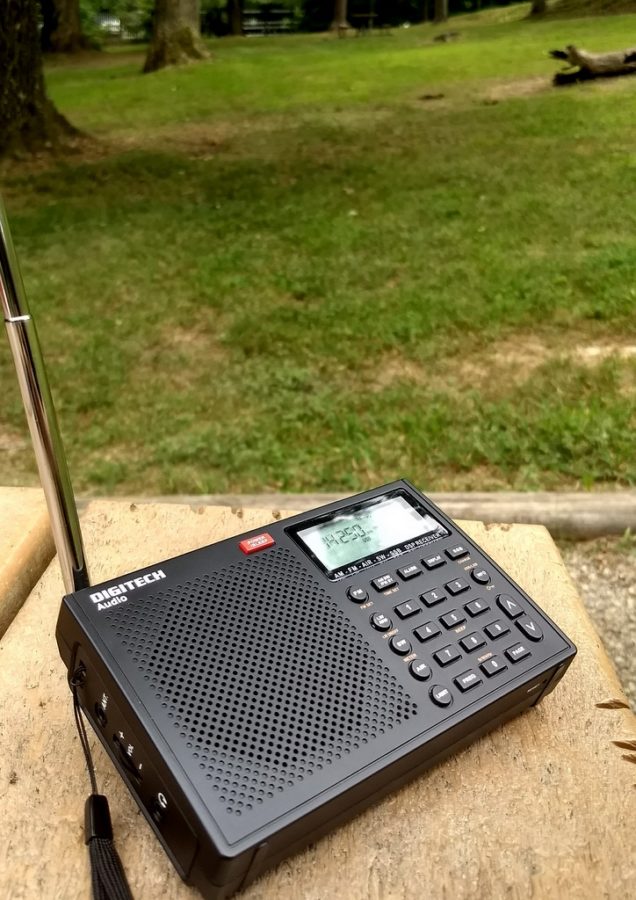
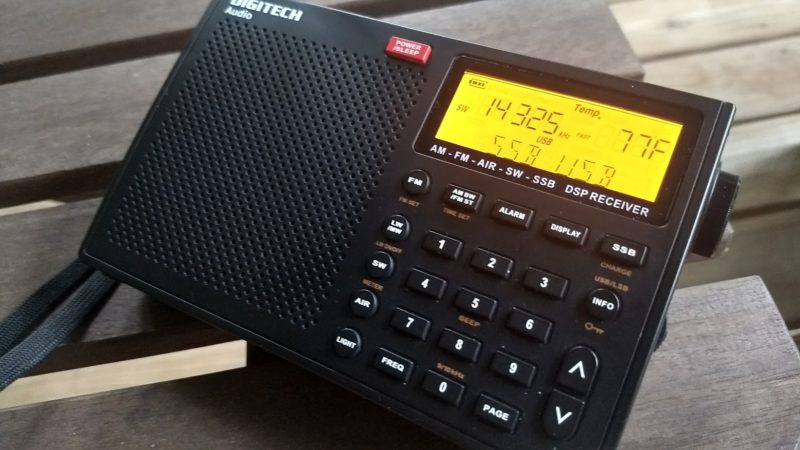
While we all enjoyed a picnic, I pulled out the AR-1780 with the intention of exploring its SSB performance and audio fidelity. I found an Islands On The Air (IOTA) activation with a decent pileup on 14,250 kHz.

I shot this short video with my smart phone:

Click here to view on YouTube.

Overall, I’m very pleased with the AR-1780 on SSB. The noise floor is pretty low, the filter selections are handy and the overall audio is comparable to slightly larger portable radios.

The dedicated fine tune control is quite handy, even though it’s oddly located on the right side of the radio (where one typically finds a volume control).

I’m putting together a short review of the AR-1780, but will need more air and comp time before I form any firm opinions.

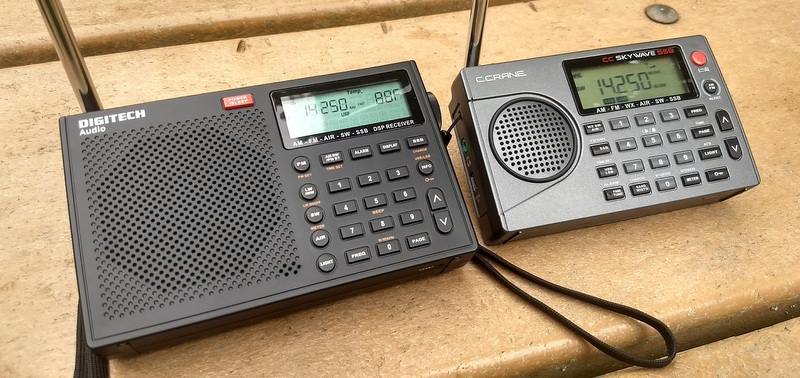
For readers that have made it this far down the post, you might recognize a yet-to-be-released portable next to the AR-1780. Of course, I’m comparing it with the AR-1780 and its predecessor, but it’s not a production run unit (yet!), so I can’t comment on performance. Stay tuned, though, as I will be posting more in the coming days!

Hurricane Harvey: How to monitor Hurricane Watch Net observations via shortwave radio

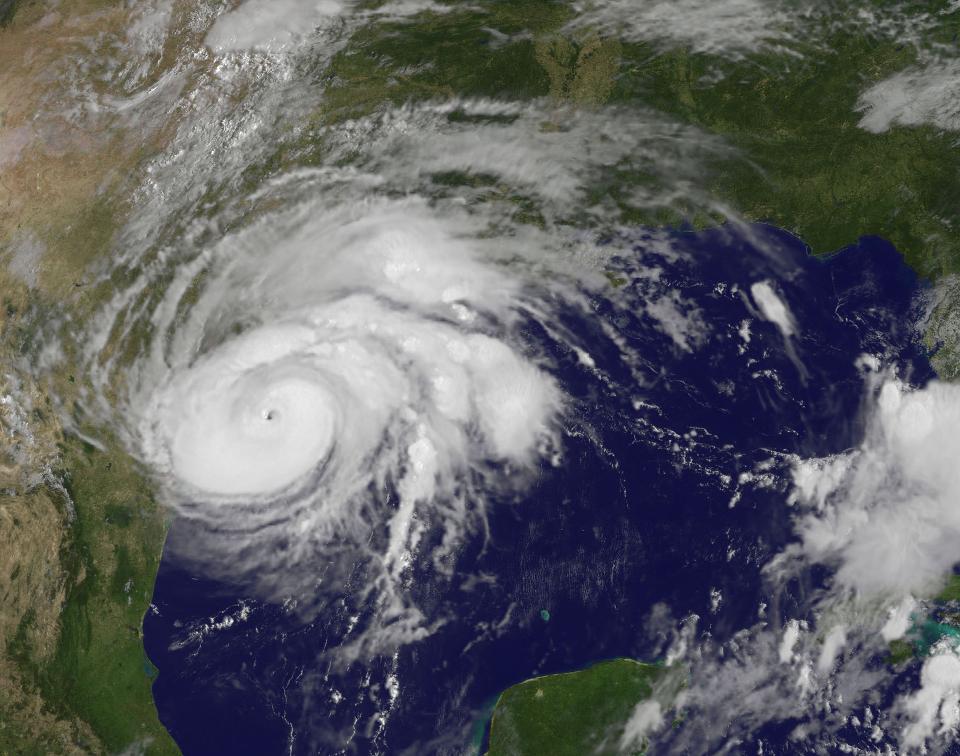
As Hurricane Harvey makes its slow trek through toward Corpus Christi, we’re watching what might become one of the most damaging storms this decade in the States.

Each hurricane season, I receive emails from readers asking about frequencies to monitor as the storm approaches.

Hurricane Watch Net (HWN)

hwn-hurricane-watch-netThe Hurricane Watch Net is a group of amateur radio operators who are trained and organized “to provide essential communications support to the National Hurricane Center during times of Hurricane emergencies.” The HWN focuses on “ground truth” observations (much like SkyWarn nets).

The Hurricane Watch Net is activated when a hurricane is within 300 statute miles of expected land-fall. The HWN covers the Caribbean, Central America, Eastern Mexico, Eastern Canada, and all US Coastal States.

The HWN operates in both English and Spanish, and is active on 14.325 MHz (upper sideband) during the day and 7.268 MHz (lower sideband) at night. The HWN is known to operate on both frequencies if propagation allows.

Please keep HWN frequencies clear

If you’re an amateur radio operator, please avoid using 14.325 MHz and 7.268 MHz anytime the HWN has been activated.

Monitoring hurricane frequencies

If you have a shortwave radio with a BFO/SSB mode–and you live within the propagation footprint–you can monitor the Hurricane Watch Net.

Note that you’ll need to use upper sideband on 14.325 MHz and lower sideband on 7.268 MHz.

You can also monitor the Hurricane Watch Net via the following web stream: http://www.broadcastify.com/listen/feed/20970/web

Click here to view the Hurricane Watch Net website.

Dan warns of more fraudulent eBay items

Many thanks to SWLing Post contributor, Dan Robinson, who writes:

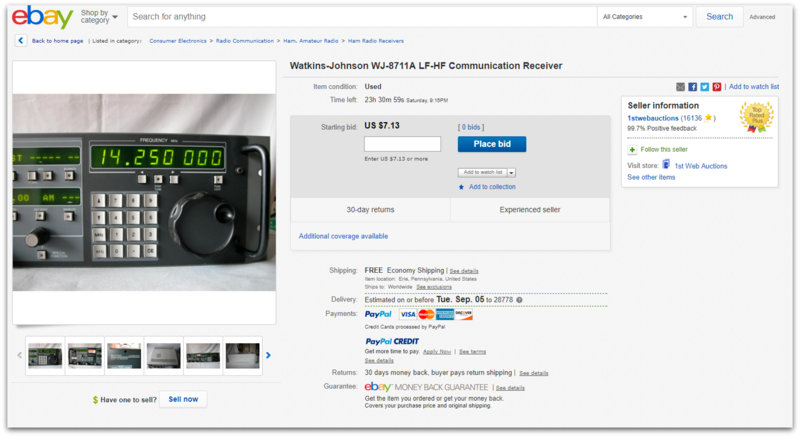
There’s been a new flurry of these posts on eBay, always the WJ 8711A. These items have prohibited listing practices, and should be ignored — definitely not something to bid on. I have reported these on numerous occasions to Ebay, which has expressed appreciation, but they keep coming back. Location is often listed as Pennsylvania, and other states.

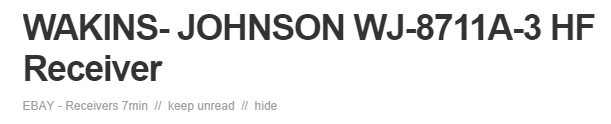
Example of item title

And they can’t even get the spelling right!

Thank you for the heads-up and warning, Dan!

It’s frustrating and I assume it’s a scammer who has hijacked valid eBay seller accounts. The seller above, for example, has 16,000+ feedbacks 99.7% positive.  TIn every way, the top of the listing appears to be valid.

But if you scroll down the page, you’ll find this message:

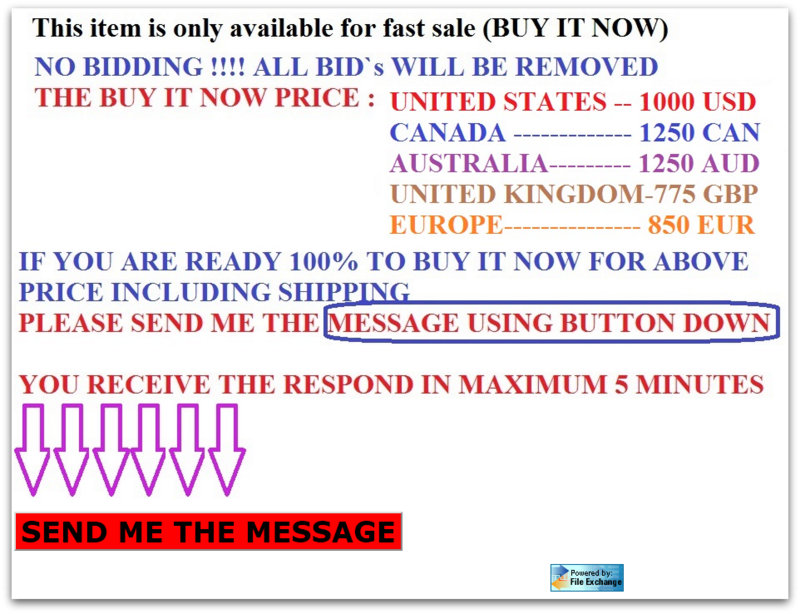
Let’s be clear: If you ever see the message above, you are viewing a fraudulent eBay listing!

The scammer actually embeds the convoluted BuyItNow message above as a graphic in the eBay listing.  This makes it difficult for eBay to automatically find the scammers and delete the postings.

Many thanks, Dan, for apprising us of the situation.

An Old Radio Soul

I find old radio souls now and again who seem, at least to me, to be in touch with the spiritual side of radio. I am not talking about religious programming or some weird cult, but rather they are folks whose souls have been touched by the magic of radio. It is mystical, magical, and at times seems to connect our physical bodies to the very electrons which flow through the air. It is as though our minds are connecting with the radio signals like old friends, able to hear and be heard.

Yeah, I know, I am weird. Radio is in no small part connected to me in a special way because of the role it played in my youth. Perhaps more recent generations will not be able to relate since their exposure to media has been raised by orders of magnitude compared to my generation. For me, and at least some of the “old souls” I have met, radio touched a very special place in our hearts and in our imaginations. It was “other” and yet uniquely ours.

When I discovered shortwave radio I thought I had found radio nirvana (okay, maybe that really came only after I got my amateur radio license and could talk, literally, around the world). Shortwave radio first connected me to the world, however, as finding stations on the air meant being exposed to people from completely different cultures who were both unique and yet just like me.

Music has always had a direct path into the soul, but it is not just my own culture’s music which stirs me–I find life in the music of all cultures. Shortwave radio allows me to experience this life as a welcomed outsider. The music and words are there for me to take in, offered from the hearts of those who created it. We become bound together in our humanity in those moments, much as we become bound together with nature as we listen to waves crashing against the beach or when rain splatters in the forest.

The comedian and banjo player extraordinaire Steve Martin once said in a comedy routine, “You can’t play a depressing song on the banjo,” and proceeded to demonstrate the perky, upbeat sounds of the instrument. I feel this is similar to listening to music from around the world–we cannot be disconnected from those with whom we share such intimate moments though music. I may not understand the words, but my soul understands the heart within the music.

There are those who say shortwave radio is dead because so many stations have gone off the air. Shortwave is alive and well, and evidence of this is there for all to see if they are willing to look. It is not FM, it is not audio streaming. It is radio. Signals speeding through the air, bouncing off the atmosphere, crashing waves of electrons hurtling through the ether to find expression through our speakers and our headphones.

The noise and static which may accompany the signals are evidence of the hard-fought battle waged by those electrons to reach our shores and thus our ears. “You made it!” “You made it!” The signals arrive scarred from the journey, but they are here and they speak to us. And they arrive all up and down along the dial on every band, on every day without fail. They are here, just waiting to be discovered, even if now and again they must play a game of hide and seek with us because of seasons and solar cycles and shortened propagation paths. They are here, nevertheless, I promise.

Radio is the medium which brings together all of these things for me and fills my soul with gratitude. -73, Robert

Robert Gulley, AK3Q, is the author of this post and a regular contributor to the SWLing Post. Robert also blogs at All Things Radio.

Universal Radio is moving

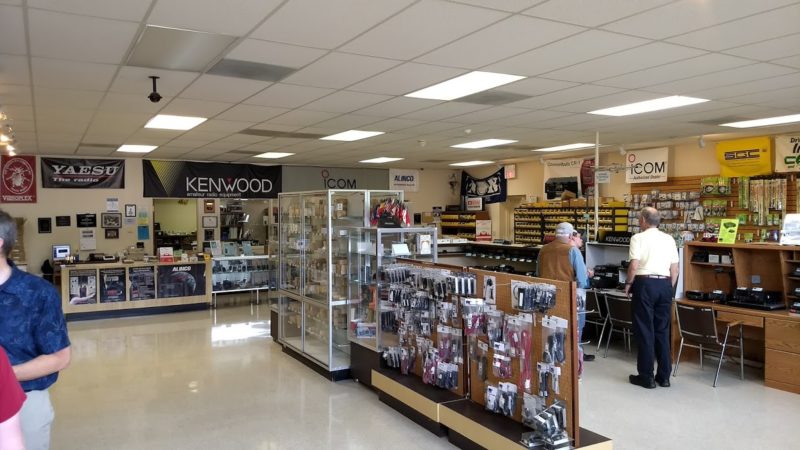
Universal Radio’s showroom at the current Reynoldsburg location.

(Source: Universal Radio via Dave Zantow)

Universal Radio Is Moving

In the coming months Universal Radio will move its operations to a more efficient location here in the Columbus, Ohio area where we can continue to serve our loyal customers.

This will be the fourth location change since Universal was founded in 1942.

We look forward to many more years of serving the amateur and short wave communities which Universal Radio has done for 75 years.

The new location (below) is a 30 minute drive from the current location.

Universal Radio Inc.
651-B Lakeview Plaza Blvd.
Worthington, OH 43085

Moving date: Mid-October, 2017

WNAH’s solar eclipse propagation test

Many thanks to SWLing Post contributor, Ivan Cholakov (NO2CW), who writes:

If you ever loved AM radio you will love this.

Thank you WNAH for recognizing there’s more to radio than plugging into a programming network and walking away!

Click here to view on YouTube.

Very cool! Many thanks, Ivan!

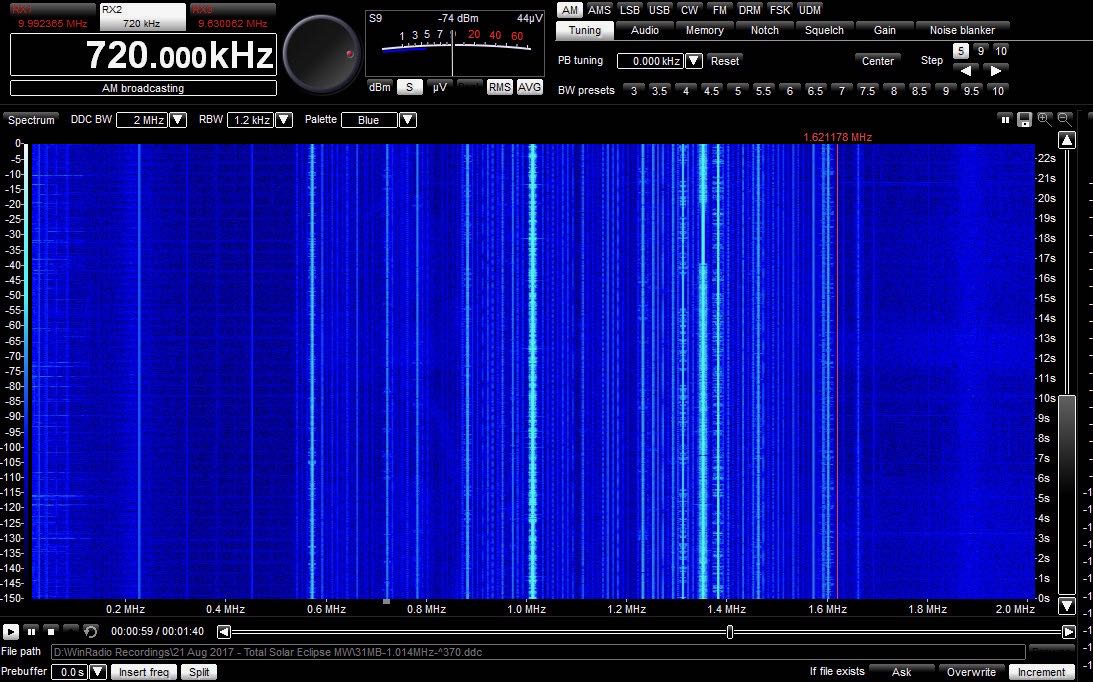
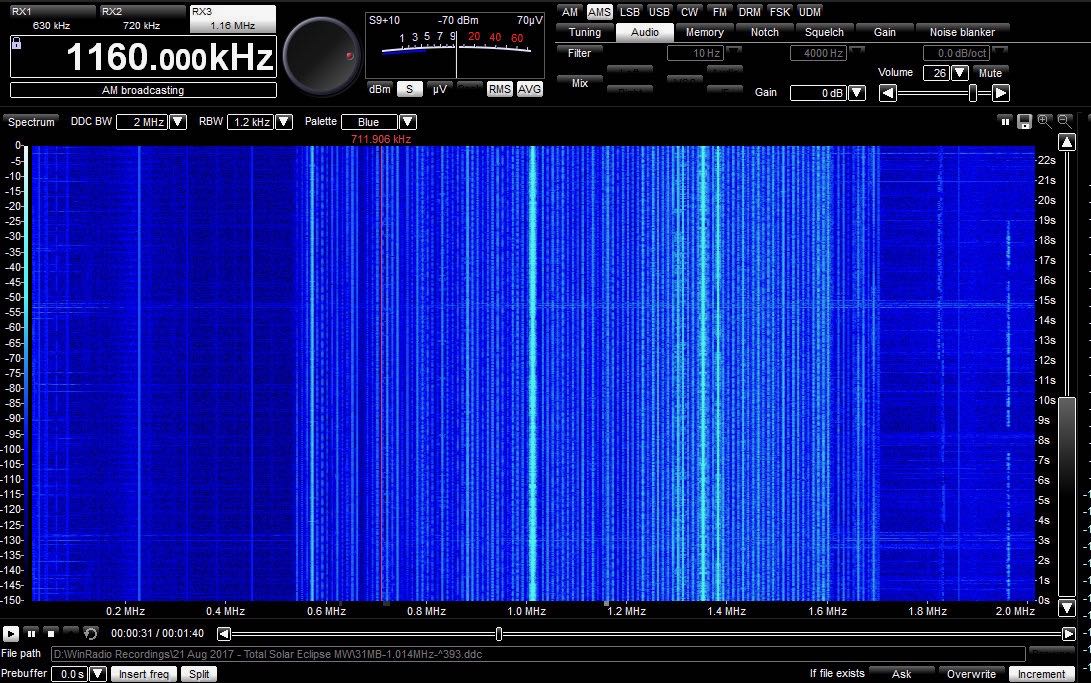
As I mentioned in a previous post, I recorded the entire mediumwave (AM broadcast) band from my North Carolina home with a WinRadio Excalibur on August 21 (day of the eclipse). After receiving Ivan’s message last night, I played back my recording and moved the time forward to around the moment of totality.

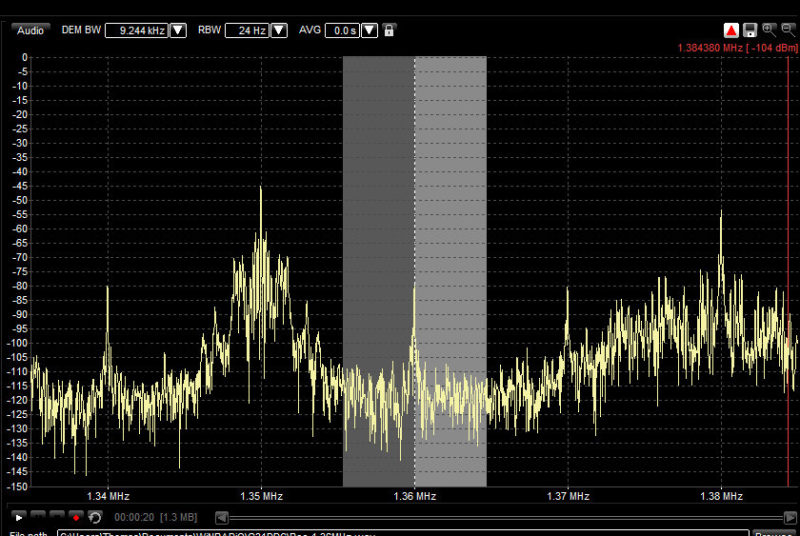
The mediumwave band was hopping! Several stations were competing for 1360 kHz with eclipse-enhanced propagation. There were two large signals flanking 1360 as well.

I thought I would never hear WNAH, but as I listened, their ID in CW (Morse Code) popped out of the signal mix. Here’s a short recording of the first station ID I received around 2:26 PM EDT (1826 UTC):

Click here to download the audio.

True: this is rough audio, but it always amazes me how CW can so effectively punch through noise. Nice touch, WNAH!

WNAH’s signal strength increased with time, but so did the competing signals on 1360 kHz. Within 10 minutes, about the time of totality in western North Carolina, WNAH was 40% stronger.

I did submit my recording and notes to WNAH last night.

Due to my schedule, I haven’t had any meaningful time to go over my eclipse spectrum recordings. Indeed, I think I’ll need several dedicated days to review them. While searching for WNAH’s signal, I could see a significant difference in propagation on the waterfall display within a 26 minute span of time:

 14:15 EDT

14:41 EDT

Note that local time of totality was 14:36 EDT.

I made spectrum recordings spanning 0-2 MHz, 6-8 MHz and 13.5-15 MHz.

Post readers: Did anyone else log WNAH? Log any other shortwave or mediumwave DX? Please comment!