Category Archives: What’s On Shortwave

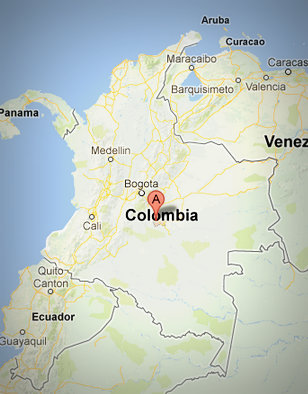
Rijmenants’ paper sheds light on Cuban numbers stations

WFL_015I’m always amazed by the remarkable talents and extraordinary knowledge of SWLing Post readers. Dirk Rijmenants recently commented on one of our Cuban spy numbers station postings:

[T]hanks for your work on this fascinating blog.

I have additional information on how and who used these Cuban numbers stations. I composed a paper based on FBI and court documents. “Cuban Agent Communications” can by found in the Papers section of my website.

Here’s the direct link (pdf):
https://www.ciphermachinesandcryptology.com/papers/cuban_agent_communications.pdf

Have fun reading!

Dirk Rijmenants
Cipher Machines & Cryptology

I’ve read Dirk’s paper, which does, indeed, shed light on the process of receiving and decoding numbers. Most of all, it exposes the vulnerability and fallacy of using anything other than one-time decryption keys and single-use pads. Why? Most of what the FBI has learned about Cuban numbers came from laptops that were used to help decrypt coded messages–an unnecessary procedure when numbers can simply be decoded on note pads that can then be burnt or destroyed.

But don’t take my word for it–download and read Dirk’s paper Cuban Agent Communications” by clicking here. Also, be sure to check out Dirk’s blog and cryptology website; I’ve bookmarked both.

Thanks for sharing your findings, Dirk!

Pirate Radio Recordings: Black Cat Radio

(Click to enlarge)

(Click to enlarge)

Last night, I heard a new pirate on the air: Black Cat Radio.

Black Cat signed on 6,925 kHz USB around 23:45 UTC. After sending in a reception report, I received a reply with a cool eQSL card (see right) and learned that this was, in fact, show number one.

Here’s the show #1 play list, courtesy of Greaser Bob:

  • The Genders- Horatio
  • Blitz- 45 Revolutions
  • Queens of The Stone Age- Go With the Flow
  • Nirvana- Anueurysm
  • Black Flag- Gimmie Gimmie Gimmie
  • Betty Blowtorch- Strung Out
  • The Misfits- Angel F**k
  • Suicidal Tendencies- You Got I Want
  • MC5- Kick Out the Jams
  • Corrosion of Conformity- Who’s got the Fire
  • Phil X and the Drills- You’re not Happy till Im not Happy
  • The Vandals- Urban Struggle
  • The Bloodhound Gang- Pennsylvania
  • Betty Blowtorch- Rock and Roll 69

Click here to download the full recording of Black Cat Radio Show #1 as an MP3, or simply listen via the embedded player below:

Standard Pirate Radio Disclaimer: This is a recording of a real pirate radio broadcast, and as such, may include strong or colorful language or lyrics. In general, if you are easily offended by the words, ideas, music lyrics, or music herein, you should slowly…back… away…

PCJ Radio International radiogram, March 31st

pcj

(Source: PCJ Media)

On March 31st, 2013 PCJ Radio International will conduct a digital text through analogue shortwave broadcast of a radiogram.

Setting: MFSK32

Date: March 31, 2013

Time: 0227UTC

Frequency: 9955khz

This test will have a message in English and Spanish for listeners in Cuba and Latin America. Those in the South Eastern part of the United States will also be able to tune in and record the 2 to 3 min transmission. If all goes as planed the Cuban jamming against 9955 kHz won’t have any effect on the message we will transmit.

For information on the software needed to decode this radiogram visit the following URL:

http://www.pcjmedia.com/component/content/article/1-latest-news/224-pcj-radio-radiogram-test-march-27-2013

VOA Radiogram: March 23/24 broadcast

VOARadioGram(Source: VOA Radiogram)

VOA Radiogram for March 23/24 will be similar to the past weekend’s program in that it features the PSK modes. Much of Kim’s script will be the same. In this weekend’s broadcast, however, only one mode at a time will be transmitted. This should improve the signal-to-noise ratio and ability to decode each mode.

Each will be centered on 1500 Hz:

  1. BPSK31 (1:00)
  2. PSK63F (1:00)
  3. BPSK63 (1:00)
  4. PSKR125 (1:00)
  5. PSKR250 (1:00)
  6. PSKR500 (1:00)
  7. PSKR1000 (1:00)
  8. PSKR125 (3:45) Plain text
  9. PSKR250 (2:40) Flmsg* formatted (with html)
  10. MFSK32 (0:55) Image

*Install Flmsg. Then, in Fldigi: Configure > Misc >  NBEMS > under Reception of flmsg files click Open with flmsg and Open in browser, and below that state where your Flmsg file is located.

If decoding performance is still not satisfactory, VOA Radiogram in future weekends will feature more robust modes, such as MFSK, MT63, and Olivia.

See VOA Radiogram: how to decode the modes.

VOA Radiogram transmission schedule
(all days and times UTC)
Sat 1600-1630 17860 kHz
Sun 0230-0300 5745 kHz
Sun 1300-1330 6095 kHz
Sun 1930-2000 15670 kHz
All via the Edward R. Murrow transmitting station in North Carolina.

Please send reception reports, audio samples, screenshots, etc.,  to [email protected]

Shortwave Radio Recordings: Voice of Greece

greeceFor your listening pleasure: alomost four hours of music, and a little Greek commentary, from the Voice of Greece.

Recorded on March 8th, 2013 on 9.42 MHz at 22:00 UTC.

Click here to download the full recording, or simply listen via the embedded player below:

VOA Radiograms Today (17 March 2013)

VOARadiogram(Source: VOA Radiogram)

The third airplay of VOA Radiogram is coming soon, at 1300 UTC, on 6095 kHz. Another, directed to Europe, will be at 1930 UTC on 15670 kHz.

Thanks to the many listeners throughout Europe, North America, and even in Asia, who have sent reports, audio, screenshots, spectrum displays, etc. After the last transmission today, I will summarize the results in this website.

WRMI, Radio Miami International, 9955 kHz, is transmitting IDs in the Olivia 8-1000 mode until 0400 UTC Monday (midnight EDT). These are centered on 1300 and 2500 Hz. Don’t be discouraged by the low signal level of WRMI, or by the Cuban jamming on the frequency. You might get a good decode of Olivia 8-1000 anyway.

VOA Radiogram “soft launch” this weekend

VOARadioGramKudos to VOA research analyst Dr. Kim Andrew Elliott for his remarkable innovation:  VOA Radiograms (i.e., digital text messages sent over shortwave broadcast radio), and for promoting this concept through the Voice of America. His persistance, with support from forward-thinking shortwave broadcasters like WBCQ, WRMI and The Mighty KBC, who have all broadcasted his digital messages, has paid off.  Classic technology meets current in this new communication mode which makes internet disruption absolutely irrelevant, and which is even impervious, to a great degree, to interference.

This weekend, the VOA Radiogram will become a reality:

(Source: VOA Radiogram)

VOA Radiogram will “soft launch” this weekend. Here is the transmission schedule (all days and times are UTC):

Saturday 1600-1630 17860 kHz

Sunday 0230-0300 5745 kHz (Saturday evening in North America)

Sunday 1300-1330 6095 kHz

Sunday 1930-2000 15670 kHz

All via the IBB Edward R Murrow Transmitting Station in North Carolina.

The digital text modes to be transmitted this weekend on VOA Radiogram are as follows. Each text transmission will be one minute, unless otherwise specified. Asterisk * denotes RSID: if your RxID is on, Fldigi will automatically switch to this mode and audio frequency. The other modes you can decode from your recording.

  1. BPSK31 on 2000 Hz*
  2. QPSK31 on 1000Hz, BPSK31* on 2000 Hz
  3. QPSK31 on 1000Hz*, PSK63F on 1500Hz, BPSK31 on 2000 Hz
  4. QPSK63 on 1000 Hz, PSKR125 on 1500 Hz*, BPSK63 on 2000 Hz
  5. QPSK125 on 1000Hz, PSKR250 on 1500 Hz*, BPSK63 on 2000 Hz
  6. QPSK250 on 800 Hz, PSKR500 on 1500Hz*, BPSK250 on 2200Hz
  7. QPSK500 on 800 Hz, PSKR1000 on 1500 Hz*, BPSK500 on 2200 Hz
  8. PSKR500 on 1000 Hz, PSK63F on 1500 Hz, PSKR125 on 2000 Hz, and PSKR250 on 2500 Hz* (5 min 40 secs).  The latter portions of the PSKR250 and 500 transmissions are formatted for Flmsg. (In Fldigi, Configure > Misc > NBEMS > under Reception of flmsg files, click Open with flmsg and Open in browser, and below that state the location of the flmsg.exe file.)
  9. MFSK32 image on 1500 Hz (54 seconds)

In future weeks, after the “hard launch” of VOA Radiogram, only one mode will be transmitted at one time. This will ensure the highest possible signal-to-noise ratio and the best possible chances for a successful decode.

See also how to decode the modes.

Send reports to radiogram(at)voanews.com

Follow @voaradiogram

Keep up-to-date with all future broadcasts, digital modes and methods for decoding on the VOA Radiogram website, and by following them on Twitter: @voaradiogram.