Tinkering with the Credit Card Crystal Radio

Credit-Card-Crystal-Radio-2

A few weeks ago, we published a short post about a credit card crystal radio from an eBay seller in the UK.

I purchased a kit–at $17-18 US shipped, it’s quite a modest investment for what might be a fun little project.

Credit-Card-Crystal-Radio

The crystal radio arrived while I was traveling during Easter break, but my free time has been so (extremely) limited lately, I was only able to unpack and try out this new arrival yesterday.

Credit-Card-Crystal-Radio-1

The biggest surprise for me was the fact that this isn’t really a kit–the board is fully populated and requires no soldering whatsoever. The board feels of very good quality.

All that is required is connecting the high-impedance earphone, earth/ground and aerial/antenna to the board. Since all of these components can be connected with the supplied alligator clip cables, getting it on the air took all of 20 seconds. I simply hooked up the ground and connected the aerial to my sky loop wire antenna.

I instantly heard a signal and station ID which confirmed it was our closest local broadcaster on 1010 kHz.  This station isn’t of the blowtorch variety, but is the strongest one I receive on the MW band simply due to its proximity. Audio was quite faint through the earpiece, but I believe if I tinkered with antenna length and the two variable capacitors, I could improve reception.

SWLing Post reader, Richard Langley, received his crystal radio and had a very similar experience with reception.

Credit-Card-Crystal-Radio-4

With any crystal radio (especially one this small), performance is directly correlated with antenna length, availability of a good ground connection and, of course, strong broadcasters in your vicinity.

I plan to spend an evening tinkering with this little receiver and see if I can pick up some of the night time powerhouse AM stations on the east coast.

I can say this: if you’re looking for a simple, uber-compact emergency receiver for your go-bag, bug out bag or emergency kit, this one will certainly fit the bill. This crystal receiver and all of its components weight no more than a few ounces and could easily fit in compact pouch or sleeve.

Have any other readers have enjoyed tinkering with this little emergency crystal radio?

If you would like to purchase one, try searching eBay with one of the links below. The product will only appear in the search results if currently available.

Dave Zantow’s Grundig G2 Notes

(Photo source: Eton Corporation)

(Photo source: Eton Corporation)

After posting the recent mini review of the Grundig G2 Reporter, Dave Zontow (N9EWO) notes:

I just completed updates on my reviews page regarding these models.

http://webpages.charter.net/n9ewo2/g2reporter.html

Owners should take note for the cure with excessive battery consumption when OFF . It’s not covered well in the owners manuals (if at all depending on the variant). One toggled in the menu’s, it pretty much squashes the issue.

Many thanks, Dave for your very detailed review of the Grundig G2!

Victor’s detailed handwritten QSL Card

Noted DXer, Victor Goonetilleke, recently posted this circa 1971 QSL on Facebook and has kindly allowed me to share it here on the SWLing Post:

Victor-QSL

Click to enlarge

Victor comments:

“The Glory Days of Short Wave Radio. Can you imagine someone hand writing all this today?”

Indeed! I’m very impressed with the detail this Central African Republic broadcaster included in this QSL card–very neat handwriting! Certainly a gem and wonderful memory of hearing this domestic shortwave radio service so far outside its intended broadcast footprint! Thanks for sharing, Victor.

A source of Sangean shortwave radios in New Zealand

ATS-909X

In response to a post last year where we asked about sources of shortwave radios in New Zealand, SWLing Post reader, James Patterson, writes:

I have now found a very good importer of very good quality shortwave portable radios here in New Zealand.

[T]here is an importer of the Sangean ATS 909X portable radios. He has a shop and warehouse. He imports all Sangean radio products, is excellent to deal with and will ship them anywhere in New Zealand.

I have just recently bought the ATS 909X. I must say that I did buy one off him and found the frequency band coverage on that one [unit] was very limited. [This unit] got mixed in with a batch sent to him, but was meant for a different country with government restrictions on band coverage. The one I have now is “full band” and an excellent portable receiver in every way. I’m very pleased to be able to share this with anyone either living here in New Zealand or wanting to come here for a holiday and in need of good quality shortwave radio with very good SSB.

The importer’s internet site is : www.mayogroup.co.nz

The website will give the full details and contacts of the importer, who is a well-known and trusted person to deal with. He does not advertise on sites like TradeMe. However, he does deal through electronics stores such as 100% Appliances here in NZ.

Many thanks, James, for the report on the Mayo Group as an importer of the Sangean ATS-909X. Very encouraging to hear as there are so few local sources of shortwave radio products in New Zealand.

Of course, those living in New Zealand can always purchase shortwave radios through sellers on eBay, but delivery time may be as long as two weeks or more, depending on the parcel service chosen.

O’Rielly proposes a new way to fight pirate radio

fcc_logo

Many thanks to an SWLing Post reader who shares this blog post by FCC Commissioner, Michael O’Rielly. In his post, Commissioner O’Rielly expresses his hatred of pirate radio stations and how he believes action should be taken against pirate stations. Worth reading, especially in light of potential FCC Enforcement Bureau Field Office closure plans.

(Source: FCC Blog)

Consider a New Way to Combat Pirate Radio Stations

Everyone should agree that pirate radio stations – by any definition – are completely illegal. Given other responsibilities and obligations, however, the Commission’s resources are stretched, and it seems that stopping pirate radio is not at the top of the priority list. While this reality is not surprising, we need to consider other ways to remove the scourge that is pirate radio. One approach would be to give broadcasters a new right to use the legal process to go after such stations, letting loose broadcasters’ legal bloodhounds to root out the violators. This isn’t a new idea as it has been done in other circumstances outside of spectrum policy, such as to combat email spam, and we should consider it here, too.

It is important to start by recognizing the truth about pirate radio stations. They are not cute; they are not filling a niche; they are not innovation test beds; and they are not training grounds for future broadcasters. If broadcasting were a garden, pirate radio would be poisonous crabgrass. Put another way, pirate radio participants are similar to outlaws who rob a retail store and then sell the stolen inventory online. In practice, pirate radio causes unacceptable economic harm to legitimate and licensed American broadcasters by stealing listeners. Pirate operators also cause “harmful interference” that inhibits the ability of real broadcasters to transmit their signals and programming, which provide such vital services as emergency alerts, critical weather updates, political information and news. And, pirate radio can disproportionately impact minority-owned stations as they undercut their financials and can cause harmful interference to legitimate stations serving minority populations.

Let’s also dispel another myth: pirate radio does not increase media diversity. From time to time, arguments have been made that we should look the other way because some pirate radio operators may be minorities, or the stations’ content appeals to minority listeners. To be clear, the race, color, religion, national origin, sex, or any characteristic of a pirate radio operator should be completely irrelevant to the discussion. Their operations are illegal – end of story. Just imagine if we allowed this argument to be persuasive in other spectrum enforcement decisions: Commission spectrum and licensing policies would be thrown into complete chaos and wireless systems would cease to operate.

Instead of embracing pirate radio, approaches like the NAB’s Broadcast Leadership Training Program should be encouraged to prepare underrepresented populations for leadership and ownership positions in broadcasting. Alternatively, those truly interested in operating a legal broadcast station can seek to participate in the Commission’s July 2015 auction, in which 131 FM construction permits will be available, many in smaller and less expensive markets.

If there are unmet needs or underserved populations, the solution is not to condone an illegal station, but to convince the applicable existing broadcaster to be more responsive. Collectively, broadcasters are uniquely attuned to the needs of their communities and promoting localism because the success of their stations and ultimately, their livelihoods depend on it. Moreover, there are other technologies available to target broadcasts to a distinct group within a community, such as low power FM stations or Internet radio stations, which are free, easy to establish and not regulated by the Commission.

To combat pirate radio, I am suggesting that we replicate a concept contained in the CAN-SPAM Act of 2003. Specifically, section 7(g) authorizes an Internet Service Provider to “bring a civil action in any district of the United States with jurisdiction” against (1) false or misleading header information; (2) aggravated violations relating to commercial electronic mail; (3) failure to place warning labels on commercial electronic mail containing sexually oriented materials; or (4) a pattern or practice involving deceptive subject headings, failure to include return address, or continuing to transmit after a recipient objection.[1] This provision provides a mechanism for ISPs to enjoin further violations and recover actual and aggravated damages and attorney fees. In other words, it authorizes ISPs to seek out the bad actors for a host of illegal activity and recoup their losses. The framework serves as a good model to provide additional options – outside of the FCC process – for eliminating and deterring pirate radio.

There is no doubt that pirate radio stations are often highly mobile, making tracking and finding such stations tedious and sometimes futile. But with the right technology to pinpoint signal strength and a little luck, the origination point of the pirate radio broadcast can be located, often leading to some back office or mobile van. In fact, broadcasters have told me of instances where they were able to accurately detect and locate pirate radio stations, meaning it can be done. And locating mobile pirate operators, while difficult, is no more so than trying to locate the purveyors of unwanted spam who can be stationed anywhere in the world with Internet access and a server. If it can help in the case of spam, or even if it acts as a further deterrent, why not give it a try here? Who do you think would cause more concern to a pirate station: the busy FCC or a broadcaster seeking to protect its station’s rights and revenues?

In all fairness, the CAN-SPAM’s private right of action for ISPs hasn’t been used all that often and hasn’t magically eliminated spam. No one who worked on the law ever expected it to do so. Instead, the private right of action was meant to be one more tool in the toolbox. In practice, the provision has been used by a select number of companies determined to be ISPs by the courts, including Yahoo!, Facebook, and My Space. Facebook has been of the more frequent users of the provision, using it to obtain judgments in no fewer than three cases leading to statutory damages and injunctive relief.

On a side note, pirate radio has been mentioned recently in conjunction with the Commission’s proposal to reorganize and close certain FCC field offices. To be clear, I am not taking a stance on that matter at this time, and my proposal should not be seen in any way related. Few details have been made available to me regarding the field offices, and I was not a party to the plan’s development. The field office discussion should remain completely separate because the problem with pirate radio and lack of attention exists today under the current enforcement structure. Whether altering the field offices would further denigrate our enforcement efforts against pirate radio is a debate for another time.

Private enforcement of spectrum license rights in court should remain limited in any event. I am in no way suggesting that the Commission transfer its spectrum enforcement authority to the court system, and any private right here would be in addition to, not supplanting, the Commission’s responsibilities, nor undermining any common law rights of broadcasters. And to allow for some private action in this specific case should not be interpreted as my support for more lawsuits and certainly not more class-action suits. As in the case of spam, I would not recommend allowing consumers (e.g., a station’s listeners) to file lawsuits. But if we can narrowly permit a limited and targeted private right of action here to be used only by broadcasters, it could provide a valuable tool to tackle a persistent problem in some radio markets. To the extent that this idea garners consideration, it may require a change in current law, which is solely within the purview of Congress. At such a point, I would leave the discussion in the capable hands of our elected representatives.

Though I know commissioner O’Rielly is mostly focusing on local FM and AM pirates, I can say that I’ve never heard shortwave pirates interfere with commercial stations; they occupy rather unoccupied parts of the bands.

Click here to view this post on the FCC Blog.

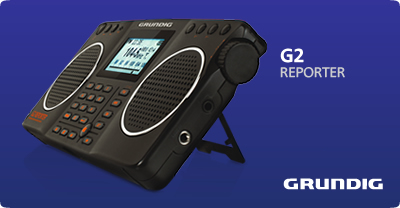
This shortwave listener gives the Grundig G2 a positive review

GrundigG2Front

Regarding the Grundig G2, SWLing Post reader “Shortwave Listener 22007” recently commented:

I have owned this radio for about 2 months, here are the things I have noticed…

The good:

  • The G2 has shortwave reception almost matching that of my Tecsun PL880
  • The e-reader function works great for programming shortwave schedules, contains bookmarks for easy access
  • Audio is decent through earpieces
  • Recorder events can be labeled using a computer
  • The receiver is small enough to fit into a small coat pocket
  • The radio is available new for only +- $50

The Bad:

  • No glue of any sort is used to keep the plastic knob from falling off
  • Receiver controls are somewhat complicated e.g, it requires that push in the knob 3 times and then turn the knob just to begin a recording session
  • A glitch causes the G2 to freeze up after a recording event is deleted, because there is no reset button the only way of solving this problem is to take out battery and then put it back in again, in which case the time and date settings have to be reset again.

Summary: The Grundig G2 Reporter is excellent receiver for its price class and probably receives more criticism should, however, those interested in the G2 should still look at the upgraded 1128H version which has many of the operational peculiarities and glitches fixed.

Many thanks for your review! I have a Grundig G2 I purchased several months ago; I’m not sure if it’s an upgraded version. I may have to give it more time on the air and, especially, evaluate its recording capabilities.

Click here to search Amazon for a Grundig G2.

Also, note that Universal Radio has a current promotion that includes a free G2 with the purchase of an Eton Grundig Edition Field  or an Eton Grundig Edition Satellit.

New Franzis shortwave radio kit

FranzisKitRadio

Many thanks to SWLing Post reader, Franz Miller, who writes:

“I’ve pasted a link below to the webpage at Conrad in Germany for yet another Franzis radio kit; no idea how good it is, but it looks neato-retro to me.  Covers longwave, medium, shortwave VHF, & UHF, allegedly.  Price on Conrad’s website is around 69 Euros.”

Click here to view the new Franzis Radio Kit on Conrad’s website.

I truly appreciate the reminder, too, that I have a previous model Franzis kit somewhere in storage that I need to unearth and build! I assume this new Franzis model also has a cardboard chassis.

Update–Tomas adds the following comment:

Here is a link to the Franzis site where there are several pictures and also a two minute video demonstrating the kit.

http://www.franzis.de/elektronik/lernpakete-elektronik/der-grosse-franzis-radiobaukasten#

Of course, for SW it only supports the 41-meter band.