Shortwave Radio Recordings: beHAVior Night

Sir Scratchy (Source: Facebook)

Sir Scratchy (Source: Facebook)

For your listening pleasure: beHAVior Night, a shortwave radio show, relayed by WBCQ, dedicated to showcasing music from the first four decades of the 20th Century.

If you’re as nostalgic as I am, you’ll love the sonic combination of early records with the shortwave ether hosted by the inimitable “Sir Scratchy.” Relax, close your eyes, and indulge in a little radio time travel…

You can tune in beHAVior Night on Fridays at 17:00 EST or 22:00 UTC on 7,490 kHZ.

Though I could not find an official website for beHAVior Night, I would encourage you to “like” both Sir Scratchy and the beHAVior Night Facebook pages where show updates are often posted.

Click here to download the recording as an MP3, or simply listen via the embedded player below:

If you like listening to early 20th century music via shortwave, you should also check out Marion’s Attic and the occasional pirate radio station, Radio Casablanca.

Pirate Radio Recordings: JFK Shortwave

JFK Shortwave QSL-Yesterday marked the 50th anniversary of the assassination of US President, John F. Kennedy.

Last night, I tuned in and recorded the pirate radio station, JFK Shortwave: a tribute broadcast inspired by the late President Kennedy, filled with an array of music, sound clips and even parody.

JFK Shortwave‘s upper side band broadcast lasted for a little over half of an hour, starting around 00:07 UTC (23 November 2013) on 6,930 kHz.

Click here to download the recording as an MP3, or simply listen via the embedded player below:

Jonathan Marks remembers the opening of the BBC Seychelles relay site

Jonathan Marks

Jonathan Marks

In response to the announcement of the closure of the BBC Seychelles relay, Jonathan Marks writes:

“You might like to revisit this old Media Network when we spoke about the opening of the Seychelles site.

http://jonathanmarks.libsyn.com/mn-29-09-1988-blackpool-offshore-radio-

Jonathan, I’m glad you shared this recording as it’s also chock-full of radio nostalgia: covering offshore radio ships, numbers stations, BBC Radio 1’s move to FM, AFRTS closure (via US VOA relays), and even an interview with Alan Weiner.

Readers, if you enjoy listening to these archived broadcasts as much as I do, then I encourage you to check out Jonathan’s Media Network Vintage Vault.

Many thanks, Jonathan!

BBC announces closure of Seychelles relay station

BBC Seychelles Relay Station (Photo: Vijay.sc)

BBC Seychelles Relay Station (Photo: Vijay.sc)

(Source: BBC Media Centre via Rob Wagner)

The British Broadcasting Corporation (BBC) announced today that the Indian Ocean Relay Station (IORS) transmitter site at Grand Anse, Mahé, will cease all shortwave transmissions on 29 March 2014.

The site was established in 1988 and has been in continuous service since then, relaying BBC broadcasts to audiences in East Africa primarily in English and Somali.

The closure will not affect the availability of BBC World Service programmes in Seychelles, which are relayed from satellite broadcasts on to local FM frequencies 106.2, 105.6 and 105.2MHz. In areas of East Africa still dependent upon shortwave broadcasts, the signal will be supplied by other relay stations. The announcement follows an earlier decision to stop all shortwave broadcasts from the BBC World Service site in Cyprus for similar commercial, technological and audience reach reasons. These ended in March of this year.

The announcement will unfortunately result in 11 staff being put at risk of redundancy. The staff over the last 25 years have operated and maintained this shortwave broadcast facility with passion, expertise and professionalism. The technical ability and commitment of the team at the IORS has been applauded by the BBC World Service.

The decision to close the site has been taken due to changing commercial and technological circumstances. As countries develop and their media markets open, listening and viewing habits have changed. New technology has changed the way audiences listen to BBC programmes and reduced the importance of shortwave broadcasts in much of the area currently served by the IORS, making the IORS commercially unviable.

The BBC is supporting the development of new delivery platforms such as internet and mobile streaming as well as FM radio and TV broadcasts. Shortwave broadcasts continue to regions and markets where listening remains strong and BBC services can be delivered efficiently to large geographic areas.

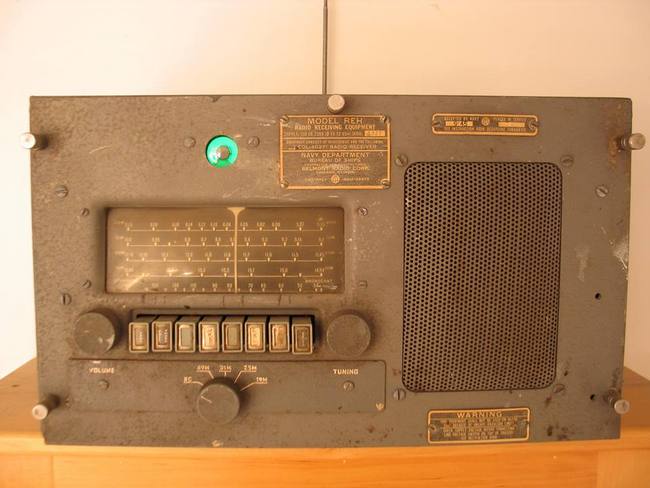
WBCQ’s “new” monitor: a Navy model REH

(Source: WBCQ Facebook Page)

(Source: WBCQ Facebook Page)

Check out this Navy receiver model REH, that the good folks at WBCQ The Planet have electrically restored. The REH was an “amenities” receiver used by the United States Navy in World War II for troop entertainment. WBCQ, however, has given this one a second life as a station monitor.

No wonder that glowing green magic eye is so bright–it’s tuned to a broadcast that’s being transmitted from WBCQ’s back yard in Monticello, Maine! WBCQ says it “sounds great.” No doubt!

Thanks to WBCQ for sharing this on their Facebook page!

Shortwave Radio Recordings: Radio New Zealand International

799px-Wellington_city_with_Cable_CarFor your listening pleasure: two full hours of Radio New Zealand International, recorded on November 22, 2013 starting around 7:59 UTC on 9,765 kHz.

This recording begins with the The RNZI interval signal: the charming and unmistakable call of the New Zealand Bellbird.

Click here to download the recording as an MP3, or simply listen via the embedded player below:

Radio 700 brings international broadcasters back to shortwave

Radio-700-LogoMany thanks to SWLing Post reader, Knut, who recently informed me that the German language services of Radio Slovakia International, Radio Prague, Radio Ukraine International and the Polish Radio External Service are being relayed on shortwave radio, via Radio 700 in Euskirchen, Germany.

All broadcasts are on 3985 kHz and are transmitted daily (with 1 kW), beginning at 19:30 UTC.

At one thousands watts, on 3,985 kHz, this will be challenging DX outside of Europe. Still, I love the fact that independent broadcasters (like Radio 700, WRMI, WBCQ, etc.) make shortwave broadcasting affordable for many of these international broadcasters.

Knut originally learned about these relays through the German radio blog, DX Aktuell.

Check out Radio 700’s full broadcast schedule by clicking here.