Radio Waves: NAB and DRM Compete for US Digital, 1937 Radio School, iPhone over AM Radio, and “War of the Waves”

Radio Waves:  Stories Making Waves in the World of Radio

Because I keep my ear to the waves, as well as receive many tips from others who do the same, I find myself privy to radio-related stories that might interest SWLing Post readers.  To that end: Welcome to the SWLing Post’s Radio Waves, a collection of links to interesting stories making waves in the world of radio. Enjoy!

Many thanks to SWLing Post contributors Alan, Paul, Bruce Hardie, Josh Shepherd, and Paul Evans for the following tips:


NAB, DRM Spar Over AM Digital for U.S. (Radio World)

Digital Radio Mondiale says its technology deserves to be tested in the United States

The Federal Communications Commission has been hearing from the National Association of Broadcasters and other interested parties about whether to allow AM band stations to turn on all-digital transmission, and under what parameters.

In addition to publicly filed comments, the NAB, which supports the idea, has made presentations to FCC staff about certain specifics — including whether the FCC should allow Digital Radio Mondiale to be tested in this country. NAB says it should not.[]

Remote learning isn’t new: Radio instruction in the 1937 polio epidemic (The Conversation)

A UNICEF survey found that 94% of countries implemented some form of remote learning when COVID-19 closed schools last spring, including in the United States.

This is not the first time education has been disrupted in the U.S. – nor the first time that educators have harnessed remote learning. In 1937, the Chicago school system used radio to teach children during a polio outbreak, demonstrating how technology can be used in a time of crisis.

[…]In 1937, a severe polio epidemic hit the U.S. At the time, this contagious virus had no cure, and it crippled or paralyzed some of those it infected. Across the country, playgrounds and pools closed, and children were banned from movie theaters and other public spaces. Chicago had a record 109 cases in August, prompting the Board of Health to postpone the start of school for three weeks.

This delay sparked the first large-scale “radio school” experiment through a highly innovative – though largely untested – program. Some 315,000 children in grades 3 through 8 continued their education at home, receiving lessons on the radio.

By the late 1930s, radio had become a popular source of news and entertainment. Over 80% of U.S. households owned at least one radio, though fewer were found in homes in the southern U.S., in rural areas and among people of color.

In Chicago, teachers collaborated with principals to create on-air lessons for each grade, with oversight from experts in each subject. Seven local radio stations donated air time. September 13 marked the first day of school.

Local papers printed class schedules each morning. Social studies and science classes were slated for Mondays, Wednesdays and Fridays; Tuesdays, Thursdays and Saturdays were devoted to English and math. The on-air school day began with announcements and gym. Classes were short – just 15 minutes – providing simple, broad questions and assigning homework.

The objective was to be “entertaining yet informative.” Curriculum planners incorporated an engaging commercial broadcasting style into the lessons. Two principals monitored each broadcast, providing feedback to teachers on content, articulation, vocabulary and general performance. When schools reopened, students would submit their work and take tests to show mastery of the material.

Sixteen teachers answered phone calls from parents at the school district’s central office. After the phone bank logged more than 1,000 calls on the first day, they brought five more teachers on board.[]

Listening to an iPhone with AM Radio (Hackaday)

Electronic devices can be surprisingly leaky, often spraying out information for anyone close by to receive. [Docter Cube] has found another such leak, this time with the speakers in iPhones. While repairing an old AM radio and listening to a podcast on his iPhone, he discovered that the radio was receiving audio the from his iPhone when tuned to 950-970kHz.

[Docter Cube] states that he was able to receive the audio signal up to 20 feet away. A number of people responded to the tweet with video and test results from different phones. It appears that iPhones 7 to 10 are affected, and there is at least one report for a Motorola Android phone. The amplifier circuit of the speaker appears to be the most likely culprit, with some reports saying that the volume setting had a big impact. With the short range the security risk should be minor, although we would be interested to see the results of testing with higher gain antennas. It is also likely that the emission levels still fall within FCC Part 15 limits.[]

“War of the Waves: Radio and Resistance during World War II.” (American Economic Journal: Applied Economics)

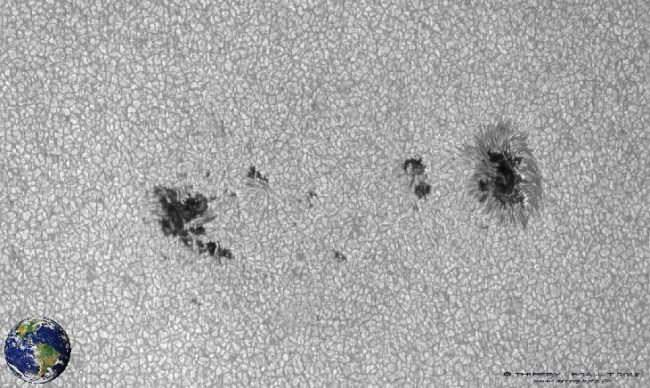
Abstract: We analyze the role of the media in coordinating and mobilizing insurgency against an authoritarian regime, in the context of the Nazi-fascist occupation of Italy during WWII. We study the effect of BBC radio on the intensity of internal resistance. By exploiting variations in monthly sunspot activity that affect the sky-wave propagation of BBC broadcasting toward Italy, we show that BBC radio had a strong impact on political violence. We provide further evidence to document that BBC radio played an important role in coordinating resistance activities but had no lasting role in motivating the population against the Nazi-fascist regime.

You can find a pre-print at: https://www.econstor.eu/bitstream/10419/202840/1/1016161859.pdf.


Do you enjoy the SWLing Post?

Please consider supporting us via Patreon or our Coffee Fund!

Your support makes articles like this one possible. Thank you!

Flea Market Find: David restores a Hammarlund HR-10 solid-state portable

Many thanks to SWLing Post contributor, David Korchin, who writes:

Stumbled on this rig at an estate sale and laid out a cool $5.00 for her. She was mostly in pieces in a big plastic bag covered in a LOT of dust, and the battery compartment had seen better days. But I thought I could get it going.

Once I got to the chassis I noticed someone with a Golden Screwdriver had been rooting around in there (the PS module was missing screws to the frame and there was some solder bits dancing around inside).

Threw in 4 C cells: pots were noisy, but there was sound, and after liberal application of De-Oxit and some scrubbing the thing snapped to life! Quite good MW reception: I snagged KMOX 1130 St. Louis at 06:30 GMT this morning, a good hop of 960 miles.

Hammarlund only made this Weather/Marine band receiver in 1969-70, so it’s a rare bird, though probably not collectable, per se. Still, it was fun to get the thing operational.

Oh wow! Thanks so much for sharing your flea market find with us, David! I’m so glad you were able to not only give this HR-10 a proper clean-up, but also bring her back to life–and even snag some DX!

And your photos, as always, are simply gorgeous.

I’m curious if anyone else in the SWLing Post community owns or has owned the Hammarlund HR-10. Please comment!

The perils of radio self-enabling…

So the SWLing Post has been online now for twelve years and during that time I’ve been accused of being a “radio enabler.” Of course, I’ve never counted just how many, but I’m guessing somewhere in the region of 115,900 times.

Truth is, radio love is infectious.

In the past, I’ve read reviews and articles about radios that have lead me down the path to making a purchase. Countless times.

Yesterday, though, I quite literally enabled myself.

It all started with the Elecraft KX1

I posted this article on QRPer.com where I listed four ham radio transceivers I regretted selling. The number one pick was the Elecraft KX1 QRP CW transceiver.

I owned the KX1 for years. It was my first CW-only transceiver and my fist backpack-friendly radio for proper lightweight, low-impact, field radio fun. I sold it in 2016 to help fund the purchase of my Elecraft KX2.

Besides simply admiring a radio that embraced the philosophy of “form following function,” the KX1 had features you wouldn’t expect in a radio so compact and so lightweight. For example…

SWL Band RX

Wayne Burdick (N6KR)–co-founder and engineer/designer at Elecraft–is a shortwave radio enthusiast.

The KX1 was designed so that while you’re camping, hiking, or activating a SOTA site, you can also do a little SWLing!

Even though the KX1 is a CW-only rig in transmit, they added both LSB and USB out-of-band reception. Depending on the KX1 band configuration, you can zero-beat broadcasters, widen the adjustable filter, and enjoy shortwave listening in the field.

When I owned the KX1, I did this quite often. Don’t get wrong: it couldn’t compete with, say, a dedicated shortwave receiver like the Tecsun PL-680, but it worked well enough that listening to even weaker stations was very doable. When one-bag travelling or camping, it was great to have one radio that could serve two functions.

LED Log Book Lamp

Photo: Eric (WD8RIF)

To my knowledge, the KX1 is the only portable transceiver I know of that includes a built-in logging lamp.

I remember once operating the KX1 on the beach at Jekyll Island, GA one evening and using the lamp to illuminate my logging sheet. Good times…

Perfect ergonomics for winter field operating

Elecraft KX2 (top) and KX1 (bottom)

Even though the KX1 is a small radio, it was one of the first field rigs to have top-mounted controls. All of the buttons, knobs, and pots are well-spaced and easy to access. I especially love the pots used for the RF Gain, Filter, and AF Gain–raised, thin, tactile stems, essentially, that could be easily adjusted even while wearing thick winter gloves.

In fact, the KX1 is the only portable radio I’ve ever operated that didn’t require me, at some point, to remove my gloves.

Insane amount of features

In true Elecraft fashion, the KX1 packs a ton of features specifically designed around field operation. Check out the features from their quick reference sheet above.

Here’s what happened

I published my article on QRPer.com and decided, on a whim, to see if there were any listings for the KX1 on QTH.com’s classifieds list via my QRP Transceiver shopping list.

One ham had a KX1 listed. It was nearly identical to the one I owned and even included the same Pelican case. The only difference was my KX1 sported 4 bands (80, 40, 30, and 20m)–this one only had three bands (40, 30, and 20). Not a big deal because typically when I’m hiking I do little operating on 80 meters. If I decide to add 80 meters, I may still be able to snag the appropriate kit module.

The listing had no price.

I called the seller–who turned out to be fairly local–and within an hour he came back with his offer: $300 for the entire kit plus true shipping costs. I thought that was a fair price, so I purchased it and he even shipped it same day.

Moral of the story?

Next time I make a post about radios I’ve regretted selling, trading, or giving away, I need to publish it, then slowly back away from the computer.

I’m not going to be too hard on myself this time, though: I’m truly looking forward to putting the KX1 back in rotation here at SWLing Post HQ.

If you feel inclined, I would encourage you to comment on this post about radios you’ve regretted selling (click here to read the full QRPer post). I love hearing why specific radios have strong appeal for certain enthusiasts.

Just take my advice and stay away from the classifieds!

Radio Waves: Signals from Mars, Two More Hamstronauts, M17 Digital Voice Mode, and Climbing Trees for a Better Signal

Radio Waves:  Stories Making Waves in the World of Radio

Because I keep my ear to the waves, as well as receive many tips from others who do the same, I find myself privy to radio-related stories that might interest SWLing Post readers.  To that end: Welcome to the SWLing Post’s Radio Waves, a collection of links to interesting stories making waves in the world of radio. Enjoy!

Many thanks to SWLing Post contributors Troy Riedel, LG, Ron and the ARRL News for the following tips:


Radio Signals from Mars (Spaceweather.com)

How close is Mars? Close enough for radio reception. On Oct. 4th, amateur radio operator Scott Tilley picked up a carrier wave from NASA’s Mars Reconnaissance Orbiter (MRO) circling the Red Planet. Turn up the volume and listen to the Martian Doppler shift:

Tilley is a leader in the field of satellite radio. Dead satellites, zombie satellites, spy satellites: He routinely finds and tracks them. “But this was a first for me,” he says. “A satellite around Mars!”

It’s not easy picking up radio signals from distant planets. NASA does it using the giant antennas of the Deep Space Network. Tilley uses a modest 60 cm dish in his backyard in Roberts Creek, BC. This week’s close encounter with Mars set the stage for his detection.

“MRO’s signal is weak, but it is one of the louder signals in Mars orbit,” says Tilley. “The spacecraft has a large dish antenna it uses as a relay for other Mars missions. With the proximity of Mars these days, it was the perfect time to try.”[]

Two More Astronauts Earn Amateur Radio Licenses (ARRL News)

Although the lockdown of Johnson Space Center (JSC) postponed amateur radio training and licensing over the past 7 months, NASA ISS Ham Project Coordinator Kenneth Ransom, N5VHO, was able to work with all of the new astronaut-class graduates, as well as offer some refresher courses with already-licensed astronauts. Licensed astronauts on the International Space Station (ISS) may operate the on-station ham radio equipment without restrictions.

Astronauts often participate in Amateur Radio on the International Space Station (ARISS) contacts with schools and groups on Earth.

NASA Astronaut Kayla Barron, who completed her introductory course in June and received basic ham radio operations training in late September, recently tested and received the call sign KI5LAL.

European Space Agency astronaut Matthias Maurer passed his amateur radio exam on July 30, and he got his basic ham operations training in July. He now is KI5KFH.

Astronauts Shane Kimbrough, KE5HOD, and Shannon Walker, KD5DXB, completed the refresher course earlier this year. Two other new astronauts are in the queue to take the Technician license exam. — Thanks to Rosalie White, K1STO[]

M17 Aims to replace proprietary ham radio protocols (Hackaday.io)

While M17 might sound like a new kind of automatic rifle (as actually, it is), we were referring to an open source project to create a ham radio transceiver. Instead of paraphrasing the project’s goals, we’ll simply quote them:

The goal here should be to kick the proprietary protocols off the airwaves, replace DMR, Fusion, D-Star, etc. To do that, it’s not just good enough to be open, it has to be legitimately competitive.

Like some other commercial protocols, M17 uses 4FSK along with error correction. The protocol allows for encryption, streaming, and the encoding of callsigns in messages. There are also provisions for framing IP packets to carry data. The protocol can handle voice and data in a point-to-point or broadcast topology.

On the hardware side, the TR-9 is a UHF handheld that can do FM voice or M17 with up to 3 watts out. The RF portion uses an ADF7021 chip which is specifically made to do 4FSK. There’s also an Arm CPU to handle the digital work.[]

Armed with a radio, Cambodian girl climbs tree to access education (SE Asia Globe)

When Cambodian schools closed due to Covid-19, poor internet access and a lack of minority language materials made distance learning in rural communities near impossible. But armed with a simple radio, children are rising above these obstacles to their education

Jumping down from the tree near her home, Srey Ka assumes her spot in the shade underneath as she adjusts the dials on her radio. Her pet piglet remains asleep at her feet, twitching his nose as he dreams, his belly full of leftover rice. Around her, cows meander by, their ringing bells competing with the sound of static from her radio.

While her school is still closed due to Covid-19 regulations, she still wears her Grade 3 uniform as she attempts to locate a signal. She’s listening out for distance learning programmes – six hours of educational radio broadcasts per week for children in Grades 1-3, some of which are in her ethnic minority language.

It was August and Srey Ka had just received a radio from international nonprofit Aide et Action, two weeks before her school reopened as pandemic measures eased in Cambodia in early September.

From the Phnong ethnic minority group, Srey Ka struggled to find learning resources in her language during school closures. Eager to cram as much as she can before returning to school, Srey Ka tied the antenna of her radio to the highest point of a tree to get the best reception. Even a clear radio signal is hard to come by in the small fishing village of Pun Thachea, located along a remote stretch of the Mekong river in Cambodia’s northeast Kratié province.[]


Do you enjoy the SWLing Post?

Please consider supporting us via Patreon or our Coffee Fund!

Your support makes articles like this one possible. Thank you!

Mehdi spots two Kenwood transceivers in the “Love and Monsters” trailer

Many thanks to SWLing Post contributor, Mehdi, who writes

Hey Thomas. I have seen some of your posts on identifying radios in movies. I just wanted to tell you that there are at least 2 HF tarnsceivers shown in the trailer of the upcoming film “Love and Monsters” : Kenwood TS-520S, Kenwood TS-130S

Great catches, Mehdi! No doubt, if they’re in the trailer, there may be more in the movies.

Thanks for sharing!

Here’s the full trailer:

FTIOM & UBMP, October 11-17

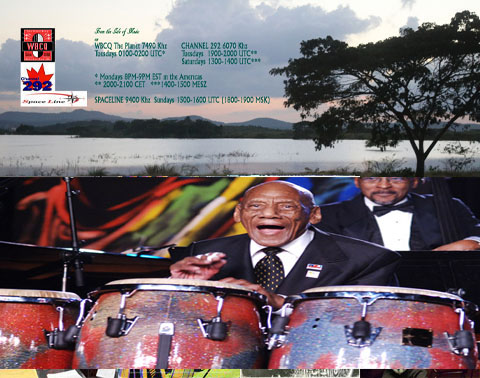
From the Isle of Music, October 11-17:
This week we enjoy some of Manuel Valera’s New Cuban Express albums including some of his latest big band release.
The broadcasts take place:
1. For Eastern Europe but audible well beyond the target area in most of the Eastern Hemisphere (including parts of East Asia and Oceania) with 100Kw, Sunday 1500-1600 UTC on SpaceLine, 9400 KHz, from Sofia, Bulgaria (1800-1900 MSK)
2. For the Americas and parts of Europe, Tuesday 0000-0100 on WBCQ, 7490 kHz from Monticello, ME, USA (Monday 8-9PM EDT in the US).
3 & 4. For Europe and sometimes beyond, Tuesday 1900-2000 UTC and Saturday 1200-1300 UTC on Channel 292, 6070 kHz from Rohrbach, Germany.
Our Facebook page is https://www.facebook.com/fromtheisleofmusic/
Our V-Kontakte page is https://vk.com/fromtheisleofmusic
Our Patreon page is https://www.patreon.com/tilford
Uncle Bill’s Melting Pot, October 11, 13 and 17:
Episode 186 presents music from some of the best instrumental country guitar pickers in the United States.
The transmissions take place:
1.Sunday 2200-2300 (6:00PM -7:00PM EDT) on WBCQ The Planet 7490 kHz from the US to the Americas and parts of Europe
2. Tuesday 2000-2100 UTC on Channel 292, 6070 kHz from Rohrbach, Germany for Europe.
3. Saturday 0800-0900 UTC on Channel 292, 9670 kHz from Rohrbach, Germany for Europe.
Our Facebook page is https://www.facebook.com/UncleBillsMeltingPot/
Our V-Kontakte page is https://vk.com/fromtheisleofmusic
Our Patreon page is https://www.patreon.com/tilford

Free Online Event: Matt Zullo presents the “The U.S. Navy’s On-The-Roof Gang, Prelude to War” October 8, 2020

Many thanks to SWLing Post contributor, Aaron Kuhn, who notes that author Matt Zullo will give a free online presentation about his novel, The US Navy’s On-The-Roof Gang, Volume One tomorrow (Thursday October 8, 2020, at 16:00 UTC).

Click here to register for this free event.

Description:

THE US NAVY’S ON-THE-ROOF GANG: VOLUME I – PRELUDE TO WAR is an historical novel based on the unknown true-life story of the “On-The-Roof Gang,” the U.S. Navy’s fledgling radio intelligence organization in the years leading up to World War II. It is based on the real life of Harry Kidder, a U.S. Navy radioman who first discovered and deciphered Japanese katakana telegraphic code while stationed in the Philippines in the 1920s, discovering that he was listening to Imperial Japanese Navy (IJN) radio communications. Kidder strongly believed in the future of radio intelligence and a chance meeting with Lieutenant Laurance Safford led to the birth of the Navy’s Radio Intelligence community. Kidder taught others the nascent art of intercepting IJN communications on the roof of the Main Navy Building in Washington, DC. From 1928 to 1941, 176 Sailors and Marines attended this training and were then stationed as radio intercept operators around the Pacific. These men would become known as the On-The-Roof Gang and were charged with keeping track of the IJN as they prepared for war with the United States. The circumstances of America’s entry into World War II hinged on success or failure of the On-The-Roof Gang, and Harry Kidder knew this. On-the-Roof Gang: Prelude to War concludes with the “date which will live in infamy,” December 7, 1941

Matt Zullo is a retired U.S. Navy Master Chief Petty Officer who has more than 35 years’ experience in Radio Intelligence, now more commonly known as Communications Intelligence. He holds a Master’s degree in Strategic Intelligence from the National Intelligence University, where he researched and wrote his master’s thesis on the On-the-Roof Gang. He has published numerous articles on the On-the-Roof Gang in the Naval Cryptologic Veterans Association’s Cryptolog magazine and on social media platforms. As one of only a few quantifiable experts on the subject, Matt has spoken at the 2009, 2011, and 2013 Cryptologic History Symposiums, as well as at several Navy events around the world. He recently (Nov 2019) attended the induction of Harry Kidder into NSA’s Cryptologic Hall of Honor and spoke about Harry Kidder at a subsequent event for the sailors of Cryptologic Warfare Group Six. Matt continues his research into the On-the-Roof Gang as he writes and edits his two-volume history about the group.

Click here to view the author’s website.