(Source: JamesButters.com)
Radio Waves: Stories Making Waves in the World of Radio
Because I keep my ear to the waves, as well as receive many tips from others who do the same, I find myself privy to radio-related stories that might interest SWLing Post readers. To that end: Welcome to the SWLing Post’sRadio Waves, a collection of links to interesting stories making waves in the world of radio. Enjoy!
Many thanks to SWLing Post contributors Ron, Tracy Wood, and Dennis Dura for the following tips:
WNPV Radio preparing to go off air April 30 (The Reporter)
TOWAMENCIN — When April ends, the airwaves above the North Penn valley region will be emptier, and so will a little brick building on Snyder Road in Towamencin.
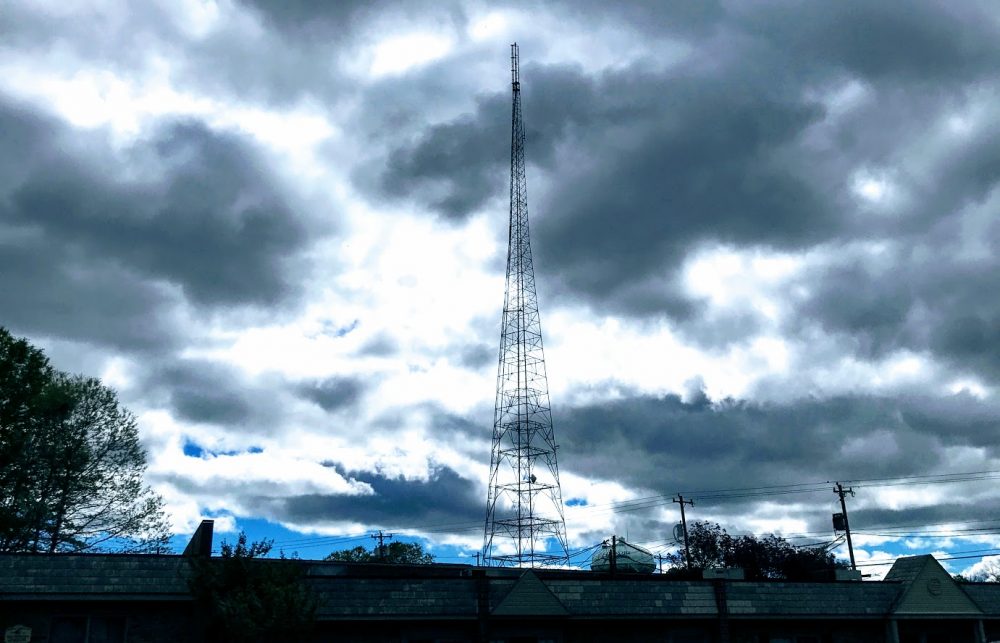
Sitting below five 165-foot-tall radio antennas and one cell tower, that brick building has been the home for six decades of WNPV, the local radio station found at 1440 AM and 98.5 FM.
“We’ve been at it for 60 years, and our mission and our core values are really no different today than they were in October of 1960. It literally is to serve the community,” said Phil Hunt, the station’s General Manager.
“It’s gotten to the point where it’s not sustainable for us to continue to do that. It takes resources to do it properly; those resources, primarily, are people, and we were having trouble making ends meet,” he said.
Hunt announced Wednesday that WNPV will go off the air on April 30, bringing an end to an era of live, local news that began on Oct. 17, 1960. The station’s coverage of local sports, politics, breaking news, and key issues have earned dozens of awards, a handful of which greet visitors as you walk past an old teletype machine through the station’s front door.[…]
Privat-ear Subminiature Tube Pocket Radio (JamesButters.com)
The Privat-ear pocket radio was manufactured in the USA and released onto the market by Electronics Systems Corporation in 1949 (1a, b, c). Although small enough to fit in a shirt pocket this is not a transistor radio; it owes its small size to the use of subminiature tubes developed during WWII and was designed as an earphone only model. It predates the first commercially available transistor radio by five years and was an innovative, but ultimately doomed, attempt at realizing an American cultural objective; the creation of a portable shirt pocket radio with mass appeal.
The Privat-ear was invented by Frank L Stuck, a Minister of Lakeland Florida. Born in Washington, Pennsylvania on October 13 1904 to William and Maise Stuck, he was the second youngest of four children (1d, e). He studied Theology at Bethany College, West Virginia from 1924 – 1927 and received a Doctor of Divinity degree from the American Theological Seminary at Wilmington Delaware (1f). Whilst attending College he was one of the founding members of Alpha Pi Alpha, was a member of the Student Volunteers and met and married Iva Myrtle Driggs.[…]
IN CASE YOU MISSED IT – The End Of Radio. Really? (Radio Ink)
(By Mike Bustell) I try to keep my head down and quietly work behind the scenes helping our salespeople make a killing for our advertisers and our company. However, I had to react to Roger Lanctot’s “Technology Tyranny and the End of Radio” LinkedIn article published in last Friday’s Radio Ink headlines.
How Tesla and Silicon Valley (and other tech giants) feel about local radio is not much different than what our salespeople hear when talking with their local garden center or auto dealer group — that local radio is no longer relevant to bother putting it on their 2020 dashboards.
All these objections are happy opportunities to educate, bond, and sway hearts, minds, and advertising budgets. We have to be happy well-armed warriors with targeted customer-specific information every time we ask for a decision-maker’s valuable time. Once we earn an advertiser’s business we can never stop educating, bonding, or working on helping them grow their business.
Below is the most up-to-date look at the audio sources that $100K+HHI purchasers and lessees for new hybrid and electric vehicles are using. Like Mike Bloomberg taking the salt shakers off of New York City restaurants’ tables, Tesla’s removing easy access to local AM/FM radio stations on their new vehicles’ dashboards shows a similar out-of-touch-with-the-people attitude. Ninety-four and a half percent of $100K+ Age 25+ adults who plan to buy or lease a new hybrid or electric vehicle in 2020 listen to Local AM/FM radio every week — nearly three times that of Spotify, the second most-listened-to audio source every week used by these consumers.[…]
China COVID-19 shut-in tunes in to the world via radio (Marketplace)
The battle to contain the COVID-19 virus in China has kept most people at home since the end of January.
Life is slowly returning to streets in cities like Shanghai, but face masks are now required in nearly all public spaces, even though they are not recommended for the general public by the Centers for Disease Control or World Health Organization.
Since there is a shortage of masks, most people are still effectively forced to stay home. As Marketplace’s China correspondent, this includes me. My window to the world for a better part of a month has been through radio.[…]
Do you enjoy the SWLing Post?
Please consider supporting us via Patreon or our Coffee Fund!
Your support makes articles like this one possible. Thank you!