Tag Archives: BBC

BBC & VOA collaborate to fight Ebola

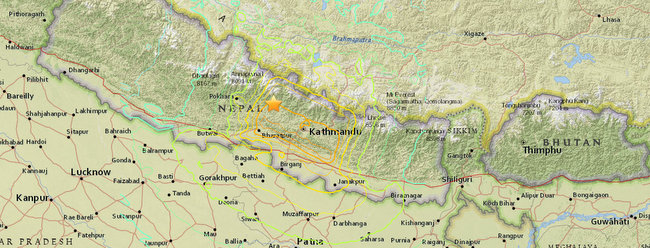
Ebola Cases Map (Source: World Health Organization)

Ebola Cases Map (Source: World Health Organization)

(Source: BBC Media Centre via Andy Sennitt)

The BBC World Service and Voice of America (VOA) have entered into a ground-breaking partnership to pool resources and content about the Ebola outbreak in West Africa, so as many people as possible receive factual information about the disease.

The broadcasters are sharing TV, radio and digital content related to the outbreak in Guinea, Sierra Leone and Liberia. Editors will also share Ebola planning and identify other possible areas for collaboration, such as sharing contacts. The collaboration features content in English, French and Hausa with the scope to translate content into a range of local languages.

World Service Director Peter Horrocks said:

“This is the worst Ebola outbreak the world has seen and so we have taken unprecedented action. Reliable facts and information can literally save lives and as the two leading broadcasters in the region we have joined forces to reach as many people as possible.”

VOA Director David Ensor said: “We at the VOA and the BBC are united against a common enemy—Ebola. Our collaboration is about public service at a time when so many lives are at stake.”

BBC Relay Station handed back to Seychelles

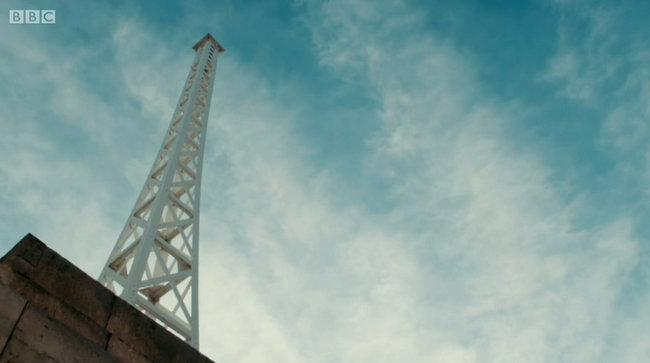
BBC Seychelles Relay Station (Photo: Vijay.sc)

BBC Seychelles Relay Station (Photo: Vijay.sc)

(Source: Seychelles News Agency via Andy Sennitt)

Tuesday November 18 marked the closure of an iconic chapter of Seychelles’ history, signalling the end of an era when information was much more difficult to come by. With much of Africa joining the internet and mobile phone revolution, the times of trying to glean information about happenings in the rest of the world on a crackly AM radio station have now passed by.

Over 25 years after its establishment, the site of the BBC’s former Indian Ocean Relay Station (IORS), located at Grand Anse, on the western side of the largest inhabited island in the archipelago, was handed back to the government of Seychelles by the country’s British High Commissioner, Lindsay Skoll.

The station transmitted BBC World Service programmes since 1988 via shortwave to listeners across East Africa in a range of languages, including the BBC’s English-language output for Africa as well as programmes in Swahili, Kinyarwanda, Kirundi, Somali and French.

In November 2013, the BBC announced its intention to cease all its shortwave transmission services from Seychelles due to a gradual and irreversible fall in demand for shortwave radio services, and on March 29 this year, the BBC IORS retransmission services from Seychelles were officially switched off. BBC World Service broadcasts in East Africa are still available via the internet and also via various other localised frequencies.
The handing over of the site to the Ministry of Land Use and Housing (MLUH) also included the station’s buildings and equipment, all of which are still in working order. The site is spread over a 32,000 square metre property, occupied under a lease dating back to March 27, 1985.

[…]The station is equipped with 33KV high-voltage equipment and transformers which will now go into the possession of the Public Utilities Corporation, while the Seychelles Civil Aviation Authority (SCAA) will take over three of the BBC’s four steel communications towers and the annex building.

The SCAA will use the towers to strengthen its air communication and surveillance capabilities and the annex building will be used to house a new high-frequency aviation communications radio system to help control air traffic coming in from the west of the island.

The fourth steel tower will be allocated to the local telecommunications company Cable and Wireless for mobile based telecommunications.

Read the full article on the Seychelles News Agency’s website.

China pays local radio and TV stations to broadcast their content

(Image source: BBC)

(Source: The Independent via Andy Sennitt)

“The BBC has warned that China poses a “direct threat” to its global reach by paying incentives to local broadcast companies to prioritise its state-funded CCTV service over other international networks.

Peter Horrocks, the Director of the BBC’s World Service Group, told The Independent that the BBC’s distribution network was in danger from the hugely-ambitious CCTV and its deep financial resources.

“What the Chinese do is to pay local radio and TV stations to take their content,” he said in an interview with The Independent. “If you are a poor TV station in Tanzania and someone from China comes along and says ‘Will you take this content in Swahili?’ then you are quite likely to take it – so it’s a real threat to the future of the World Service’s content.”

As shortwave radio has become less widely used, the BBC has become increasingly dependent on local distribution partners for its radio and television output in large parts of the developing world. Around 40 per cent of the BBC’s global content is distributed through such intermediaries. “Locally distributed content is a very significant proportion of our overall audience,” said Horrocks. The BBC either seeks payment for its programming or provides it for free.”

[Continue reading…]

The Guardian: BBC broadcasts banned over Rawanda genocide documentary

the-guardian-logo(Source: The Guardian via Andy Sennitt)

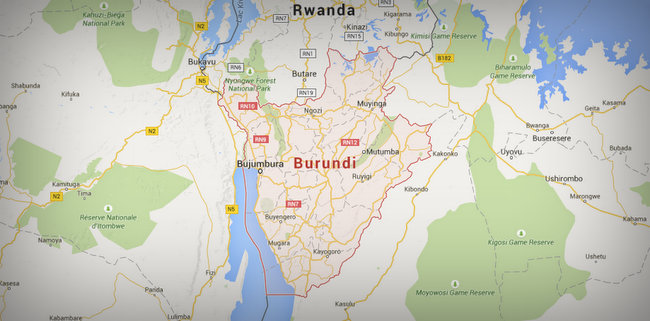
The Rwandan government has suspended all BBC radio broadcasts in Rwanda’s most common language to protest against the news organisation’s recent documentary about the 1994 genocide in the country.

President Paul Kagame’s government, members of parliament and genocide survivors have expressed their anger at the BBC over the recent documentary that suggested the country’s president may have had a hand shooting down his predecessor’s plane, a crash that triggered the mass killings.

Its hour-long documentary, Rwanda, The Untold Story, also quoted US researchers who suggested that many of the more than 800,000 Rwandans who died in the 1994 genocide may have been ethnic Hutus, and not ethnic Tutsis as the Rwandan government maintains.

Late on Friday, the Rwandan Utilities Regulatory Authority announced the suspension of the BBC’s broadcasts in the local language, Kinyarwanda. The board said it took the action because it has received complaints of “incitement, hatred, divisionism, genocide denial and revision” from the public. It said further action could be taken.

The BBC had defended the film on Friday, saying it had a “duty to investigate difficult and challenging subjects”.

Continue reading at The Guardian…

The BBC Genome Project

RadioTimes

Many thanks to Mike Barraclough who shares this news:

“BBC has today launched a website publishing every BBC programme ever broadcast by the Corporation from digitised editions of the Radio Times 1923-2009. Getting occasional internal errors at the moment presumably due to heavy use following publicity. Well designed and easy to search. http://genome.ch.bbc.co.uk/

The archive is quite deep–if you’re the nostalgic type, expect to spend a few hours browsing.

Wartime radio: The secret listeners

RadioSecretService

After publishing the post about Geoff Hanley and the Radio Security Service last week, I discovered this brilliant 1979 documentary from the BBC which highlights civilian involvement in radio-based intelligence during WWI and WWII.

Here’s a description from the East Anglian Film Archive:

“It was the tireless work of amateur radio enthusiasts during World War I, that initially convinced the Admiralty to establish a radio intercept station at Hunstanton. Playing an integral role during the war, technological advances meant that radio operators could pinpoint signals, thus uncovering the movement of German boats, leading to the decisive Battle of Jutland in 1916.

Wireless espionage was to play an even more important role during World War II, with the Secret Intelligence Service setting up the Radio Security Service, which was staffed by Voluntary Interceptors, a band of amateur radio enthusiasts scattered across Britain. The information they collected was interpreted by some of the brightest minds in the country, who also had a large hand in deceiving German forces by feeding false intelligence.”

Click here to watch the 30 minute film.