Tag Archives: BBC

National Radio Quiet Zone featured in BBC Radio 4 series

GreenBankTelescope

Many thanks to SWLing Post reader, David Freeborough, who shares this brilliant, in-depth radio documentary featured on the BBC News and BBC Radio 4.

This BBC News Magazine article introduces the documentary:

“Anyone driving west from Washington DC towards the Allegheny Mountains will arrive before long in a vast area without mobile phone signals. This is the National Radio Quiet Zone – 13,000 square miles (34,000 sq km) of radio silence. What is it for and how long will it survive?

As we drive into the Allegheny Mountains the car radio fades to static. I glance at my mobile phone but the signal has disappeared.

Ahead of us a dazzling white saucer looms above the wooded terrain of West Virginia, getting bigger and bigger with every mile. It’s the planet’s largest land-based movable object – the Robert C Byrd Green Bank Telescope (GBT) – 2.3 acres in surface area, and taller than the Statue of Liberty.

But it needs electrical peace and quiet to do its job.”

[Continue reading…]

The story continues on the BBC News site, but I would encourage you to listen to the five part radio documentary series on BBC Radio 4 first. Green Bank, WV, is certainly one part of the planet where a shortwave radio listener would be quite happy: residents have virtually no radio interference or obnoxious electrical noises that plague the rest of the modern world.

telescopes-1911The radio documentary can be streamed on the Radio 4 website.  I’ve included links to each episode below. As far as I can tell, there are no expiration dates on the Radio 4 streams:

My wife and I have camped near the NROA site in Green Bank–it’s a beautiful part of the world. I’m certainly long overdue to return!

Again, David, many thanks for sharing this!

TX Factor Episode 8

TX-Factor-Episode-8

Many thanks to SWLing Post reader, David (G4EDR), who writes:

“I thought you and the many readers of your SWLingPost would be interested in the latest edition (8) of TX Factor a UK produced online TV programme.

It features two employees of the BBC who are also radio amateurs and shows them in their working environment as studio managers and continuity announcers on BBC radio.

Just navigate to http://www.txfilm.co.uk/txfactor/txfactor.shtml and select watch now for episode 8.

There are also items about Icom UK and Practical Wireless magazine.

Thanks for hosting your SWLingPost, I really enjoy it.”


Many thanks again, David! Another brilliant episode! At time of posting, the TX Factor site was down, but their YouTube channel, of course, is working fine. I’ve embedded the video below:

My buddy Eric (WD8RIF) also alerted me that this episode had been published. I love watching TX Factor–I’m so impressed with both their programming and production quality.

TX Factor Team: Keep up the good work!

BBC shortwave frequencies and schedule for Nepal earthquake relief

Nepal-Earthquake-Map

BBC-Nepal(Source: BBC Media Centre press release)

BBC World Service broadcasts Lifeline programmes in Nepal

In response to the aftermath of the earthquake in Nepal, the BBC World Service is now broadcasting additional programming on shortwave in both Nepalese and in English.
BBC Media Action – the BBC’s international development charity – is working with the Nepali Service on BBC World Service (radio and online) and local partner radio stations to broadcast ‘Lifeline’ programming.

Liliane Landor, Controller of World Service Languages, says: “Information is vital and we are doing all we can to make sure that our audiences in the affected areas receive their local and regional news as well as ‘Lifeline’ programming designed to give practical information to help deal with the aftermath of the earthquake.”

The Nepali language programme is available on shortwave as follows:

Nepali dawn transmission (01:30-01:45 GMT)
11995 kHz (25 metre band)
15510 kHz (19 metre band)

Nepali evening transmission (15:00-16:00 GMT)
9650 kHz (31 metre band)
5895 kHz (49 metre band)

The availability of World Service English on short wave to Northern India and Nepal has been extended with the service now starting one hour earlier than normal at 23.00 GMT.

Additional frequencies for World Service in English (to S Asia) from 23:00 GMT to 24:00GMT
5895 kHz (49 metre band)
9540 kHz (31 metre band)

From 00:00GMT the broadcasts continue as normal on 12,095kHz, 9,410kHz and 5970kHz

AIR and BBC design programming for post-earthquake Nepal

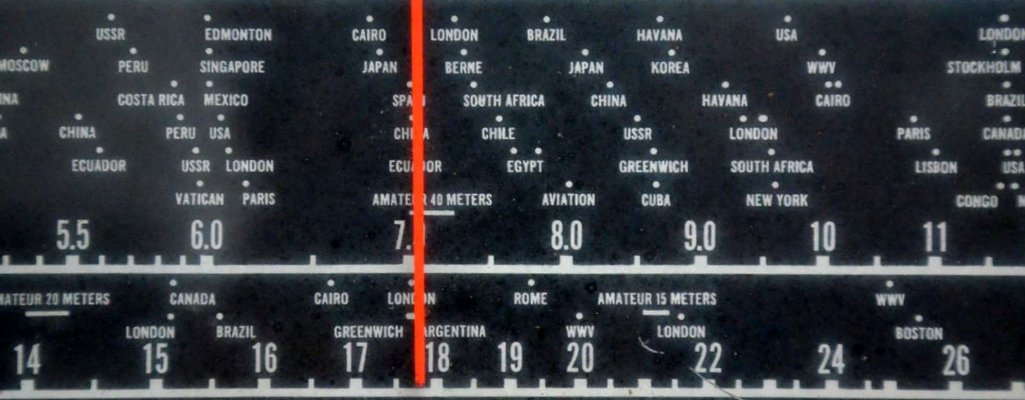
SX-99-Dial

(Source: RMbiz)

MUMBAI: In the wake of recent earthquake that affected Nepal and India, All India Radio (AIR) and British Broadcasting Corporation (BBC) have designed special programming for affected areas of Indo-Nepal border and Nepal respectively. AIR is also transmitting services through their External Services Division (ESD).

AIR stations in Patna, Darbhanga, Gorakhpur, Lucknow, Gangtok, Siliguri, Guwahati, Delhi and others put out suitable programmes to generate awareness among the masses, particularly informing them how to tackle such situations.[…]

Continue reading…

BBC plans North Korean news service

NorthKorea-Map (2)Many thanks to SWLing Post reader, Richard Cuff, for sharing this news from The Telegraph:

BBC-WorldService“The BBC is planning a new North Korea service to give the totalitarian state’s 25 million people an alternative to Kim Jong-un’s propaganda.

In a move that could plunge the corporation into confrontation with the North Korean dictator, the World Service is examining how to set up a special news channel that will get around Pyongyang’s ban on foreign media broadcasts.

The plan has echoes of Western broadcasts into the Soviet Union and Warsaw Pact countries during the Cold War, when the BBC, Radio Free Europe and Voice of America all broadcasted to listeners behind the Iron Curtain.

However, it is likely to spark fury from Pyongyang’s volatile leadership, and could lead to the British embassy in Pyongyang being targeted for protests or being shut down altogether.

It could also put Britain in the firing line for North Korean-led cyberattacks, such as the one that targeted Sony Pictures last year over its film “The Interview”, which lampooned Kim Jong-un.”[…]

[Continue reading at The Telegraph...]

Speech by James Harding focuses on future of BBC News and Current Affairs

(Image source: BBC)Many thanks to Jonathan Marks who shares a link to this speech by James Harding, Director of BBC News and Current Affairs. This public event was hosted by City University London on 18 December 2014.

The full speech by James Harding can be read on the BBC Media Centre website–I have included some excerpts below:

“2014 has been a year of exceptionally diverse and demanding stories – the Scottish referendum; the floods; Rotherham; UKIP; the Commonwealth Games and the World Cup; Ebola; Ukraine; IS; Boko Haram; the Malaysian airliners; Hong Kong. And, at the same time, huge change within BBC News.

We are changing at a time when there’s a lot less money available. We had to make £50 million of savings this year, after four consecutive years of cuts. And many people in BBC News are, understandably, unhappy. Losing 415 jobs is incredibly painful for the individuals directly involved and the waves it creates are acutely felt by all of our teams of journalists and production staff.

We have had to make some hard choices. We have restructured – a restructuring focused on two things: enabling original journalism and the digital transformation of BBC News.

The digital transformation of BBC News, of course, did not start this year and it certainly will not finish to the strains of Auld Lang Syne. But we have been driving innovation and improvement. The mobile sites are now responsive in 30 languages; the Twitter breaking news feed topped 10m users; BBC News is the most retweeted news source worldwide; BBC Trending has gone from obscurity to the envy of newsrooms everywhere; the Weather app is the most popular we’ve ever done. And, most significantly, the new BBC News app went into BETA testing yesterday. We will roll it out in the New Year. It represents a huge step forward on two fronts that really matter in mobile: personalisation and video. What you need to know, wherever you are, whenever you want it.

We have renewed the case for the BBC’s contribution to the revival of local journalism. We have shown a willingness to take on the wrong-headed argument that the problems of the local newspaper industry are the BBC’s fault; and we have shown a willingness to work with the local newspapers in meaningful partnerships. Someone said to me this week that the definition of partnership is “the mutual suspension of loathing in the pursuit of resources”. Well, I hope it can be more than that, as there is a real issue of information inequality in this country. Rich, old, white people are getting a better diet of news than poorer, younger and non-white people. And that’s increasingly true in national vs local news. Redressing the balance is one of the reasons we’ve doubled the regional news coverage in England in the 10 O’Clock news hour in the months ahead of the election.

[…]At the same time, we are making the most of the fact that the BBC is the world’s most global news service. Not just because it serves a worldwide audience of more than 250 million people. But because it has the voices and views, experience and contacts of the World Service – the language services, Monitoring, Media Action, World News – at the heart of it. And since the journalists at Bush House moved into New Broadcasting House, the World Service teams on the 5th floor are driving our reporting and analysis like never before. This week, Shaimaa Khalil, a former World Service correspondent, has been reporting from Peshawar, backed in no small part by the Urdu Service, the service that edited and published Malala Yousufzai’s blog long before she was a Nobel prize winner. Hard to recall that back in 2008, when the Taliban imposed a ban on girls’ education in Pakistan’s Swat Valley, no-one had heard of the schoolgirl from Mingora before BBC Urdu reporters set out to capture the impact the conflict was having on the pupils involved.

[…]But the primary role of the World Service Group, of course, is to serve audiences outside of the UK. And I was struck by the remarks made by the chief executive of Guardian Media Group, Andrew Miller, in October. I’d better be careful – he’s speaking after me!

Andrew has criticised the BBC’s recent expansion in Australia. He said the BBC’s move into Australia, where the Guardian launched a local online edition last year, threatened to distort the market and had no benefit for UK licence fee payers.

Well. What has the BBC done? Actually, we decided to tailor the BBC.com homepage for the local audience. And to do so, we appointed two people – a local editor and a homepage editor. Hardly a distortion of one of the world’s most competitive news markets, nor, I think, a threat to the Guardian’s ambitions there.

And, more importantly, I don’t want to see the World Service, now that it is funded by the licence fee payer, losing its appetite to serve people around the world. There are plenty of global news providers – CCTV, Russia Today, Al Jazeera – who would love to see the BBC reined in globally. I make no apology for our ambitions for the World Service. When it started broadcasting in 1932, John Reith warned listeners to keep their expectations low. Instead, it far exceeded them. We want to go on doing that. It is, to my mind, Britain’s best loved and most respected export. We should build it up, not tear it down. It’s a global news service that is trusted, respected and relied upon by a quarter of a billion people around the world. Our ambition is to double our global audience by 2022 to half a billion.

And even in our connected world, reliable, independent information is more needed than ever. Throughout the long history of the Cold War, the BBC World Service was broadcasting behind the Iron Curtain to a people denied the basic right of freedom of speech. The world does not stand still, and the Berlin Wall has long been reduced to rubble. So while today we are driving digital growth through mobile and social products we are also looking at how we can develop a service that might work for North Korea. And, I must say, we find ourselves increasingly reflecting on the position of the media in Russia and Turkey.

[…]Nobody knows what the outcome of next year’s election will be. The job of all news organisations is to ensure that voters arrive at polling day armed with the information they need. And, while politicians may discuss the BBC, our job is to put the public first. We will not be deterred or distracted by criticism, nor allow the debates about BBC funding mechanisms get in the way of our journalism. It’s been fashionable in the last few years to disparage journalism or despair of its future. It’s plain looking at the world today that it’s never been more important or more needed. 2015 is certainly going to be interesting. And I expect I may be ducking out of the odd meeting, to take a call, roll my eyes and swear.”