Tag Archives: Radio Nostalgia

Preserving Radio History in Your Community

Many thanks to SWLing Post contributor Dan Greenall, who writes:

I have lived in southern Ontario, Canada my entire life, have been DXing since the late 1960’s and have held the amateur radio call sign VE3HLC for over 50 years.  Most of this area’s AM broadcast stations had been considered “pests” over the years as I searched for more distant targets, until recently, when many of these began quietly slipping from the airwaves.  While this opened up some new frequencies to DX, I soon began to feel that I had lost some old friends, many that I had known since childhood.

When I retired in 2018, I decided to spend a little time trying to preserve some radio history of stations in southern Ontario communities that have played a part in my life. This might include audio clips, QSLs, station booklets, and other types of ephemera, and I would try to place this information where it could be easily accessed by future historians or anyone else who is interested.  In the end, I chose to use the Internet Archive (archive.org), where most uploaded information can be viewed (or heard) and downloaded for free.

CFPL, London, Ontario   980 kHz (still on the air)

“Communications in the Community” is a hardcover limited edition (2000 copies) souvenir book printed in 1966 by the Special Printing Unit of The London Free Press in London, Ontario, Canada.  It includes historical information about the London Free Press (newspaper) and CFPL radio and television.  I was lucky to find this item at a church rummage sale nearly 20 years ago.

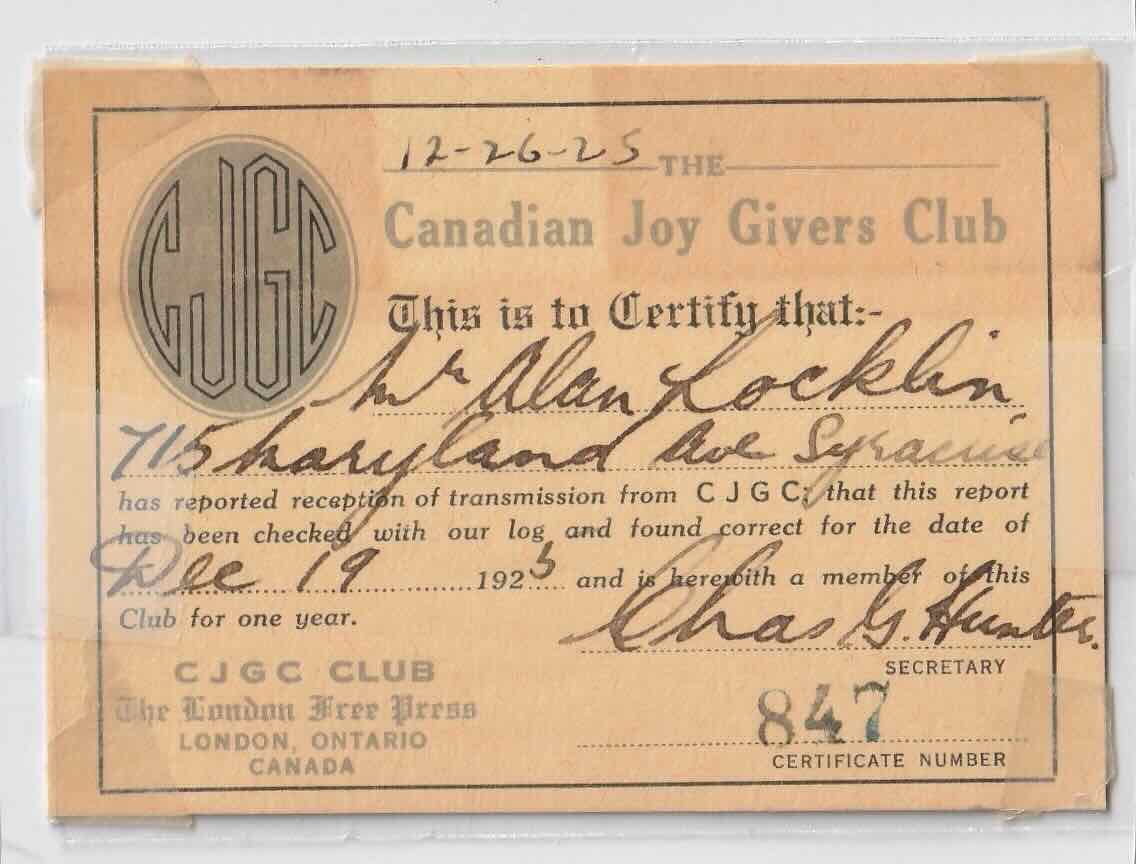
CFPL began its life as CJGC in 1922. I acquired one of their QSL cards from 1925 through an eBay purchase a few years ago.

The above and more can be found by clicking on this link.

https://archive.org/details/page-16

CKOC, Hamilton, Ontario 1150 kHz (still on the air)

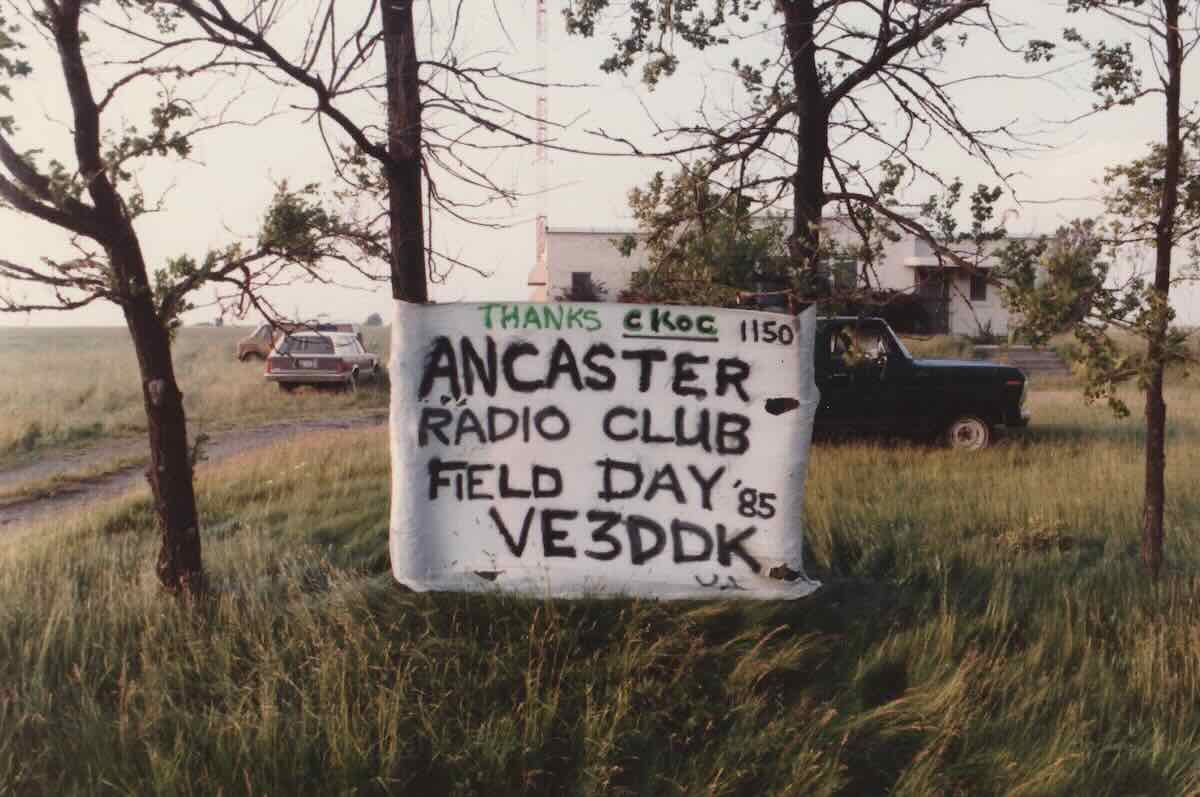
CKOC radio in Hamilton also started up in 1922.  My parents met while working at the station in the late 1940’s.  My brother and I (both radio amateurs), along with a few friends were given permission to operate on “Field Day” weekend in 1985 from their old abandoned transmitter site at Elfrida, Ontario.

This area has long since been developed to build homes and shopping areas.

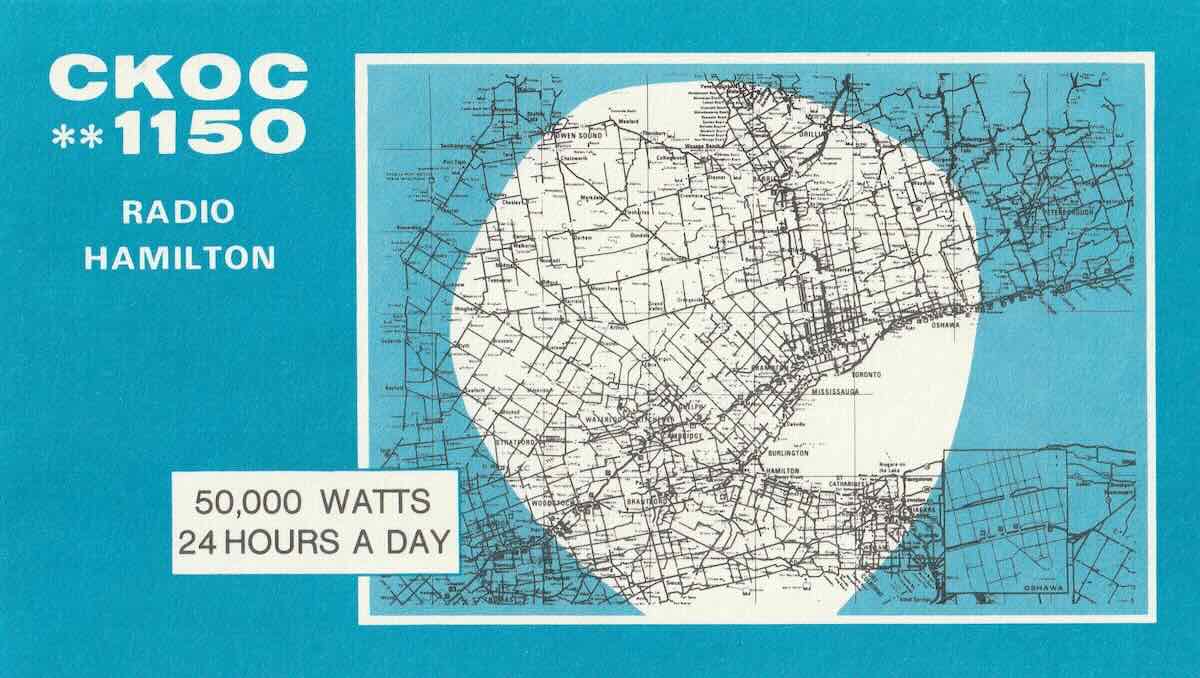
“This is Hamilton, Ontario and the story of broadcasting station CKOC” is an undated booklet (I am guessing circa 1950) that I was able to purchase on eBay.  Also found on eBay were two verifications, one from 1931 and the other from 1983.

You can find these scans and more by following this link.

https://archive.org/details/page-13_202209

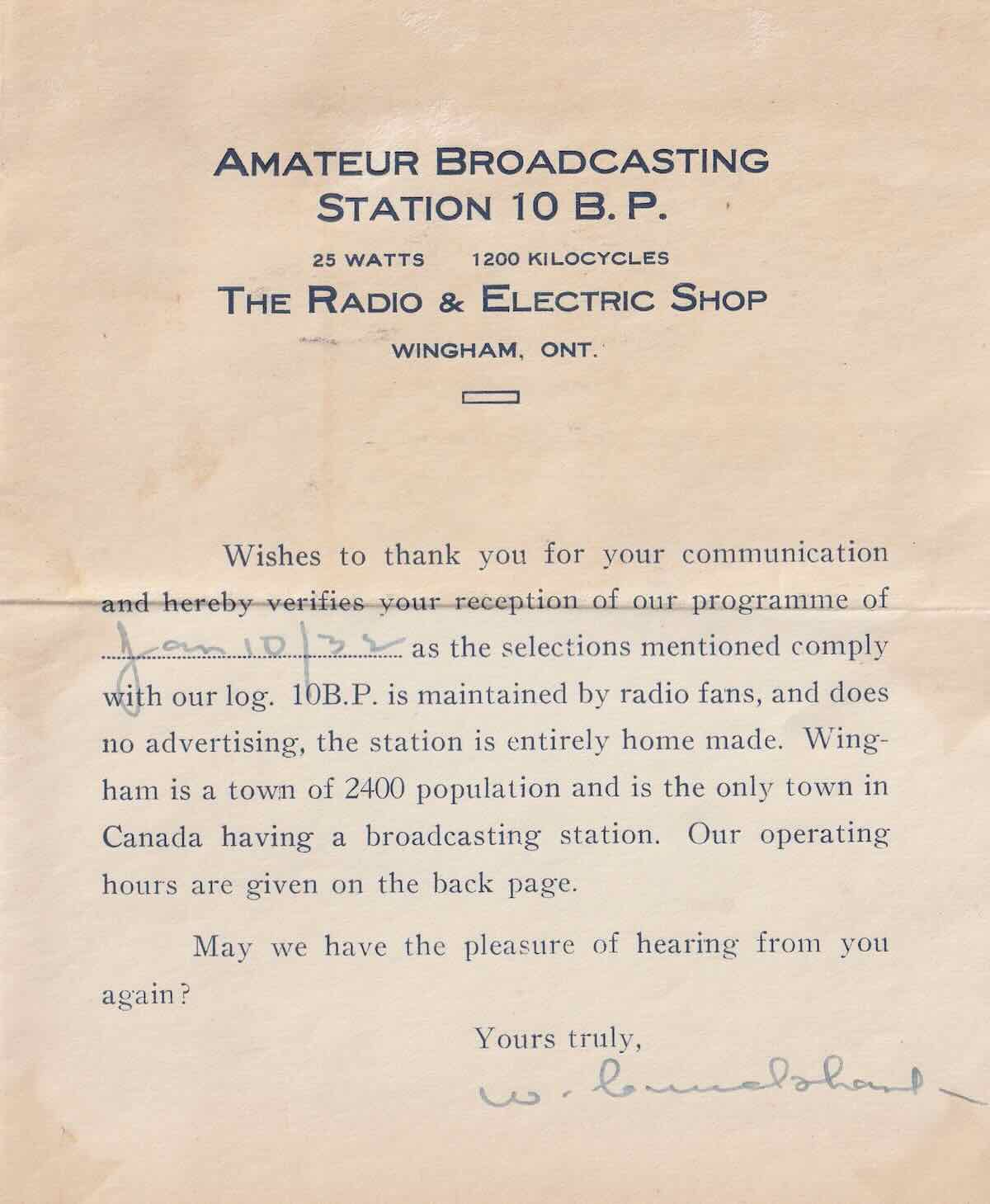
CKNX, Wingham, Ontario 920 kHz (still on the air)

This station began in 1926 using the unusual call sign 10BP.  It would remain that way until 1935.  I managed to secure this QSL from 1932 through eBay, signed by its founder W.T. “Doc” Cruickshank.

Interesting stories of how the station began can be found at this link.

https://www.communitystories.ca/v1/pm_v2.php?id=story_line&lg=English&fl=0&ex=386&sl=2541&pos=1&pf=1

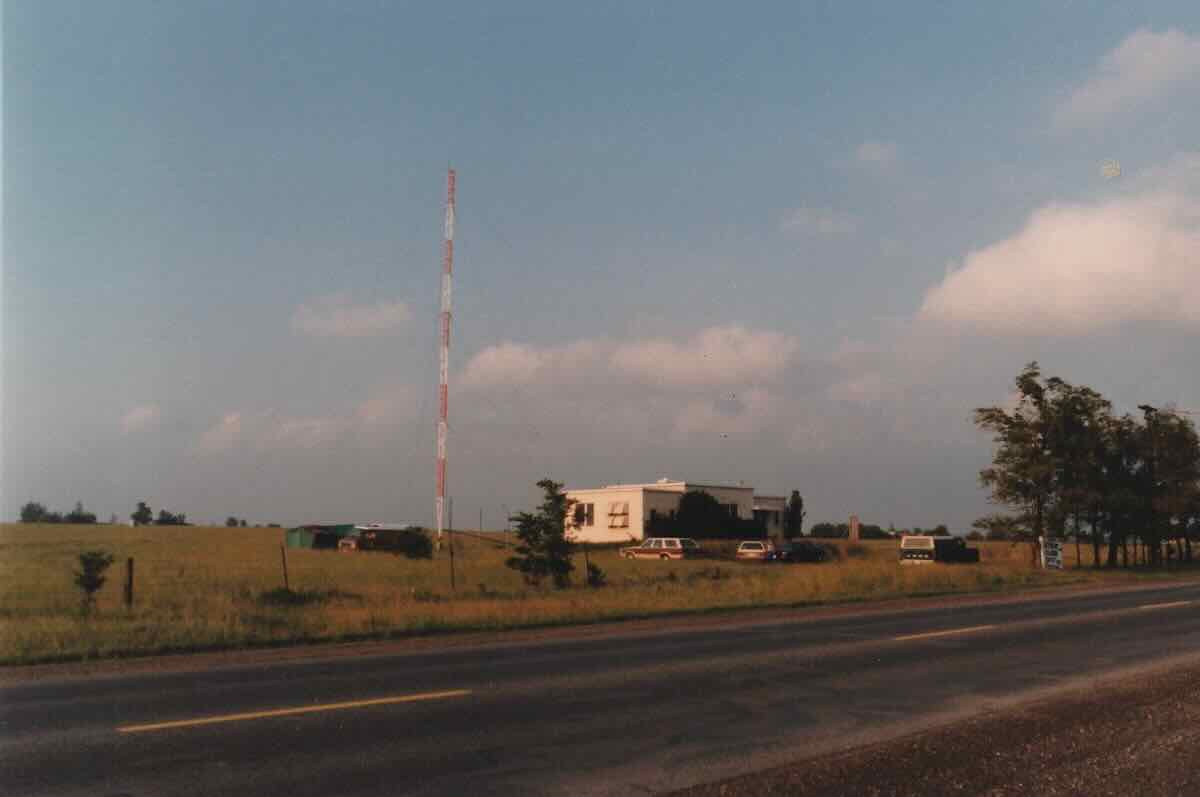
CKCR, Kitchener-Waterloo, Ontario 1510 kHz  (no longer on the air)

In 1924, this station began briefly in nearby Brantford, Ontario. It quickly moved to Kitchener-Waterloo and existed until 1965 when it became CKGL.  The CKCR call sign was picked up later in 1965 by a station in Revelstoke, BC.

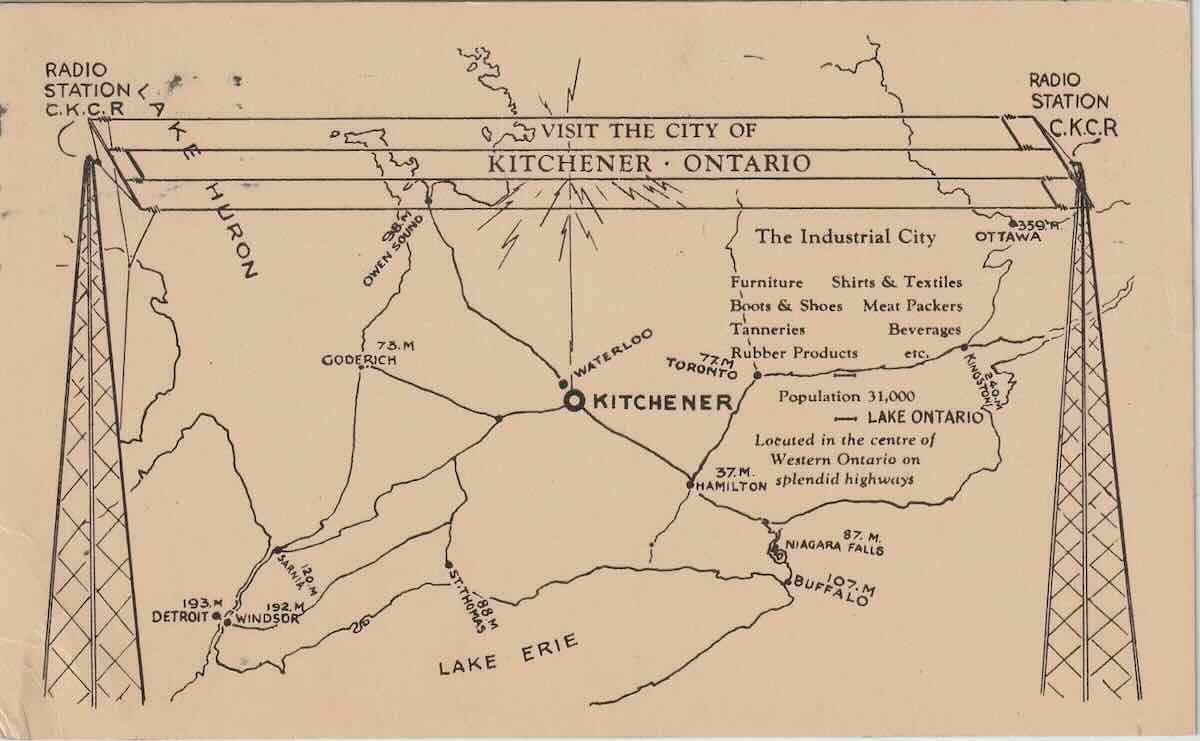
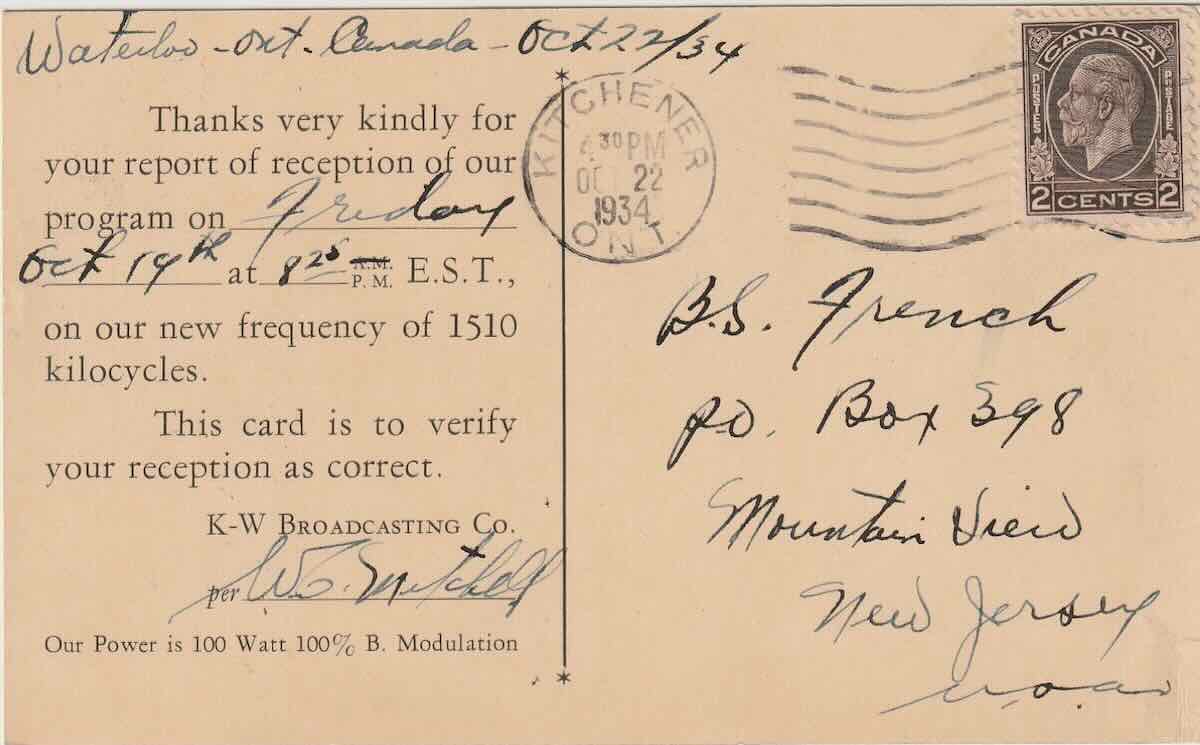
Another eBay purchase, I found this QSL with a not-to-scale map of southern Ontario from 1934.

More Ontario QSL’s can be found in my broadcast band gallery at this link: https://archive.org/details/ckoc-hamilton-on-1983

I would encourage others to save parts of the local radio history in their city, state, province or country and give back to the hobby that we have enjoyed for so many years.   I would also be happy to hear about any efforts you have made!

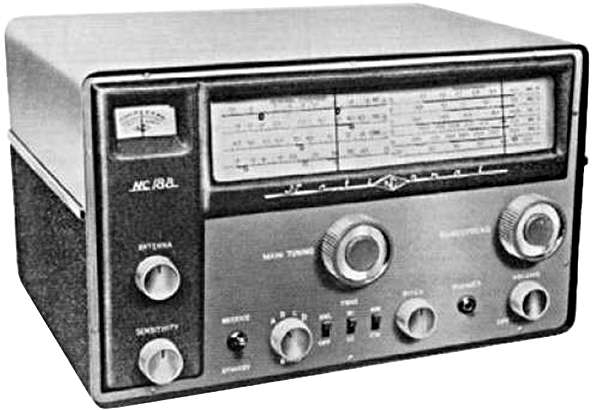
Bob’s Radio Corner: Uncle Clayton and His National NC-188

National NC-188

As recalled by Bob Colegrove

Uncle Clayton was my very first SWLing buddy.  In the late ‘50s there was no Internet – very few ways for SWLs to interact with one another.  There were clubs that published mimeograph bulletins every month or so.  These were mailed to SWLs across the country and around the world.  To come across a fellow SWL in your own town was rare.  As chance would have it, Uncle Clayton and I quite independently discovered our interest in SWLing about the same time, and then only after knowing one another for several years.

Uncle Clayton was not my real uncle.  He and his wife, Evelyn, were dear friends of my mother and father.  You see, there was a social decorum at that time which frowned upon members of the younger generation from referring to members of an older generation by their first name.  At the same time, “Mr. Smith” and “Mrs. Smith” (not their real surname) were regarded as unnecessarily formal; so, for this situation “Uncle Clayton” and “Aunt Evelyn” became the accepted form of address.

My story begins with television, not radio.  By mid-1950 both the Smiths and the Colegroves had acquired their first black and white TV “sets,” theirs a 12-inch RCA and ours a 12-inch Arvin.  Each of these occupied 8 to 12 cubic feet of space and required two well-fit individuals to move them.  Ironically, they were termed “portable” in that they required a low table or stand for proper positioning.  This contrasted with “console” models which incorporated the stand and the TV in a single cabinet.

One must understand that television at that time was what computers would become a generation later.  The nation was on the cusp of a TV frenzy.  My dad and Uncle Clayton jumped into it with both feet.  They couldn’t let the darn things alone.  Antennas were the most obvious source of tinkering.  “Rabbit ears” were the customary solution but adjusting them was a skill rivaling that of playing a cello.  Later, attic designs were fabricated for the new channel in Bloomington, Indiana.

Vaccum tubes, both necessarily and unnecessarily, became questionable components, and Uncle Clayton and my dad developed well-stocked arsenals of spares.  In retrospect the pair were, well…a couple of hacks, and I say that lovingly.  Picture two large, middle-aged men behind the RCA with the back cover off alternately trying to get a 9-pin peanut tube aligned and reinserted into its socket in the very front of the chassis – all this while trying to avoid the high-voltage discharge from the picture tube.  I still recall the looks of frustration and muffled puffs of blue air.  After some time, Aunt Evelyn appeared, looked over the dilemma, grabbed the tube, and jabbed it into the socket on the first try.

SWLing came along several years later.  I discovered it in the fall of 1958 while idly tinkering with the Howard Radio Co. Model 308 radio-phonograph console, which by that time had been relegated to the basement.  After moving it to my room and stringing up a long wire I was forever captivated.  The single SW band covered 5.5 MHz through 18 MHz across a dial a mere four inches long.  I milked that old radio relentlessly finally coming up with about 20 or 30 SW broadcast stations, all in English.

I have no recollection of how Uncle Clayton and I discovered we were going down the same path.  He had already purchased his National NC-188 with a matching speaker and set up his shack in an unused upstairs bedroom.  How I envied him.  His NC-188 was everything I envisioned in a SW radio. I was still earning my way towards purchasing a Hallicrafters S-38E.
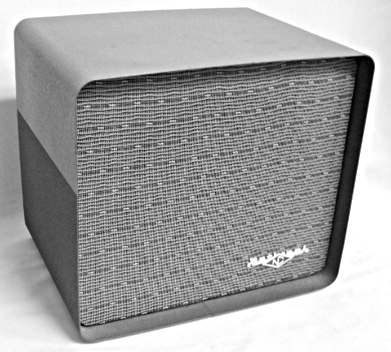
National NTS-1 Speaker for the NC-188 and NC-109.
Better radios had separate external speakers, the claim being that there was insufficient space in such feature-packed units

Uncle Clayton’s NC-188 was my first encounter with a bandspread – a term which has virtually gone out of existence.  I immediately knew what it did, but it would take me a while to understand just how it worked.  On my old Howard console, the dial pointer travelling less than a 16th inch could cover 100 kHz or more, conceivably containing 10 or 20 stations.  Furthermore, this range was traversed by a nearly imperceptible rotation of a small knob.  Conversely, the NC-188 might cover the same tuning range over a space two inches long and require four full rotations of a 2-in diameter knob.  That was an incredible mechanical advantage.

For SWLs, there was a restriction on the use of the bandspread.  Most receivers had scales neatly calibrated for the 10-, 15-,20-, 40-, and 80-meter ham bands.  This provided reasonable frequency readout – not the precision we have with today’s digital radios, but close enough.  For international broadcast bands, the listener had to rely on a 0 to 100 linear logging scale which bore no relation to frequency.  This required the listener to generate several lists or graphs translating log readings to frequency.
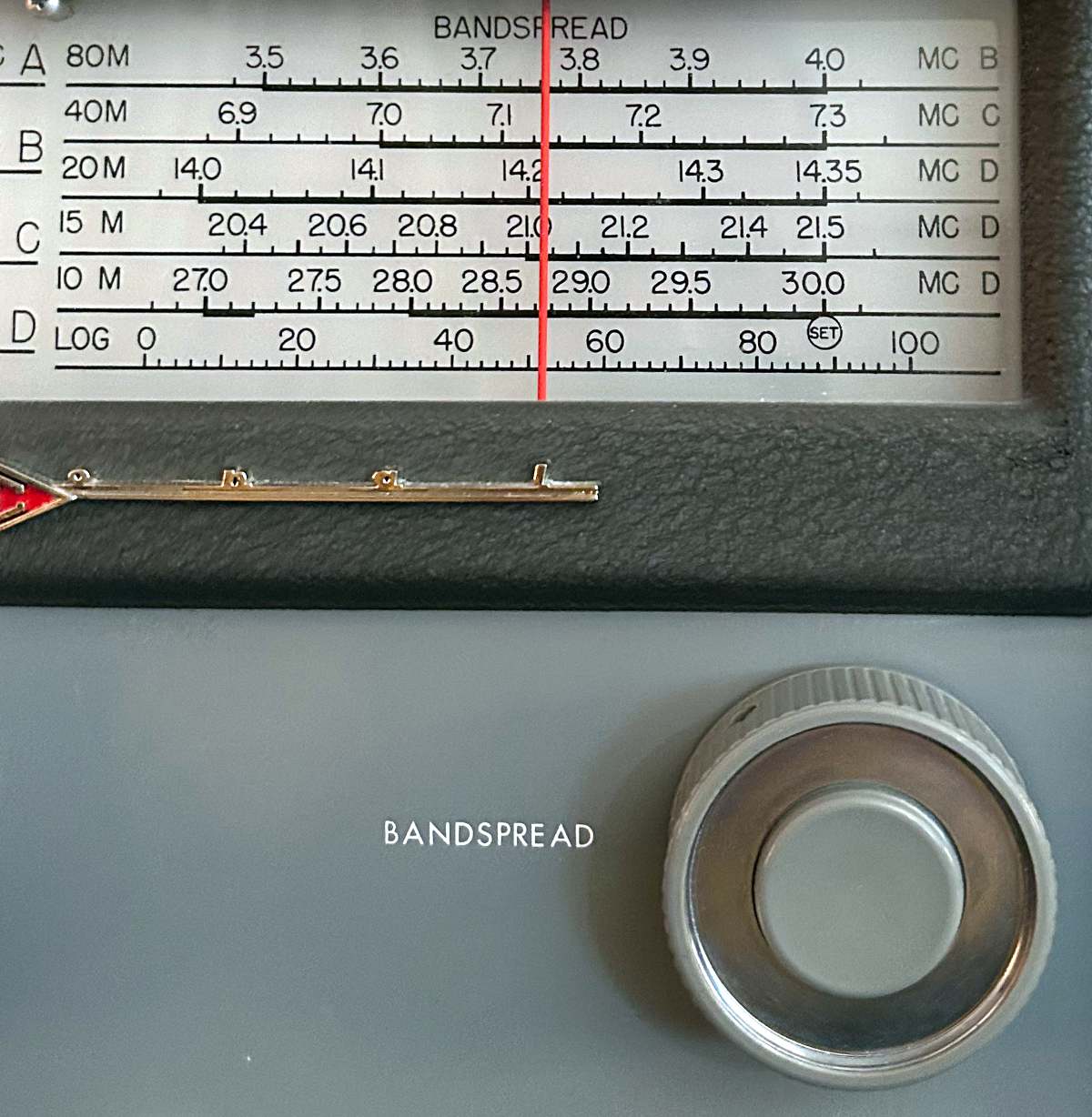
The NC-188 and -109 had 4.5” bandspreads, not as long as some, but the 2” knob required 9 full rotations to traverse end-to-end.

Everything I have described so far depended on the position of the main tuning dial.  The bandspread operated electronically in parallel with the main tuning.  In short, the main tuning dial had to be positioned precisely at the high end of the tuned band for the bandspread to produce the same results.  Within these restrictions, a bandspread was still a marvelous device.

Uncle Clayton and I were still in our formative SWLing period when our family would visit him and Aunt Evelyn.  I remember him patiently tuning across portions of the SW spectrum oblivious of the international band boundaries slowly rotating the main tuning dial and stopping at points that interested him.  When my turn at the helm came, I would often seek out the General Overseas Service of the BBC and listen to the football scores or Victor Sylvester and his Ballroom Orchestra.
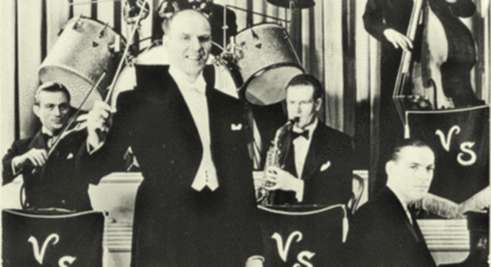
Victor Silvester conducting his Ballroom Orchestra in 1938. His orchestra was still a fixture on the BBC in the ‘50s and ‘60s. Source:  Victor Silvester and His Orchestra – You’re Dancing on My Heart

Neither Uncle Clayton nor I set the bar very high in terms of DXing prowess.  We had fun and made a lot of interesting discoveries.  Isn’t that what it’s all about?

Some years ago, I had the opportunity to buy a fairly clean National NC-109.  The -109 is an upscale version of the -188.  It has a crystal filter, an early SSB product detector and a voltage regulator.  Otherwise, the two radios are virtually identical.  I did all the usual things, cleaned it up, performed an alignment, and restrung the main tuning and bandspread dial cords.  Later I found a matching speaker.  When I was finished, I had what I regard as a museum-quality radio.  It occupies a prominent corner of the shack, but I don’t operate it that much.  Sometimes I just sit in front of it, spin the dials and remember Uncle Clayton and how it all started.
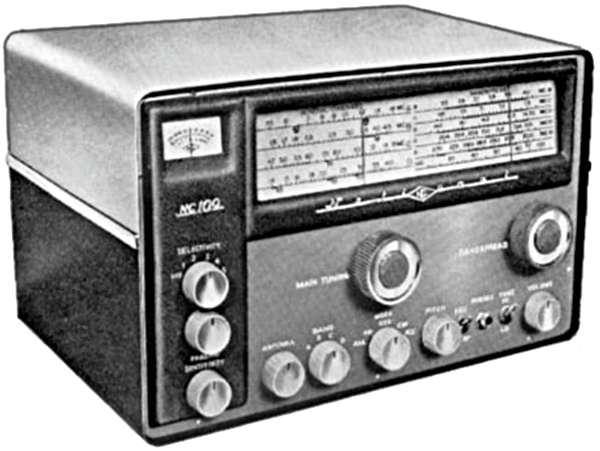
National NC-109

HCJB Quito, Ecuador – Then and Now

Many thanks to SWLing Post contributor, Dan Greenall, who writes:

In the 1970s, the powerful signal from radio station HCJB, the Voice of the Andes, in Quito, Ecuador, could be heard with station identifications (similar to this one circa 1971) being given between programs.

I am led to believe that they were made by the late Bob Beukema (1928-2001), since his resonant radio voice was often referred to as the “Voice of the Andes”. My listening post at the time was Ancaster, Ontario, Canada.

Today, the station can still be heard broadcasting from Ecuador, albeit with much lower power, perhaps 10 kW at the most, and a much simpler antenna arrangement.

The accompanying recording was made July 30, 2025 on 6050 kHz around 0200 hours UTC using a Kiwi SDR located in Lima, Peru. Even though programming is only in Spanish and indigenous languages, some of that wonderful Andean music can still be found here.

73
Dan Greenall, Ontario, Canada

Click here to download a bit of HCJB ephemera (PDF).

Dan Unearths Radio Memories: A 1990s Treasure Trove of Broadcast Ephemera

Many thanks to SWLing Post contributor Dan Greenall, who writes:

Hi Thomas

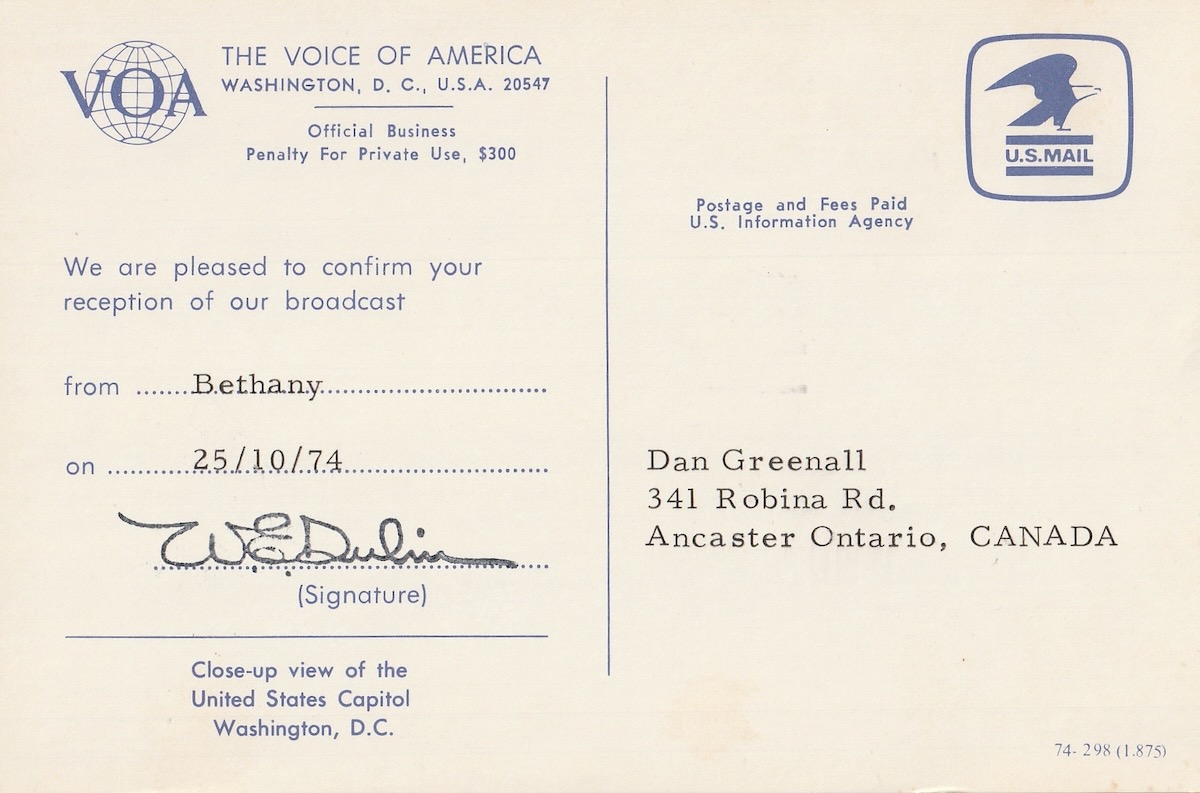
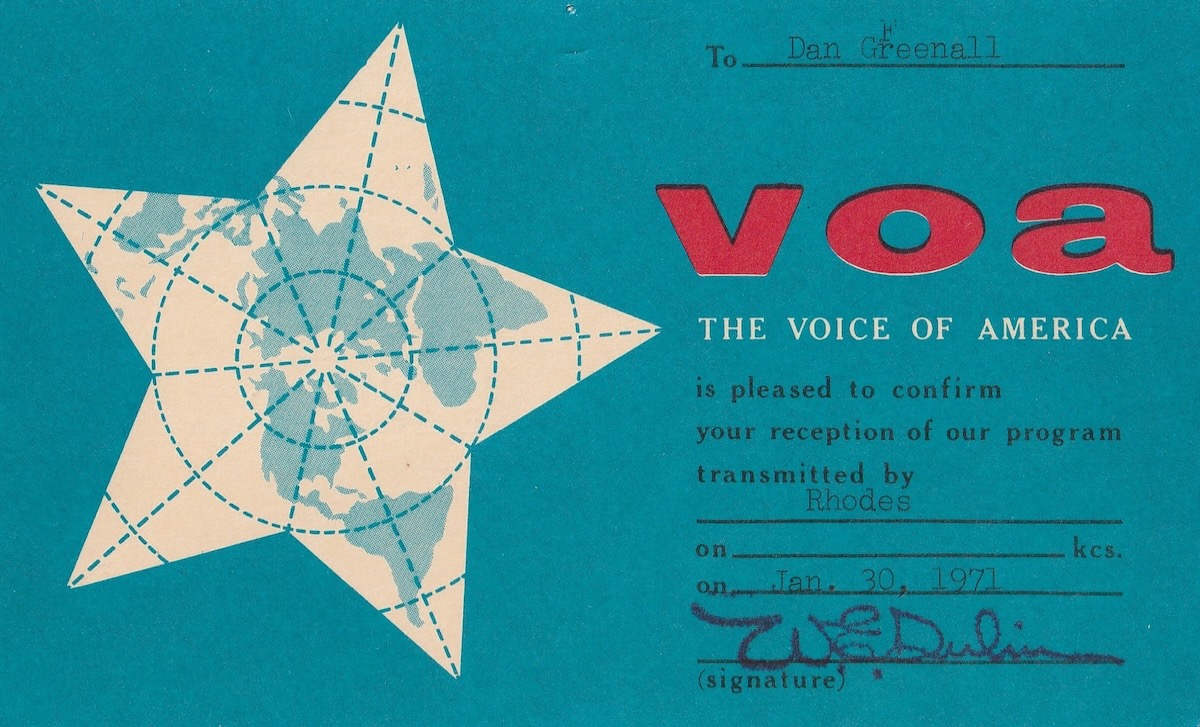
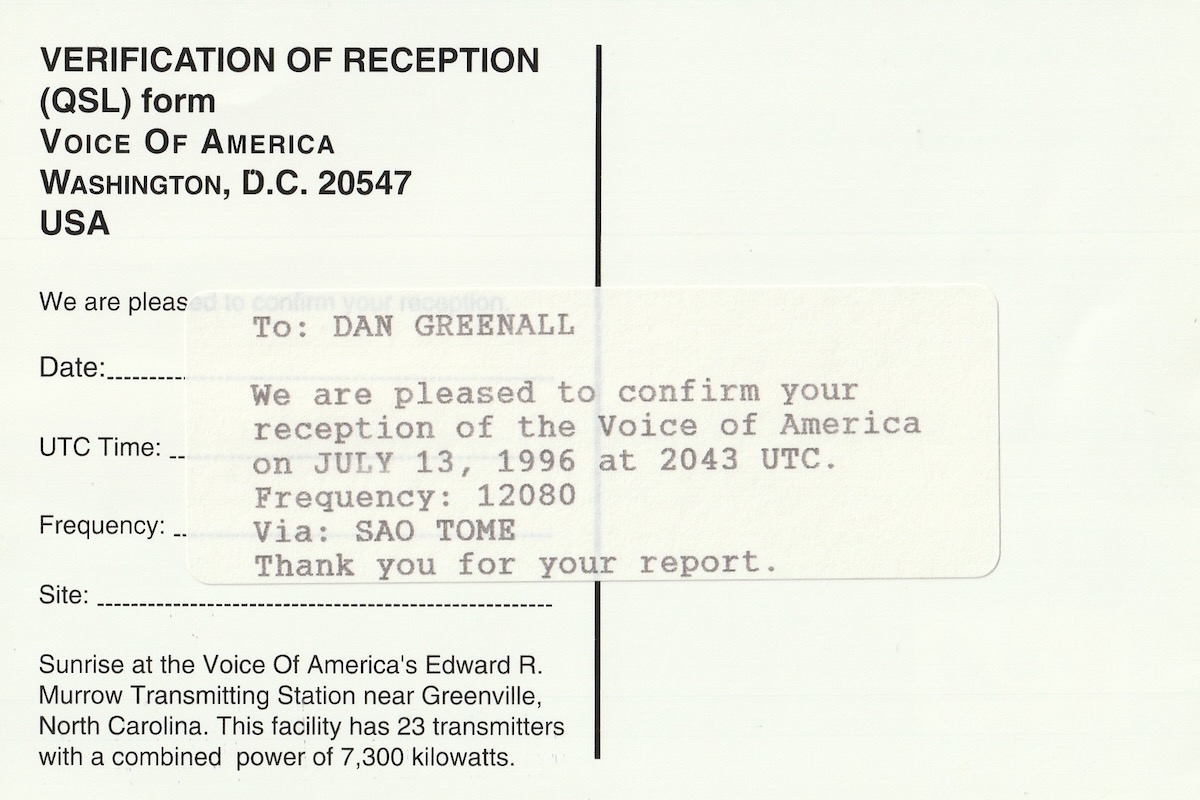
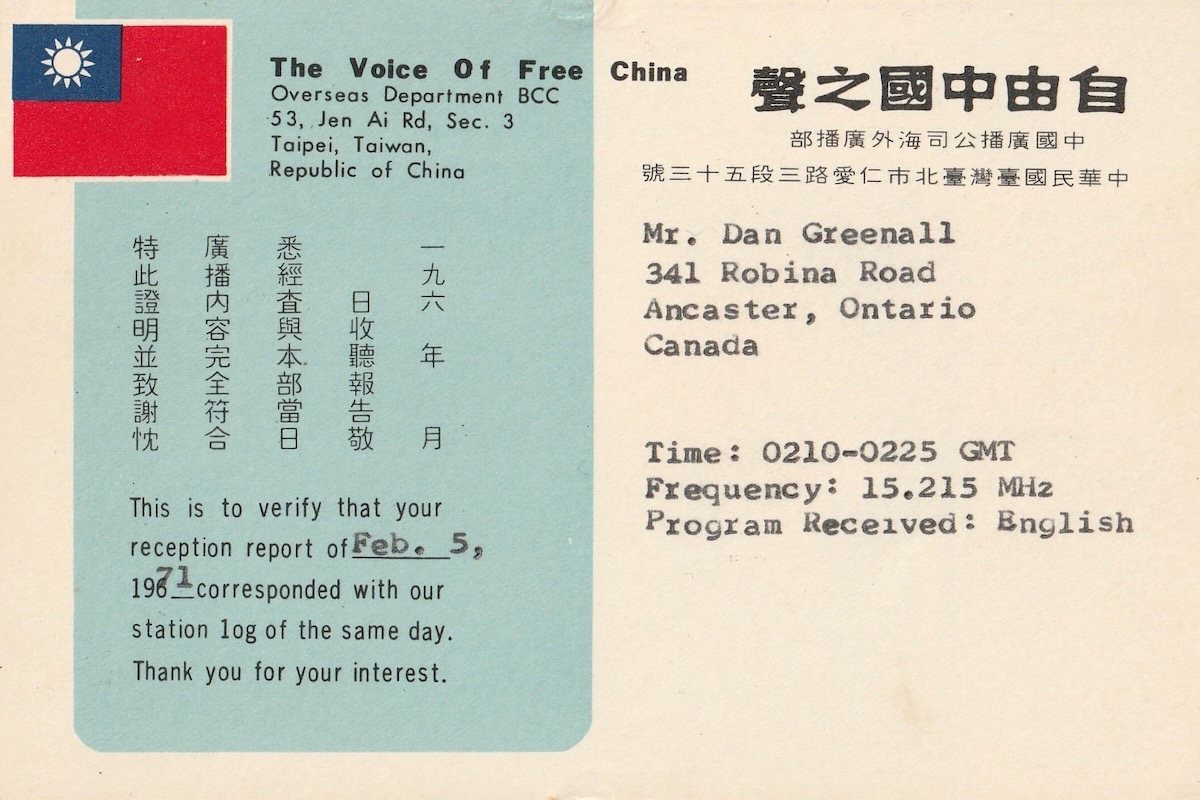
Before the days of the internet and e-mail, handwritten or typed reception reports mailed out to broadcast stations would often net the lucky DXer other goodies, including station brochures, program schedules, frequency guides, station stickers, blank reception report forms, pennants, booklets, and other items in addition to that coveted QSL verification.

The QSLs were stored carefully away in albums or shoe boxes, while much of the other paper ephemera eventually (over the years) made its way into a recycle bin. Recently, while cleaning out some storage boxes in the basement, I came across a number of envelopes containing some of the aforementioned items from the early to mid-1990s. To preserve these newly discovered pieces of radio history, I have scanned much of the material and included it here.

Here’s a sampling:

There are 39 JPEG and 7 PDF files to view: https://archive.org/details/radio-finland-program-guide-1992-3-page-2

73

Dan Greenall VE3HLC, Ontario, Canada

Thank you so much for archiving and sharing these, Dan! Pure radio nostalgia.

Paul’s Treasure Trove of 1980s Shortwave Interval Signals and Idents

I recently received a fascinating message from long-time SWLing Post reader Paul, who has graciously shared a remarkable collection of shortwave radio recordings he made from his home near London in the 1980s. Here’s what he wrote:

Hi Thomas,
I have been following your excellent blog for many years. I have noticed that sometimes you feature archive recordings. I have some that might interest you.

During the 1980s I was listening to shortwave radio from my home near London, in the south east of England. I had a cassette recorder connected to the receiver and taped anything interesting that caught my ear. Little did I know that 40 years later the majority of these stations would have disappeared and I would have the opportunity to share these recordings with the world.

I have put together a collection of five audio files of recordings from many of these international shortwave broadcasters, consisting of IDs and interval signals. The majority of these recordings are in English. I’ve grouped the files geographically:

      • Western Europe
      • Eastern Europe and the USSR
      • Africa and the Middle East
      • Asia and the Pacific
      • The Americas

I have uploaded these files to the Internet Archive, under the user name Shortwave Memories.

There are no dates or frequencies but the recordings were made during the 1980s, the majority during the first half of the decade.

I hope you and your readers find this interesting. I certainly enjoy listening to these recordings and a reminder of how shortwave used to sound.

Best regards,
Paul

Listen to the Recordings

Paul has organized his recordings by region. You can stream them directly from the Internet Archive or download them to enjoy offline: https://archive.org/details/@shortwave_memories

I’ll also embed the audio players below with Paul’s notes:

Western Europe

AUSTRIA: Radio Austria International (0)
CYPRUS: Cyprus Broadcasting Company (1.40)
DENMARK: Radio Denmark (3.09)
FINLAND: Radio Finland (4.29)
FRANCE: Radio France Internationale (5.30)
GERMANY (WEST): Deutsche Welle (6.30)
GREECE: Voice of Greece (7.53)
ITALY: RAI (9.24)
MALTA: Radio Mediterranean (11.00)
NETHERLANDS: Radio Netherlands (12.21)
NORWAY: Radio Norway (13.34)
PORTUGAL: Radio Portugal (15.34)
SPAIN: Spanish Foreign Radio (16.32)
SWEDEN: Radio Sweden (18.17)
SWITZERLAND: Swiss Radio International (19.53)
Red Cross Broadcasting Service (20.38)
UNITED KINGDOM: BBC World Service (21.49)


Eastern Europe and the USSR

ALBANIA: Radio Tirana (0)
BELARUS: Radio Minsk (1.18)
BULGARIA: Radio Sofia (1.41)
CZECHOSLOVAKIA: Radio Prague (2.29)
ESTONIA: Radio Tallin (2.50)
GERMANY (EAST): Radio Berlin Int (3.49)
HUNGARY: Radio Budapest (5.22)
LATVIA: Radio Riga (6.31)
LITHUANIA: Radio Vilnius (7.14)
POLAND: Radio Polonia (8.30)
ROMANIA: Radio Bucharest (9.37)
UKRAINE: Radio Kiev (10.41)
USSR: Radio Moscow World Service (12.17)
Radio Station Peace & Progress (13.35)
Radio Station Rodina (13.59)
YUGOSLAVIA: Radio Yugoslavia (14.21)


The Americas

Bonaire: Trans World Radio (3.31)
Brazil: Radio Nacional do Brasil (4.32)
Canada: Radio Canada Int (6.58)
Chile: Voice of Chile (8.48)
Colombia: Radio Nacional (11.06)
Radio Sutatenza (12.00)
Cuba: Radio Havana (12.48)
Dominican Republic: La Voz del CID (14.20)
Radio Clarin (15.01)
Ecuador: HCJB (15.43)
Grenada: Radio Free Grenada (17.36)
Nicaragua: Voice of Nicaragua (18.42)
USA: Voice of America (19.54)
Radio Earth (20.33)
KCBI (21.39)
WHRI (22.13)
WRNO (22.38)
WYFR (22.49)
Venezuela: Radio Turismo (23.22)
Radio Tachira (24.06)
YVTO (24.41)


Asia and the Pacific

Afghanistan: Radio Afghanistan (0)
Australia: Radio Australia (1.55)
Bangladesh: Radio Bangladesh (3.18)
China: Radio Peking (4.23)
India: All India Radio (6.16)
Japan: Radio Japan (7.29)
Korea (North): Radio Pyongyang (9.02)
Korea (South): Radio Korea (12.26)
Malaysia: Voice of Malaysia (14.22)
New Zealand: Radio New Zealand (15.49)
Pakistan: Radio Pakistan (16.13)
Saipan: KFBS & KYOI (16.44)
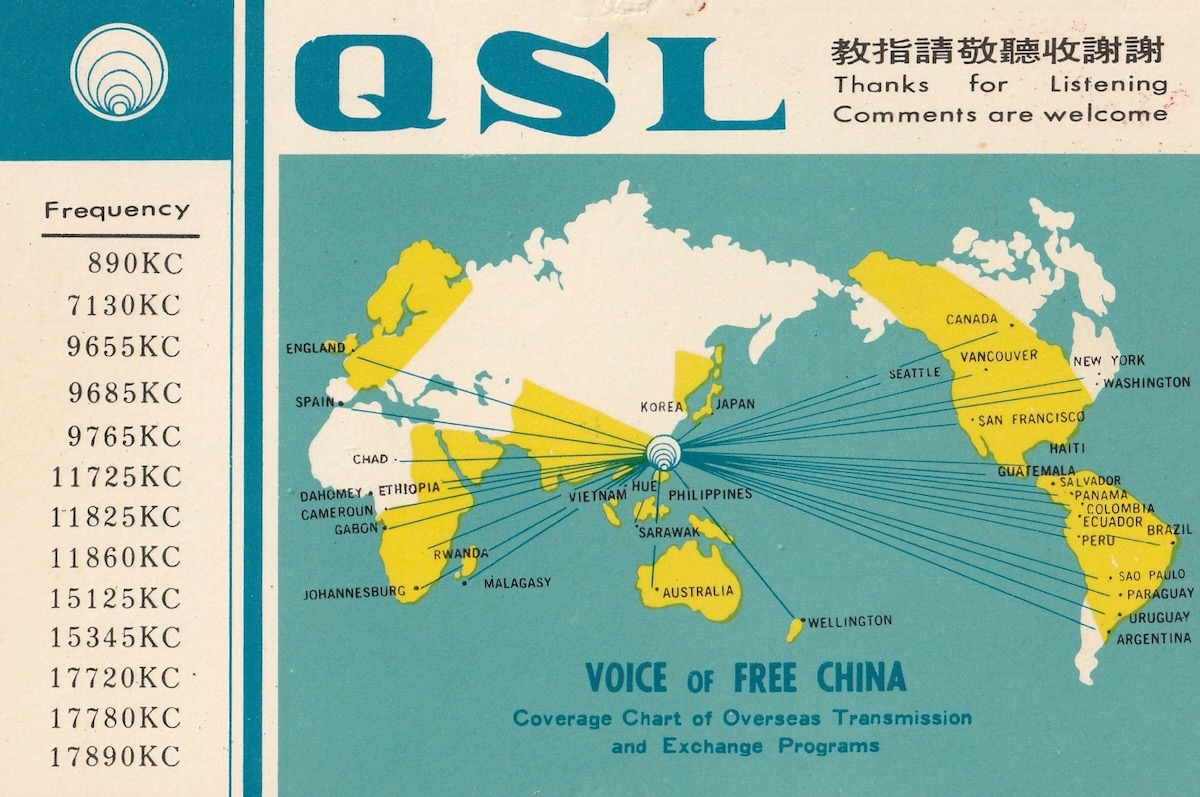
Taiwan: Voice of the Free China (18.14)
Tajikistan: Radio Dushanbe (19.01)
Uzbekistan: Radio Tashkent (19.22)
Vietnam: Voice of Vietnam (20.16)


Africa and the Middle East

ALGERIA: Radio Algiers (0)
EGYPT: Radio Cairo (1.03)
IRAN: Voice of the Islamic Republic of Iran (2.33)
IRAQ: Radio Baghdad (4.17)
ISRAEL: Kol Israel (6.33)
KUWAIT: Radio Kuwait (8.00)
LEBANON: Voice of Lebanon (9.29)
LIBYA: Radio Jamariyah (10.18)
NIGERIA: Radio Nigeria (12.15)
QATAR: Qatar Broadcasting Service (13.53)
SAUDI ARABIA: Broadcasting Service of Kingdom of Saudi Arabia (14.21)
SOUTH AFRICA: Radio RSA (15.45)
SYRIA: Radio Damascus (17.37)
TURKEY: Voice of Turkey (18.40)
UNITED ARAB EMIRATES: UAE Radio (19.50)


Many Thanks to Paul!

A huge thank you to Paul for not only preserving these recordings, but also for taking the time to digitize and share them publicly. This is a nostalgic treat for many of us and a valuable reference for future generations of listeners.

If any readers have similar recordings they’d like to share, feel free to reach out. I’m always happy to help preserve and feature them on the Shortwave Radio Audio Archive.

— Thomas

Bob’s Radio Corner: Buttons, Knobs, and Switches

Source: The Great International Math on Keys Book, Texas Instruments Inc., Dallas, Texas, p. 4-7, 1976.

Pressing Buttons. Twirling Knobs and Throwing Switches

By Bob Colegrove

Move along.  Nothing informative to read here, just the wandering of an idle mind scheming with meandering fingers on a keyboard.  On the other hand, if your curiosity can’t be controlled, consider that a significant amount of enjoyment in this hobby is the mere operation of the radio – seeing what all the buttons, knobs, and switches do, both separately and in combination.  It’s always been this way.  Beginning in the Amplifiozoic Epoch there was continual rotation of the knobs.  This occurred before the discovery of ganged capacitors, when each circuit had to be tuned independently to resonate at the proper frequency.  Otherwise, nothing.

It could be quite confounding for a non-radiofile trying to break into the sport.  Just getting some sound out of a two-knob radio could be a challenge.  My late mother solved this problem on all our radios by painting a dab of red nail polish at the points on the dial where each local station came in.

The Complexities of Shortwave

Later, with the humble entry-level shortwave “set” there was conundrum in the way the bandspread interacted with the main tuning control, and the curious effect of the BFO switch.  Even the venerable Hallicrafters Company, which catered to the hams and SWLs of the time, recognized the problem. They tried to solve this by prescribing a default setting in installation and operating procedures for model S-40 receiver, The Hallicrafters Company, Chicago, USA, p. 4, 1946:

“NOTE. – Some of the control markings are in RED. This is an added feature incorporated for the convenience of the listener who is not familiar with radio terminology as an aid in setting the controls most used for the reception of standard broadcast stations.”

That was the nice way of saying it.  After many years, I still chuckle to myself thinking of an old ham radio mentor of mine who insensitively explained that the purpose of these markings was for certain members of the household who could not otherwise make the radio work.  On my S-40B, the “convenience” markings are white dots.

Modern Radios

Modern radios have many buttons, which can work in different ways.  A short press will do one thing while a long press will do something else.  Some buttons do one thing with the radio turned off and another thing with the radio turned on.  On many radios you can lock the buttons and knobs, in which case they won’t do anything.  You must get it right.

Hidden Features

Today, the possibilities with all these variables are boundless, even beyond the control of the manufacturers who incorporate the complex TEF6686 30-pin IC chips in their designs.  Qodosen has set the bar high by making a plethora of user-adjustable functions available on the DX-286.  An uncommonly informative 40-page manual has been included with each radio and is highly recommended as an essential tool to assist with its operation.

In recent years, Tecsun has capitalized on this by incorporating “hidden features” in some of their models; that is, their operation and even their very existence are not revealed in the manual.  In computer gaming parlance, these features are called “Easter eggs” for which one must hunt.  Originally, the inclusion of hidden features may not have been intentional, but with the introduction of the PL-880 in 2013 they became a veritable sensation, as testified by the countless owner postings on the PL-880 Yahoo users’ group of that time.  A prize of unbounded esteem and self-satisfaction went to the intrepid listener who discovered and solved a hidden feature.  This interest went on for several months as Tecsun tweaked the firmware and the “features” migrated somewhat.  But unfortunately, a spoiler has been introduced.  Hidden feature data sheets are now packaged with current models.  In case you are missing any, here is a sampling.

For the Tecsun PL-368 see https://swling.com/blog/2021/08/troys-tecsun-pl-368-hidden-features-quick-reference-sheet/

For the Tecsun PL-990 see https://swling.com/blog/2020/10/johns-pl-990-hidden-features-quick-reference-sheet/

For the Tecsun PL-880 see https://swling.com/blog/2019/10/40072/

For the Tecsun S-8800 see https://swling.com/blog/2018/08/bill-discovers-a-number-of-tecsun-s-8800-hidden-features/

SDR

The complexity of radio operation is compounded still further by the advent of SDR, wherein combinations of various hardware and software components result in a host of possibilities.  Features and their placement seem endless as they are distributed on multiple menus.  As my personal experience is limited to WebSDR, I leave the pursuit of this point to others.

Manual Power Generation

Finally, the inclusion of some elementary form of leverage and dexterity is present in some radios.  Isn’t the hand-powered crank on today’s emergency radio akin to the vintage treadle-operated transcription machine pictured at the beginning of this posting?  Perhaps we have come full circle.

Conclusion

Today’s radios are a sort of Rubik’s cube which can continually be manipulated to provide many hours of discovery and complement the listening and DXing experiences.  So, the next time you crawl underneath the headset and unconsciously tune to the object frequency, zero beat on the necessary sideband, and adjust the proper bandwidth and volume, reflect on all the time and practice it took you to develop this useful skill.

Bob’s Radio Corner: The Curious Case of the Nibi-Nibi Islands

Many thanks to SWLing Post contributor Bob Colegrove, who writes:

Hi Thomas,

No mention of UTC or frequency in the attached. Made my day, but some folks apparently were not amused.

Nibi-Nibi Islands A few months ago there appeared in the bulletins of various clubs and organizations an item about a new station located in the Nibi-Nibi Islands. Additional reports on this station have been received from time to time, with the latest report containing information on new programming. The National Geographic Society claims that there is no such island. And investigation into the situation by several veteran DX'ers has failed to locate the original source of the information. It is believed now that the entire episode was a hoax. While it may have begun as a harmless prank, it has, nevertheless, consumed the time and efforts of the editors of many clubs, organizations, and DX programs. This sort of thing has no place in short-wave listening. It is sincerely hoped that all DX'ers will be on the lookout for such obviously phony reporting and will do all they can to discourage any repetition of this kind.

Source was “Short-Wave Report” by Hank Bennett, Popular Electronics, Ziff-Davis Publishing Co., New York, p. 86, March 1959.

Regards,

Bob Colegrove

This absolutely made my day as well, Bob! What a delightful bit of pranksterism from our esteemed DXing history.