Tag Archives: Shortwave Radio

Radio Australia: transmitter maintenance will lead to disruption of service for some listeners

(Source: Radio Australia via Keith Perron)

Details of an interruption to our shortwave services to Papua New Guinea, eastern Indonesia and the south west Pacific for Thursday April 19th.

This is an important announcement for shortwave listeners.

Due to essential transmitter maintenance, some broadcasts to Indonesia, PNG and the Western Pacific will not be available TODAY Thursday April 19th .

This will affect short wave broadcasts to: East Indonesia; French broadcasts to the south-west Pacific and numerous broadcasts to PNG and the central Pacific region.

The work will commence at 5am Jakarta time, 8am in Port Moresby, 9am in Port Vila, 10am in Suva, and is expected to take up to eight hours.

Some Pacific listeners will still be able to hear us 9660, or 12080 kHz.

Radio Australia’s FM, satellite and web streaming services will continue as normal. So you can still hear us on FM and the web.

The following shortwave frequencies will be suspended between 0800-1600 Melbourne time (2200-0600 UT):

  • 13630, 15515, 17715 & 17795 kHz to the south Pacific;
  • 13690 & 21725 kHz to PNG,
  • 15240 kHz to Solomons & Vanuatu
  • 11695, 15415 & 17750 kHz to east Indonesia (in Indonesian & English).

Your shortwave could have delivered the newspaper?

1938: The Gernsback Radio Newspaper (Photo: Smithsonian Magazine)

(Source: Smithsonian Magazine)

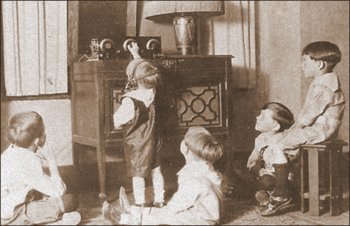
The introduction of broadcast radio caused some in the newspaper industry to fear that newspapers would soon become a thing of the past. After all, who would read the news when you could just turn on the radio for real-time updates?

Newspapers had even more to fear in 1938 when radio thought it might compete with them in the deadtree business as well.

The May, 1938 issue of Hugo Gernsback‘s Short Wave and Television magazine included an article titled “Radio to Print News Right In Your Home.” The article described a method of delivering newspapers that was being tested and (provided it didn’t interfere with regular radio broadcasts) would soon be used as a futuristic news-delivery method.

[…]This invention of a wireless fax, as it were, was credited to W.G. H. Finch and used radio spectrum that was otherwise unused during the late-night hours when most Americans were sleeping. The FCC granted a special license for these transmissions to occur between midnight and 6am, though it would seem that a noisy printing device in your house cranking away in the middle of the night might have been the fatal flaw in their system. It wasn’t exactly a fast delivery either, as the article notes that it takes “a few hours” for the machine to produce your wireless fax newspaper.

The full article, is a must-read.

Fascinating to realize that even in the infancy of wireless, newspapers already felt threatened by new technology. Goes to show that the more things change, the more they stay the same.

RCI Action Committee: What you can do

(Source: RCI Action)

How can you help?

How can you help stop this drastic cut of 80% of Radio Canada International’s budget?

Please write to Canada’s Foreign Affairs Minister John Baird, Finance Minister Jim Flaherty, and Canadian Heritage Minister James Moore.  (See addresses below.) If they are your Member of Parliament, please mention that as well.

Ask whether CBC/Radio-Canada should be deciding how strong or weak Canada’s Voice to the World should be?

Whether they feel comfortable with the fact our Chinese audience will now be cut off from RCI’s uncensored news about Canada and the World.

We feel because of the continuing cuts to RCI since 1990 (See: http://rciaction.org/blog), the government should give RCI financial autonomy and take RCI’s budget away from CBC/Radio-Canada’s control.

If you agree with us, please make your point of view heard.

We have very little time to achieve our goal. We’re counting on you.

Some points you might want to bring up with the ministers or your Member of Parliament:

  • RCI’s budget has been cut by more than 80% – from $12.3 million to $2.3 million
  • RCI newsroom will be eliminated, all newscasts cut
  • RCI will no longer be a broadcaster, whether on shortwave or satellite
  • Chinese audience will be cut off from uncensored news from RCI because only shortwave reaches the Chinese, the RCI website is blocked by China
  • Important potential trading partners such as China, India, Russia, Brazil will be cut off from news from Canada, because the RCI website is blocked or the Internet not as accessible as in North America
  • As Canadians we feel it’s essential Canada have a Voice to the World producing programming tailored for an audience not familiar with Canada
  • Canada’s Voice to the World has been a respected source of journalism for the past 67 years

Please consider sending an e-mail to the three ministers, even if you live outside Canada. If you are in Canada, you can send letters free to the ministers, MPs and Senators.

Thank you,

RCI Action Committee

[email protected]

http://twitter.com/rci_action   http://rciaction.org/blog

Addresses:

Foreign Affairs Minister John Baird  E-mail: [email protected]

Mailing address:

Hon. John Baird
418N Centre Block
House of Commons
Ottawa, ON K1A 0A6

—————————-

Canada’s Finance Minister Jim Flaherty:  E-mail: [email protected]

Mailing address:

Hon. Jim Flaherty
435-S Centre Block
House of Commons
Ottawa, ON K1A 0A6

—————————

Canadian Heritage Minister James Moore E-mail: [email protected]

Mailing address:

Hon. James Moore
15 Eddy Street, 12th Floor
House of Commons
Gatineau, QC K1A 0M5

——————————-

You’ll find e-mail and mailing addresses of all Members of Parliament here:

http://www.parl.gc.ca/MembersOfParliament/MainMPsCompleteList.aspx?TimePeriod=Current&Language=E

You’ll find e-mail and mailing addresses for all Senators here:

http://www.parl.gc.ca/SenatorsMembers/Senate/SenatorsBiography/ISenator.asp?Language=E

DXing With Cumbre Episodes 717-721

DXing with Cumbre programs 717-721 are now available as mp3 downloads.

Here are the links:

DXing with Cumbre, for those of you who are not familiar, is an excellent program for anyone interested in the shortwave radio listening hobby. Best of all, it’s free to everyone!

The Gazette: CBC cuts gut cherished international service

More attention to the cuts at RCI from The Gazette of Montreal. This article features quotes from my friend, Sheldon Harvey of the CIDX and the International Radio Report:

(Source: The Gazette)

MONTREAL – Lost amid the auditor-general’s report last week on the F-35 fighter planes and Canada raising the retirement age to 67, was news of the impending demise of Radio Canada International – the CBC’s international service, for many a lifeline to Canadian culture and politics, from as far away as Hanoi or Rio de Janeiro.

While CBC, like other crown corporations and government departments, has to cut 10 per cent of its overall budget as a result of federal cutbacks, RCI, which is administered by the CBC but has long been its poor cousin, was told more than 80 per cent of its budget would be slashed, or $10 million of $12.3 million.

[…]“Upsetting,” “absolutely dreadful,” “shocking.” Those were the words listeners from Bulgaria to Missouri used to describe the end of RCI’s shortwave broadcasts after more than six decades on the air.

[…]Sheldon Harvey, the president of the Canadian International DX Club, and a longtime shortwave enthusiast, said the international service, over the decades, has gained a stellar reputation, ranked just behind the BBC World Service – despite its relatively tiny budget – for its balanced, neutral perspective.

It was never a propaganda tool, like the Voice of America, he said.

“They have table scraps thrown at them, yet are able to put together such high-quality broadcasts for people around the world,” Harvey said. “To see that tossed aside is really sad.”

[T]he idea that listeners in other countries can all go online is farcical, Harvey said. Only 22 per cent of the population in the developing world has access to the Internet, whereas anyone with a wind-up or solar-powered radio can receive shortwave transmissions. What’s more, governments can block the Internet – as they have in Iran, China and parts of the Arab world – all part of today’s Iron Curtain. But as was seen during the Cold War, it’s almost impossible to block shortwave frequencies. If the Soviet Union jammed some frequencies, broadcasters could simply switch to others, Harvey said, and the cat and mouse game continued.

Up till now, RCI also has served to introduce people to Canada during peacetime, whether as potential visitors, trading partners or immigrants, Harvey said. Shutting down its broadcasts is like closing down embassies and trade missions. “It’s waiting for people to come to us, as opposed to knocking on their doors … I don’t think the government realizes how much of the world they are cutting off by doing this.”

[…]“CBC’s mandate is to inform Canadians. But it’s important to have a broader perspective here. … If you believe this country has something to say, you can’t support these cuts.”

Read the full article at The Gazette.  We are actively posting news about the RCI cuts here on the SLWing Post and we also welcome your comments.

You will find the latest news by following our tag: RCI Cuts

The Gazette: Tributes to RCI pour in from around the world

A sampling of messages to The Gazette in response to the cuts to Radio Canada International (RCI):

(Source: MontrealGazette.com)

“This is absolutely dreadful. RCI has been one of the best shortwave radio stations and a much-needed voice of solid, objective reporting. I’ve been a loyal listener from the mid-1990s and I am really saddened by this news. I understand that the times are difficult and that cuts need to be made, but this is an incredibly short-sighted decision. The staff and RCI’s international listeners deserve better. Surely a plan can be devised that would keep RCI going.”

Nenad Knezevic, Belgrade, Serbia

“I’m at a loss for words. I’ve been listening to RCI on shortwave since the glory days of the 1970s. This is the loss of a great friend to me. I’ve enjoyed countless English broadcasts of RCI. I feel a huge emptiness upon losing Radio Canada International on shortwave!”

Charles Ermatinger, St. Louis

“What upsetting news! I listen to the Link at night — so insightful and enlightening! Why couldn’t the CBC have made cuts to the television instead? The Internet has usurped the role of the television, but radio is radio!!! I love the immediacy of radio! I will miss your voice most of all, Marc!”

elise db, Ottawa

“Shocking news, I didn’t really expect that the only reliable source of information about this beautiful country is going to be shut down. … Hope you’ll change your decision and continue to broadcast, even only in English.”

Georgi Bancov, Troyan, Bulgaria

“There are places on Earth that just do not have Internet access yet. Many remote locations, in poorer countries. SW radio is their only means to get by. I guess we’re just abandoning them, to stay current with costs and technology. Very sad. BTW, the broadcast from (the Sackville) towers can be heard everywhere on Earth.”

DM, New Brunswick.

“It seems very short-sighted to cease Canadian broadcasting to the world. The astronomical expense of the Olympics are always sold to host countries’ citizens as providing many intangible benefits … well surely the international broadcasts which promote and explain Canada, its systems, policies, culture, innovations and Canadian analysis of international events etc. is valuable to the government and the country. From what I’ve seen on radio discussions boards there will be no more broadcasts and most people laid off for the sake of $10 million … peanuts, methinks.”

BigC-Canuck

Read the full page of comments at The Gazette. We are actively posting news about the RCI cuts here on the SLWing Post and we also welcome your comments.

You will find the latest news by following our tag: RCI Cuts

China Radio International increasing Turkish content

(Source: Today’s Zaman)

“I’ve sometimes been challenged trying to find exactly the right word to translate from Turkish into Chinese,” recalled Wenjun Liu, a 37-year-old reporter working at the Turkish Broadcast Service of China Radio International (CRI) in Beijing.

 “Thank God, we have Turkish native speakers working here to rush to our aid,” she added.

Like many Chinese nationals who were assigned to work at the Turkish service, Liu has assumed a Turkish name for herself — “Damla.” She works at the world news desk and was working on a story about Prime Minister Recep Tayyip Erdo?an’s visit to Iran in late March. Like many of her colleagues, Damla is a graduate of Beijing Foreign Studies University, a foreign language and international studies university in China.

CRI has been broadcasting in Turkish since October 1957 using the shortwave frequency. It has a one-hour-long program every day, repeated four times during the day in different time slots. It uses Internet broadband to spread the word and has also used local FM stations in ?stanbul and Ankara to reach its audience since 2010. With unprecedented growing ties recently with Turkey, China is set to promote its culture in many areas, including broadcasting more Turkish content on the CRI.

Yongmin Xia, the director of the Turkish service, revealed to Sunday’s Zaman that the CRI has decided to boost its presence in Turkey. Going by the Turkish name Murat, Xia said the CRI has chosen ?stanbul, the largest city in Turkey, to launch a radio station. “We are going to start with five people and hope to reach 15 in this service in ?stanbul,” he said, adding that the stronger presence would help develop bilateral relations further.

“Our common values are more than the differences between the Turkish and Chinese peoples,” he emphasized, pointing to a strong adherence to traditional values in both cultures. “Turks and Chinese share similar traits such as hospitality and warmth in human relations,” he added.

There is no easy way to rate how popular the Turkish service at the CRI is since it airs in shortwave, but the managers at the CRI say they have some idea by looking at regular mail, e-mails and website impressions. “Our Turkish website has 600,000 clicks on a monthly basis,” Xia explained. Overall, the CRI received more than 3 million letters from overseas listeners in 2011.

Read the full article here.

Though CRI has an enormous broadcasting presence around the globe (and it keeps growing), I would certainly question the listenership numbers based on the methods they use to quantify them. If by 600,000 monthly website “clicks,” they mean “hits,” their numbers may be overly generous. Many of “hits” are associated with search engine and other bots that routinely crawl the web. A more telling number would be either web page views or unique visitors.

Frankly, the 3 million letters from overseas listeners is also hard to believe, though I do imagine they receive a hefty amount of correspondence.