Tag Archives: Shortwave Radio

Expectations after dusting off a radio that’s been in storage

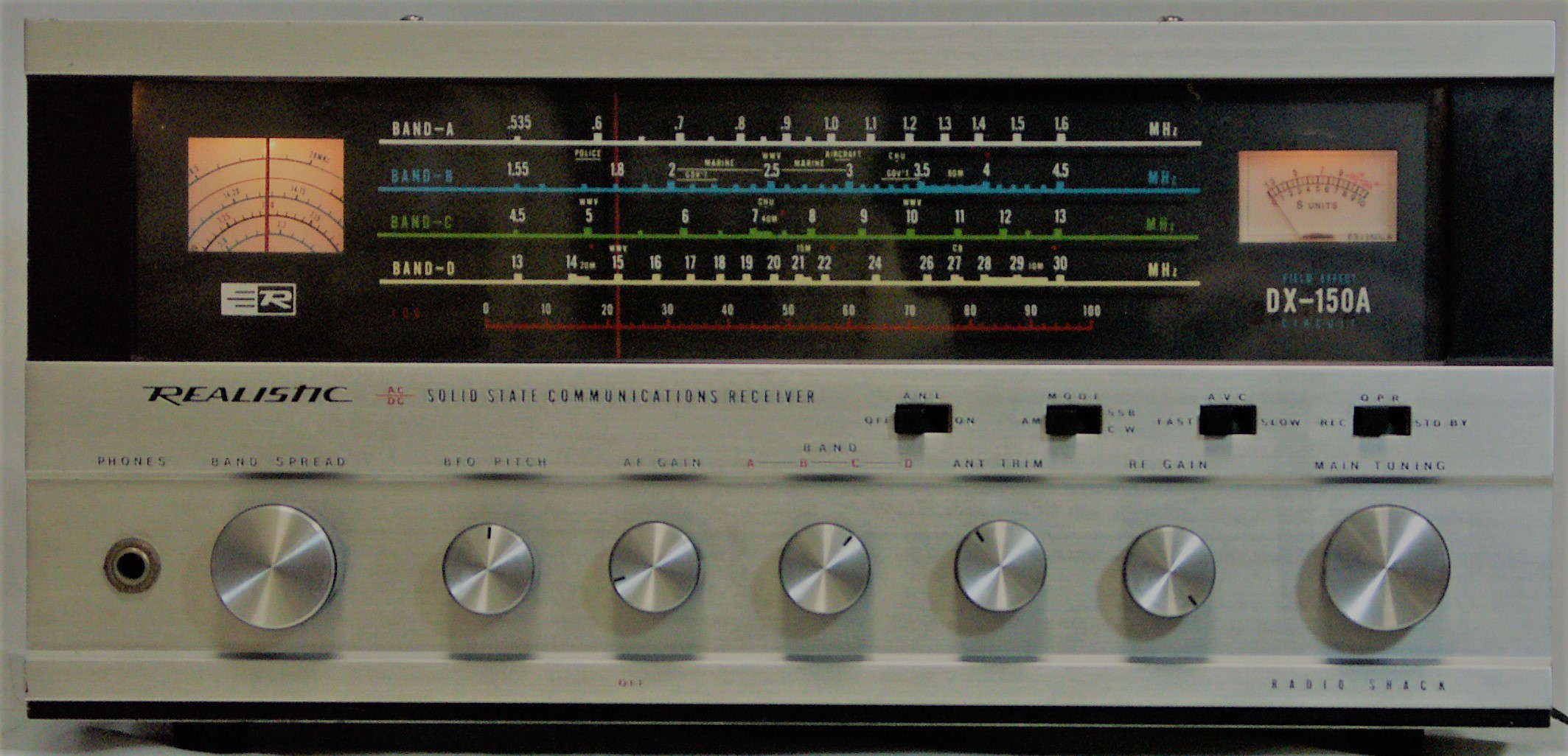
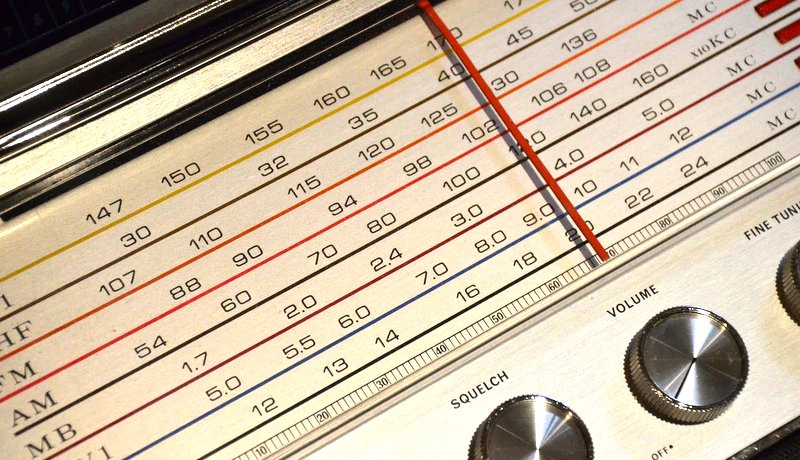
Realistic DX-150A (Source: Universal Radio)

Many thanks to SWLing Post reader, Alfred, who writes:

I purchased a Realistic DX150 radio when it was first introduced. I used it for many years and then stored it away for some time. A few years ago I decided to use it again. After the bandspread control was repaired at a local radio shop, I used it for a short time and then stored it away.

Yesterday, I took it off the shelf to see what was on the air waves. I did not have much success in getting any broadcasts to tune in strongly/clearly. I am writing to ask what my expectations should be – given the low performance of the radio and the state of shortwave transmissions these days. The mechanical aspect of the bandspread control needs attention again. My question is: Should I be able to pick up transmissions at some good level/ quality?

Thank you for your advice and recommendations.

Alfred, thank you for your inquiry and I hope you don’t mind that I’m sharing it here publicly because I’ve been receiving so many similar questions in the past few months.

I assume with so many people sheltering at home because of Covid-19 and, suddenly, having time available to catch up on projects and pastimes, they’re pulling solid-state receivers off of the shelf and putting them on the air again!

You asked: “Should I be able to pick up transmissions at some good level/ quality?”

A simple question, with a potentially complicated answer!

A simple answer first…

If your DX-150 is still electrically and mechanically functioning as it should, and you have it connected to an effective antenna, then yes, you should be able to receive transmissions!

Caveats…

As I’ve told numerous others who have resurrected solid-state gear from storage, there’s a good chance gear that’s a few decades old could have dead or leaky capacitors. Sometimes the symptom of this is a “hum” in the receiver’s audio, but bad capacitors (or “caps” as we like to call them) can also cause less obvious issues with the radio’s overall performance. If you’ve tried everything and suspect your radio needs repair, there are some great repair technicians out there. My friend Vlado is one of them, but I think he may have paused repairs during the Covid-19 pandemic.
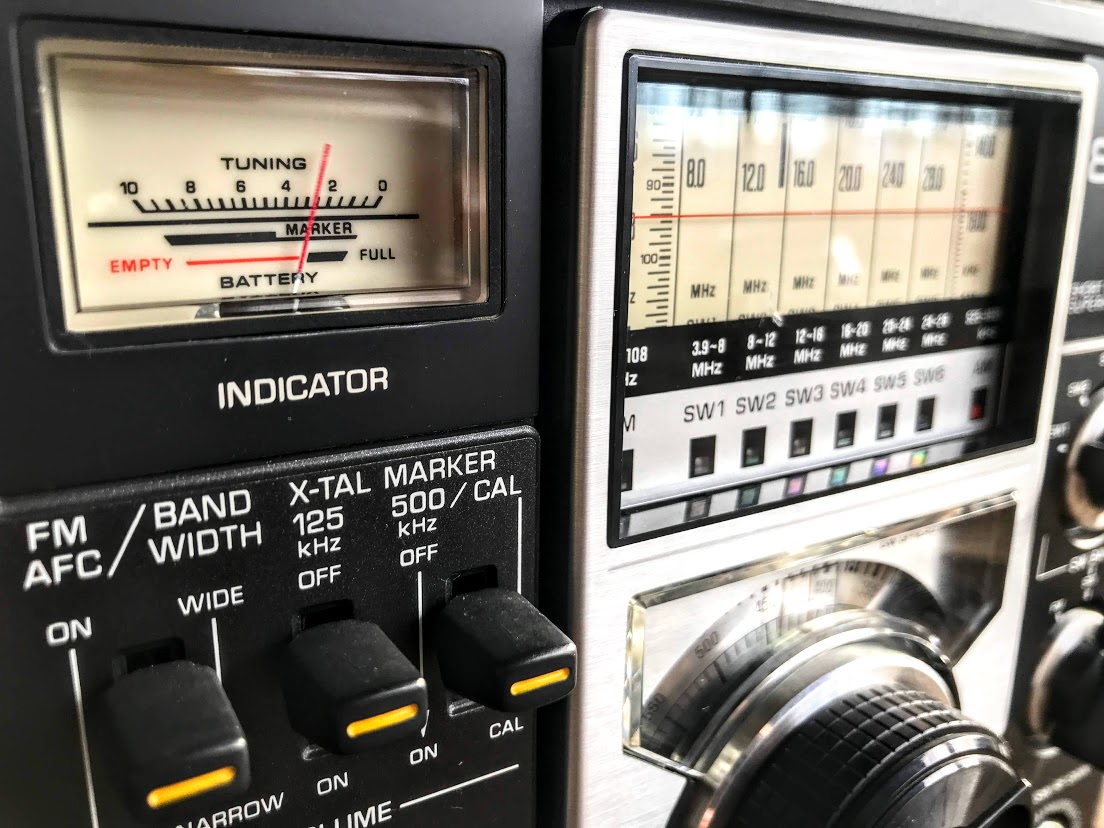
Radios that have sat on a shelf or in a basement for years may also have built up oxidization on switch and knob contacts. Carefully applying a product like Deoxit on contacts can make a world of difference and bring your radio back to life.

In addition, if you haven’t hooked up your radio in a couple of decades, you may be surprised by the amount of radio interference and noise (RFI) our home electronics generate. A random wire or indoor antenna that worked well in the 1970s might not work at all if you have high levels of RFI where you live. RFI has the same effect on your radio as a noisy restaurant environment has on your ability to hear a friend who is speaking at a normal volume level across the table from you. RFI can deafen your receiver. There are antennas that can help mitigate RFI, and there are also techniques you can use to help mitigate it.

Depending on where you live in the world, you will find the shortwave landscape isn’t the same as it was, say, in the Cold War years. Fear not! There are still numerous broadcasters out there, so people who say shortwave is “dead” simply aren’t listening.  Check out ShortwaveSchedules.com and Prime Time Shortwave for what’s out there and where to find broadcasters on the bands. If you like music, I highly recommend Alan Roe’s guide to music on shortwave.
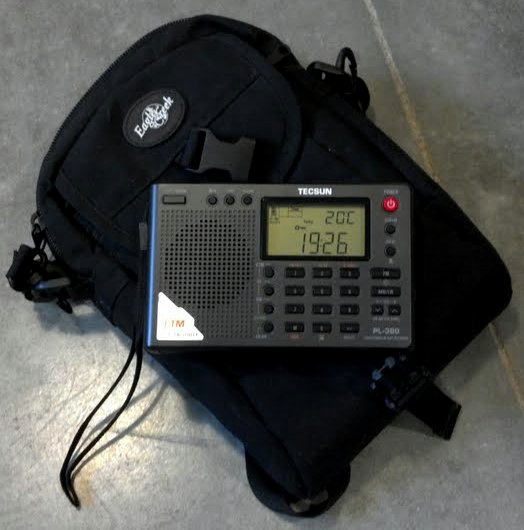
The Tecsun PL-380 is one of several compact portables that can be purchased for $50 or less.

If you find that you’re not hearing anything on your DX-150 (or other vintage radio)–even after following some of the advice above, yet you still want to explore the shortwaves–you might consider investing in a modern portable radio. Not only do modern portables sport a digital frequency display (which helps locate stations), but they allow you to take your listening to the field. You will be surprised what you can receive when you walk or drive to an area far away from man-made electronic noises. Tabletop radios like the DX-150 are not terribly portable. If you’re looking for some portable shortwave radio suggestions, check out this post. (Incidentally, if you found this post because you’re mainly seeking an AM/FM radio for local news and info, check out this post.)

Getting back on the air…
Alfred (and others who have recently contacted me) I hope this post gives you some helpful guidance. In truth, there are still many other issues that could affect your ability to get the most out of your vintage solid-state receiver. Let’s assume, though, that the solution is simple! Give it a go, and take your time tuning across the bands on different days and with your receiver in different locations.

My hope is that SWLing Post readers will also comment on this post with other suggestions to help you back into the world of SWLing!


Do you enjoy the SWLing Post?

Please consider supporting us via Patreon or our Coffee Fund!

Your support makes articles like this one possible. Thank you!

Radio Waves: Libre Space Foundation Reviews SDRs, ARRL VEC Statement, Pandemic Pastime, and Former CEO of RadioShack Now C-19 ER doctor

Radio Waves:  Stories Making Waves in the World of Radio

Because I keep my ear to the waves, as well as receive many tips from others who do the same, I find myself privy to radio-related stories that might interest SWLing Post readers.  To that end: Welcome to the SWLing Post’s Radio Waves, a collection of links to interesting stories making waves in the world of radio. Enjoy!

Many thanks to SWLing Post contributors Ron, Paul, Marco Zennaro, and Richard Langley for the following tips:


The Libre Space Foundation reviews software defined radios (Hackaday)

If you want to go to the next level with software defined radio (SDR), there are a lot of choices. The RTL-SDR dongles are fine, but if you get serious you’ll probably want something else. How do you choose? Well, your friends at the European Space Agency Libre Space Foundation have published a paper comparing many common options. True, they are mostly looking at how the receivers work with CubeSats, but it is still a good comparison.

The devices they examine are:

  • RTS-SDR v3
  • Airspy Mini
  • SDRPlay RSPduo
  • LimeSDR Mini
  • BladeRF 2.0 Micro
  • Ettus USRP B210
  • Pluto SDR

They looked at several bands of interest, but not the HF bands — not surprising considering that some of the devices can’t even operate on HF. They did examine VHF, UHF, L band, S band, and C band performance. Some of the SDRs have transmit capabilities, and for those devices, they tested the transmit function as well as receive.

The review isn’t just subjective. They calculate noise figures and dynamic range, along with other technical parameters. They also include GNURadio flowgraphs for their test setups, which would be a great place to start if you wanted to do these kinds of measurements yourself.[]

ARRL VEC Issues Statement on Video-Supervised Online Exam Sessions (ARRL News)

Very few ARRL Volunteer Examiner teams have successfully conducted in-person exam sessions (following social distancing guidelines) and video-supervised exam sessions using fillable PDF exams and documents. So far, we have found that both types of sessions take volunteer teams two to three times longer to conduct and accommodate fewer candidates than sessions conducted prior to the COVID-19 pandemic. So far, the video sessions have included only one examinee per session.

We ask the community to be patient with our volunteer teams as they navigate uncharted territory. Please remember with the introduction of significant new processes such as these, that there should be proof of concept, establishment of protocols and procedures, and beta testing before expanding to a larger audience. Video-supervised exam sessions require a different skillset than in-person exam administration. Not all teams will be equipped to deliver video exams right away.

The ARRL Volunteer Examiner Coordinator (VEC) has been investigating options for an online examination system.

Fillable PDFs are cumbersome within a video-supervised exam session process. We recognize that online testing would represent a large-scale solution for our thousands of VEs and would make session procedures easier for our teams, but this will not happen overnight.

The ARRL VEC will continue to adapt and respond to the evolving crisis as we search for viable and easy-to-use online examination system solutions and conduct exam sessions in innovative ways.[]

Pandemic Pastime – Shortwave Radio (KFGO)

Ever since I was a little kid, I was fascinated that at night you could listen to radio stations from all over the country. My little Heathkit radio, which I built myself, could pick up stations in Minneapolis, Chicago, St. Louis, Denver, Little Rock, Pittsburgh to name a few. West coast stations were rare because it was tough getting a signal over the Rocky Mountains.

Then there was shortwave radio. A buddy of mine had one and he showed me a list of all the countries he was picking up. England, France, Germany, Latin American countries, numerous stations on the shortwave bands in America. Even Radio Havana coming out of Cuba. Anything from religion to hard edge rock and roll. He also noted he picked up Radio Free Europe and the Voice of America.

Well years later I would stop by my local Radio Shack and decided it was my turn to take up this hobby of monitoring shortwave radio. This particular radio also had a built in cassette player so you could record your found stations as well. It was really interesting to hear the news from other countries and get their take on what was happening in America.

One of the first frequencies I tuned in was WWV a shortwave radio station out of Fort Collins Colorado, that broadcasts the time via the atomic clock. The seconds tick off until the top of the hour when you hear a voice announce the time, followed by a tone that hits the top of the minute exactly on the nose. Great way to set the clock.

Now I know you can probably find all these shortwave stations on the internet, but what fun is that right?

With the covid-19 pandemic, this is a little something different than binge watching television, or building that 10th jigsaw puzzle or cleaning out that closet again and again.

Have a chair on the patio, a glass of your favorite beverage, extend the antenna, and start turning up and down the dial and see what you can find. I had a little notebook that I kept track of my searches. Don’t have it now though…lost it.

I’ll start a new one.

Stay safe everyone![]

Former CEO of RadioShack now an ER doctor (National Post)

‘I am just one of those people who was very fortunate, where things worked out, and where I could do not just do one thing I really enjoyed in life, but two’

Brian Levy loved science as a kid. He had a microscope, read up on stuff in the encyclopedia and messed around with home experiment kits. During his high school years, he took every science credit possible. By his own admission, he was a “geek,” one with an equally strong passion, alongside science, for electronics.

Levy knew how to operate a shortwave radio. Weekend teenage heaven, in his mind, was hanging around the local RadioShack store, a warehouse of gizmos where he scored his first part-time job in 1974, earning US$1.40 an hour at a shop in downtown Atlanta. He was 15, which, alas, was too young to be working for the company, according to the folks at corporate headquarters in Texas, who fired him upon receiving his paperwork.

The dismissal didn’t sit well with Levy.

“I actually called the vice president of human resources in Texas,” he says. The executive was impressed by the moxie of the kid. On the day he turned 16, Levy was hired back.

[…]Levy did not foresee the premature end to his business career. When it came, rather than being crestfallen, he felt liberated, and free to pursue an “itch” that he had always felt the need to scratch. So he applied to medical school at McMaster University in Hamilton, ON. (Levy came to Canada in the first place after relocating RadioShack HQ north of the border as CEO. He is now a dual citizen, although his soft, buttery accent betrays his roots in the American south.)[]


Do you enjoy the SWLing Post?

Please consider supporting us via Patreon or our Coffee Fund!

Your support makes articles like this one possible. Thank you!
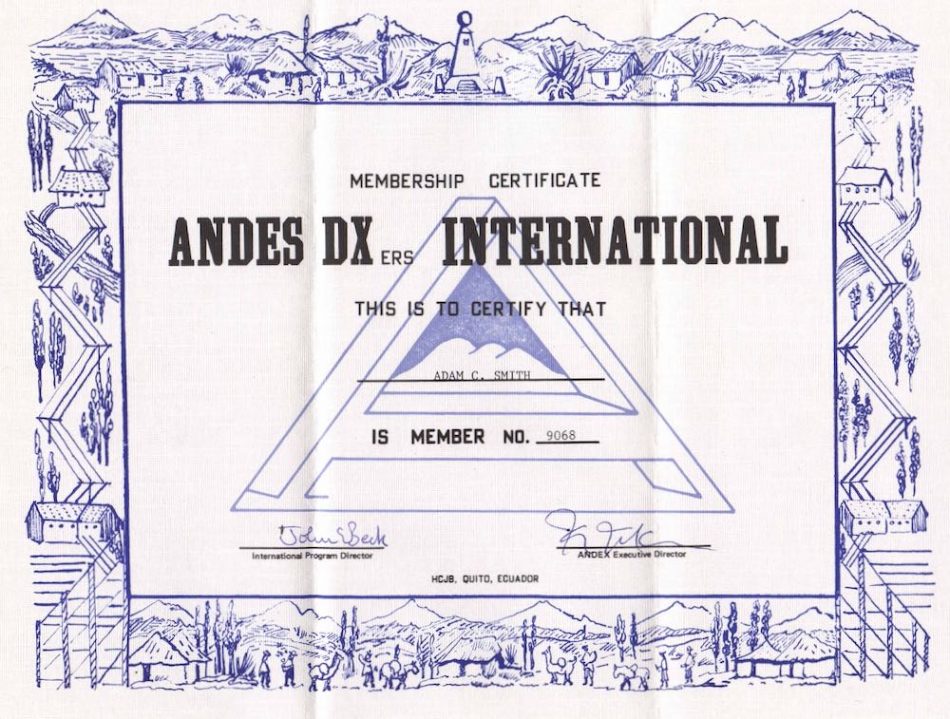
Adam’s Andes DXers International certificate

Many thanks to SWLing Post contributor, Adam Smith, who shares the following certificate and writes:

I was going to share a piece of history I just came across going through some of my shortwave radio boxes. Lots of QSLs but this its a membership in ANDES DX Club!

Good times!

Thank you for sharing this bit of shortwave radio nostalgia, Adam! Any others in the SWLing Post community belong to the Andes DXers International? Do you still have your certificate? Please comment!

Yet another mystery utility signal to solve–!

Back by popular demand!

On our quest to solve UNID utility signals, SWLing Post contributor David Crawford, is asking for help again to ID yet another interval signal. David writes:

Here’s yet another memorable utili-tune from the deep archives here, again not my recording, origin uncertain.

This one has a date, time and frequency on the filename [19670811-2347-15910-VM unID] and therefore would have been 1967. I heard this one myself occasionally also, which would have been sometime during the mid-to-late 1970s. It would have overlapped with the same time period during which CTNE was using the 14985 kHz tune previously provided, so despite the broad similarity I would assume it wasn’t them. Unless of course they used different tunes for different circuits:

Readers: Can you positively ID this interval signal? If so, please comment!

Dean solves second interval signal mystery

(Image source: Madrid.org)

In response to our second mystery interval signal challenge, SWLing Post contributor, Dean Bianco replies:

Mystery solved!

This is the “interval signal” (more accurately, a placeholder with a musical station identifier) for the Compañía Telefónica Nacional de España (CTNW) from Madrid, Spain.

They were a point-to-point HF radiotelephone terminal that provided overseas telephone and telegraph services in the days before satellites became common.

As a young SWL, I would receive all manner of strange musical identifiers for these utility stations. Most of these HF telecommunication services had gone to satellite by the early 1980’s. The HF bands were chock-a-block with signals, whether they be broadcast or utility services.

Glad to help!

To verify his claim, Dean shares the following embedded audio file made by Willi Passmann in the mid 1970s (via the excellent UtilityRadio.com website):

Well done, Dean! Thank you once again for coming to the rescue!

In case you didn’t know, dear readers, Dean Bianco is a force to be reckoned with in the shortwave radio world. 🙂 This year, he won the 3rd Annual Fest Trivia Quiz at the 2020 Winter SWL Fest! An impressive accomplishment, indeed. Not only that, but Dean’s an incredibly nice guy, great friend, and always willing to help out those new to the hobby!

Thank you, Dean!

Let’s solve another interval signal mystery!

Last month, we published a post asking SWLing Readers to help Brian (W9IND) identify an elusive interval signal. Turns out, the interval signal belonged to the Voice Mirror of the PTT Habana, Cuba station.

This month, SWLing Post contributor, David Crawford is asking for help to ID another interval signal which likely belongs to a utility station. David writes:

In follow-up to the La Habana utility mystery, here’s another one from the same era, 14985 kHz or thereabouts. Somewhere along the line I came to the conclusion that it might be El Salvador, but I don’t remember what led to that. The [recording embedded below] isn’t my own recording of it.

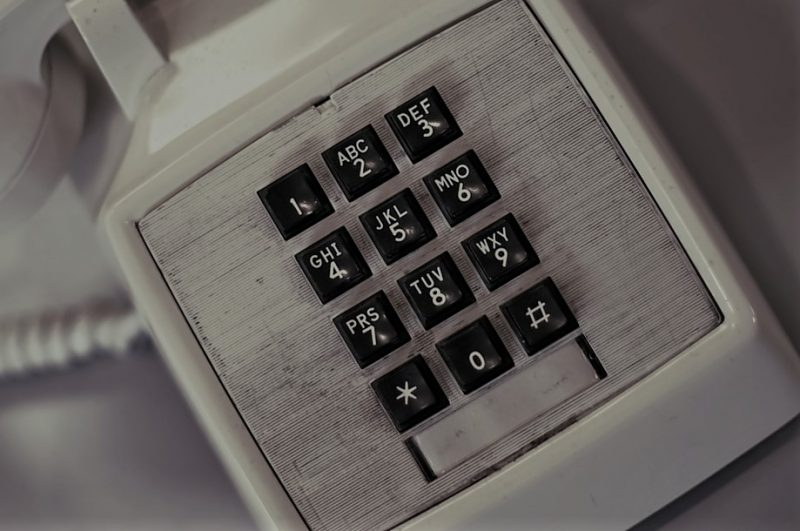
The tune is composed of individual DTMF tones, and when I was a bored youth I discovered that it could be played on an AT&T desk touch tone phone by pressing two keys at a time to remove the second tone. This one would repeat for hours at a time, interrupted by manually patched telephone calls.

Readers: Can you positively ID this interval signal? If so, please comment!