Tag Archives: Voice of America

VOA to increase broadcasts to Burundi

voa logoMauno Ritola shared the following message on the WRTH Facebook page this morning:

VOA Boosts Broadcasts to Burundi as Civilians Flee Political Violence

Monday through Friday:

  • 0400-0530: 7350 kHz, 9815 kHz, 11905 kHz

  • 1600-1630: 13630 kHz, 15460 kHz, 17530 kHz

  • 1930-2000: 9470kHz, 11615 kHz, 12140 kHz

Mauno also notes that the late evening frequencies are incorrect in the following VOA news release:

(Source: VOA News)

Voice of America today began boosting broadcasts to Burundi where at least 14 people have been and killed and more than 200 injured in protests against President Pierre Nkurunziza running for a third term.

VOA has additional shortwave and FM broadcasts in Kirundi, Kinyarwanda, Kiswahili, French, and English with an expanded call-in show, more reporting from the ground, and new drive-time newscasts.

“At this critical moment for democracy in Burundi, we are stepping up to keep our audiences informed, “ says VOA Director David Ensor. “Voters deserve to know what is going on with presidential elections just one month away.”

The African Union and the United States say the Nkurunziza candidacy violates a regional peace deal that ended civil war in 2005. U.S. Secretary of State John Kerry says the president’s move “flies directly in the face of the constitution of his country.”

President Nkurunziza says he is exempt from the two-term limit because his first term was chosen by parliament.

VOA is one of the last remaining sources of news in Burundi after authorities blocked access to social media, closed Radio Publique Africane, and suspended relay transmissions for two other independently owned stations — Bonesha FM and Isanganiro.

The Committee to Protect Journalists condemns this harassment and says the Nkurunziza government is “blatantly trying to gag” coverage of its opponents.

VOA is adding reporters in Burundi and Rwanda along with additional staff in Washington D.C., where its U.S. government-funded transmissions originate.

Daily broadcasts air on 95.2 FM and 94.9 FM in Bujumbura and on 104.3 FM in Kigali.

There are new VOA shortwave broadcasts from 04:00 to 05:30 UTC and from 19:30 to 20:00 UTC on 7350 kHz, 9815 kHz, and 11905 kHz; and from 16:00 to 16:30 UTC on 13630 kHz, 15460 kHz, and 17530 kHz.

“With thousands of Burundians fleeing to neighboring Rwanda, Tanzania and the Democratic Republic of Congo, VOA is committed to providing accurate and reliable news to this critical region,” says Ensor.
VOA director David Ensor steps down

(Source: NY Times)

David Ensor (Source: BBG)

David Ensor (Source: BBG)

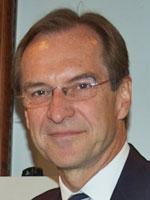
David Ensor, who as director of the Voice of America has presided over significant growth in the news agency’s audience despite budget cuts, announced Tuesday that he was stepping down.

Mr. Ensor, who joined the Voice of America in June 2011, said he would leave the government-funded broadcaster at the end of next month. He did not explain his decision or discuss his plans.

The Broadcasting Board of Governors, which oversees the Voice of America, credited Mr. Ensor with creating new television programming in Russian, Ukrainian, Persian, Mandarin, Burmese and Creole, among other languages. It also said he had led a digital transformation of the agency’s newsroom and expanded media programs in Africa.

[…]His time at the news agency has not been without controversy. Dan Robinson, the former chief White House correspondent for the Voice of America, said its central news operation had been devastated by staffing cuts, and he and other former employees said a number of veteran correspondents had resigned or retired in frustration. [Continue reading…]

CRI, RFA, Sputnik, and the BBC: an “information battle?”

Radio-Dial-Blurred-Dark

Many thanks to SWLing Post contributor, Richard Cuff, for sharing this article from The National:

Radio wars: information battle heats up as Russia and China muscle in

For about 70 years it was the base of the BBC World Service. Bush House, with its grand marble entrance in central London, stood as a powerful symbol of the BBC, home to the short-wave radio services that delivered news to dozens of countries in more than 40 languages. But the lights went out in 2012 when the World Service moved to the more prosaic Broadcasting House; two years later it lost its annual £245 million (Dh1.341 billion) grant from the UK’s government.

Both changes are symptomatic of the BBC’s less certain place in the broadcasting world as other countries significantly ramp up recruitment and funding for their own equivalent services.

Last December, Peter Horrocks, the BBC World Service’s former director, warned that the West was losing the “information war” with Moscow as the old Cold War foe pumped out wave after wave of pro-Kremlin propaganda on its rapidly expanding radio, TV and online platforms.

Horrocks had called for a rethink on financial assistance from the UK government as, even before the grant was ended, cutbacks in 2011 forced the closure of five language services and some short-wave broadcasts.

“We are being financially outgunned by Russia and the Chinese. Medium to long term there has to be an anxiety about the spending of others compared to what the BBC are putting into it,” he said.

It is now all too clear that established broadcasters that are based in the West, such as Radio Free Asia, Voice of America (VOA), Radio Free Europe (RFE) – funded mainly through an agency of the US government – and the BBC are facing increased competition. Last November, Moscow rebranded its international English-language radio service: Radio Sputnik replaced the Voice of Russia and funding was increased for a new state-owned global news agency, Rossiya Segodnya.

Meanwhile, Beijing’s China Radio International (CRI) is an important part of the Communist Party’s foreign policy. CRI uses internet, short wave and satellite to broadcast around the world in dozens of languages, while Radio Sputnik has ambitions to broadcast in 30 languages across more than 130 countries by the end of the year.[…]

Continue reading on The National website…

Seeking a recording of the VOA Greece Station ID

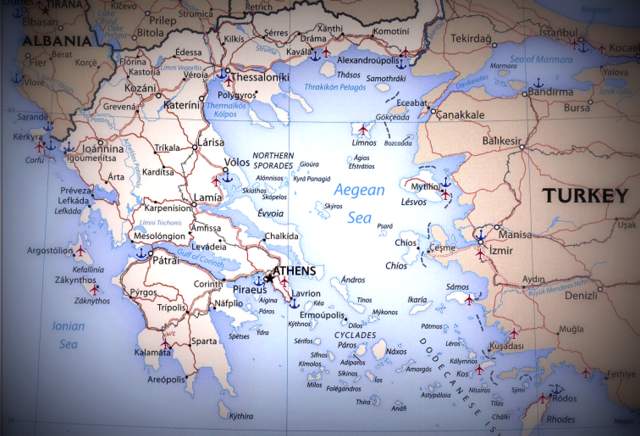
GreeceMapMy friend, Gary Wise (W8EEY), recently wrote with an inquiry; I’m hoping an SWLing Post reader can help…

Gary writes:

“As you might know I was the Station Manager of the VOA Greece Transmitting Station when it closed down in 2006. I’ve been contacted by one of the Greek employees. They are planning a reunion of former employees in April and would like to put together an audio montage of station sounds. They have some material, but would like to find a recording of the Greece Station ID (and possibly the one from Rhodes too). This was a male announcer stating that “This transmission came to you from Greece” or words to that effect.

Would you have such a thing, or know who might? I know the crew would greatly appreciate anything you might have along these lines.”

I don’t believe we have a recording of this in the SW Radio Audio Archive, nor in my local archives.

Does anyone out there have a recording of the VOA Greece Station ID? Please comment below or contact me.

An SWL perspective on US/Cuba relations

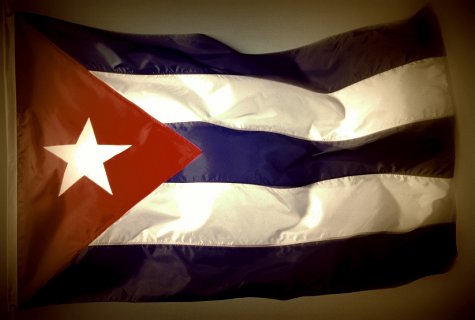
WFL_015Many thanks to SWLing Post contributor, London Shortwave, who has posted an article on his blog regarding US/Cuba relations after Presidents Barack Obama and Raul Castro announced, last Tuesday, the re-establishment of relations. London Shortwave has included recordings from the VOA, Radio Marti and Radio Havana Cuba.

Click here to read the full article on London Shortwave’s blog.

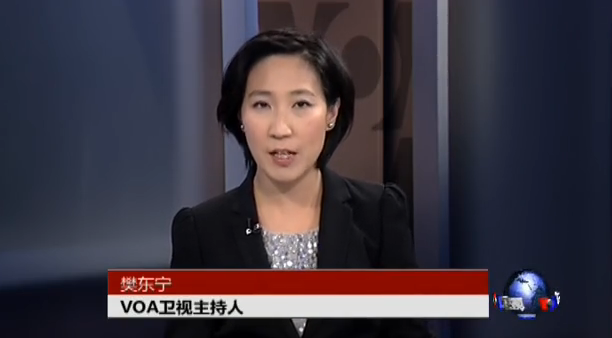
VOA Reduced TV to China during Hong Kong protests

VOA-Weishi-TV

The website BBG Watch recently posted a guest commentary from an anonymous VOA reporter regarding the loss of VOA Weishi TV during the Hong Kong protests. Here is an excerpt from BBG Watch:

“On Monday, September 29, the loyal viewers of Voice of America (VOA) “Weishi,” the VOA Mandarin TV program, were surprised to see their TV screen turned into a blue graphic during some hours when the original program previously aired was repeated. In the place of the professionally produced VOA TV broadcast, audiences received radio signals from Radio Free Asia (RFA).

Audience surveys, although underestimating the viewership because many Chinese are reluctant to share sensitive and potentially dangerous information with strangers, show that the popularity of the 2-year-old VOA “Weishi” is growing by leaps and bounds in China. Some of its segments, including “History’s Mysteries,” “Pro&Con” and “Issues and Opinions,” already also attract many millions of viewers on YouTube. The management’s decision to take away some of the repeat hours from the “Weishi” programs will be devastating to VOA’s Mandarin broadcasting. Meanwhile, it will not help RFA, since very few people listen to radio via TV. If they do, there are existing channels leased by the International Broadcasting Bureau (IBB) to broadcast radio programs via satellite to China and Tibet. IBB reports to the Broadcasting Board of Governors (BBG), the federal agency and the bipartisan Board in charge of all U.S. taxpayer-supported media for audiences abroad.”

Read the full commentary on the BBG Watch website.

I listened to China Radio International a few times during the peak of the protests and–no surprise–there was absolutely no mention or even hint of an uprising. Indeed, China has been actively blocking international TV news outlets like CNN and social media sites like Instagram.

China-WPFI-001

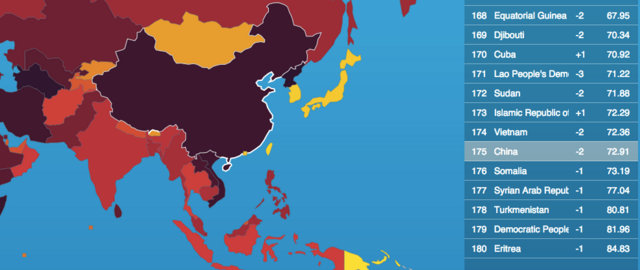
China is ranked as one of the worst countries in the world in terms of press freedoms–175th out of a possible 180 countries on the 2014 World Press Freedoms Index.