Many thanks to SWLing Post reader, Daniel Amoroso, for sharing the following QSL cards from the Voice of America and China Radio International: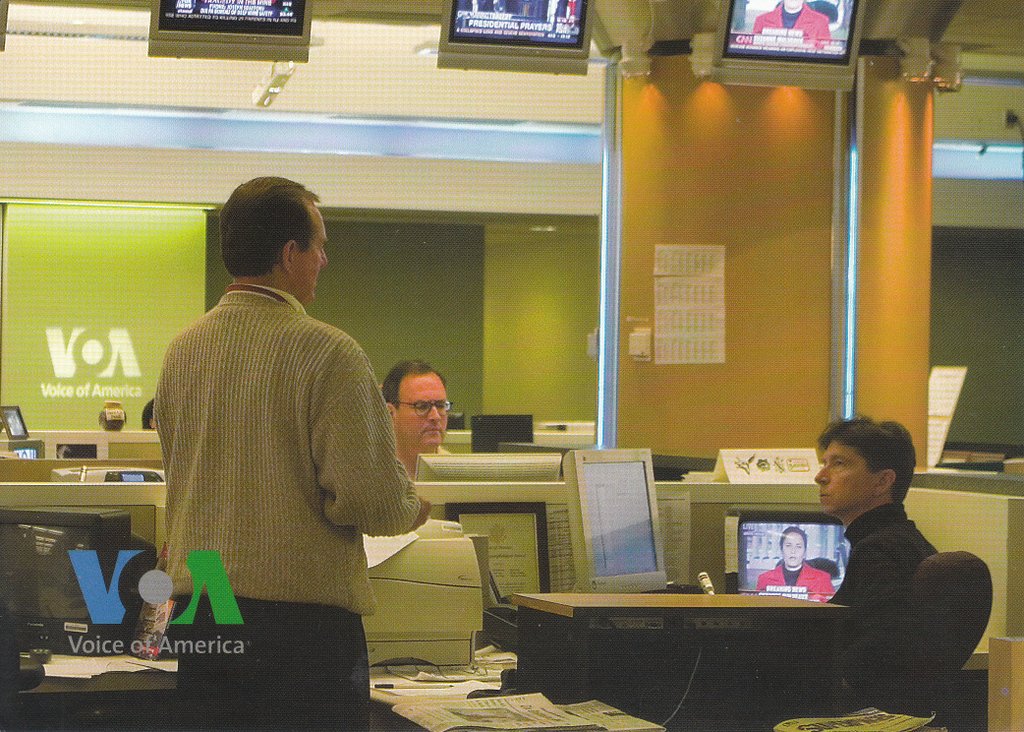

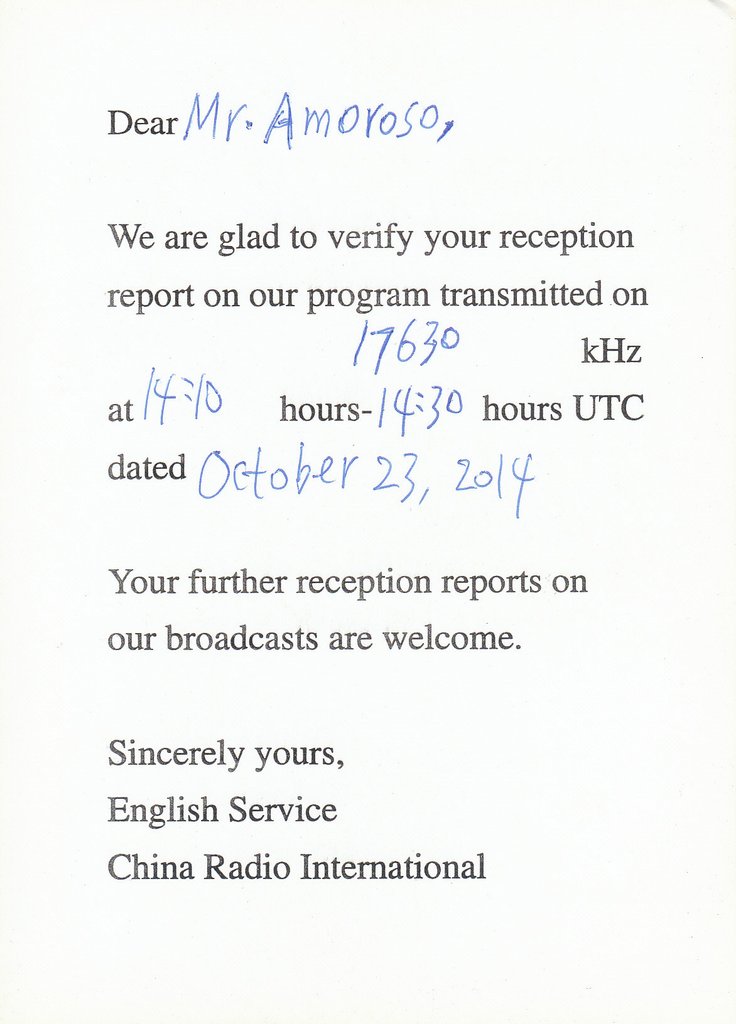

Many thanks to SWLing Post reader, Daniel Amoroso, for sharing the following QSL cards from the Voice of America and China Radio International:
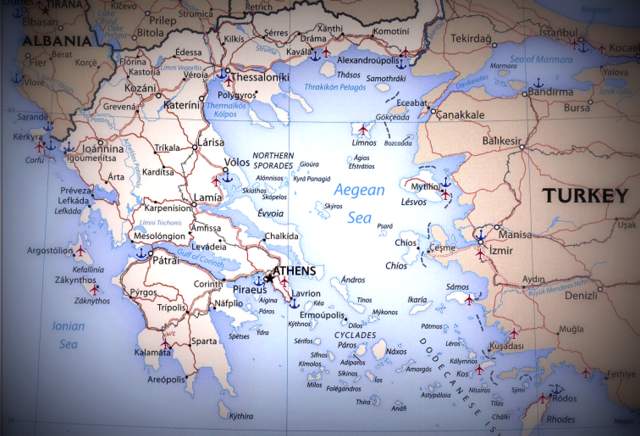 My friend, Gary Wise (W8EEY), recently wrote with an inquiry; I’m hoping an SWLing Post reader can help…
Gary writes:
“As you might know I was the Station Manager of the VOA Greece Transmitting Station when it closed down in 2006. I’ve been contacted by one of the Greek employees. They are planning a reunion of former employees in April and would like to put together an audio montage of station sounds. They have some material, but would like to find a recording of the Greece Station ID (and possibly the one from Rhodes too). This was a male announcer stating that “This transmission came to you from Greece” or words to that effect.
Would you have such a thing, or know who might? I know the crew would greatly appreciate anything you might have along these lines.”
I don’t believe we have a recording of this in the SW Radio Audio Archive, nor in my local archives.
Does anyone out there have a recording of the VOA Greece Station ID? Please comment below or contact me.
 Many thanks to SWLing Post contributor, London Shortwave, who has posted an article on his blog regarding US/Cuba relations after Presidents Barack Obama and Raul Castro announced, last Tuesday, the re-establishment of relations. London Shortwave has included recordings from the VOA, Radio Marti and Radio Havana Cuba.
Click here to read the full article on London Shortwave’s blog.
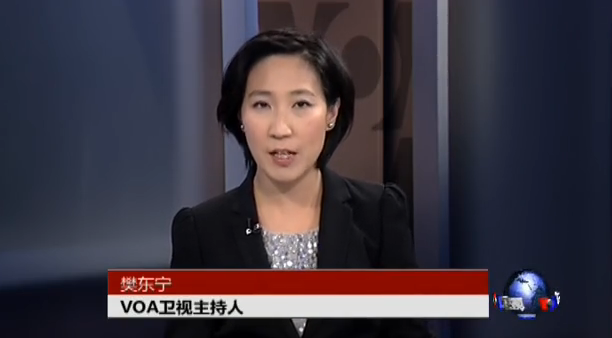
The website BBG Watch recently posted a guest commentary from an anonymous VOA reporter regarding the loss of VOA Weishi TV during the Hong Kong protests. Here is an excerpt from BBG Watch:
“On Monday, September 29, the loyal viewers of Voice of America (VOA) “Weishi,” the VOA Mandarin TV program, were surprised to see their TV screen turned into a blue graphic during some hours when the original program previously aired was repeated. In the place of the professionally produced VOA TV broadcast, audiences received radio signals from Radio Free Asia (RFA).
Audience surveys, although underestimating the viewership because many Chinese are reluctant to share sensitive and potentially dangerous information with strangers, show that the popularity of the 2-year-old VOA “Weishi” is growing by leaps and bounds in China. Some of its segments, including “History’s Mysteries,” “Pro&Con” and “Issues and Opinions,” already also attract many millions of viewers on YouTube. The management’s decision to take away some of the repeat hours from the “Weishi” programs will be devastating to VOA’s Mandarin broadcasting. Meanwhile, it will not help RFA, since very few people listen to radio via TV. If they do, there are existing channels leased by the International Broadcasting Bureau (IBB) to broadcast radio programs via satellite to China and Tibet. IBB reports to the Broadcasting Board of Governors (BBG), the federal agency and the bipartisan Board in charge of all U.S. taxpayer-supported media for audiences abroad.”
Read the full commentary on the BBG Watch website.
I listened to China Radio International a few times during the peak of the protests and–no surprise–there was absolutely no mention or even hint of an uprising. Indeed, China has been actively blocking international TV news outlets like CNN and social media sites like Instagram.
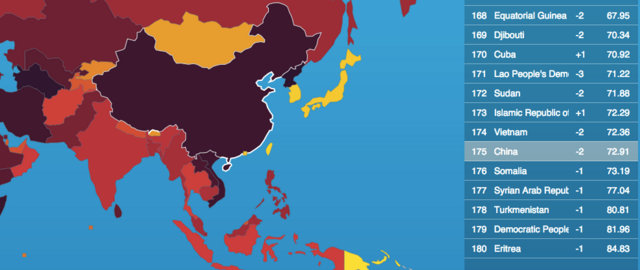
China is ranked as one of the worst countries in the world in terms of press freedoms–175th out of a possible 180 countries on the 2014 World Press Freedoms Index.
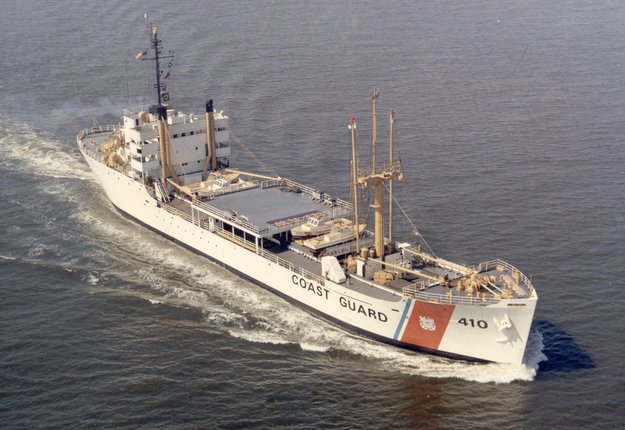
Photo courtesy of former Courier crewman David M. Newell. Source: US Coast Guard
(Source: VOA News)
In 1952, amidst the Cold War, a 338-foot Coast Guard Cutter was transformed into the mobile broadcasting base of the Voice of America. Its mission for more than a decade: send information beyond the Iron Curtain to counter Soviet propaganda in more than a dozen native languages. Daniela Schrier reports from an exhibit honoring the veterans and broadcasters who served aboard the ship in the waters off of Rhodes, Greece.
Click here to watch the video if the embedded player above is not visible.
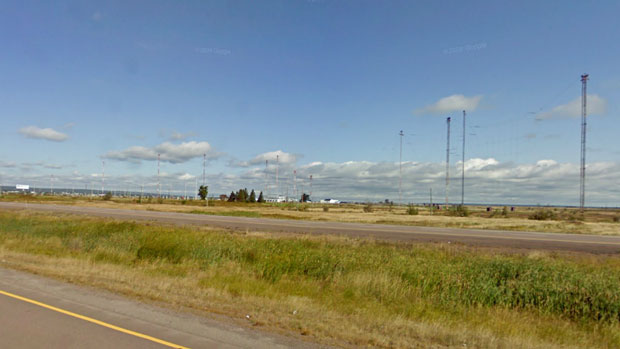
Check out this article from Radio World which addresses the state of shortwave radio broadcasting.
Jeff White of WRMI and Kim Elliott of the VOA are both interviewed. Elliott even speaks about the virtues of the VOA Radiogram experiments which have had success circumventing shortwave radio jamming (broadcasts which were completely omitted from the BBG Special Committee report on the efficacy of shortwave radio).
 Many thanks to TheGreekRadio.com for commenting with details about the August 12 closure of VOA’s Greek language service and allowing the following article to be republished on the SWLing Post:
The end of operation of the Greek Service of VOA (Voice of America) after 72 years was announced yesterday by the radio network. The decision was taken due to cuts in the budget allocated for the operation of the news organization, but also due to the effort to use the broadcaster for the diplomatic needs of the United States. The last show will be aired Tuesday morning via satellite and it will be relayed to Greece by Skai Radio and City 106,1 in Thessaloniki. The first broadcast of the Voice of America, the official foreign-language radio in the United States was the February 1, 1942 in German with the announcer WIlliam Harlan Hale. The Greek was one of the 25 languages of the first network and airs on November 1, 1942.
The history of the Greek service
The presence of the Voice of America was very evident in the Greek territory, as the giant of American propaganda during the Cold War had settled in Greece, two of the most powerful transmitters in order to broadcast to Eastern Europe.
The radio transmitters of the Voice of America settled in Greece after the civil war, as part of the implementation of the Truman Doctrine. Then, the American state sent to Greece a set of equipment, “to facilitate the Greek Institute of Radio”, but which was used extensively for broadcasts programs from Washington. The first equipment arrived in 1949, and included a medium wave transmitter WESTERN ELECTRIC 50 KW and four shortwave transmitters COLLINS 30 KW, placed by the Voice of America in Perea Thessaloniki, by providing facilities for radio broadcast abroad: ‘Voice of homeland “of E.I.R (later the 5th of ERA). Also, the Voice of America originally had a floating the radio station on the medium wave powered 150 KW, aboard a ship called Courier, which was anchored in Rhodes and had its antenna mounted on a balcony.
The almost arbitrary installations of radio transmitters legalized later by a series of agreements between the American and the Greek Government and the relocation of equipment in Rhodes (Koskinous, Sgouros, Afandou), Xanthi (Dasochori) and Kavala (Agiasma). The last two agreements in 1997 and 2002, under which the American service undertook the responsibility to provide technical assistance and equipment (transmitters medium and short) to the Greek Radio. The transmitters in the Greek area set off in 2006, as part of policy to reduce shortwave. Then it was considered that the Greek stops as well, but the reactions of Greek-American associations eventually blocked the decision and the Greek radio program continued to broadcast via satellite, internet and FM stations as relayed by the Sky and the City International.
In 2006, despite the fact that the Voice of America left behind two very powerful transmitters, which could be used by the Greek Radio, eventually due to high maintenance cost , the broadcasting sites remained inoperative. Indeed, a few months ago, the abandoned facilities of the Voice of America in Xanthi to contain dangerous materials for the environment.
Readers: please contact me if you are able to record this final broadcast as I would like to add it to the Shortwave Radio Audio Archive.
Again, our thanks to TheGreekRadio.com who publishes news about all aspects of Greek radio on their site. Please check it out!