Tag Archives: Voice of America

VOA adds shortwave frequencies for US election coverage

(Photo source: VOA)

(Source: VOA via Kim Andrew Elliott)

Special election programming on the Voice of America

0200-0600 UTC, November 7:

Africa
0200-0300 UTC  909, 1530, 4930, 6080, 9885, 15580
0300-0600 UTC  Existing broadcasts

Middle East
0200-0400 UTC   9480, 12005, 15255
0400-0600 UTC   9480, 15255

Asia

a. South and Central Asia
0200-0400 UTC  13810, 15155, 15255, 15590
0400-0600 UTC   13570, 13810, 15155, 15255, 15590, 15640, 17525

b. East Asia
0200-0300 UTC  13810, 15230, 17525, 17615
0300-0400 UTC   13810, 15230, 17615
0400-0600 UTC   13810, 15230, 15405, 15640, 17615

c. Southeast Asia
0200-0300 UTC   11705, 15155, 17525
0300-0400 UTC   15155, 17525, 17615
0400-0600 UTC   15155, 15640, 17525, 17615

BBG: Hurricane Sandy Fails To Stop VOA Broadcasts

Though this press release rightfully focuses on the staff at VOA headquarters in DC, we should take our hats off to the good folks that kept the Edward R. Murrow Transmission site running in North Carolina as well.

(Source: BBG)

Pounding rain and 80 mile an hour winds from Hurricane Sandy shut down U.S. government offices and the Washington, D.C. public transportation Monday and Tuesday, but it didn’t stop VOA journalists, technicians and support personnel from delivering news around the world in 43 languages.

“We had people sleep on couches around the building, and one used a cot, but the cots are not very comfortable,” English Branch Chief Terry Wing says.  “Some folks came in early on Monday, some stayed late, a couple are still here, I think some are going on 30 hours or more.”

VOA Director David Ensor says every show aired on schedule.  “It was extraordinary, hundreds of programs went out, we never missed a beat.”  Ensor says many language services provided constant updates to network affiliate stations around the world.

Executive Editor Steve Redisch says, “The Spanish Branch did more than 50 live shots to affiliates in Latin America and had a reporter on the New Jersey beach. The Russian Service was on with their affiliate, and the Indonesian Service filed for 20 radio and TV affiliates.”  Redisch says those are just some examples of what went on during the storm.

Newsroom Deputy Managing Editor David Jones, who spent the night at a nearby hotel, says it was all hands on deck.  “People were great.  We had TV and radio packages on the weather, and our political reporter did a story on how the hurricane affected the campaign, but most of our coverage was international — the fighting in Syria, Secretary of State [Hillary] Clinton’s trip to the Balkans, the Ukrainian Election, and   there was something on South African politics,” Jones says.

Executive Editor Redisch says there was a lot of resourcefulness.  The French-to-Africa Service found a French speaking meteorologist at the National Weather Service, and the Mandarin Service TV show was anchored by an alternate who borrowed clothes so she could host the program.

While VOA journalists were hunkered down in Washington, videographer Daniela Schrier managed to capture something that nobody else had, footage of flood waters rushing through streets of Lower Manhattan Monday night.  Schrier, who was trapped in her apartment in New York’s East Village, managed to upload the video to Washington just before she lost power.

VOA broadcasts more than 1,700 hours of radio and television programming around the world each week from its headquarters in Washington.  The programs are delivered on satellite, cable, shortwave, AM, FM, the Internet and on a worldwide network of affiliate stations.

VOA: Malian journalist attacked on air, listeners search and rescue

(Source: VOA News)

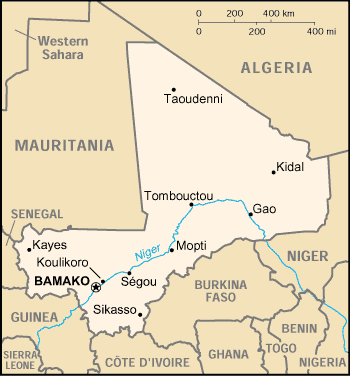
A Malian journalist who was hospitalized after being beaten by Islamist militants in the northern city of Gao Sunday says he was unconscious after the attack.

Speaking from his hospital bed Tuesday in Gao, Malick Maiga Aliou told VOA’s French To Africa service that men “armed to the teeth” entered the studios of radio Adar Koima during a live broadcast and dragged him into a car.

He says the gunmen beat him with rifle butts and other objects, accusing him of spreading lies about them.  Eventually, he says, they dumped him at a local cemetery where they stomped on him and left him for dead.

Local residents who heard the attack live on the radio organized a search for Aliou, who was found unconscious and taken to a local hospital.

The beating, Aliou’s third at the hand of Islamists, appeared to be punishment for reporting that local residents had prevented the amputation of a thief’s hand on Sunday.

The Malian journalist also contributes stories to the Voice of America.  VOA’s director David Ensor condemned the attack and applauded the local residents who came to Aliou’s aid.

The Islamist group MUJAO, which controls Gao, insists on imposing strict Islamist laws in the region under their control.  But local residents organized a protest Sunday to prevent the amputation of the young thief’s hand.

MUJAO and other Islamist groups took over control in northern Mali following the March coup in the capital Bamoko.

Last week, in the small Malian town of Aguelhok, another armed Islamist group, Ansar Dine, publicly stoned an unmarried couple.

Mali’s government has condemned the stoning as well as the attack on the journalist.

Malian interim President Dioncounda Traore has recently returned to Bamako after two months in Paris, recovering from a violent attack by opponents to his appointment.  He vowed the government will retake the north.

Fifteen-member regional group ECOWAS has proposed deploying more than 3,000 troops to help restore order in Mali.

In Zimbabwe, “if you want to hear the truth…listen to Shortwave Radio Africa…listen to VOA”

This is a brilliant piece on the lack of press freedom in Zimbabwe and the importance of shortwave radio. It was broadcast yesterday on Weekend All Things Considered. Links to the show and audio are below.

(Source: NPR)

In Seke, a rural community 40 miles outside Harare, James Chidakwa and his father eat roasted nuts and cornmeal inside a small brick hut. They’re farmers who rely heavily on maize and chickens to survive. James Chidakwa says that like many, his family refuses to listen to government TV or radio broadcasts.

“They always lie to the people,” he says. “Everything they say is a lie.”

So at 6 p.m. most evenings, they turn on a battery-powered, short-wave radio and tune in to a “pirate radio station.” Chidakwa says Shortwave Radio Africa and Voice of America are their favorites.

“If you want to hear the truth, wait for the end of the day to listen to Shortwave Radio Africa, to listen to VOA,” he says.

The stations, which are based in the U.K. and the U.S., send their signals through radio towers in countries that border Zimbabwe. That means Zimbabwean officials — who claim these broadcasts are illegal — have little recourse. In the past, they’ve confiscated short-wave radios. Chidakwa says that forces some people to listen undercover.

“Some of them, they will take the radios into their bedrooms and, low volume, they listen to the news. But the truth is, there is fear in them,” he says.

But for Chidakwa and his father, it’s a risk they are prepared to take.

The stations, which are based in the U.K. and the U.S., send their signals through radio towers in countries that border Zimbabwe. That means Zimbabwean officials — who claim these broadcasts are illegal — have little recourse. In the past, they’ve confiscated short-wave radios. Chidakwa says that forces some people to listen undercover.

“Some of them, they will take the radios into their bedrooms and, low volume, they listen to the news. But the truth is, there is fear in them,” he says.

But for Chidakwa and his father, it’s a risk they are prepared to take.

You can listen to the full story from Weekend All Things Considered, by clicking here (mp3), or read the transcript on this page.

This is just one more story we’ll file under “Why Shortwave Radio.”

RCI, and others, I wish you were listening. Those in Zimbabwe certainly are.

“VOA Looks to Future on 70th Anniversary”

(Source: Voice of America Press Release)
Washington, D.C. — February 1, 2012 — Voice of America turned 70 on Wednesday, and VOA Director David Ensor says the international broadcast agency is aggressively moving forward with new programs that ensure it remains an “information lifeline to people in closed societies like Iran.”

Addressing VOA journalists at the agency’s Washington headquarters, Ensor pointed to a television news show for Burma that began airing in January, a popular video blog that has been viewed more than 7 million times in China, expanded TV broadcasts to Iran, and new health programs on radio in Africa. He also described plans for a Russian language TV program that will harness popular social media programs to make citizen journalists and the audience a key part of the show.

Ensor said the one-time cold war broadcaster is “as relevant today as it was February 1st, 1942,” the date of the first shortwave radio broadcast to Germany.”

Created by the U.S. government in the opening days of World War Two, the Voice of America has evolved into a global multi-media organization, broadcasting balanced and comprehensive news in 43 languages to an estimated weekly audience of 141 million.

The first shortwave radio transmission, spoken in German just weeks after the Japanese attack on Pearl Harbor, began with the words “Here speaks a voice from America.” The broadcast went on to promise, “The news may be good. The news may be bad. We shall tell you the truth.” Ensor, the 28th Voice of America director, says the agency continues to be guided by those words.

VOA radio remains highly popular in many markets, including Somalia, parts of Pakistan and Haiti. Ensor says the agency is moving forward with new television and Internet programs that target countries like Iran, where the government restricts the free flow of information.

VOA programs are delivered on satellite, cable TV, mobile, shortwave, FM, medium wave, the Internet, and on a network of about 1,200 affiliate stations around the world. In addition to more than 1,100 employees in Washington, VOA works with contract journalists in trouble spots around the world. Last month the Taliban claimed responsibility for the murder of a reporter working for VOA in Pakistan.

Chucho Valdés: Inspiration from VOA Jazz Hours

(Source: Kim Elliott via the Hartford Courant)

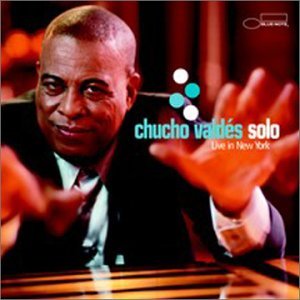
24 Jan 2012, Owen McNally: “Still very much an irrepressible life-force at 70, Chucho Valdés, the renowned Cuban pianist, composer and bandleader, is on a winter tour of the United States that sets down for high-energy maneuvers … at the cabaret series at the University of Connecticut’s Jorgensen Center for the Performing Arts. … The title track [of his new CD], ‘Chucho’s Steps,’ … is a 50-bar adventure in challenging harmony in which he pays tribute to John Coltrane’s intimidating masterpiece, ‘Giant Steps.’ Valdés notes that as a young man in Cuba he would listen on short-wave radio to a program called ‘The Jazz Hour’ on The Voice of America, an experience that opened his ears to Coltrane’s innovations and the creative fervor of the new, iconoclastic music that was fermenting in the States.”

The Voice of America turns 70

(Source: Diplomatic Courier)

“The news may be good. The news may be bad. We shall tell you the truth.” – William Harlan Hale; February 1, 1942

Such began the first broadcast of a small team of dedicated men transmitting live from a claustrophobic New York City studio into Nazi Germany.  Their group had no name, although their first broadcast was titled Stimmen aus Amerika—Voices from America. The equipment they used was borrowed.  They had no direction as to what they would broadcast, except the truth.  At that moment, the United States stepped into a role as guardian of the power of ideas and honest messenger of information to all corners of the world.

From the very beginning, the Voice of America has held at its core the mission to present to the world the policies and culture of the United States, while reporting on global news events accurately, clearly, and objectively.  It has been one of the U.S.’s most effective public relations initiatives. All around the world, the Voice of America is highly respected as an honest and fair messenger, and in many places, as the only comprehensive source of news free from propaganda.  From Nazi Germany to Communist Eastern Europe to Kim Jong Il’s North Korea, VOA has often been the only connection to the outside world that people of repressive regimes have. […]

Today, VOA broadcasts through the Internet, television, and a network of AM, FM, and shortwave radio signals. The approximately 1500 hours of programs per week include features on American culture, learning English, international news, discussion programs, and regionally focused programs to address the needs of the local populations.  VOA broadcasts in 43 languages, televising programs in 26 of those, and reaches 141 million people weekly. All this makes VOA one of the largest multimedia news organizations in the world.

Read the full story at the Diplomatic Courier website.