Author Archives: Thomas

Shortwave Shindig Interval Signal Sign On

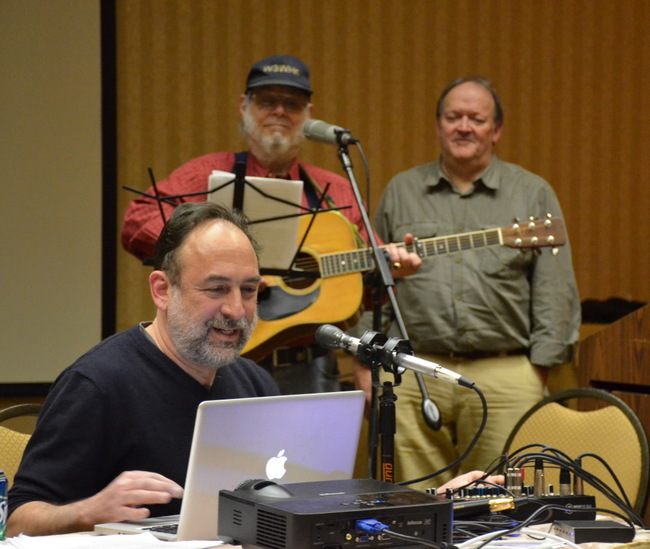
Broadcasting a live performance of the Shortwave Shindig at the 2015 Winter SWL Fest.

Many thanks to SWling Post contributor David Goren, who recently uploaded the Shortwave Shindig interval signal slideshow to his YouTube channel. David notes:

For the past 22 years or so, I’ve helmed the Shortwave Shindig, a long form listening session celebrating the art, history and culture of Shortwave Radio. This takes place in suburban Philadelphia at the annual Shortwave Listener’s Fest (which just marked it’s 39th year), sponsored by the North American Shortwave Association (NASWA). Our opening gambit for the evening is to play an Interval Signal medley. Interval Signals are short samples of music often incorporating a country’s national anthem, folkloric music, even bird calls…as an aid for tuning in the station prior to the official sign-on. Our resident musical genius Chris Johnson takes the Shindig’s anthem, the country gospel tune “Turn Your Radio On” and morphs it into classic Interval Signals from the golden era of Shortwave Radio broadcasting (including The Voice of America, Radio Tehran, Radio Kiev, Radio Norway, Radio Canada, Radio Australia and many more.) This year I added a slide show with a smattering of Shortwave Radio related graphics. I present it here for your listening and viewing pleasure. Kudos also to Jeff Murray for designing the ultra-snazzy Shortwave Shindig logo.

Click here to view/listen via YouTube.

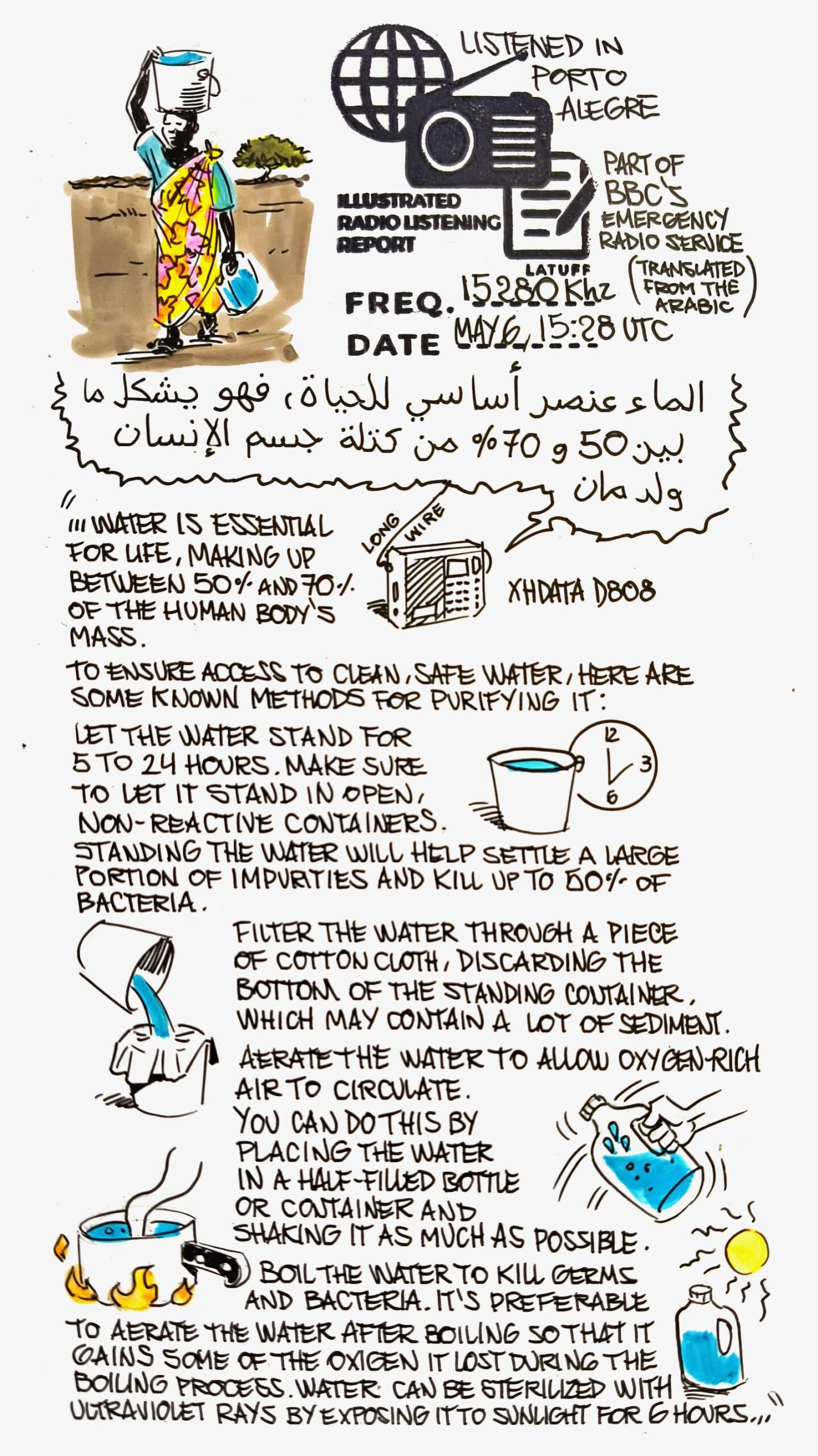
Carlos’ Illustrated Radio Listening Report and Recording of the BBC Emergency Radio Service (May 6, 2026)

Many thanks to SWLing Post contributor and noted political cartoonist, Carlos Latuff, who shares the following illustrated radio listening report of a recent BBC Emergency Radio Service broadcast.


Carlos notes:

BBC Emergency Radio Service

Click here to view on YouTube.

Carlos’ Illustrated Radio Listening Report and Recording of the BBC Emergency Radio Service (May 5, 2026)

Many thanks to SWLing Post contributor and noted political cartoonist, Carlos Latuff, who shares the following illustrated radio listening report of a recent BBC Emergency Radio Service broadcast.


Carlos notes:

BBC Emergency Radio Service

Click here to view on YouTube.

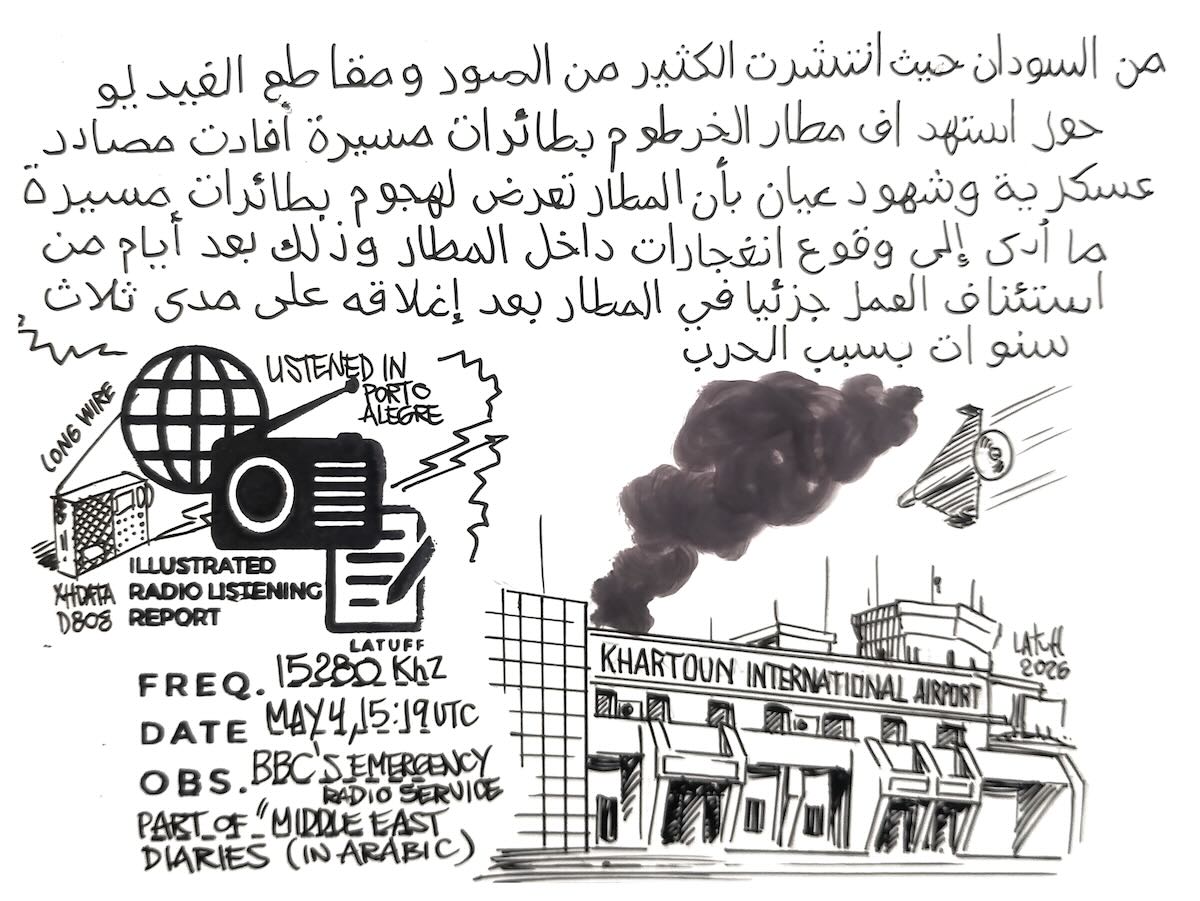
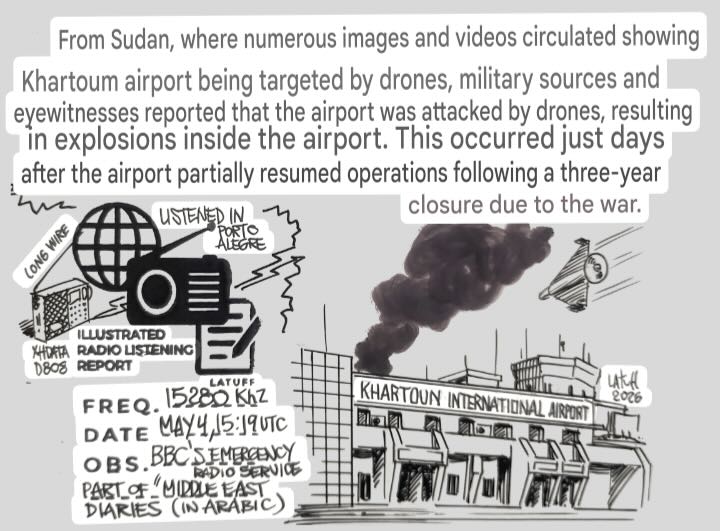
Carlos’ Illustrated Radio Listening Report and Recording of the BBC Emergency Radio Service (May 4, 2026)

Many thanks to SWLing Post contributor and noted political cartoonist, Carlos Latuff, who shares the following illustrated radio listening report of a recent BBC ERS broadcast.


Carlos notes:

BBC Emergency Radio Service

Click here to view on YouTube.

WKRP Returns: FM Fiction Becomes FM Reality in Cincinnati!

Many thanks to SWLing Post contributor, Dennis Dura, who shares this bit of radio nostalgia made real. Nearly 50 years after the iconic TV series WKRP in Cincinnati first aired, the call letters have officially returned—this time on a real FM station in Cincinnati. The new WKRP(FM) launched on 97.7 MHz, even featuring a familiar voice from the original show to mark its debut.

Read the full story at Radio World.

Alfredo’s XHDATA D-808 External Ferrite Antenna Mod

Many thanks to SWLing Post contributor Alfredo (EA4IMN), who writes:

Hi Thomas,

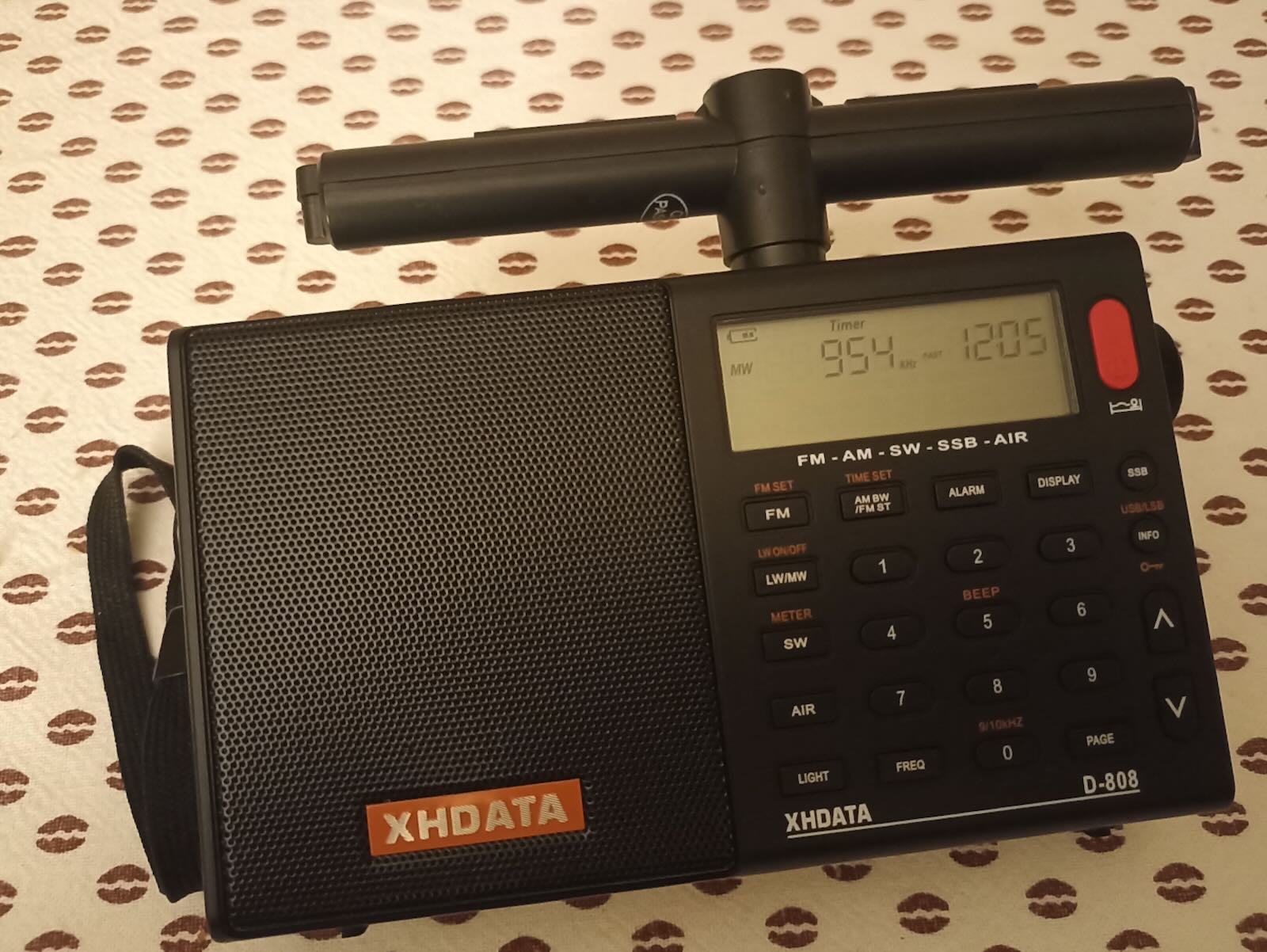
Greetings from EA4IMN. I recently purchased an XHDATA D-808, and got puzzled by the absence of an external jack for the LW/MW antenna. Inspired by previous work, I set to add this feature to my unit.

My journey was overall straightforward, but not without some hacking required, so I’m sharing my experience here, in case it helps others. (I have briefly documented this on another forum, but here you are the abridged version of the story.)

First, let’s start with a pic of the pristine PCB:
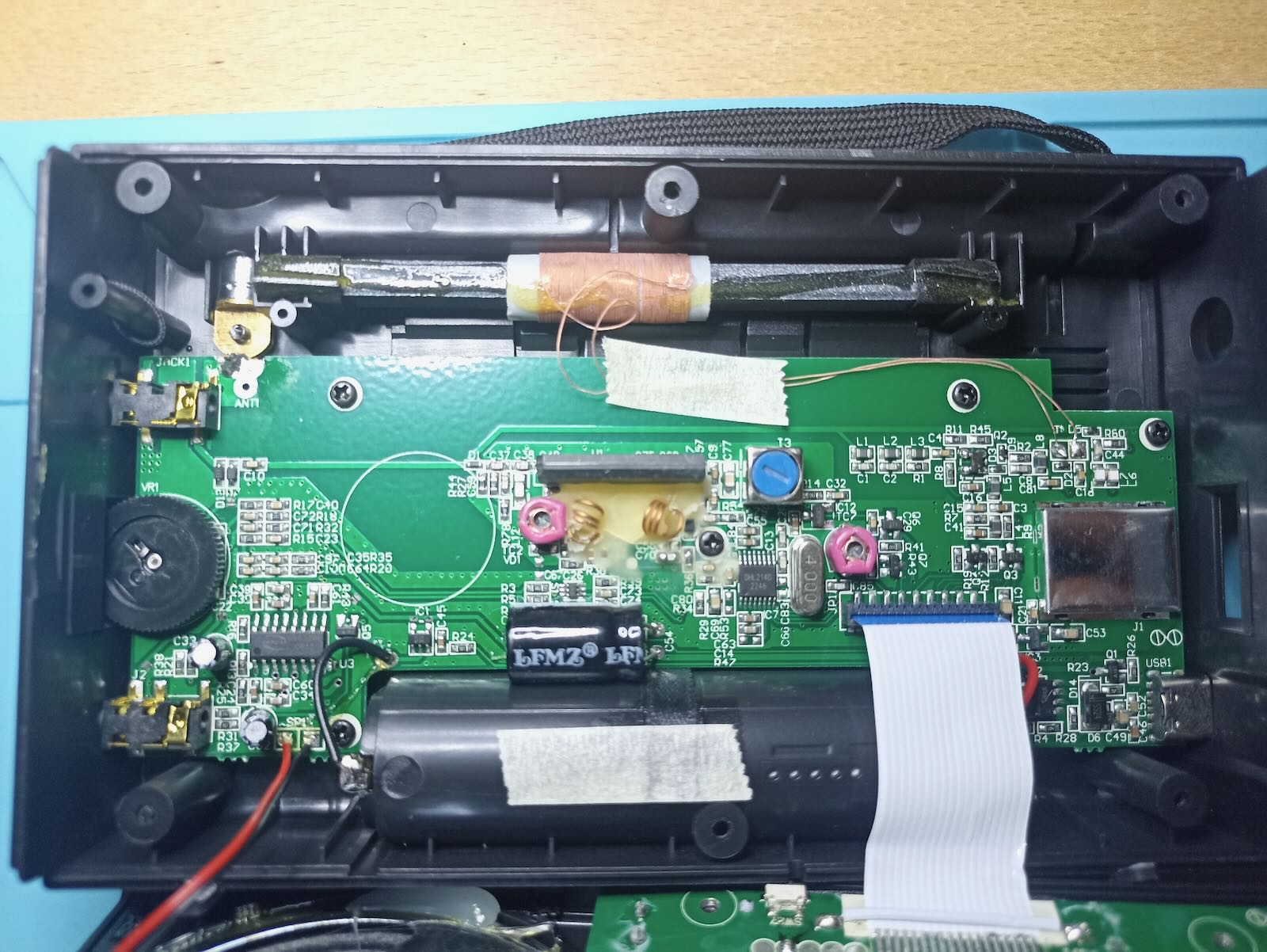
It’s a recent unit, and I observe it has minor differences even from some USB-C variants I could find on YouTube. I assume XHDATA keeps tweaking the inner design, and that’s not documented.
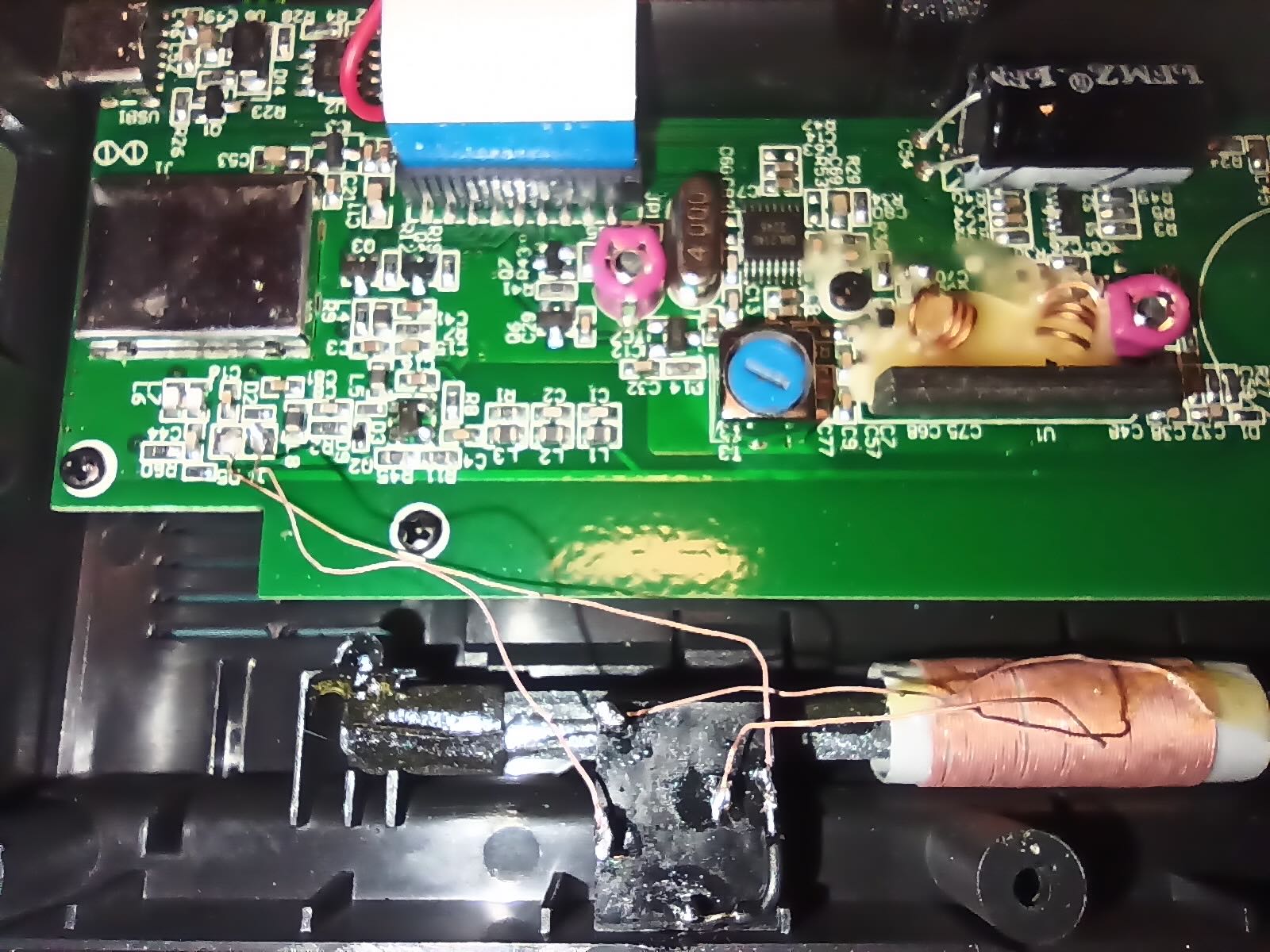
In the “external MW Jack” picture [above], you can see how I added a 5-pin female jack. Interestingly, I could entirely reuse the litz wires that came with the internal ferrite antenna. It works as follows:

  • When no male jack is inserted, the internal ferrite antenna is directly connected to the antenna pads on the PCB.
  • When a male jack is inserted, the internal ferrite antenna gets disconnected, and the PCB pads take the signal from the external antenna connected to the male jack.

Since I wanted to be able to also connect a long-wire, it was crucial to correctly identify the “hot” pad on the PCB, so that it would be wired to the tip of the jack (and not to the sleeve). It turns out that, on my unit, the squared pad was connected to GND.

I recommend anyone wishing to do this mod to verify the pad layout on their unit, since the PCBs keep changing. This is how to do it:

  • Pick one litz wire of the internal ferrite antenna and cut it. Make sure to cut it at a point that will later allow you to solder both ends to any of the 5 pins of the jack (you still don’t know if you cut the hot or GND wire!)
  • With a multimeter, check for continuity between the antenna pads and a well-known GND pin. In my unit, I used the audio amplifier chip, the CS8573E, for which datasheets are available, to check which pins go to GND. (Note: I first tried to check continuity with the negative pole of the battery, but that didn’t work, likely due to the battery recharge circuitry.)

Also, I recommend soldering the sleeve and ring pins (you can see a black wire in my picture): some ferrite antennas come with a stereo jack where the ring is floating, so the added wire makes sure all jacks are treated as mono, by shorting ring and sleeve.

Now… closing the unit was an issue: the 5-pin jack I just added clashed with the display! I had to get creative in a few ways:

  • Bend three pins in the jack that were clashing against the display. That made them just lower enough that I could “gently push” the case so that it would close.
  • Yet, the pins were now touching the metal cover of the display, hence shorting together, and nullifying the antenna! That was sorted by covering the metal plate with insulating tape. I had to add a couple of layers, since the soldered pins had rough edges that would keep piercing into the tape…

In the end, it all looked good to me, as depicted in the “Final result” photo:
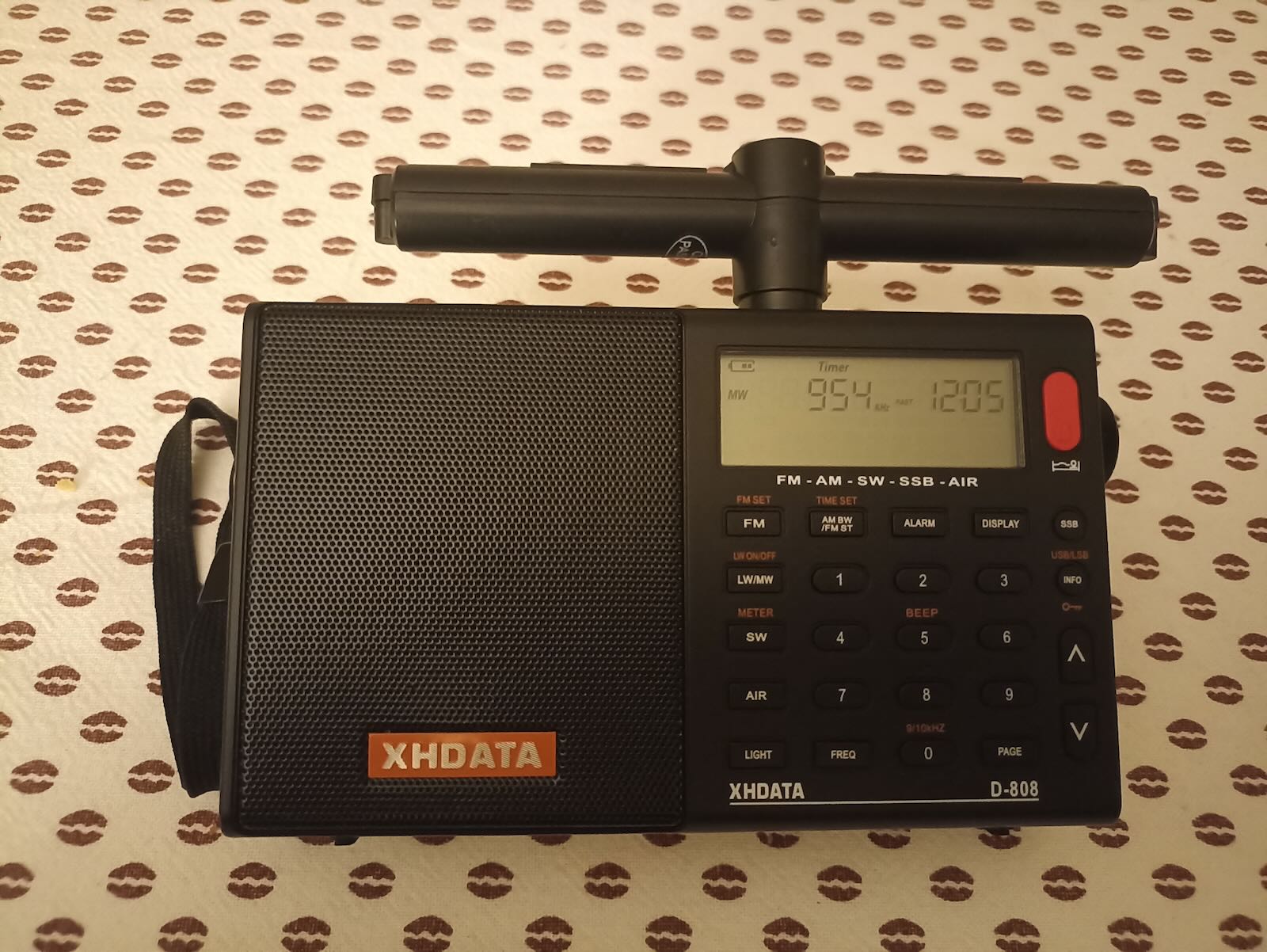
Admittedly, the external ferrite antenna in the picture performs roughly the same as the internal one. But at this point, it’s just a matter of plugging another jack and keep experimenting!

73

Winter SWL Fest 2026: “Meet the Archivist” Recording

I wasn’t able to attend the Winter SWL Fest this past weekend due to my travel schedule. As in years past, my good friend David Goren invited me to record a “Meet the Archivist” segment for his annual Shortwave Shindig live event.

Unfortunately, there were some technical difficulties this year, and the segment wasn’t able to be played during the live event. However, David recently shared a SoundCloud link with me, and I’m happy to pass it along here on the SWLing Post.

It’s always a lot of fun to be part of this—many thanks to David for including me again!

Feel free to listen to the embedded recording below: