Author Archives: Thomas

Op Ed: “OK, but why shortwave?”

Many thanks to SWLing Post contributor and host of Underground Sounds, Kelsie, who writes:

Why Shortwave?

by Kelsie

A question I’m regularly asked when talking about our radio show, and radio in general, is why choose independent radio rather than publishing a podcast or streaming playlist?
The answer is not a simple one, but I feel that it’s a powerful one.

Streaming services have made it far easier for new and independent artists to publish music, but publishing is only the first step in exposing new music to a potential audience. The age old problem faced by artists and publishers since the commercialization of music, remains – how does an artist or label get their new music heard?

The sad truth is that the vast majority of artists publishing their music on streaming services such as Spotify, Apple Music, or Tidal, etc., will not get what they’re really looking for, and that’s exposure.

Streaming services present content to their users based on a limited form of mathematical artificial intelligence known as an algorithm. Algorithms work by correlating searches by users with the content of their saved playlists. If users do not know that those new songs exist and have not searched specifically for them, the streaming algorithms will not have enough data on the new releases to suggest them to a wider audience who might like them. As a result of this, people who use streaming services are not exposed to a variety of musical styles and genres, unlike those of us who grew up when terrestrial radio was the dominant format.

While terrestrial radio may still be unencumbered by algorithm-generated playlists, commercial FM and satellite radio have effectively homogenized them over the years, resulting in a similar impact to musical variety. There was a time when radio stations used to allocate time slots for shows hosted by DJ’s that played different genres and styles of music on the same frequency. Since about 2010, the DJ format has become practically extinct.

Most radio stations today play a limited selection of songs and artists based on agreements with the traditional recording industry, resulting in very little variation from station to station at any given time of day. Both frequent listeners of FM or satellite radio can attest that the same songs and artists are played daily, even if they’re played in a different order, and even switching from one station to another during a song will oftentimes result in the listener hearing a different song by the same artist on the other station. This is only getting worse now that the majority of radio stations within the United States are owned by only two major corporations.


The lack of musical variety listeners are exposed to on commercial radio and streaming services lead me to the first part of my answer:

Independent radio is not subject to the homogeneity of commercial radio or streaming services.

This is largely due to the fact that instead of playlists or algorithms, independent stations are usually focused on the communities they serve, and tend to still produce individual shows tailored to different genres and interests. Tuning in at different times of the day exposes listeners to music they just wouldn’t have heard on other formats. Not everyone will like the same songs or artists, but there is usually something for everyone and a priceless opportunity to expand one’s musical horizons.

An explanation of this usually leads to the question, “OK, but why shortwave?”, or, “Isn’t shortwave dead?”

Here is where answer is is a little more complicated.
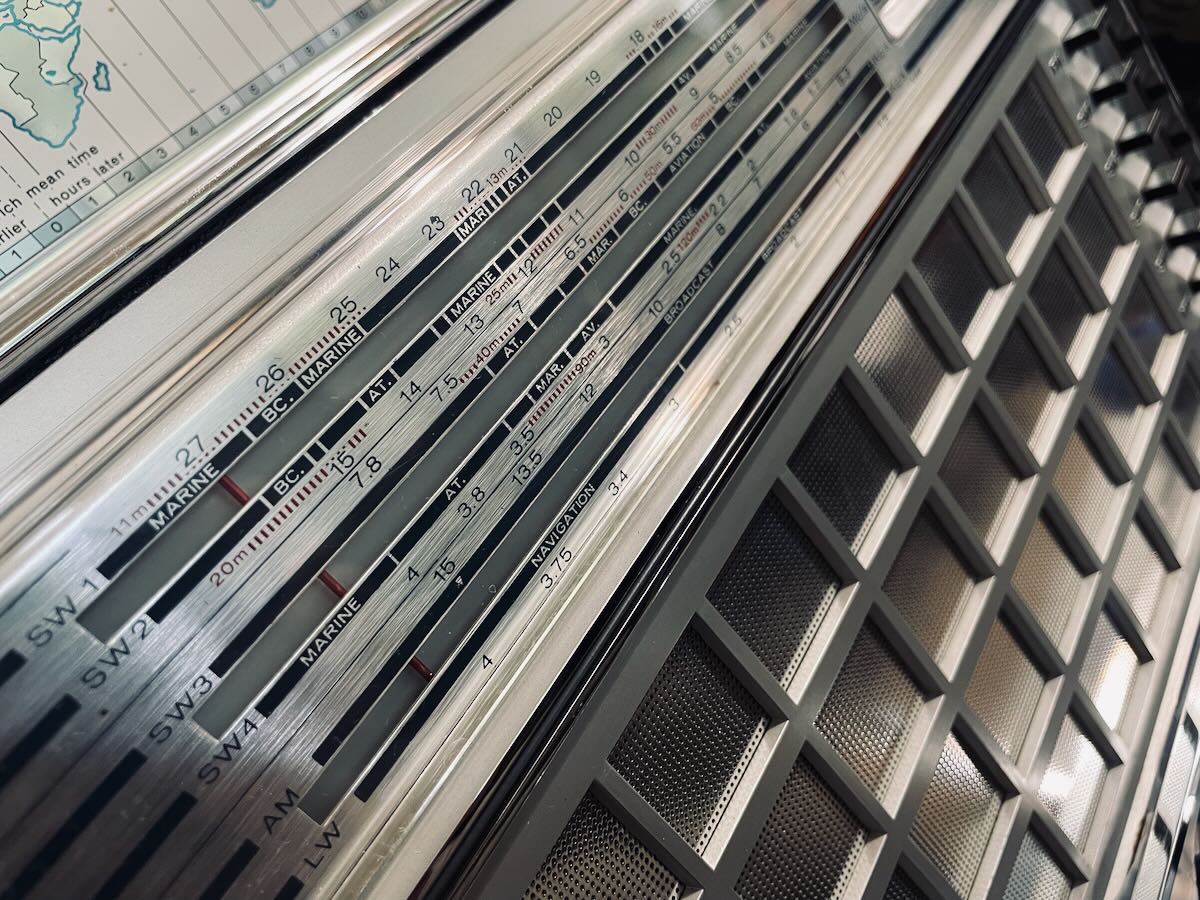
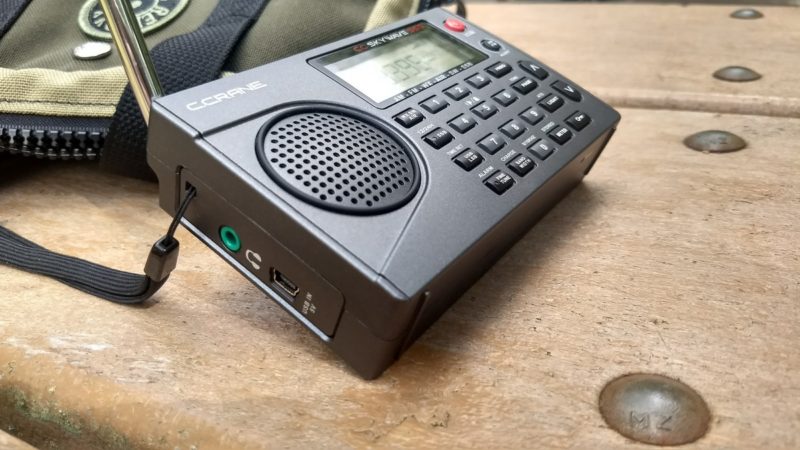
I’m sure, at least for myself, part of the decision to utilize shortwave broadcasting is based in the nostalgia of listening to broadcasts from all around the world as a child at the peak of the Cold War in Europe, hearing songs in languages I did not understand, often in keys and rhythms unfamiliar to a Western ear, and my particularly fond memories of listening to relays of Casey Kasem’s weekly Top 40 show from back home. As a former musician myself, and an avid shortwave listener who likes to restore vintage radio receivers, I still have almost that same level of excitement when I hear musical styles that I haven’t been exposed to before, and I want to share that with anyone in the world with an ear to listen.

This being said, the most important component of my answer comes down to accessibility.

Shortwave broadcasting is accessible. While independent radio may provide the only remaining viable format for exposing listeners to music from outside the corporate mainstream, independent shortwave radio potentially allows listeners from anywhere in the world to listen to music that they might be actively prevented from hearing in their own countries through various means, such as internet censorship or national broadcasters who only play what their governments mandate or allow.

As Geddy Lee from the band Rush used to sing, “One likes to believe in the freedom of music”.

I know that we certainly do, and I’m sure our opinion is shared by many of the fine music broadcasters on shortwave radio right now. From some of the more notable national broadcasters who pepper their broadcasts with music from their countries, to independent broadcasters such as Over The Horizon Radio, Alt Universe Top 40, VORW, Cruisin’ The Decades, Memphis Weirdos, Pop Shop Radio, Laser Hot Hits, This Is A Music Show, Texas Radio Shortwave, and many, many more who play music that terrestrial or satellite radio won’t play.

While shortwave radio is also going through somewhat of a renaissance right now, in large part due to the current dire situation in Eastern Europe, I think it’s more than that. I feel that large part of it is boredom and apathy with mainstream radio and the coldness of streaming services.

Whatever the reason, what better time than now to listen to shortwave stations from around the world, or even to become a part of the music broadcast resurgence yourselves?
TX Factor Episode 29

Many thanks to SWLing Post contributor, Eric (WD8RIF), who notes that the 29th episode of TX Factor was recently released. Here’s the show summary:

Welcome to our new episode!

TX Factor Calling – TX date 8th July 2023

We’re beaming (almost) live across the airwaves with microwatts of broadband energy to bring you the long-awaited show 29 of TX Factor. In this programme we increase the power to a few tens of Watts when Bob, Dave and Noel head to the Wiltshire hills with a pair of Icom IC-905 all-mode transceivers to see what can be achieved.

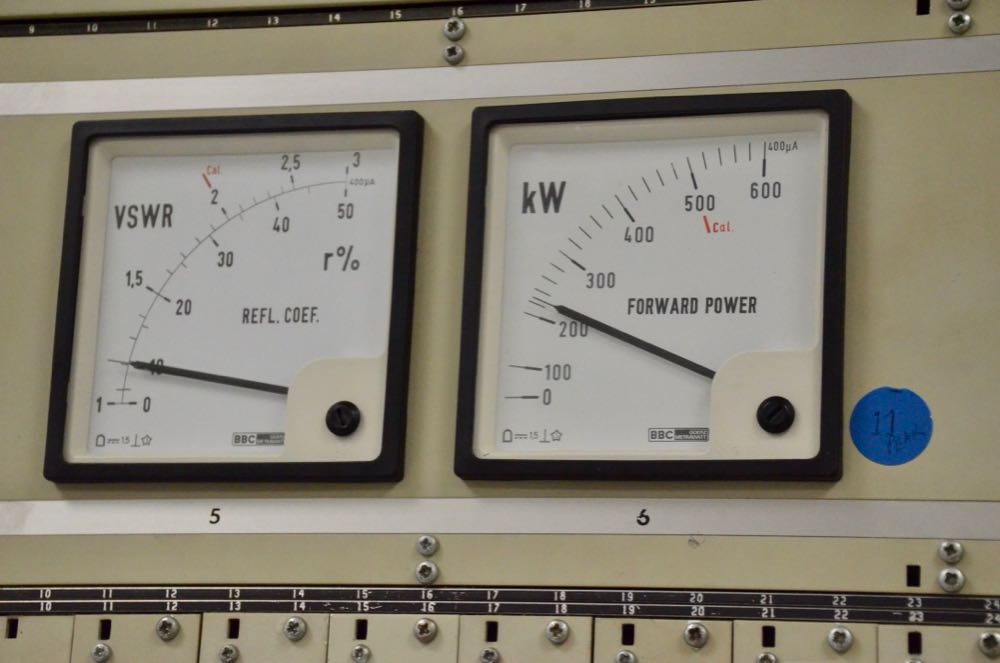
Bob takes the TX Factor cameras to the heart of England to the UK’s last remaining shortwave transmission station and ramps up the power to a staggering 250 kilowatts. Woofferton, near Ludlow, is the home to some venerable Marconi senders from the 1960s still beaming programmes across the globe.

Oh, and there’s a free-to-enter draw – details below.

Click here to view on YouTube.

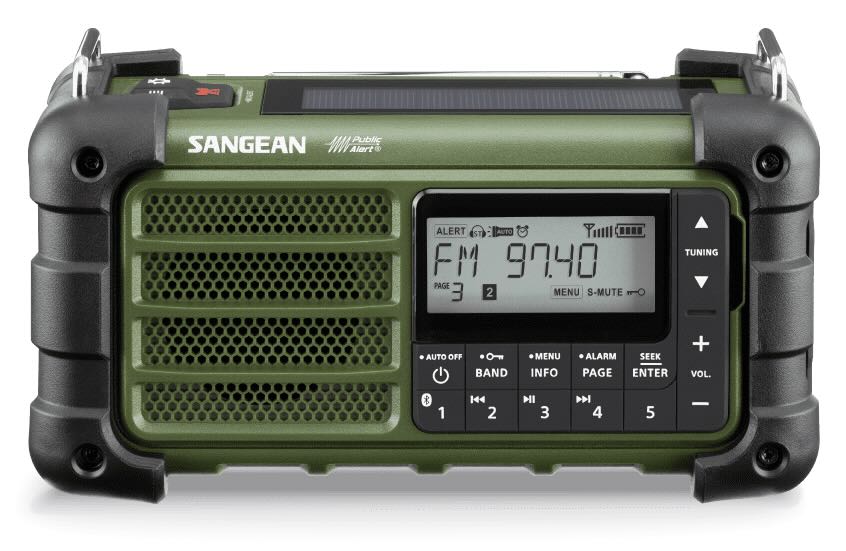
The new Sangean MMR-99 series emergency radio

Many thanks to SWLing Post contributor, Mangosman, who writes:

Thomas,

I saw the Radio World review of the Sangean MMR-99 (page 16).

As I usually do I go to the source which in this case is the Sangean website to find

    • Sangean MMR-99 FCC AM/FM and in the USA version Weather radio band.
    • Sangean MMR-99 which is the UK version which is AM in the MF band for 9/10 kHz channel spacing No Low Frequency (LW) band.
    • Sangean MMR-99 DAB which is interesting because it is typically DAB+/FM no AM or Weather Band.

Your posters around the world may wish to review this radio which is available on line and in retailers.

Thank you for the tip! Impressive that MMR-99 is IP55 rated and ruggedized. I like the fact they’ve also made regional variants of this radio even including DAB.

The US version of the Sangean MMR-99 is available on Amazon.com (affiliate link) for $89.76 shipped

Spaceweather.com: “Radio Amateurs Hack a NASA Spacecraft” and Sunspot High for Cycle 25

Many thanks to SWLing Post contributors, Troy Riedel and Jock Elliott, who share the following news items from Spaceweather.com:

RADIO AMATEURS HACK A NASA SPACECRAFT: Ham radio operators are picking up a strong signal from space. It’s NASA’s STEREO-A spacecraft returning home after 17 years.

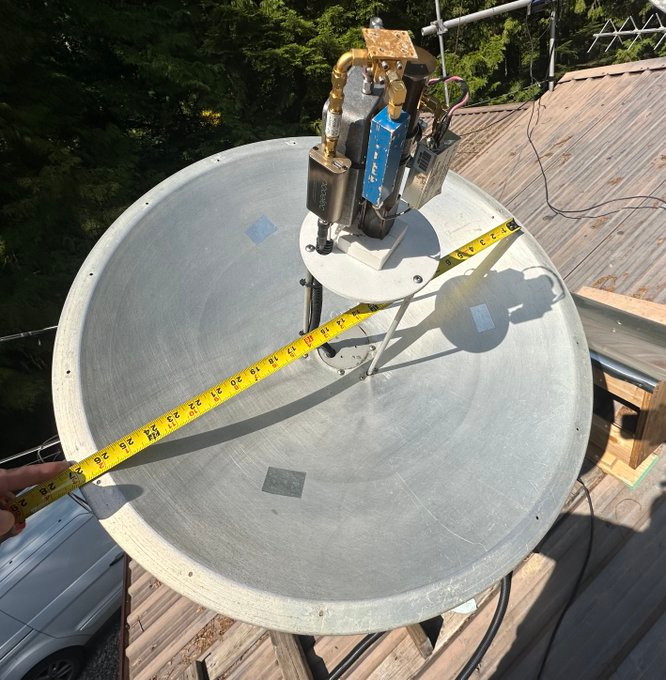
“I’m having fun with STEREO-A,” reports Scott Tilley (VE7TIL) of Roberts Creek, British Columbia. “The spacecraft is coming close to Earth this summer, and I can now receive its signal using a small 26-inch dish in my backyard.” Here is what he picked up on July 2nd:

“We caught an X-flare in progress,” Tilley says. “Naked-eye sunspot AR3354 was really crackling.”

STEREO-A left Earth on Oct. 26, 2006, launched from Cape Canaveral with its sister ship STEREO-B. Both spacecraft were on a mission to the far side of the sun. Over the years, they would circle behind behind the sun, beaming images back to Earth so scientists could make 3D models of solar activity. In 2014, STEREO-B failed and was not heard from again. STEREO-A kept going, and now it is on its way back. [Continue reading at Spaceweather.com…]

Also…

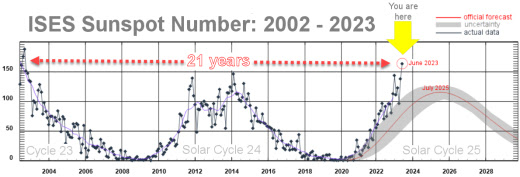
SUNSPOT COUNTS HIT A 21-YEAR HIGH: The sun is partying like it’s 2002. That’s the last time sunspot counts were as high as they are now. The monthly average sunspot number for June 2023 was 163, according to the Royal Observatory of Belgium’s Solar Influences Data Analysis Center. This eclipses every month since Sept. 2022:

Solar Cycle 25 wasn’t expected to be this strong. When it began in Dec. 2019, forecasters believed it would be a weak cycle akin to its immediate predecessor Solar Cycle 24. If that forecast had panned out, Solar Cycle 25 would be one of the weakest solar cycles in a century.

Instead, Solar Cycle 25 has shot past Solar Cycle 24 and may be on pace to rival some of the stronger cycles of the 20th century. The last time sunspot numbers were this high, the sun was on the verge of launching the Great Halloween Storms of 2003, which included the strongest X-ray solar flare ever recorded (X45), auroras as far south as Texas, and a CME so powerful it was ultimately detected by the Voyager spacecraft at the edge of the solar system.

Special transmissions in German from RTI Tamsui

Many thanks to SWLing Post contributor, Harald (DL1AX), who shares the following announcement (translated) from Radio Taiwan International: 

Dear listeners of RTI,

Once again this year, RTI will broadcast German-language programming directly from the Tamsui, Taiwan transmitter on several days.

Broadcast dates and frequencies July 2023:
1700-1800 UTC 11995 kHz
1800-1900 UTC 9545 kHz

1) 07.07. Friday
2) 08.07. Saturday
3) 09.07. Sunday
4) 14.07. Friday
5) 15.07. Saturday
6) 16.07. Sunday
7) 21.07. Friday
8) 22.07. Saturday
9) 23.07. Sunday
10) 28.07. Friday
11) 29.07. Saturday
12) 30.07. Sunday

Reception reports will be confirmed again with a special QSL card.
Reception reports can be sent by e-mail to [email protected].
via the online form https://de.rti.org.tw/index/content/id/8
or by mail to: Radio Taiwan International, German Service, P.O. Box 123-199, Taipei 11199, Taiwan

We look forward to receiving your reception reports!
Your RTI editorial staff
https://de.rti.org.tw/
[email protected]

Shortwave Modernization Coalition: Public comment period on new proposal

Many thanks to SWLing Post contributor, Benn Kobb, who shares the following announcement:

The FCC has opened for public comment the Petition for Rulemaking of the
Shortwave Modernization Coalition.

The proposal would bring new private, non-broadcast digital stations to
the high-frequency spectrum.

As covered in Experimental Radio News, the Coalition members have
performed HF experiments over the last several years. Favorable FCC
action on the proposal would open the field to regular commercial
operations.

The FCC has assigned the petition number RM-11953. Comments are due in
30 days.

FCC Public Notice:
https://docs.fcc.gov/public/attachments/DOC-394830A1.pdf

Petition:
https://www.fcc.gov/ecfs/document/1042840187330/1

Benn Kobb

Experimental Radio News
https://www.experimentalradio.news

Radio Waves: DW Launches “Sudan Now” on Shortwave, Mayor Saves AM Station, Tape Measure Turnstile Antenna, and Where Does AM Go From Here?

Radio Waves:  Stories Making Waves in the World of Radio

Welcome to the SWLing Post’s Radio Waves, a collection of links to interesting stories making waves in the world of radio. Enjoy!

Many thanks to SWLing Post contributors Dennis Dura and David Iurescia for the following tips:


“Sudan Now” – DW Arabic launches new radio program for Sudan (DW)

DW is now broadcasting a 30-minute daily Arabic-language radio program entitled “Sudan Now” on shortwave, Hotbird and SES-5 satellites and via the DW Arabic website.

As an unbiased radio program, “Sudan Now” will provide listeners in the target region with unbiased coverage of current issues in the region and will promote political, social and cultural dialogue through interviews, talk shows and reports.

Given the lack of independent information sources in Sudan and the limited ability of established media to broadcast due to internet outages and ongoing fighting, “Sudan Now” was specifically designed to be broadcast on shortwave and via the Hotbird- and SES-5 satellites. The satellite broadcast enables listeners in the target region to receive the program via their TV sets.

DW Managing Director Programming Dr. Nadja Scholz: “The conflict in Sudan is ongoing and has far-reaching effects on the entire region. It is absolutely necessary to provide the people there with a dedicated program that enables them to access independent, current and in-depth information. With shortwave radio, we further increase our ability to reach as many people as possible.”

Manuela Kasper-Claridge, DW editor-in-chief, said: “The humanitarian situation in Sudan remains catastrophic. There is a lack of everything – including free, independent information. This Arabic-language radio program is therefore urgently needed.”

The program broadcast will begin on Monday, June 26, 2023. It will air daily from Monday to Friday at 2:30 pm (local time, GMT+2) for a duration of thirty minutes. A repeat of the radio program will air daily at 8:30 pm.

“Sudan Now” can be heard in the afternoon on shortwave 15275 kHz/17800 kHz and in the evening on shortwave 15275 kHz/17840 kHz.

In addition, all broadcasts will be available on the DW Arabic website.

AM Matters: This CO Mayor Saved His Town’s Station (Radio Ink)

[…]Radio Ink: When Justin Sasso briefly mentioned KLMR’s story at Hispanic Radio Conference, it piqued the room’s interest. That’s a powerful AM story. How did this come to pass with you both?

Dan: So about a year ago in late July, KLMR was blown off the air from a micro-downburst. The previous owners couldn’t fix it and they were in danger of losing the license. When I saw the building, half the roof was gone and the antenna was dangling in the wind.

I’ve been in the radio business in Colorado for 40 years, with the last 20 in Colorado Springs, but I’ve never owned a radio station. And so when this opportunity came about, I reached out to Kirk. We had talked about possibly buying a company in Lamar previously. He’s not just the mayor, he’s my brother-in-law, but it was great that the mayor wanted to get involved in it too. So we’re off and running.

Radio Ink: For a mayor to step up and say, “This AM station is so important to my community that if nobody else will save it, I will,” is a huge testament to AM radio’s power and value.

Kirk: It’s vital. That’s what I had mentioned to Justin in that meeting about AM. When we look at rural Colorado and the ag market there, there’s a necessity for that. [Continue reading…]

A Quick And Easy Tape Measure Turnstile Antenna For Milsat Snooping (Hackaday)

The number of satellites whizzing by over our heads at any moment is staggering, and growing at a rapid rate as new constellations are launched. But sometimes it’s the old birds that are the most interesting, as is the case with some obsolete but still functional military communications satellites, which thanks to a lack of forethought are largely unsecured and easily exploitable. And all that’s needed to snoop in on them is a cheap ham radio and something like this simple and portable satcom antenna.

As proof of the global nature of the radio hobby, the design in the video below by Brit [Tech Minds] borrows heavily from previous work by Italian ham [Ivo Brugnera (I6IBE)], which itself was adapted to use 3D-printed parts in a German blog post a few years ago. [Continue reading…]

Not just cars: Where does AM radio go from here? (YouTube)

Joe and Jeff Geerling discuss AM radio station ownership, emergency use, rural listeners, and more.


Do you enjoy the SWLing Post?

Please consider supporting us via Patreon or our Coffee Fund!

Your support makes articles like this one possible. Thank you!