Author Archives: Thomas

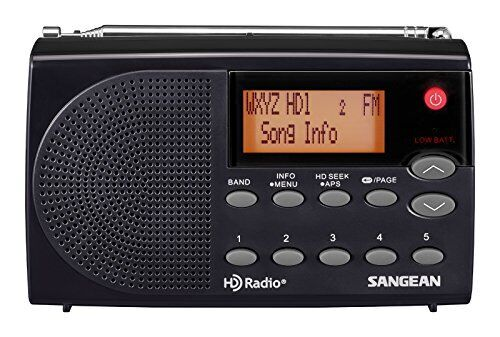
The C.Crane Digital FM Transmitter 3

Many thanks to SWLing Post contributor, Ron, who shares information about the latest C.Crane FM transmitter:

Check out the new C.Crane FM Transmitter 3.

Everything is the same as the previous model except it now covers 87.7 to 108 MHz.

People have been reported as being in big trouble for using 87.7 MHz, or is it because of their competitor, the Whole House FM Transmitter? This also covers the entire band but has serious build quality defects according to the Amazon reviews and costs more than the C.Crane FM-3.

Click here to check out the C.Crane FM Transmitter 3.

Thanks for the tip, Ron! Like many, I use FM and AM transmitters to pipe Internet radio streams throughout my house: especially the UK 1940s Radio Station!

Rafael spots a Tecsun S2000 in “Moonfall”

Many thanks to SWLing Post contributor, Rafael Rodriguez, who writes:

Hi Thomas

Once again the Radio Tecsun model S2000 makes its appearance in a movie, this time in the Hollywood science fiction action and adventure production called “Moonfall.”

Without being a film critic, the movie is very regular ; but it gives screen to this radio that seems to be a favorite in the setting.

Good DX

Rafael Rodriguez R.
Bogotá D.C. – COLOMBIA

Great catch, Rafael. When I watch Moonfall, I’ll keep an eye out for that S2000! Thank you so much for sharing!

The Nextube retro nixie clock

Many thanks to SWLing Post contributor, Al Hearn (WA4GKQ), who writes:

Thomas:

I’ve just received this Rotrics NexTube [see photo above] after a year of waiting. It was a KickStarter project and suffered numerous delays, and is just now shipping. It’s beautiful — real walnut wood, glass tubes and brass fixtures.

It appears at first glance to be yet another imitation Nixie tube clock but it’s actually much more than that. Each tube is a high-res IPS display that can display almost anything, including photos. It’s highly configurable, uses WiFi to connect to the Internet, and has an (yet undocumented) open API.

Being a ham and SWLer, I can envision someone much smarter than I programming this device to show real-time propagation data from beacons, propagation forecasts, etc. or other information of interest to those of us in the hobby. Imagine each of the six tubes graphically showing real-time band conditions on six different ham bands. It can already be used as a GMT clock. A set of three touch buttons allows app switching and user interaction.

With your infinite access to members of our hobby, I thought maybe you could find a way to expose this to those who might have an interest and expertise to create such an application for this amazing little device. I believe that its potential is almost unlimited, in ways the creators haven’t imagined.

73,
Al Hearn
WA4GKQ

Thank you for sharing this, Al! What a beautiful, modern take on the Nixie Tube clock! I love the simple design and versatility.

I’m very curious if any other readers have purchased the Nextube or have tinkered with the API. Please comment!

Click here to check out the Nextube at Rotrics.

Decode the Enigma: Crypto Transmission from KPH on Saturday, July 23, 2022

The Maritime Radio Historical Society is hosting a brilliant on-the-air event via KPH. I’ve pasted full details below, copies directly from the Maritime Radio Historical Society announcement:


ATTENTION ALL AGENTS!

Crypto Transmission from KPH!

Background

The MHRS in cooperation with our good friends at the Cipher History Museum

will send a coded message in 5-letter groups via the facilities of coast stations KPH on Saturday July 23, 2022. The message will be encrypted using the famous Enigma code machine.

All KPH listeners are invited to try their hand at receiving and decrypting the message. Certificates will be awarded for proof of successful decode, first to decode and use of original hardware.

Mislaid your Enigma code machine? In the military you’d have some explaining to do, soldier. But for the KPH Crypto Event, no problem. See the ‘Enigma Simulator’ section below for a link to an easy-to-use Enigma simulator.

Enigma

The Enigma was the Germans’ most sophisticated coding machine for securely transmitting command and control messages via radio communications in WWII. It was considered so secure that it was used to encipher the most top-secret of messages.

The arrangement of Enigma’s rotors and plugboard connections provided a unique series of letter substitutions which changed with each keystroke. The daily rotor order and the ring and plugboard settings to be used were specified in a codebook distributed monthly to all users of a network.

For additional information on the Enigma please see Ralph Simpsons’ Cipher Museum History site

Crypto broadcast date, time and formats.

The crypto broadcast will commence at 2000Z (1300 Pacific) on 23 July on all KPH CW frequencies. The broadcast will consist of a ‘callup’ (in plain text) announcing the broadcast, followed by the cipher message. The callup and cipher messages will be sent at 15 WPM. The cipher message will be sent in 5 letter groups and the message will be sent twice to ensure proper reception.

The usual KPH channel marker or ‘wheel’ running at 20 WPM will precede the announcement for the crypto broadcast to give listeners a chance to tune to the strongest signal in their area.

The KPH CW frequencies are (in kc):

    • 426 (after an announcement on 500)
    • 4247.0
    • 6477.5
    • 8642.0
    • 12808.5
    • 17016.8
    • 22477.5

Upon completion of the CW transmissions, the broadcast will be repeated on all KPH RTTY frequencies. The RTTY transmission will be 170cps shift Baudot, 45 baud.

The KPH RTTY frequencies are (in kc):

    • 6324.5
    • 8427.0
    • 12585.5

Code Machine Key Settings – IMPORTANT!

Decoding an Enigma message requires the use of two keys: a Daily Key (valid for particular day), and a Message Key (unique to each individual message sent that day).

The Daily Key

Prior to decoding a message, the daily key must be set into your Enigma code machine. The daily key settings were specified in codebooks and distributed monthly. Please consult the following codebook to obtain the daily key setting for the GMT date of the broadcast.

Click HERE for the Enigma codebook. Use the “Armee-Stabs-Maschinenschlussel No 28” (Army Staff Machine Key Number 28). Notice each daily setting is across one line, starting with the first day of the month on the bottom of the sheet.

The Message Key

Starting in 1940, for additional security, the machine operator would randomly choose two groups of three letters to encode each message (in addition to the daily key settings above). These were known as the ‘message key’. The first group of three letters is used to encode the second group of three. Then the first group (in plaintext) and the second group (now encoded) are sent in the message header, along with the date and letter count, as explained in the above link. The recipient then uses the message key to decode the message. For more information see the following video on Enigma decoding procedures.

Click HERE to watch a video on Enigma coding procedures.

Enigma Simulators

So you had to toss your Enigma machine overboard when your U-boat was captured? Again, no worries. MHRS has you covered! Software simulations exist for the Enigma code machine.

Click HERE for an Enigma simulator. It is web-based, no download necessary.

Certificates

Upon proof of successful decode, the following certificates will be awarded:

– First to decode the Enigma message

– Successful decode using *original* hardware (i.e., an actual Enigma machine)

– All successful decodes of the message

To apply for a certificate, send the decoded message to [email protected] with the subject line ‘decoded Enigma message’. The First to Decode award will be based on the timestamp of the first email demonstrating a successful decode. For the Enigma Original Hardware certificate, send the decoded message *plus* a photo of your Enigma machine showing the daily key setting. Printed certificates will be mailed for ‘First-to-Decode and ‘Original Hardware’ awards. Certificates for ‘Successful Decode’ will be emailed in digital form suitable for printing at home.

More Information

For more information or questions about the KPH cipher broadcast send email to [email protected] with the subject line:

Crypto Broadcast

Quindar Tones: From the SWLing Post Archives

I’ve been listening to Apollo 11 in real-time, as mentioned in a previous post. Today, I’ve been listening to NASA communications as the Eagle landed on the moon (53 years ago). 

Of course, any of those Apollo era comms include loads of Quindar Tones, so this reminded me of the following post from the SWLing Post Archives. I thought I might resurrect it for those who might not have caught it when first published. Enjoy:


Quindar Tones: Those iconic NASA PTT confirmation beeps

Apollo 11 (Photo: NASA)

Yesterday, my family watched the successful launch of the NASA Demo-2 SpaceX Dragon via YouTube.

As astronauts Robert Behnken and Douglas Hurley communicated with Mission Control, we heard PTT confirmation beeps after each transmission.

Those beeps, of course, reminded me of past NASA missions and those iconic confirmation tones we heard in audio from the Mercury, Gemini, and Apollo days all the way into Space Shuttle missions.

Quindar Tones

Source: honeysucklecreek.net

Last year, after spending a couple of days at the US Space and Rocket Center (and attending the Huntsville Hamfest), I heard numerous NASA audio clips and that lead me down the path of researching those PTT confirmation tones.

Turns out, they’re called “Quindar Tones.”

I couldn’t find any information about Quindar Tones at the US Space and Rocket Center–although, admittedly, the place is massive and I could have easily overlooked it–so I did a little research when I returned home.

I found this archived post on the NASA’s Apollo Lunar Surface Journal wesbite:

Re: Apollo beeps

Journal Contributor Mark Burckhard writes:

“I’ve always wondered what purpose the ‘beeps’ served that one heard intermittently during the voice communications with the Command and Lunar Modules during the Apollo missions, as well as other space missions.”

Journal Contributor Mike Dinn provides an MP3 clip ( 123k ) from a network audio check that includes numerous Quindar Tones.

Journal Contributor Markus Mehring replies:

“‘Other space missions’ is quite an accurate observation, since the ‘beeps’, in fact, are still in use today on Shuttle flights, at least on the UHF frequencies.”

“These beeps are called ‘Quindar-Tones’. Their purpose is to trigger the ground station transmitters when there is an outgoing transmission from Earth. The CapCom in the Mission Control Center, who is taking care of communications with the crew, uses his communication gear in a PTT mode exclusively. ‘PTT’ is short for Push-To-Talk, which means that the CapCom presses a button every time and as long as he wants to talk. (The crews back during Apollo – and also today – usually communicate via PTT as well, but they also have the so-called ‘VOX mode’ at their disposal, in which their microphones are voice-triggered by a certain adjustable threshold volume levels. VOX is used when they don’t necessarily have their hands free.)

When the CapCom presses his PTT button to start a transmission, an intro tone (2.525KHz sine wave with a length of 250ms) is generated and triggers the ground station transmitters to send. And when he is finished talking and releases the button again, a slightly lower outro tone (2.475KHz, sine, 250ms) is generated to trigger the ground station transmitters to turn off. So in short, these are remote control trigger tones.

CU! Markus”

I then discovered this article via the Internet Archive Wayback Machine, which gave more detail about the Quindar Tones’ name and some of the idiosyncrasies of the system:

The story behind the “Beep”

Steve Schindler, an engineer with voice systems engineering at NASA’s Kennedy Space Center, offers the following history of [Quindar Tones] origins.

“Quindar tones, named after the manufacturer of the tone generation and detection equipment, are actually used to turn on and off, or “key,” the remote transmitters at the various tracking stations (Merritt Island Launch Area–now Kennedy Space Center, Bermuda, Australia, etc.) that were used to communicate with the Mercury through Apollo spacecraft and, in some cases, are still used with the Space Shuttle.”

[…]”Although it usually worked well, there were a couple of peculiarities with this system. If the transmitter was keyed and the telephone line connection broken, the transmitter would never get the tone to turn off. To prevent this there was a “transmitter on” light at each remote site that would come on when the transmitter was keyed. Someone was supposed to monitor the circuit and if the audio dropped, but the “transmitter on” light was still on, they would have to manually unkey the transmitter. Also, just before communications was handed over to a new tracking station, the key-unkey tone pair was sent 10 times to ensure that everything was functioning correctly. This was done before the audio was patched to the tracking station’s line so it wasn’t heard in the control room or on NASA Select audio.

The Quindar system was actually built from a piece of equipment that was used to put multiple teletype circuits on a single phone line by means of frequency domain multiplexing. Because replacement parts are no longer available, an “out-of-band signaling” system was installed in 1998 for the transmitters located in the U.S. This system uses a continuous tone that is below the normal audio frequency range. When the tone is present, the transmitters are keyed. When the tone is not present, the transmitters are unkeyed. It worked fine, but the Astronaut Office complained about the lack of tones which everyone had become accustomed to as an alert that a transmission was about to start. So, the Quindar tone generator, which was still installed in case it was necessary to key the transmitters at an overseas site, was re-enabled.

Even though you won’t hear the same Quindar tones in present-day space missions, you can listen until your heart is content at the website Apollo In Real Time.

The Internet Archive also has a massive collection of Apollo audio free to stream and download.

Quindar Music

If you’re fascinated with the NASA audio soundscape in general, you might check out the electronic music duo Quindar featuring longtime Wilco member Mikael Jorgensen, and art historian-curator James Merle Thomas.

Quindar: Mikael Jorgensen & James Merle Thomas. Photo by Chad Ress, Spacesuits by Cassandra C. Jones

Science Friday featured an extended interview with the group in 2017. If you love electronic music–especially if you’re a fan of Wilco, it’s well worth a listen:

Check out their latest video, Choco Hilton:

Speaking of Mikael Jorgensen and Wilco, I should note here that their album yankee hotel foxtrot has a deep shortwave motif.

Anyone else fascinated with Quindar Tones and NASA audio? Feel free to comment and share any other resources or projects you’ve found.


Do you enjoy the SWLing Post?

Please consider supporting us via Patreon or our Coffee Fund!

Your support makes articles like this one possible. Thank you!

FM Pirates: FCC Enforcement sends letters to landlords

Photo by Ben Koorengevel

(Source: Radio World)

NYC-Area Landlords Get Pirate Letters (Radio World)

FCC Enforcement Bureau traced FM signals after receiving complaints

Continuing its efforts to fight illegal broadcasts, the Federal Communications Commission has sent notices to five property owners and managers in and around New York City.

The letters from the Enforcement Bureau inform the owners that the FCC, after receiving complaints, traced unlicensed signals to each property in April, May or June. These letters inform the owners that under federal law, anyone who allows pirate radio broadcasting on a property can face significant financial penalties — up to $2.1 million.

The recipients are given 10 business days to show that they are no longer permitting pirate radio on their properties and to identify individuals engaged in pirate radio on the property that they own or manage. [Continue reading…]

Radio Waves: DRM Demo in Australia, Decoding the JWST, the ARDC, and EV Makers Dropping AM Radio

Radio Waves:  Stories Making Waves in the World of Radio

Welcome to the SWLing Post’s Radio Waves, a collection of links to interesting stories making waves in the world of radio. Enjoy!


Australia Demonstrates DRM on AM, FM (Radio World)

Since September 2020, ABC Radio has been quietly trialing DRM technology in Victoria

The public-service Australian Broadcasting Corp. and its transmission contractor BAI Communications Transmission Network hosted a public demonstration of Digital Radio Mondiale broadcasts on June 29, 2022. ABC highlighted the use of DRM on both AM and FM in Wagaratta, Victoria.

According to the DRM Consortium, the demonstration was the culmination of almost two years of COVID-impacted work to assess the performance of DRM services in Australia’s VHF and medium-wave bands.

Previously, the Australian Amateur Radio Experimenters Group reported that AREG member Steve Adler (VK5SFA) had been monitoring “a very un-publicized Digital Radio Mondiale (DRM) trial” on 747 kHz from Wangaratta in August 2021.

The Australian Communications and Media Authority provided ABC with a license variation to conduct the DRM 30 trials from September 1, 2020, to August 31, 2022.

At the public demonstration, senior representatives from the public, commercial and community radio sectors, along with regulators and other interested parties, were able to hear and see the capabilities of DRM broadcasting on AM from Dockers Plains and on FM from Mount Baranduda. They were also able to review the transmission equipment at Wagaratta.[Continue reading…]

Also check out the DRM Consortium’s article on this same topic.

Decoding James Webb Space Telescope (Daniel Estévez)

The James Webb Space Telescope probably needs no introduction, since it is perhaps the most important and well-known mission of the last years. It was launched on Christmas day from Kourou, French Guiana, into a direct transfer orbit to the Sun-Earth L2 Lagrange point. JWST uses S-band at 2270.5 MHz to transmit telemetry. The science data will be transmitted in K-band at 25.9 GHz, with a rate of up to 28 Mbps.

After launch, the first groundstation to pick the S-band signal from JWST was the 10 m antenna from the Italian Space Agency in Malindi, Kenya. This groundstation commanded the telemetry rate to increase from 1 kbps to 4 kbps. After this, the spacecraft’s footprint continued moving to the east, and it was tracked for a few hours by the DSN in Canberra. One of the things that Canberra did was to increase the telemetry rate to 40 kbps, which apparently is the maximum to be used in the mission.

As JWST moved away from Earth, its footprint started moving west. After Canberra, the spacecraft was tracked by Madrid. Edgar Kaiser DF2MZ, Iban Cardona EB3FRN and other amateur observers in Europe received the S-band telemetry signal. When Iban started receiving the signal, it was again using 4 kbps, but some time after, Madrid switched it to 40 kbps.

At 00:50 UTC on December 26, the spacecraft made its first correction burn, which lasted an impressive 65 minutes. Edgar caught this manoeuvre in the Doppler track.

Later on, between 7:30 and 11:30 UTC, I have been receiving the signal with one of the 6.1 metre dishes at Allen Telescope Array. The telemetry rate was 40 kbps and the spacecraft was presumably in lock with Goldstone, though it didn’t appear in DSN now. I will publish the recording in Zenodo as usual, but since the files are rather large I will probably reduce the sample rate, so publishing the files will take some time.

In the rest of this post I give a description of the telemetry of JWST and do a first look at the telemetry data. [Continue reading…]

Helping Secure Amateur Radio’s Digital Future (Hackaday)

The average person’s perception of a ham radio operator, assuming they even know what that means, is more than likely some graybeard huddled over the knobs of a war-surplus transmitter in the wee small hours of the morning. It’s a mental image that, admittedly, isn’t entirely off the mark in some cases. But it’s also a gross over-simplification, and a generalization that isn’t doing the hobby any favors when it comes to bringing in new blood.

In reality, a modern ham’s toolkit includes a wide array of technologies that are about as far away from your grandfather’s kit-built rig as could be — and there’s exciting new protocols and tools on the horizon. To ensure a bright future for amateur radio, these technologies need to be nurtured the word needs to be spread about what they can do. Along the way, we’ll also need to push back against stereotypes that can hinder younger operators from signing on.

On the forefront of these efforts is Amateur Radio Digital Communications (ARDC), a private foundation dedicated to supporting amateur radio and digital communication by providing grants to scholarships, educational programs, and promising open source technical projects. For this week’s Hack Chat, ARDC Executive Director Rosy Schechter (KJ7RYV) and Staff Lead John Hays (K7VE) dropped by to talk about the future of radio and digital communications. [Continue reading…]

Interference causes EV makers to drop AM radio (Radio World via the Southgate ARC)

Radio World reports the Electromagnetic Interference generated by Electric Vehicles is causing some EV automakers to drop AM (medium wave) radio

The article says:

Some EV automakers are dropping AM altogether due to audio quality concerns, but that’s just one piece of the puzzle as radio continues to fight for space on the dash.

“As carmakers increase electric vehicle offerings throughout their lineups, the availability of AM radio to consumers is declining,” said Pooja Nair, communications systems engineer with Xperi Corp., in a Radio World guest commentary. “This is because the effects of electromagnetic interference are more pronounced in EVs than in vehicles with internal-combustion engines.”

In other words, electromagnetic frequencies generated by EV motors occupy the same wavelength as AM radio signals. The competing signals clash, effectively cancelling each other out. As EV motors grow more powerful, AM static tends to increase.

Read the full story at
https://www.radioworld.com/news-and-business/headlines/why-are-some-automakers-ditching-am-radio


Do you enjoy the SWLing Post?

Please consider supporting us via Patreon or our Coffee Fund!

Your support makes articles like this one possible. Thank you!