Author Archives: Thomas

2025 Checkered Flag Award: W9IMS Grand Prix Special Event Now Underway

Make the Month of May Even Merrier: Earn Your First Credit Toward the 2025 Checkered Flag Award

By Brian D. Smith, W9IND

Never mind the old saying about April showers bringing May flowers. In Indianapolis, the month of May ushers in auto racing season, with two major events scheduled at the Indianapolis Motor Speedway.

It’s also the start of your opportunity to earn the latest Checkered Flag Award, available to hams and shortwave listeners who connect with amateur radio station W9IMS during its three special events of 2025. The events commemorate major races at the legendary oval: The Indy Grand Prix and the Indianapolis 500, both from the IndyCar series; and the NASCAR Brickyard 400.

But don’t delay – the first event, now underway, will pull the plug at 11:59

p.m. Saturday, May 10 (Eastern Time)/0359 UTC Sunday.

Nine days later, W9IMS will return to the airwaves for its ever-popular Indy 500 special event. Following its May 25 conclusion, the transmitters will cool for a couple of months until the final special event of the year (July 21-27), honoring the NASCAR Brickyard 400.

Prime time for W9IMS is 6 to 10 p.m. Eastern Time (2200 Saturday-0200 Sunday UTC) on weekdays, sometimes extending to midnight (0400 GMT Sunday) and beyond, and the bands of choice are 40 and 20 meters – generally on or around 7.245 and 14.245 MHz. But QRM and other adversities can prompt changes in frequencies. To eliminate guesswork, check for W9IMS spots on DX Summit (www.dxsummit.fi) and eHam (www.eHam.net).

Also, while W9IMS can fire up anytime between now and its final Saturday signoff, you’ll have a better chance of finding active stations by going to the W9IMS QRZ page (www.w9ims.com) and clicking the Grand Prix link under “2025 Operating Schedule” – which displays the time slots that operators have already signed up for. The same page contains additional information regarding the W9IMS QSL cards and certificate.

For radio amateurs who still haven’t bagged W9IMS by Saturday evening, note that toward the end of the event, operators often start limiting calls to stations that haven’t yet worked the current special event. Another tip is to drop in for happy hour, the last hour of the last day – in this case, 11 p.m. Saturday (0300 UTC Sunday). That’s when W9IMS ops traditionally switch to contest-style QSOs, exchanging only signal reports so they can log as many stations as possible. But remember, too, that W9IMS special events can end early in the event of sparse QSOs or unfavorable solar or weather conditions.

And a final tip for hams: If you can hear W9IMS but can’t complete a QSO in the waning moments, don’t despair. You can still create an SWL report by jotting down the details of other W9IMS contacts – including frequency, UTC, and the callsigns of a few stations that you heard W9IMS work. A valid report satisfies the requirements for a Grand Prix QSL card and the first of three credits for a certificate. SWL certificates feature names instead of callsigns but are otherwise indistinguishable from awards issued to amateur radio operators.

Whether or not you achieve the clean sweep this year, you’ll qualify for a new and unique QSL card with each race that you snare. But don’t give up yet – you still have several days left to put the Grand Prix in your log and claim your first credit toward the 2025 Checkered Flag Award.
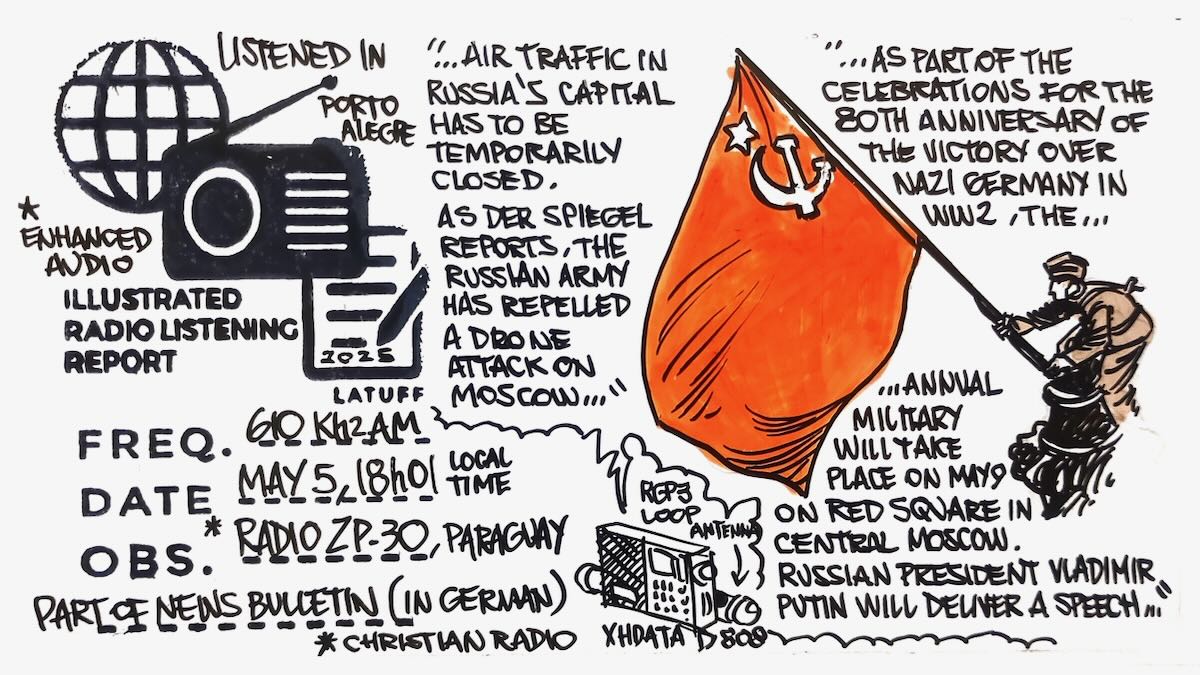
Carlos’ Illustrated Radio Listening Report and Recording of ZP-30 (May 5, 2025)

Many thanks to SWLing Post contributor and noted political cartoonist, Carlos Latuff, who shares the following illustrated radio listening report of a recent ZP-30 broadcast.


Carlos notes:

Radio ZP-30: (Russia) Drone attack repelled; 80th anniversary of Nazi Germany defeat:

Part of Paraguay’s Radio ZP-30 news bulletin (in German) about a Ukrainian drone attack repelled by Russian army, and the preparations for the celebrations of the 80th anniversary of Nazi Germany defeat by Soviet Union. Listened in Porto Alegre, Brazil, on a Xhdata d-808 receiver.

Click here to view on YouTube.

Radio: Your Lifeline When the Grid Goes Down

Photo by Parker Coffman on UnsplashMany thanks to SWLing Post contributor Richard Cuff, for sharing this article from Metro.co.uk: “Radio is still the ultimate survival tool during blackouts and emergencies.” The piece underscores radio’s enduring role as a reliable source of information when modern digital networks fail. In an age of increasing reliance on internet and mobile phone services, it’s a timely reminder of why radio is so valuable in crisis situations.

Radio and Resistance: The Legacy of Radio Plzen

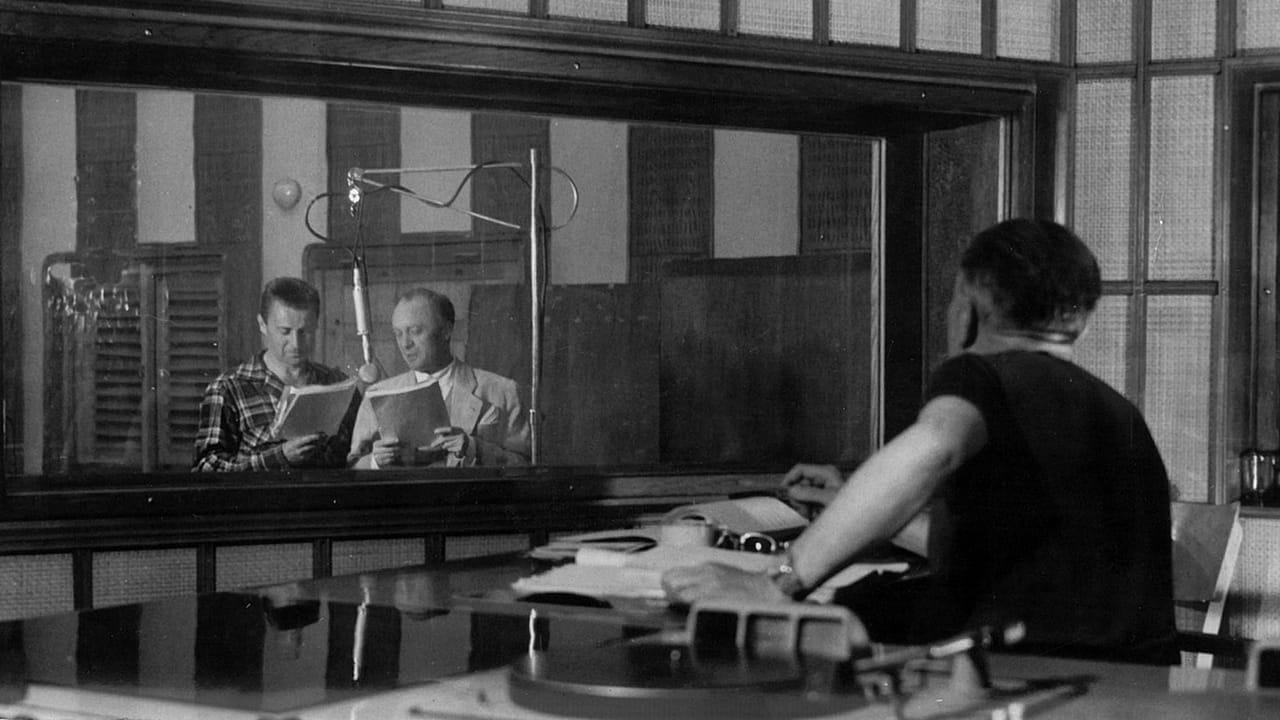
Photo of studio via Radio Prague International

Many thanks to SWLing Post contributor David Iurescia for sharing this excellent article from Radio Prague International, which commemorates the 80th anniversary of Radio Plzen’s powerful broadcast urging resistance during World War II: https://english.radio.cz/radio-plzen-voice-changed-history-80-years-ago-8849932

Mark spots two vintage radios in the background of a K-drama

Many thanks to SWLing Post contributor, Mark Hirst, who writes:

Thomas,

K-dramas with Korean subtitles can be a useful form of language immersion, so I recently came across this comedy sitcom on YouTube.

In this clip, we see Winter, Karina, and Giselle of the K-pop girl group Aespa.

Behind them are what appears to be a Beomaster 900M and a Philips
Philetta.

Mark

You’ve got sharp eyes, Mark! Thank you for sharing.

Carlos’ Illustrated Radio Listening Report and Recording of ZP-30 (May 2, 2025)

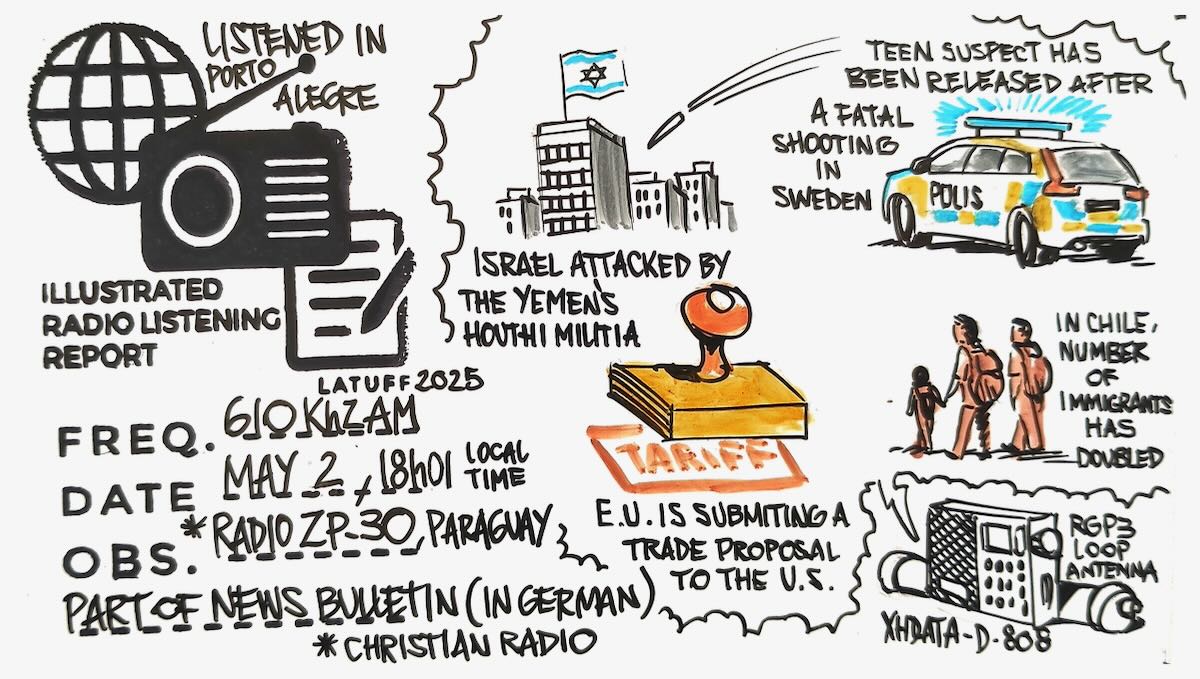
Many thanks to SWLing Post contributor and noted political cartoonist, Carlos Latuff, who shares the following illustrated radio listening report of a recent ZP-30 broadcast.


Carlos notes:

International news of Radio ZP-30, from Paraguay, 610 kHz AM

Part of Paraguay’s Radio ZP-30 news bulletin (in German). Listened in Porto Alegre, Brazil, on a Xhdata d-808 receiver.

Click here to view on YouTube.

Don Moore’s Photo Album: Guatemala (Part Six) – Huehuetenango

Many thanks to SWLing Post contributor Don Moore–noted author, traveler, and DXer–for the latest installment of his Photo Album guest post series:


default

Don Moore’s Photo Album:
Guatemala (Part Six) – Huehuetenango

by Don Moore

More of Don’s traveling DX stories can be found in his book Tales of a Vagabond DXer [SWLing Post affiliate link]. If you’ve already read his book and enjoyed it, do Don a favor and leave a review on Amazon.

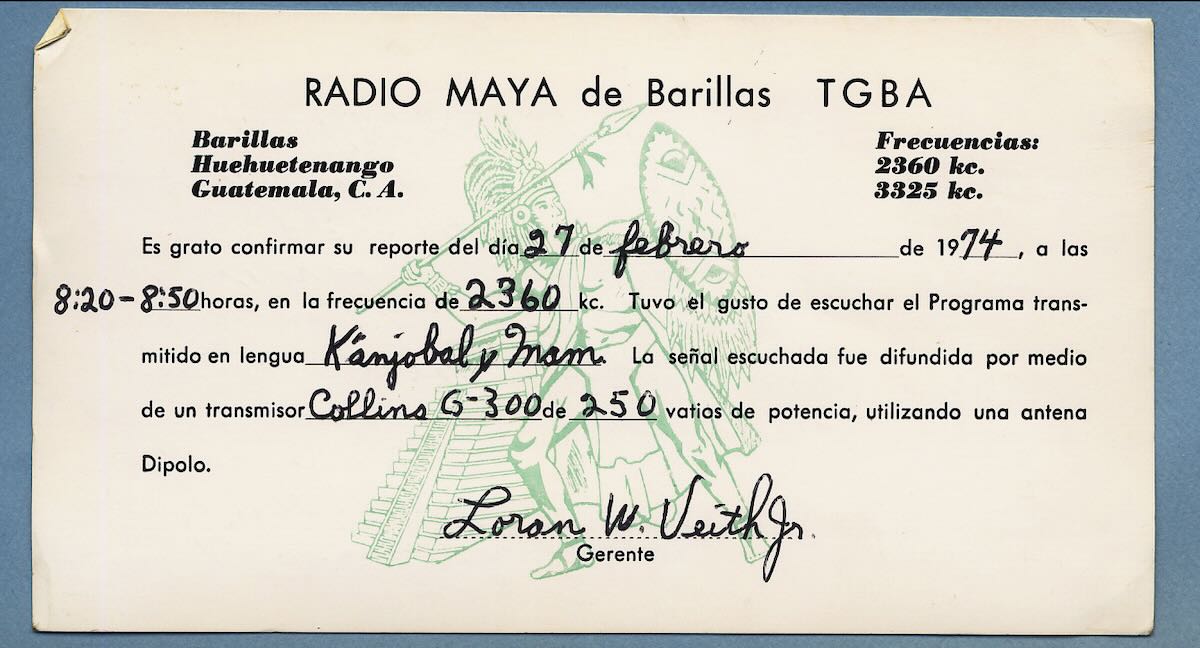
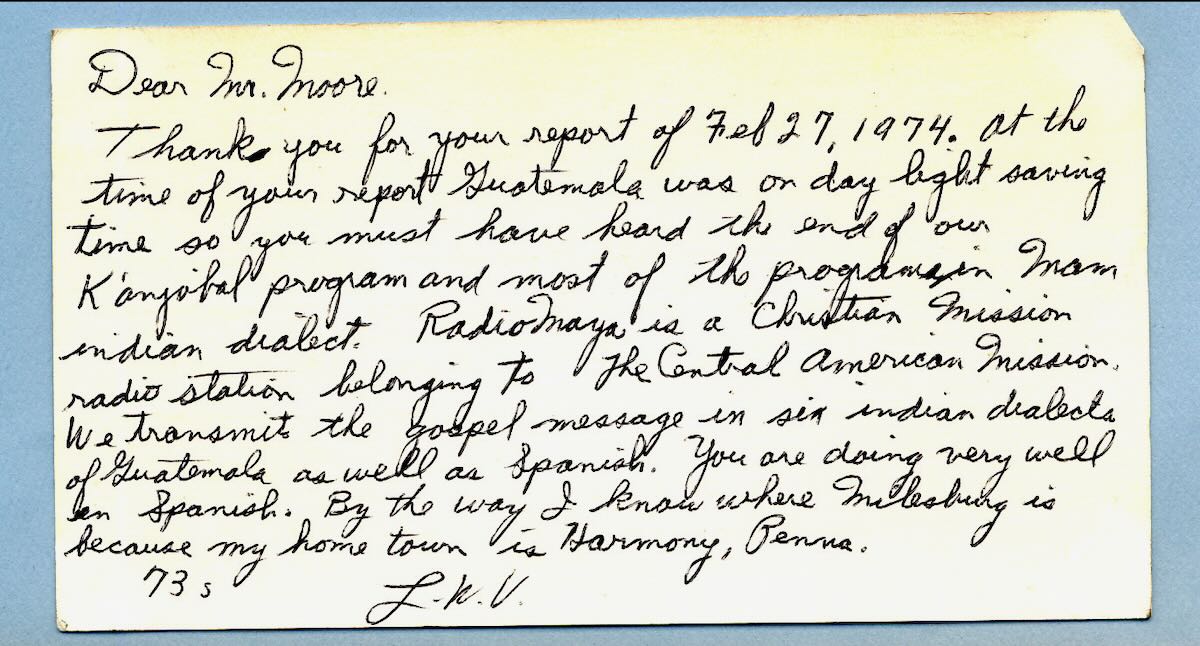
I first heard of Huehuetenango in February 1974. I had gotten my first serious receiver, a Barlow-Wadley XCR-30, a few weeks earlier. Now I could try for stations in the 120-meter band. The first one I heard was Radio Maya de Barillas on 2360 kHz from a place named Barillas in Guatemala. And Santa Cruz de Barillas (the town’s full official name) was in a department named Huehuetenango. The name sounded exotic and magical.

In my mind, Radio Maya de Barillas was the ultimate DX target. The Evangelical Protestant station used a tiny amount of power in 120-meters, the shortwave band that provided the most challenge to DXers. The programs were in Mayan languages with mostly hard-to-pronounce names. And my map showed that Barillas was literally at the end of the road. There was nowhere to go beyond Barillas.

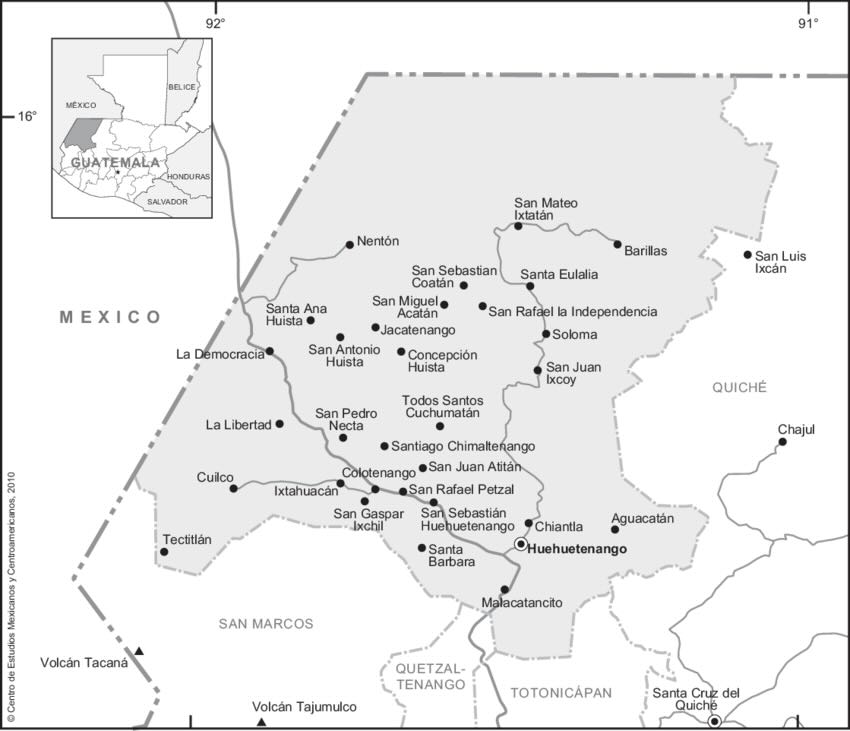
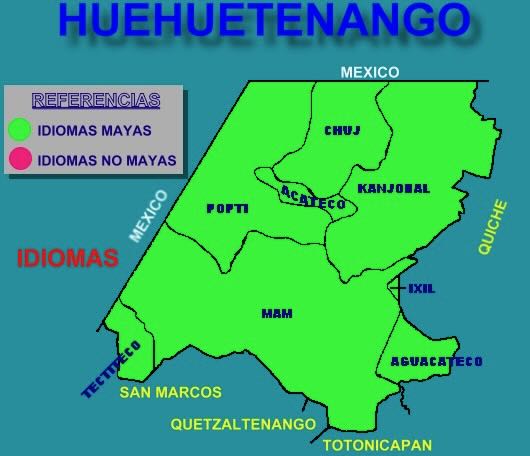
That sense of Huehuetenango being on the edge of civilization was totally correct. The department contains the rugged Cuchumatanes mountains, the highest non-volcanic mountains in Central America. It’s the only place in Central America where it’s too cold to grow corn. Instead, people get by raising sheep and planting potatoes. The mountains explain why eight different Mayan languages (belonging to three different language families) are spoken in this one department. Steep rugged mountains are a barrier to communication. A lack of communication causes a common language to diverge into multiple languages over just a few centuries.

The Mam, numbering about half a million, are the fourth largest Mayan group in Guatemala and their homeland extends into other departments in the south. But the other seven languages are only found in Huehuetenango with maybe a little spillover across the borders. The largest of those is Kanjobal, spoken by about 80,000 people today. The Tectiteco (Tektik) number just a little over two thousand.

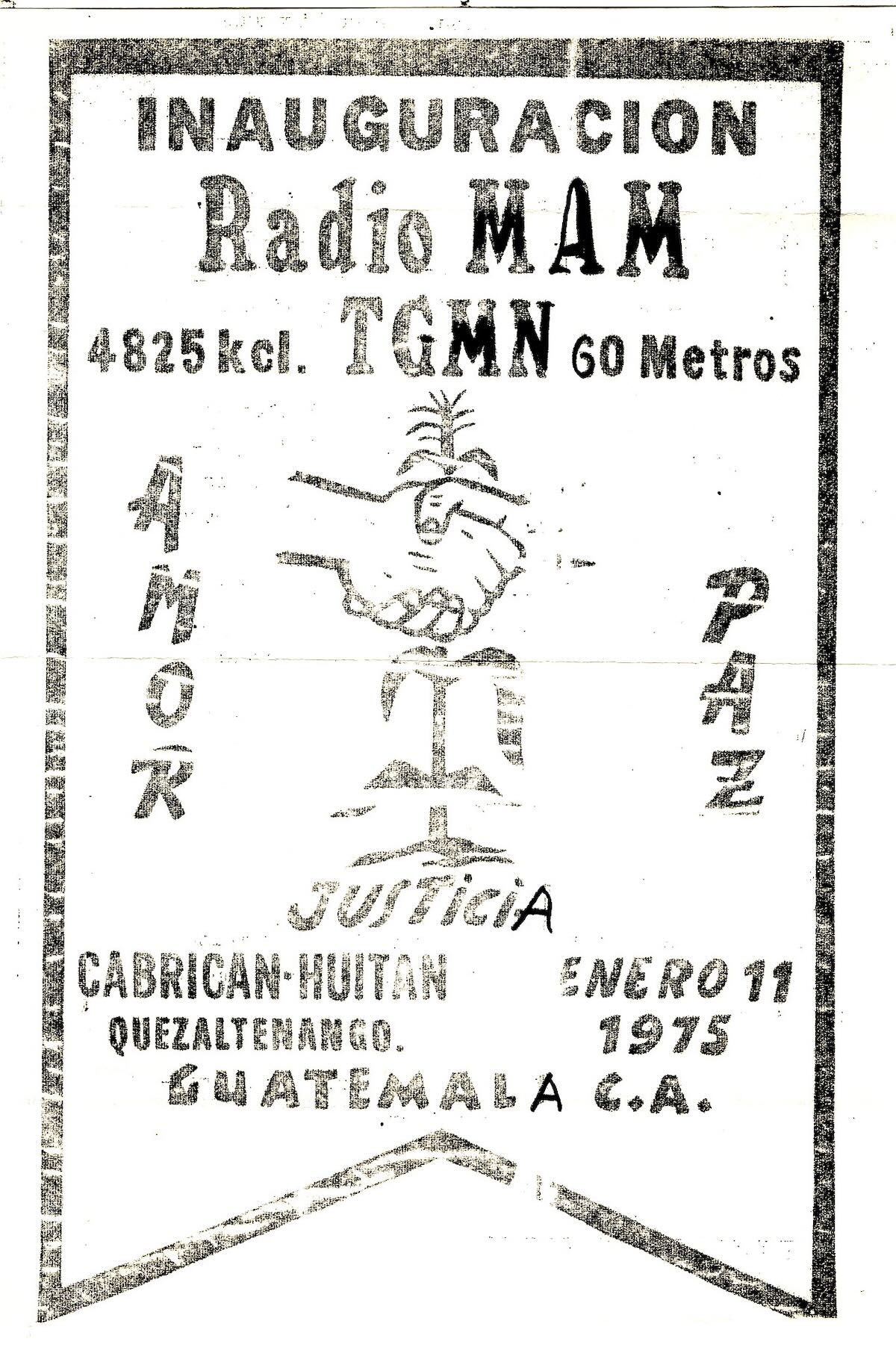
As noted on the back of my QSL from Radio Maya de Barillas, that station broadcast in six of the region’s languages, including Mam and Kanjobal, the language spoken in and around the town of Barillas. For about a decade Radio Maya was the only radio station to broadcast in the region’s languages. Then in 1975 the Roman Catholic church opened an educational station, Radio Mam, in Cabricán to the south in Quetzaltenango department. But Radio Mam only broadcast in the Mam language. (And, unfortunately, I never got to visit the station.)

Visiting Huehuetenango (or not)

When I was traveling to Guatemala while living in Honduras in the early 1980s, one of my goals was to visit as many Guatemalan shortwave stations as possible. Yet I never once considered going to Barillas. Sure, I knew that the dirt road from the town of Huehuetenango to Barillas was one of the worst in Central America and that the bus ride took twelve hours. That wasn’t going to stop me.

 What stopped me from visiting Radio Maya was that Barillas was right in the middle of the area of the heaviest fighting between the government and the guerrillas. This may surprise you if you’ve read the previous parts of this series, but there really were some things back then that I knew better than to do. Going into the worst part of a war zone was one. The closest I came to Barillas was passing through the southern part of the department on the Pan-American Highway on my way to Mexico in December 1984. That was just a few weeks after a guerilla band had ventured south and blown up four bridges on the road. Continue reading