Author Archives: Thomas

Pacific Beat: Vanuatu invests in shortwave service

(Source: ABC Pacific Beat via Michael Bird)

Click here to listen.

In the age of social media and internet technology, shortwave may be seen as traditional technology — but it still plays an important role in reaching far-flung communities, with Vanuatu’s public broadcaster now investing millions of dollars to boost its shortwave service.

The Vanuatu Broadcasting Television Corporation (VBTC) is investing AUD$12 million in upgrading its national radio service through its shortwave and and medium wave service.

VBTC chief executive officer, Francis Herman told the ABC that only 30 per cent of the country can access national radio but after the upgrade, this would increase to 100 per cent coverage across Vanuatu’s 80-plus islands.

“Radio as you know is cost effective, people can pick it up on their phone, in the villages where television can not reach, radio is the companion for people,” Mr Herman said.

The Australian Broadcasting Corporation shutdown its shortwave service to the Pacific in 2017, in favour of a digital presence while China and New Zealand have increased their shortwave coverage.

Technology commentator Peter Marks said investing in shortwave is a great way to complement Vanuatu’s national radio service.

“Shortwave comes from over the horizon it will continue to work even when local conditions are difficult like extreme weather that might knock out local FM and AM stations and internet,” Mr Marks said.

Vanuatu is listed by the United Nations as one of the most disaster-prone countries in the world and regularly experiences, earthquakes, cyclones and floods.

Mr Herman said this makes having a national shortwave service even more important.

“We have general elections in March next year, we are about to head into the cyclone season beginning in November and so its important, it’s crucial that the people of Vanuatu can get access to a reliable and credible broadcaster,” Mr Herman said.

Along with its shortwave broadcasts, the VBTC is also looking to improve its television coverage over the next two years, with funding support from the Vanuatu government, New Zealand and China.

Click here to read the full article and listen to the audio at Pacific Beat.


Do you enjoy the SWLing Post?

Please consider supporting us via Patreon or our Coffee Fund!

Your support makes articles like this one possible. Thank you!

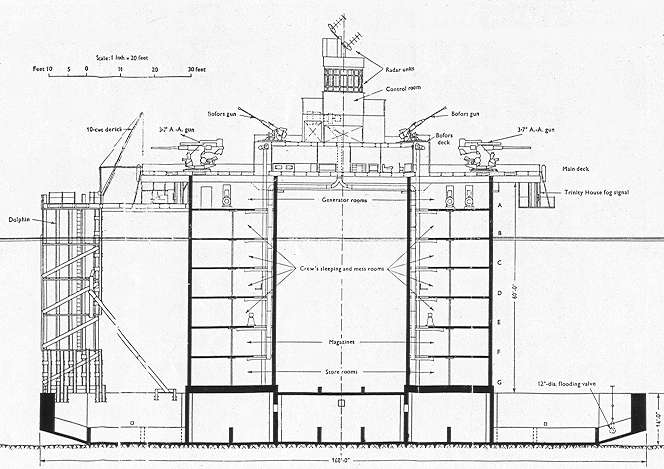
Knock John Sea Fort and life on Fort Roughs

Many thanks to SWLing Post contributor, Dave Porter, who writes:

This is a recent posting of a trip out to the Knock John Fort and also of a new book about life on a sister fort, Roughs Tower.

Report – – Knock John Sea Fort – May 2018 | Noteworthy Report

The fort is still dry inside. This was the home of R Essex and the RCA ET4336 + T aerial. When Bates closed Essex they moved to the Roughs.

Check Amazon for the book “Holding the Fort” by Bates son [affiliate link]. It’s a hardback book and is excellent. An early Christmas present!! Plenty of pics and Sealand as well plus their TX and studio.

Fascinating!  Thank you for sharing this, Dave!

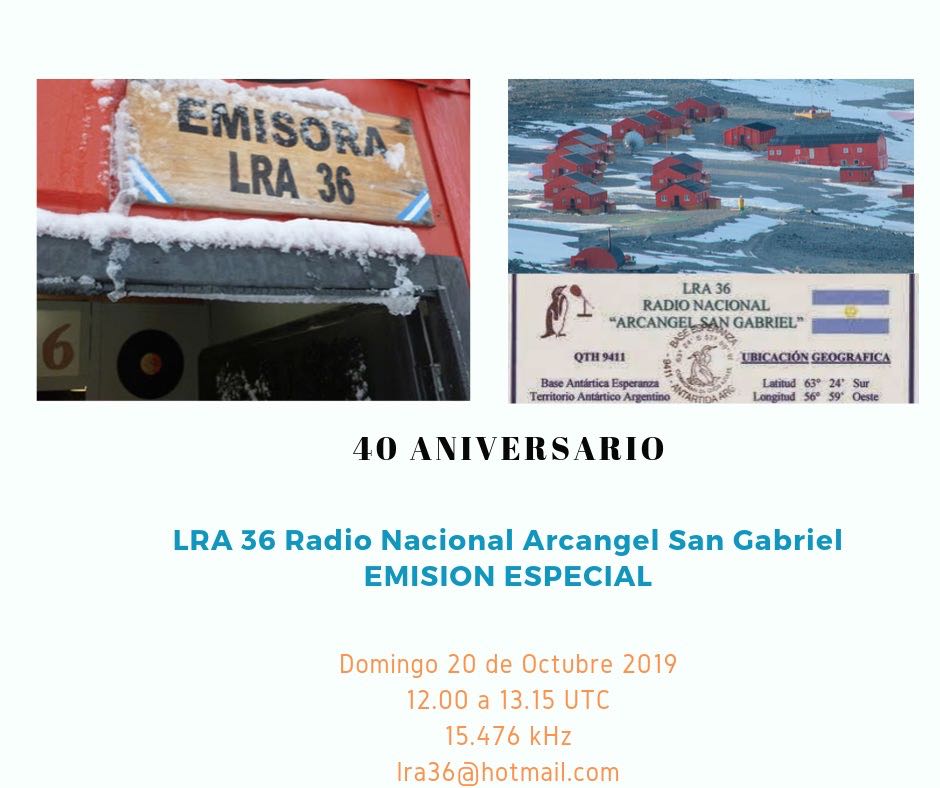
40th Anniversary Event: National Radio Archangel San Gabriel (LRA36)

Many thanks to SWLing Post contributor, Adrian Korol, who writes:

LRA 36 National Radio Archangel San Gabriel turns 40 on October 20

The different services of RAE Argentina to the World have produced special programs of 10 minutes each that will be broadcast from Antarctica via LRA36 on 15476 kHz, days and times to be confirmed.

The languages ??of these special programs will be Spanish, Portuguese, English, French, Italian, German, Japanese and Chinese. The arrival to the Antarctic of the new valves of the transmitting equipment of LRA36 is imminent.

These broadcasts will have a commemorative eQSL. You can send your reports, message and greetings to [email protected]

Thanks for sharing, Adrian! We’ll be listening!

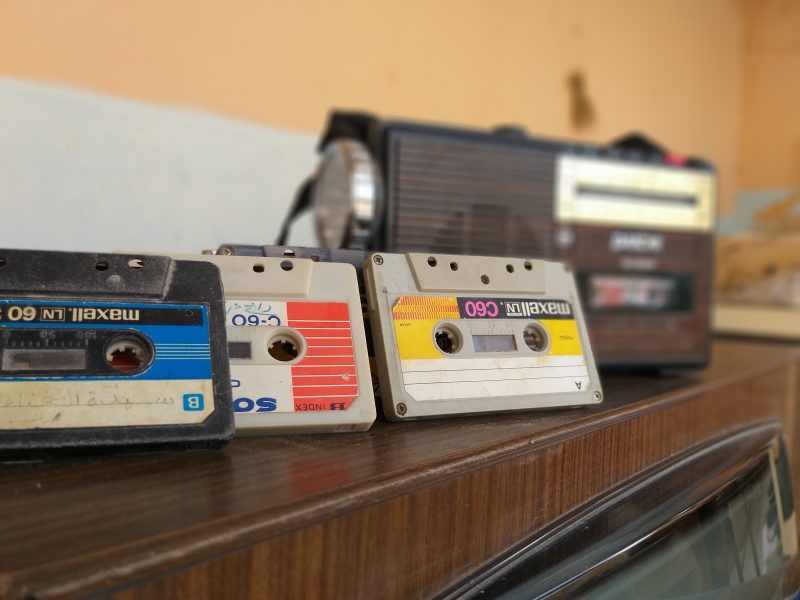
RadioTapes.com: a treasure trove of airchecks from the Minneapolis/St. Paul markets

Cassettes

Photo by Ar Meftah

One of our contributors on the Shortwave Radio Audio Archive, Tom Gavaras, has been sharing some brilliant airchecks. I also discovered that Tom runs an amazing site simply chock-full of Minneapolis/St. Paul airchecks. Tom writes:

Hi Thomas,

[…]As an FYI … I own/run a website called RadioTapes (www.RadioTapes.com). It features more than 2,000 airchecks of Minneapolis/St. Paul radio stations dating back to 1924. You will also find some shortwave recordings that I previously posted (on the Special Postings page).

In addition to my collection, the website includes airchecks provided by more 100 contributors. RadioTapes also has a Facebook page with 1,400 followers.

Post readers: I strongly suggest you check out Tom’s amazing archive of airchecks.  If you ever lived in or DXed the Minneapolis/St. Paul market, you’ll certainly hear some familiar voices and IDs.

Thank you Tom!

Click here to check out RadioTapes.com.

Platja de Pals: Once a Cold War “front line” for Radio Liberty

(Source: CNN via Tracy Wood)

(CNN) — It’s March 23, 1959. The radio waves crackle and broadcast begins: “Govorit Radio Svoboda” (??????? ????? ??????? – “This is Radio Liberty speaking…”)
From the other side of the Iron Curtain, the radio broadcasts of US-funded Radio Liberty reached deep inside the Soviet Union. This was an opening line destined to enter Cold War folklore.

What most of those clandestinely tuning in could not possible imagine is the unlikely location those broadcasts were coming from.

This quiet beach resort of Platja de Pals, Spain, tucked between the Mediterranean Sea and the greenery of pine groves and rice paddies, makes for an unlikely Cold War front line, but this is exactly the role it played for nearly half a century.

At this spot, some 150 kilometers north of Barcelona, Catalonia’s rugged Costa Brava opens up into a large bay lined by a long sandy beach, the perfect location for what was to be one of the most powerful broadcasting stations in the world.

Strategic location

In the mid-1950s, and after nearly two decades of international isolation for Francisco Franco’s Spanish dictatorship, the increasing tensions of the Cold War provided the background for a rapprochement between Spain and the United States.

In this new Cold War context, Washington took an interest in Spain’s strategic location. General Franco, himself a staunch anti-communist, was happy to oblige. In a landmark deal, the United States was provided with a string of bases on Spanish soil, while Franco’s dictatorship would see its relations with the West restored.

The setup of Radio Liberty’s broadcast station in Pals was a side effect of this new geostrategic reality.

From 1959 to 2006, this beach was home to 13 massive antennas (the largest of them 168 meters high, or more than half the size of the Eiffel Tower). This spot was favored not only because of the availability of space — the antennas were laid out in a mile-long line parallel to the shore — but also because it provided direct, unimpeded access to the sea. A physical phenomenon called tropospheric propagation makes it possible for radio waves to travel further over water.[…]

Click here to continue reading at CNN.

RRI Listener’s Day 2019

(Source: Radio Romania International via David Iurescia)

Dear RRI friends, Sunday, November 3, 2019 will be Listeners’ Day on RRI, a day of celebration for which you are kindly invited to send us your opinion about the role of international radio broadcasting now, 30 years after the fall of many communist regimes in Eastern Europe. The Berlin Wall fell in 1989 and many states in the former Communist bloc got rid of Communism, such as the Democratic Republic of Germany, Czechoslovakia, Poland, Bulgaria and Hungary. In Romania, the Communist regime was ousted on December 22, 1989.

Whereas until then international radio broadcasters in eastern countries would air propaganda against western states, and western stations would criticize the eastern states, after 1989, many of these broadcasters started promoting the countries from where they were transmitting.

International radio broadcasters have turned, in each of these states, into stations promoting their own countries and airing the views of the respective states on various issues. International broadcasters have also become a means of exporting democratic values.

In this year’s edition of Listeners’ Day on RRI, we ask you what is today, in your opinion, the role of an international broadcaster? What do you expect from an international broadcaster? Do you have any memories that you can share with us, regarding your international listening experience in general, and as listeners of RRI in particular?

We are looking forward to receiving your answers, which will be included in our shows on November 3rd! You can email them to us, at [email protected], post them on Facebook or send them as a comment to this article on RRI’s website at www.rri.ro. If you like, you can also send us pre-recorded answers via WhatsApp, at +40744312650, or you can send us your telephone number so we can call you from the studio and record your opinions. Thank you!

Click here to read the full article at RRI.