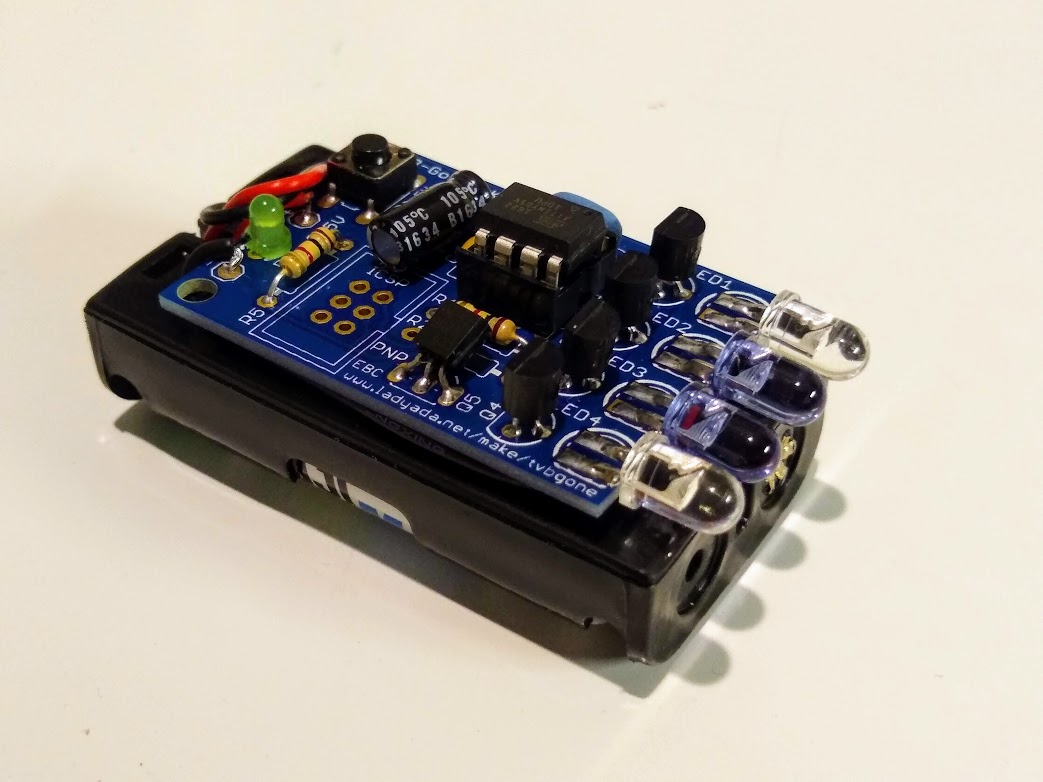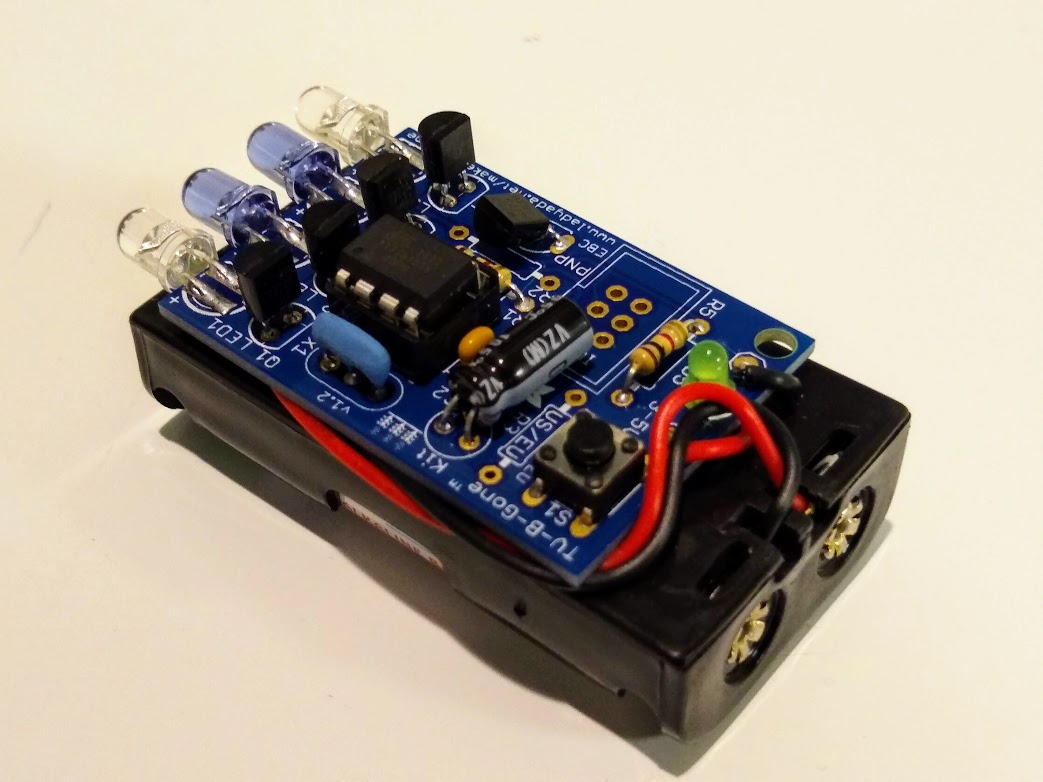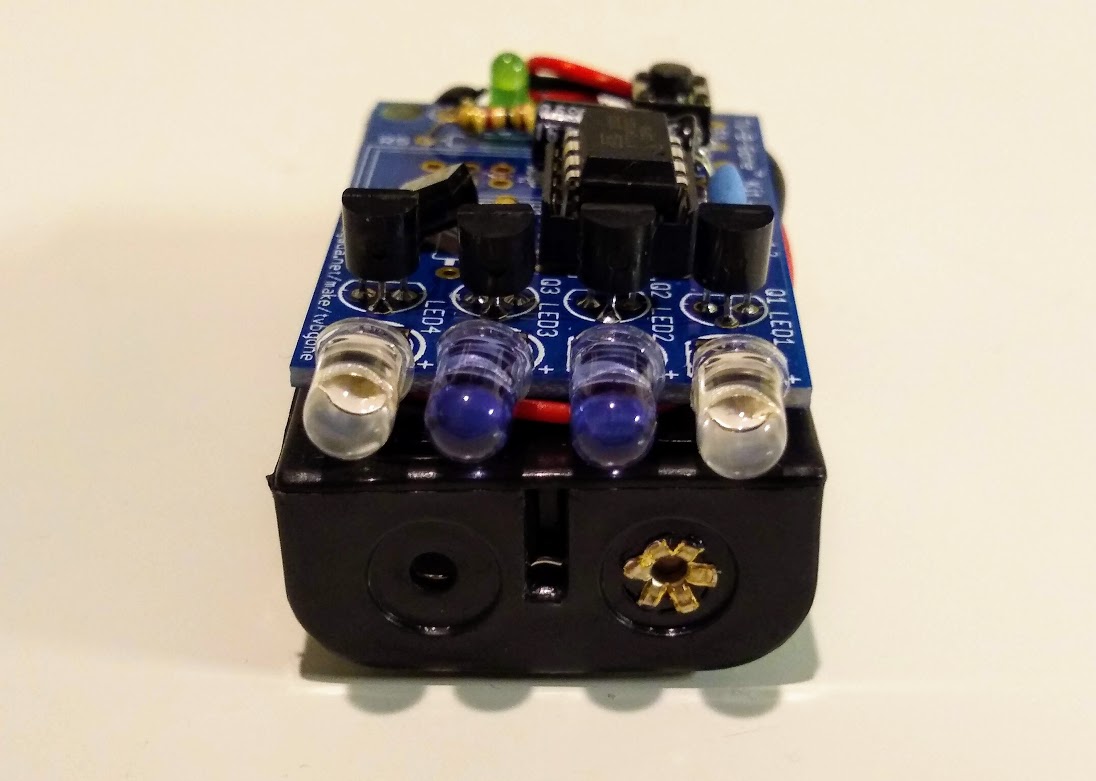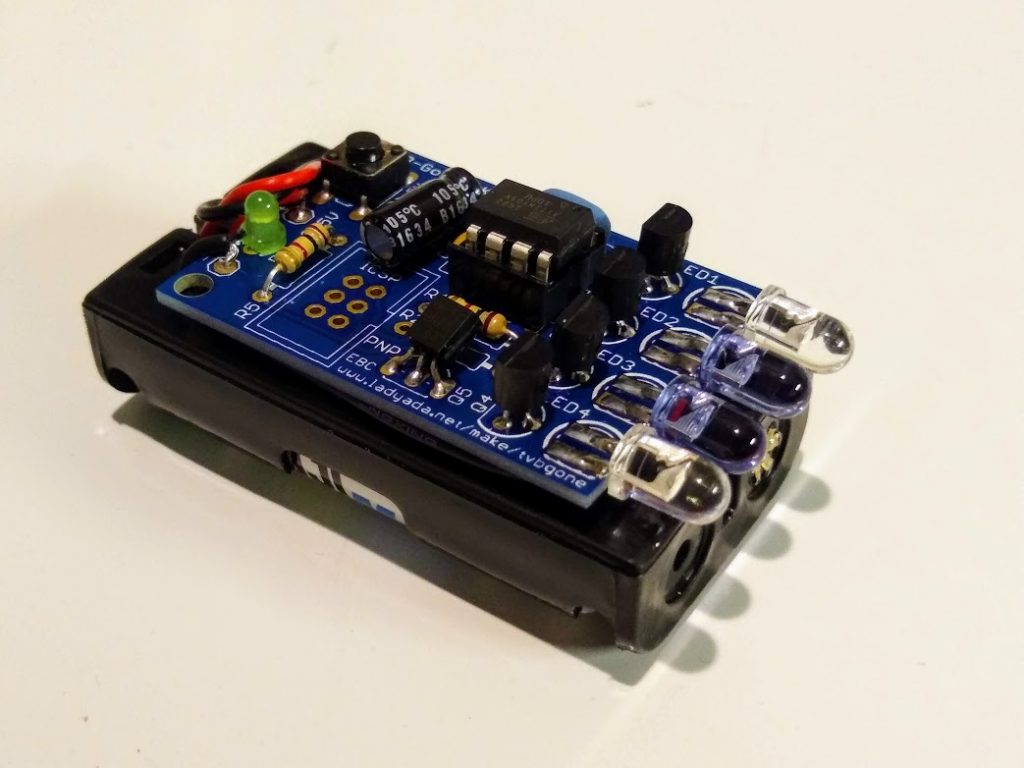
The TV-B-Gone kit
Post readers might recall that I attended and presented at Circle of HOPE (Hackers On Planet Earth 2018 in New York City.
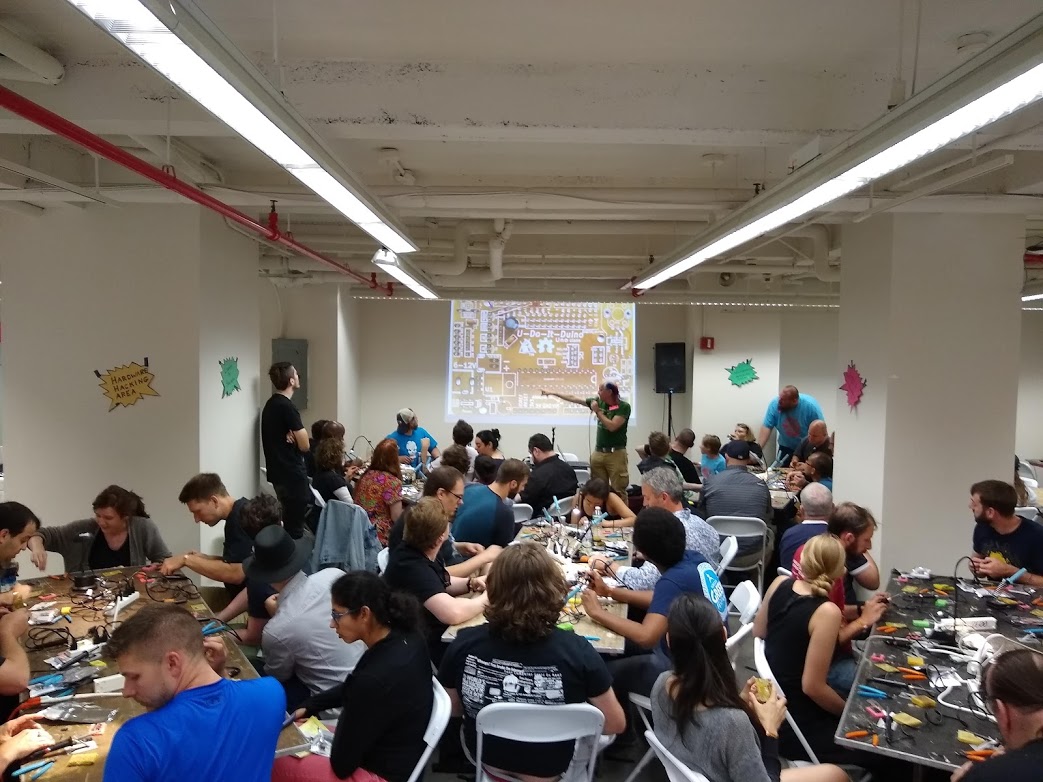
One of the many cool things about HOPE was the Hardware Hacking Village: a space with 40 or so fully-stocked soldering stations that HOPE attendees could use anytime during the conference.
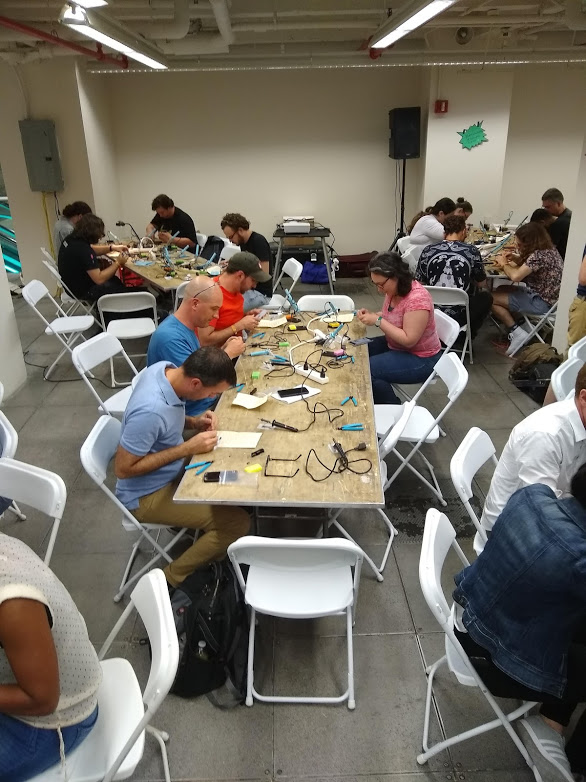
One of the many HOPE Hardware Hacking Village tables
I built two kits at the conference: The Cricket QRP transceiver (read about that here) and a very cool little product called the TV-B-Gone.
What is the TV-B-Gone? As the name implies, it’s a TV remote control with only one function, one button and one mission: to turn off TVs!
The TV-B-Gone is packed with power codes for virtually any TV or monitor on the market. Simply point the remote at a TV, click its one button, and wait as the device cycles through loads of power codes in a few seconds.
At first blush, this might sound like a mischievous little device. I mean, imagine watching the World Cup finals at your favorite pub or bar and someone turns off all of the TVs in the establishment at a crucial moment in the game? I’m sure some purchase the TV-B-Gone for this very purpose.
That’s not me. I’m not into pranks and that’s not why TV-B-Gone designer (and Maker community giant) Mitch Altman designed this product. It was more about creating an “environmental management device”–a way to control the ubiquitous TV messages/media bombarding us in situations where they really don’t belong.
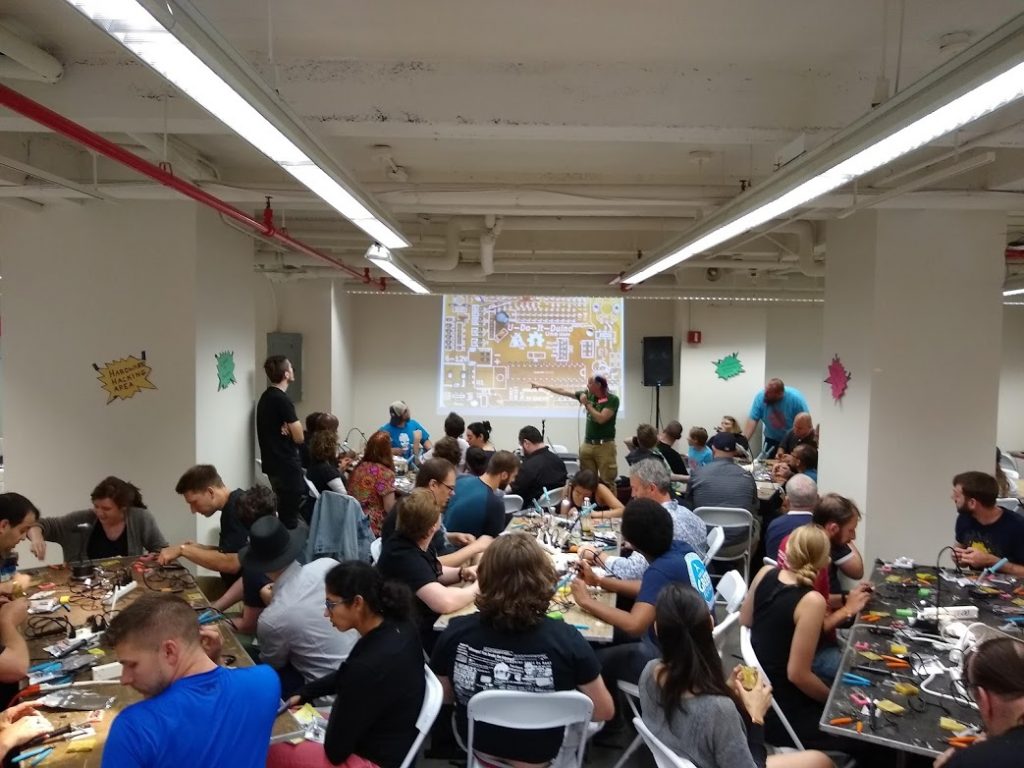
Mitch Altman in his element, teaching a class in the Hardware Hacking Village at HOPE 2018.
I’ll be the first to admit here that I’m a radio guy (big surprise, right–?) and really have no love for TVs. We have one 28″ TV in our home and it only receives one PBS station although we do use this TV it to watch the odd TV program or series via Netflix or Amazon Prime Video. I never consume news via TV unless a news-worthy event is one that must be seen. I prefer consuming news via radio or reading newspapers with objective reporters that I trust.
So when I met Mitch at HOPE and saw that he was selling a kit version of the TV-B-Gone for $20 US, I couldn’t fork out my money fast enough!
I bought the kit and built it at a table not even 10 feet away from him.
I meant to take photos of the TV-B-Gone kit as I built it, but was quite distracted helping a father and his 10 year old son both build their first kits (HumanaLight kits, of all things!) across from me.
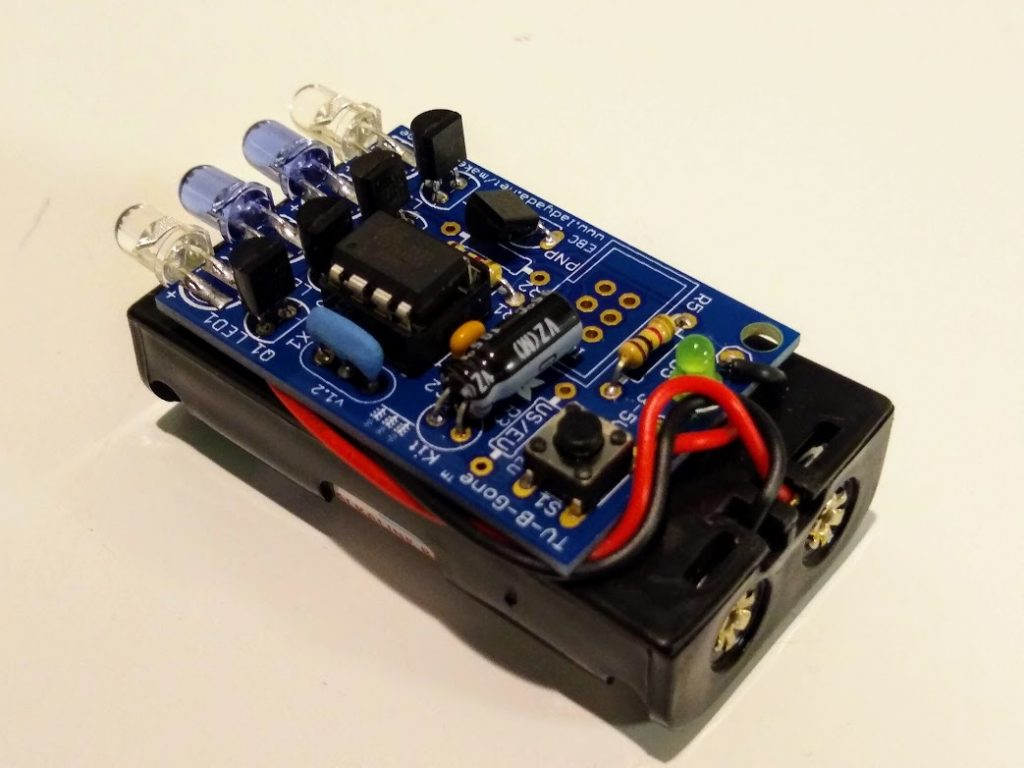
Even though my attention was divided, I still completed the kit in well under an hour. I didn’t have two spare AA batteries to power it for testing purposes, but Mitch was nearby and gave me two new AA cells.
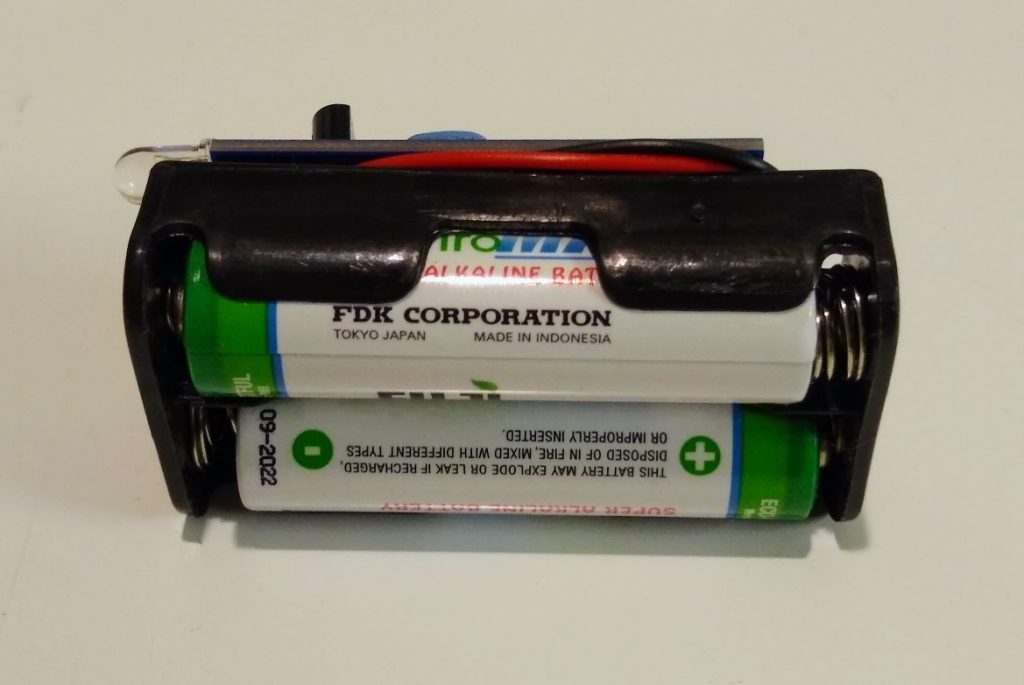
The TV-B-Gone kit is powered by two common AA batteries
After pushing the only button on this remote, the small green LED started blinking–“a good sign” said Mitch. Then he had me turn on the front-facing camera of my Android phone to verify the LEDs were blinking (front-facing cameras don’t filter IR light–who knew?). They were blinking/flickering like mad.
Mitch said, “Now you have the power to turn off TVs…and you should!”
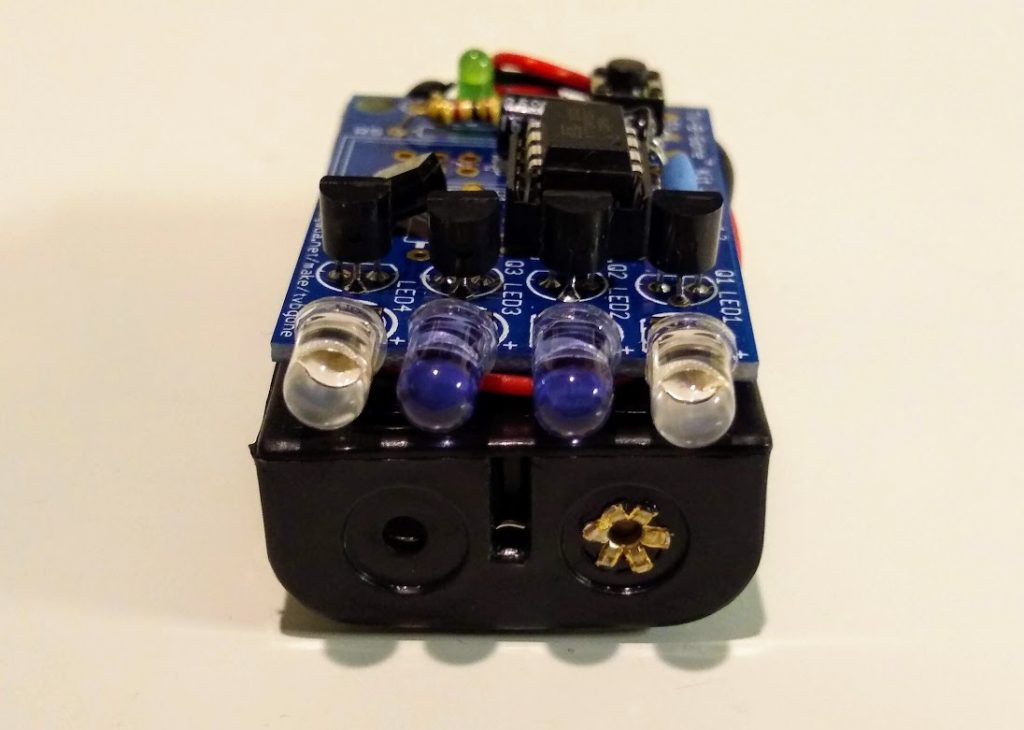
The TV-B-Gone kit sports four powerful LEDs that are effective up to 150 feet away.
I bought this kit with one specific use in mind: hotel dining rooms.
I travel quite a lot and almost always stay in hotels that provide breakfast in a small dining room area of the lobby. I’m often travelling with family, so I wake up quite early, head to the breakfast area, grab a cup of coffee, and catch up with SWLing Post correspondence, comments and posts. Most of the time, I’m the only person in the dining room, yet the TV is blaring the news (often an outlet I don’t like) and there is no remote to be found.
This is where the TV-B-Gone could bring peace to my morning. But would it work? Time to find out!
On a trip through Connecticut in August, I stayed a few nights at a Hilton Garden Inn. I found an excellent spot to work on a comfy couch in a corner nook of the lobby. The couch faced a fireplace and was perfect for relaxing and catching up on work. One morning, I woke at 5:30 AM, headed down to the lobby and grabbed a cup of coffee. Unfortunately, right above the fireplace in this small nook was perched a monster flat screen TV with the news blaring. At 5:30 AM!?!
There was no remote to be found, so I reached into my bag, pulled out the TV-B-Gone, pressed the button and within 5 seconds, the TV turned off.
I knew then: I’d fallen in love with this $20 kit.
Then again in New York, last week, I was having breakfast at 6:00 AM in a small hotel. The only other people in the dining room were obviously with the military and there together for breakfast and a chat/debriefing before starting their day. None of them were watching the TV which was blaring commercials–in fact, they had all positioned themselves at the farthest point from the TV and facing away. I had a hunch they wouldn’t mind if I turned off the TV, so I pulled out the TV-B-Gone and didn’t even remove it from the poly bag I keep it in. One press of the button and seconds later the TV went silent.
I heard one of the guys at the other table say, “I hope they keep that thing turned off!”
I won’t lie: it felt like I was wielding a super power.
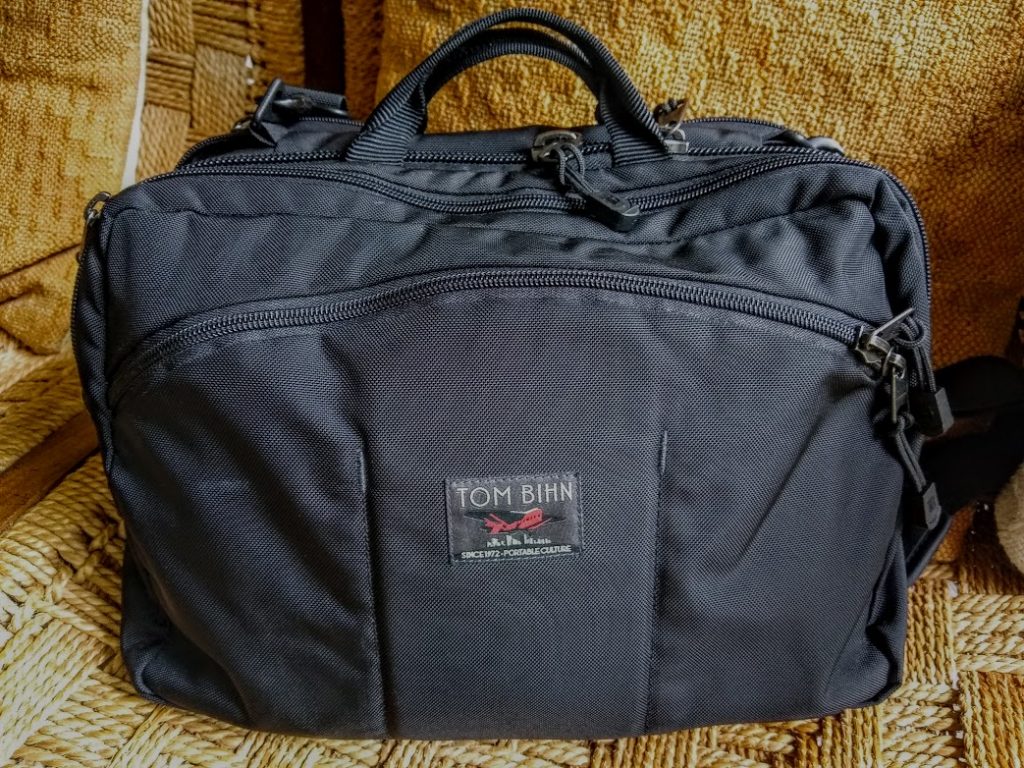
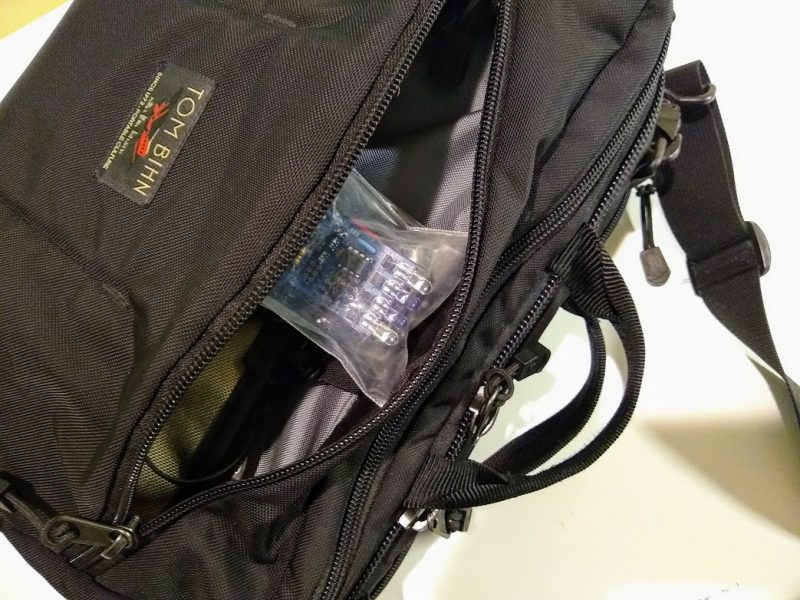
My EDC Pack easily accommodates the TV-B-Gone.
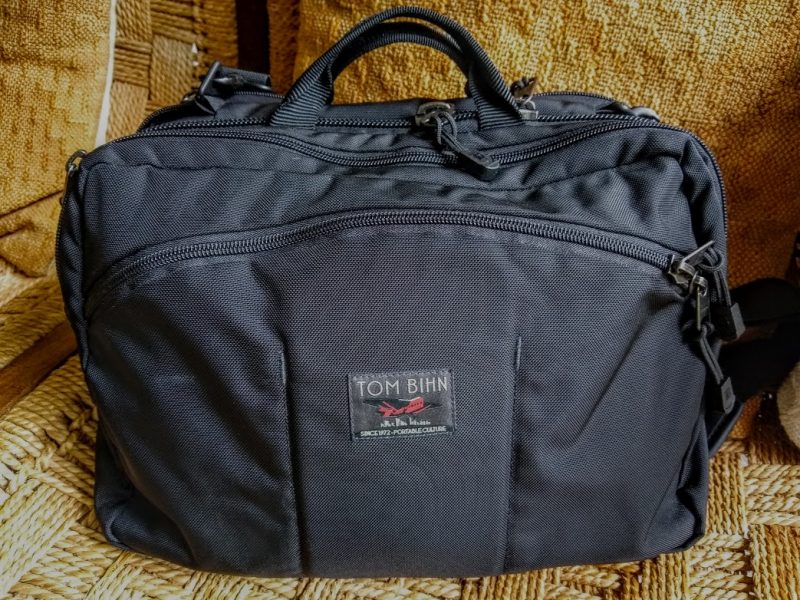
My TV-B-Gone remote now permanently lives in a dedicated pocket at the front of my EDC pack (a Tom Bihn Stowaway, in case you’re interested).
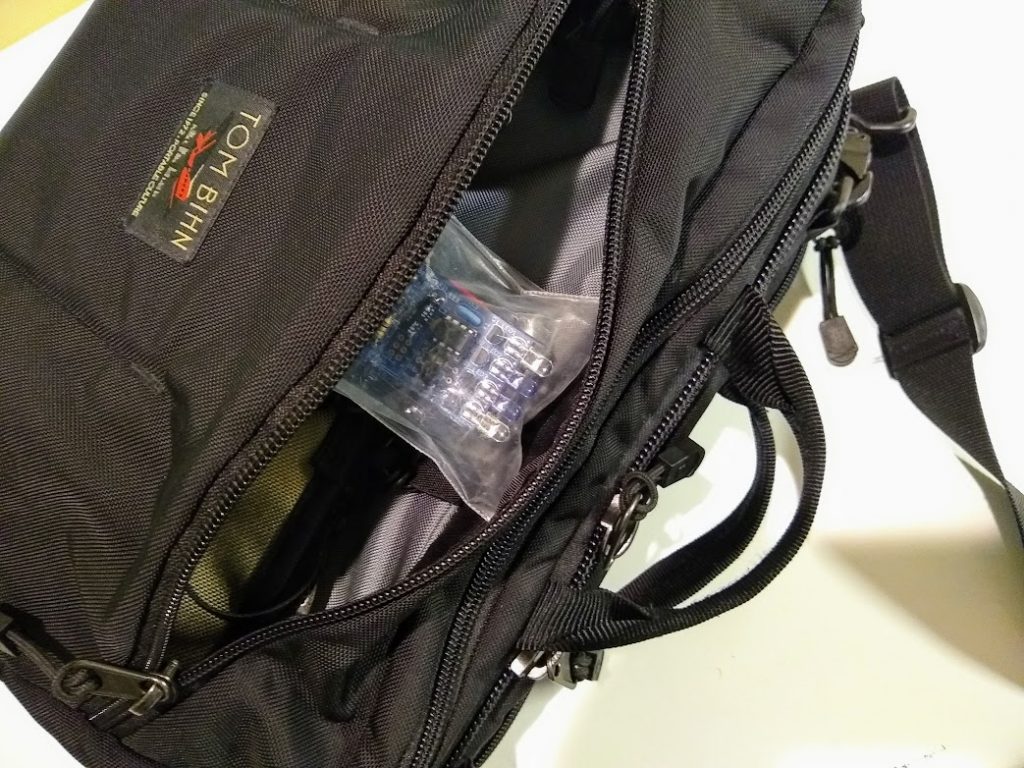
My TV-B-Gone remote now travels with me everywhere.
If you’re like me and would like a little device to manage your environment, I strongly recommend the TV-B-Gone.
I had a lot of fun building the kit version of TV-B-Gone, but if you don’t care to build one, Mitch has pre-built key chain versions of this same remote on his website for a mere $24.95. Note that the kit version comes with all you need to set up the remote for international use (power codes and configuration differ based on region). If you purchase a pre-built keychain, make sure you buy the version for the part of the world where you intend to use it.
TV-B-Gone Retailers:
Do you enjoy the SWLing Post?
Please consider supporting us via Patreon or our Coffee Fund!
Your support makes articles like this one possible. Thank you!


 (Source: IEEE Spectrum via Ed C)