Many thanks to SWLing Post contributor and noted political cartoonist, Carlos Latuff, who shares illustrated radio listening report of recent Radio Nikkei 1 and 2 broadcasts.
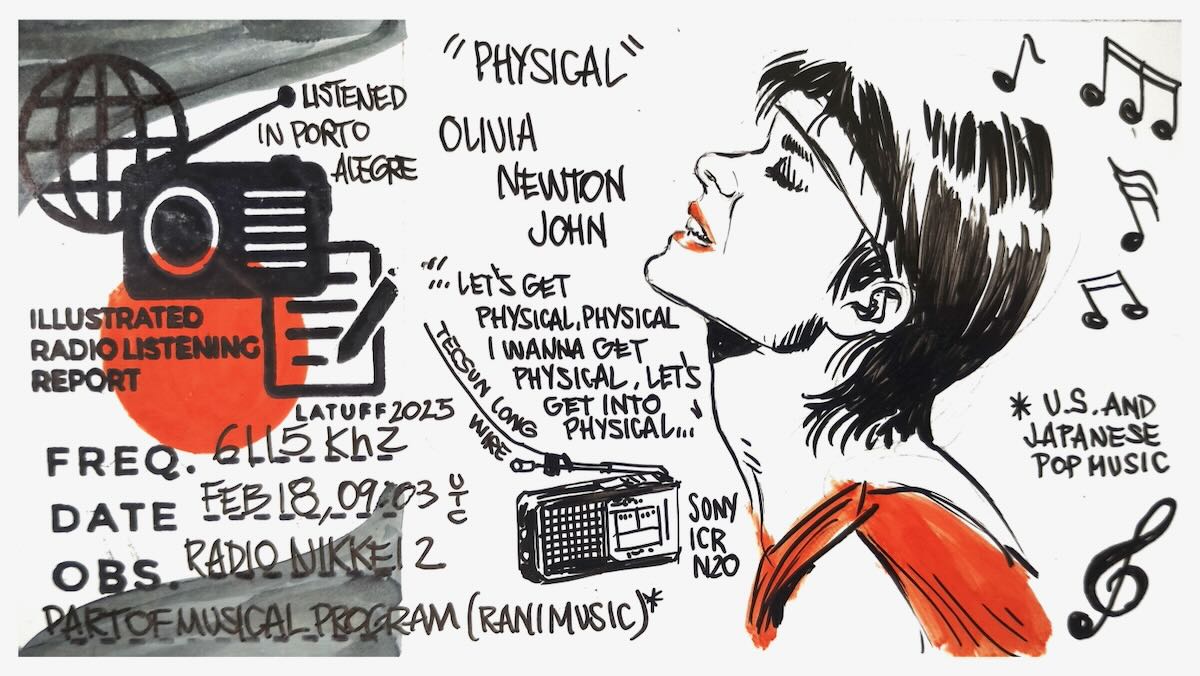
Click here to view on YouTube.


Many thanks to SWLing Post contributor and noted political cartoonist, Carlos Latuff, who shares illustrated radio listening report of recent Radio Nikkei 1 and 2 broadcasts.
Click here to view on YouTube.
Many thanks to SWLing Post contributor, Bill Tilford, who shares the following update:
March’s program will be a Cuban dance party featuring some of our favorite charanga orchestras:
Friday, March 7:
3955 kHz at 2200 UTC
Saturday, March 8:
3955 kHz at 1800 UTC simulcasted with 9670 kHz using beam E-F (repeat of March 7 episode).
Uncle Bill’s Melting Pot, March 2025
March’s program will feature mainly music from Corsica and will air as follows:
Friday, March 14:
3955 kHz at 2200 UTC
Saturday, March 15:
3955 at 1800 UTC simulcasted with 9670 using beam E-F (repeat of March 14 episode).
**In addition to direct radio reception, we do honor reception reports using remote SDRs as long as the whole program is described and which SDR is specified.
Many thanks to SWLing Post contributor Adid, who shares the following news from NHK World:

February 14, 2025
Termination of NHK WORLD-JAPAN Verification Cards (confirmation cards)
NHK WORLD-JAPAN has been issuing verification cards (confirmation cards) to people who have notified us that they are listening to our broadcasts.
Please be advised that we have decided to stop issuing the Verification Cards. The cards will be sent for confirmations on broadcasts up to March 20, 2025.
Thank you for your understanding and continued support.
You can continue to submit your comments and requests to English language services through
Contact Us on our website.
Your feedback will be used to improve our broadcasts and services.
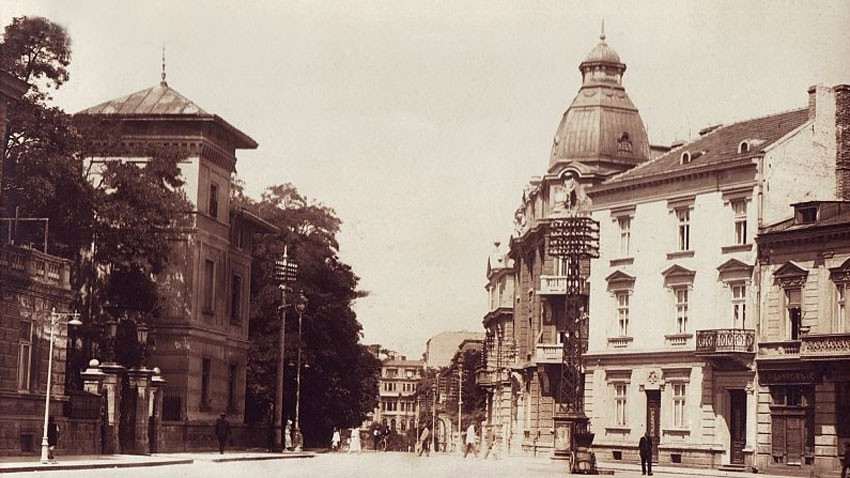
Vintage Radio Bulgaria QSL Card
Many thanks to SWLing Post contributor David Iurescia, who shares the following item from Radio Bulgaria:
16 February marks the anniversary of BNR’s multilingual programme
On February 16, Radio Bulgaria celebrates its 89th anniversary. Throughout these years, our multilingual media has been not only a channel of information, but also an invaluable link with our audience around the world. Today, Radio Bulgaria offers rich journalistic content, including programmes for the Bulgarian diaspora, as well as for foreigners in Bulgaria and abroad. We are active on social media in 11 languages and connect with our listeners through modern digital platforms. The greatest reward for our small team is the trust and affection of our numerous listeners and users from all over the world. [Continue reading…]
Many thanks to SWLing Post contributor and noted political cartoonist, Carlos Latuff, who shares illustrated radio listening report of a recent Radio Beunos Aires broadcast.
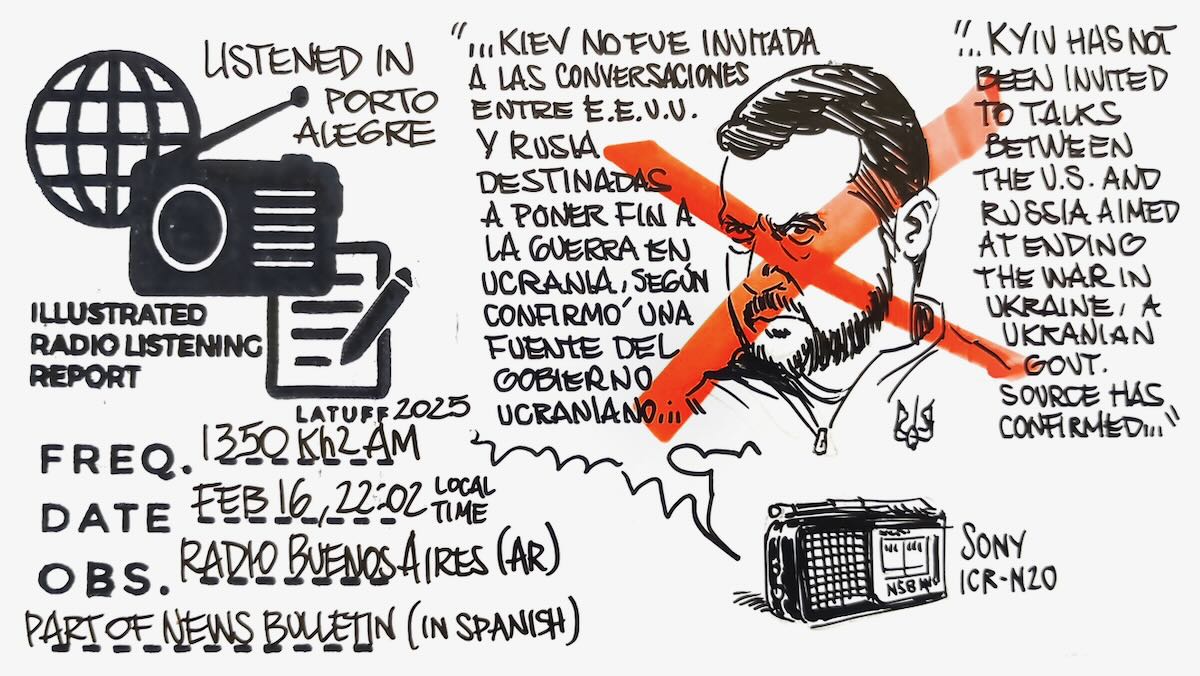
Carlos notes:
Part of Radio Buenos Aires’ news bulletin (in Spanish): Ukraine not invited to US-Russia peace talks:
“Kiev no fue invitada a las conversaciones entre Estados Unidos y Rusia destinadas a poner fin a la guerra en Ucrania, según confirmó una fuente del gobierno ucraniano.“
(Kyiv has not been invited to talks between the United States and Russia aimed at ending the war in Ukraine, a Ukrainian government source has confirmed.)
Listened in Porto Alegre, Brazil, in a SONY ICR-N20 receiver.
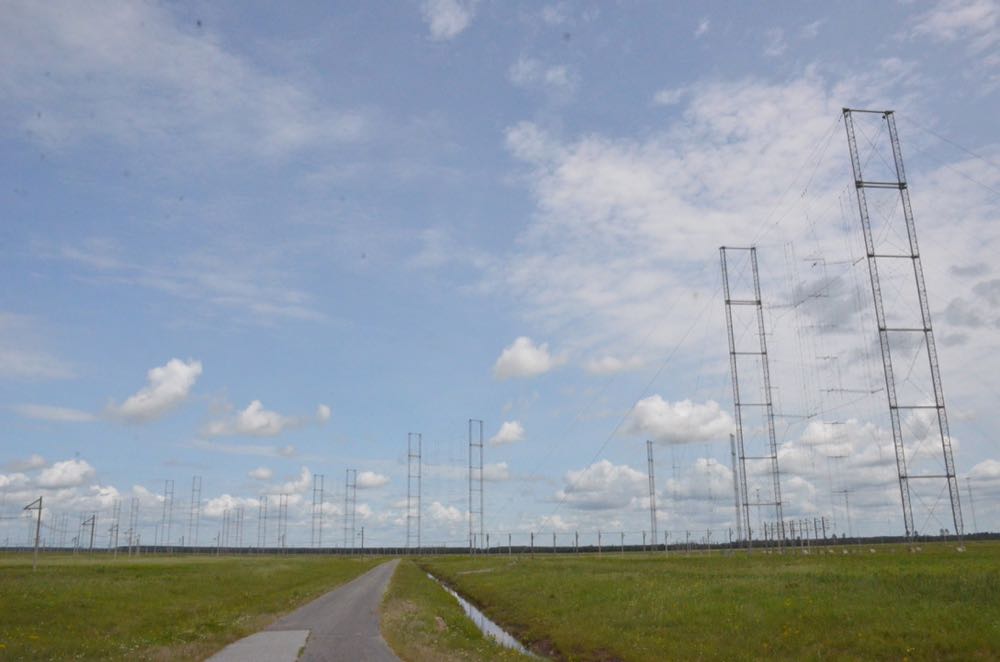
Curtain Antennas at the Edward R. Murrow Transmitting Site.
Many thanks to SWLing Post contributor, Marc Pascoe, who, in response to this article from The Spectator posted last week, shared a thought-provoking piece from ARK on the dangers of phasing out shortwave broadcasts.
The ARK article highlights the critical role shortwave radio has historically played in providing access to information, particularly for rural and underdeveloped regions where internet penetration remains low. Despite digital media’s rise, approximately 37% of the global population still lacks reliable internet access, making shortwave a vital tool for delivering news, emergency alerts, and educational content. The reduction in shortwave services risks isolating these populations, especially during crises when conventional communication networks may be unavailable or compromised.
Additionally, the article underscores the increasing vulnerability to censorship, propaganda, and misinformation as shortwave broadcasts decline. Unlike the internet, which can be easily controlled or restricted by authoritarian regimes, shortwave signals are resilient and difficult to jam. Historical examples from North Korea, Iran, and the war in Ukraine illustrate the crucial role shortwave plays in ensuring the free flow of information.
Many thanks to SWLing Post contributor Don Moore–noted author, traveler, and DXer–for the latest installment of his Photo Album guest post series:

Image Source: Wikimedia Commons
by Don Moore
More of Don’s traveling DX stories can be found in his book Tales of a Vagabond DXer [SWLing Post affiliate link]. If you’ve already read his book and enjoyed it, do Don a favor and leave a review on Amazon.
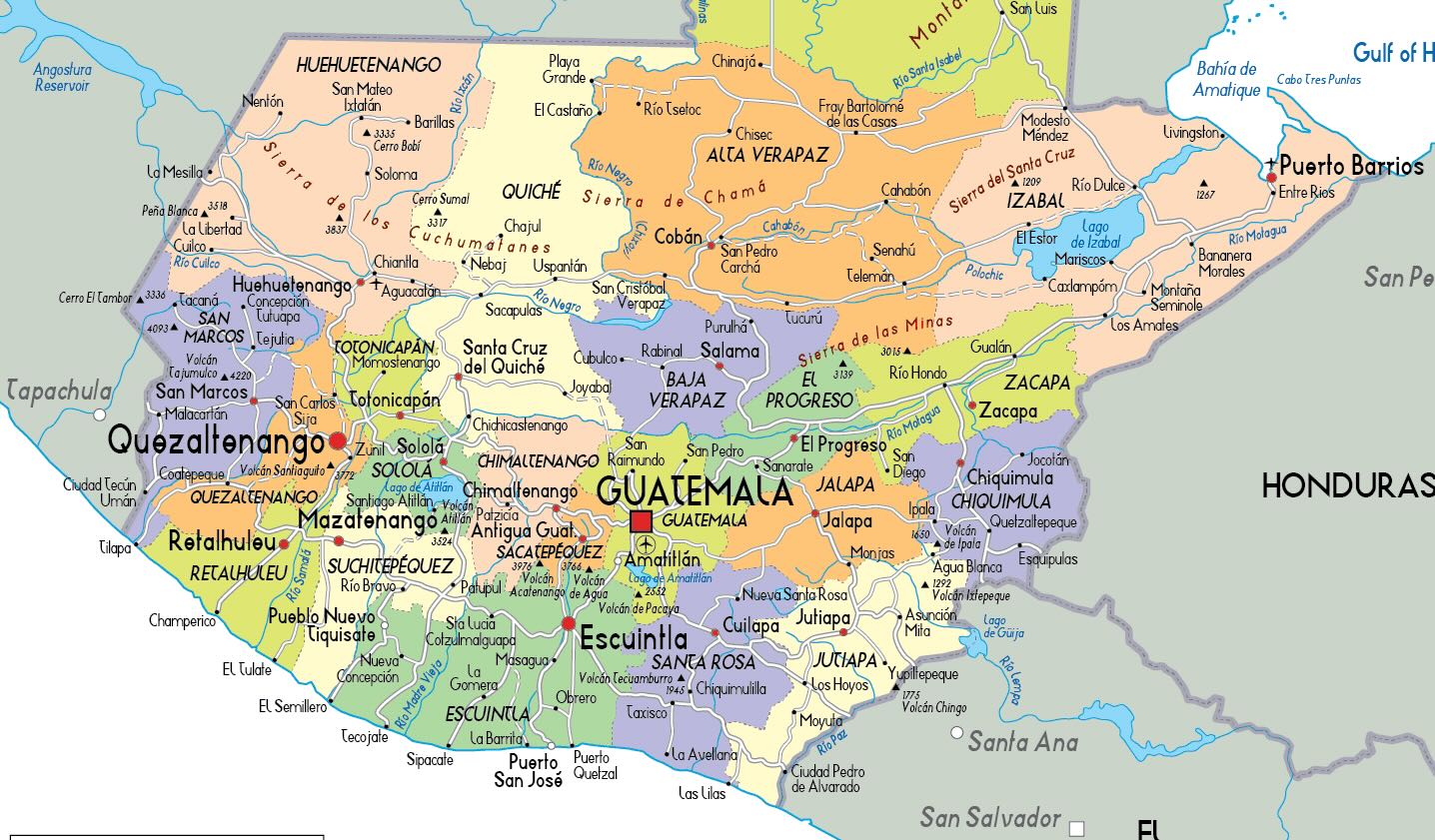
Guatemala City, the country’s capital, is the political, economic, and social hub of the country. The next largest city, Quetzaltenango, is less than a fifth as big. Guatemala City also forms a pivot point dividing the country. The departments to the west and the Verapaz region to the north are heavily indigenous. Quiché department is named after the country’s largest Mayan group. The Pacific departments to the south and those to the east are mostly populated by Spanish-speaking ladinos, which is what mestizos of mixed Spanish and indigenous heritage are called in Guatemala. It’s the ladinos and Guatemala’s small European-descended upper class who rule the country. Although the Mayans and a few smaller groups represent half of Guatemala’s population, the country has never had an indigenous president. That’s not where the power lies.
While I was working in Honduras, all of my visits to Guatemala included a few days in Guatemala City. It wouldn’t make anyone’s lists of Latin America’s best capitals but I always enjoyed returning. It felt like a city. Honduras’ capital of Tegucigalpa felt like an overgrown small town.
Guatemala City had a very diverse radio scene with stations programming for all the segments of the population. You could tune in everything from Guatemalan marimba music to English-language rock to Spanish-language romantic pop to Mexican ranchera to Argentine tango. There was even a commercial classical music station on medium wave. Several of the stations – Radio Nuevo Mundo comes to mind – had very professional news departments. And three of Guatemala City’s radio stations broadcast on shortwave.
But for me the best part of visiting Guatemala City wasn’t the shopping or the museums or even visiting the radio stations. It was getting to see my friends in the Guatemala DX Club.
In early 1983 I connected with the Guatemala DX Club through Radio Netherlands’ Spanish language DX program, Radio Enlace. I first got together with them on my second visit to Guatemala in June 1983 and then made a point of visiting them every time I came to the city. The GDXC had several dozen members, mostly in Guatemala City. Only about eight or ten regularly participated in club events and those are the ones I met. The club had occasional meetings, sometimes organized visits to radio stations, and published an annual newsletter. They also produced a weekly fifteen-minute DX program on La Voz de Guatemala.
This photo was taken during my last visit in December 1987. In the back row are Carlos Zipfel Valencia, Jorge Luis Álvarez, and Edgar Oliva. Me and Ralf Gruner are seated in front.

Edgar was an official monitor for Deutsche Welle and had a beautiful huge Grundig receiver that the station had gifted to him. It had been sent by diplomatic pouch to the West German embassy where he had picked it up in person.
Carlos’ father, Carlos Zipfel y García, was a well-known Guatemalan writer but Carlos was more interested in the spoken word of radio. After getting a communications degree he received professional training through programs run by Radio Netherlands and Deutsche Welle and pursued a career in broadcast journalism and management. At different times he’s served as a producer for La Voz de Guatemala, director of Radio Universidad de San Carlos, and in various roles for several public and non-government organizations such as the Federation of Guatemalan Radio Schools.
I’ve always liked the GDXC pennant. It was intentionally designed to point left so that it would easily fit on the wall between the usual right-pointing radio station pennants. Only a DXer would think of doing that! The design features Guatemala’s national bird, the quetzal, which is known for its long tail feathers.

During my first visit with the club, Carlos used his day off to take me to visit the radio station he was working at plus several more medium wave and FM stations. He already had many professional contacts so I had some very memorable station tours. Carlos also used his press credentials to get me a private tour of part of the Palacio Verde, or presidential palace.
The station I was most interested in seeing was the official government radio station, TGW La Voz de Guatemala, also sometimes called Radio Nacional de Guatemala. I had a very long visit there as Carlos, of course, had connections. It was he who produced the club’s weekly DX program on TGW.
The Estudio Maya was a spacious room where live marimba music concerts were broadcast each week. The station even had its own handmade marimba. The use of the name Estudio Maya is interesting. Guatemala embraces the historical image and importance of the Mayans while at the same time ignoring the present-day Mayan population. Half of Guatemala’s population speak Mayan languages but the national radio station only broadcast in Spanish.


Visiting radio stations usually includes collecting souvenirs and TGW didn’t disappoint. Here are several items from the station’s 50th anniversary in 1980. I also picked up several QSLs signed and sealed not just by the head station producer but also by Carlos on behalf of the Guatemala DX Club.


TGW La Voz de Guatemala, 640 kHz, as recorded in Guatemala City in June 1983:
The marimba is Guatemala’s national musical instrument and if you ever heard one of Guatemala’s shortwave stations you surely heard the music. Like the banjo, the marimba is an instrument that always sounds happy. It’s impossible to play a sad song on one. The instrument is like a xylophone but is made of wood. Although smaller ones do exist, a true marimba requires seven musicians playing in unison. A live concert is an amazing sight. Continue reading