Author Archives: Thomas

Shortwave Radio Recordings: Radio Thailand English language service

Paul-Walker-Galena-Alaska

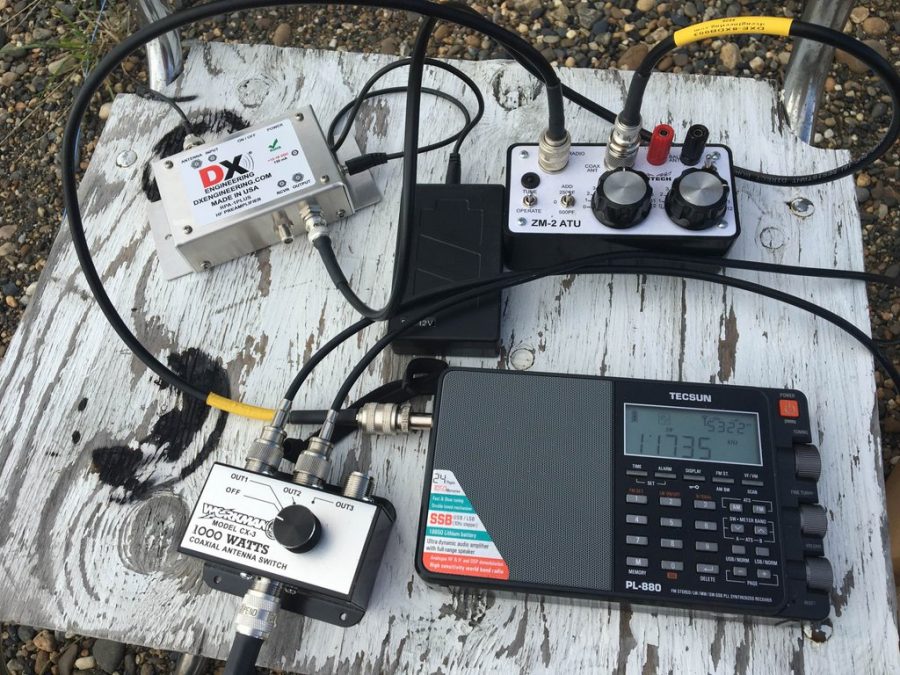
Many thanks to SWLing Post contributor, Paul Walker, who shares this recording from his home in Galena, Alaska. Paul notes:

Radio Thailand (13745 kHz) English service to North America at 0000UTC on November 8th, 2016:

Click here to view on YouTube.

Not the strongest I ever hear them, but a good solid clean nearly noise and nearly fade free signal.

That’s an impressive signal, Paul, especially considering the fact that propagation conditions have been somewhat shaky as of late. Thanks for sharing!

Hoax Radio transmissions at Melbourne and Avalon airports

The Melbourne Airport (Source: melbourneairport.com.au)

The Melbourne Airport (Source: melbourneairport.com.au)

Many thanks to SWLing Post contributor, Phil Brennan, who writes:

Your readers might be interested in this article from today’s Guardian

Hoax radio transmission at Melbourne airport forces plane to abort landing

Police are investigating 15 incidents of illegal radio transmissions with aircraft at Melbourne and Avalon airports, including hoax calls that forced at least one aircraft to abort its landing.

In a statement issued on Monday night, the Australian federal police said there had been “unlawful interference with air traffic control broadcasts over several weeks”.

Audio obtained by the ABC revealed that, during one of the calls, the hoax caller pretended to be the pilot of a light aircraft as he spoke to an air traffic controller.

“I can see you there now. Roger your mayday. Could you please advise what your situation is,” the air traffic control operator asks.

“Engine failure,” the hoax caller replies. “Descending passing through 4,500.”

In another incident a Virgin Australia flight en route from the Gold Coast to Melbourne was forced to change course under the instruction of the hoax caller transmitting from an unknown location, the ABC reported.

Continue reading…

Such behaviour could have disastrous consequences.

You’re right, Phil. It angers me to no end when people intentionally cause interference or disrupt operations at airports. So many lives depend on air traffic control and flight communications systems.

Thank you for sharing.


Nicholas uses Android phone and $18 receiver to decode VOA Radiogram

voa-radiogram-decode-app

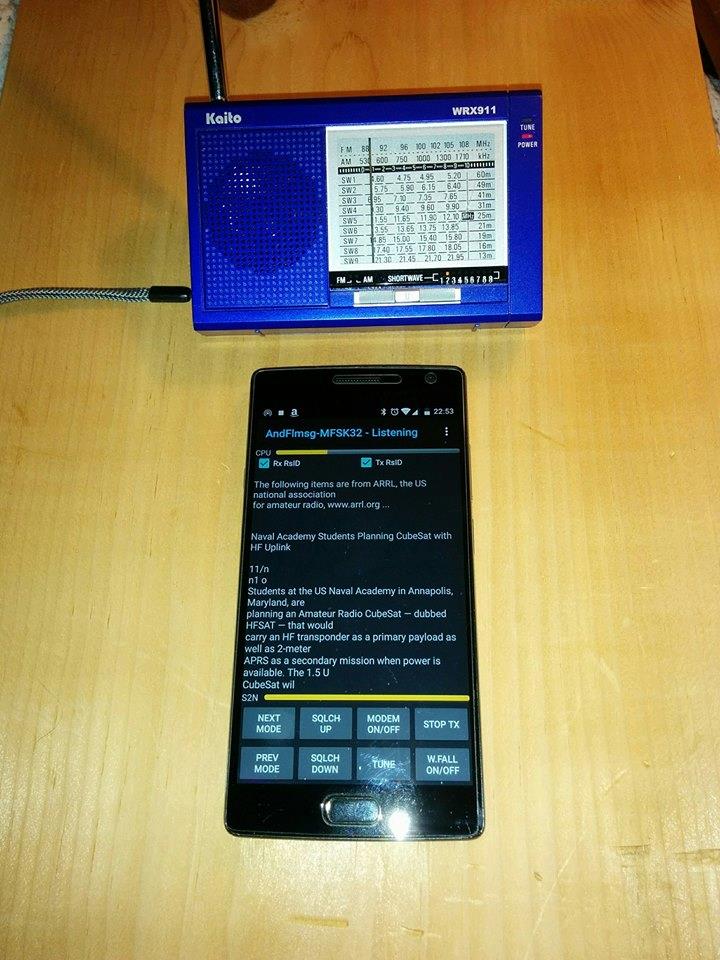
Many thanks to Nicholas Pospishil, who shares this photo and notes:

“VOA Radiogram on 5745 kHz. No fancy equipment needed.”

No kidding! Mobile phones and tablets now have more than enough horsepower to decode most VOA Radiograms.

Nicholas uses the free AndFlmsg app for Android to decode. Note that AndFlmsg is not available in the Google Play store, you must manually install it using these directions.

The Kaito WRX911 is an $18 US receiver and AndFlmsg is free. That’s a pretty inexpensive and accessible combo!

Nicholas originally posted this image on Gary J. Cohen’s Shortwave Listeners Global.

Thanks for sharing, Nicholas!

Mark’s Global Spectrum Project MK2

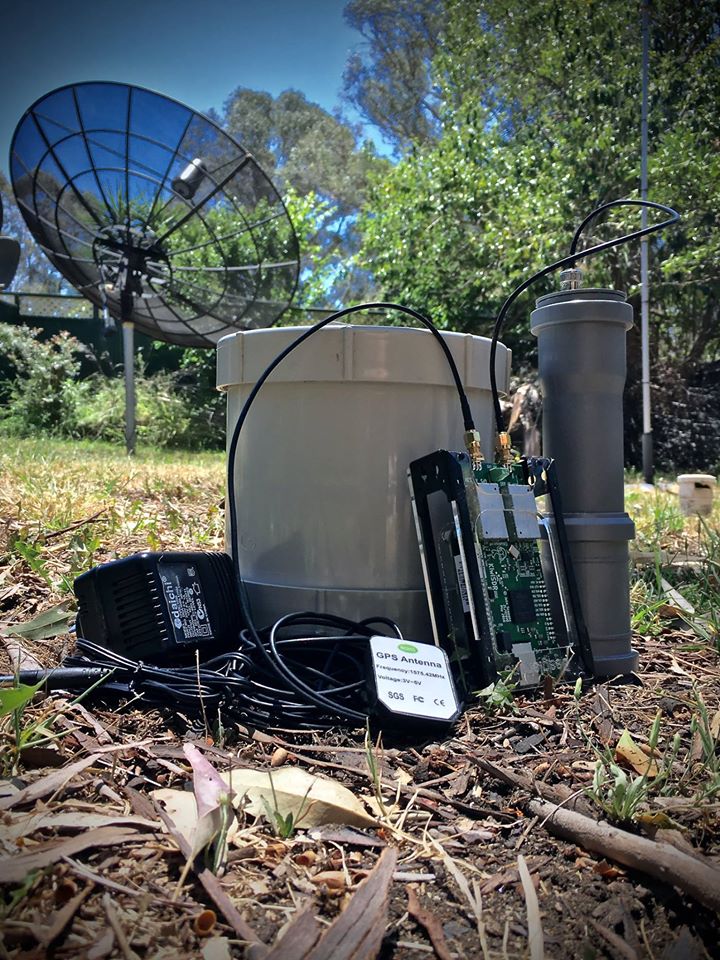
mark-fahey-beagle-kiwi-sdr

Many thanks to SWLing Post contributor, Mark Fahey, who shares the following:

It’s been a fun weekend getting the first two remote modules for the Spectrum Project MK2 together. These modules tune into and then digitally preserve broadcasted human communication; music, discussion, culture for future generations to study and ponder.

This initial version of the hardware provides 0-30MHz with four (simultaneous) independently configured receivers that are controlled remotely from anywhere on the planet. The first of the modules will be installed near Vladivostok in Russia’s far east and the second is planned to go to one of the “stans” in Central Asia, most likely Kazakhstan.

markfahey-kiwisdr

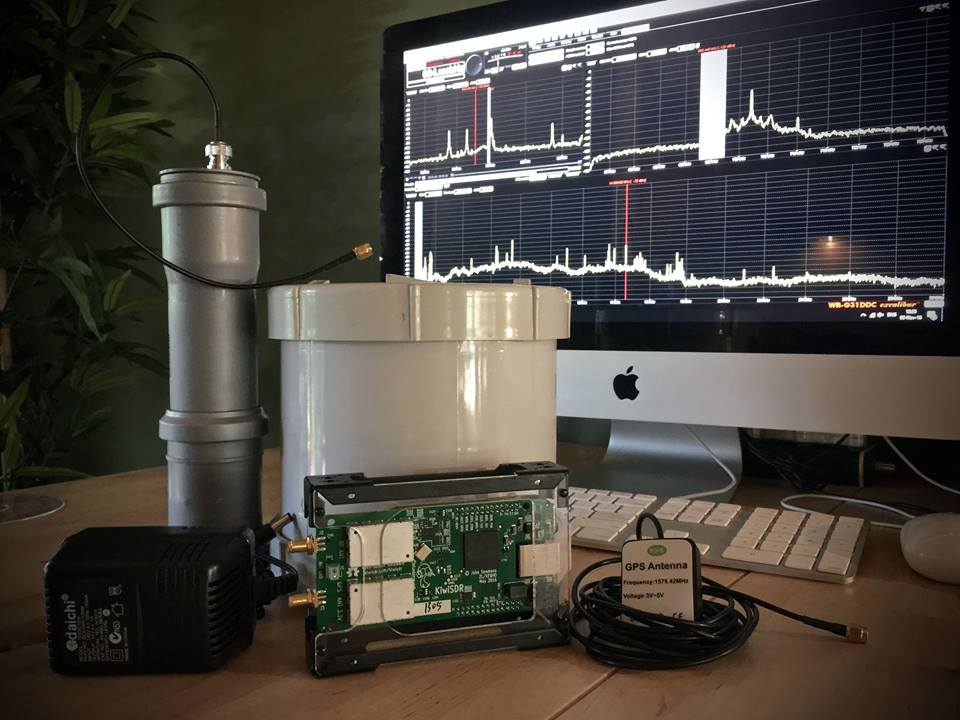
The hardware includes a KiwiSDR 0-30MHz SDR 4 channel receiver AM LSB USB CW FM plus GPS for precision timing and location information. A BeagleBone Green is the CPU and the compact 100KHz-30MHz active antennas we are using are precision built by RA0SMS in Irkutsk, Siberia, Russia.

(Note to fellow SDR geeks – the WinRadio Excalibur running on the iMac [above] is not part of the remote system – it just happens to live on my assembly bench).

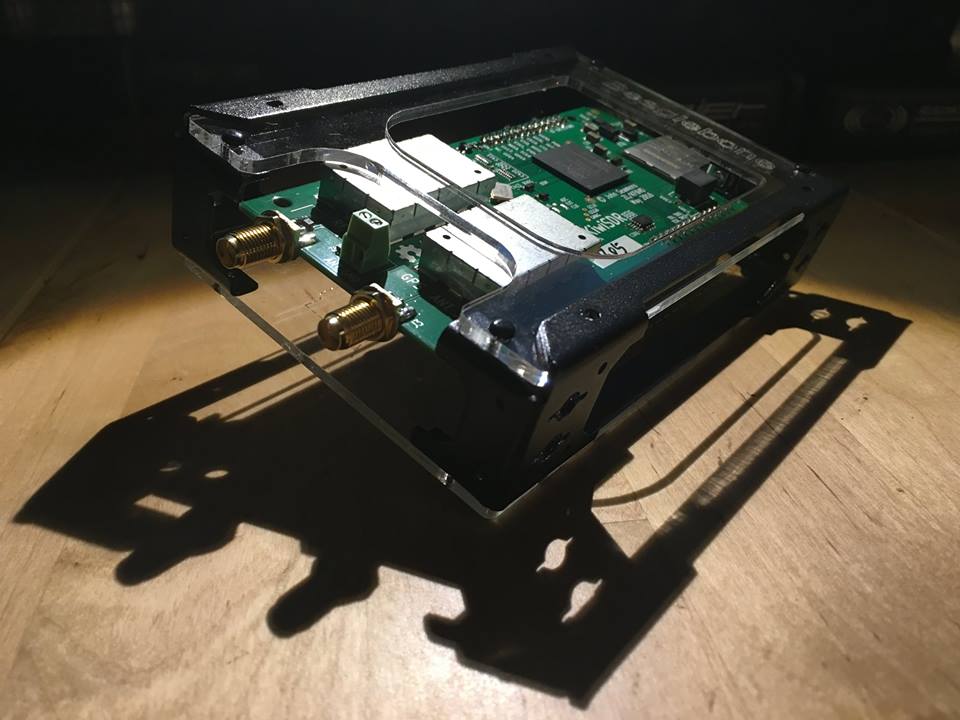
markfahey-sdr-module1

Remote Module #1 prior to sealing.

This first generation is built to connect to a wired internet connection and power supply. The hardware includes a KiwiSDR 0-30MHz SDR 4 channel receiver AM LSB USB CW FM plus GPS for precision timing and location information. A BeagleBone Green is the CPU and the compact 100KHz-30MHz active antennas we are using are precision built by RA0SMS in Irkutsk, Siberia.

Remote Module #3 and later will support solar power and a 4G/ LTE connection so the devices can be located anywhere on the planet that has reasonable cell phone coverage.

Remote Module #2

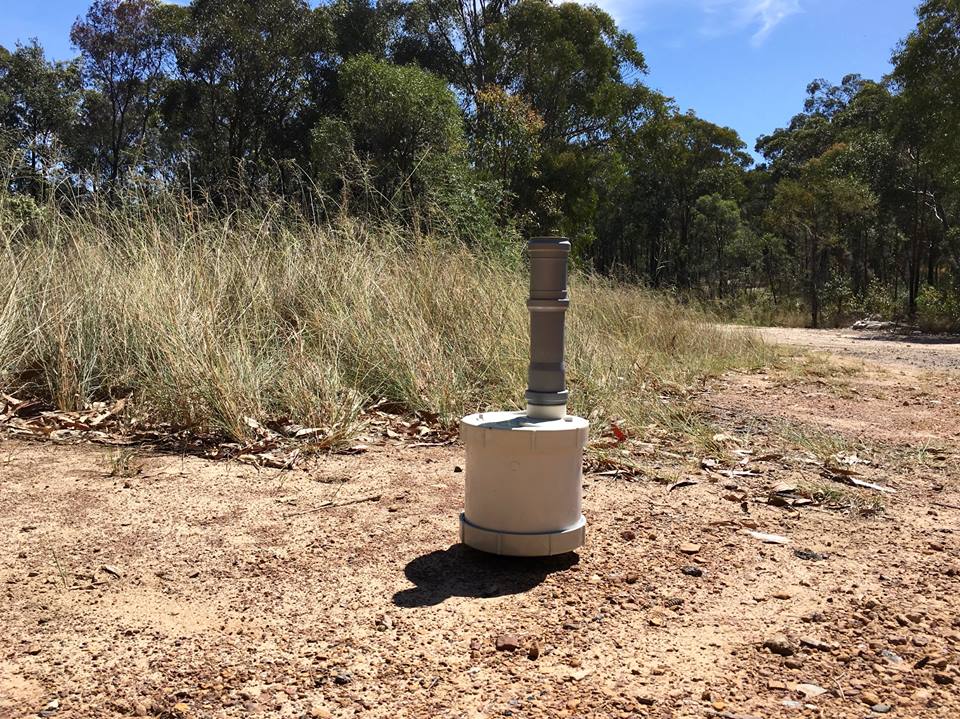
Remote Module #2

This is Remote Module #2 sealed and ready for connection to a network and power supply. The hardware includes a KiwiSDR 0-30MHz SDR 4 channel receiver AM LSB USB CW FM plus GPS for precision timing and location information. A BeagleBone Green is the CPU and the compact 100KHz-30MHz active antennas we are using are precision built by RA0SMS in Irkutsk, Siberia.

Remote Module #3 and later will support solar power and a 4G/ LTE connection so the devices can be located anywhere on the planet that has reasonable cell phone coverage.

Don’t forget you can tune into the prototype system now up and running near Sydney Australia. Point your browser to http://mediaexplorer.ddns.net:8073

This is simply amazing, Mark. I can’t wait to try out the receivers in your Spectrum Project MK2 once they’ve been deployed and implemented. We’ve talked about this concept before, but what I love about Mark is he simply pulls the trigger and makes it happen as soon as technology has made it possible to implement.

Mark: please keep us posted with your updates!

Foreign Affairs Committee believe “government should fund BBC Monitoring”

(Source: Parliment.UK via Andy Sennitt on PCJ Media’s Facebook Page)

Government should fund BBC Monitoring, not the licence fee payer

bbc-monitoring29 October 2016

It was a mistake to end Government funding for BBC Monitoring in 2013 and that change should be reversed, say MPs on the Foreign Affairs Committee.

Report findings

The Foreign Affairs Committee says BBC Monitoring is vital to the FCO’s scrutiny of developing events across the world. Highly valued by the Government, the service translates and analyses news and information from freely available media sources in 100 different languages and covering 150 countries.

Triggered by a shortfall of £4m in funding, the BBC now proposes an extensive restructure of the service, which would mean the closure of 40% of BBC Monitoring posts in the UK and 20% of posts abroad, and relocation of the service from Caversham to London.

The Government is the prime customer for the service. The Foreign Affairs Committee believes Government should restore funding for open source monitoring of media sources overseas, whether they pay BBC Monitoring or carry out the work themselves.

Chair’s comments

Chair of the Committee, Crispin Blunt MP, commented:

“BBC Monitoring is a highly regarded organisation whose work is more important than ever.

These cuts to BBC Monitoring, proposed by the BBC, are simply not in the interest of the UK Government. They will not help the FCO improve its performance in detecting trends and undercurrents overseas that have implications for UK policy – something it notably failed to do in Libya, for instance. Given the vast increase in social media output, this kind of monitoring is more important than ever.

Other countries with similar operations fund them from central Government. The principal benefit of the output of BBC Monitoring is better-informed Government policy, which is why the Government should fund it, not the licence fee payer. It’s notable that in the face of these cuts, government departments are in the process of recreating this capability internally. This should not be necessary and we should be bolstering the work of BBC Monitoring, not cutting it.”

Further information

Kickstarter: The $239 RS-HFIQ 5 Watt General Coverage Transceiver

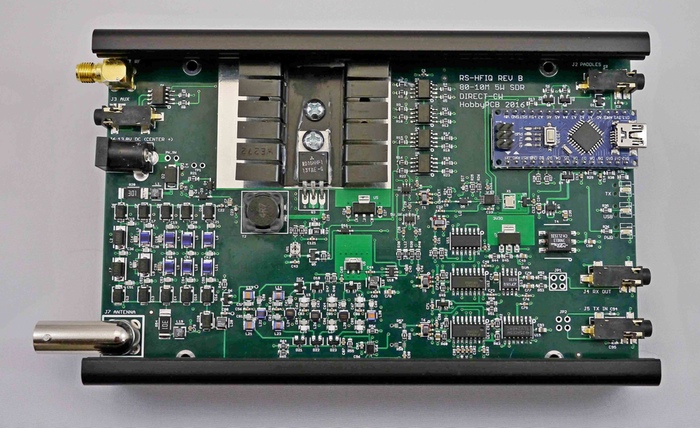
rs-hfiq-sdr

Many thanks to Jim Veatch (WA2EUJ) who shares the following:

HobbyPCB is offering their RS-HFIQ 5W SDR on Kickstarter starting at $239. Check it out here:

https://www.kickstarter.com/projects/hobbypcb/rs-hfiq-5w-software-defined-radio-sdr-tranceiver

Thanks, Jim-I wish you success in this campaign (though it appears you’ve met your base goal and are now into stretch goals).

While there are a fair amount of SDRs in the $200-300 price range, there are few that are actually transceivers.  I’m also impressed with the level of filtering on both the RX and TX stages and the fact that the baseband and digital section have separate and isolated grounds. The RS-HFIQ could potentially have a low noise floor and a decent front end.

If you back the RS-HFIQ, please consider sending us your review to publish here on the SWLing Post!

DXtreme Station Log 12

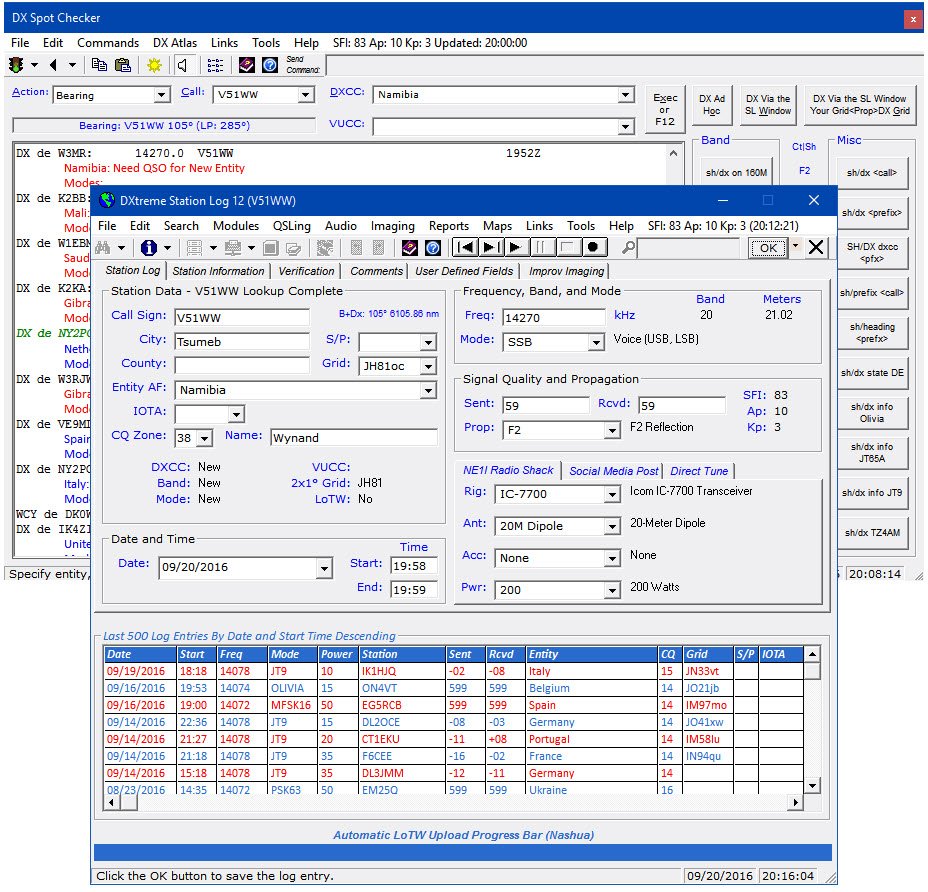
dxtreme-station-log-12

(Source: DXtreme Press Release)

Product Announcement: DXtreme Station Log 12

DXtreme Software™ has released a new version of its popular logging program for

Amateur Radio operators: DXtreme Station Log 12™.

New Features in DXtreme Station Log 12

  • Automatic LoTW Upload Users can set Station Log 12 so it uploads each log entry to LoTW automatically when added, capturing and saving QSO Record Status from the LoTW server as part of the process. Modified log entries can be uploaded as well. If desired, users can disable automatic uploading and can upload log entries to LoTW semiautomatically and manually in batches whenever they want to.
  • LoTW Reporting Users can perform searches and run reports filtered by LoTW QSO Record Status, which indicates whether log entries are On, or Not On, the LoTW server following upload or QSL-updating. Users can also perform searches and run reports filtered by LoTW QSL Record Status, which indicates the date of each LoTW QSL record processed by DXtreme’s LoTW QSL Update Utility.
  • JT65A and JT9 Contact Pre-fill Right-clicking the New button presents a shortcut menu that lets users pre-fill the Station Log window with log information from a JT65A or JT9 contact completed on WSJT-X or JT65-HF-HB9HQX Edition.
  • Afreet Ham CAP Integration Expansion Station Log 12 now integrates with optional Afreet Ham CAP throughout the program. Users activate Ham CAP by requesting short- or long-path propagation predictions on spotted and logged stations and entities.
  • Quick Find A box on the Station Log toolbar lets users type a call sign and press Enter to search quickly for a station in their log. If the call is in the log, a list of QSOs with it appears on a popup window. If desired, the list of log entries can be loaded into the Station Log window for viewing or editing, one log entry at a time.
  • Improv Imaging™ — Lets users associate adhoc images with their log entries. This feature is like, but separate from, our popular QSL Imaging™ facility. Users can capture, scan, or paste any image and save it as a single-page .jpg, or single- or multi-page .tif. Improv images popular with users include signals on a spectrum analyzer or waterfall, QSOs conducted on Amateur Television and data applications, and rigs and antennas used during contacts.
  • Other Imaging Enhancements The QSL image previewer on the Station Log window is larger, as is the QSL Image Explorer, which also lets users call-up, in the Station Log window, the log entry associated with each QSL image, making the Explorer act like a Search window. Improv Imaging has its own, dedicated previewer and explorer.
  • UX Improvements Users can apply foreground and background colors and font attributes to grid headings and data rows throughout the program.

Standard Features in DXtreme Station Log 12

DXtreme Station Log 12 lets hams log their contacts and import ADIF files from other programs. It supports major call sign subscription services, and offers the following multimedia and advanced functions:

  • DX Spot Checker™ Receives DX spots from Telnet-based servers, and determines whether QSOs are needed for new or verified DXCC® entities, band-entities, mode-entities, or VUCC grids.
  • DX Atlas Integration Performs DX Atlas azimuth plots from the user’s location to that of a spotted or logged station. Also creates maps for a variety of reports.
  • Band Master Integration Afreet Band Master can be invoked with needed band and IOTA lists based on the user’s Station Log 12 database.
  • Rig Control Tunes/retrieves frequencies and modes from supported rigs through integration with Afreet Omni-Rig.
  • QSL Processing Creates QSL and address labels for physical QSLs, and supports the ARRL’s LoTW facility, including capturing LoTW QSL records as digital images.
  • Audio Facility Records and plays QSOs.
  • Reports Provides a wide range of performance and station reports to let users see how well they’re doing. Reports can be filtered and sorted. Includes DXCC® and WAS Analytics™ tools for analyzing and enhancing DXCC and WAS standing.

Operating System and Requirements

DXtreme Station Log 12 runs in 32- and 64-bit versions of Microsoft® Windows® 10, Windows 8.1, Windows 8, Windows 7, Windows Vista®, and Windows XP.

Pricing and Support

DXtreme Station Log 12 retails for $89.95 USD worldwide for Internet distribution. Reduced pricing is available for upgrading users, and CD shipment is available at a nominal surcharge. All prices include product support by Internet e-mail.

About DXtreme Software

Based in Nashua, NH, DXtreme Software produces powerful and easy-to-use logging applications for all kinds of radio enthusiasts — from short-wave and medium-wave listeners and DXers to Amateur Radio operators. For more information about DXtreme Station Log 12, visit www.dxtreme.com or contact Bob Raymond, NE1I, at [email protected].

DXCC® is a registered trademark of the American Radio Relay League, Inc.

Microsoft®, Windows®, and Vista® are registered trademarks of Microsoft Corporation.

Band Master, DX Atlas, Ham CAP, and Omni-Rig are owned by Afreet Software, Inc. A purchased software license for Band Master and DX Atlas are required to use them.

JT65-HF HB9HQX Edition is owned by Beat Oehrli, HB9HQX. WSJT-X is owned by Joe Taylor, K1JT.