Category Archives: Art

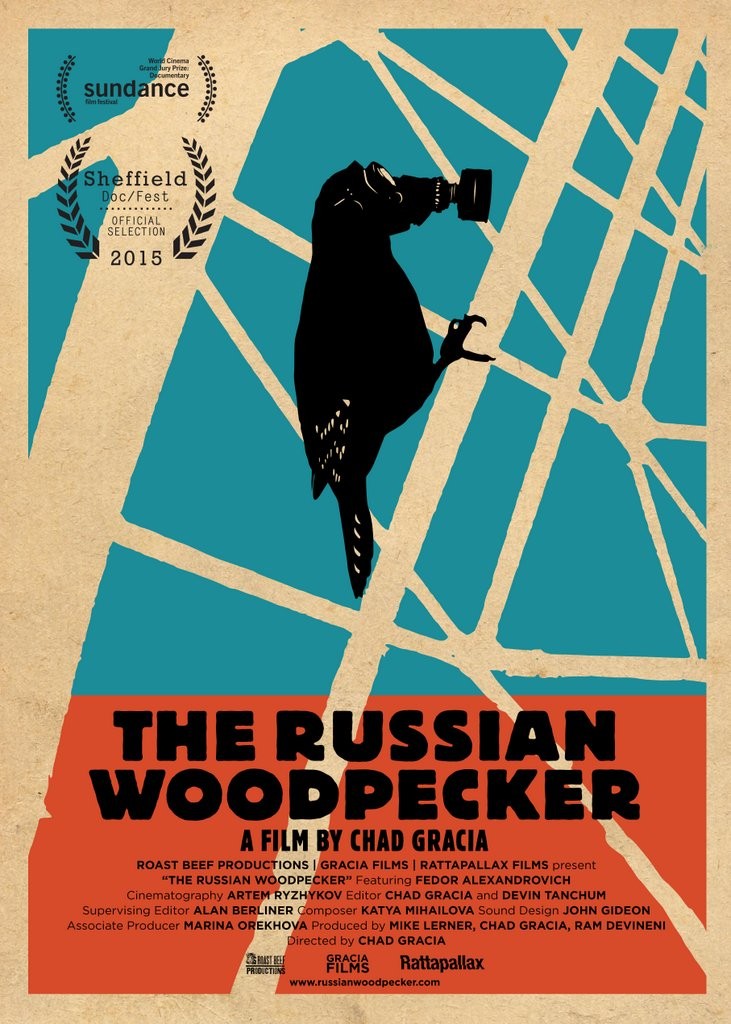
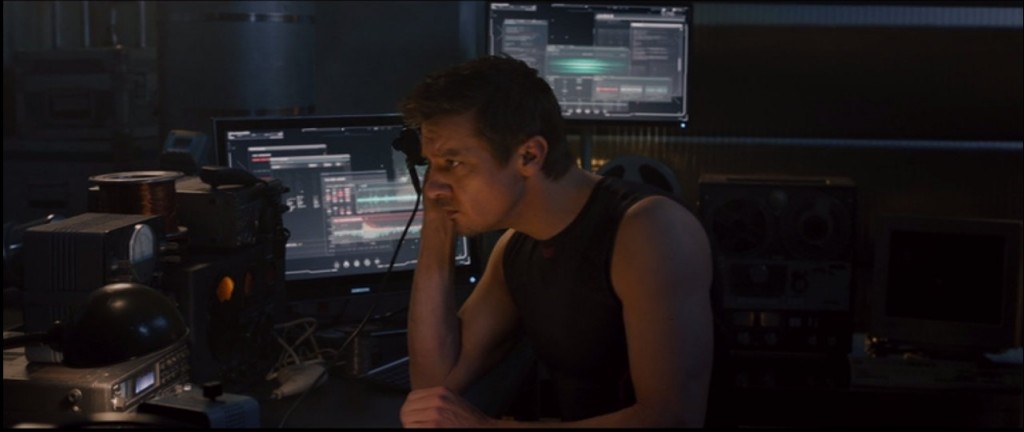
Jeff Murray presents: Love, Death & Shortwave

SINPO-Pictures

From my buddy, Jeff Murray (K1NSS), the Mastermind behind Dashtoons:

“Created for the North American Shortwave Association’s Winterfest 2015, this unflinching documentary recalls a time when tuning a short wave radio was something akin to enjoying a schnapps in a cool West Berlin jazz bar less than a klick from Checkpoint Charley, especially if you were eleven years old.”

https://www.youtube.com/watch?t=97&v=RkcR7_esRcE

Shortwave Radio Recordings: A Tale of Two Cities via Global 24

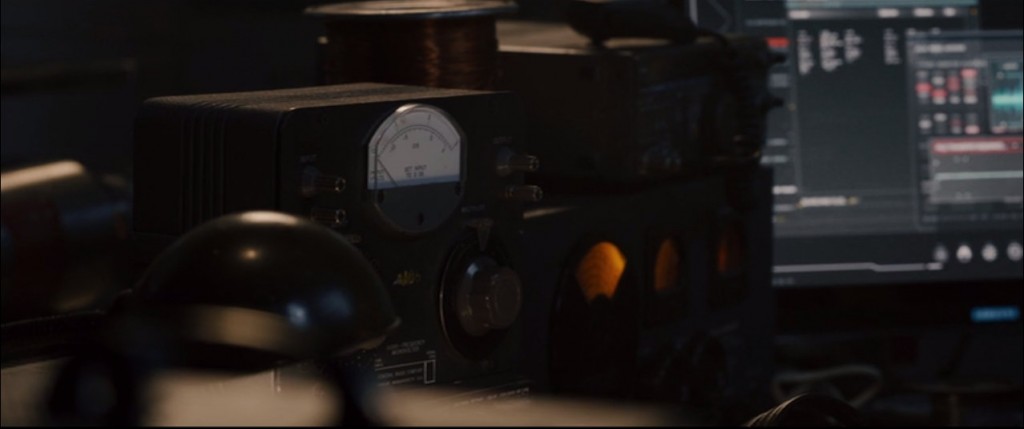
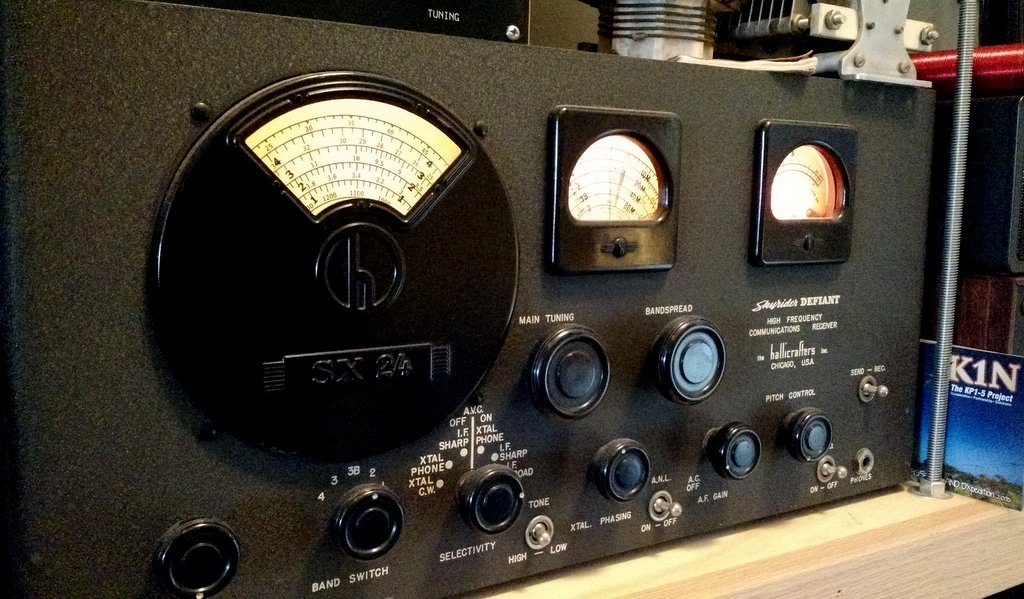
Elad-FDM-S2-FrontPanelTuesday morning, I tuned my WWII era BC-348-Q to Global 24 on 9395 kHz. The signal, via WRMI’s transmitter, was quite strong.

The company rehearses Treasure Island, the second program in The Mercury Theatre on the Air series, presented July 18, 1938 (Source: Wikipedia)

The company rehearses Treasure Island, the second program in The Mercury Theatre on the Air series, presented July 18, 1938 (Source: Wikipedia)

At 2:00 UTC, I heard an announcement that The Mercury Theatre on the Air radio play of A Tale of Two Cities was about to begin.

Not wanting to miss an opportunity to record this timeless Dicken’s classic, I quickly switched over to the Elad FDM-S2 SDR to record the broadcast live. Fortunately, I captured the full broadcast and the fidelity is almost as good as a local station.

For your listening pleasure this New Year’s Day, please enjoy A Tale of Two Cities by The Mercury Theatre on the Air courtesy of Global 24:

Click here to download the recording as an MP3.

Happy New Year, everyone!

Yes, there is a shortwave…!

Virginia letter Dash

Dear Editor—

I am 8 years old. Some of my little friends say there is no shortwave. Uncle DX Dash! says, “If you see it on the SWLing Post, it’s so.” Please tell me the truth, is there a shortwave?

Virginia E. Layer
330 Independence Ave., S.W.

Virginia, your little friends are wrong. They have been affected by the skepticism of a digital age. They do not believe what can’t be heard or seen on their smart phone. They think that nothing can be which is not comprehensible by Google. They seek credit cards, not QSL cards.

Yes, Virginia, there is a shortwave. It exists as certainly as sound and circuits and tubes exist, and you know that these abound and give to your life its highest beauty and joy. Alas! how dreary would be the world if there were no shortwave! It would be as dreary as if there were no Virginias. There would be no heterodynes, no band openings, no propagation to make tolerable this existence. It would be a world without London Calling.

Not believe in shortwave! You might as well not believe in the ionosphere. You might get your papa to hire men to listen to all of the wi-fi radios of the world, but even if you did not hear shortwave, what would that prove? The most real things in the world are those that neither children nor men can see. Did you ever see ground waves dancing on the lawn? Of course not, but that’s no proof that they are not there. Nobody can casually conceive or imagine all the wonders there are heard and unheard in the listening world. For that, you must wear headphones.

No shortwave! Thank goodness! It lives, and lives forever. A thousand years from now, Virginia, nay 10 times 10,000 years from now, shortwave will continue to make glad the hearts of listeners.


Happy Holidays from your friends at Dashtoons and the SWLing Post!

With apologies to The New York Sun.  Our tongue-in-cheek editorial borrows from the timeless classic, “Is There a Santa Claus?” printed in the September 21, 1897, issue of The New York SunClick here to read the original

Video: 1940s-era holiday treat from Tommy Dorsey (c/o a vintage rig)

Tommy_dorsey_playing_trombone

Below you’ll find a short video of my 1945 Scott Marine Radio Model SLR-M playing Tommy Dorsey and his Orchestra’s  jazz-infused version of “March of the Toys” from Victor Herbert’s holiday classic “Babes in Toyland.”

It’s a little holiday time-travel I cooked up for you on this great vintage rig. I’m actually playing the song via an SStran Model AMT3000 AM transmitter I built from a kit (more on that in a future post). The transmitter has been set to 1410 kHz, to which the SLR-M is tuned.

Though the microphone on my Flip Video camera makes the sound in this little recording tinny (you’ll have to trust me that, live, it’s remarkably warm and rich), it does feel a bit like radio time-travel to hear a 1940s-era song played on a 1940s era-radio. This is just how WWII servicemen might have heard this music.

For your holiday enjoyment: “March of the Toys” by Tommy Dorsey and his Orchestra:

The Spectrum Monitor: only $24 for a year’s subscription

December14Cover.1On occasion, the things you enjoy most, you forget to share with your friends. Not sure why this happens, but this is certainly the case with the Spectrum Monitor magazine (TSM). I’m long overdue to properly pitch TSM to my readers, which I feel is an absolute bargain at just $24 per year.

Why? Many of you may recall that it was only July of last year when we learned about the closure of The Monitoring Times magazine.  I had always loved the magazine–not only were the management and editors a great group, but the magazine content was some of the best in the communications business when I began writing features and reviews for MT. But the owners of MT, Bob and Judy Grove, were ready to retire; ultimately, they decided to close their magazine down rather than sell it off.

Shortly after the announcement, MT‘s managing editor, Ken Reitz (KS4ZR), decided to make a go of a new publication. Albeit wholly digital, this magazine was to cover the same scope and content depth as MT, and would be known as The Spectrum Monitor (TSM).

In January of this year, TSM launched, and like many SWLing Post readers, I was eager to see if the content met the benchmark MT had set for so many years.

I needn’t have worried.  Ken had corralled many excellent contributors, in many cases drawing upon previous writers for MT.  And in the past year, I don’t believe it’s a stretch to say that in many respects, TSM not only met that benchmark, but has actually even exceeded itTSM is now–unquestionably–a good, solid, thoroughly enjoyable publication. 

Each issue is packed with topics covering the radio spectrum: shortwave, ham radio, vintage radio, pirate radio, scanning, public service, satellite, AM/medium wave and host of digital/mobile technologies, as well. Really, everything a listener could hope for.

November2014Cover Initially, I had my doubts.  I frankly wasn’t sure whether I’d like reading a “digital-only” radio publication, or whether other readers would. I confess to being a bit “old school;” as a radio listener, I like to hold a radio in my hands, to physically tune it; as a reader, I prefer holding a printed publication in hand, to turn the (paper) pages…How would I feel with an e-reader or laptop, instead? Would reading that way feel like work?

But TSM soon swayed me toward the digital as both reader and as a columnist. As a writer, there was less stress on word count. If it was a bit short, or lengthy– as my October column was–I soon found it mattered less. In a digital publication, page count is comparatively irrelevant as long as content is worthwhile and captivating for the reader.  And as a reader, I appreciated that the columnists that I was reading would have the freedom to write at length, too.

Secondly, a digital publication gave its writers an opportunity to infuse columns with a multi-media element–something I’d become accustomed to as a blogger here on the SWLing Post. When I published a review of a radio, I could include actual audio clips in the article. If I wrote about pirate radio, for example, I could embed actual pirate radio recordings. Brilliant! And, again, more fun for the reader.

Also, including links or references to external websites is a cinch in a digital format, and quite easy for the reader to check out. Instead of copying a long gangly URL from a printed page, you simply click on a link as you would on a website, such as on this one. Second nature, really.

FEB2014CoverFinally, in a digital publication, I found writers could use more full-color images in their articles. I really enjoy the addition of the images; they make articles come to life…

So, I soon learned to relax with the e-reader just as I had with the printed Monitoring Times.  No pages to turn, but then again, not so different from reading…well, a blog like this.  I’ve received excellent feedback from TSM readers, too, many of whom admitted their initial bias against a “digital” magazine had since been withdrawn completely.

I continue to enjoy reading TSM every month.  And although–due to time constraints–I’m no longer TSM‘s primary shortwave radio columnist, I still enjoy writing for TSM when time permits, so you will see my reviews and features pop up in TSM now and again.

But why take my word for it?  Check it out for yourself–it’s one of the best magazines for the radio enthusiast, digital or print…And at only $24 annual cost, it’s a terrific and affordable last minute Christmas gift for a friend, family member, or–let’s be honest–for yourself.

Afraid to commit to a one year subscription? Individual issues of TSM are available online for $3 each. If you like what you’re reading (you will), you can then purchase a one year subscription, and the cost of your issue will be refunded.

If you’re lucky enough to receive a subscription to TSM in your stocking, I can assure you that you’re in for a real treat.  Happy reading!

David Goren’s Cold War mix

ShortwaveologyFeeling nostalgic for the Cold War?  David Goren recently posted the following audio mix and description on his excellent website, Shortwaveology.net:

“This mashup of vintage cold war propaganda (mostly) from Radio Moscow’s North American Service was made for The Schizophonic Archive, a part of The Bureau of Memories: Archives and Ephemera, an exhibition curated by the anthropological collective Ethnographic Terminalia in December 2014. Thanks to Kim Andrew Elliot, Jack Widner, Marie Lamb, David Bodington, Jeff Place and Smithsonian Folkways for the recordings. Special thanks to Tom Miller and Ethnographic Terminalia.”

Readers: There are many more audio goodies at Shortwaveolog.net–go check’em out!