Category Archives: Broadcasters

A Little Taste of Cuba on Free To Air Satellite

Many thanks to SWLing Post contributor, Mario Filippi, for the following guest post:


A Little Taste of Cuba on Free To Air Satellite

by Mario Filippi, N2HUN

(All photos courtesy of author)

Tropical countries have always held a fascination for me, Cuba being at the top of the interest totem pole.  Perhaps it’s due to the fact that baby boomers (such as me) remember early 1960’s weekly drills in grammar school, ducking under our desks during the Cuban missile crisis when the cold war was a fact of life. President John Kennedy, Fidel Castro, and Nikita Khrushchev were the primary combatants in those days, and we had to be prepared for a possible attack.  Fortunately our country was spared from any stateside skirmishes, but since those days when Cuba became a forbidden place for US travelers, its history and its people have always captivated my imagination.

For those interested in what’s going on in Cuba there’s always shortwave radio; Radio Habana Cuba always pegs the  shortwave “S” meter and is received loud and clear. On certain nights when propagation on the BCB (broadcast AM band) is favorable towards the Caribbean, Radio Reloj (Radio Clock) can be heard with its’ “RR” identification in CW every minute on the minute.  

But there’s another way to keep current with Cuban events in ways that a shortwave radio cannot provide, and that is through Free To Air satellite, which provides worldwide reception of television and radio stations. A typical FTA satellite installation appears below, consisting of a dish and an LNB pointed towards a satellite of interest.  There are about a dozen Ku band satellites available in the Clarke Belt 22,600 miles away in geostationary orbit all beaming programming to different parts of the globe.
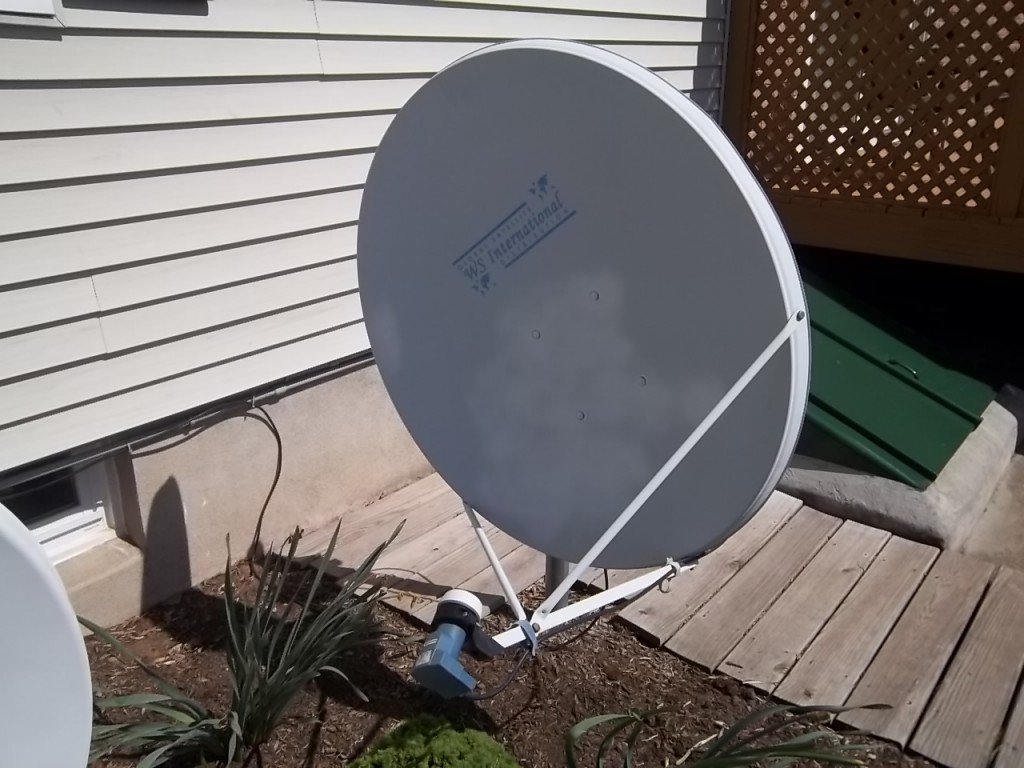
WS International Ku band offset dish with Chapparal Ku LNB

WS International Ku band offset dish with Chapparal Ku LNB

The signal from the satellite dish is fed via RG/6 coax to a satellite receiver which decodes the satellites’ data into TV and radio format that can be viewed or listened to on a standard television, and an example of a modern FTA receiver, the X-Square Premium Mini, sometimes called a STB (Set Top Box) is below. The X-Square Mini is one the smallest of the FTA receivers available and works very well.
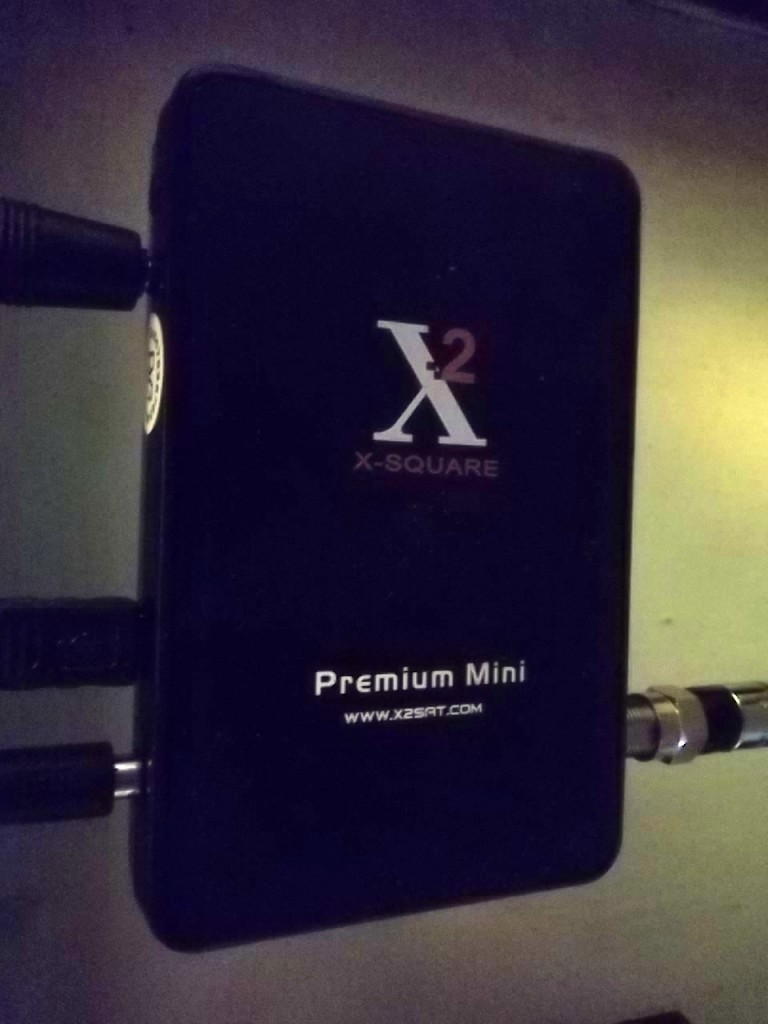
X-Square FTA receiver, about the size of a cigarette pack.

X-Square FTA receiver, about the size of a cigarette pack.

Okay, so we have our receiver, dish, etc., now all we need to know is where to find Cuban programming in the Ku satellite band.  As of this writing, Cuban television and radio programs are found on Hispasat at 30W, which has a spot beam to the USA and is easily received on the East coast.  For more information on Hispasat just Google it or look it up on www.lyngsat.com.  Pointing your dish at Hispasat, or for that matter at any other FTA satellite requires patience and knowledge, and you can check YouTube which has many videos on the subject.  Best bet would be to have someone who’s experienced with FTA to assist you.

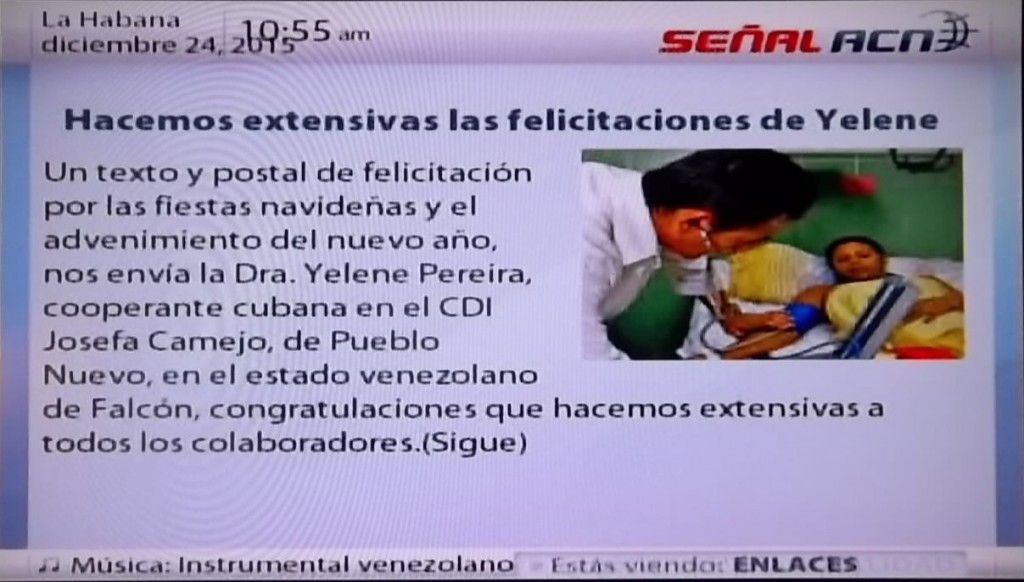
You’ll find about 55 TV channels on Hispasat covering S. America, Asia, Europe, USA, and the Middle East with several TV channels from Cuba such as Cubavision,  Cubavision International,  Senal ACN, Contribucion, Educativo, and Educativo 2.  And from the USA, Radio Martis’ cousin TV Marti (yes there is a TV Marti!) is beamed.  

Screen shots from some of these appear below:
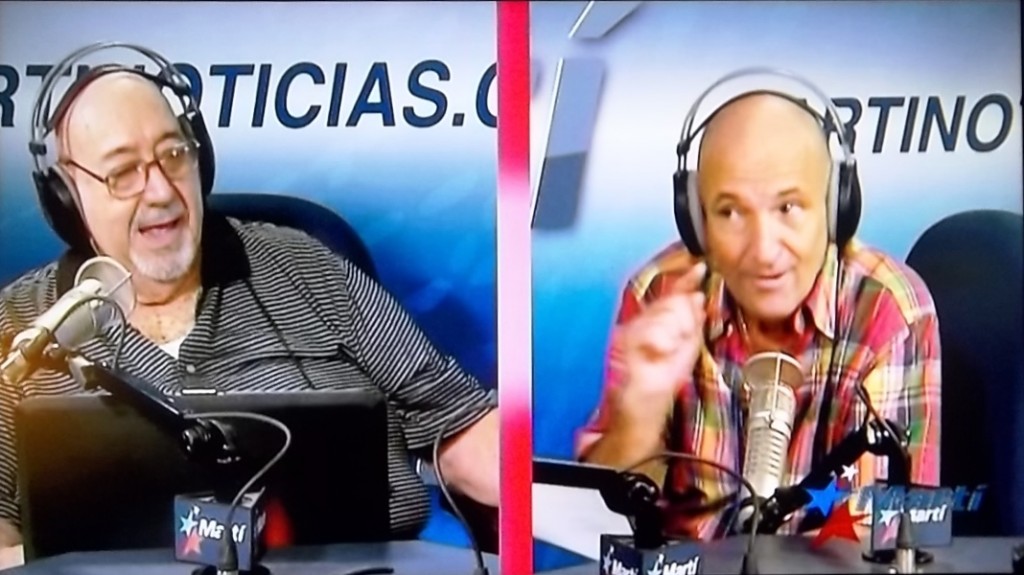
TV Marti talk show with logo on lower right.
TV Marti talk show with logo on lower right.

senal acn

News, sports, music, info channel Senal ACN.
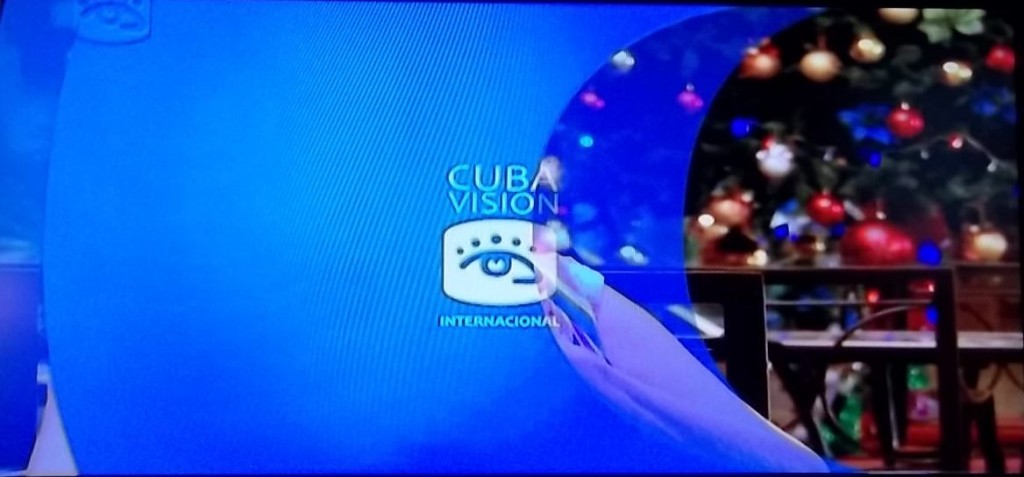
Cubavision International  station identification.

Cubavision International  station identification.

Let’s move on to Cuban radio stations to be heard on Hispasat.  First off, Hispasat covers about 57 radio stations  from the Middle East, S. America, and Europe.  Some of them will be familiar to SWLs while others are local AM and FM stations originating from the mother country, a distinct advantage to having FTA satellite.  Cuban radio stations available on Hispasat are shown in the satellite scan below.  A total of ten stations come in with FM quality reception over FTA satellite, with no fading or hiss.  However, in the event of rain, Ku signals suffer terribly from moisture attenuation but that’s about the only reception hurdle you’ll have to endure.  One of my favorite stations is CMBF with its beautiful classical music.
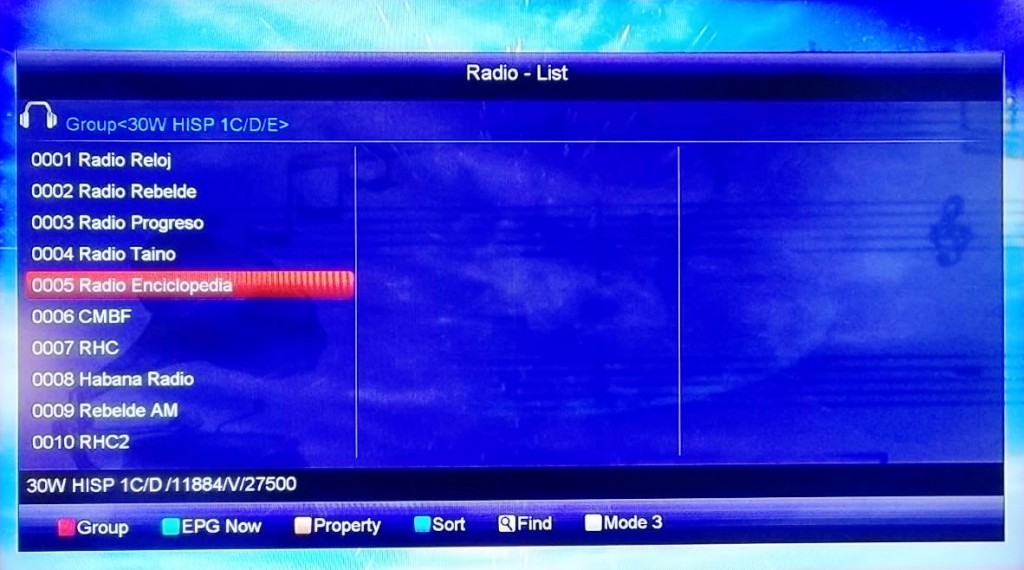
Cuban radio stations scanned in from satellite Hispasat at 30W.

Cuban radio stations scanned in from satellite Hispasat at 30W.

So  hopefully this little introduction into Cuban radio and TV using Free To Air satellite will kindle interest in this “ultra-shortwave”  mode of looking  (and listening) into what’s happening in this culturally rich island that’s been out of reach for most United States citizens for over half a century.


Thank you so much for the excellent post, Mario. As I’ve mentioned before, I’m planning to install an FTA system at my house in the near future. Your guidance is most helpful!

Radio France to shut down mediumwave

La Masion de la Radio, Paris, France, (Photo source: Gérard Ducher via Wikimedia Commons).

La Masion de la Radio, Paris, France, (Photo source: Gérard Ducher via Wikimedia Commons).

Many thanks to SWLing Post reader, Marc, who shares this news from Radio France.

The article (in French) notes that as of midnight on December 31, 2015, Radio France will cease all mediumwave broadcasts permanently. Up to this point, Radio France’s mediumwave transmitters have broadcast France InfoFrance bleu RCFM and France Bleu Elsass.

The article notes that regions previously within the broadcast footprint of their mediumwave transmissions are now serviced via FM and/or online streaming.

Click here to read the article on Radio France’s website.

WRTH 2016: I’m glad I stopped by the post office

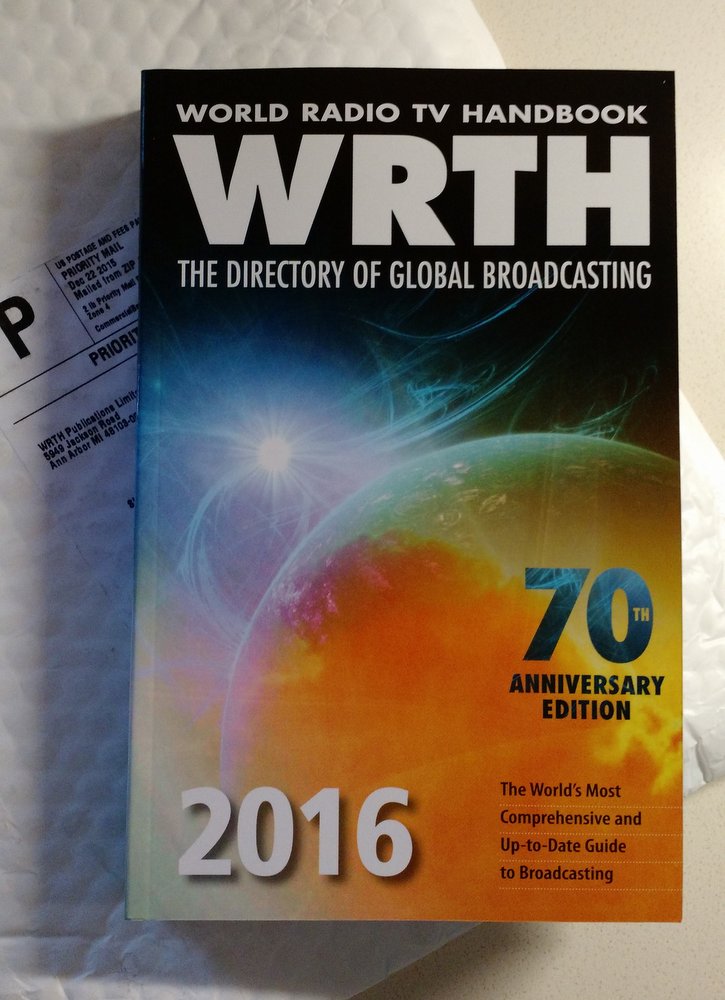
WRTH-2016

I just brought home my copy of WRTH 2016 from the post office. I didn’t expect it to arrive so soon from the UK, so I’m very much looking forward to reading through it over the next few days. It’s a special volume, too: WRTH’s 70th anniversary edition!

I’m also honored to have a feature article and two reviews in this particular edition.

You can order your copy from Amazon or Universal Radio here in the US, from Radio HF in Canada. Otherwise, consider ordering directly from WRTH online.

I’ll post an overview of WRTH 2016 in the coming days.

Download the 1923 “first Wireless Christmas” edition of The Radio Times

RadioTimes1923

(Source: BBC Genome Blog via Mike Barraclough)

The much-loved Christmas edition of the Radio Times made its first appearance in 1923. 

It was all very different to today’s multi-channel, on-demand world. There was only radio, and London station 2LO had a meagre five-and-a-half hours of programmes on Christmas Day.

But to some extent, the first Christmas issue set many traditions which have prevailed for decades in various guises. The cover was a warm splash of colour and very festive in tone, while the publication’s austere masthead was festooned with snow and holly.

John Reith, who went on to become the BBC’s first director general, was given the first page to deliver a message to listeners, in which he deliberated the meaning of Christmas and then inevitably talked about the joy of broadcasting and the “first Wireless Christmas”.

“The loud speaker is such a convenient entertainer,” he wrote. “He doesn’t feel hurt if a cracker is pulled in the middle of a song, or offended if the fun grows riotous during his performance”.

While Reith was keen to talk up the virtues of broadcasting, the magazine was packed with adverts for radio sets and cartoons about the joys of consuming radio programmes.

But Christmas is all about giving, and we’d like to offer you the chance to download the first Christmas issue. It’s a fascinating document and we hope you will enjoy it. Happy Christmas fromBBC Genome!

Download a PDF version of the 1923 Christmas Radio Times by clicking on this link

BBG Watch: BBG hit with $400M employee contractors suit

BBG-Logo(Source: BBG Watch via Dan Robinson)

A $400 million class action lawsuit was filed Monday in the U.S. Court of Federal Claims against the Broadcasting Board of Governors over personnel and contracting practices overseen by top agency officials in recent years. The plaintiffs, several Voice of America (VOA) workers, allege that the U.S. government-funded, international news broadcaster’s Board of Governors denied proper pay and benefits to VOA employees intentionally misclassified as independent contractors by agency officials, Law360 website reported.

As reported by Law360, plaintiffs in the latest class action lawsuit allege that the Broadcasting Board of Governors has implemented a system of using “Purchase Order Vendors” (POVs) “for services indistinguishable from those of direct employees, to avoid a 30 percent budget increase from providing the lawful wages, paid leave, workers compensation, and tax contributions the workers are owed.”

“The BBG put the plaintiffs and class members on purchase orders so it could extract their faithful service to the United States while avoiding payment of the more substantial compensation that is owed to federal employees,” the complaint states.[…]

Continue reading on the BBG Watch website…

Berlin group distributes tiny radio transmitters for Syria

In this photo taken Monday, Dec. 21, 2015, Philipp Hochleichter of the MICT (Media in Cooperation and Transmission) organization talks behind Pocket FM Radio Transmitters in Berlin, Germany. As part of the Syrian radio networking project, MICT has designed small modular FM transmitters. (AP Photo/Michael Sohn)

In this photo taken Monday, Dec. 21, 2015, Philipp Hochleichter of the MICT (Media in Cooperation and Transmission) organization talks behind Pocket FM Radio Transmitters in Berlin, Germany. As part of the Syrian radio networking project, MICT has designed small modular FM transmitters. (AP Photo/Michael Sohn)

(Source: Yahoo News via Dan Robinson)

BERLIN (AP) — On the top floor of an old brick building in the heart of Berlin, a group of journalists and tech enthusiasts are working to spur the Syrian media revolution.

Their weapon is an unassuming black case the size of a shoebox that allows opposition radio stations in Syria to transmit inside hostile territory.

Dubbed PocketFM, the device is basically a low-powered radio transmitter. Coupled with a satellite dish to receive new programs, a car battery for power and a one-meter (three-foot) antenna, it can broadcast FM radio within a 5-kilometer (3-mile) radius.

That’s enough to cover a town or a city district, said Philipp Hochleichter, who oversees development of the device for the Berlin-based nonprofit organization Media in Cooperation and Transition.

The group has been training journalists in conflict zones for more than a decade and often relies on FM radio to reach populations in far-flung areas that don’t have access to the Internet or smartphones. But when the group realized that shifting front lines and the brutal treatment of journalists meant operating large broadcast antenna could become too cumbersome or risky, it developed PocketFM.

Continue reading on Yahoo News…

Castro wants an end to US broadcasts directed at Cuba

Havana, Cuba (Photo: Wikimedia)

Havana, Cuba (Photo: Wikimedia)

(Source: VOA News)

Cuban President Raul Castro is urging the U.S. government to stop radio and television broadcasts that Cuba considers harmful, while also saying that his government is willing to keep improving relations with the United States.

In a speech broadcast on state television Friday, Castro said that his government will “continue insisting that to reach normalized relations, it is imperative that the United States government eliminate all of these policies from the past.”

He noted that the U.S. government continues to broadcast to Cuba, including transmissions of Radio Marti and TV Marti, despite Cuba’s objections. Radio Marti and TV Marti are overseen by the Broadcasting Board of Governors, which is also the parent organization of the Voice of America.

Castro also criticized U.S. immigration policy that allows Cuban migrants to live in the United States if they reach U.S. territory.

“A preferential migration policy continues to be applied to Cuban citizens, which is evidenced by the enforcement of the wet foot/dry foot policy, the Medical Professional Parole Program and the Cuban Adjustment Act, which encourage an illegal, unsafe, disorderly and irregular migration, foment human smuggling and other related crimes, and create problems to other countries,” Castro said.

Continue reading on VOA News online…