Shortwave listening and everything radio including reviews, broadcasting, ham radio, field operation, DXing, maker kits, travel, emergency gear, events, and more
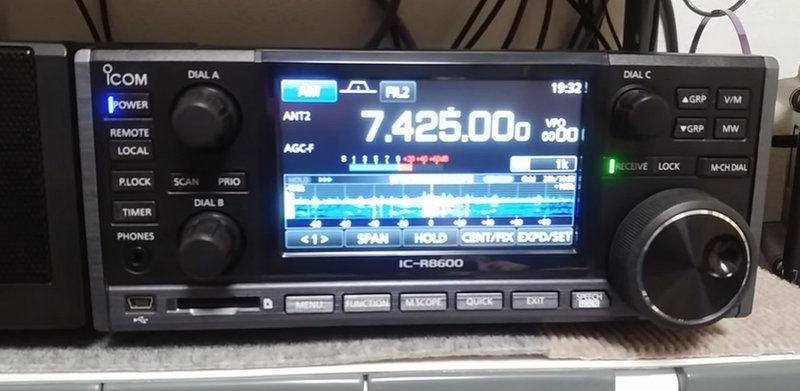
Many thanks to a number of Post contributors who’ve shared a link to links to bcloyaji’s YouTube Channel where a few videos of the Icom IC-R8600 have been posted. (Thank you for your patience, as well, as I’ve been traveling and way behind on posting this!)
I’ve embedded a few videos below, but I encourage you to also check out bcloyaji’s YouTube Channel for more:
I’m looking forward to checking out the IC-R8600 at the 2017 Dayton Hamvention and even potentially reviewing it here on the SWLing Post at some point.
Any Post readers plan to purchase the IC-R8600?
Though we have no US pricing yet, I’ve been checking with Universal Radio regularly for any news.
In cooperation with Bletchley Park, the Heinz Nixdorf Museum DLØHNF in Paderborn, Germany is hosting a cipher event on April 7
A Google translation of the DARC post reads:
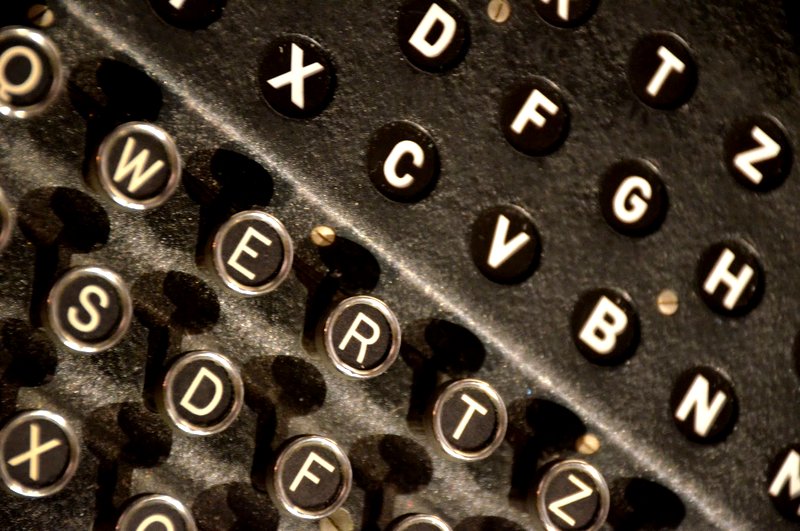
As with the first event of this kind ten years ago, an encrypted message is sent over radio, to which radio amateurs are invited, to follow them and to play with them. This time, however, the message is not generated with a Lorenz machine, but with an enigma and then transmitted in encrypted telegraphy to 40 m from the club station of the Heinz Nixdorf Mueseum, DLØHNF.
DLØHNF will open radio stations with other stations, which also use historical technology and thus recreate a historical radio network, between the transmissions of various encrypted messages – which are specially approved for this event. DLØDM and DLØAFM are also involved. The activities in Bletchley Park go back to the mathematician Alan Turing, who during the Second World War succeeded in decoding the Enigma coded radio spoofs of the Germans with his Turing machine.
In the Heinz Nixdorf Museum you can watch the happenings from 9 o’clock on the spot. Visitors experience encryption with the Enigma, the Morse as well as a live transmission.
Hams in the U.S. will soon have two new bands on which to operate, experiment and contribute to the collective knowledge of “the radio art.” In a Report and Order issued on March 30, the FCC approved creation of secondary amateur allocations at 135.7-137.8 kHz (2200 meters) and 472-479 kHz (630 meters), the first amateur bands with wavelengths above 200 meters since the dawn of radio regulation.
The new bands come with lots of strings attached, since they will be shared with “PLC” systems used by electric utilities to control the nation’s power grid. Hams will be limited to fixed station operation, antennas no higher than 60 meters (196 feet) above ground and radiated power limits of 1 watt effective isotropic radiated power (EIRP) on 2200 meters and 5 watts EIRP on 630 meters (1 watt in some parts of Alaska). Plus, operation on these bands will not be allowed within one kilometer of electric transmission lines using PLC and advance notice of all planned operation to the PLC network coordinator will be required.[…]
Many thanks to SWLing Post contributor, Mike Hansgen (K8RAT), who shares the following post from Icom UK:
The IC-7610 (Source: Icom UK)
Icom Inc. has released more details about the launch of the IC-7610 HF/50MHz SDR Transceiver and its target price. Icom plans to release this high performance HF SDR transceiver around late May with the product being rolled out across the globe in the following months. We expect that the IC-7610 should be available in the UK early Summer with a suggested retail target price of £2,999.99 ex.VAT. Please note that this target price and UK availability may be subject to change.
We expect demand to be huge for this product. Indeed many back orders are already on our system. So if you want to be one of the first customers in the UK to own one of these eagerly awaited radios, please contact your Icom Amateur radio dealer who will be able to put you in their order books.
More about the IC-7610 HF/50 MHz 100 W SDR transceiver
Following on from the technology incorporated into the IC-7300, the IC-7610 adopts the same RF direct sampling system for signal processing. By converting the analogue signal directly to a digital signal and processing it within the FPGA (Field Programmable Gate Array), it provides improved transmission phase noise and excellent RMDR of 105 dB (at 1 kHz detuning).
The IC-7610 will have two independent receivers, enabling simultaneous reception of two frequencies in different bands/different modes.
The IC-7610 will also feature high-speed, high-resolution performance. The real-time spectrum scope supports different bands and a dual display that can monitor different modes. It will also have a waterfall display function that displays received signals in time sequence. The DIGI-SEL unit will be available to both the main side and the sub side of the receiver. In addition, the IC-7610 adopts a large 7-inch full-colour touch screen panel.
Main features include:
• Further evolved RF direct sampling method.
• Excellent RMDR: 105 dB realized.
• Dual watch function can receive simultaneously in different bands and different modes.
• DIGI-SEL unit that eliminates excessively strong signals is installed in the main and sub of the receiving section.
• High-speed real-time spectrum scope and waterfall display function.
• 7-inch full-colour touch panel, outstanding operation and visibility
As mentioned earlier, demand is going to be enormous for this model, so get into contact with your authorised Icom Amateur radio dealer today.
Many thanks to SWLing Post contributor, Dan Robinson, for the following guest post:
HRO-500 Unboxing and Initial Tests
by Dan Robinson
It is amazing that in these days of waning shortwave broadcast activity, there are still those occasional time capsules — radios that appear on the used market via Ebay or private sales that are new in the box or close to it. Think of it — after 50 or 60 years, these fine examples of radio history can still be found, complete with their original boxes, shipping crates, manuals and accessories.
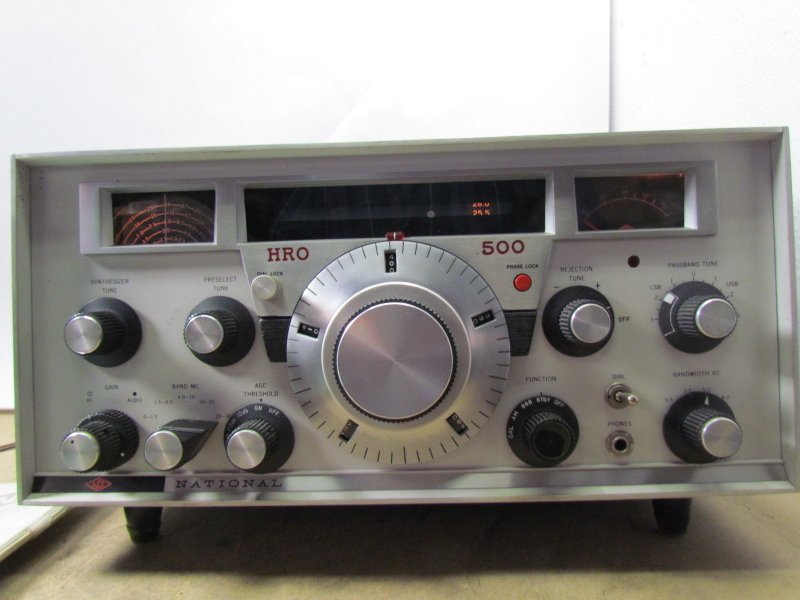
We have seen a number of these in recent years. Several years ago, a Panasonic RF-9000, one of the Holy Grails of radio collecting, appeared on Ebay, in new opened box condition. As rare as that was, it’s even rarer to find tube or solid state communications receivers from the 1950’s and 1960’s. Such is the case with National HRO-500s, which were considered high level receivers when they came on to the market in the mid-1960’s.
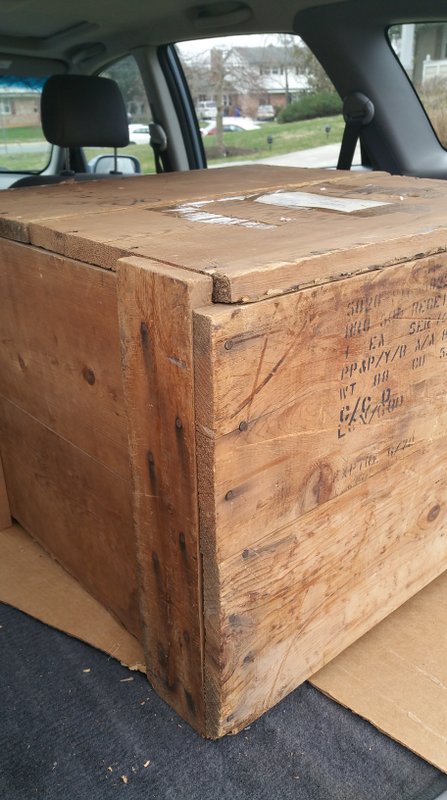
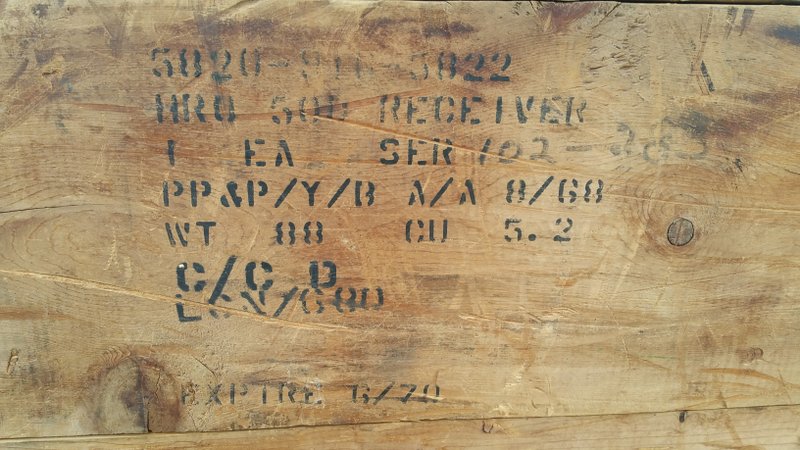
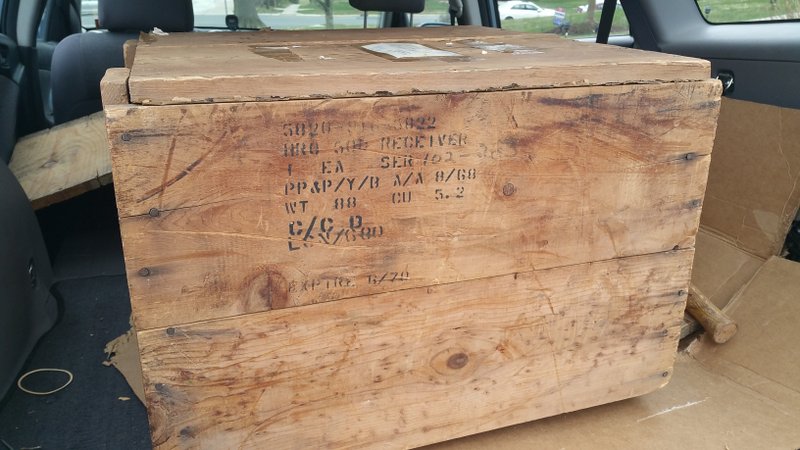
In 2016, a seller in California advertised a great rarity — a HRO-500 that he said he purchased in 1967, complete with its original shipping crate.
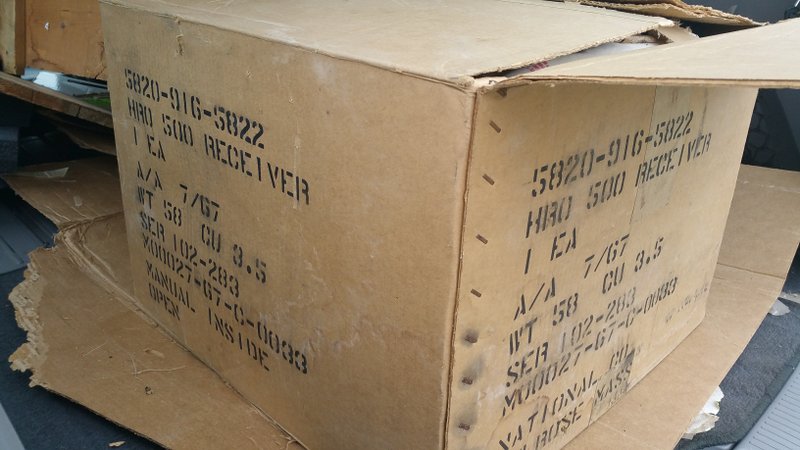
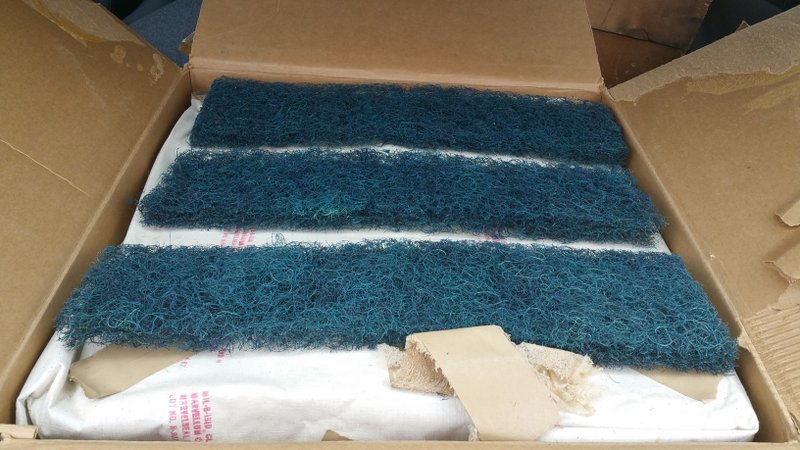
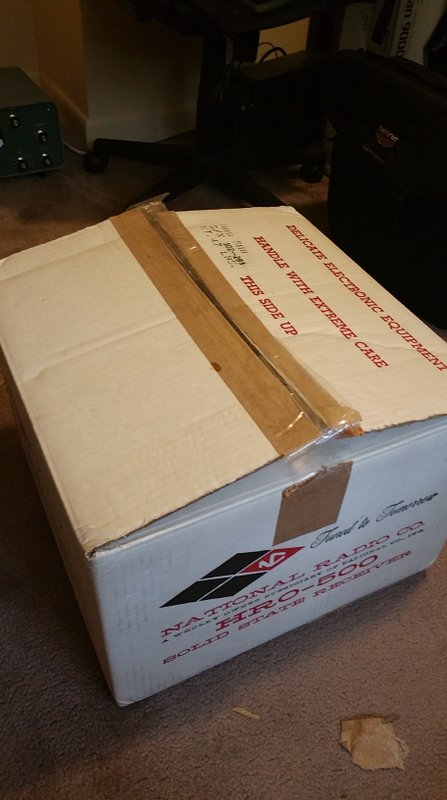
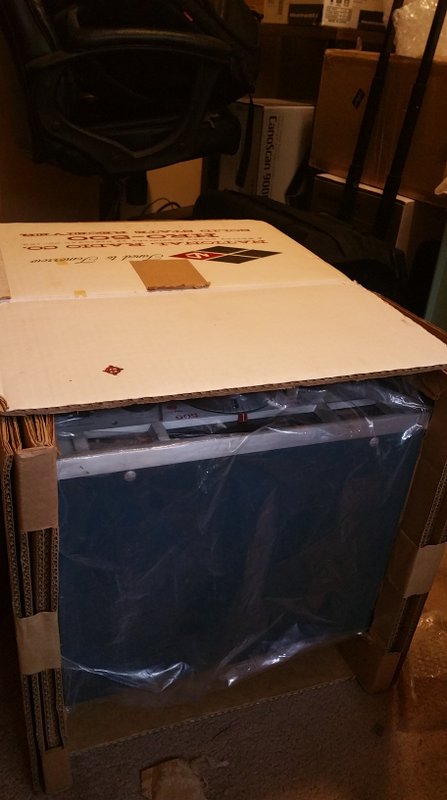
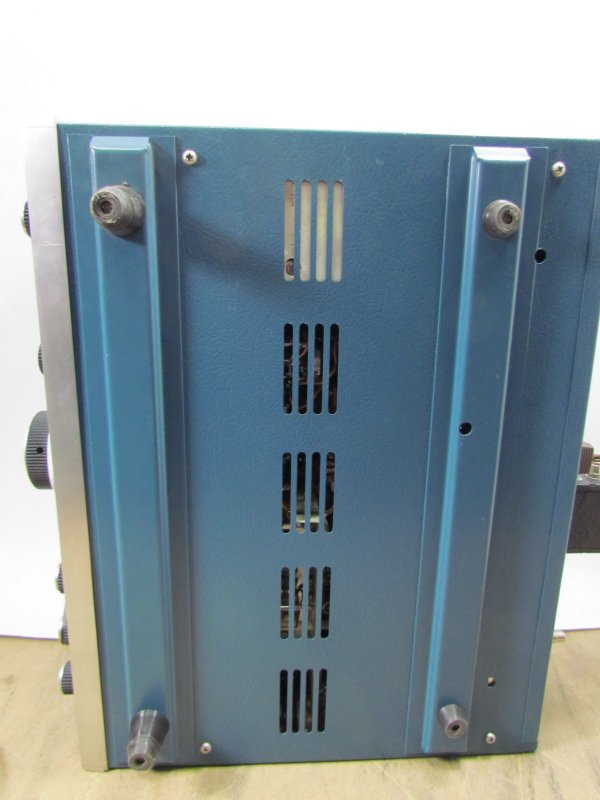
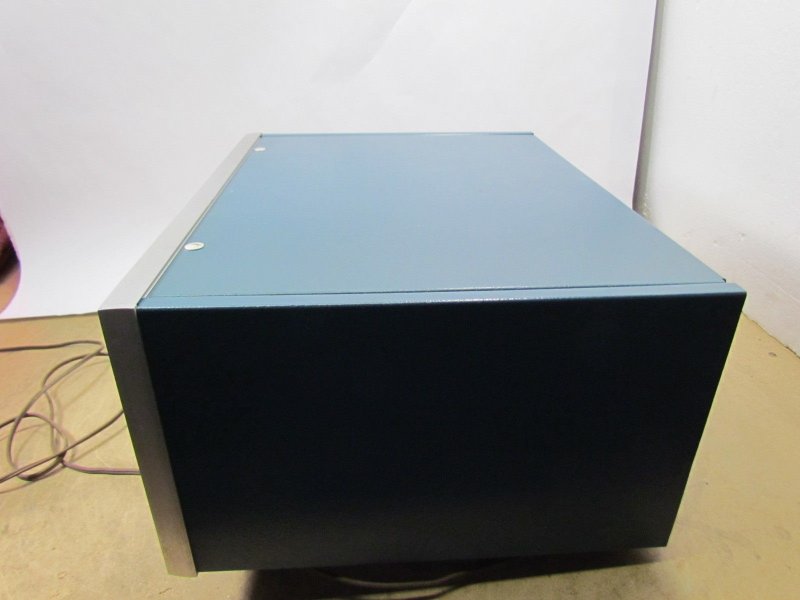
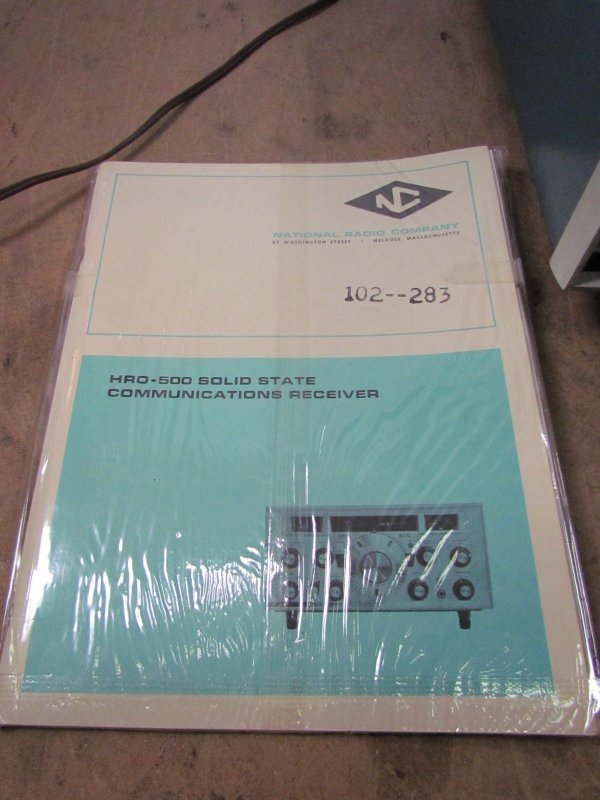
It was said to be in new/unopened condition, which of course raises concerns about the unit itself since it has never been used since leaving the factory. While that radio apparently sold (the asking price was $2500), I was astounded to recently see another HRO-500. It was not in New/Unopened condition, but the closest one comes to it. Among a collection purchased by the seller, the radio was in its original crate, inside of which was the original box with the original National Radio Co fabric cover, with original strips of fiberglass insulation. The manual is still in its plastic wrap.
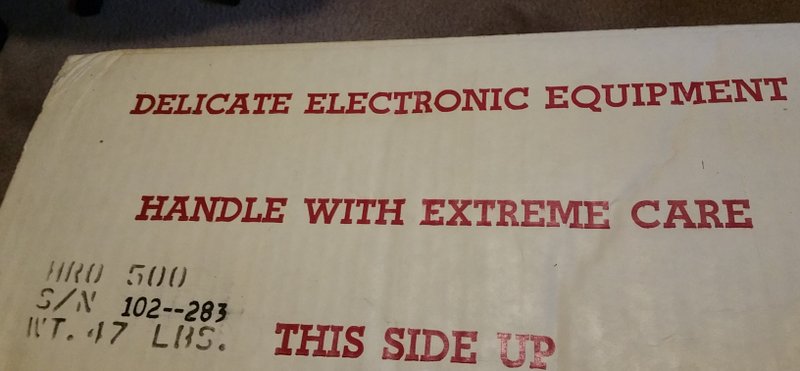
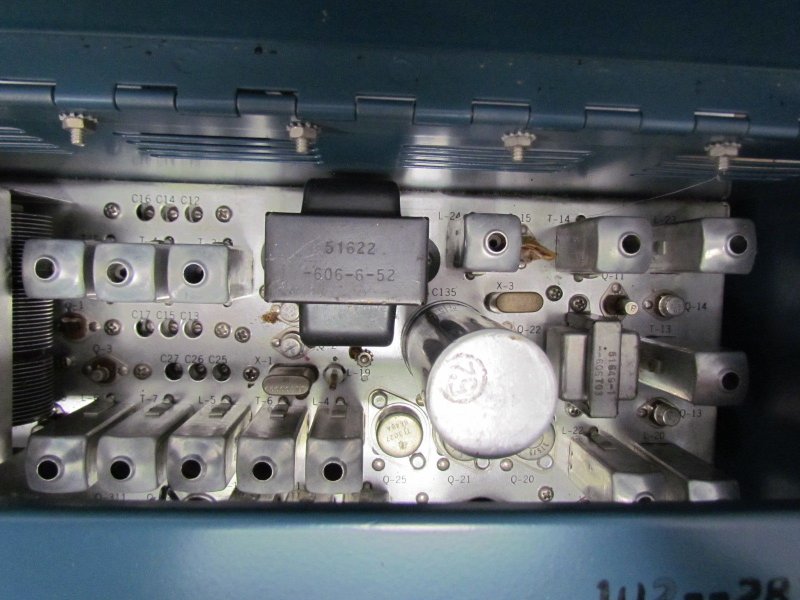
I decided to do a video for SWLing Post readers, and provide some still shots, as this time capsule of radio history was opened (this was likely only the 2nd or 3rd time it was opened since leaving the factory, the last time by the seller for photography for the Ebay ad.
The good news — many HRO-500s on the used market exhibit failure of the PLL lock circuit. While the PLL lock light on this particular radio does not light up, its PLL does operate on every band. This radio arrived with one metal cap for the MODE knob missing, so I’ll be searching for a spare. And the dial calibration clutch knob appears to be frozen, another minor issue that does not impact operation of the radio.
All in all, this was a fantastic find and I hope SWLing Post readers enjoy the video and stills:
Thanks for sharing your notes, photos and video, Dan!
The National HRO-500 is a gorgeous radio and it looks like you’ve got a prime specimen. I’m so impressed it came with the original wooden crate, exterior box and radio box! Amazing.
We’re looking forward to your assessment of the HRO-500 once you’ve have it on the air a while.
SWLing Post readers: In March, I had the good fortune of visiting Dan Robinson’s home and taking a tour of his impressive radio collection. I took a number of photos with Dan’s permission. I’ve been incredibly busy as of late, but as soon as catch my breath after travels, I’ll post the photo tour. I’ll also post photos from our tour of the NSA museum in Fort Meade, MD. Stay tuned!
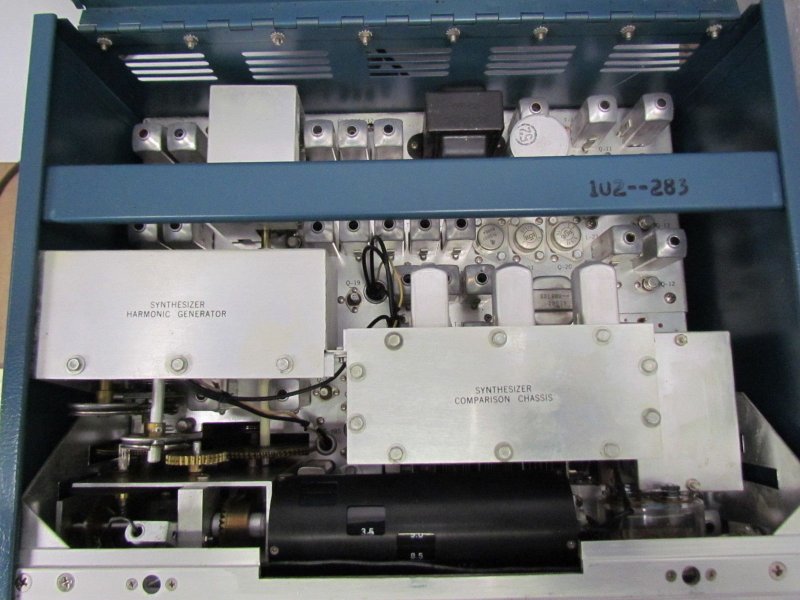
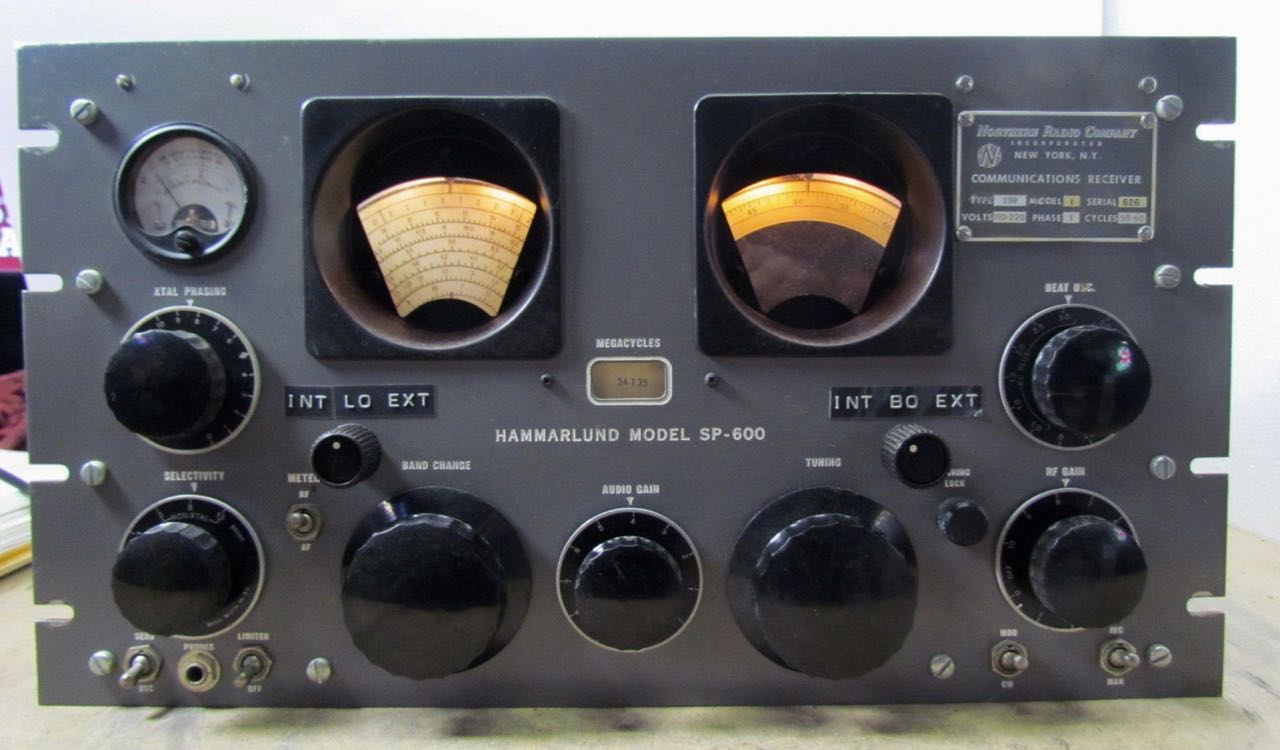
Many thanks to SWLing Post contributor, Daniel Hawkins, who leaves the following comment in reply to our previous post about the Northern Radio SP-600 and discussion about diversity operation. Dan writes:
Diversity operation: two or more receivers and antennas used to copy CW or RTTY from one or more transmitters.
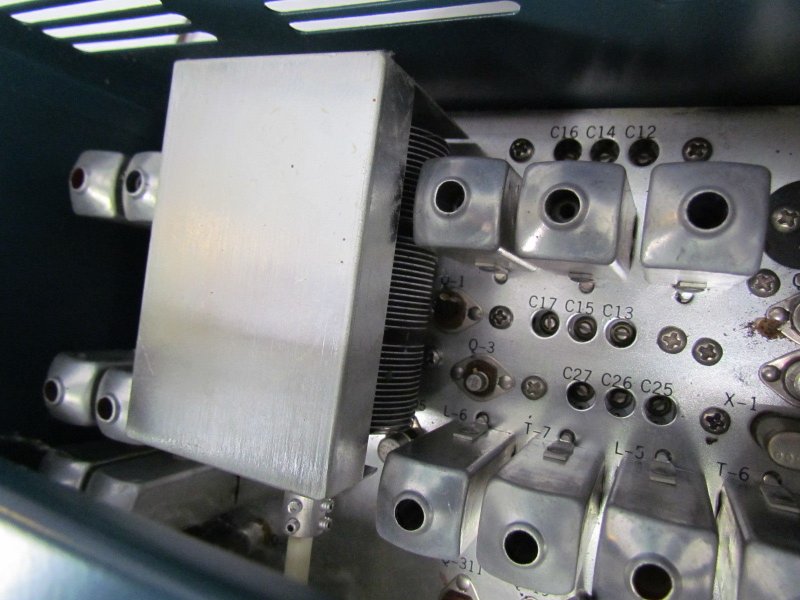
Most of the Hammarlund SP-600s were models built for diversity use including the well-known JX-17, the most common SP-600. Diversity models can be used as single receivers. In this eBay example Northern Radio has modified a SP-600 J-11 for diversity use.
SP-600 nomenclature: J means joint army/navy (JAN) mil-spec components. L means low frequency. X means crystal frequency control in addition to VFO. My SP-600 is a JX-21, which is not a diversity model. Higher model numbers do not necessarily mean later production dates. All SP-600s use the same serial number sequence regardless of model. Somewhere between serial numbers 15,000 and 17,000 (mid 1950’s) Hammarlund stopped using molded black beauty capacitors and switched to installing ceramic capacitors.
The two-digit model numbers indicate model types. JX-1, 7, 10 and 21 were similar non-diversity receivers. SP-600s built for military contracts will have an additional tag showing the military model number(s).
Here is a great page showing Northern Radio modified SP-600s in action with accompanying Northern Radio RTTY gear.
Thanks for the primer, Dan! I believe I have one of the X models with crystal control, but I’ll need to verify once back home. Any other SP-600 owners out there in the Post readership?
Many thanks to SWLing Post contributor, Dan Srebnick (K2DLS), who recently posted a detailed overview of his ADS-B installation on his blog:
Monitoring NextGen ATC (on the cheap!)
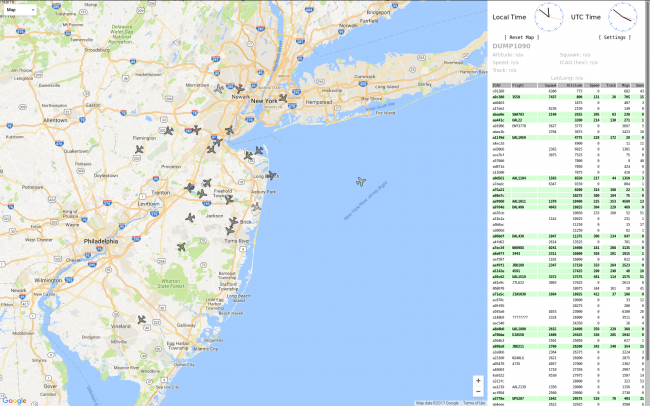
A key component of next generation air traffic control is Automatic Dependent Surveillance – Broadcast (ADS-B). The current FAA mandate is for all included aircraft to output ADB-B transmissions no later than January 1, 2020. But you don’t have to wait to receive and map ADS-B. There is a lot of air traffic to be seen.
[…]I decided to use a spare older RTL-SDR stick based on the RTL2832U and R820T chips. This USB device comes with a small antenna that I hoped would be good enough to get me started. It is not in any way optimized for the 1090 MHz signals that are used by ADS-B and is roughly 19 parts per million (ppm) off frequency. It cost a bit over $10 at a hamfest a couple of years ago. The designs have improved since the early models were offered. Newer models include a TCXO (thermally compensated crystal oscillator) for stability and accuracy.
I needed software to take signals from the RTL-SDR stick and plot them on a map. That software is “dump1090”, originally written by Salvatore Sanfilippo. I added an install stanza to the Makefile, along with a systemd service file, for a smooth system install. I also needed to install the RTL-SDR USB drivers. The complete installation runs “headless”, meaning no monitor, keyboard or mouse need be connected. Remote management can be done via ssh.[…]
This is fantastic, Dan! Thank you for taking the time to share all of the code snippets you needed to do the installation on the Raspberry Pi B as well. Post Readers: if you have an older Raspberry Pi and RTL-SDR sitting on a shelf, use Dan’s guidance to turn them into an ADS-B feeder!