Shortwave listening and everything radio including reviews, broadcasting, ham radio, field operation, DXing, maker kits, travel, emergency gear, events, and more
During this session, the [ARRL] Board took the following actions:
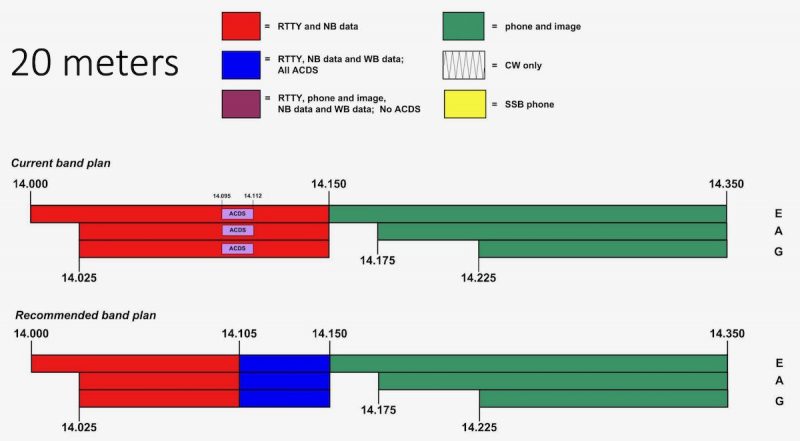
Accepted the final recommendations of the Band Planning Committee. Committee chair and ARRL First Vice President Mike Raisbeck, K1TWF, introduced the motion to adopt the plan. An earlier draft of the plan was introduced at the Board’s in-person January meeting. After the January Board meeting, the Committee received and considered hundreds of comments from interested amateurs. The final band plan can be viewed on the ARRL website.
The new plan only applies to the HF band and makes no changes to 160 and 60 meters. A couple other notes from the accepted plan:
No changes to CW allocations throughout all amateur bands
RTTY and all other narrowband, non-ACDS modes permitted wherever data
modes are allowed
As you read through the changes, keep in mind that the new plan addresses expanded Technician HF privileges and also re-defines ACDS (Automatically Controlled Digital Stations) allocations among other modifications.
Technicians will be happy to note they’ll have new phone and image privileges on 80 meters (3,900 – 4,000 kHz), 40 meters (7,225 – 7,300), and 15 meters (21,350 – 21,450 kHz).
Radio Waves: Stories Making Waves in the World of Radio
Because I keep my ear to the waves, as well as receive many tips from others who do the same, I find myself privy to radio-related stories that might interest SWLing Post readers. To that end: Welcome to the SWLing Post’sRadio Waves, a collection of links to interesting stories making waves in the world of radio. Enjoy!
Many thanks to SWLing Post contributors Mike Terry, Dan Robinson, Ulis Fleming, and William Lee for the following tips:
GENEVA — Switzerland is embarking on the next phase of its digital radio switchover strategy. In May René Wehrlin, media specialist at Switzerland’s Federal Office of Communications (Ofcom) announced the country’s next steps toward the country’s total transition to DAB+.
Ofcom officially confirmed in 2019 that the nation would say “adios” to all FM radio programs by the end of 2024 at the latest. At the time, the “Digital Migration” (DigiMig) working group, set up by the Swiss private and public radio sectors and Ofcom in 2013, stated that 68% of radio listening was digital, 37% of which was via DAB+ and 15% exclusively via FM.[…]
Guyana’s President David Granger late Friday said his administration rejected a request by the United States (US) to use the medium wave radio frequencies of this South American nation to broadcast Voice of America programmes to Venezuela.
Mr. Granger said Guyana turned down the request because of security, health and political risks that Guyana could expose itself to with Venezuela which is claiming the Essequibo Region that makes up about two-thirds of this former British colony.
“Given the length of an unpoliced western border, the influx of refugees, the unsettled territorial question and the public health risks, it would not be in our national interest to do anything to contribute to destabilising relations at this time,” the President said.
A US Embassy spokeswoman said the American government was no longer interested in the project. ” The U.S Agency for Global Media is not actively considering this anymore. It is important that the people of Venezuela have access to uncensored news from credible Venezuelan and international journalistic news sources. Guyana has shown leadership in the past, in defense of representative government by joining other Lima Group members from the Americas to strive for a democratic resolution to the crisis in Venezuela,” she said.[…]
The Chinese navy has warned off a US military plane that briefly flew close to the southern coast of China, north of the Taiwan Strait, according to a Beijing-based think tank.
In a 34-second scratchy radio recording released by the South China Sea Strategic Situation Probing Initiative (SCSPI), a think tank based in Beijing, a man – purported to be a Chinese naval official – can be heard saying in English: “This is China Naval Air Force on guard, you are approaching Chinese air domain, change your course immediately or you will be intercepted.”
He then repeated the warning in Mandarin Chinese.
The institute said on its Twitter account that the recording was captured on Thursday morning by a radio amateur. It remains unclear which aircraft was involved, or if there was any face-off in the air.[…]
Charity Intelligence is recommending donors support Farm Radio International for the coronavirus pandemic. Farm Radio has a network of over 1,000 radio programs reaching more than 250 million people in 41 countries across Africa.
Communication is critical in the early stages of a disease outbreak to give people information. Rumours swirl that Africans cannot get coronavirus. Tanzania’s president, Magufuli, said churches should stay open because the coronavirus is “satanic” and “cannot survive in the body of Christ.” As all have witnessed, fake news has harmful consequences with the quick coronavirus.
Farm Radio International is a Canadian, medium-sized charity with donations of $3.9m in 2018. Typically, a charity of this size would not be front of mind in a global response. Yet Farm Radio has the existing platform and local operations to play an effective role reaching millions quickly in a coronavirus response. Early communication is an urgent need. […]
I mentioned in a previous post that I’ve been practicing my CW (Morse Code) skills in an effort to build confidence to do a Parks On The Air (POTA) CW activation.
But how in the world do you practice handling a CW pile-up without actually going on the air–?
I’m glad you asked!
My DXing and contest friends have often touted an amazing free PC application developed by Alex Shovkoplyas (VE3NEA) called Morse Runner.
Morse Runner’s goal is simple: teach you how to manage a CW pile-up.
In short? It’s incredibly effective!
When you start a Morse Runner session, the application emulates the sound and atmosphere of the HF bands in CW mode (meaning, a narrower filter setting). It’s very convincing.
Instead of using a key to send a CQ, the Morse Runner interface emulates a contest logging system where a computer generates your CQ and sends the signal report you record for a station.
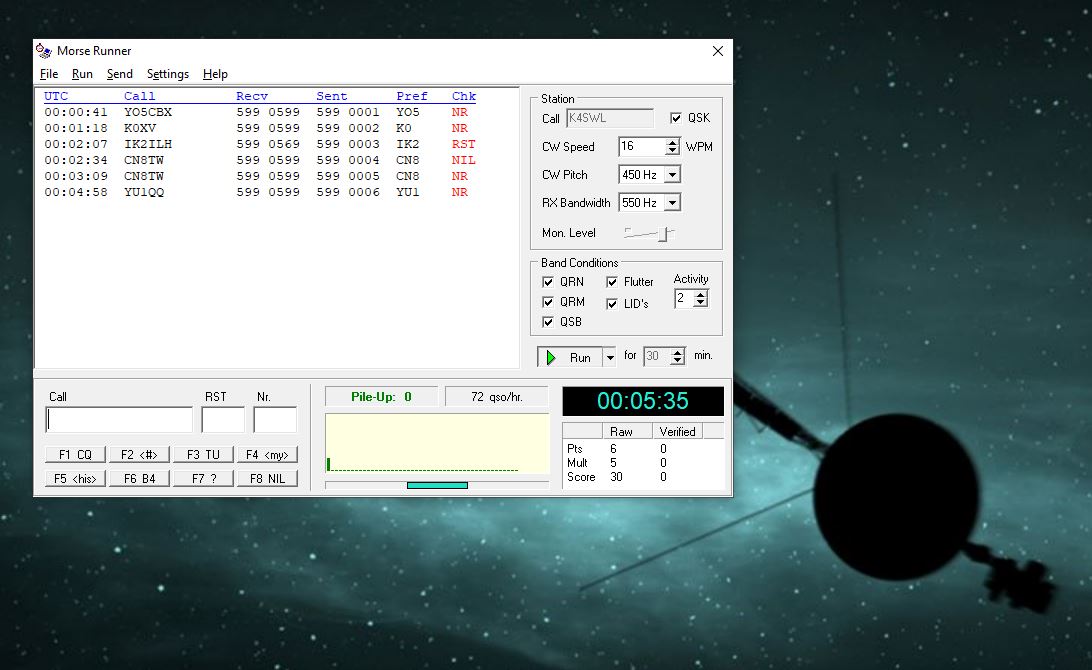
Screenshot of Morse Runner (click to enlarge)
You simply set a few parameters like your call sign, max CW speed, pitch, and bandwidth, then press the “run” button and call CQ by pressing the F1 key on your keyboard.
Within a few CQ calls, you’ll hear anywhere from one to several stations answer your CQ (depending on your settings). Your job is to then start logging those stations accurately from the pile-up. If you reply with an incorrect call, the other station will repeat their call until you correct it.
Morse runner has band condition settings you can select like: QRN, QRM, Flutter, QSB and–yes–even LIDs.
Quite often I’ll accurately reply to a weak station and they’ll send “AGN?” and I repeat their report until they copy it.
Morse Runner is so convincing that when I’m in the middle of a big pile-up, I honestly forget I’m communicating with a computer application! I get some of the same excitement and the–let’s be frank–anxiety I would get on the air during a live CW pile-up.
If you select the “LIDs” Band Conditions setting, it’ll crack you up with how accurately it portrays annoying operators who either deliberately or unintentionally try to interfere!
Here’s sample audio from a session this morning:
The screen shot above shows the settings I used for this very tame session with no large pile-ups. If you’re a seasoned CW contester, pump up the speed and the activity level then you’ll feel like you’re on the Heard Island DXpedition!
In short: Morse Runner is giving me the courage to do my first CW park activation. I highly recommend it!
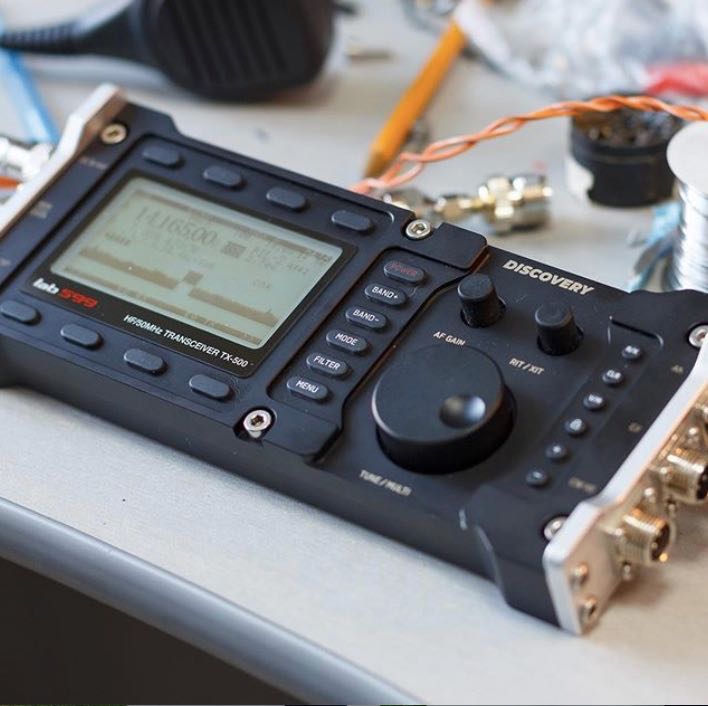
Many thanks to SWLing Post contributor, Josh (KI6NAZ), who shares a link to his YouTube channel where he takes us on a tour of the lab599 TX-500 Discovery:
Thanks for sharing this, Josh! The TX-500 is certainly a unicorn in the world of field-portable QRP radios since it’s designed to be weather-proof.
lab599 has confirmed that they will dispatch a TX-500 loaner unit for my upcoming review. I’m looking forward to see how it plays in the field and might compare with other QRP rigs in my arsenal!
Many thanks to SWLing Post contributor, Paul, who asks:
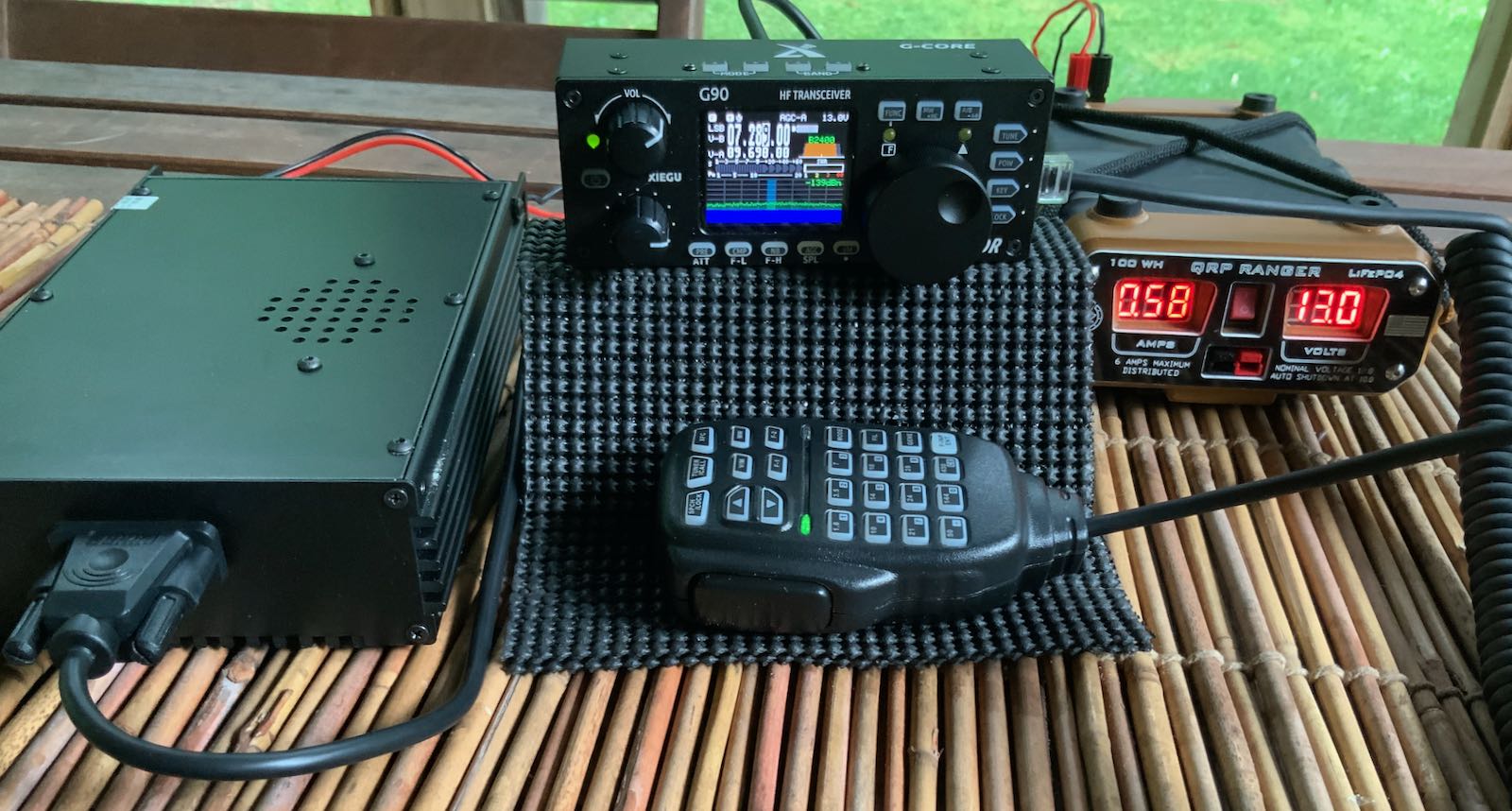
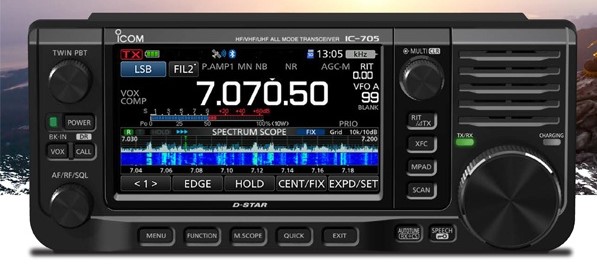
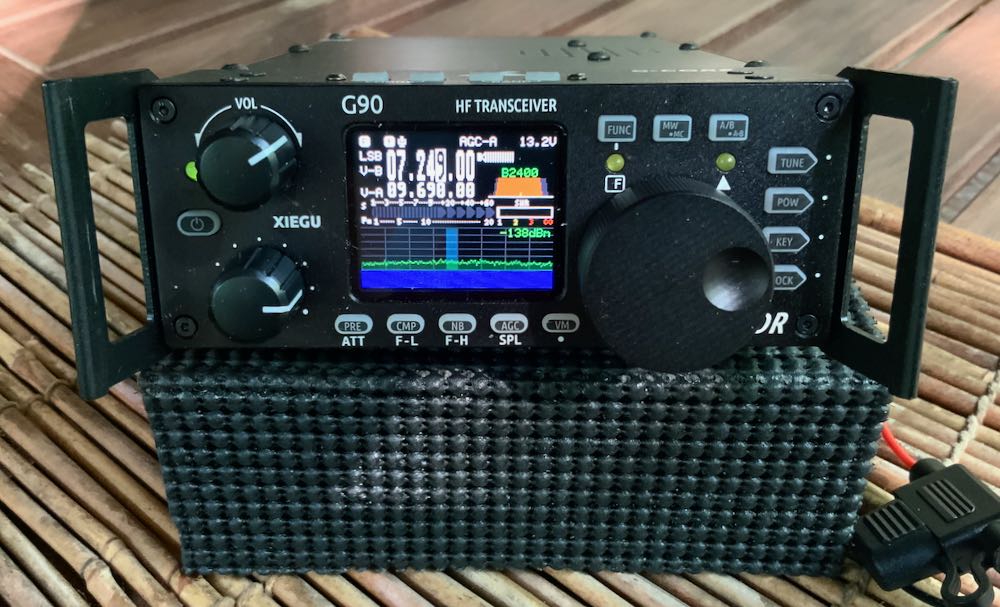
How does the Icom compare with the Xiegu G90, besides lack of a built-in antenna tuner, and having lower transmit power, and a better screen?
Good question, Paul.
The G90 is a great radio for sure and has better specs and features than I would expect from a $450 transceiver. I’ve taken it on a number of portable field operations and love it. My full review of the G90 will appear in the August 2020 issue of The Spectrum Monitor.
Keep in mind that at time of posting (July 21, 2020) no one has really reviewed and compared the performance of a production run IC-705 with any other radio as of yet. I will purchase an IC-705 for review as soon as they start shipping in the US, but I don’t expect to be able to do that until September or October at best. So we can’t really speak about performance at this point.
What makes the IC-705 unique in the portable radio market is the number of features it will sport.
Here’s a short list of features the Icom IC-705 has that the Xiegu G90 does not have:
D-Star mode with built-in WiFi to connect to Internet/hotspot
Built-in GPS
Built-in TX/RX recording
Broader receive range: 0.030–199.999 and 400.000–470.000 MHz
Multi-mode 6M/2M/70CM TX and RX
Touch screen display that is customizable
Built-in WiFi and Bluetooth
Native to digital modes–no external sound card interface needed
Frequency stability less than 0.5 +/- ppm in VHF/UHF, making it ideal to drive an amplifier for demanding tasks like EME
The Xiegu G90 actually has a few features that the Icom IC-705 will not:
Built-in (very effective) automatic antenna tuner
Antenna analyzer function [Update: Geoff notes “The Icom IC 705 does also have a VSWR Plot/analyser in the menu same as the IC7300 and iC 7100, page 9.3 in the advanced IC 705 manual”
20 watts of output power (the IC-705 has a max output power of 10 watts using an external 13.8V battery source)
10.8 kHz AM bandwidth (the IC-705 maxes out at 6 kHz per specs)
Detachable faceplate which will likely make mounting it mobile even a little easier than the IC-705 (although in truth both transceivers are very compact and should be easy to mount)
Side panels that protect the front faceplate and rear connections
At the end of the day, though, the Xiegu G90 is an excellent little budget transceiver. It’s feature-rich compared with other transceivers in this price bracket, but basic compared with the IC-705 or Elecraft KX3 or KX2.
The Icom IC-705 will have a retail cost well over two times that of the G90 but will sport features that no other QRP transceiver has up to this point. In fact, the list of features above is only a sampling.
If none of the unique features of the IC-705 appeal or apply to you and your operating style, save a little money and grab the G90. Or consider spending a bit more for an Elecraft KX2.
If you want an incredibly feature-rich transceiver and are comfortable with a price point in excess of $1100-1200 US (estimated at time of posting), you might delay purchasing until you’ve read a few user reviews of the yet-to-be-released Icom IC-705.