Category Archives: Ham Radio

Mission RGO One: Impressions, availability, pricing and upgrades

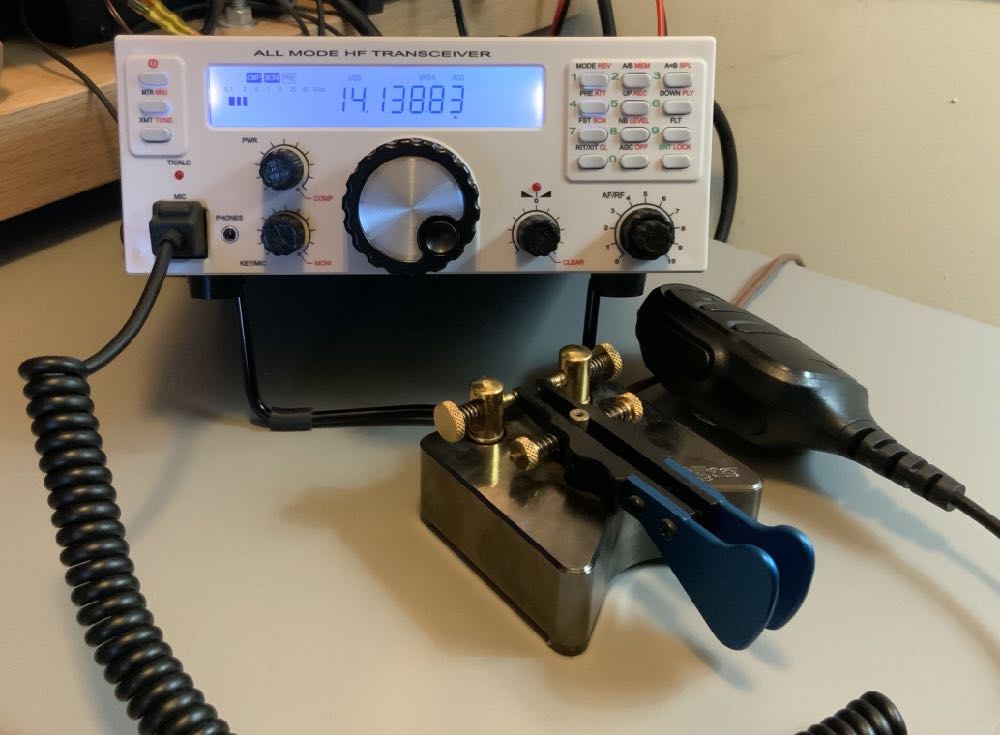
Readers might recall that I picked up a Mission RGO One 50 watt transceiver from Boris (LZ2JR) at the 2019 Hamvention. I’ve been helping Boris and his team evaluate this Bulgarian-manufactured general coverage transceiver since then.

I’ll be writing a comprehensive review of the Mission RGO One for The Spectrum Monitor magazine later this year, but in the meantime I thought I’d post a quick update.

I’ve gotten a number of emails from readers asking specific questions about this transceiver and its availability/pricing. Here are a few answers to your questions:

Is it a good one?

This is the most common question, of course.

In short: the Mission RGO One has exceeded my expectations. The RGO’s noise floor is low, the dynamic range high, the audio pleasant, and the ergonomics are top-notch. As I said in a previous post, you can tell the RGO One was designed by an active ham radio operator. The radio is a pleasure to use and harkens back to the days of benchmark pre-SDR transceivers.

Keep in mind I have a very early evaluation model and it’s due a firmware upgrade. The only negatives I’ve experienced are ones I would expect as we flesh out minor firmware bugs. Indeed, most all of these have been sorted already.

I’ve used the RGO One in both the shack and in the field and find it’s a capable radio in both situations.

In fact, last year I taught a ham radio class to a group of home-schooled high school students. Of course, I wanted to offer them proper on-the-air time so they could experience a little HF radio magic. My radio of choice was the RGO One for its ease of use and excellent built-in audio.
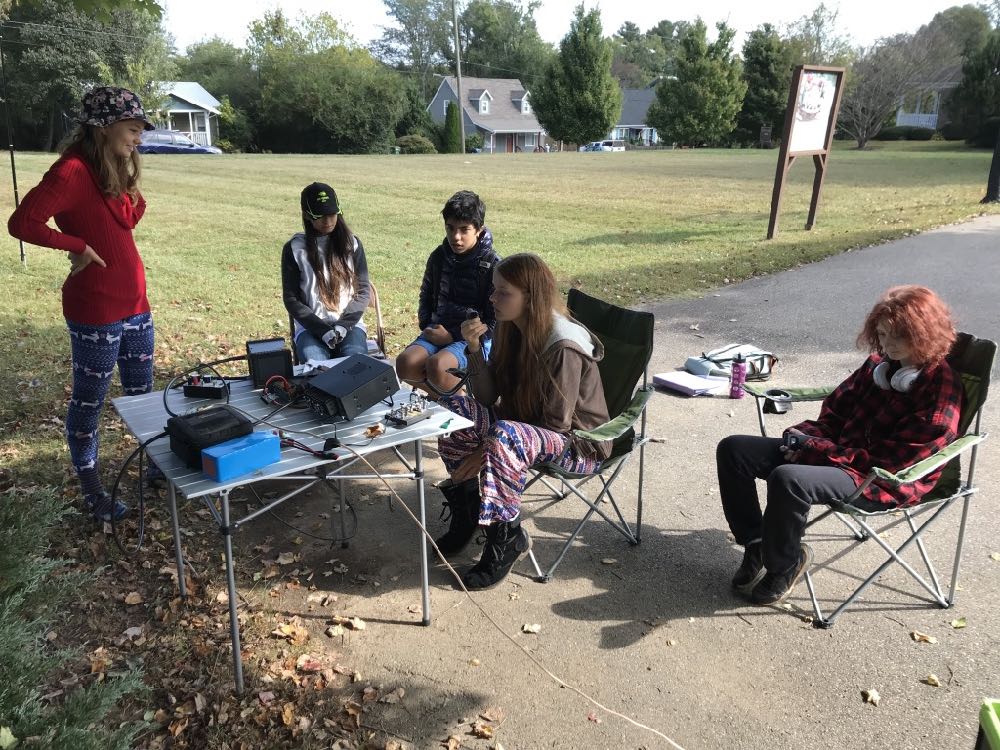
I took the class outside and we connected the RGO One to a resonant portable 20 meter vertical. One of the very first SSB contacts we made was with a ham radio operator in Slovenia–with solid 5 by 9 reports on both ends. After that, my students were hooked! (In fact, four of my seven students have since passed their ham radio license exam! I’m incredibly proud of them.)

If you’re curious how well the RGO One holds up during contest conditions in CW, I highly recommend checking out this CQWW report by John (AE5X).

Market niche
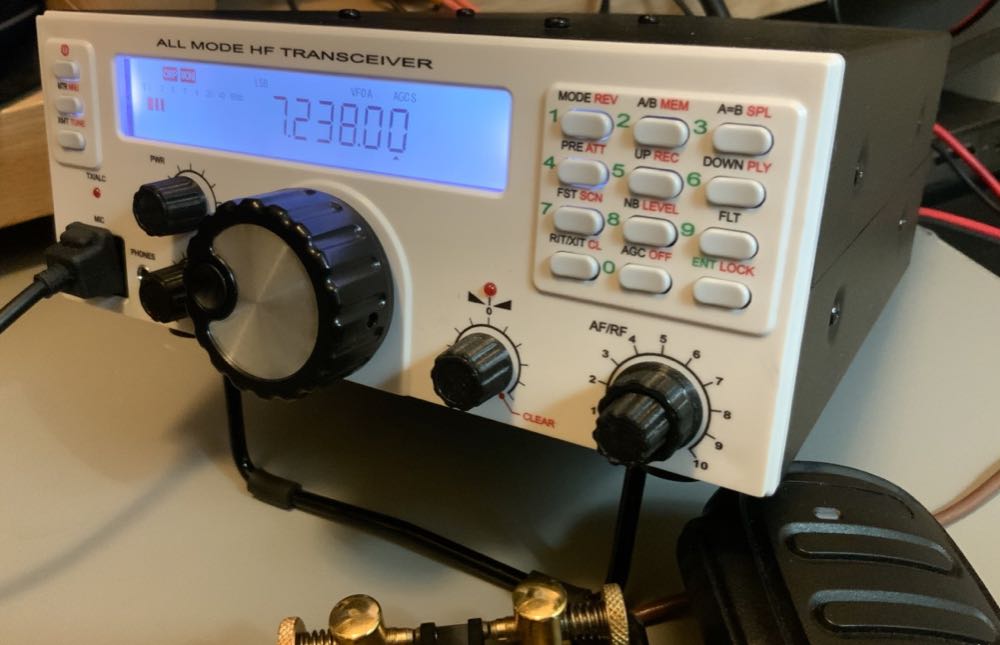
With a large number of QRP and 100 watt sub-$1000 transceivers on the market–including the Elecraft KX2, Yaesu FT-818/FT-891, Icom IC-718/IC-7300, to name only a few–where does the Mission RGO One fit in?

Good question.

In my mind, what makes the RGO One unique is the fact that it has the price, weight, and form factor of a field-portable, front-panel QRP transceiver, but is capable of pumping out a full 50 watts of power without an external amplifier.

The RGO one is lighter (about 5 lbs) and draws less current on receive than most comparable 100 watt general coverage transceivers.

I see the RGO One becoming my choice radio for most Parks On The Air (POTA) field activations this year. In the past, I’ve used my beloved Elecraft KX2 for NPOTA and POTA activations because it’s extremely portable and incredibly versatile. I’ll still use the KX2 for activations that require hiking or in situations where I can’t easily set up a tabletop radio, but I can’t tell you how many times I wish I had a little more TX output Since the RGO One can provide up to 50 watts out, it’ll give me a little more “juice” when conditions demand.

Availability and pricing
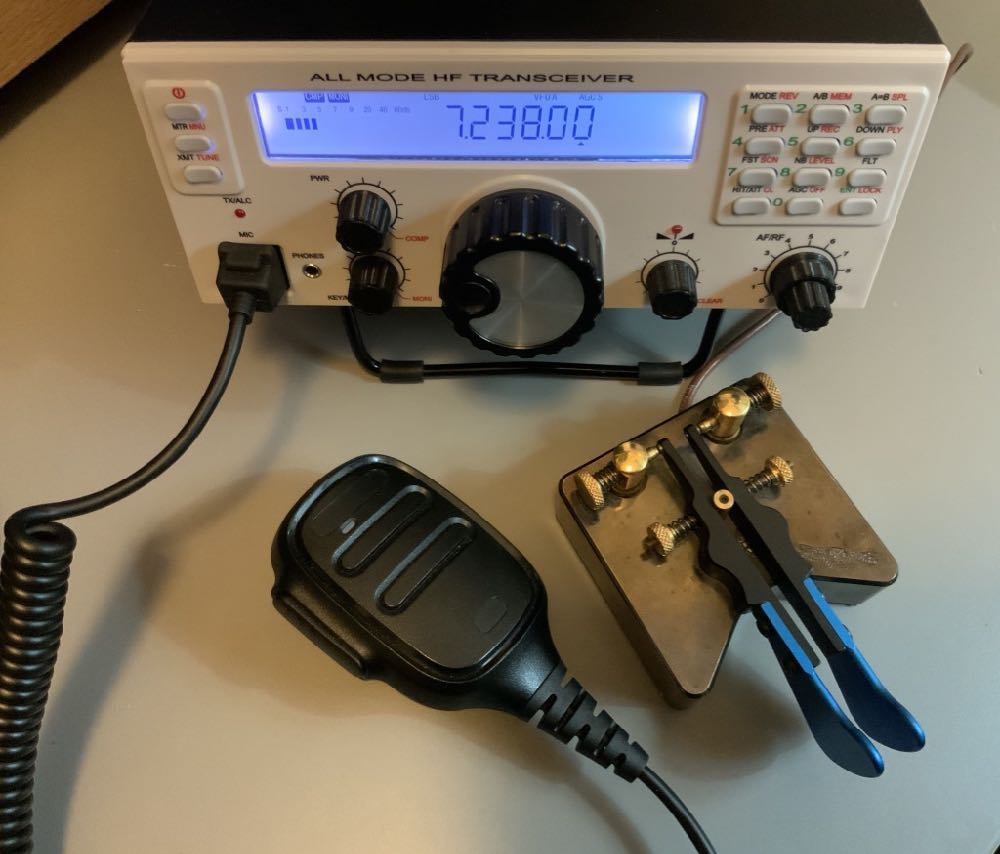
At present, there are a limited number of early production Mission RGO One transceivers in the wild. The company is in the process of scaling up production.

To that end, you will now find a Mission RGO One pre-order form on their website.

The price is 790 Euro (roughly $880 US) plus shipping. There will be two shipping options: directly from Bulgaria, and from the USA in mid-May 2020. These units will all be fully factory assembled and aligned.

It’s my understanding that eventually there will be a modular kit version of the RGO One and the price will be much less than that of the assembled unit.

Internal ATU option

The RGO Team is also in the final stages of producing an optional high-performance internal ATU.

I have no details about pricing or availability yet, but I will be testing this ATU in the shack and in the field later this year. After I’ve evaluated the ATU, I will publish my full review of the RGO One in The Spectrum Monitor magazine.

Other Questions?
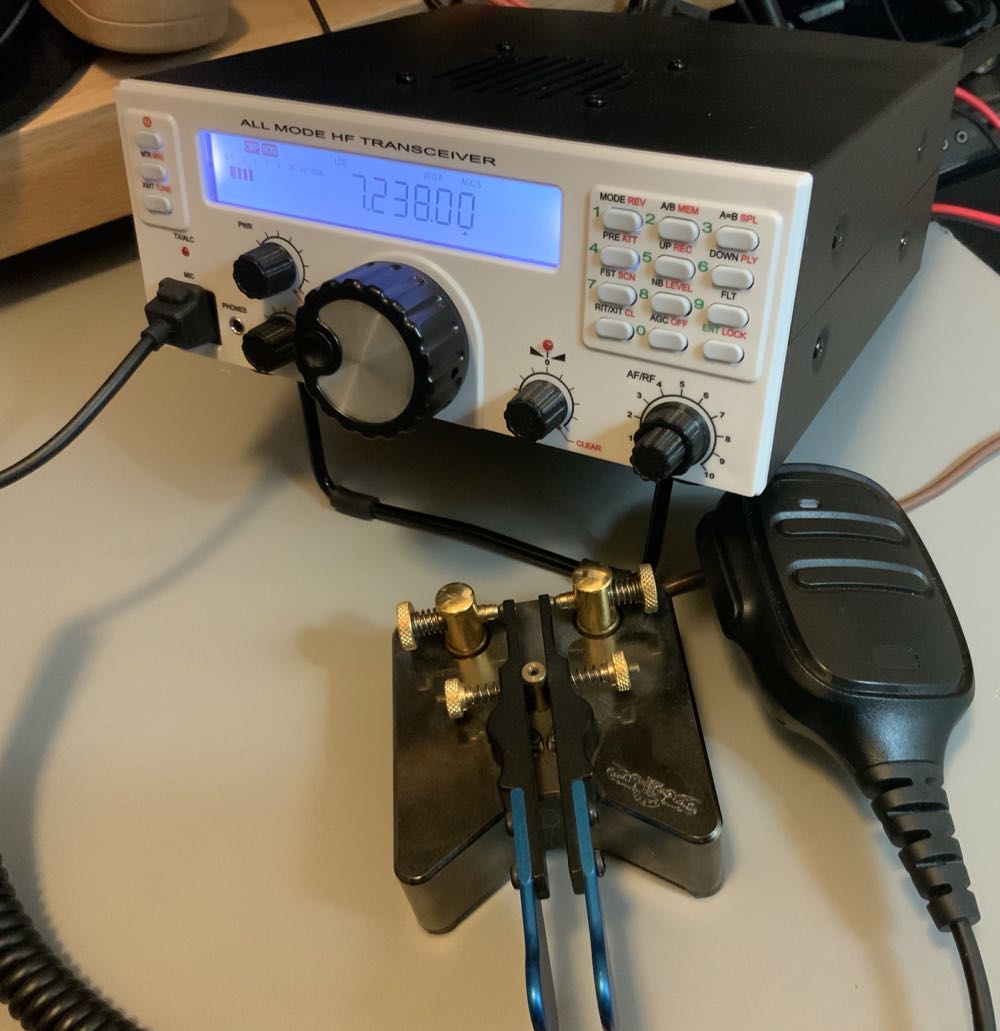
As you might have gathered, I’ve really been enjoying my time with the Mission RGO One transceiver. Lately, it’s even taken the place of my beloved KX3 in the radio shack.

Please comment if you have other questions and I’ll do my best to answer them.


Do you enjoy the SWLing Post?

Please consider supporting us via Patreon or our Coffee Fund!

Your support makes articles like this one possible. Thank you!

Tomorrow: Morristown Hamfest and youth radio event

My buddy, Vlado (N3CZ), and I have decided to head to the Morristown, Tennessee hamfest tomorrow morning. The event is sponsored by the Lakeway Amateur Radio Club and also features a “kids day” to promote amateur radio to unlicensed youth. The club provides opportunities for both individuals and youth groups to get on-the-air experience and help sort out the best path to get an amateur radio license.

Neither one of us knew about this regional hamfest until last month when I received a request from the radio club’s president asking if I could help spread the word. It was then that I discovered Morristown is within a two hour drive. Vlado and I are always up for a road trip (even if it means leaving at 5:00 am…egad–!).

We’ll keep our expectations in check, but we both hope to sell some radio gear that is in excess to our needs. If you happen to live in the area, pop by and introduce yourself!  Here are the details:

Lakeway Amateur Radio Club’s
28th Annual HAMFEST
Where: 1615 Pavilion Drive, White Pine, TN 37890
8:00 AM -3:00 PM
Saturday, January 4th, 2020

Gates Open @ 8:00 AM.
Admission $10.00 at the Gate
Opening Cermonies @ 8:30
HAMFEST Forums start at 9:oo AM, District 8 Meeting and ARRL, David Thomas
Keynote: Jason Johnston W3AAX, Parks on the Air!

Grand Prize is an Icom IC-7300.

Click here to visit the hamfest website.

Reginald Fessenden’s connection to Bermuda

Reginald Fessenden: “The Father of Radio Broadcasting” (Source: Wikipedia)

Many thanks to SWLing Post contributor, Paul Evans (W4/VP9KF), who writes:

The story of Reginald Fessenden has a background in Bermuda.

Before he finished his college education in Canada, he spotted an advert for Headmaster at a school in Bermuda. He applied for it and got the job. At the right age of 18 he became headmaster of Whitney Institute, a school near the top of the hill in Flatts and where your scribe went to school starting in 1968! He met Helen Trott of Flatts and they were married and he moved on to his radio and scientific fascination. The main school building that I attended is exactly as it was in Fessenden’s time (and is to this day).

Later, they moved back to Bermuda and bought Wistowe a house on North Shore Road in Flatts (on the east side of the inlet), which was no more than a stiff 10 minutes walk to Whitney). The school and house still stand although the roads are now so very busy (and the house literally within an inch of passing buses) it’s hard to see them (I do have pictures!). Wistowe is just yards from the Bermuda Aquarium across the road.

In October 2007 the amateur radio special callsign VP9F was used to celebrate his life (indeed he held the callsign himself in 1929).

A fuller article is at http://vp9ge.com/vp9f.htm as written by myself and Ed, VP9GE.

The celebrations also included Ken Hubbard who demonstrated radio to students from Whitney and other Bermuda schools (Ken was my Physics instructor at Bermuda College, although not a radio ham). In 1976 Ken and I did a public demo of radio while I manned the world’s first all solid state transceiver, the Atlas 210X at a similar open day at Bermuda College (ironically the student [me] taking the lead and having to supervise the instructor!).

Once again, a small world!

Thanks for sharing this interesting bit of Fessenden history, Paul!

Assembling the uBITX V6 QRP transceiver

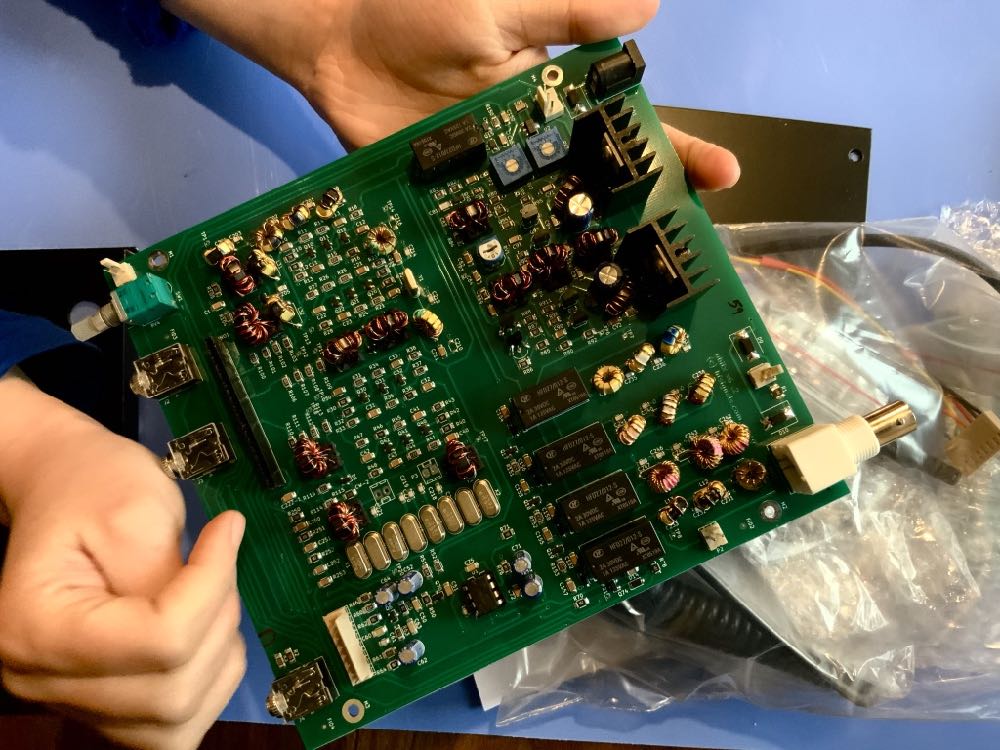
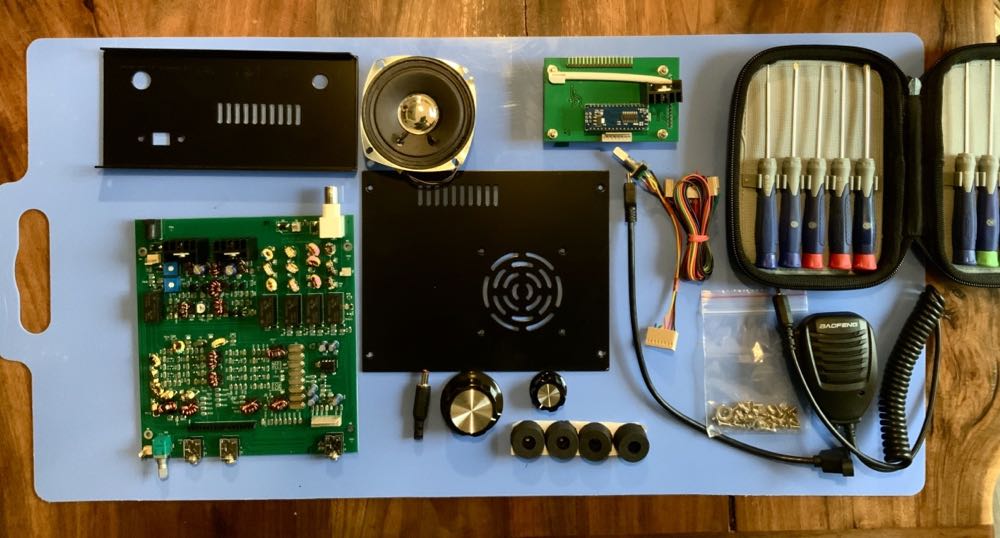
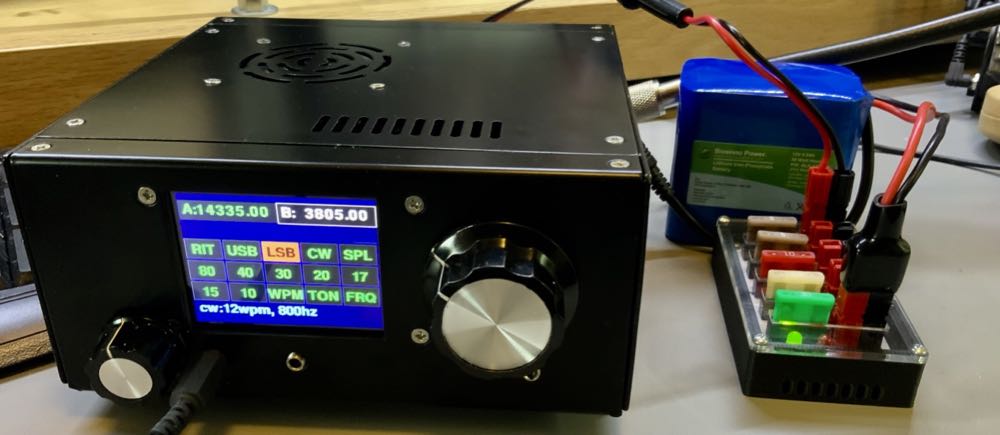
Last Friday, after returning from holiday travel, I found a belated Christmas gift on my doorstep: the new uBITX V6 QRP transceiver.

In the spirit of full disclosure, this package wasn’t delivered by Santa, rather by DHL in record time from India. As I mentioned in a previous post, I simply couldn’t resist purchasing such an affordable general coverage transceiver.

To be clear, the uBITX V6 isn’t really a kit. The boards are all fully populated by a women’s cooperative in India. You can purchase the uBITX V6 for $149 without a chassis and for $199 with a custom metal chassis. I purchased the latter.

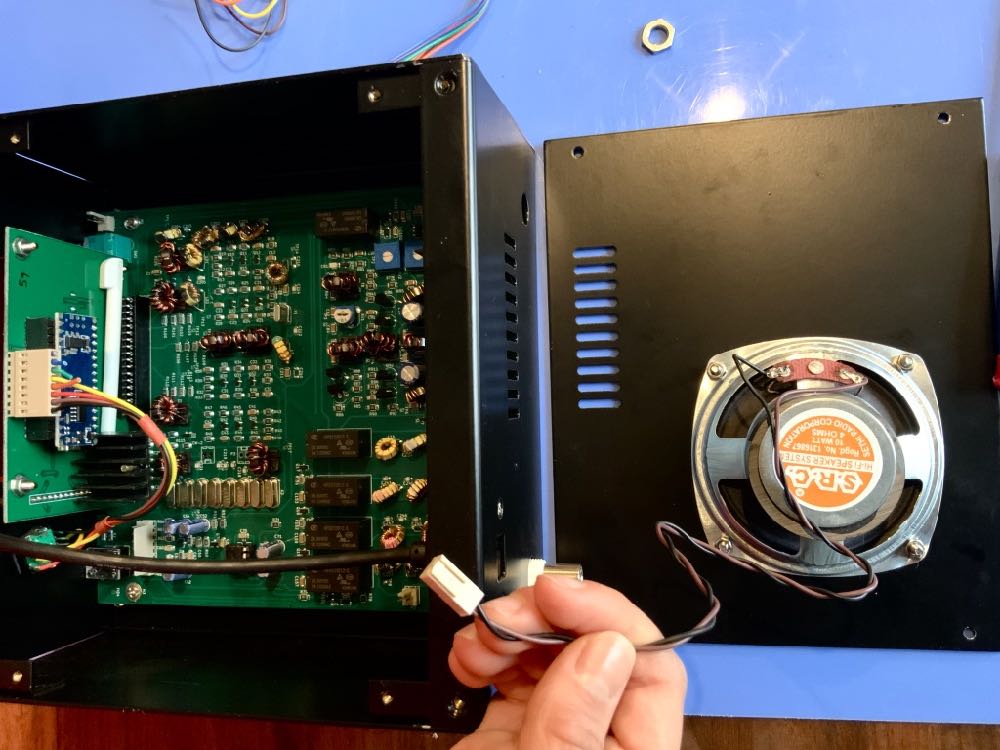
Assembly may take thirty to forty minutes following HF Signals’ online guide. I employed my twelve year old daughters who pretty much assembled the entire radio–I only helped seat the display to the main board.

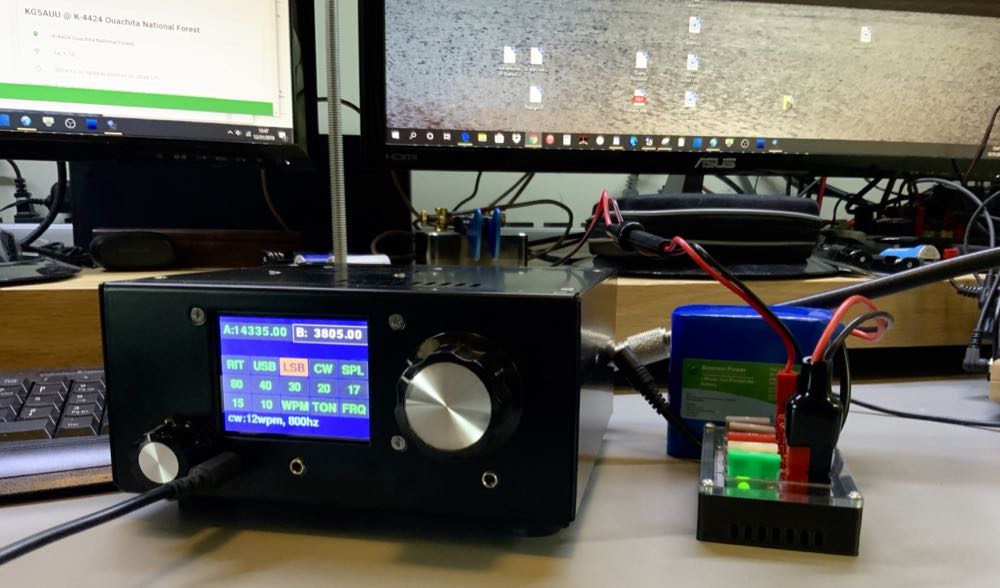
There is no firmware or software to upload. Simply assemble the radio, solder a power cord to the supplied coaxial plug (hint: positive tip polarity), connect an antenna, connect a power supply, and turn it on.

You’re on the air!

So far, I’ve only scanned the bands and listened to QSOs and broadcasters (no AM mode, so I’ve been zero-beating stations in SSB). Today, I hope to chase a few parks via the Parks On The Air program.

I still need to calibrate the radio yet (although it does zero beat WWV perfectly).

If you purchase the uBITX V6, don’t expect a benchmark transceiver. This uBITX V6 feels more like a work-in-progress and I assume the pre-loaded firmware is simply a first iteration.

Since the radio is open source, I expect hams will soon hack this rig to go above and beyond its basic (understatement alert–!) feature set.

If you’re a CW operator, you might hold off on purchasing until someone has properly implemented the mode. I made some test CW CQs into a dummy load just to check out the keyer and I honestly don’t think I could manage a proper QSO at this point. Sending is sluggish and…well…awkward.

Note that I will be writing a full review of the uBITX V6 for a future issue of Radcom (the RSGB’s monthly publication). Check back here for uBITX V6 notes along the way.

Also check out the excellent blog of our friend, John Harper (AE5X), who has also recently put the uBITX V6 on the air!

Anyone else order a uBITX V6? Please comment!


Do you enjoy the SWLing Post?

Please consider supporting us via Patreon or our Coffee Fund!

Your support makes articles like this one possible. Thank you!
Understanding decibels

Many thanks to SWLing Post contributor, Marty, who shares the following article from Nuts and Volts magazine–a primer on decibels:

The “dee-bee” is everywhere in ham radio, and is used for characterizing everything from antenna performance to nano-sized signals. Learn the decibel (abbreviated as lower-case ‘d’ followed by an upper-case ‘B’ or ‘dB’) and you and your signal will go a long way!

From the ARRL Ham Radio License Manual’s online math tutorials for beginning hams (arrl.org/chpt-2-radio-signal-fundamentals), we introduce the decibel. “You have probably recognized deci as the metric prefix that means one-tenth. The unit we are really talking about here is the bel (a ratio of sound levels named for Alexander Graham Bell), so a decibel is just 1/10th of a bel. We use a decibel instead of a whole bel because the bel represents a rather large change in levels. The dB is a just-perceptible change and more useful as a unit of measurement.” As used in wireless, the decibel is the ratio of two power levels:

dB = 10 log10 (P2/P1)

Note that the dB has no units because it is a ratio. The dB is just a number that describes how much bigger or smaller one quantity is compared to the other. Both quantities themselves must have the same base units, though — watts, for example. If P2 is larger than P1, the dB value is positive, such as for amplifier gain. If P2 is less, the value is negative and represents attenuation or loss. (Somewhat confusingly, it’s common to specify an amount of attenuation as a positive value of dB. For example, “This filter attenuates the signal by 20 dB.”)

Click here to read the full article at Nuts and Volts.

Source files for Tom Lackamp’s NewLog logging application?

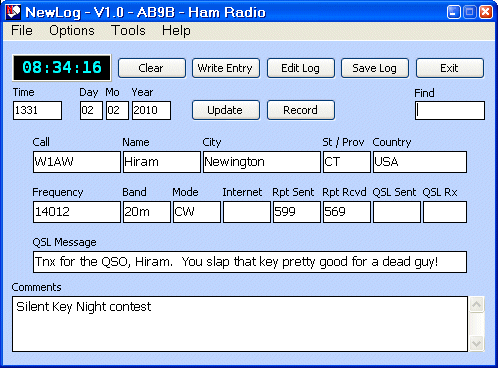
NewLog Entry Screen

I recently received an inquiry from SWLing Post contributor, Geroge (NJ3H), who is a big fan of the simple logging application NewLog.

NewLog was written by Tom Lackamp (formerly AB9B) who was very well regarded in the community. Several years ago, however, he seemed to disappear: his callsign was reassigned and his email no longer works. Many assume, of course, that he could be SK.

UPDATE: Many thanks to the SWLing Post readers who shared the sad news that Tom Lackamp passed away on 12/26/2017 at age 70.

George has attempted to track Tom down because there are a few minor modifications he’d like to make to NewLog.

I’m told Tom openly encouraged his users to modify NewLog’s source files that we believe to have been written in Delphi.

If you happen to have the source files for NewLog–or know of a way to locate them–can you please comment on this post? Perhaps NewLog can be given a second life in the hands of the right programmer. Of course, please comment if you know how to contact Tom Lackamp or if you know what might have happened to him.

Icom IC-705 price and availability

Note: We will update this post as pricing information is confirmed by retailers.

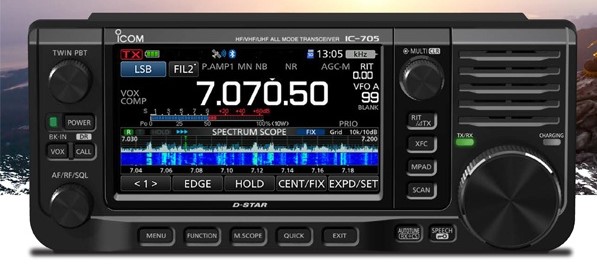
Many thanks to several SWLing Post readers who have been carefully tracking the price of the Icom IC-705 transceiver which is expected to start shipping around the second quarter of 2020.

Pricing in Japan: 124,800 yen

Paul Evans notes that the price in Japan, according to this Icom Japan press release [PDF], is 124,800 yen + tax. That’s roughly $1150-1200 USD.

Pricing in UK: £1200.

In addition, ML&S have recently posted updated details from Icom UK and have noted that they “anticipate a price of around £1200 (£1000.00 excluding VAT).” To put that in perspective, the IC-7300 is currently being offered for the same price and it’s been on the market a while now.

This could mean that after the IC-705 has been on the market for a while, discounts could place it well below that of the IC-7300. Of course, if history is an indicator, early adopters will likely pay the top price.

Pricing in US: [TBD]

No confirmation yet from US retailers, but at this point, I would bet we could see pricing around $999 USD. That would be a competitive starting point. Of course, once we have confirmation from retailers we’ll update this with actual figures.

Other regional pricing

We will update this post with pricing and availability once we confirm details. Please comment with any tips!


Do you enjoy the SWLing Post?

Please consider supporting us via Patreon or our Coffee Fund!

Your support makes articles like this one possible. Thank you!