Category Archives: Ham Radio

TX Factor Episode 25

Many thanks to SWLing Post contributor, Eric (WD8RIF), who notes that the 25th episode of TX Factor was recently released. Here’s the show summary:

A post-election special – well, not really! Just a look at some more new and innovative AR products from this year’s Hamfest, including a potted history of the ever-popular and much revered range of transceivers and kits from Electraft with co-founder Eric Swartz WA6HHQ. There’s our free-to-enter draw with some excellent prizes from ML&S and RSGB to be won.

In this modern era of connectivity, we take the ever-present Internet for granted; it’s always there and continues to deliver our data from A to B without issue. But what would happen if that vital link failed? We visit Southampton and Portsmouth on the UK’s south coast to see how two city councils, assisted by a group of dedicated amateurs, plan to maintain their communications infrastructure via radio links alone, should the Internet go down.

Click here to view on YouTube or on the TX Factor website.

Just ordered the new $149/$199 uBITX v 6.0 QRP transceiver

Many thanks to SWLing Post contributor, Pete (WB9FLW), who notes that Ashhar Farhan (VU2ESE) has recently announced the availability of the uBITX v 6.0–as Pete notes, “just in time for the Holidays!

Pete shared the following message from Farhan:

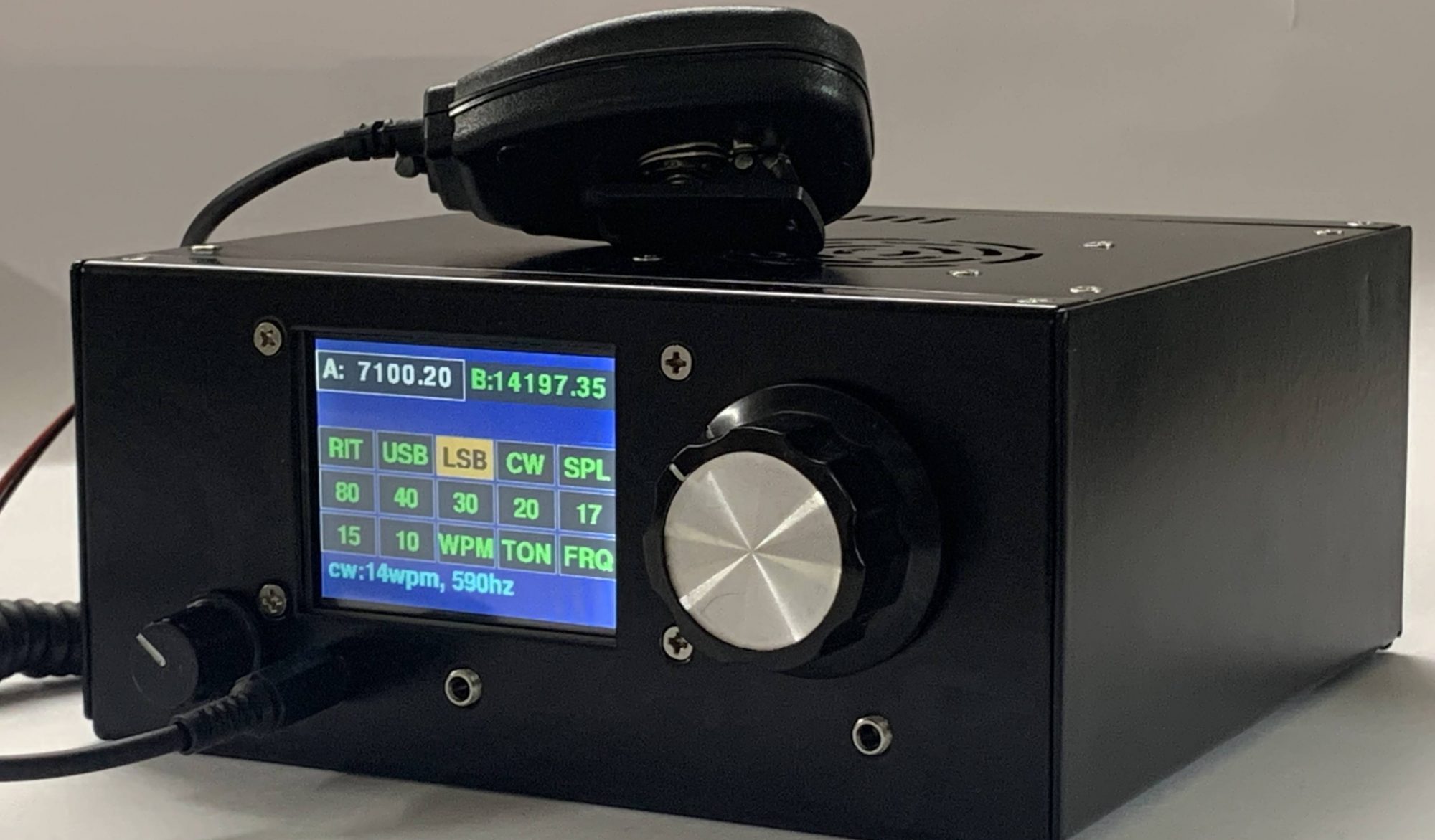
Here is what [the uBITx v 6.0] looks like :

And of course, you can buy it on hfsignals.com. The shipping will happen from Tuesday onwards. We have a limited supply of the first 200 boards. The rest is for after Christmas.

The most important thing about this revision is that the Radio circuitry is almost unchanged. We have incorporated the connectors on the PCBs. So, this kit needs none of the confusing soldering. You snap in the TFT Raduino onto the main board, plug the power and antenna from the back, snap on headphones, plug in the mic (supplied with the kit) and off you go!

It is offered in two kits now : The basic kit (150 USD) is without the box (like old times) but with a microphone and two acrylic templates for the front and back panels.

The Full kit (199 USD) has the box with speaker, mounting hardware etc. Both are described on the website.

Now, about the TFT display:

For those who are using the 16×2 display and you would like to upgrade, you will have to do three things:

Add a heatsink to the 7805 of the raduino

Buy [here] and hook it up as per [this article].

Grab the new Arduino sketch from https://github.com/afarhan/ubitxv6

Background:

I have been hacking away at adding a TFT display for the Arduino for sometime. Finally, I managed to do this with a really inexpensive 2.8 inch TFT display that uses a controller called the ILI9341. The display update is slow but, clever guy that I am, the display very usable. it uses the same pins that earlier connected to the 16×2 LCD display. This display is available everywhere for a few dollars.

Many thanks, Pete, for sharing this announcement. The price was simply too attractive to me, so I just purchased the full kit for $199 US. (Thanks for being the good enabler you are, Pete!)

Update – 30 May 2020: Many thanks to Armin Sander who notes that the uBITX V6 full kit price has increased to $209 US.

I’ll post an update when I receive the transceiver and assemble it. I do hope this is a workable little radio–it would be pretty amazing for newcomers to the hobby to be able to get on the HF bands for a mere $200 US. I also love the fact that this is all based on open-source, hackable technologies.

Voice of Nigeria would like your reception reports

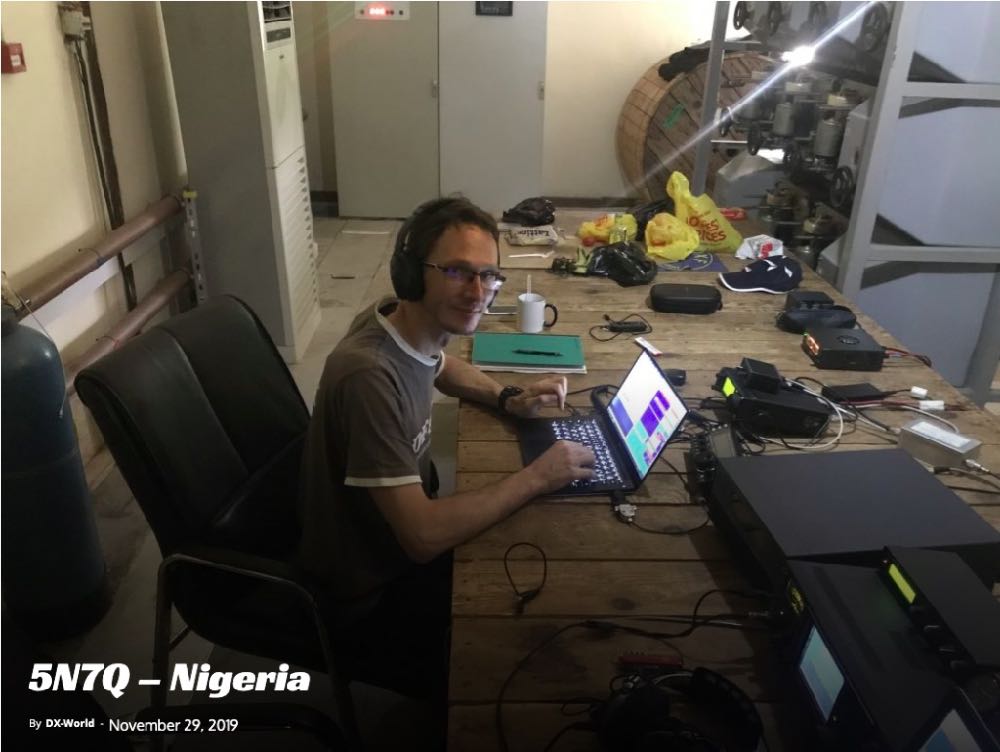
Photo source: 5N7Q

Many thanks to SWLing Post contributor, Harald Kuhl (DL1AX), who shares the following note posted on the 5N7Q DXpedition page:

UPDATE from Bodo, DF8DX.

5N7Q is QRT for now. Rene DL2JRM and Bodo DF8DX enjoyed this activity very much. We logged more than 20,000 QSOs in 9 days of operation. We were active from 10m to 160m in CW, SSB, RTTY and FT8.

While many friends appreciated getting some new band points, operating in FT8 and on the 60m band were first time ever activity.

Our QTH was in the broadcasting station of Voice Of Nigeria in Abuja. We were very grateful for this opportunity to use the broadcasting antennas that have 20dB gain into Europe, NA and SA. Asia was workable with our vertical dipoles or via long path. Unfortunately the giant rotatable antenna cannot be rotated at the moment but we hope that it is doable at the next activity. For low-bands we had some dipoles hanging from the 80m tall link tower. Our signal was good but we clearly had some RX trouble as the noise was very high. Complete log is uploaded to Clublog and Lotw as well. Please use OQRS to receive your paper QSL card via bureau or direct. There are still a lot of mails asking about QSOs that cant be found in the log. Please QRX, I will check all of them carefully but it takes some time. Our QSLs may be requested for free via bureau and Lotw is already uploaded, no waiting, no donation required for this service.

This activity would not have been possible without the effort and help by the staff from Voice Of Nigeria. All credit go to them. Please help us to help them. You may support future activities from here by keeping this wonderful transmitting station on air. Their current broadcasting schedule is: 0600-1100UTC on 7255kHz in AM (beaming to West Africa and SA) 1500-2100UTC on 11770kHz in AM (beaming to West Africa and NA) 1500-2100UTC on 15120kHz in DRM (beaming to EU). Please tune in and listen to Voice Of Nigeria.

Please send your listener reports to:

Head Of Engineering Engr. Jerimoth Canice Voice Of Nigeria Headquarter Oda Cres, Wuse 2 Abuja Nigeria [email protected]. Your listener reports are highly appreciated and help to keep transmitting from here.

Many thanks for sharing this, Harald! Readers, if you’ve logged VoN recently, please send them a reception report!

Mario acquires an Index Labs QRP++ general coverage transceiver

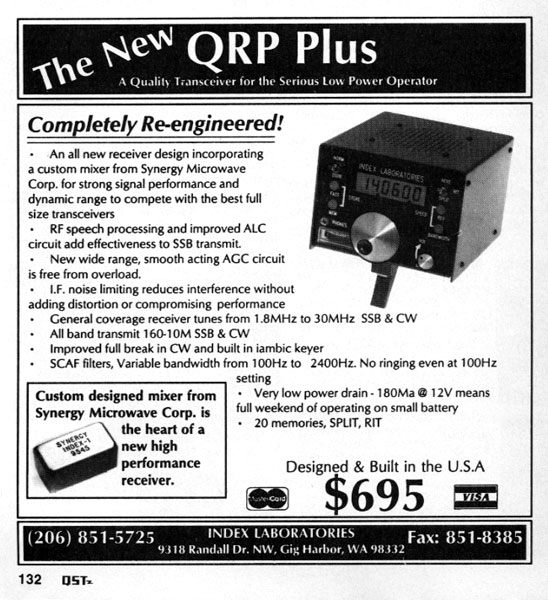
May 1996 QRP Plus ad from QST (Source: WD8RIF)

Many thanks to SWLing Post contributor, Mario Filippi (N2HUN), who shares the following guest post that was originally published on the Delaware Valley Radio Association (DVRA) website:


Amateur Radios from the Past: The Index Labs QRP++

The Index Labs QRP ++ was an intriguing little radio manufactured back in the mid-‘90’s by Index Labs of Gig Harbor, WA.  For those interested in QRP (low power operating, generally less than five watts output) this transceiver filled the bill perfectly.  It supports CW and SSB, transmits on all WARC bands, covers 1.8 – 30 MHz receive, has full break-in CW and a built-in iambic keyer.  It boasts 20 memories, weighs four pounds (perfect for portable operation) and measures 5.5 x 4 x 6 inches.  It’ll run on a 12V 1.5 amp supply or a stout 12 volt gel cell.  The internals (see second pic) are an engineering masterpiece with stacked circuit boards reminiscent of commercial rigs.
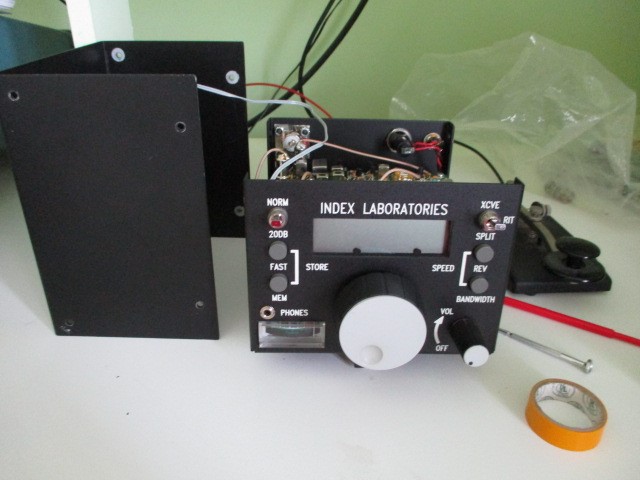
Index Labs QRP ++ on the test bench

I recently acquired one of these radios as I was heavily into QRP in the 1970’s while using a TenTec Argonaut 509 and vertical on our apartment house’s roof.  Back then the sunspot numbers scored much higher than today and many contacts were made, most notably a CW contact with Japan with a paltry one watt.  So for nostalgic reasons I had to have one of these QRP++ rigs even though more modern and sophisticated versions are available.

At the moment bench tested is being done prior to sending it into action.  One important component needing replacement was the memory battery which was totally kaput.  Interestingly, this battery not only keeps the 20 memories alive but also brought back to life the CB radio-style S-meter reminiscent of radios from decades ago. Other items on the testing  “to do” list will be checking power output, frequency accuracy, drift, and finally, on-air performance.  The radio will feed a ground mounted 31’ vertical with 53 radials. With the right ionospheric conditions hopefully contacts will be aplenty.
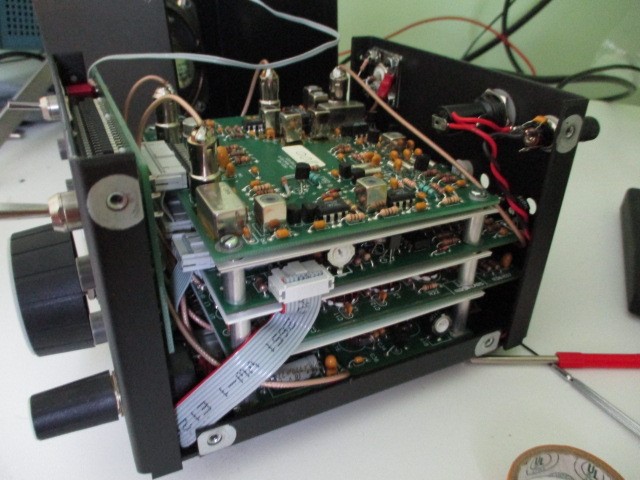
Neatly stacked circuit boards and clean layout of QRP++

Unfortunately, no service manual exists for this gem, but it rates a 4.1 out of 5 on the eham.net Richter scale, and a number of ops have published helpful information on problems, solutions and modifications.  Notably the first run of these radios was later replaced with improved models boasting higher performance via a custom designed mixer, so knowing the serial number of your unit helps to determine if yours was an upgrade.
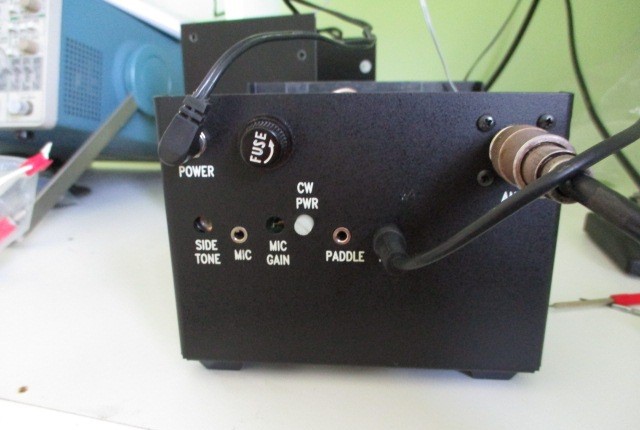
Rear panel control layout. Power is adjustable and tested at a hair under 5W.

You can read and see more photos from the author, Mario Filippi N2HUN, at https://www.qrz.com/lookup/n2hun

Click here to read this article on the DVRA website.


Thank you, Mario, for sharing this article and many thanks to the DVRA for allowing us to re-post it.

I owned a QRP++ for a few years and absolutely loved it. At the time, it was one of the most portable full-featured transceivers on the market. Although it can struggle in RF dense environments like Field Day or other contests, for daily use it was very effective. I eventually sold mine to fund the purchase of the Elecraft KX1 and, later, KX3.

I always loved the simple front-panel ergonomics of the QRP+ and QRP++. It’s an incredibly easy rig to operate in the field. Plus…it has a bit of a “cute” factor, if you like radios shaped like cubes.

There is a dedicated email discussion group for Index Labs transceivers–currently, they’re on Yahoo Groups but may migrate to another platform by end of year.

In addition, SWLing Post contributor, Eric McFadden (WD8RIF), has an archived webpage with a wealth of information about the Index Labs QRP+ series.

Thanks again for sharing this, Mario! I know you’ll enjoy the QRP++ once you get it on the air!


Do you enjoy the SWLing Post?

Please consider supporting us via Patreon or our Coffee Fund!

Your support makes articles like this one possible. Thank you!

Rick compares the Bonito ML200, Cross Country Wireless, MLA-30 and Wellbrook 1530LN

Many thanks to SWLing Post contributor, Mike Ladd, who shares the following video by Rick King who compares four mag loop antennas: the MLA-30, Cross Country Wireless, Bonito ML200, and the Wellbrook 1530LN.

Click here to view on YouTube.

Excellent comparison, Rick!

Although we’ve previously posted reviews and comments about the MLA30, I’m quite impressed that it gave the venerable Wellbrook a run for its money. I’m not surprised the Bonito ML200 was the winner here–Bonito quality is second to none.

Loop links:

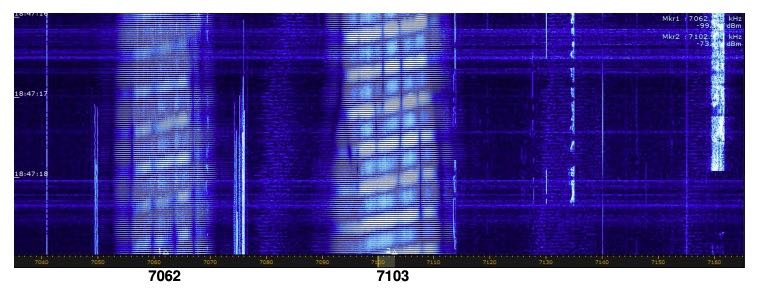
Contayner Over-The-Horizon Radar site polluting the HF spectrum

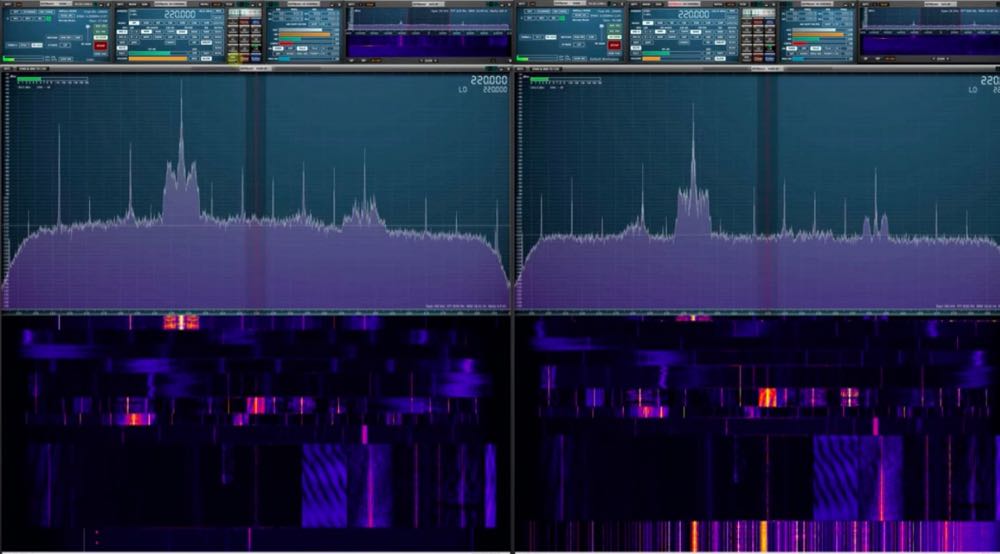
OTH radar Contayner on 7062 and 7103 kHz on 21 Oct. at 1847 UTC (Source: IARU Region 1 Newsletter)

Many thanks to SWLing Post contributor, Paul Evans, who writes:

The news from IARU Region 1 observer reports is all over the radio internet (including news sites and other blogs), but the extent of this [Russian] OTHR is grim. [Click here to read a recent ARRL News post.]

It is also entering service on a full-time basis, along with, potentially, a similar Chinese system.

Yes, it has been in testing for many years but is approaching multiple site use, soon. As the sunspot cycle comes back they may prove to be very limiting.

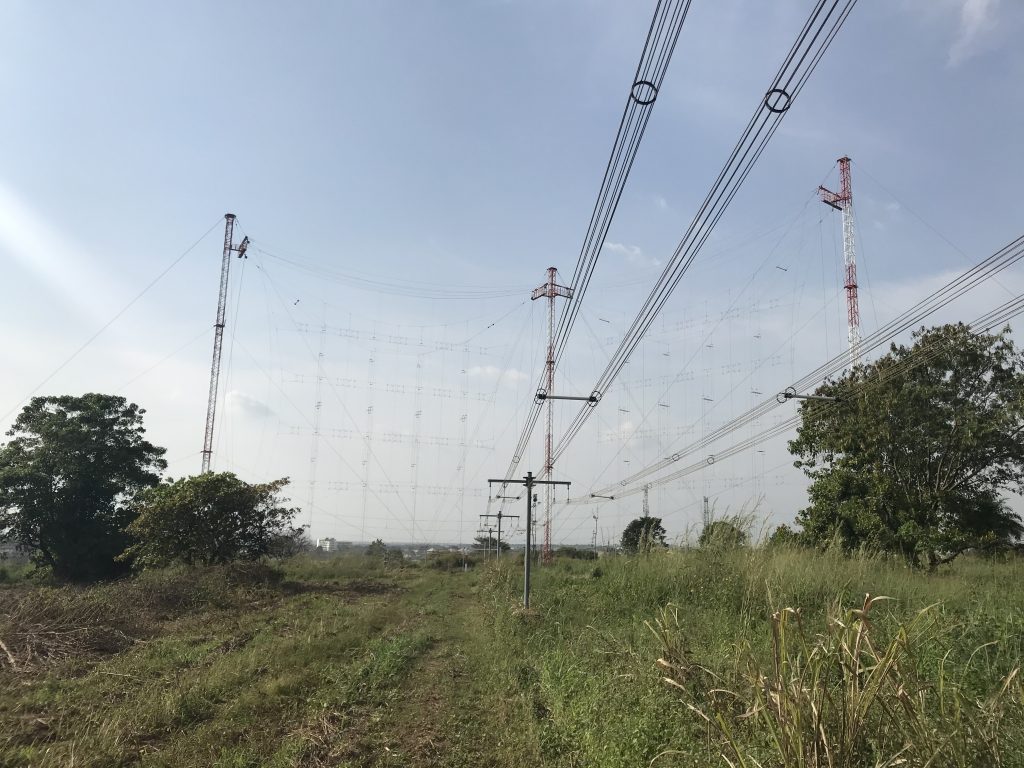
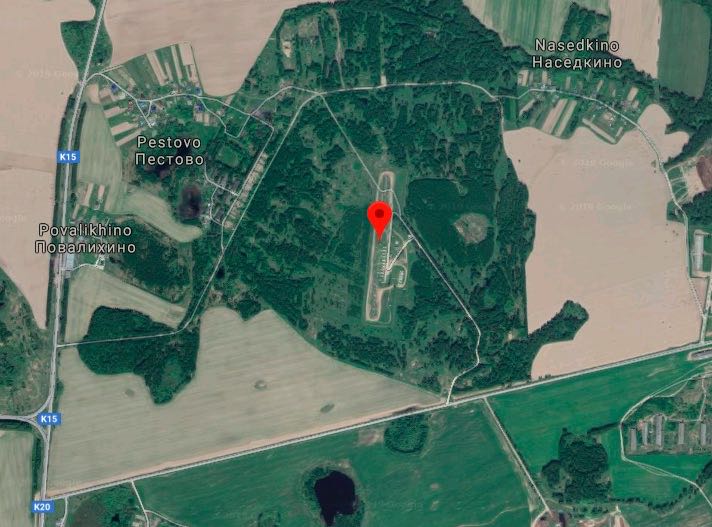
The antenna picture (for the transmit site) is impressive:
https://qrznow.com/russian-oth-radar-now-reported-to-be-everywhere/

(although I think that is of the old Woodpecker site, the Google Maps street view image looks somewhat different, see below).

However, it’s not so huge that it really stands out. It can be seen here:

in satellite view and can even be seen in street view here:

Note that the magic number in the phased arrays seems to be 9.

Rather worrying is that the UK continues to run, over many years now, OTHR from sovereign bases (ZC4) in Cyprus rather obviously aimed at use in Syria and Libya for use with the RAF and for Russian air space. It too can be seen on the salt marshes in the south of the island. As an active system it seems to be rather more cloaked than the Russian system, although there are some 360 degree images in Google Maps that show the towers. This was extremely annoying on the bands when the last solar cycle was near maximum from Bermuda because it was right in the main lobe when a Yagi was pointed towards Europe and was very loud. It was considerably narrower than the Russian system but occupied a solid chunk of band.

Paul, thank you for bringing this to our attention. I have seen chatter about the QRM this particular Russian OTH Radar site has created, but it seems other countries will soon be joining the OTHR QRM scene as well.


Do you enjoy the SWLing Post?

Please consider supporting us via Patreon or our Coffee Fund!

Your support makes articles like this one possible. Thank you!

TX Factor Episode 24

Many thanks to SWLing Post contributors, Eric and Tom, who note that the latest episode of TX Factor has been released.  Here’s the show summary:

Episode 24 of TX Factor is a Hamfest 2019 special, reporting on some of the eye-catching products and services on display at this year’s event in Newark.

We investigate the current state of HF propagation, celebrate 50 years of Nevada Radio, Mike tries out a few solder stations, and Bob goes all soft over the VMARS vintage AM radios. And to cap it all, we take a look at the latest rig from Yaesu.

As always, there’s a chance to win a great bundle of prizes from our sponsors, ML&S and the RSGB.

We hope you enjoy the show!

Click here to view on YouTube.