Category Archives: News

Radio Waves: Love of AM Radio, AM Moves Forward in House, Radio Obsession Turns to Drone Defense, Starlink Radio Pollution and TWR Celebrates 50 Years in Roumoules

Radio Waves:  Stories Making Waves in the World of Radio

Welcome to the SWLing Post’s Radio Waves, a collection of links to interesting stories making waves in the world of radio. Enjoy!

Many thanks to SWLing Post contributors Markku Koskinen, David Goren, Troy Riedel, and David Iurescia for the following tips:


No matter what happens in the future, I will always love AM radio (Global News)

It’s been a tough couple of years for anyone who loves AM radio.

Things began to wobble before the pandemic as new, younger media buyers — people who did not grow up with radio — started shuffling advertising dollars towards digital platforms away from traditional media. That hurt all terrestrial radio, but AM in particular because it tends to attract an older demo.

Things got worse when it became apparent that big foreign tech companies — Google, Facebook, and so on — sucked more ad dollars out of the Canadian ecosystem.

Next, manufacturers of electric vehicles claimed that they couldn’t offer AM radio in their dashboards because of the electromagnetic interference caused by EV motors. Depending on who you talk to, this claim may or may not be bogus. [Continue reading…]

AM Radio for Every Vehicle Act moves forward in House (Inside Radio)

The House Energy and Commerce Committee has advanced the AM Radio for Every Vehicle Act with a 45-2 vote. The bill, which aims to preserve AM radio access in vehicles, saw lawmakers emphasize AM radio’s critical role during emergencies, with Rep. Jeff Duncan, R-S.C., and others highlighting its importance in the Emergency Alert System. The legislation would require automakers to include AM radio or face fines, with a phased compliance timeline. The Senate version has gained broad support but awaits a final vote. [Continue reading…]

Meet the radio-obsessed civilian shaping Ukraine’s drone defense (MIT Technology Review)

Since Russia’s invasion, Serhii “Flash” Beskrestnov has become an influential, if sometimes controversial, force—sharing expert advice and intel on the ever-evolving technology that’s taken over the skies. His work may determine the future of Ukraine, and wars far beyond it.

Serhii “Flash” Beskrestnov hates going to the front line. The risks terrify him. “I’m really not happy to do it at all,” he says. But to perform his particular self-appointed role in the Russia-Ukraine war, he believes it’s critical to exchange the relative safety of his suburban home north of the capital for places where the prospect of death is much more immediate. “From Kyiv,” he says, “nobody sees the real situation.”

So about once a month, he drives hundreds of kilometers east in a homemade mobile intelligence center: a black VW van in which stacks of radio hardware connect to an array of antennas on the roof that stand like porcupine quills when in use. Two small devices on the dash monitor for nearby drones. Over several days at a time, Flash studies the skies for Russian radio transmissions and tries to learn about the problems facing troops in the fields and in the trenches.

He is, at least in an unofficial capacity, a spy. But unlike other spies, Flash does not keep his work secret. In fact, he shares the results of these missions with more than 127,000 followers—including many soldiers and government officials—on several public social media channels. Earlier this year, for instance, he described how he had recorded five different Russian reconnaissance drones in a single night—one of which was flying directly above his van. [Continue reading…]

Radio pollution from SpaceX’s new Starlink satellites poses threat to astronomy, scientists say (Space.com)

Radio pollution from Starlink satellites could mar the hunt for mysterious signals from the early universe.

SpaceX’s new Starlink satellites produce 32 times more radio noise than their predecessors, causing concerns among astronomers about their interference with radio astronomy observations.

Radio astronomy uses supersensitive antennas to detect faint radio signals emitted by stars, black holes and other objects in the universe. Researchers working at the Low Frequency Array (LOFAR) in the Netherlands, one of the world’s most sensitive radio observatories, have now found that SpaceX’s growing megaconstellation of internet-beaming satellites is blinding their instruments. During a series of observations conducted in July, the researchers found that Starlink satellites crisscrossing the sky above the array appear up to 10 million times brighter than some of the most precious targets of radio astronomy research.

Jessica Dempsey, the director of the Netherlands Institute for Radio Astronomy, which manages LOFAR, said the satellite radio pollution interferes with measurements of distant exoplanets and nascent black holes. It might also obscure the faint radiation coming from the Epoch of Reionization, one of the least-understood periods in the history of the universe, she added. [Continue reading…]

TWR Celebrates 50th Year Broadcasting from Roumoules, France (TWR)

TWR (Trans World Radio) is commemorating a significant milestone today: the 50th anniversary of broadcasts from the Roumoules radio station. These broadcasts have enabled the gospel message to reach countless listeners across borders and barriers.

In 1960, TWR began airing from a 100-kilowatt shortwave transmitter in Monte Carlo. At that time, audio tapes had to be physically delivered to transmitter sites. On occasion, they even had to be smuggled across national borders to Monte Carlo for transmission back into the originating countries. This is considered TWR’s first transmitting site under the name Trans World Radio.

Through radio waves beamed from Monte Carlo, Christ’s message reached behind the Iron Curtain to eager listeners. Specific areas reached from Monte Carlo were Spain/Portugal, the British Isles, Scandinavia, the Middle East/North Africa, the Soviet Union, Eastern Europe, Central Europe and Southern Europe.

On July 14, 1974, Radio Monte Carlo established new transmitters in Roumoules, France, actualizing the vision of its technical director, Lucien Allavena. This new site, now managed by Monaco Media Diffusion, set the stage for future advancements.

In 1987, TWR started airing medium- and long-wave broadcasts from Roumoules, extending previous coverage by over 1.5 million square miles.

Through TWR’s partnership with Radio Monte Carlo, millions of people have been able to access biblical teaching. Radio Monte Carlo overcame any attempts at signal interference, ensuring the broadcast remained uninterrupted. [Continue reading…]


Do you enjoy the SWLing Post?

Please consider supporting us via Patreon or our Coffee Fund!

Your support makes articles like this one possible. Thank you!

Icom booth appears in Japanese “Ladybaby” music video

Many thanks to SWLing Post contributor, Fred Waterer, who writes:

I just rediscovered this 9 year old video. It may be old news to you, I’m not sure.

An Icom display photobombs this Japanese music video, which up to that point I found, well, amusing on a number of levels.

LADYBABY Nippon manju Music Clip

Warning, you can’t “unsee” this video! 🙂 What a hoot! Thanks for sharing, Fred.

Reports on Hack of HT Radios/ICOM Responds

by Dan Robinson

The explosions/detonations of HT radios targeting the militant group Hezbollah in Lebanon continue to make headlines, with latest reports digging into the origins of the units and containing reaction from ICOM.  This story is one of those rare occasions when the radio manufacturing industry is thrust into the spotlight.

Reuters reported that:

“The lethal hack of Hezbollah’s Asian-branded pagers and walkie-talkies has sparked an intense search for the devices’ path, revealing a murky market for older technologies where buyers may have few assurances about what they are getting. While supply chains and distribution channels for higher-margin and newer products are tightly managed, that’s not the case for older electronics from Asia where counterfeiting, surplus inventories and complex contract manufacturing deals can sometimes make it impossible to identify the source of a product, analysts and consultants say.”

The Reuters report also noted:

“For Icom, one problem is that it stopped making the IC-V82 model in question a decade ago, around the time it started introducing holographic stickers as a protection against counterfeit products, the company said. The company has long warned about imitation products, especially of its older models. In fact, more than 7% of firms in Japan reported business losses from counterfeit products in 2020, according to the latest available report by the Japan Patent Office, with around a third of cases linked to China. Icom has urged that customers only use its official distributor network to ensure they are buying genuine products.”

This earlier Reuters report was published in The Jerusalem Post.

Other reports were by Kyodo (see: https://english.kyodonews.net/news/2024/09/9d7c5ea04e62-exploding-walkie-talkies-in-lebanon-may-be-product-of-japanese-firm.html, Bloomberg (appearing on the TIME website (https://time.com/7022598/lebanon-walkie-talkies-explosion-japan-icom/) and BBC (https://www.bbc.com/news/articles/cz04m913m49o).

Another report, which quotes Ray Novak, ICOM U.S. representative, appeared in The Washington Post.   It said ICOM was “[investigating the allegations, but early signs pointed to the walkie-talkies being counterfeit]”.  ICOM had issued three statements on its website as of mid-September 20th.

Music from all over the map

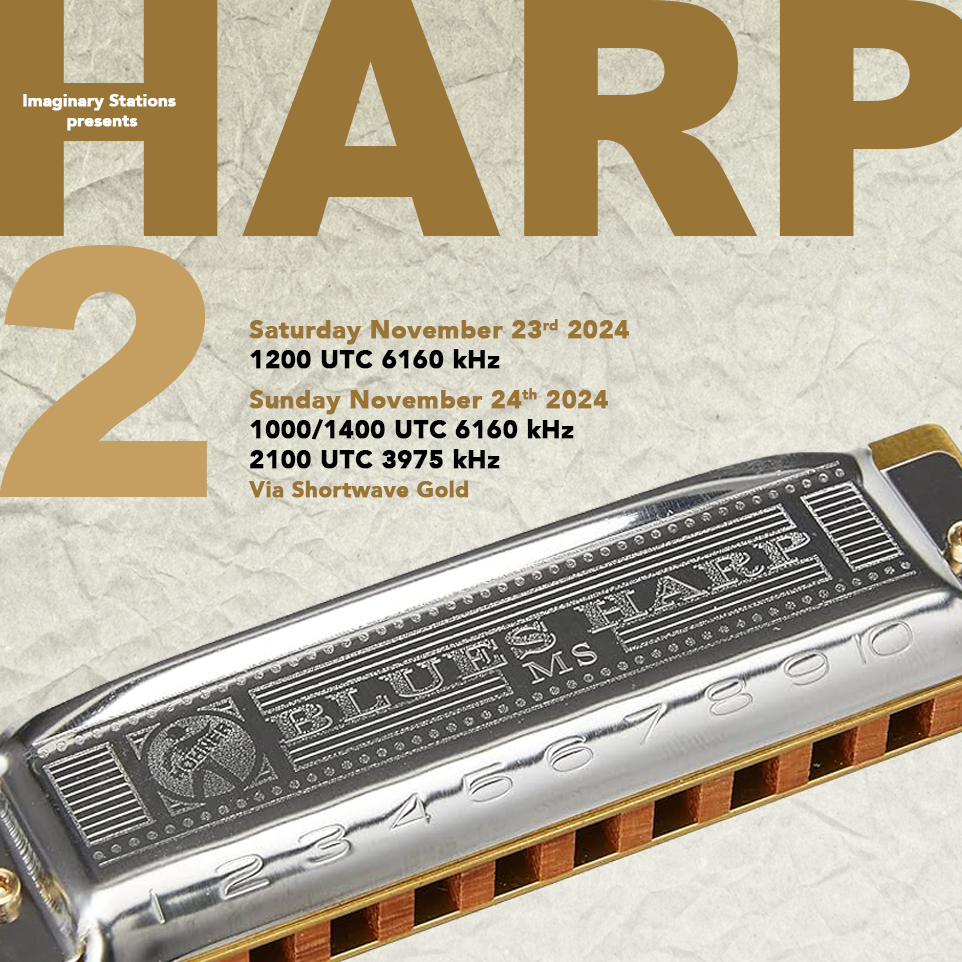
FastRadioBurst 23 here with news of what the Imaginary Stations crew are up to. This Sunday coming on 22nd September 2024 there’s another episode of Skybird Radio International via the services of Shortwave Gold.

The show which features an across the board selection from around this musical globe of ours will be broadcast at 0900/1300 hrs UTC on 6160 kHz and then at 2000 UTC on 6160 kHz and 3975 kHz. Expect all sorts in a international musical mix up including the above musical gem.

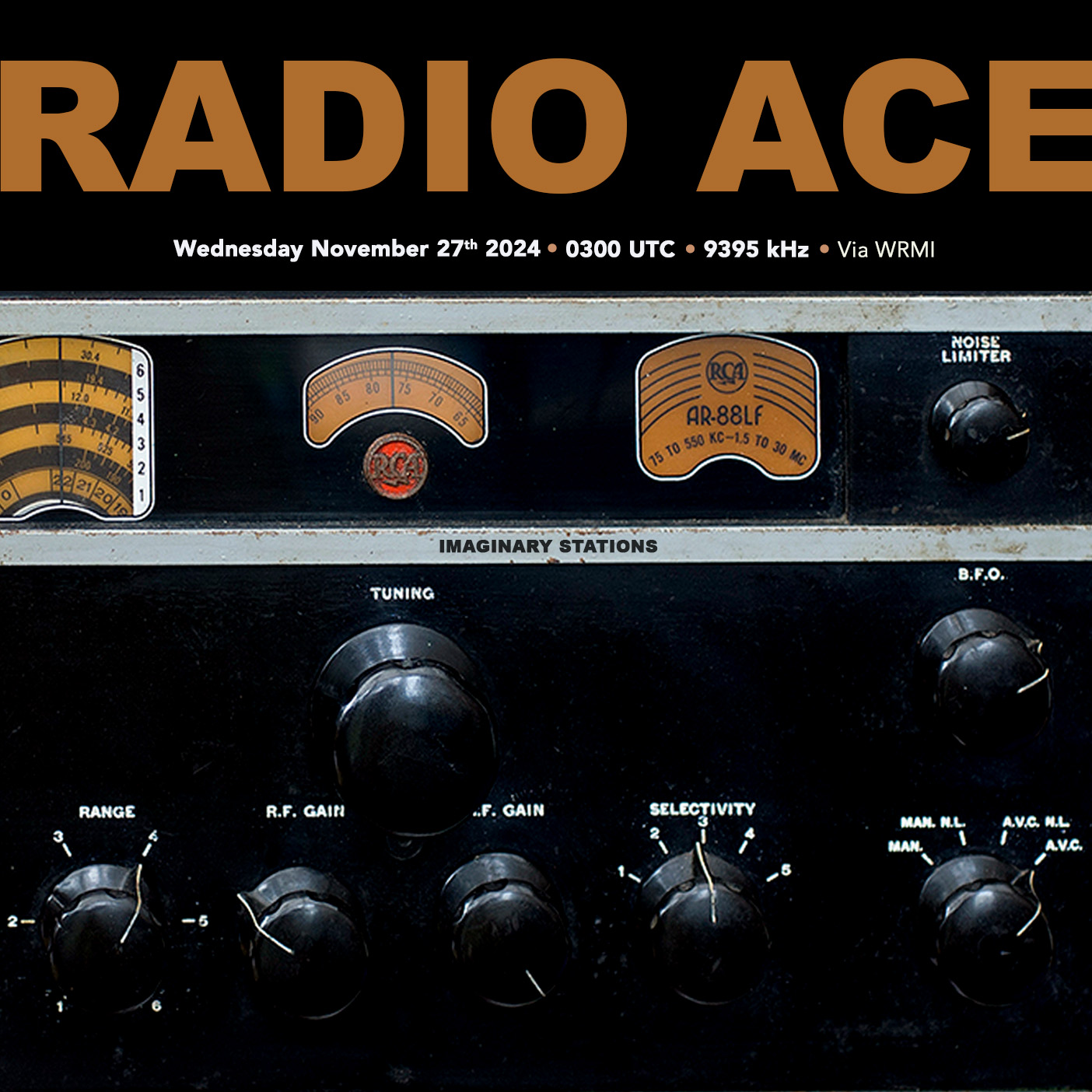
Next Wednesday 25th September 2024 at 0200 UTC on 9395 kHz  via WRMI there’s an episode of Radio Ace. If you love all things radio-related you’ll Radio Ace!

We now have a Patreon page for our regular listeners here. Monthly memberships are available for exclusive audio and zines.

For more information on all our shows, please send  to [email protected] and check out our old shows at our Mixcloud page here.

Carlos’ Shortwave Art and recording of CGTN/China Radio International (September 15, 2024)

Many thanks to SWLing Post contributor and noted political cartoonist, Carlos Latuff, who shares his radio log art of a recent CGTN/CRI broadcast.


Carlos notes:

Part of CGTN Radio news bulletin about typhoon Bebinca approaching China. Listened via shortwave in Rio de Janeiro, Brazil.

Click here to view on YouTube.

Frank shares updates about the SWL Contest 2024 and 2025

Many thanks to SWLing Post contributor, Frank SWL (F14368), who writes:

I’ve written three articles about the next contest project in January 2025, a list of our sponsors for 2024, and a list of listeners who worked this contest 2024. Check them out here:

https://icomjapan.blogspot.com/

Frank also shared the following banner for the 2025 contest:

Carlos’ Shortwave Art and recording of NHK (September 15, 2024)

Many thanks to SWLing Post contributor and noted political cartoonist, Carlos Latuff, who shares his radio log art of a recent NHK broadcast.


Carlos notes:

Sounds like old news…but it’s not!

Part of NHK news bulletin about typhoon nr. 14 approaching Japan. Listened via shortwave in Rio de Janeiro, Brazil.

Click here to view on YouTube.