Category Archives: News

Reminder: The Mighty KBC testing transatlantic signal on 9.4 MHz, October 7, 2012

See if you can catch this test transmission on Sunday, October 7 (oo:00-02:00UTC) from The Mighty KBC in the Netherlands:
(Source: The Mighty KBC)

The Mighty KBC is testing on 9400 kHz on Sunday, October 7th, 2012 between 00.00 – 02.00 UTC with 100kW beamed to the USA, South America and Canada.

Propagation Map (Source: The Mighty KBC)

The Mighty KBC testing transatlantic signal on 9.4 MHz, October 7, 2012

See if you can catch this test transmission on Sunday, October 7 (oo:00-02:00UTC) from The Mighty KBC in the Netherlands:

(Source: The Mighty KBC)

The Mighty KBC is testing on 9400 kHz on Sunday, October 7th, 2012 between 00.00 – 02.00 UTC with 100kW beamed to the USA, South America and Canada.

Propagation Map (Source: The Mighty KBC)

Microtelecom Perseus software updates

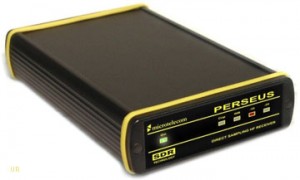
The Microtelecom Perseus SDR

I just received the notification below from Microtelecom. I find it very encouraging that they are still tweaking and working on the Perseus software (which is quite mature at this point). No major upgrades here, but they’re worthy updates.

Note that this is a BETA release for the client and server versions:

(Source: Microtelecom)

A new Perseus release is now in the BETA phase.
Here is the download link:

http://microtelecom.it/perseus/Perseusv40c_beta.zip

There are quite a few changes in both client and server.

Client

-The servers map is no longer integrated in the Perseus software (when clicking on the “Show Map” button, a default browser window will open).

The link between the map and the Perseus software is done by a tool (included in the package) called mttps.exe. During the first run, administrative privileges are required to properly register the MTTP protocol.

-Buttons font rendering was modified to address some users that reported “blocky” or hardly readable labels on some buttons.

-Audio Delay: this new feature inserts a configurable delay in the DSP chain, please refer to the release notes (included in the package) for more information about it.

Server

-Support for the delay feature

-Restarting the server is no longer needed after a DNS change

-Blacklist support: using a text file (as explained in the release notes) it is possible to reject connections from an IP address or family of IP addresses (server software settings has a new section).

Enjoy this new release!
The Microtelecom Development Team

Radio Australia to broadcast coverage of the AFL Grand Final

(Source: Radio Australia via NASWA)

Radio Australia will broadcast coverage of the AFL Grand Final on Saturday 29 September 2012 from 0430-0745 UT. It will be part of our regular Grandstand sports coverage.

The coverage will be available on our HF (shortwave) and local FM relays, but it will not be available on RAs web stream due to content rights limitations.

Our HF coverage will be as follows.

South Pacific – 11945 kHz and 15160 kHz

South-west Pacific – 12080 kHz and 15240 kHz

Papua New Guinea & West Pacific – 9660 kHz and 15415 kHz

South-east Asia – 17750 kHz

Reception may also be possible on 4835 kHz from the ABC domestic HF service at Alice Springs. 4835 kHz would be a good choice for land-mobile operators within 1,500 km of Alice Springs. Reception of 4835 kHz may be possible beyond 1,500 km.

Note: Reception of particular HF channels may be possible beyond the nominal target areas. Please try all frequencies to ascertain if reception is possible in your area.

AFN (AFRTS) drops Key West transmitters

Due to budget cuts, the American Forces Network (AFRTS) has decommissioned their Key West, Florida SW frequencies of: 5446, 7811, 12133 kHz
Since the Navy provides the shortwave service as a supplementary or backup service for their ships that don’t have the Navy’s Direct-to-Sailor (DTS) capability, I’m not terribly surprised they’re downsizing. Even so, the AFN still maintains their Guam and Diego Garcia transmitters as they recognize that the, “[s]hortwave service is also an option for land-based listeners in remote locations that do not have access to local or satellite-delivered AFRTS full Satellite Network (SATNET) services.”

AFN/AFRTS Shortwave Frequencies (note: all broadcasts are in USB)

  • Diego Garcia:
    • 12,579 kHz daytime
    • 4,319 kHz nighttime
  • Guam:
    • 13,362 kHz daytime
    • 5,765 kHz nighttime

Personally, I’m a little saddened by the cuts as the Key West facility was the easiest for me to hear in the US, though I routinely hear Guam and Diego Garcia. Not familiar with the AFRTS?  Check out our recent post.

Thanks to Kim Elliott for the tip.

BBC celebrates 90 years of radio with a global simulcast, you can contribute

(Source: BBC)

The BBC today announced plans for an unprecedented global simulcast across its radio networks – including every UK station (local, network and national) and many World Service outlets – curated by Damon Albarn to mark 90 years of radio.

The simultaneous broadcast, called Radio Reunited, will take place on November 14 at 17:33 GMT – 90 years since the first broadcast from the British Broadcasting Company in 1922 – to a potential global audience of 120 million people across every inhabited continent.

The three-minute transmission will be based on recorded messages from listeners around the world on the theme of the future. Each of an estimated 60 BBC radio stations will choose one message and many of them will then be mixed together and set to a musical score specially composed by the Blur frontman.

It will form the centrepiece of the on-air celebrations to mark 90 years of BBC Radio, which will also feature a wide range of special programming across BBC stations, full details of which will be announced nearer the time.

[…]Damon Albarn said: “I love the idea of stations across Britain and the World Service coming together, with all of our different lives and circumstances, even if it’s only for a few minutes. It’s a powerful idea.”

Radio Reunited is one of the key broadcasts to mark the anniversary. Two of the other major programming projects launched today to celebrate 90 years of BBC radio are:

– The Listeners’ Archive – on October 11 the BBC begins a major initiative to recover the lost gems of the broadcasting archive by calling an ‘amnesty’ on recorded media.  Listeners are asked to scour their lofts, garages and cupboards for tapes, cassettes and other recordings of BBC radio programmes from 1936 to 2000, and hand them in at BBC Centres around the UK on ‘Amnesty Day’. BBC Radio 2, BBC Radio 4, BBC Radio 5live, BBC Local Radio in England and the BBC Nations are all involved. Central to the project will be a series of shows on Radio 2 and 6 Music around the 90th anniversary, where clips of the recovered content – and possibly whole programmes – will be played, and introduced by the person who originally recorded them. [Continue reading…]

The BBC has full details of how you can participate.  I would hope that there are some readers of the SWLing Post who may have recordings to share for The Listener’s Archive. I believe I have some old recordings of the BBC WS on New Year’s Eve 1999–if I can only find them!

Hurricane Isaac: Hear eyewitness weather reports on shortwave

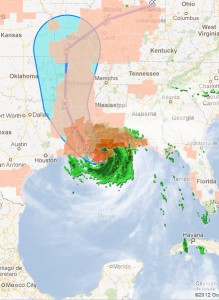
At time of this posting, I’m listening to the Hurricane Watch Net (HWN) on 14,325 kHz.  HWN net control is receiving weather reports as Hurricane Isaac hits Louisiana with 80 mph winds–dumping torrential rain on the area and causing widespread flooding.

Although Isaac is “only” a Category One hurricane, I suspect damage will exceed similar storms from the past, as the flood waters are rapidly rising, already forcing some people into attics and onto rooftops.

Tuning In

If you have a shortwave radio, even a portable, that can tune in SSB (or Single-Side Band), you can listen to or participate in the Hurricane Watch Net.

In a previous post–almost exactly one year ago when Hurricane Irene was threatening islands and States in the Gulf of Mexico–I described how to listen to the HWN.

Below, is a short audio clip of the Hurricane Watch Net this morning, which includes a few reports and a check-in from the National Hurricane Center’s own ham radio station:

(If  you find this kind of thing exciting, or you’re into weather tracking and would like to become more involved in disaster communications, consider becoming a ham radio operator.)