Category Archives: News

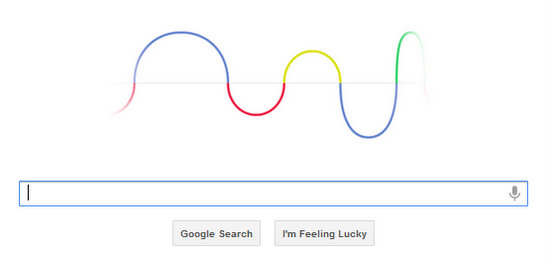
Google Doodle honors Heinrich Hertz’s 155th birthday

If you visit Google’s home page today, you’ll notice that their typical logo has been replaced with an animation of an undulating, multi-colored wave.

If you click on the wave, you’ll be taken to sites telling the story of Heinrich Rudolf Hertz.

We should all take a moment today to thank Hertz for his contribution to the radio spectrum. Indeed, it was Hertz who showed that electricity could be transmitted via electromagnetic waves. This laid the groundwork for developing wireless telegraph and radio. In the 1930’s the International Electrotechnical Commission decided that Hertz’s name would become the unit of frequency for our electromagnetic spectrum–the hertz (Hz)–about four decades after the his death.

To read the story of Hertz, I would suggest browsing his Wikipedia entry.

If you missed seeing the Google Doodle animation, check out the video below:

This isn’t the first time Google has honored an influential innovator in our radio world, a few years ago we posted their Google Doodle tribute to Samuel Morse.

RNW: Antenna repairs under way in Madagascar

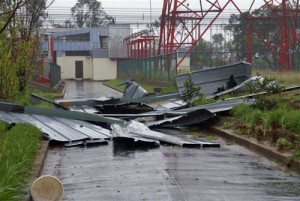
(photo: RNW)

RNW Madagascar was hit by a tropical cyclone last week and incurred heavy damage. I’m very happy to read the report below that antenna repairs are under way:

(Source: RNW Media Network)

We have received some more photos from our colleagues in Madagascar, showing the damage to the antennas caused last week by Tropical Cyclone Giovanna, and repairs under way. The first photo shows the satellite dish that was used to receive BVN TV and the RNW audio channels from the satellite. The broken dish has been replaced by a backup. Damage to several of the antennas was similar to the one in the second photo. One has already been repaired. The third photo shows some repairs taking place on the ground to the feeder of the log periodic antenna.

As BBC World Service moves from Bush House, they open doors

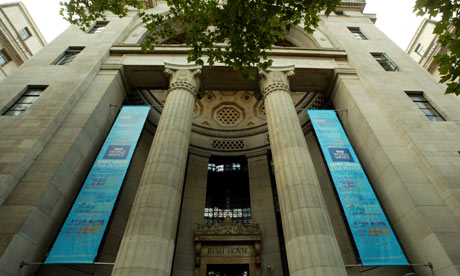
BBC World Service - Bush House

BBC World Service opens doors to celebrate 80th birthday

(Source: BBC Press Office)

Global audience gets unique behind the scenes access as move from iconic London home begins.

Audiences are to be given unprecedented behind the scenes access as part of a special day of live programming on February 29, to mark the BBC World Service’s 80th birthday.

Highlights from the day will include a special global audience with Sir David Attenborough and The Strand – the WS global arts programme – will be edited by guest artist and music producer William Orbit.

Audiences will be able to join a special debate about what they want from the World Service, both on air, online and across social media forums. (#bbcws80)

The day will give audiences around the world a unique insight into production of their favourite programmes and multilingual videos will be produced of all the broadcasts throughout the day online at bbc.co.uk/worldservice.

For the first time audiences will be invited to watch and participate in over 12 hours of programmes in English and across more than 12 different languages. The day will be hosted by BBC Persian’s Pooneh Ghoddoosi and BBC World Service presenter Ros Atkins.

BBC World Service’s daily morning editorial meeting, which normally takes place behind the doors of Bush House, will be opened up and broadcast live for the first time. In this meeting – a daily part of life in the building – the newsroom’s editors discuss and agree the big stories and developments and decide on which stories will shape the day’s news agenda.

The open courtyard of Bush House will host many of the programmes that day. Flagship programmes such as Newshour and World Have Your Say will invite audiences to join a conversation about international broadcasting and the future priorities of the BBC World Service.

Listeners around the world – and the audience at Bush House – will have the chance to shape the news agenda and debate by making suggestions from the floor, or through Twitter, Facebook and Skype.

Peter Horrocks, Director of BBC Global News, said: “The 80th birthday and departure from Bush House means these are historic and changing times for the BBC World Service. We want our audiences to be at the heart of both the commemoration of the past and conversation about the future.”

BBC World Service Commissioning Editor, Steve Titherington, said: “We are turning Bush House inside out showing who we are and what we do to our audiences and asking what the world wants next from the BBC World Service.”

On February 29, BBC World Service is also launching a new series of programmes on the human body. Linked to the Olympics, The Human Race will invite the public to take part in a ‘healthcheck special’ featuring leading international scientists and sportspeople.

Not only celebrating 80 years of broadcasting, this special day of programming marks the start of the BBC World Service’s move from Bush House, its iconic London home for over 70 years, to a new state of the art broadcasting centre in Oxford Circus.

The move will see all of the BBC’s news services – UK and international – based together for the first time. The aim is to create ‘the world’s newsroom’ – enhancing the BBC’s global newsgathering and creating a forum for the best journalism in the world.

Programming

BBC World Service English – much of the day’s global schedule from 07:00 to 23:00 GMT will broadcast live from outside Bush House. Programming highlights from this day include:

09:00 – The live news meeting – normally conducted behind closed doors, audiences will for the first time be given insight into the inner workings of the newsroom.

11:00 – World Have Your Say – the global interactive news discussion programme will ask audiences around the world what they want the programme to be about on that day.

15:00 – A live global audience with Sir David Attenborough.

17:00 – World Business Report and Focus on Africa will link up to broadcast a special programme asking how business journalism is reporting the financial crisis with Alistair Darling on the panel, and looking at the creative energy and entrepreneurship coming out of Africa.

19:00 Health Check – will air a special programme to launch The Human Race Season – a raft of programmes examining the human body. Endurance runners and sprinters, sports psychologists, doctors and coaches will all be in the courtyard to try to answer ‘What makes an Olympic athelete?’

20:00 – 22:00 – Newshour, BBC World Services flagship current affairs show, will broadcast a special debate looking at the future of international broadcasting.

22:00 – 23:00 – The Strand Extra – BBC World Service’s global arts show, will be edited by special guest artist and music producer William Orbit.

Could the DR111 DRM Radio be the portable we’ve been waiting for?

The DR111 DRM Radio (Photo: Chengdu NewStar Electronics)

One of the reasons DRM (Digital Radio Mondial) has struggled to gain global popularity is that there has yet to be a portable radio solution with universal appeal.

Perhaps the future Chengdu NewStar Electronics DR111 DRM Radio will change that? According to their website, the company is certainly setting out to make an affordable receiver that is simple to operate. Hopefully, CDNSE has learned from this radio’s predecessor; ergonomics, affordability and overall ability to receive and decode DRM signals are the keys to its success.

We have added the DR111 to our Shortwave Radio Index. Check back as we will post updates.

Today is World Radio Day: Support a Cause via Shortwave Radio

Shortwave Radio Listeners may occasionally feel that their hobby is a passive one–one of simply listening. I’m here to tell you that it is not.

SWLers are among the more enlightened of media hobbyists, and here’s why: 1) they tend to be intensely curious about the world, 2) they tend to cultivate a nostalgic appreciation of the past, of the world’s history and what it teaches, and 3) as a result, they understand the power that radio still holds for much of our world today, especially those the not-so-world-wide internet has forgotten or overlooked, and those that political strife oppresses.

This World Radio Day, you can change that false label of “passive” to active, and create change by contributing to a charity near and dear to my heart–Ears To Our World (ETOW).

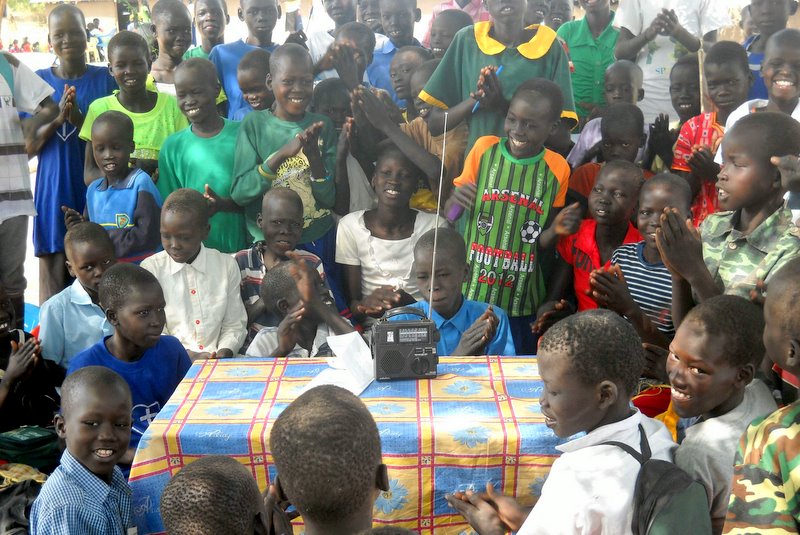
ETOW is a shortwave radio charity that sends self-powered shortwave radios to schools and communities in third world countries.  This is because ETOW believes that access to information is access to education.

In other words, every day is World Radio Day at ETOW.

Children in South Sudan listening to music on their self-powered shortwave radio supplied by Ears To Our World.

Click here to donate to Ears To Our World, and make World Radio Day a lasting reality for needy schools throughout our world.

Happy World Radio Day!  To quote ETOW’s tagline:  Listen and learn.

More power to you, SWLers.

The Guardian on World Radio Day: celebrating an unsung hero

(Source: The Guardian)

Radio is the predominant source of information in areas of the world that are sometimes too remote to get a newspaper delivered, let alone access the internet. This is why Unesco has noted that radio is a “low-cost medium, specifically suited to reach remote communities and vulnerable people”.

Attention given to technology for information communications has recently been captivated by web-based applications, especially “new” or “social media”. But about 65% of the world’s 7 billion people do not use the internet. In addition to those who are offline due to lack of access, there are also those who are unaware, unable or simply do not want to use social media.

People listen to the radio in their cars, on the move and at work. Radios don’t require large amounts of electricity, and wind-up radios don’t need an electrical source at all. Moreover, radio reaches large groups of people, being easily shared among families or listener groups. It is a medium often used as a focal point for community discussion on subjects including politics, elections and service provision. Radio efficiently reaches large audiences in real time. [continue reading…]

This will be filed under our ever-growing category, “Why Radio?

Read the full article at The Guardian.

New shortwave radio station, Madagascar World Voice Radio, to begin testing this year

An update on the Madagascar World Voice Radio station via Glenn Hauser and the DX Listening Digest:

(Source: DX Listening Digest)

Gayle Crowe, the VP of Programming, World Christian Broadcasting [see our previous post] via DX Listening Digest: “The transmitters are sitting on the dock in Houston awaiting the ship that will take them to the west side of Madagascar. Best estimates are that the trip will take between 60 and 90 days. Once they make it through customs (which sometimes has been a lengthy, uncertain process) and are in place at the station, a technician will have to come from Continental Electronics to install them. Best case scenario for the beginning of testing is probably June 1.”

(Source: FinnDXer)

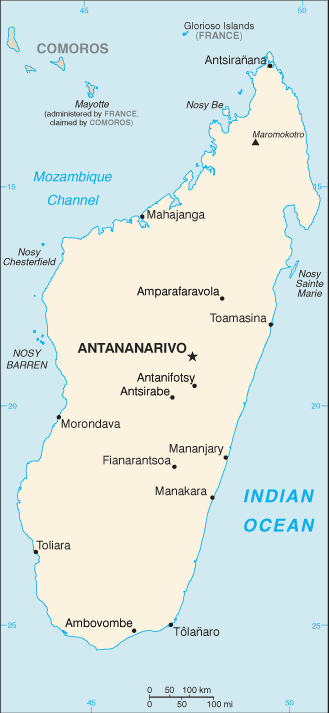
A new short wave radio wills start this spring or next summer in the Indian Ocean, “Madagascar World Voice Radio” broadcasting from Mahajanga on seven frequencies:
7355, 9565, 9585, 11870, 13630, 13635 and 13650 kHz.
Madagascar World Voice (MWV) is a member of World Christian Broadcasting Corporation (WCBC) in Nashville Tennessee (USA).

TEST SCHEDULE FREQUENCIES 2012
06H00-06H30 UT 7355
06H30-07H00 UT 9565
07H00-07H30 UT 11870
07H30-08H00 UT 13635
08H00-08H30 UT 9565
08H30-09H00 UT 11870
09H00-09H30 UT 13630
10H30-11H00 UT 9585
11H00-11H30 UT 11870
11H30-12H00 UT 13650
(Bernard Grondin via dxld)