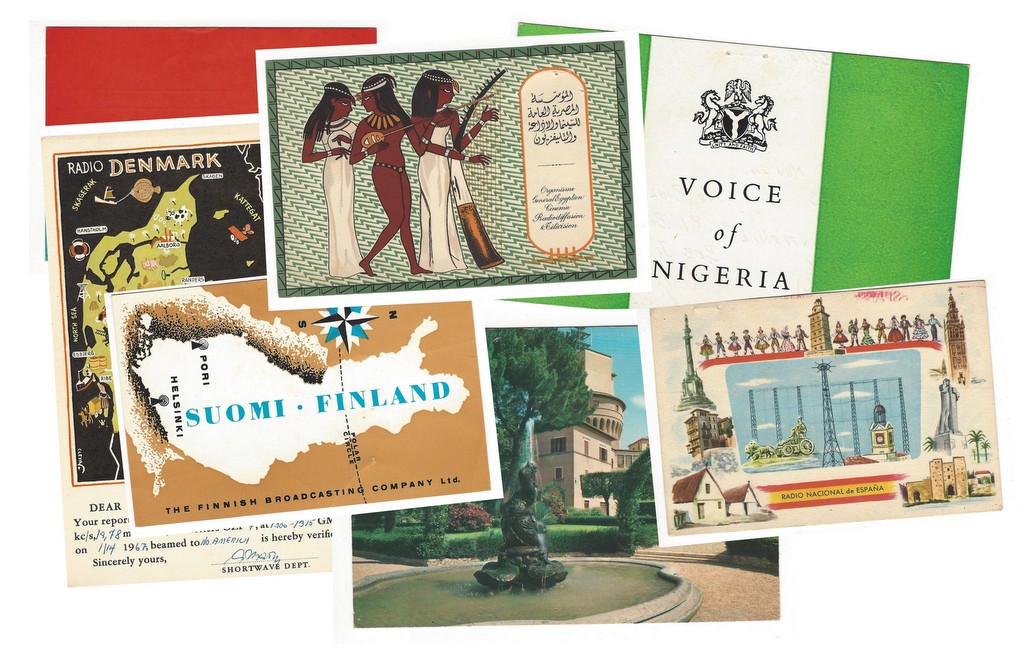
 Many thanks to SWLing Post contributor, Paul Walker, who shares a link to the following site curated by Bill McDavitt (KG4RRT) which is chock-full of QSL cards from across the globe.
Thanks for the tip, Paul!

Many thanks to SWLing Post contributor, Paul Walker, who shares a link to the following site curated by Bill McDavitt (KG4RRT) which is chock-full of QSL cards from across the globe.
Thanks for the tip, Paul!
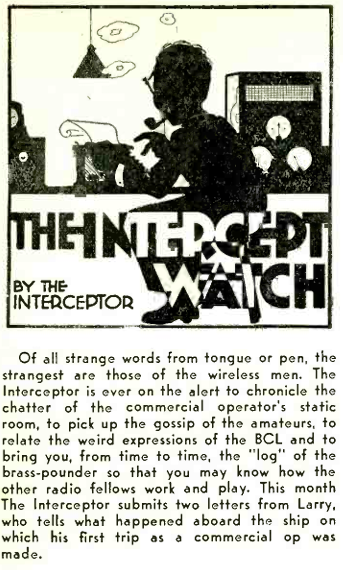 Many thanks to SWLing Post contributor, Bill Meara who writes:
Thomas: I found this in an old radio magazine. SWLPost is on The Intercept Watch!
Radio. July 1934
https://www.worldradiohistory.com/Archive-Radio/30s/Radio-1934-07.pdf
73 Bill
How cool! Thank you for sharing, Bill!
Many thanks to SWLing Post contributor, Don Moore–noted author, traveler, and DXer–for the latest installment of his Photo Album guest post series:
by Don Moore
It’s been three months since the last time I put together one of these pieces because I was busy finishing my book, Tales of a Vagabond DXer [Note: SWLing Post Amazon affiliate link]. You may have seen the announcement about it here a few weeks ago. This series should appear more regularly in 2024 as I plan to concentrate on small writing projects for a while!
Back in August, we looked at five Costa Rican shortwave stations that I visited in 1990. This time I’m going to feature just one station, but a station with a very interesting story. My book has an updated and rewritten version of the article I wrote about it for Monitoring Times magazine in the early 1990s. But the book doesn’t have many photos as adding those significantly increases the price. So, here are the pictures and a little bit about the station.
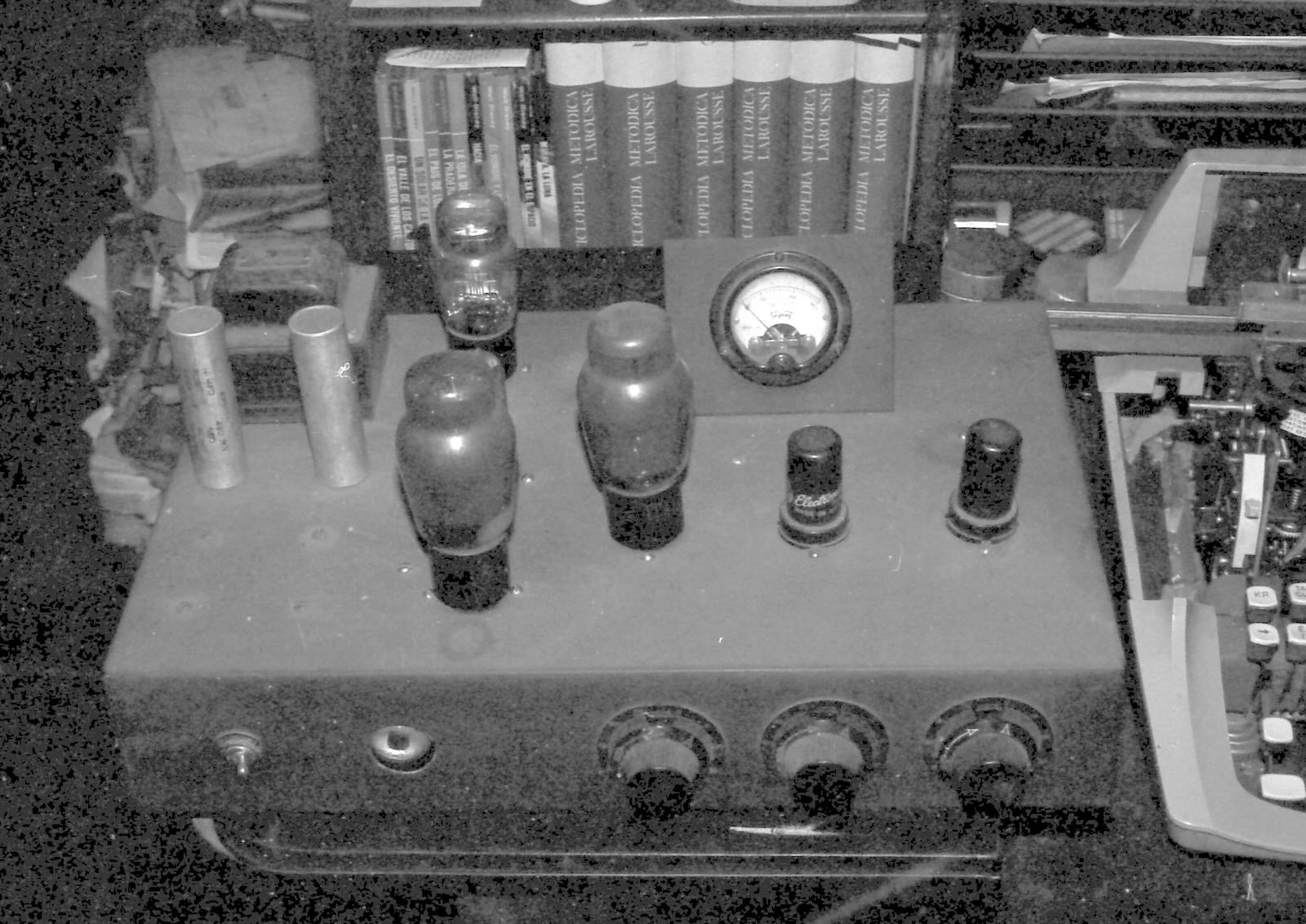
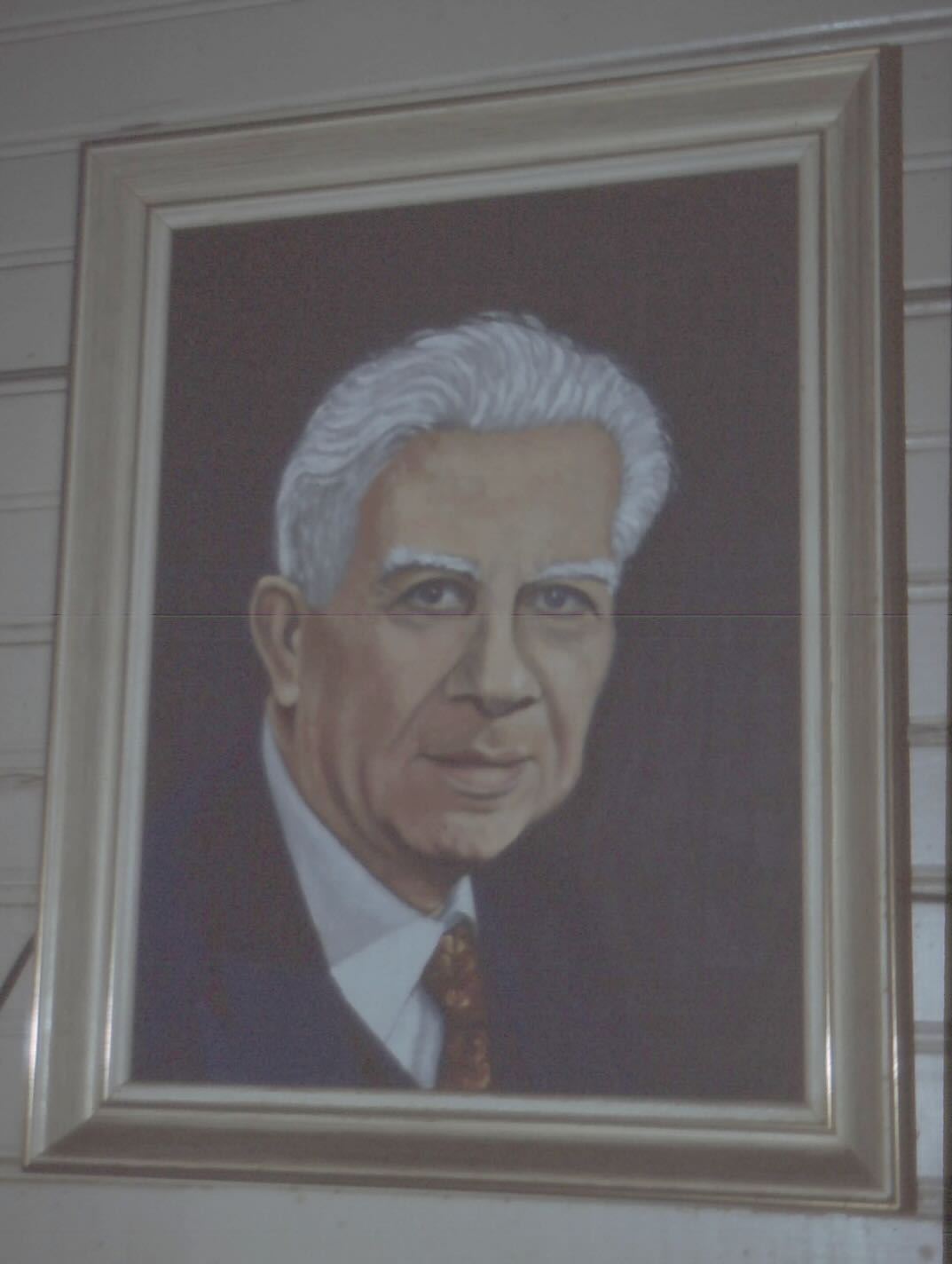
This seven-and-a-half-watt transmitter was the first transmitter for TI4NRH, the first shortwave broadcast station in Latin America. It was built by Amando Céspedes Marín in Heredia, Costa Rica in 1928. Don Amando operated a small medium wave station and hoped that by using shortwave he could reach listeners in all of Costa Rica. Instead, he gained an audience all around the world. His little TI4NRH became one of the most popular radio stations for shortwave listeners throughout the 1930s until he shut it down at the beginning of World War Two. This portrait of Don Amando was made around that time.
I remembered reading about TI4NRH in an old-timer’s article, so while I was in Costa Rica I went to Heredia hoping to find someone who could tell me where the station had operated from. I wanted to get a picture of the building. Instead, I found that everything was still there in the dimly lit backroom of the family house. (The pictures are grainy as the room was very dark.) Don Amando had passed away in 1976 but his never-married daughter, Lydylia, still lived there and treated the room as a shrine to her departed father.
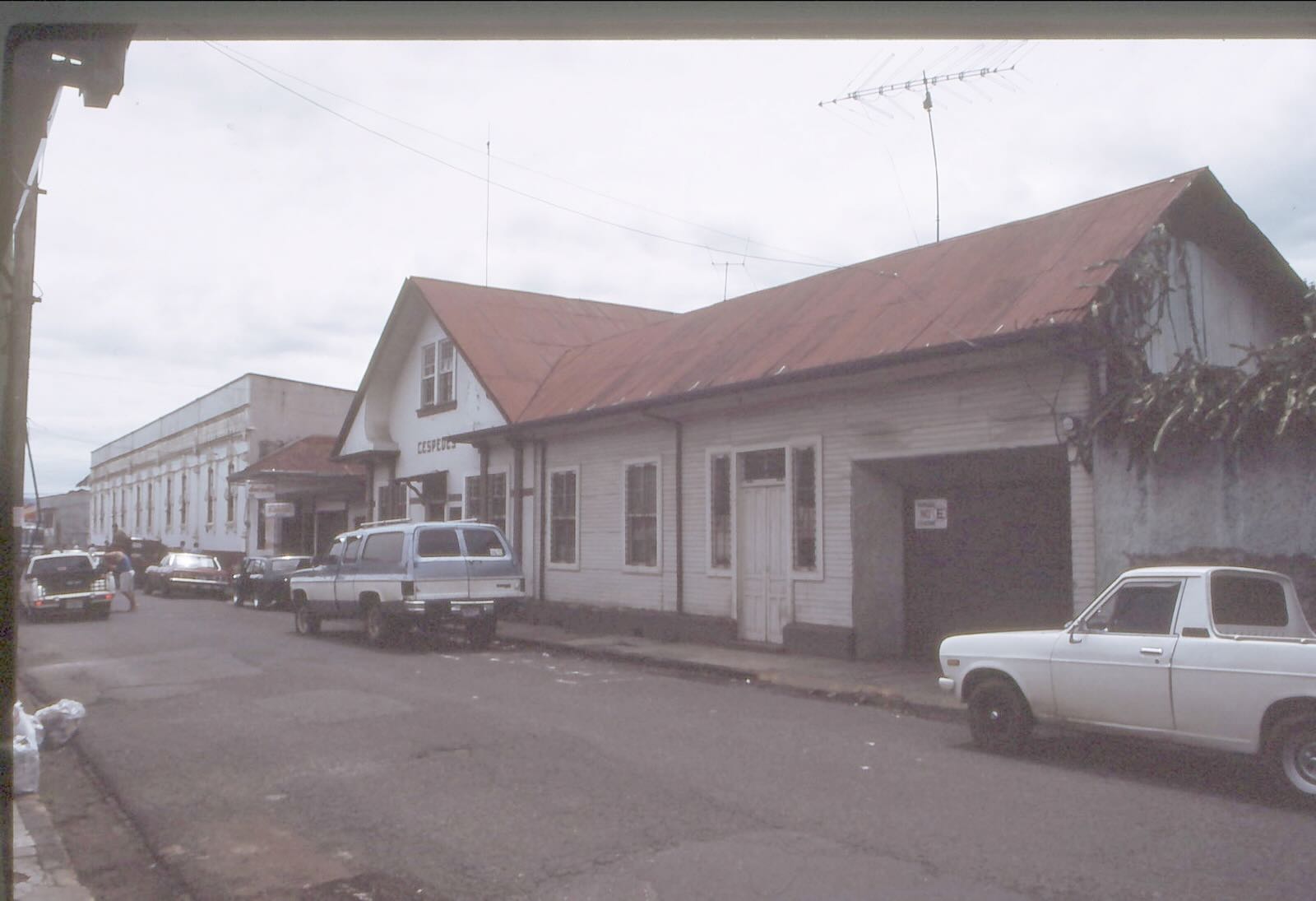
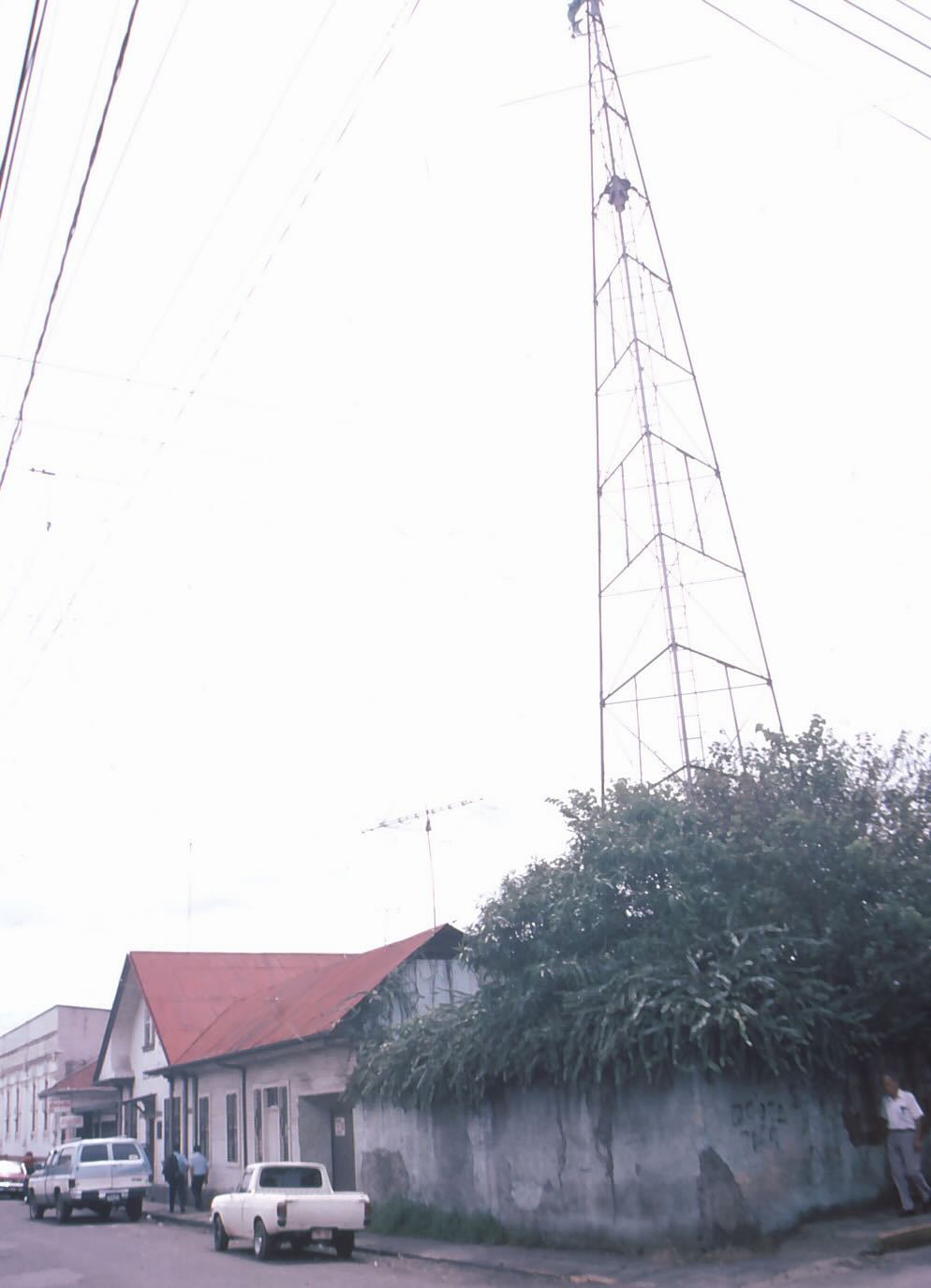
The Céspedes family house was on a side street a few blocks south of the main plaza in Heredia. The radio station was located in the middle section, behind the white door.
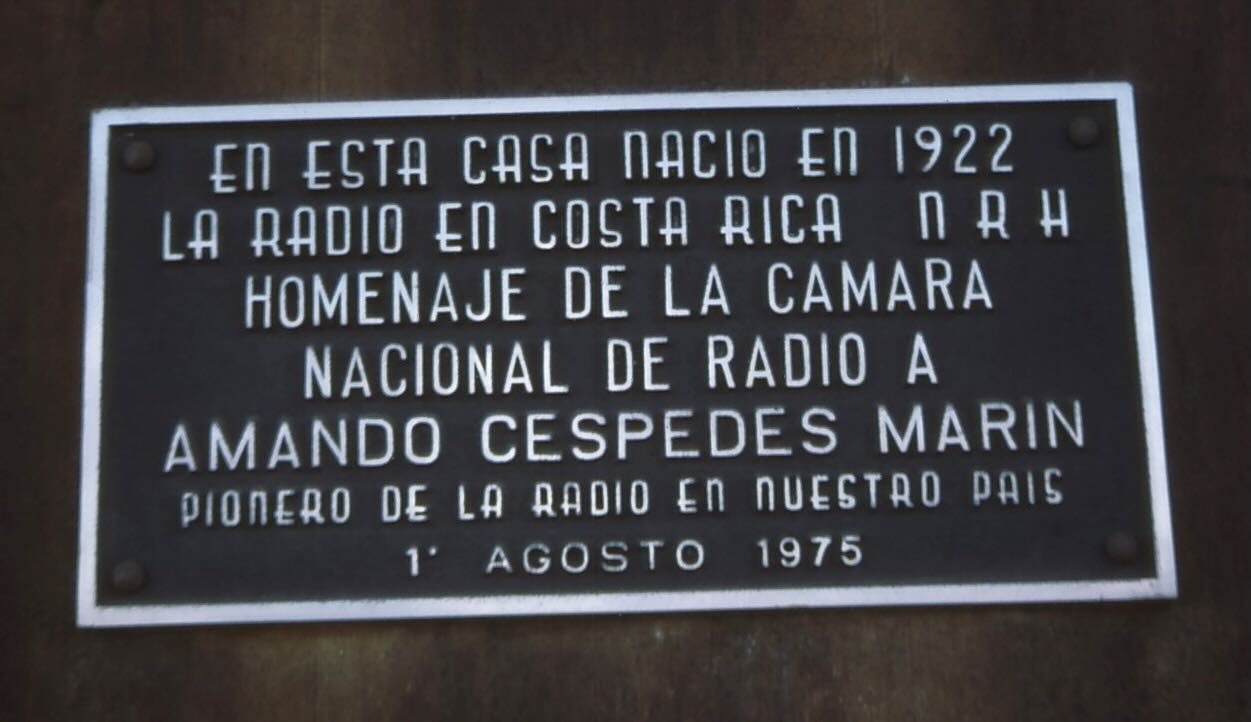
Plaque on the front door commemorating the building as the birthplace of radio in Costa Rica.
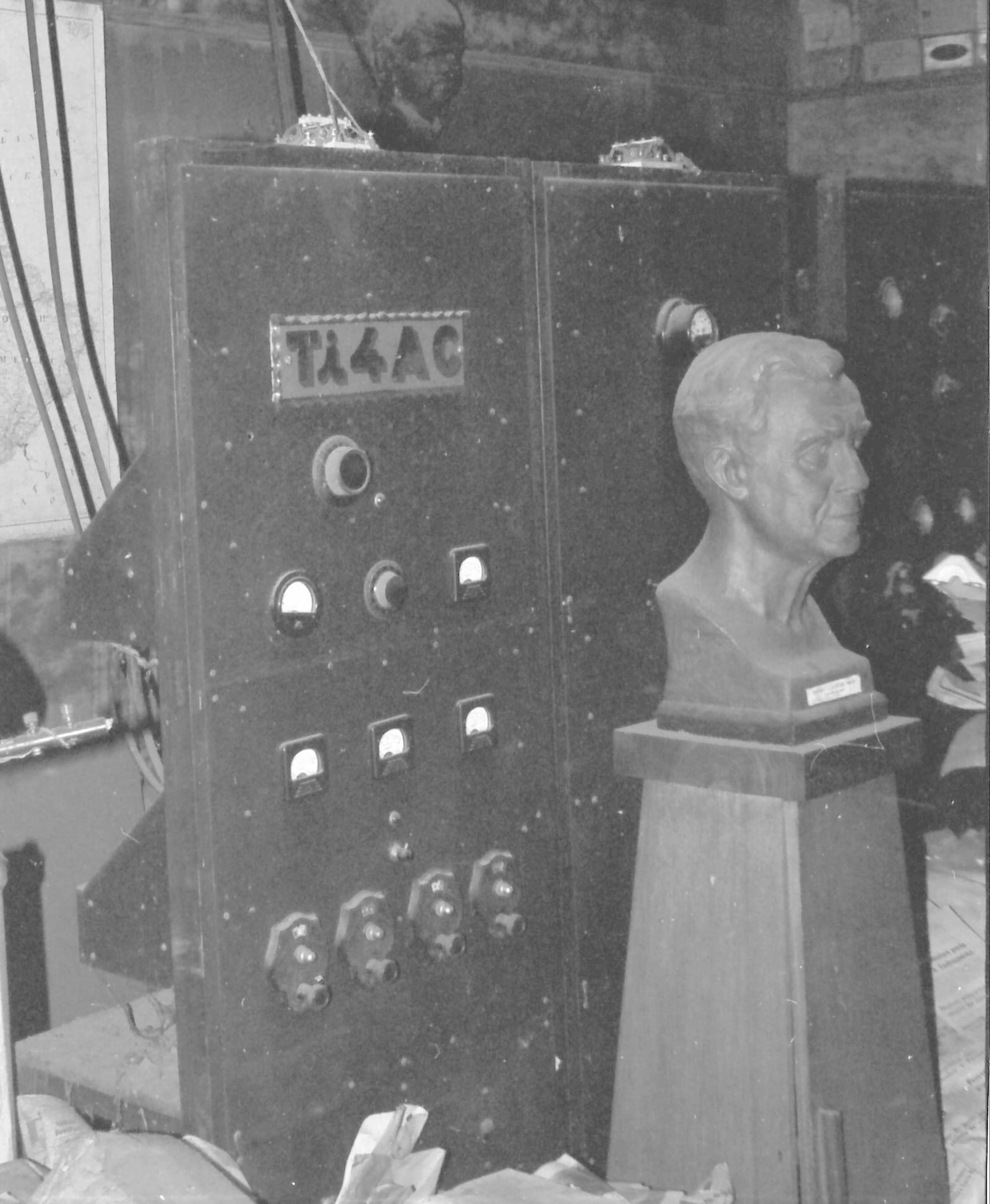
Financial support from listeners helped TI4NRH buy new transmitters and raise power. This 300-watt transmitter was the last one used.
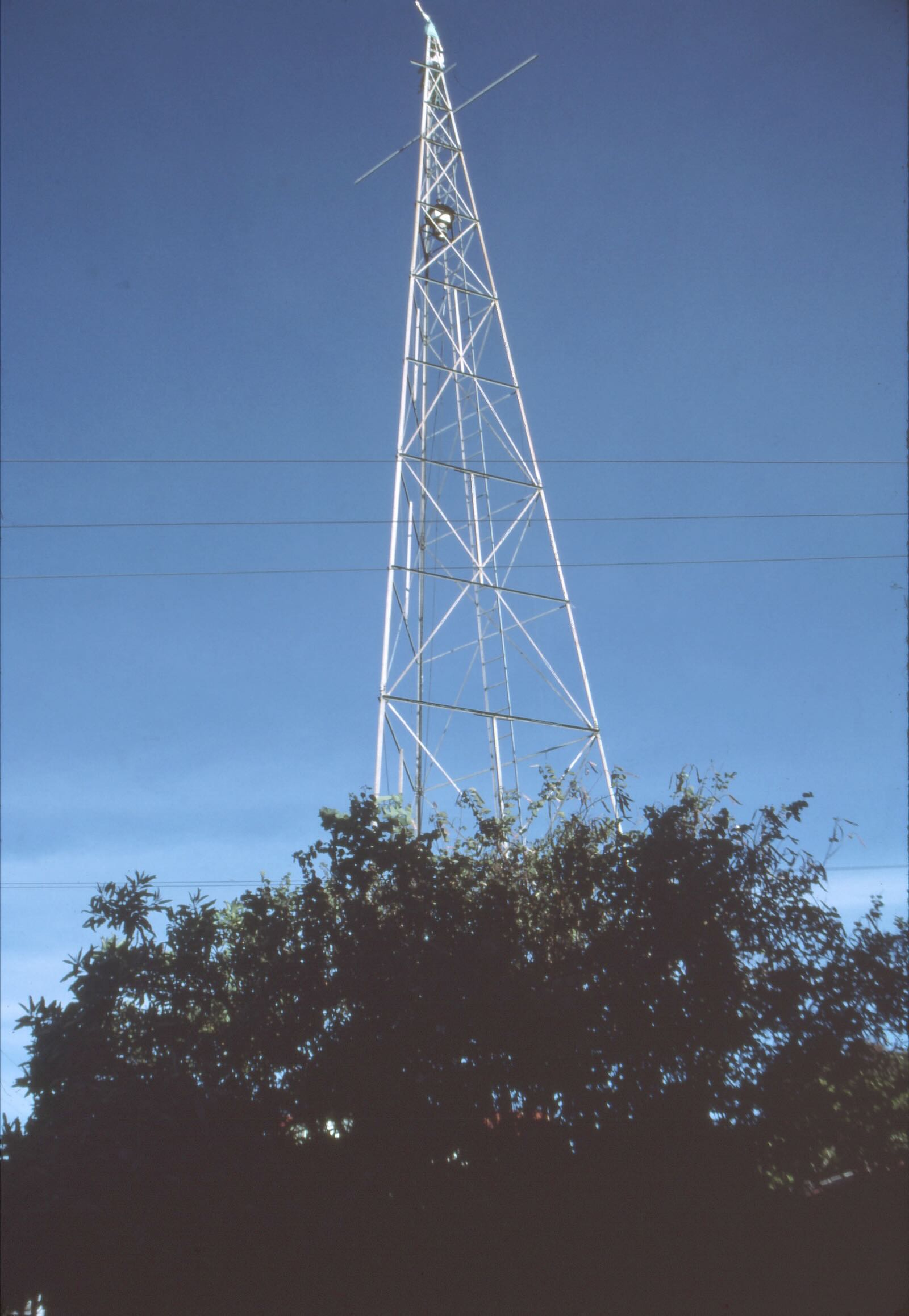
Radio amateurs in the USA and Canada raised money to buy and ship this antenna tower to TI4NRH in the late 1930s.
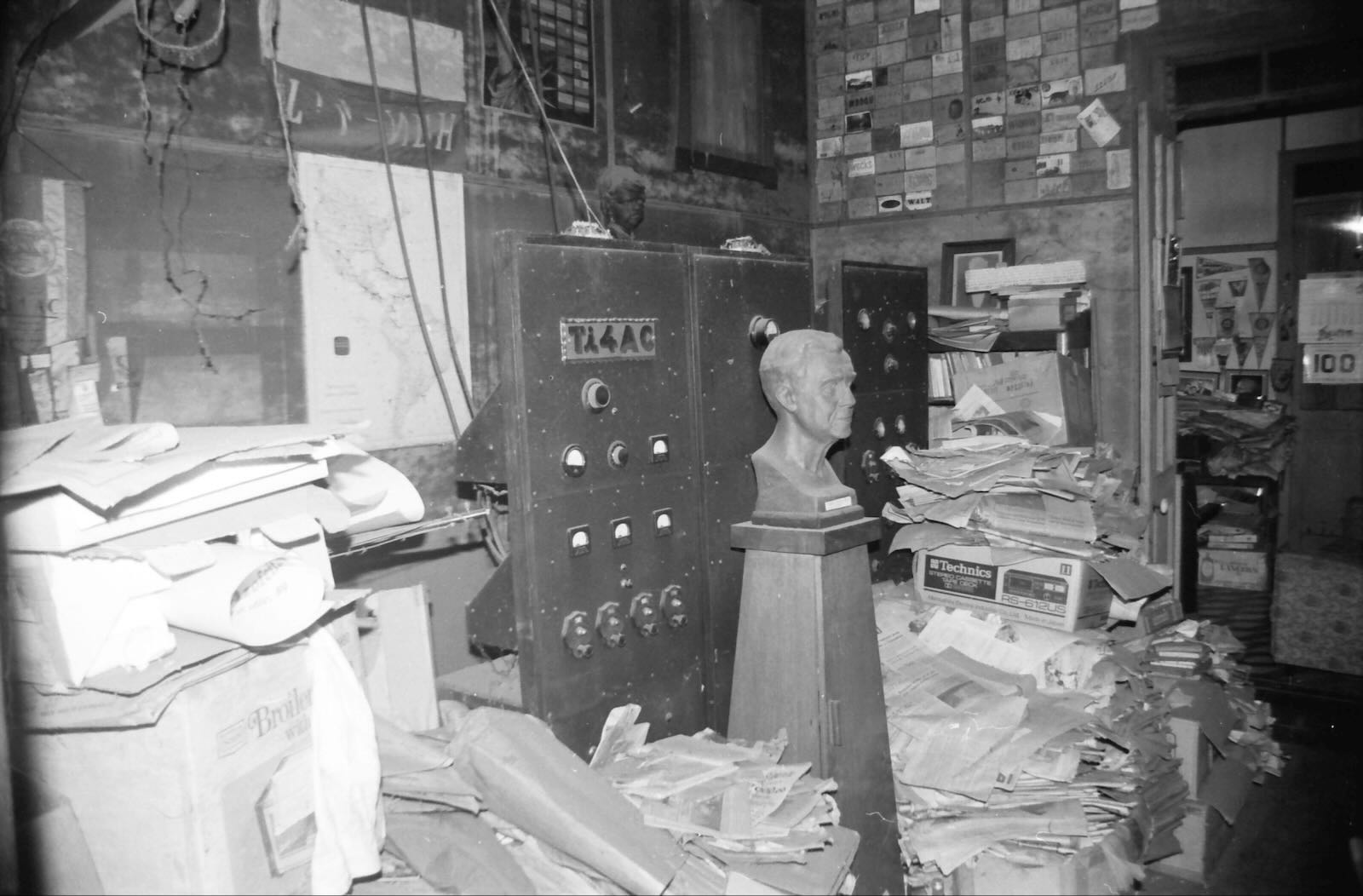
Nothing was removed after the station closed down but the space became a storage room for the family. This is how it looked in June 1990.
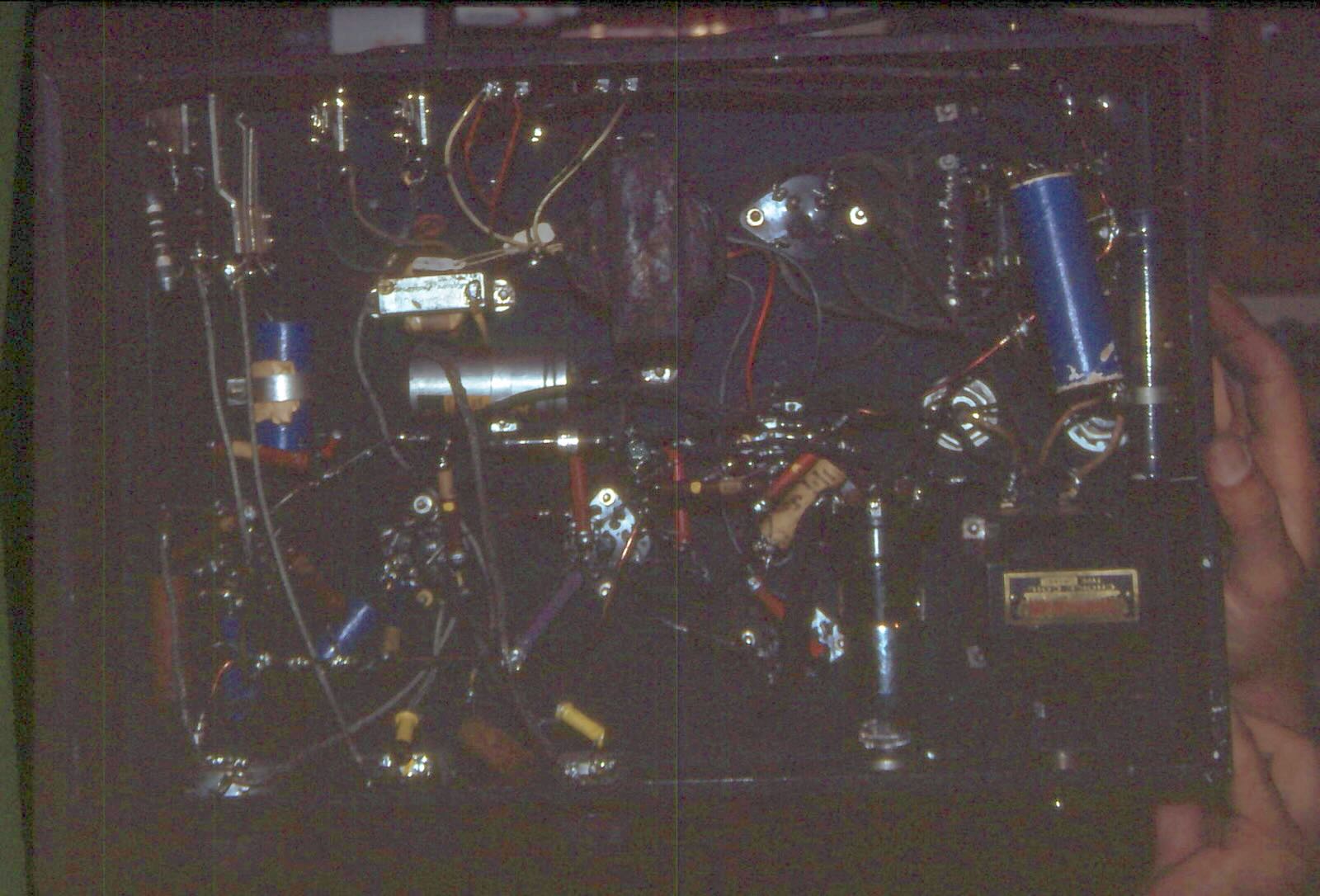
The bottom of that original 7 ½ watt transmitter. Unfortunately, the photo came out very dark in the dimly lit room.
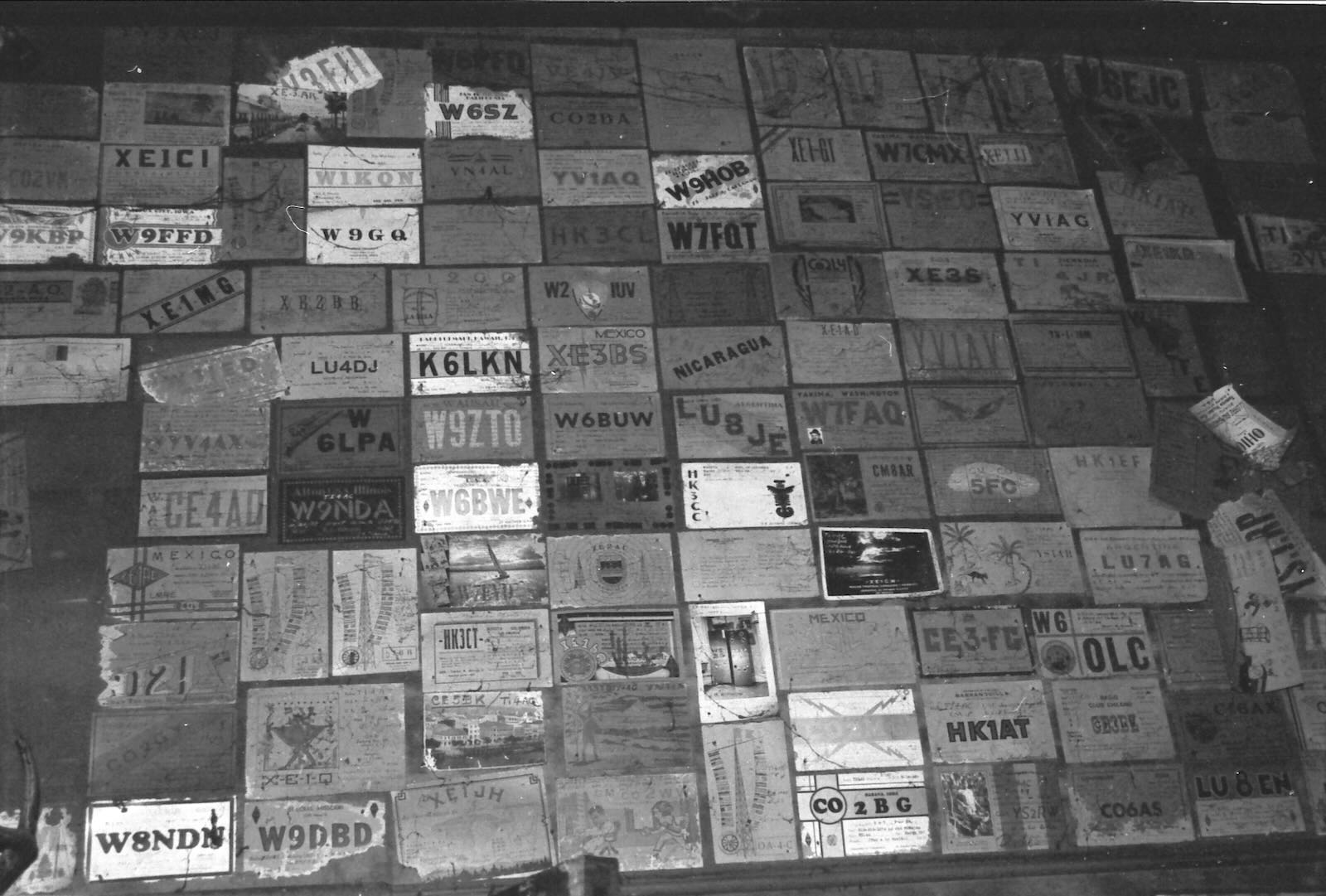
The walls were covered with yellowing 1930s amateur radio QSL cards.
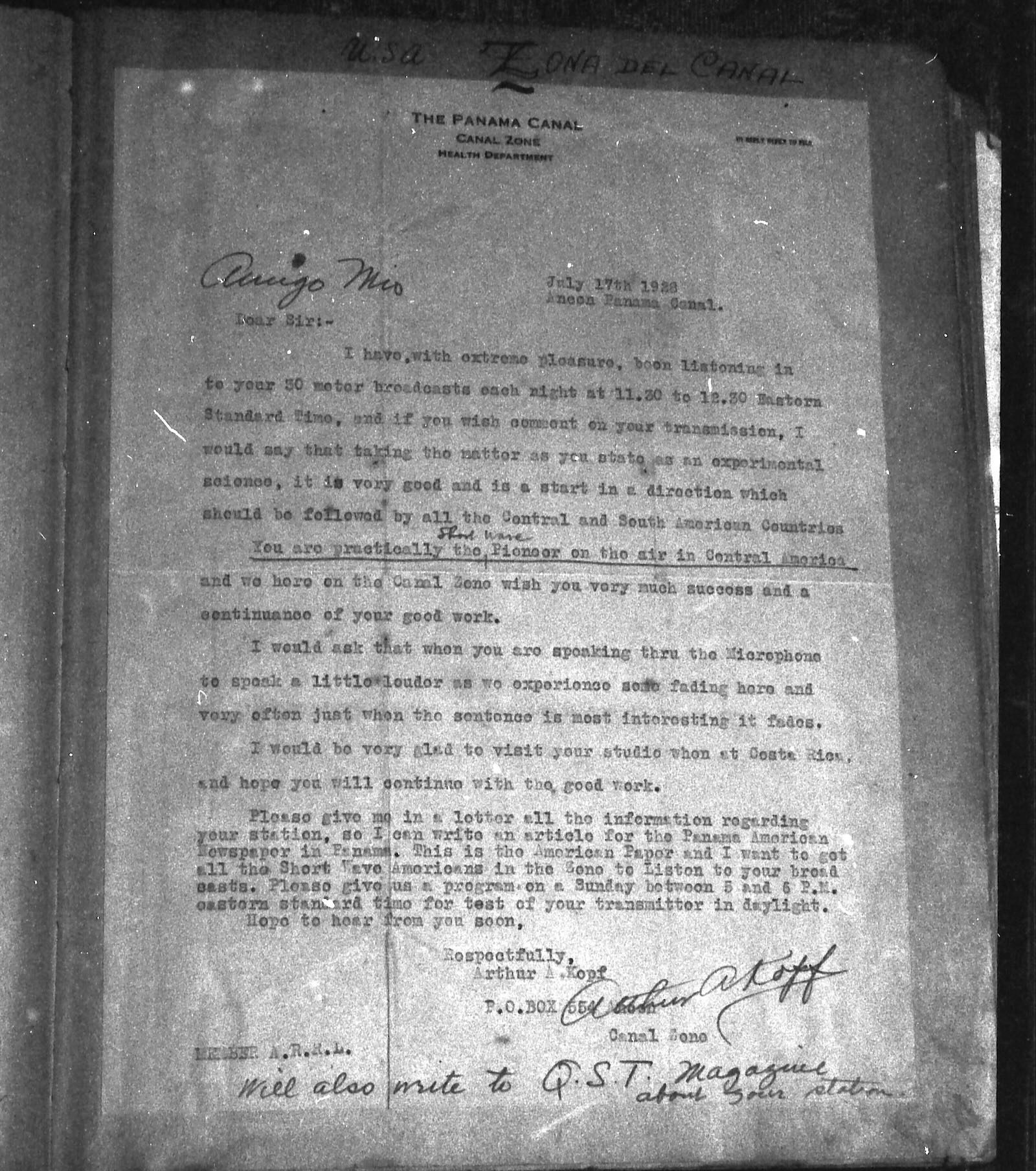
This letter written by Arthur Kopf, an American working in the Panama Canal Zone, was the first report received by TI4NRH. That made it the first reception report ever written to a Latin American shortwave broadcast station.
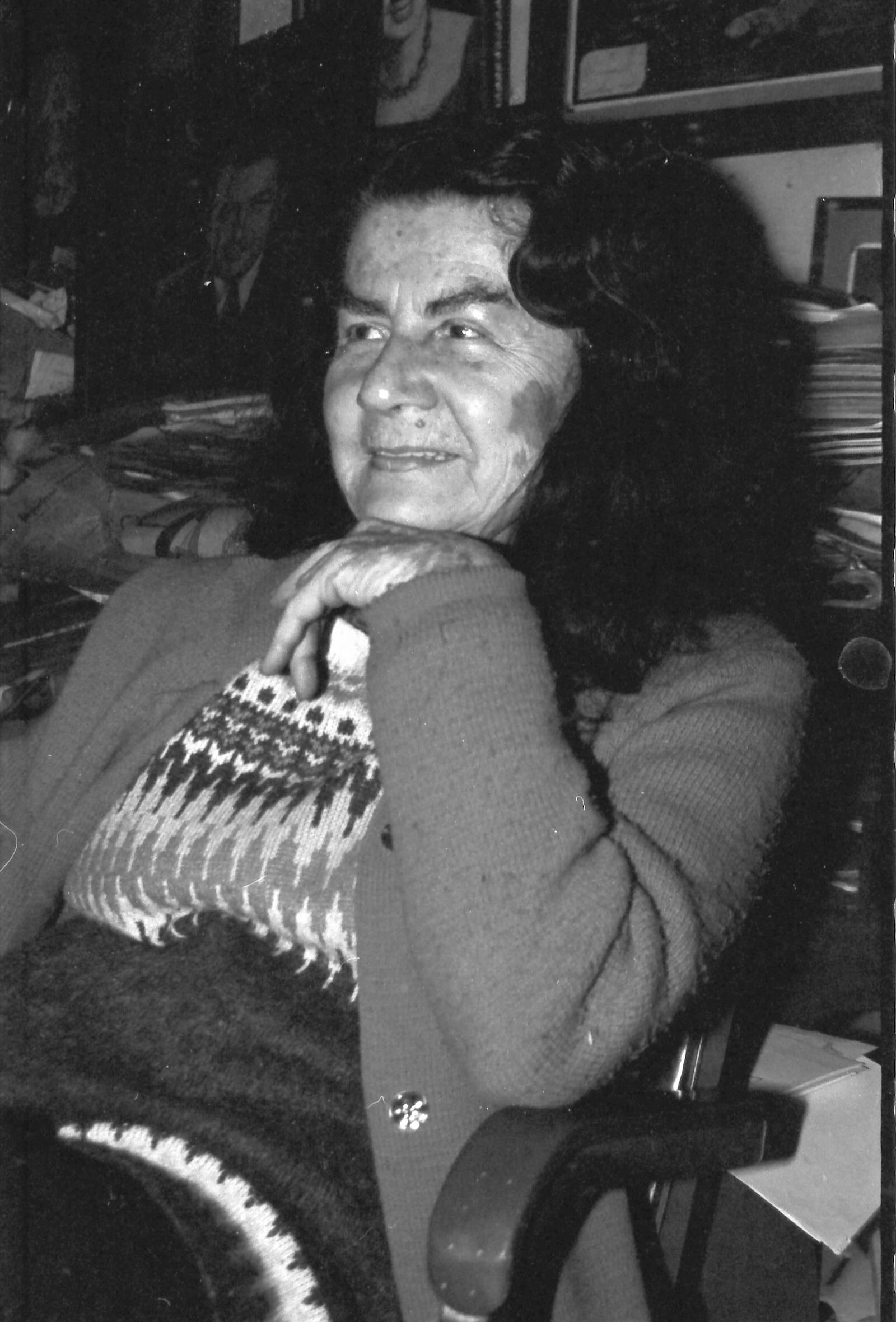
Don Amando’s daughter Lydylia was the guardian of her father’s legacy.
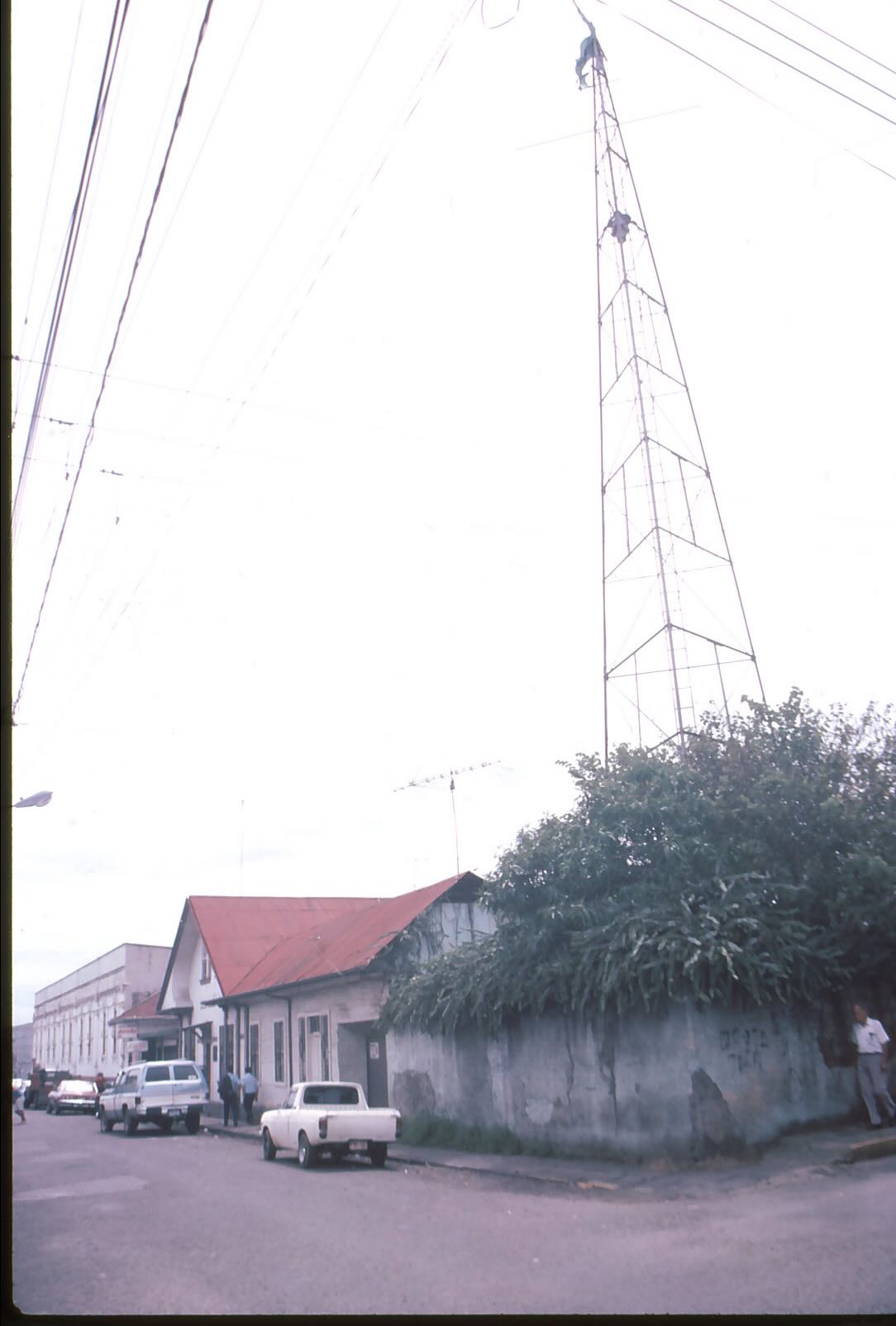
A view showing the house and neighboring antenna tower.
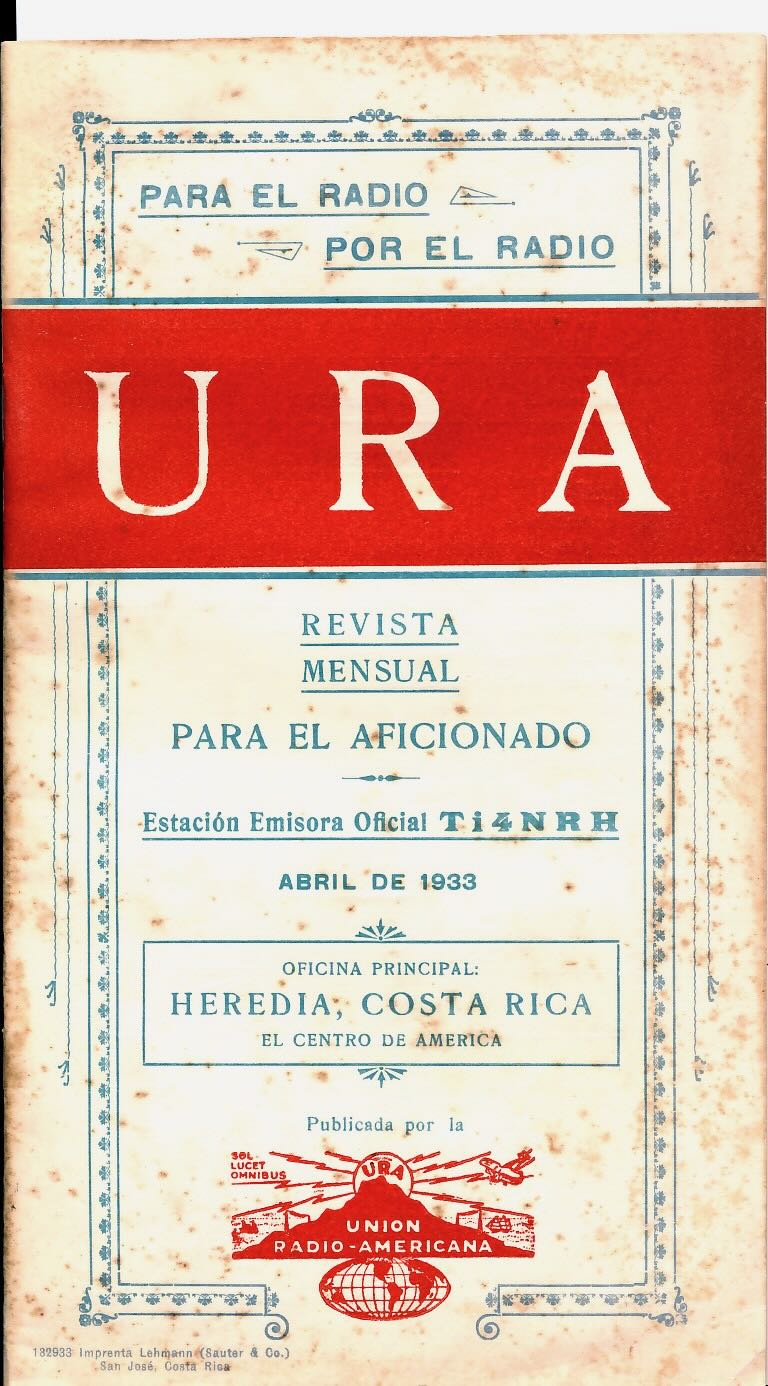
TI4NRH was only a hobby for Don Amando. He made a living by operating a print shop and photography studio. With financial support from the Zenith Corporation, he published a monthly radio magazine (primarily in Spanish) for several years in the 1930s.
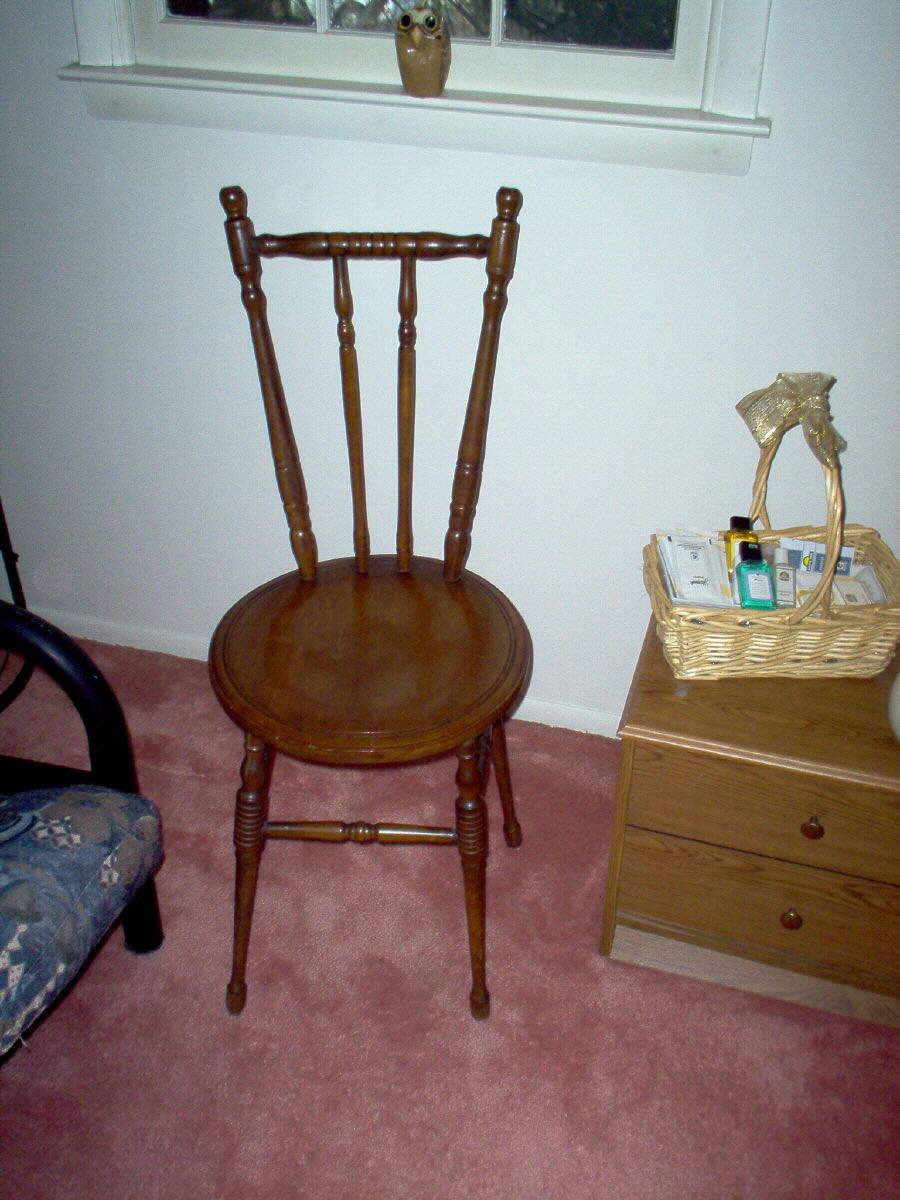
In 1928, Philadelphia DXer Charles Schroeder became the first North American DXer to log a Latin American SWBC station when he heard TI4NRH. He not only got a QSL for his reception, TI4NRH sent him a beautiful chair made out of Costa Rican tropical hard woods. The chair was sent in pieces with instructions for assembly and arrived in just twelve days. Mr. Schroeder passed away in 1956, but in 2005 I heard from Schroeder’s daughter, who still had the chair. She sent these photos.
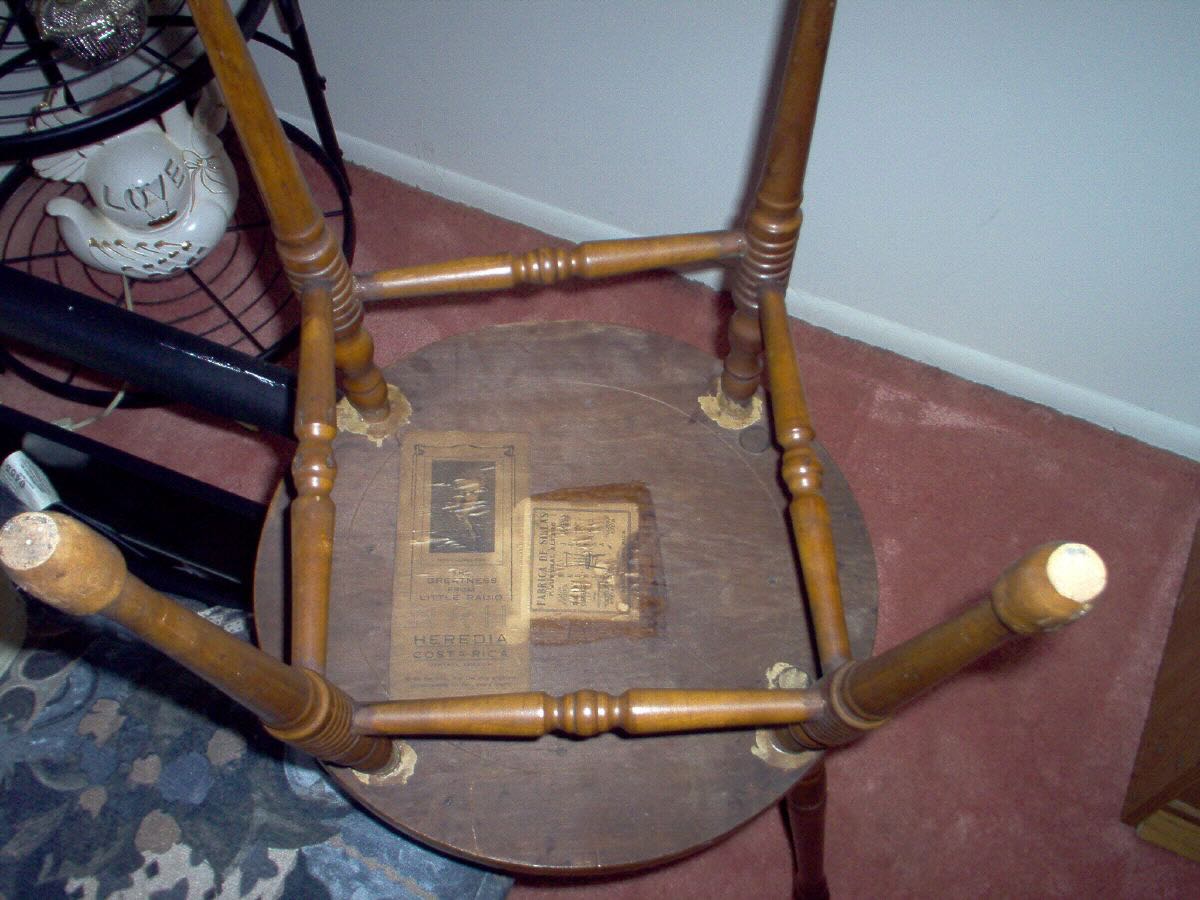
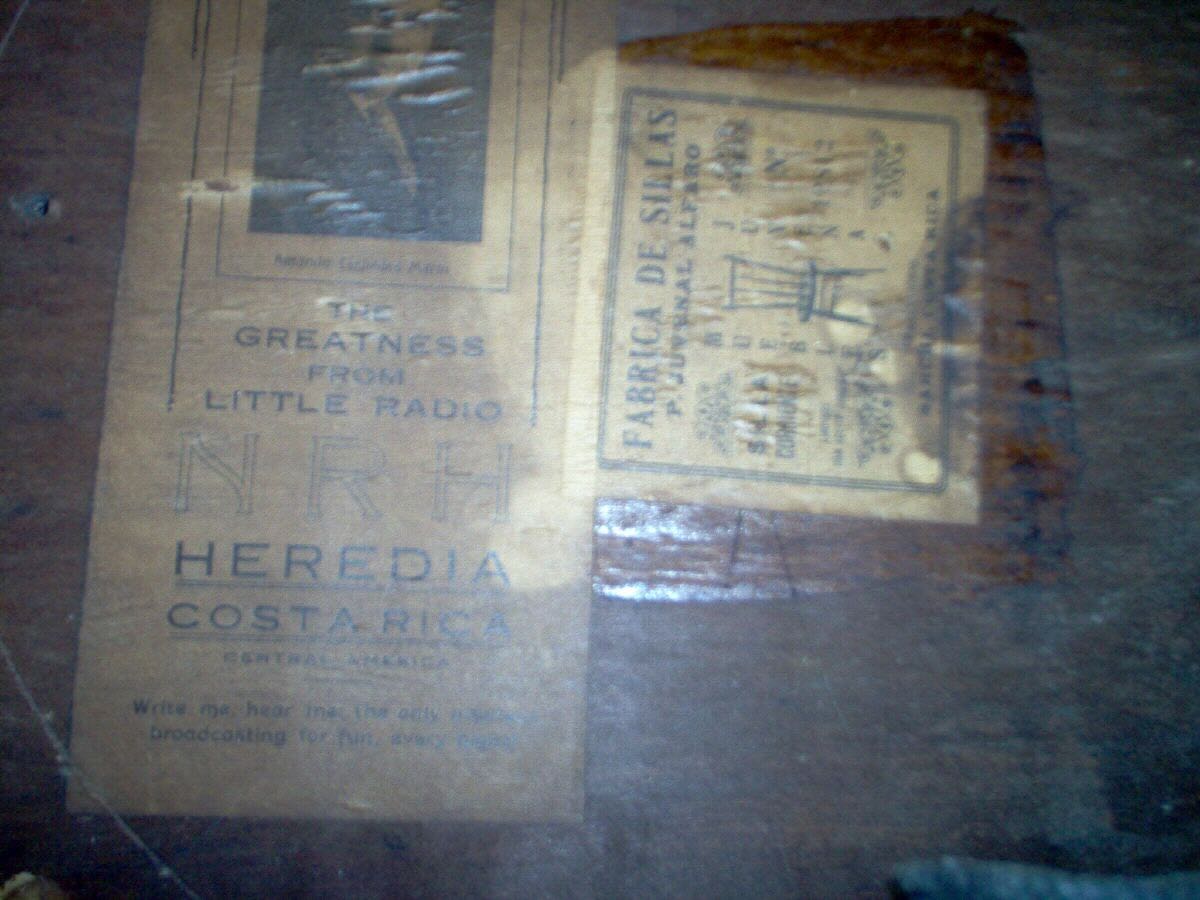
Finding TI4NRH was like finding an unknown time capsule. It was one of the biggest highlights of both my DX career and my travels. And I always hoped to return. In the late 1990s I learned that Lydylia had passed away and that one of her nephews had moved into the house. Sometime around 2010 the antenna tower had become unsafe so the family had it torn down and sold for scrap. However, other than donating a few items to the city museum (something Lydylia had refused to do), the family continued to hold on to Don Amando’s legacy. In 2017, a group of Costa Rican radio amateurs visited the house and published their photos, which were much better than my old ones.
I would like to say that everything is still there for the next visiting DXers to see. But in looking for links to include in this piece I came across some very sad news. The house was demolished in July 2021. Apparently the next generation of the family (Don Amando’s great-grandchildren) had no interest in maintaining the old house and Costa Rica doesn’t have a good program to preserve historical sites. So the city of Heredia had the house torn down. The news article I found (which was very critical of the destruction) didn’t even know what had happened to the station memorabilia that had been in the house. So, unfortunately, this story does not have a happy ending.
To see the exact location of where TI4NRH was, open Google Maps and search for the following coordinates: 9.995550958984419, -84.11618361000325 then switch from map view to satellite view.
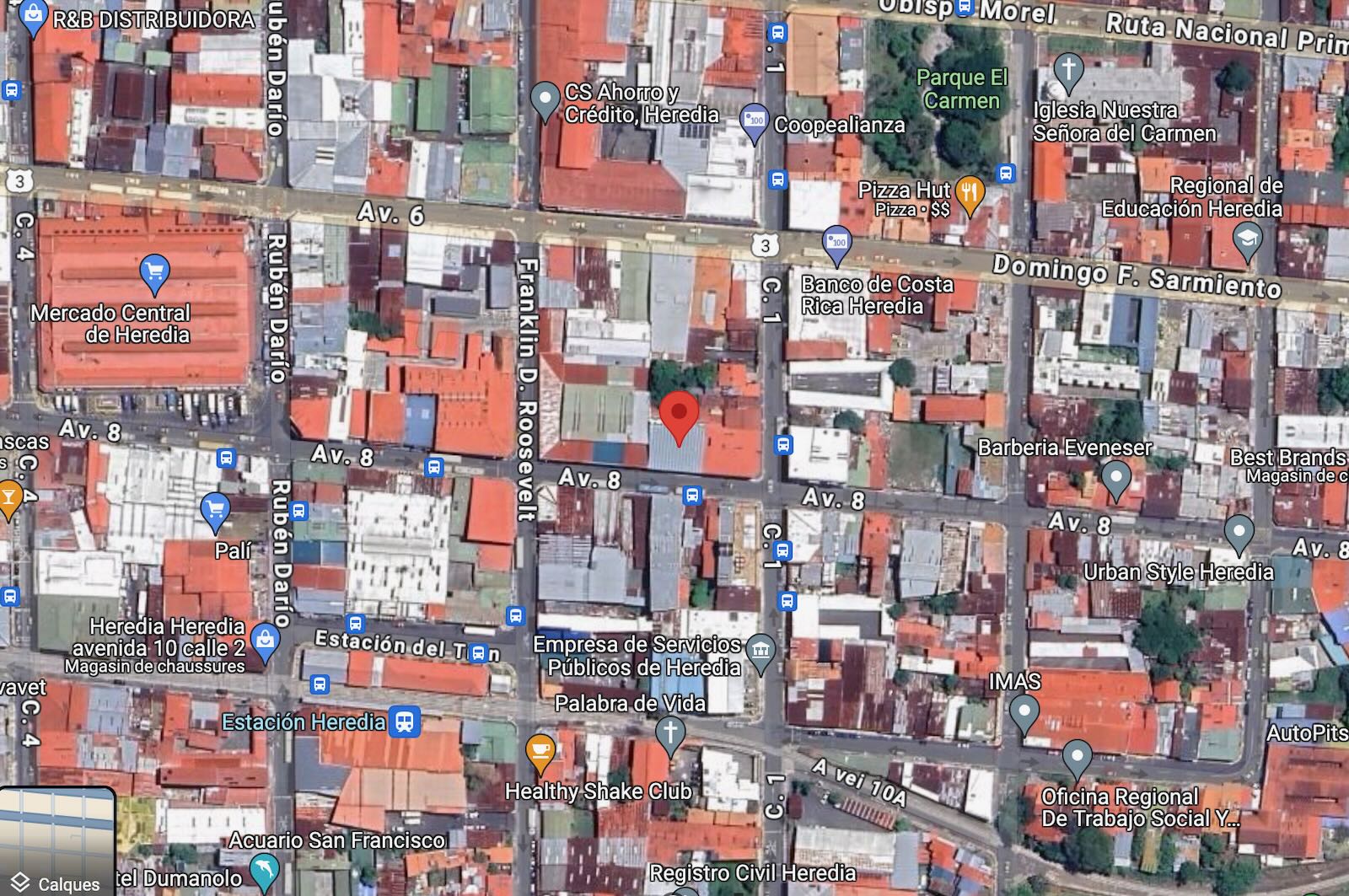 The main house was where the shiny tin roof is today (2024). Just to the right is another building with a red roof. That is where the wing with the station and the antenna tower were.
Many thanks to SWLing Post contributor, Bill Meara who shares the following article from the excellent SolderSmoke Podcast:
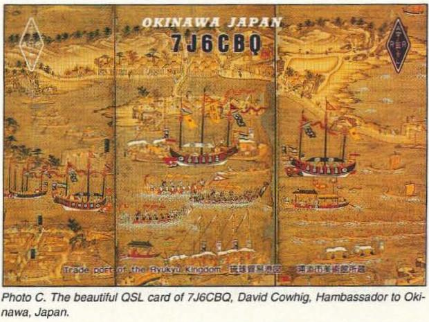
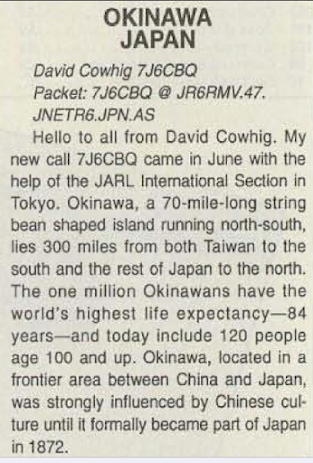
The article about Sergeant Malik Pugh USMC on Okinawa brought back memories from the 1990s. David Cowhig was 73 Magazine’s Hambassador on Okinawa — I had the same “position” in the Dominican Republic. David and I were both in the Foreign Service; we joked that 73 had afforded us our only chances to be ambassadors of any kind. David’s Okinawa QSL and the opening from his initial report to 73 magazine appear above. You can see more here:
https://archive.org/details/
https://archive.org/details/
https://archive.org/details/
https://archive.org/details/
https://archive.org/details/
A couple of my own “dispatches” as Hambassdor to the Dominican Republic appear here:
https://www.gadgeteer.us/DRDISP.HTM
Back in the 90’s David sent me an old QST Magazine. I wrote about this on the SolderSmoke blog:
https://soldersmoke.blogspot.com/2015/07/been-there-done-that-he-begged-his.html
Later, I learned about another “Hambassador” who was still active as a radio amateur: Ron Gang 4X1MK:
https://soldersmoke.blogspot.com/2017/10/ron-gang-4x1mk-on-qso-today-podcast.html
Finally (and this is really cool): David Cowhig has been putting his language skills to good use, translating Chinese written material. He sent me his translation of the opening chapters of a Chinese science fiction novel about ham radio. Readers of the SolderSmoke Daily News will like this:
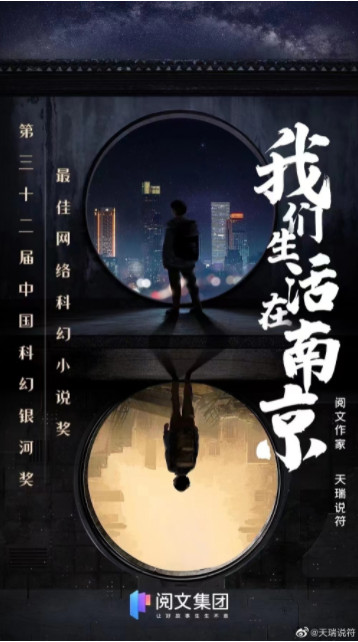
https://gaodawei.wordpress.com/2021/12/18/chinese-sf-ham-radio-web-novel-we-live-in-nanjing/
Check out this article and much more on the SolderSmoke podcast blog!
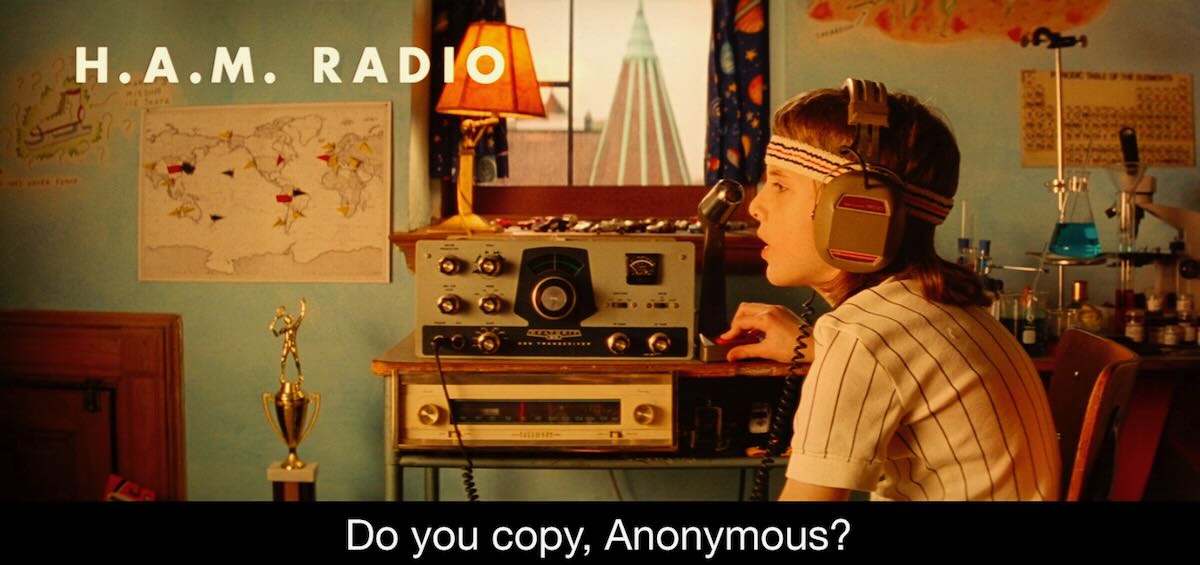
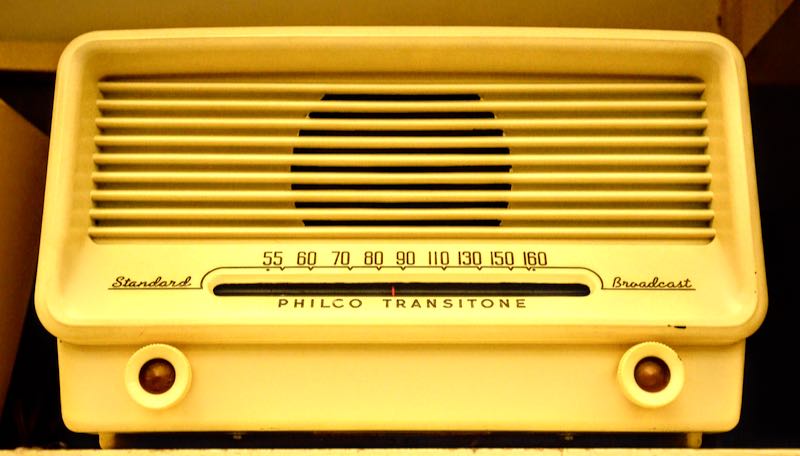
Many thanks to SWLing Post contributor, Frans Goddijn, who spotted the radio gear above in the The Royal Tenenbaums (2001). Can you recognize this iconic brand? How about the receiver on the lower shelf?
Thanks for the tip, Frans!
 Many thanks to SWLing Post contributor, James Copeland (KDØICP), who writes:
Hi Thomas,
Hope you are doing well. A few years ago, I sent you a story about radio dramas we were doing on my college radio station, KSDB in Manhattan, KS. Well, I’m now working at KGGF in Coffeyville, KS, continuing the tradition on this heritage AM station.
Earlier this month, we broadcast a community Christmas program to benefit our local theater in town that is being restored. The broadcast featured two old-time radio dramas and local music. Coffeyville, KS is a small town with a population under 9,000, but it has one of the oldest and largest radio stations in the area. 10 KW day and 5 KW night on 690 kHz. I thought some in your audience might enjoy trying to tune in Christmas morning at 8 a.m. CST for the rebroadcast of the program. A link for more information and the audio as well is available here:
https://kggfradio.com/local-news/721426
For those who are interested in the technical details of the broadcast, I used two ribbon mics and the main microphones, an RCA 77-DX and an RCA BK-11. The room acoustics proved to be a bit of a challenge with the final mix, but the whole thing was live with no edits and while it was far from perfect, I think the genuine nature of the community program shines through. The signal was sent to the station using a VHF Marti remote pickup unit. This particular recording was made at the station.
Also, if your readers are interested in submitting QSL reports, I would be glad to answer them. We usually get a few throughout the year, and I especially enjoyed a report early this year from some of the serious DXers in Norway!
Merry Christmas and 73!
James Copeland, KDØICP
Many thanks, James, for sharing this here on the SWLing Post. We all love a good radio production! It’s brilliant that you’ve brought this tradition to Coffeyville, KS!
I’ve also linked to the audio file of the broadcast below:
Many thanks to SWLing Post contributor, Jerome van der Linden, who writes seeking a bit of help:
Hello Thomas,
From time to time I see you’ve tried to ID receivers used in movies etc. I have a slightly different request that I hope you may pass on…
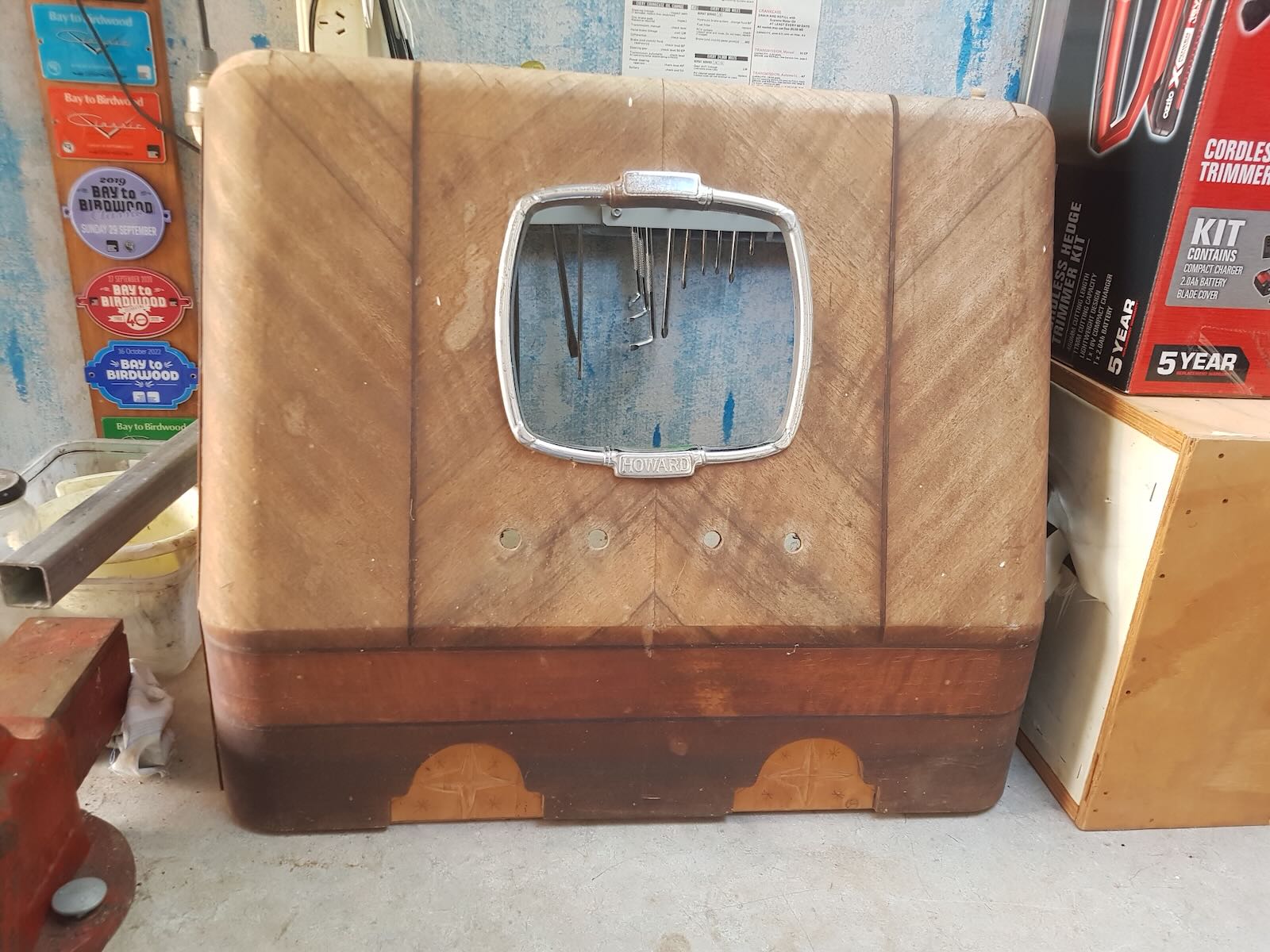
I’m trying to restore an old AM/SW radio for a friend and only know that its brand is a Howard radio who built sets in the US and in Melbourne, Australia. But I don’t know its model number and the tubes (valves here) are not all identifiable.
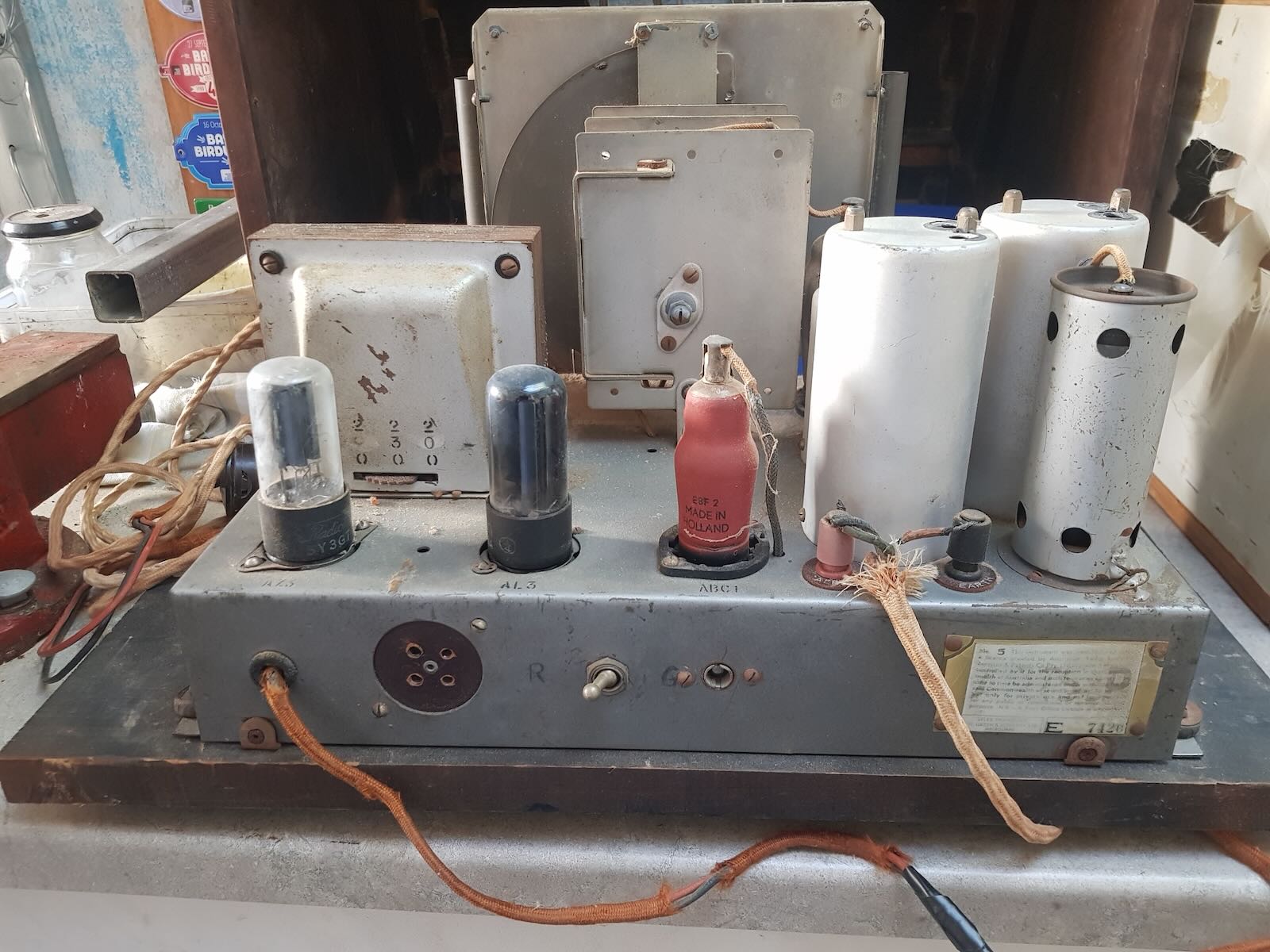
The chassis has numbers printed on it adjacent to the tubes AZ3 (with a Y2GT tube in its socket); AL3; ABC1 plus a couple of others. The four front control knobs appear to be volume, AM/SW band selector, tuning job (which drives a set of gears connected to the dual gang variable capacitor tuner), and what I assume is the tone control. There does not appear to be a power switch. Apart from tubes, I’m keen to confirm what my physical inspection of the 16 or so capacitors, in fact, are supposed to be so that I can source replacements.
The radio also has a toggle switch on the back, which I think switches the input between radio and an external gramophone. The loud speaker appears to be of the type with 4 conductors, where two are probably powering an electro magnet for the speaker. (I have also emailed the Steven Johnson web site for information, as he seems to store a lot of schematics for download.)
Thanks in advance.
Jerome van der Linden
Readers: If you can help Jerome, please comment!