Shortwave listening and everything radio including reviews, broadcasting, ham radio, field operation, DXing, maker kits, travel, emergency gear, events, and more
Many thanks to SWLing Post contributor, Dan Robinson, who writes:
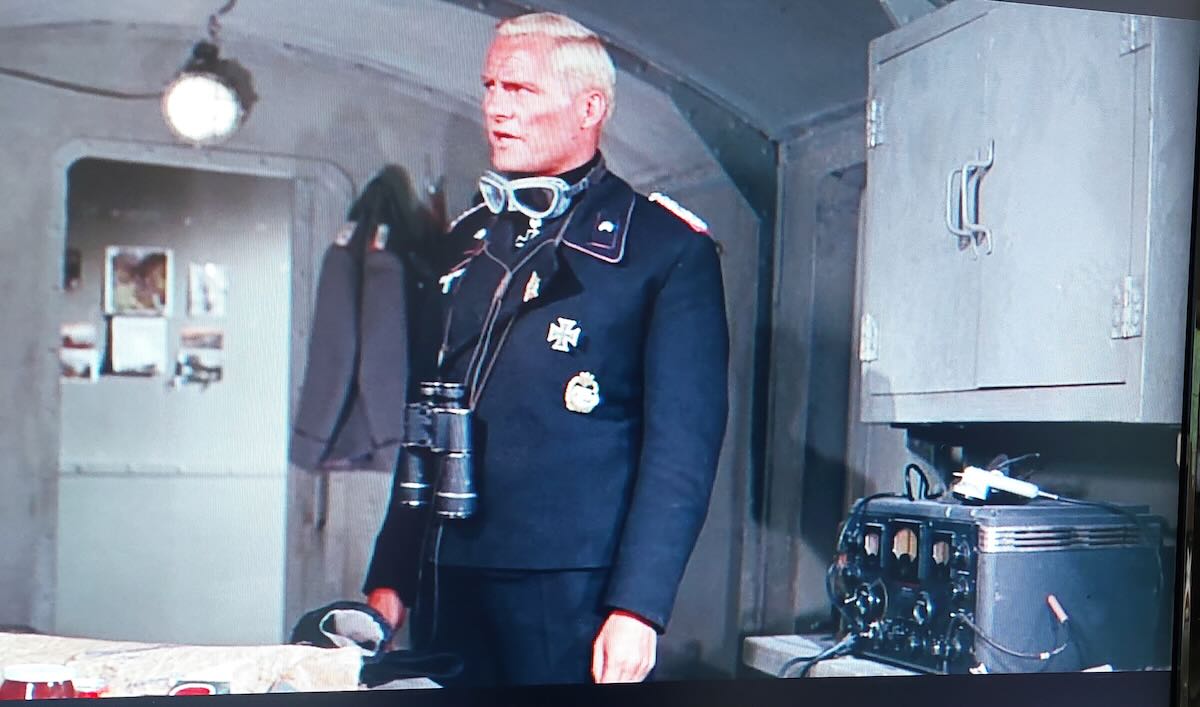
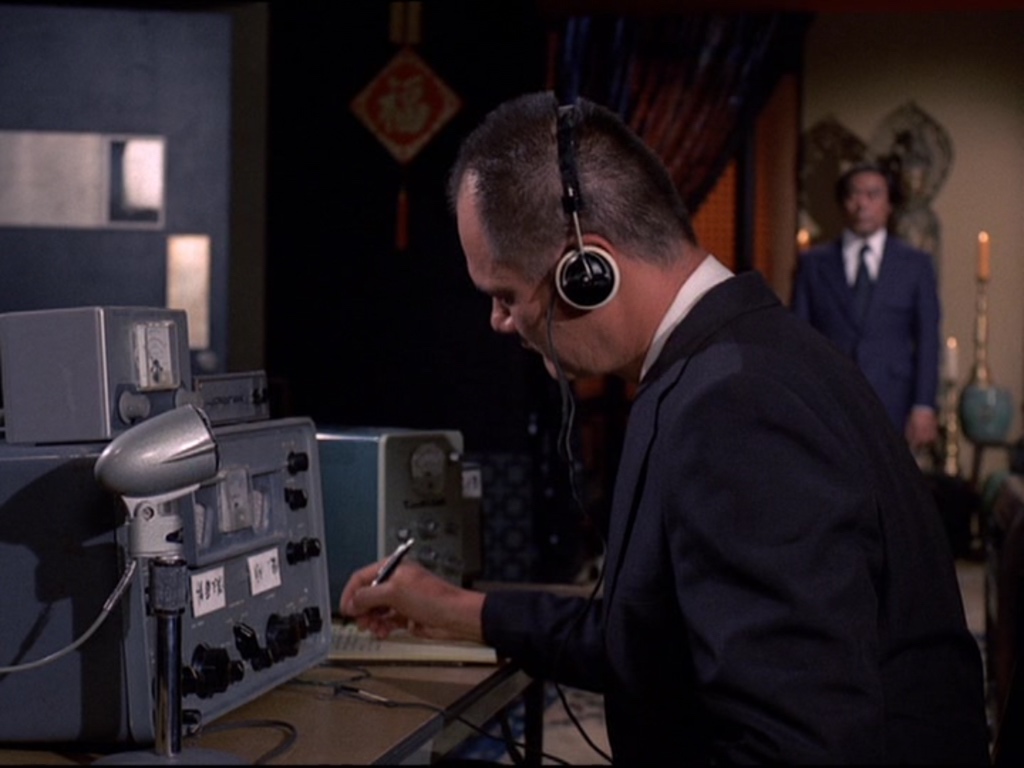
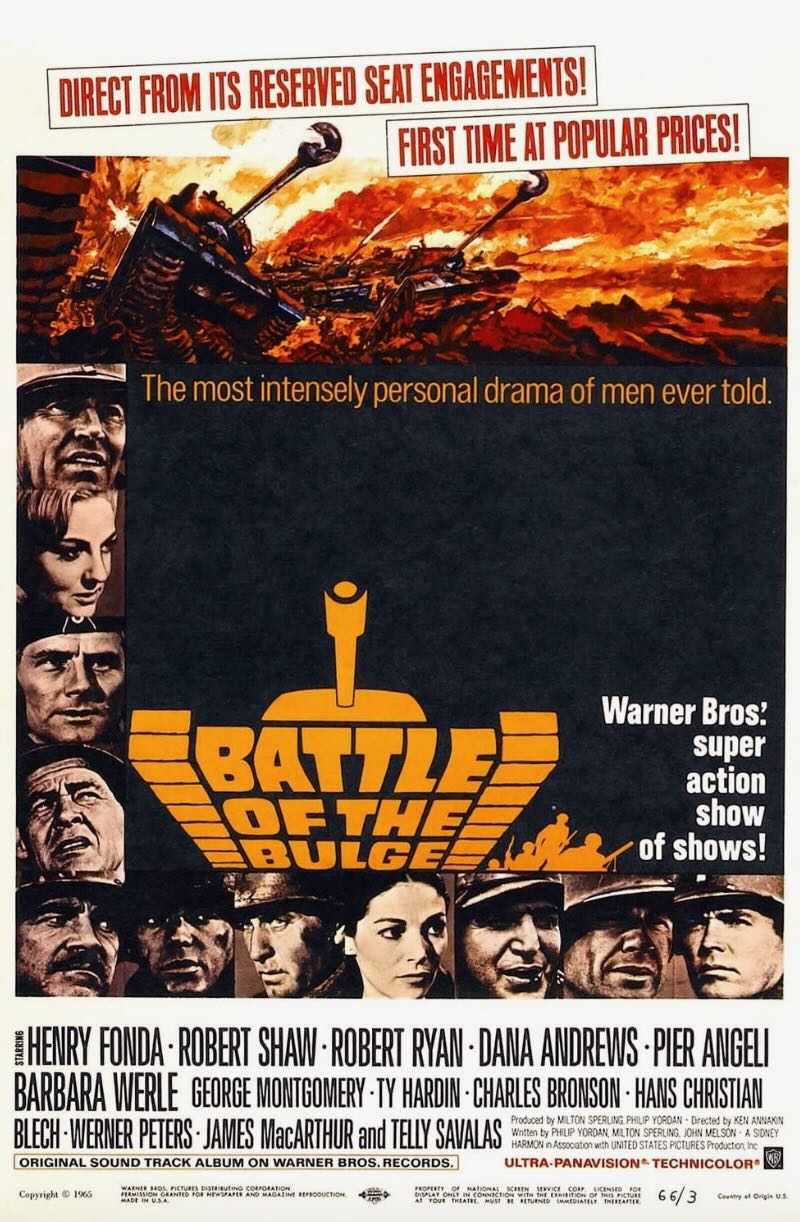
Not a false alarm this time — one of the most striking appearances of a classic shortwave receiver was in Battle of the Bulge, the 1960’s movie about the great battle between German and U.S. forces during World War II, lasting five weeks between the end of 1944 and beginning of 1945. This movie had some of the biggest stars of the time, including Henry Fonda, Robert Ryan, Telly Savalas, and Charles Bronson. Robert Shaw played the German commander of the offensive in the Ardennes and scenes in his command trailer showed a beautiful Hallicrafters SX-28/A which audiences are led to believe was both a transmitter and a receiver.
In this scene, the radio is shown as Shaw is chewed out by his superior in the trailer for not making more progress on the battlefield.
The SX-28 is one of the most amazing radios Hallicrafters made. Thanks for sharing this, Dan!
Many thanks to SWLing Post contributor, Mark (AE2EA), who writes:
Good Morning Thomas,
The Antique Wireless Museum has just released a video of a presentation
by AWA member Rich Place about his time working at HCJB, The Voice of
the Andes. I thought your SWLing members might be interested.
AWA member and RF engineer Rich Place, WB2JLR, made multiple trips to
Ecuador to work at the HCJB transmitter and he relates his experiences
with some of the unique challenges associated with operating a high
power shortwave transmitter at a high, dry elevation, in a remote
location near Quito Ecuador.
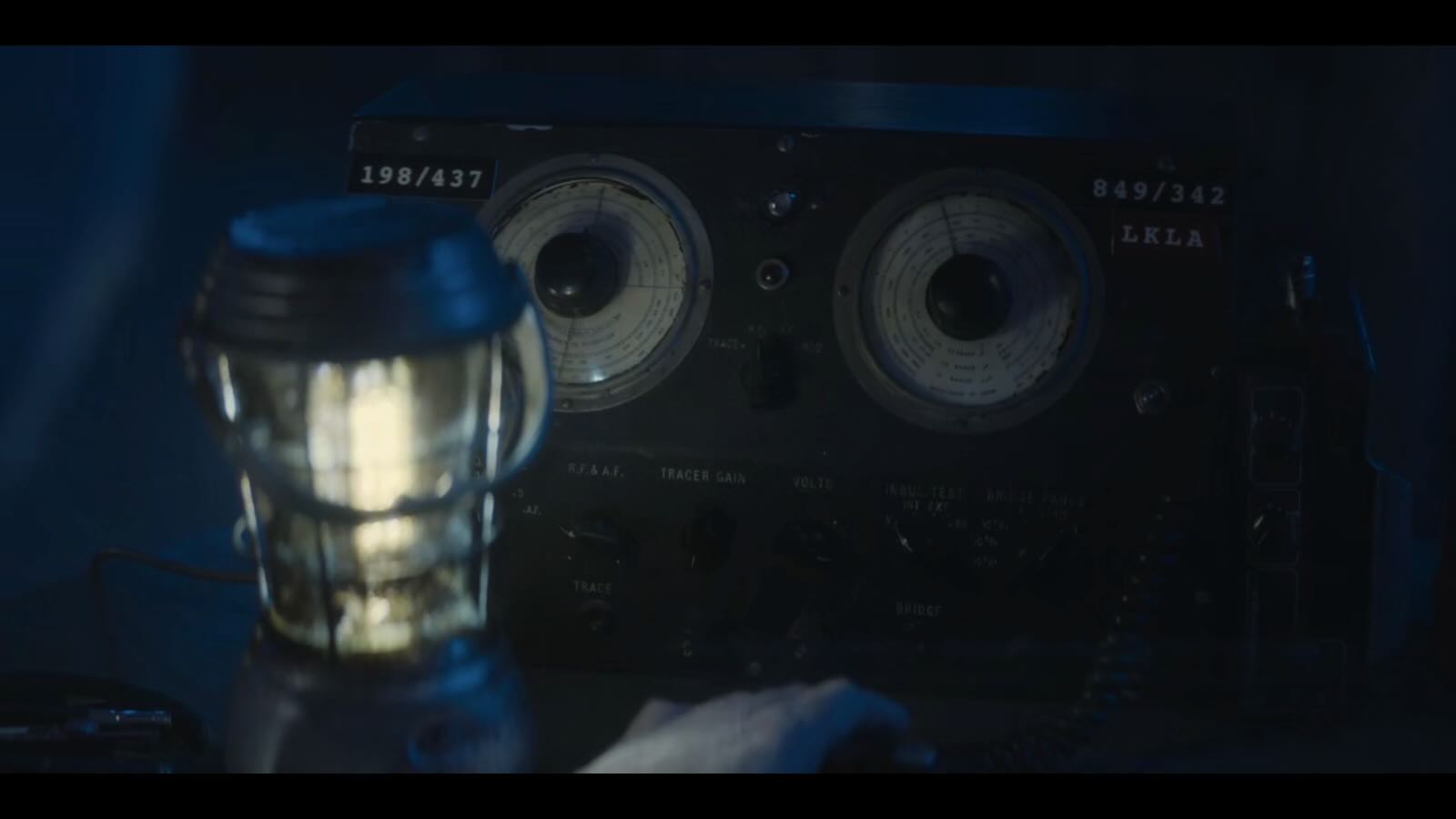
This is from episode 3. Here’s a brief description of the show:
In a ruined and toxic future, a community exists in a giant underground silo that plunges hundreds of stories deep; there, people live in a society full of regulations they believe are meant to protect them.
Does anybody recognize this radio? [click to enlarge image]
– Bruce
Oh wow, Bruce. I’m a massive fan of the SILO series by Hugh Howey–indeed, the Wool Omnibus was the very first eBook I ever purchased! I’ve decided to re-read this series before watching it on Apple TV.
If you can help Bruce identify this radio, please comment!
Radio Waves: Stories Making Waves in the World of Radio
Welcome to the SWLing Post’sRadio Waves, a collection of links to interesting stories making waves in the world of radio. Enjoy!
Many thanks to SWLing Post contributors Dave Porter, Mark Hirst, Stuart Smolkin, Bill Forcier, and “Mangosman” for the following tips:
talkSPORT – Proposals to reduce AM Coverage (OfCom)
talkSPORT Limited (“talkSPORT”) submitted a request to reduce the coverage of its national AM
(medium wave) commercial radio service from 93% to 89.9%, by ceasing transmissions from the
following four of its twenty-two transmitter sites:
Dumfries (Dumfries & Galloway)
Kingston upon Hull (East Riding of Yorkshire)
Fern Barrow (Bournemouth)
Greenside Scalp (Tayside)
We consulted on the request with a preliminary view that we were minded to approve it. We have had regard to the responses we have received in reaching our decision. We received two responses agreeing with the proposal and four disagreeing. In section 3 below, we summarise stakeholders’ comments, assess them and outline the conclusions we have reached.
What we have decided – in brief
Ofcom has decided to approve the request submitted by talkSPORT Limited to reduce its AM
(medium wave) coverage by ceasing transmissions from four of its transmitter sites.
In times of emergency AM Radio could be your only source of information.
AM Radio is part of the Emergency Alert System, so critical life saving information during hurricanes, floods, blackouts and other disasters are delivered to you via AM Radio.
Certain car manufacturers have dropped AM Radio from their current and future vehicles.
This profit motivated move by car manufacturers is dangerous!
Sign the petition to maintain broadcast AM Radio in current and future vehicles, including electric vehicles.
Note: The Washington Post article about AM being removed from cars is behind a paywall. The link provided may give you free access.
America’s love affair between the automobile and AM radio — a century-long romance that provided the soundtrack for lovers’ lanes, kept the lonely company with ballgames and chat shows, sparked family singalongs and defined road trips — is on the verge of collapse, a victim of galloping technological change and swiftly shifting consumer tastes.
The breakup is entirely one-sided, a move by major automakers to eliminate AM radios from new vehicles despite protests from station owners, listeners, first-responders and politicians from both major parties.
Automakers, such as BMW, Volkswagen, Mazda and Tesla, are removing AM radios from new electric vehicles because electric engines can interfere with the sound of AM stations. And Ford, one of the nation’s top-three auto sellers, is taking a bigger step, eliminating AM from all of its vehicles, electric or gas-operated.
Some station owners and advertisers contend that losing access to the car dashboard will indeed be a death blow to many of the nation’s 4,185 AM stations — the possible demise of a core element of the nation’s delivery system for news, political talk (especially on the right), coverage of weather emergencies and foreign language programming.
“This is a tone-deaf display of complete ignorance about what AM radio means to Americans,” said Michael Harrison, publisher of Talkers, a trade journal covering the talk radio industry. “It’s not the end of the world for radio, but it is the loss of an iconic piece of American culture.” [Possible paywall: Continue reading…]
TAMPA, Fla. — Special operations signals intelligence teams say they need smaller, more versatile gear that gathers and shares data on the breadth of radio frequencies in all domains — land, sea, air and now space.
The mission has shifted dramatically as the United States ratchets up competition in the frequency bands with peer competitors like Russia and China, a far cry from deciphering mobile phone signals from violent extremists, officials said.
That’s one request to industry within a small slice of a larger portfolio under U.S. Special Operations Command Program Executive Office-Special Reconnaissance.
On Wednesday, a panel of program managers ticked off the varied sensor, communications and intelligence gear the office wants during the Global SOF Foundation’s SOF Week here.
Their efforts to upgrade and improve collection and dissemination of data continues in an ever-more crowded radio frequency spectrum across, and beyond, the globe. [Continue reading…]
Who Uses DRM?
The sky was blue and the boats were swaying in the harbor, but the participants from countries as far apart as India, Brazil, Denmark, South Africa — and other African countries like Egypt, Indonesia, Hungary, Germany and the UK — had other fish to fry.
They wanted to know about DRM in India, where more pure DRM hours are being carried, including dedicated content like news and cricket. More MW transmitters will be inaugurated there, but the decision for the FM digitization is still pending. Last year, Ernst & Young consultants concluded in a study for the I@B Ministry that radio digitization is not only technically beneficial, but also financially. “Digital Radio can help grow the Radio Segment in India by three times over five years.” The local automotive industry, with almost six million new Indian cars equipped with DRM radios, is also very interested in the decision. The big Indian and international car brands, eying a return on their huge investments, are ready to quickly software upgrade the existing DRM AM receivers to digital DRM FM. [Continue reading…]
Many thanks to SWLing Post contributor, Mark Hirst, who writes:
Thomas,
I recently picked up a couple of DVD boxsets of Hawaii Five Oh from my local charity shop.
These old shows are always an interesting watch, giving insights into fashions, cars, cultural norms and story lines from the time.
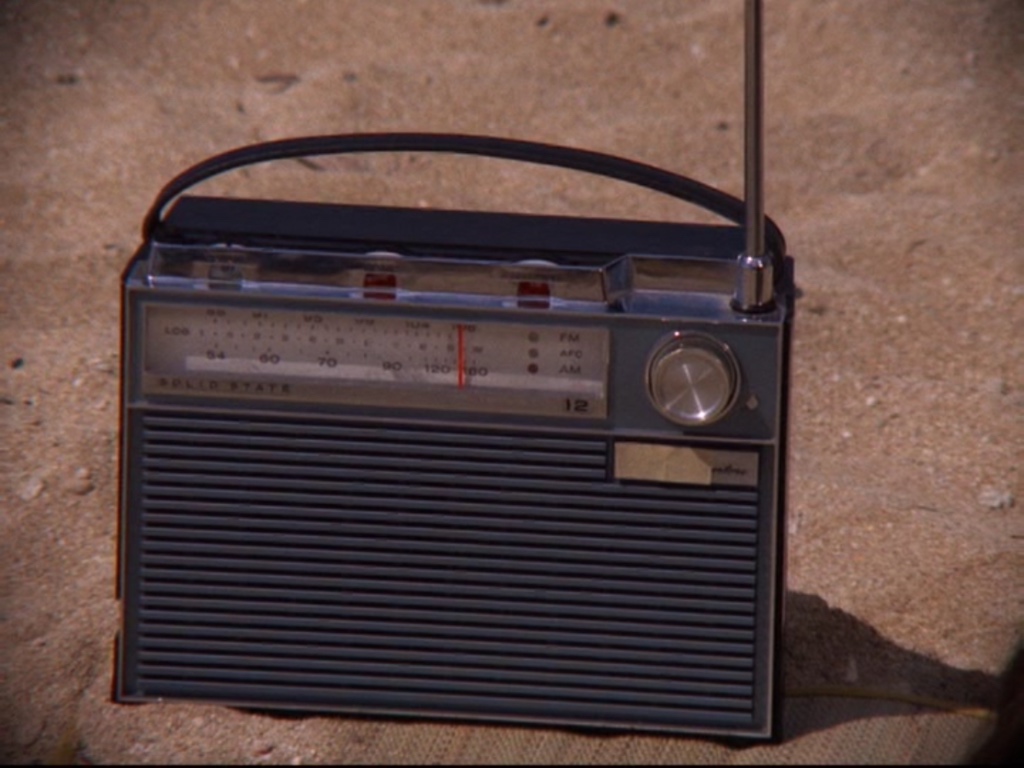
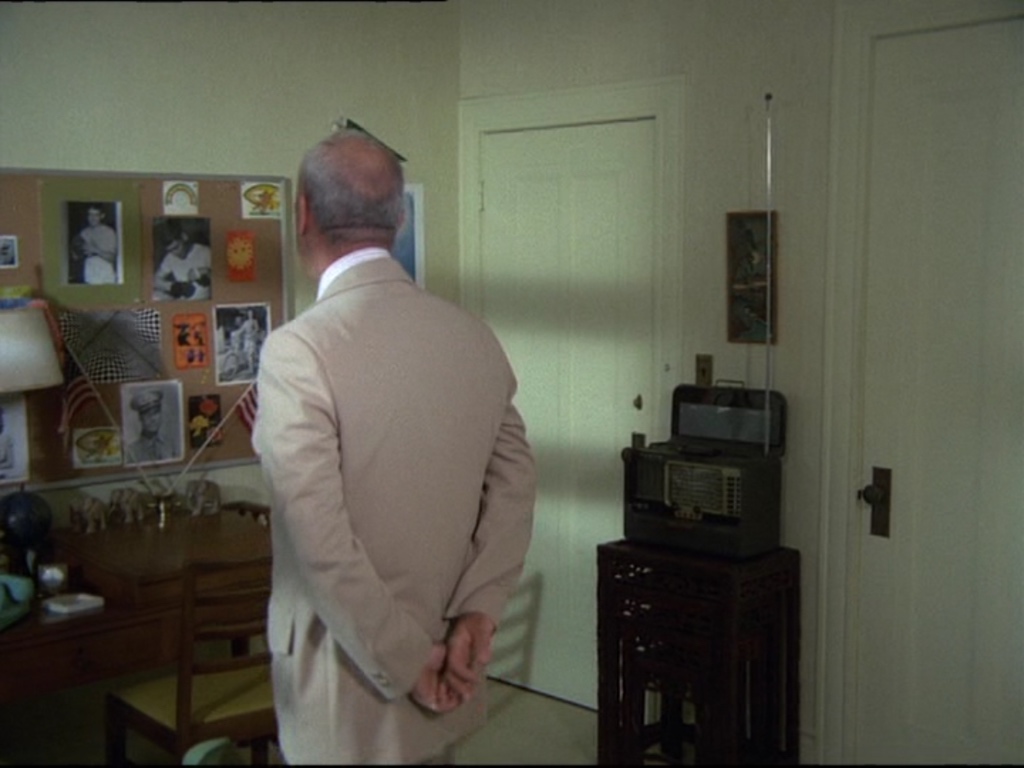
I spotted these radios, sometimes used for exposition or just props in various episodes.
Mark
Thank you for sharing, Mark! I bet readers can recognize all of these fine vintage radios! The top photo might be the trickiest in terms of narrowing down the exact model.
I haven’t watched Hawaii Five Oh in decades. It would be fun to rewatch a few episodes–I loved that show in my youth!
Cumulus publishes analysis to counter prevailing sentiments about AM and radio in general
“Ford owners are massive users of AM radio.”
So writes Pierre Bouvard, chief insights office of Cumulus Media, citing data from MRI Simmons.
That is but one of his observations as Cumulus Media/Westwood One released an analysis of listening data from sources that also include the Nielsen fall 2022 survey, Edison Research’s “Share of Ear” and research by Advertiser Perceptions.
Bouvard regularly posts about the power of radio and what he calls misperceptions about the medium among the broader marketing community.
He summarized takeaways from the new Cumulus analysis:
“The Nielsen Fall 2022 survey reveals that 82,346,800 Americans listen to AM radio monthly; 57% of the AM radio audience listens to news/talk stations, the very outlets that Americans turn to in times of crisis and breaking local news; and one out of three American AM/FM radio listeners are reached monthly by AM radio,” he wrote. [Continue reading…]
“Some clouds over the city right now. I’m Paul Murnane,” says a familiar voice.
“I’m Wayne Cabot,” says another.
Few would know their faces. But as names, they’re as recognizable as anyone in New York.
Fewer still could tell you their address — an 11th floor studio in a light-brick high-rise in lower Manhattan, between a Chase bank branch and patisserie named Maman.
But hundreds of thousands know where to find them on the AM dial — right between 820 WNYC (“public affairs”) and 930 WPAT (“multi-ethnic”). That, for 56 years, has been the location of WCBS Newsradio 880 — one of those rare unchanging institutions in a changeable city. [Continue reading…]
GENEVA — The voices sound like well-known personalities, the music features trendy dance beats and hip-hop syncopations, and the jokes and laughter are contagious. But listeners of an offbeat Swiss public radio station repeatedly got the message on Thursday: Today’s programming is brought to you by Artificial Intelligence.
Three months in the making, the French-language station Couleur 3 (Color 3) is touting a one-day experiment using cloned voices of five real, human presenters — in what managers claim is a world first — and never-aired-before music composed almost entirely by computers, not people. From 6 a.m. to 7 p.m., the station said, AI controlled its airwaves. Every 20 minutes, listeners got a reminder. Continue reading →
Many thanks to SWLing Post contributor, Mark Pascoe, who writes:
Hi, Thomas.
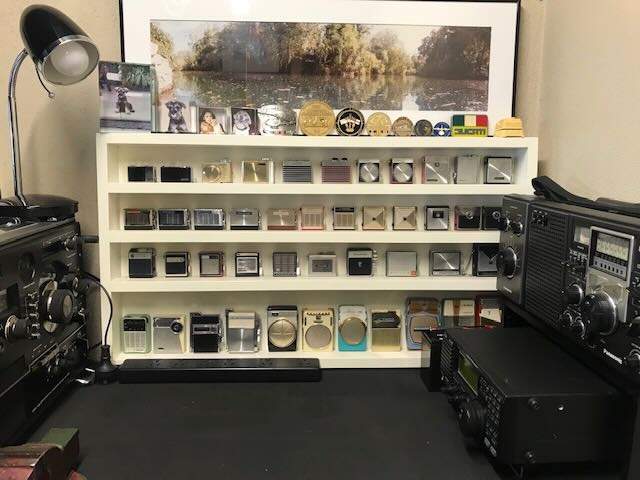
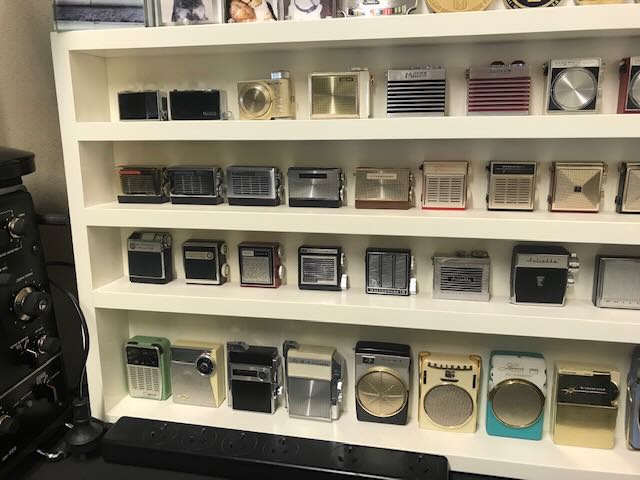
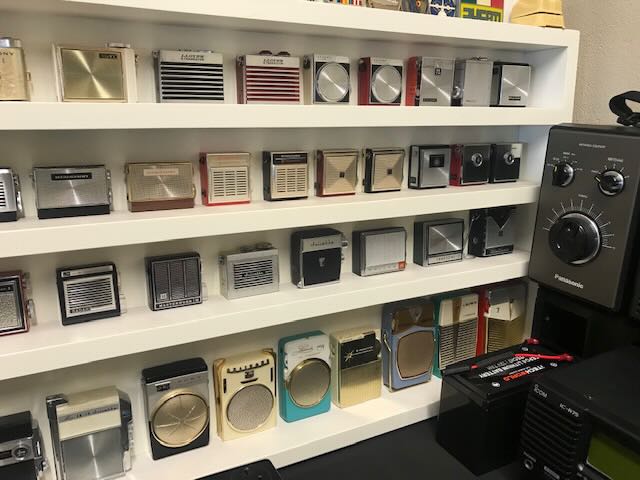
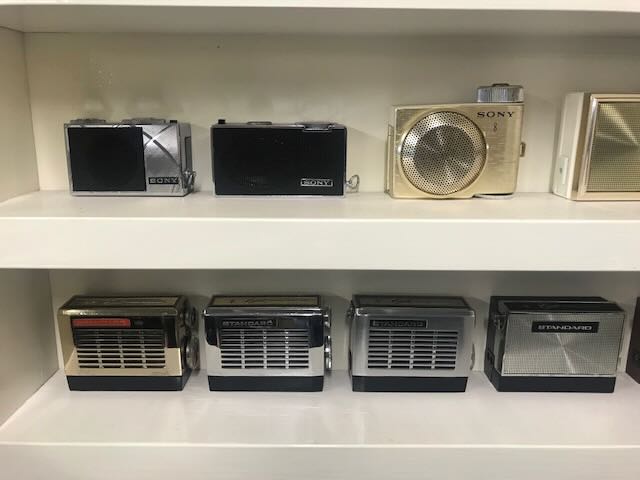
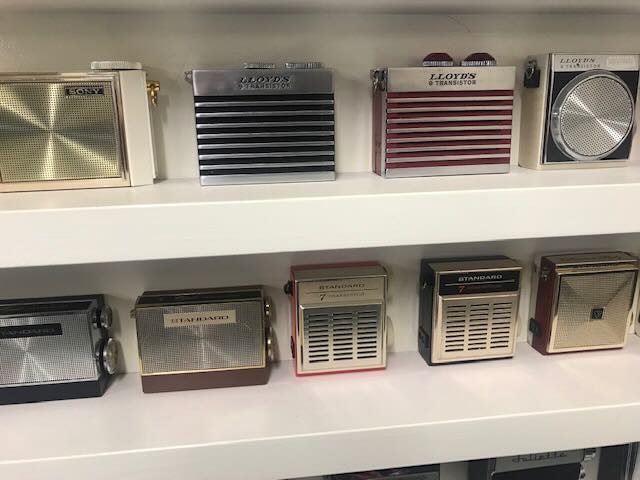
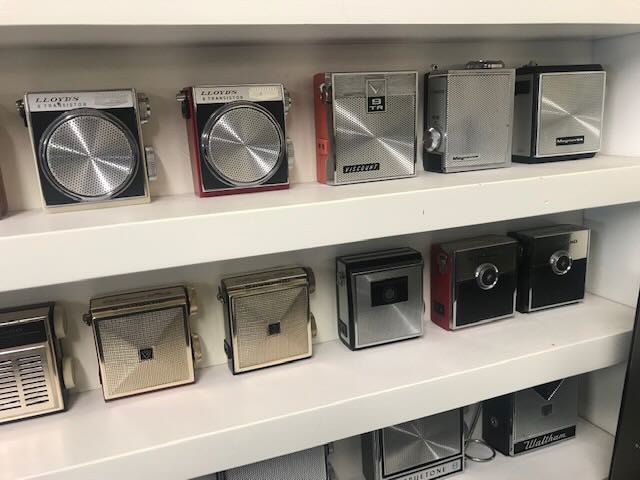
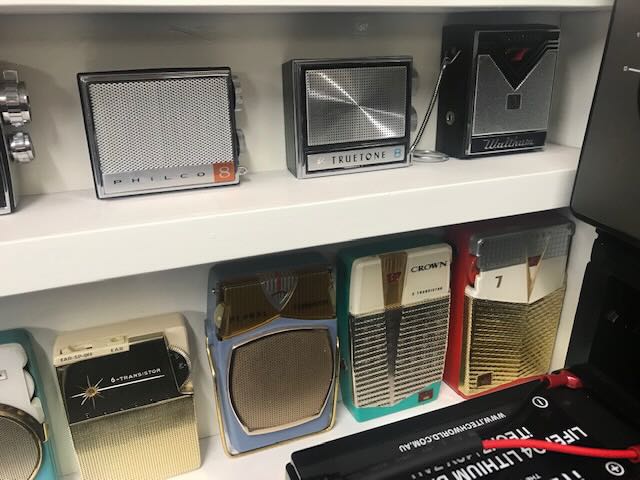
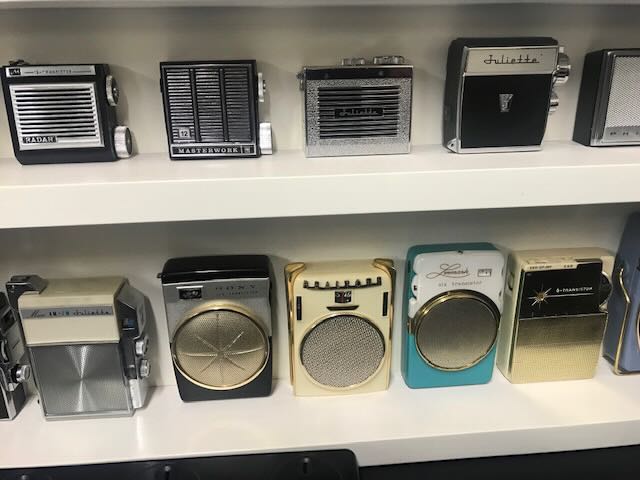
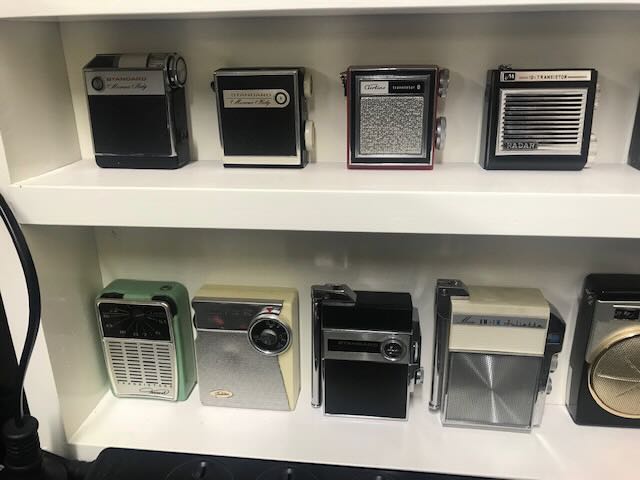
I rarely see photos of micro radio collections, so I thought some of your subscribers may be interested in seeing my little collection.
These are all late 50s to 60s radios made in Japan and hand soldered. Just over 50% of them are still working ( Deoxit is my best friend) l live in Adelaide Australia and recently retired doing the customary downsizing thing. Now I live in a small townhouse and have what must be one of the smallest radio shacks, 1m x 1/2 metre!
With a 50 ft long wire running front to back above my roof. I’m not an overly experienced SWL, and I have a question. I have 3 SW radio’s with 5 antenna attachment points. Is there a recommended antenna splitter that goes 1 into 5 without any interference ? I currently manually connect/disconnect my antenna’s.
Thanks Mark Pascoe.
These are simply amazing, Mark! I don’t believe anyone has ever shared photos of their micro radio collection before, so we’re most appreciative. There are some amazing designs in this collection!
Please support this website by adding us to your whitelist in your ad blocker. Ads are what helps us bring you premium content! Thank you!

 Many thanks to SWLing Post contributor, Dan Robinson, who writes: