Category Archives: Nostalgia

“Air Waves”: A WWII era film about the art of broadcasting at NBC

Many thanks to SWLing Post contributor, Mike Hansgen (K8RAT), who shares the following film by RKO Radio Pictures via YouTube.

Click here to watch on YouTube.

Here’s the film description:

Made during WWII by RKO Radio Pictures, AIR WAVES gives a brief history of the radio, and shows the development of the technology as it progressed from a crystal set novelty to an indispensable part of American life. Radio City Music Hall and the Rockefeller Center are seen at the 2:00 mark, with the largest radio studios in the world. At 2:30, the NBC studios are seen and at 3:10 a demonstration is made of how sound effects are made using cellophane, wooden blocks, and rubber spheres. At 4:10, a studio is seen with actors rehearsing their lines, and an engineer working with the actors to make sure everything is technically okay. At 5:41, announcers Milton Cross is seen with Jack Costello and Calvin Keach. “Twin gods of radio broadcasting are the clock and the conference…” says the narrator, and at 6:00 you’ll see the discussions that lead up to the broadcast of any network show on radio (and today, on TV). At 7:15, records are played on the air, scripts are produced on steno and mimeograph machines, and all sorted… The music library is seen at 7:48 with sheet music laid out. At 8:06, all stations are notified of the latest information with the new program and a dress rehearsal undertaken. The stopwatch commands the attention of everyone, and the program is finally on the air at the 9:10 mark.

At 10:00, the film dramatically shifts to show December 7th in Hawaii, and speaks about the work of NBC to sell war bonds and promote national defense and “do its share unflinchingly”. The war effort is shown with men and women working on the air to help people working “at war” and boosting their morale. Lowell Thomas is shown at the 11:30 mark, keeping the public informed of the latest developments.

Thanks for the tip, Mike! It’s truly amazing to see the amount of effort that went into live radio broadcasts.
“Generation Radio”: A short documentary about the evolution of broadcasting

Many thanks to SWLing Post contributor, Mike Hansgen, who shares the following documentary film about the evolution of broadcast radio. This film was actually created for a senior thesis presentation at St. Michael’s College. The film “includes interviews from BBC World Tonight & Joe Reilly (Former President NYS Broadcasters Assn), Empire Broadcasting The Jockey, Clear Channel, WEQX, ESPN, SirusXM, VPR, Skidmore College, & more.”

Click here to view on YouTube.

Impressive film especially considering this was created as a senior thesis!

Did your first shortwave radio change your world?

At the Winter SWL Fest this year, we had an open forum hosted by Skip Arey and Dan Robinson called “Shortwave Memories” where SWLs were invited to speak about what shortwave radio has meant to them throughout their lives. I was a fantastic session chock full of nostalgia.

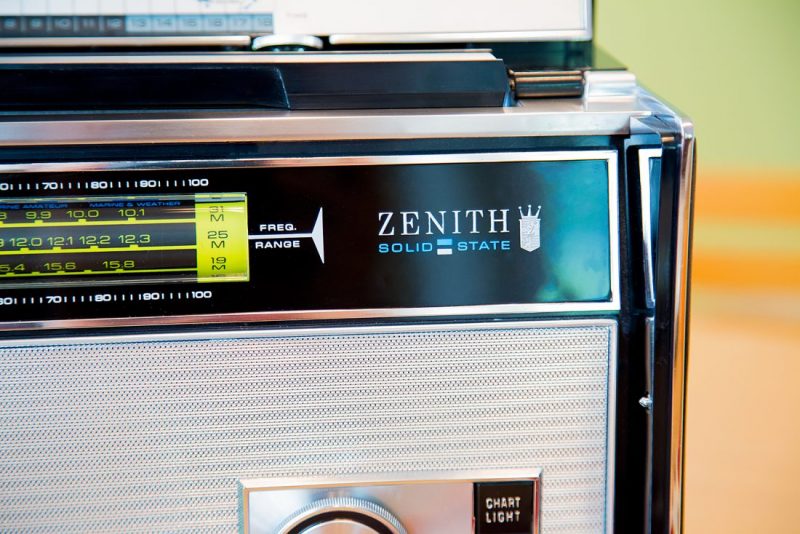
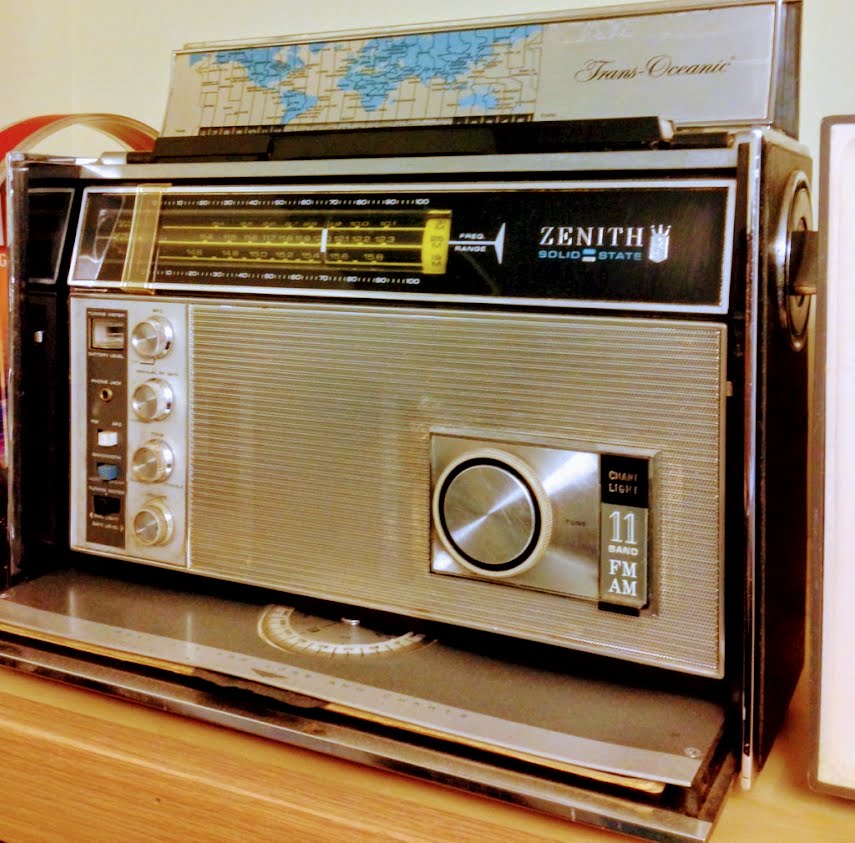
I was asked to speak and started by talking about my first proper shortwave set: the Zenith Transoceanic (photo above).

Although I first got a taste for the shortwaves on my father’s console radio (a 1936 RCA Model 6K3)–it was in our living room and I did not have ready access to it.

My Great Aunt (who lived next door to us) must have learned that I was fascinated with radio, and one unforgettable day she surprised me by giving me her late son’s Zenith Transoceanic.

It was as if I had won the lottery.

For the first time, I could actually have access to the shortwaves from the comfort of my bedroom and could listen anytime I wished.

I quickly made a little listening post complete with a map, log book and paper to scratch notes. I was transported to every corner of the planet with that magical solid state set.

That Zenith set turned out to be a catalyst for a strong interest in geography, history, politics, language and travel. I learned that through SWLing, I could hear unfiltered voices from across the globe. Mind you, this was in the late 1970s and early 80s–long before the internet, long before mobile phones.

Of course, I still have my Zenith Transoceanic and will always keep it in working order.

I’m curious: What was your first radio? Did it have any meaningful impact on your life?  Do you still have your first radio? Please comment!

Also, if you’d like to share even more detail and photos, consider submitting an article for our Listener Posts series

Radios spotted in The Walking Dead series

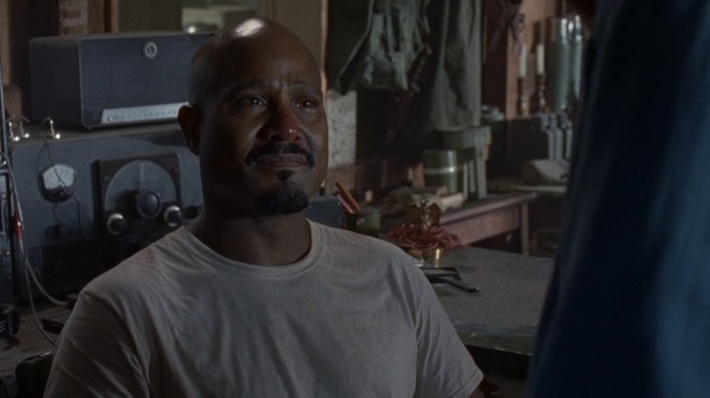
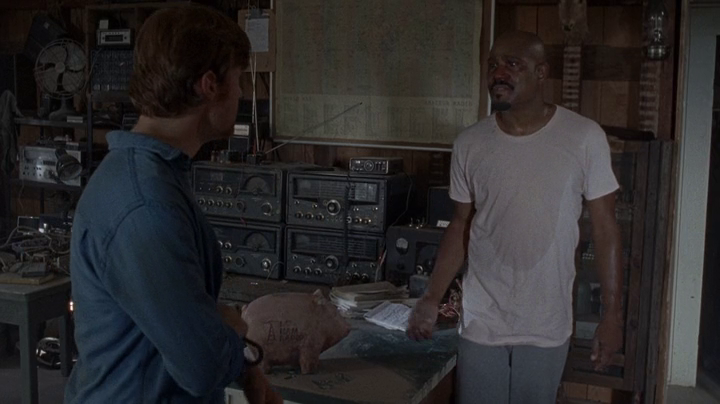
Many thanks to SWLing Post contributor, Balázs Kovács, who notes that he discovered, “some radio equipment in the latest episode of The Walking Dead series”:

Can anyone ID the rigs above?  Please comment!

I’ll add this post to our ever growing archive of radios in film.

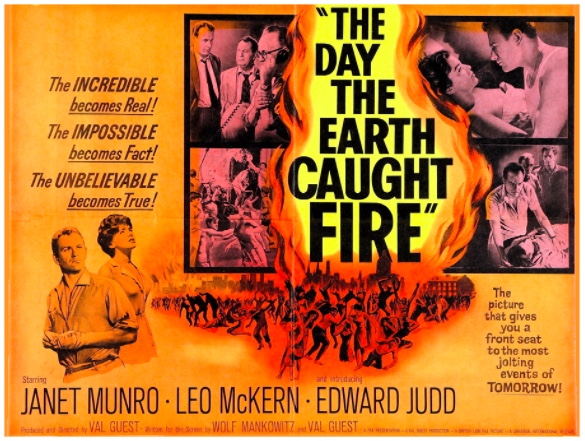
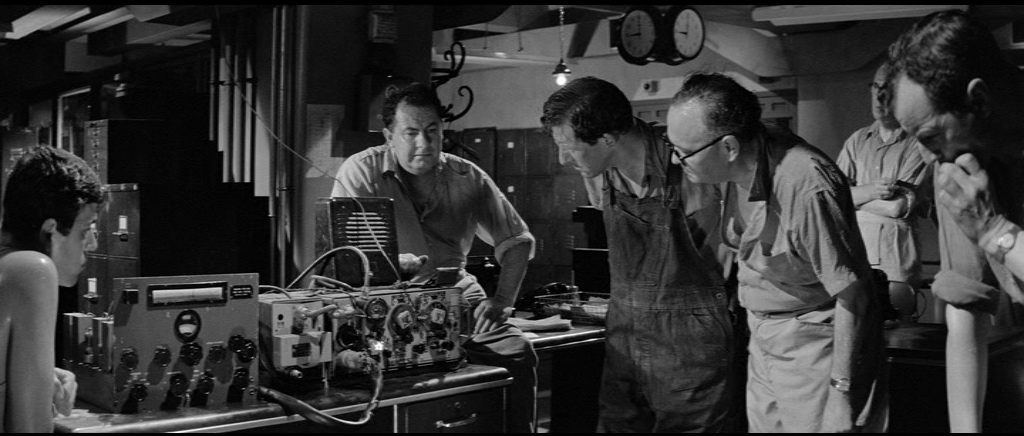
Radio spotted in “The Day the Earth Caught Fire”

Many thanks to SWLing Post contributor, Mark Hirst, who has discovered yet another radio in film:

Spotted this in the 1961 sci-fi movie, ‘The Day the Earth Caught Fire‘.

I’m guessing it’s an old military set.

I believe it is indeed, Mark!  Perhaps an intrepid SWLing Post reader can sort out the model number?  Please comment!

I’ll add this post to our growing archive of radios in film.

Vintage Radio: How to read a logging scale

Many thanks to SWLing Post contributor, Charlie Liberto (W4MEC) for the following guest post:


Vintage receiver frequency counter…sort of

by Charlie Liberto (W4MEC)

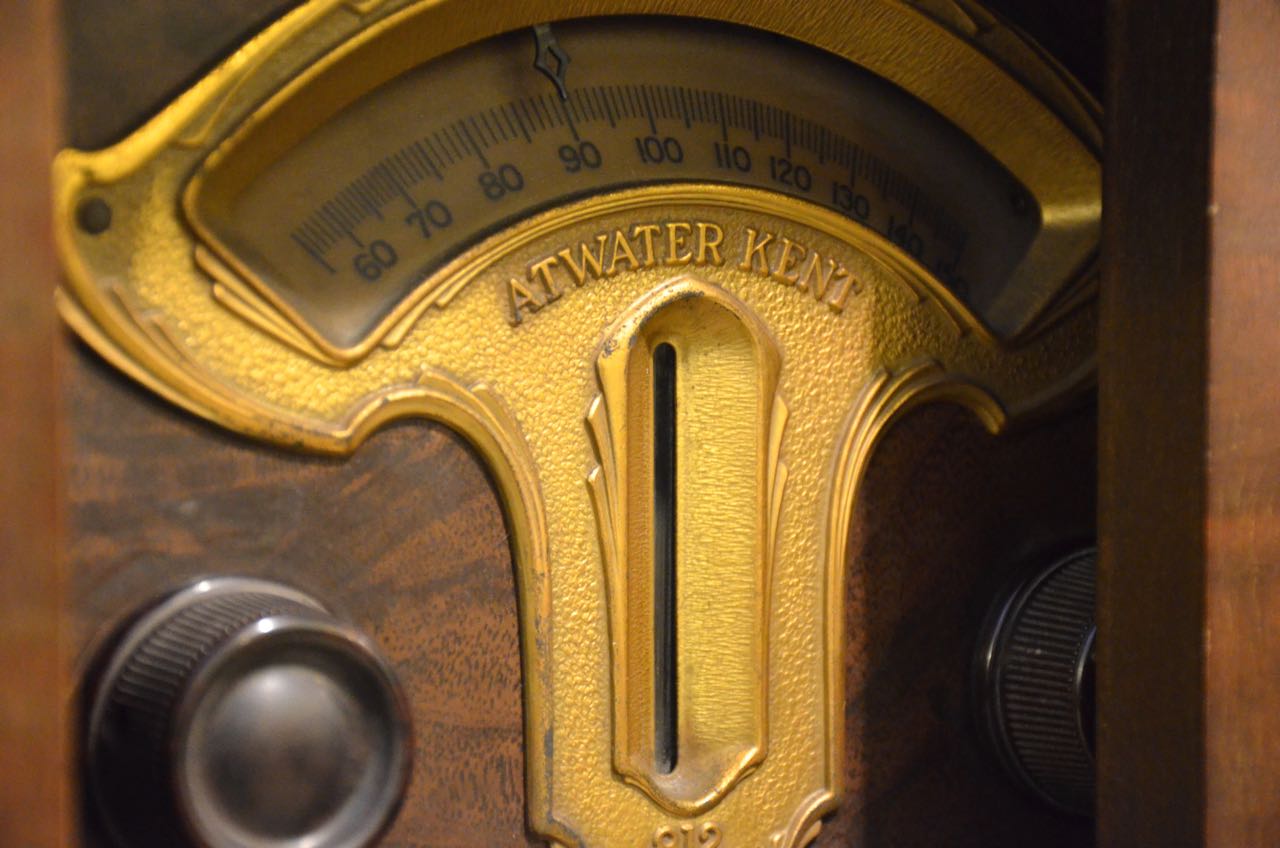
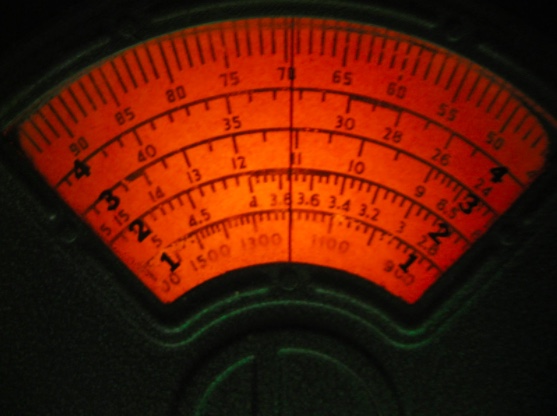
You probably know what a log book is, and maybe a logarithm, but do you know what a ‘Logging Scale’ was meant for? If you are a modern SWL’er, and have a receiver built in the last 40 years or so, you probably don’t have that mysterious 0 to 100 range on your dial, as shown at the top of the picture of the Hallicrafters S20-R main dial, and you may not have a dial at all, peering without question at a digital display of your received frequency.

The Logging Scale on older and vintage receivers had two functions: to let you find a station you might be looking for, when you knew the frequency it would be on, and to determine the frequency of a station, but you had to have known references. How to do that on those old scales that may have had 50 kHz or even 500 kHz hash marks between whole Megahertz numbers, or in that era, KC or MC numbers? The process is fairly straight forward, but did require you to know the operating frequency of at least 2 stations on the band of interest, and the closer they were to the mystery frequency, the better.

Let’s say you are looking for WLMN that is supposed to begin its operation day on 6025 kHz. and your receiver has a mark every 250 kHz between 5 and 7 MHz, that’s pretty iffy as to setting the dial. Now, you know that station WABC is on 5500 kHz, and station GXYZ is on 6525 kHz, so, tuning in WABC you note what number the pointer on the dial is over on the logging scale, maybe it is 40. Then you tune to GXYZ and you find it on 70 on the logging scale. The known difference in frequency between WABC at 5500 kHz and GXYZ at 6525 is 1025 kHz, and the logging scale number difference is 40 to 70 or 30 divisions. Take the 1025 kHz separating your two known stations, divided by the 30 logging scale divisions and you get 34.167 kHz per division. Some more math, the station you are looking for, WLMN is on 6025 kHz, which is 525 kHz away from WABC at 5500 kHz., divide 525 kHz by the logging scale frequency versus division number of 34.167 kHz which equals approximately 16. Take that 16, add it to WABC logging scale number of 40, and you should expect to hear WLMN on logging scale 56 on the dial.

Of course you can flip this process around. If you heard WLMN, but did not know it’s frequency, the same procedure worked backwards to interpolate the logging scale 56 into kHz, added to the WABC frequency/log number, or subtracted from GXYZ numbers, and you would figure out WLMN was on 6025 kHz.

What did this process do? It ‘calibrated’ your receiver dial to known checkpoints by using known frequencies of stations, such that you had a better idea of where you were frequency wise, but it did have it’s limitations. Older receiver dials usually had the lower frequencies divisions of a band close together, and as you tuned to higher frequencies on the same band, hash marks for frequencies got farther apart, while the logging scale stayed linear. This was because builders used the simpler straight line capacitance variable capacitor for tuning, instead of the straightline wavelength or straight line frequency style which would have made the dial more linear. If you used two stations on the low end to set a logging scale reference, chances are it will be quite a bit off in the frequency versus logging scale number on the high end of the dial. So, if you could find two stations that bracketed the one you were examining, that would assure the most accuracy.

After all that, you are probably saying thank God and a lot of engineers for a digital readout.


Thank you, Charlie, for an excellent tutorial and example of using dial logging. I’ve had a number of vintage radios over the years with logging scales and it took some digging to discover how they worked. While digital radios make the process as easy as pie, vintage radios are worth the extra effort!