Category Archives: Radio History

Check out the AFRTS Archive

AFRTSMany shortwave listeners are familiar with the Armed Forces Radio and Television Service (AFRTS); we’ve mentioned them before and the wide variety of programming they offer via several transmission sites.

I recently discovered the AFRTS Archive, an excellent blog that posts archived audio and memories from the AFRTS. The AFRTS Archive is actively updated and chock-full of nostalgia.

It’s Memorial Day here in the States and found this a fitting time to dig through the AFRTS Archive.

Of course, you can still listen to the AFRTS on shortwave–here are the frequencies:

AFN/AFRTS Shortwave Frequencies (note: all broadcasts are in USB)

  • Diego Garcia:
    • 12,579 kHz daytime
    • 4,319 kHz nighttime
  • Guam:
    • 13,362 kHz daytime
    • 5,765 kHz nighttime

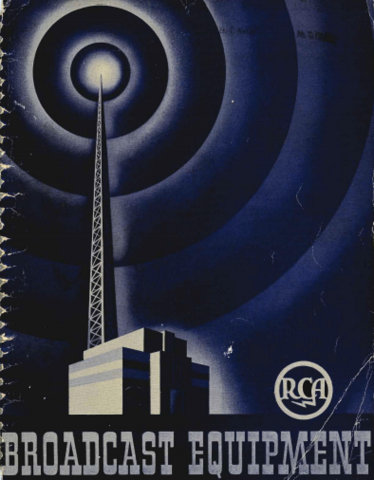
1939 RCA Broadcast Equipment Catalog

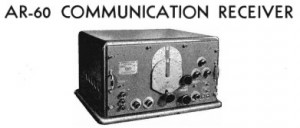
RCA-AR-60Now that I’ve read this scanned 1939 RCA Broadcast Equipment Catalog, I realize that I really do need an RCA AR-60 Communications Receiver. It would make a lovely addition to my antique radio collection!

Click here to download your copy of the 1939 RCA Broadcast Equipment Catalog.

RCACatalog

Thanks to David for spotting this!

Vatican Radio: breaking news broken?

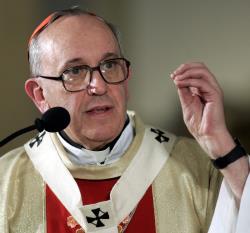
Pope Francis I

Pope Francis I (Photo: Vatican Radio)

A few moments ago, Cardinal Jorge Mario Bergoglio of Argentina was elected Pope, becoming the first pontiff from the Americas, and taking the name Pope Francis I. When breaking news like this is happens, I often turn to shortwave radio to hear it “from the source;” what better station for news about the Papal elections than Vatican Radio? Right?

Hm. When I turned to Vatican Radio on 13.765 MHZ at 20:00 UTC today, here is what I heard:

After a little music and announcement confusion–including what sounds like at least three audio feeds coming in at once–Vatican Radio settles on an announcement program which states, in several languages, “Vatican Radio’s programming schedule is currently being modified to cover the election of the new Pope.”

It wasn’t until thirty minutes later (20:30 UTC), when the Vatican Radio service to Africa started in French on 11.625 MHz, that I heard any substantive news about the new Pope:
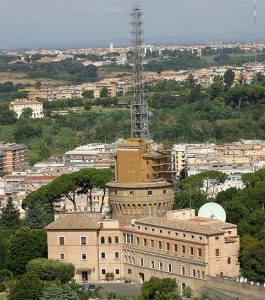
radio_vaticanoOf course, I can find information about the new Pope from any one of two million different online sources, but it did surprise me that Vatican Radio wasn’t better prepared for this event.  I even wondered if there was a different broadcast running on a consecutive frequency, so I checked; all were identical, however.

Still, the radio archivist in me can’t help but experience some appreciation of the confusion on the airwaves. After all, this is a genuine piece of radio history and a fascinating thirty minutes of audio in the wake of a big decision.

In my mind, I envision the Vatican Radio staff frantically stirring to assemble news–for which they had no advance notice–regarding the new Pope. No doubt, the CNNs, BBCs, and Al Jazeeras of the world had pre-prepared material on each of the papal candidates. When the white plume of smoke announcing the election was first spotted, these broadcasters were likely more than ready to pull out the appropriate material and publish.

Perhaps this is not how Vatican Radio usually operates. Indeed, I suspect their live feed of events experienced a technical difficulty which they have, no doubt, since resolved. And for what it’s worth, their website was appropriately up-to-date.

History:  sometimes bumpy, but always fascinating.  Especially on the airwaves.

Radio Canada International’s first broadcast 68 years ago

RCI(Source: RCI Action)

Canada’s international radio service started officially on February 25, 1945 with an address by Canada’s Prime Minister William Lyon Mackenzie King, followed by Justice Minister Louis St-Laurent (in French) and then by Howard B. Chase, chairman of the CBC board of governors[…]

Read the full article and listen to the broadcast on the RCI Action website.

Click here to listen to the first broadcast on the CBC website.

Trevor Baylis in the Vintage Vault

RNW-MediaNetworkEarlier this week, I posted an article about wind-up (clockwork) radio inventor, Trevor Baylis.

I recently discovered a 1995 episode of RNW’s Media Network, which featured Baylis–and the clockwork radio–in the context of inventions that would carry us beyond the new millenium:

(Source: Media Network Vintage Vault)

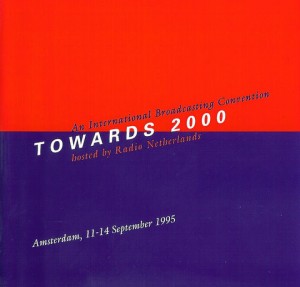
Remember Trevor Baylis and the wind-up radio? I organised a conference for Radio Netherlands at the International Broadcasting Convention IBC between September 11-14th 1995. We decided to celebrate the fact that we were 5 years away from a new Millennium by looking at the technologies that would carry us forward. That included a look at different codings for DAB, a reality check on radio by Sri Lankan broadcaster Victor Goonetilleke and a special performance about the Clockwork Radio from Trevor Baylis, the British inventor who turned up in Amsterdam and charmed the audience with his frank, funny and brilliant introduction to the concept of wind-up radios. A few weeks after the conference we produced a special CD for those who took part. This is a copy for those who missed it. It’s double the length of a normal Media Network, just over an hour.

You can download this archive episode of Media Network on the Vintage Vault website.

By the way, Jonathan Mark’s Media Network Vintage Vault has many, many audio treasures from the radio past. Certainly worth bookmarking!

History of WWV and the NIST Time Stations

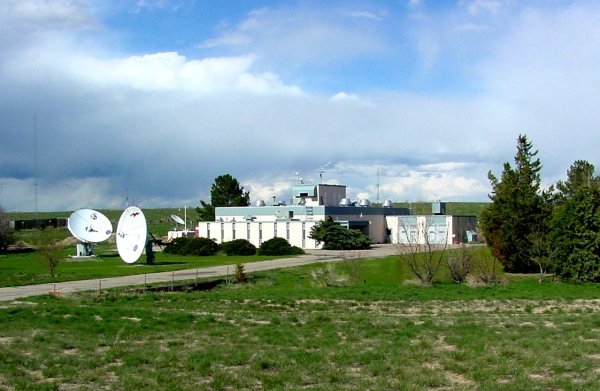
WWV building in Fort Collins, Colorado (photo courtesy: NIST)

WWV building in Fort Collins, Colorado (photo courtesy: NIST)

Many readers know that I’m a bit of a WWV geek, so you can imagine how happy I was when my buddy, Mike, and the Southgate ARC made me aware of this 152 page history of the NIST time station family. At first glance, this looks to be an authoritative and thorough history indeed.

I have already sent this to my Kindle Fire and look forward to reading it (at least, starting it) tonight. Click here to download the NIST time station history as a PDF.

Incidentally, if you have an affinity for the NIST time stations, be sure to check out my previous post on Myke’s audio history of WWV, “At The Tone.”

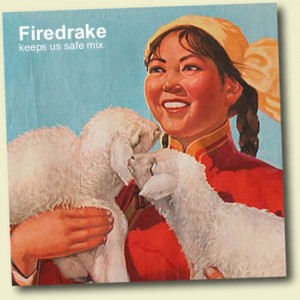
Mark’s studio version of Firedrake

(Photo: Satdirectory.com)

(Photo: Satdirectory.com)

As I suspected, the unidentified broadcast I recently posted was the Chinese jamming service, Firedrake.  Thanks to all who confirmed.

Mark Fahey even commented with a link to an article explaining how he made a studio recording of Firedrake from Chinasat 6B. Read Mark’s article here.

Mark also has the full 60 minute studio copy of Firedrake available as a 90MB MP3 file.