Category Archives: Radio History

Shortwave Radio Recordings: Worldwide All-Ireland GAA finals via RTÉ

22 September 2002; A general view of Croke Park at 3.29pm, a minute before the start of the game. Kerry v Armagh, All Ireland Football Final, Croke Park, Dublin. Picture credit; Brendan Moran / SPORTSFILE

22 September 2002; A general view of Croke Park at 3.29pm, a minute before the start of the game. Kerry v Armagh, All Ireland Football Final, Croke Park, Dublin. (Photo credit; Brendan Moran / SPORTSFILE)

Sunday afternoon, I was at home to catch a bit of the GAA finals via RTÉ on 17,725 kHz, starting around 15:00 UTC.

I enjoy hearing sporting events broadcast over shortwave–perhaps it’s my imagination filling in the gaps from the live coverage or the washy sound of the crowds roaring.  Regardless, RTÉ has a long-standing track record of broadcasting the GAA finals on every medium possible.

As I listened to the live broadcast, Sunday, I read Norman Freeman’s account of listening to the GAA finals from a ship in the Indian Ocean, back in 1956. He writes:

“Almost 50 years ago, listening to the All-Ireland by radio was uncertain and frustrating.

In 1956, RTÉ knew how much the All-Ireland meant to the Irish diaspora. Arrangements were made with the authorities in the then French Congo to have the match rebroadcast the following evening, on the powerful short-wave transmitter in Brazzaville.

The time and frequencies were published in the Irish newspapers. This information was sent by letter to the Irish on oil rigs off the coast of Borneo, to round-the-year painters on Brooklyn Bridge, and to missionaries within sight of Mount Kilimanjaro.

I had noted the time and frequencies before I was sent out to Mumbai to join my first ship, the Amra, as second radio officer. The hurling final was between two giants, Cork and Wexford.”
[Continue reading…]

While Freeman doesn’t miss the uncertainty and fickle nature of shortwave radio as the messenger of his favorite sporting event, his look back is certainly nostalgic. After all, Radio Brazzaville transported Freeman and his boss back to Ireland for the length of the game. And to RTÉ’s credit, they continue to broadcast to the Irish diaspora on shortwave radio, if only for this event. 

If you would like to hear my recording of the GAA Finals, click here to download the MP3 recording, or simply listen via the embedded player below:
Dave Porter’s video tour of the BBC Woofferton transmitting site

Check out this brilliant video tour of the BBC Woofferton Transmitting Station, presented by Senior Transmitter Engineer Dave Porter (G40YX). The video is divided in seven parts, thus I’ve created a playlist that will automatically load each video in order.

Click here to start the playlist on YouTube, or simply watch the tour through the embedded video player below. Enjoy:

Many thanks to Dave Porter for hosting this video tour and to Mike Barraclough for the tip!

If you would like to read a detailed history of Woofferton, be sure to check out our post:
Shortwave Radio History: 50 years of transmitting at BBC Woofferton

The Tuckerton Tower’s long (and unlikely!) history

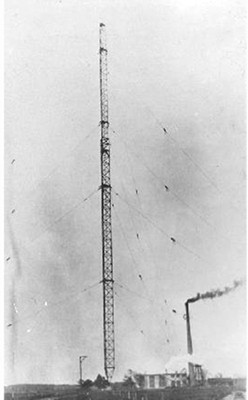
The Tuckerton Tower circa 1916 (Souce: Tom Mcnally mcnally.cc)

The Tuckerton Tower, circa 1916 (Souce: Tom Mcnally mcnally.cc)

I love radio history, and I dive right into it when something especially piques my interest. This morning, a news item from a local newspaper in New Jersey about that state’s famed, but nearly forgotten, Tuckerton Tower did just that.

Built in 1912, the Tuckerton Tower was once the tallest structure in the US.  Indeed, it was at that time the second tallest structure in the world (the Eiffel Tower had it beat by 243 feet).  Though on US soil, it was originally built by––get this––the German government, in order to communicate with an identical tower in Eilvese, Germany (see comments); of course, it also communicated with naval vessels. According to many sources, the US government may have been completely unaware of the construction of this communication monolith until it neared completion.

But that’s just the beginning of the story:  When the US entered WWI, the US government took over the tower’s operations and placed Tuckerton’s German operators and engineers in a POW camp.  Then, post-war, the newly-formed Radio Corporation of America (RCA) assumed the tower’s operation with the intention of using it for the latest and greatest innovation in radio communications: voice over wireless. Tuckerton Tower continued under RCA’s operation until the US government drafted it into service again, this time during WWII.

But even though the tower survived two world wars, weather events like nor’easters, and The Great Depression, by the late 1940s it was considered obsolete. Several attempts were made to preserve the historic structure, but on December 28, 1955, it was torn down and cut for scrap.  Today, a lower section of the tower can be viewed at the Tuckerton Historical Society’s museum, while the concrete block anchors that once held the monolithic structure upright now rest, somewhat defiantly, in the center of a residential area.

If you find this tower’s history as remarkable as I do, check out this informative and detailed article in The Sandpiper and Tom McNally’s History of Tuckerton Wireless which includes some excellent photos of the tower throughout history.

Are there any readers of The SWLing Post with memories long enough to remember the Tuckerton Tower, or who have heard stories about it?  Please comment!

Jonathan remembers Radio Netherlands Worldwide one year on

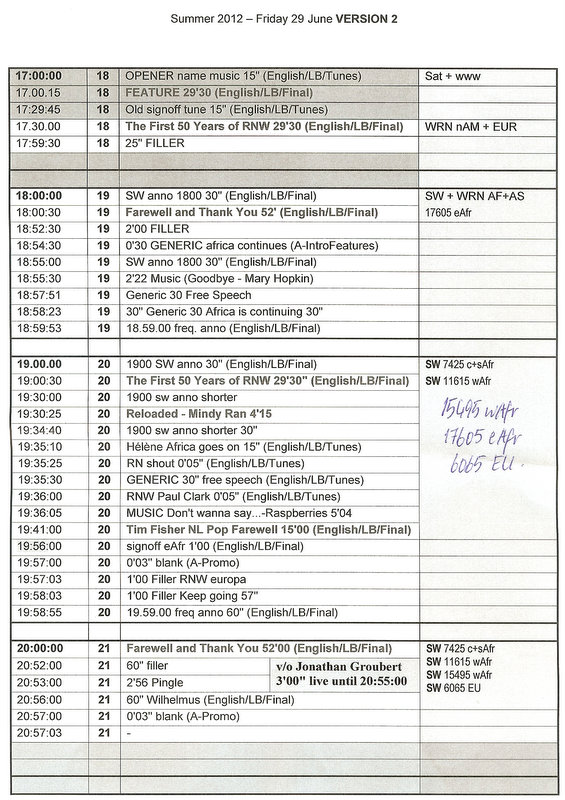
RNW's final broadcast schedule (Source: Jonathan Marks)

RNW’s final broadcast schedule (Source: Jonathan Marks)

A few days ago, former RNW employee, Jonathan Marks, was sorting out some papers in his office when something “spooky” happened:

“one sheet [of paper] fell out of a pile and onto the floor. It was the page of the last day of transmission from Radio Netherlands, English department.”

“What was weird was that this happened exactly one year ago to the day they pulled the switch. It was 2253 local time on a Friday when Jonathan Groubert, above, made the last announcement from Continuity Studio 4.”

Jonathan’s full post on his blog, Critical Distance, has some fantastic photos, notes, an interview and recording from the final moments of RNW’s final shortwave broadcast. Click here to read his post.

Jonathan’s post reminded me that one year ago, I was on a six week vacation with my family in the Canadian Maritimes.  I listened to and recorded all of the final RNW shortwave broadcasts in an off-grid cabin on the eastern coast of lovely Prince Edward Island. An SWLing memory I will never forget. You can listen to these field recordings and read my post, “RNW says farewell in style” via this link.

Seeking 1970s era recordings of Radio Australia

The Shortwave Radio Audio Archive

The Shortwave Radio Audio Archive

Yesterday, I received a message from Sam, via the Shortwave Radio Audio Archive.  He writes:

Nice website! I’ve been looking (and listening) through it for the last hour or so. Nice!

I see you have some Radio Australia recordings and was wondering if you have any older ones? I’ve been trying for a couple of years now to find a recording of the top of the hour from Radio Australia in the mid 1970s. I was a youngster then and used to rush home from school to hear the station – I grew up in Northern Ireland and used to be able to get Radio Australia from around 1530 local time until maybe 1800 local, depending on the conditions. One thing I remember about it was the time “pips”, which included a pip at 10 seconds to the hour, which I had never heard before (or anywhere else since). I’d love to hear this again along with the theme to the news which came on the hour – I’ve found out that it was called Majestic Fanfare, but the version played on 70s Radio Australia is different to that played now and in every recording I’ve heard. Seems they changed the recording they used during the 80s. Even the ABC and Radio Australia can’t help as I’ve contacted them, so I’m trying every avenue which comes along.

I know it’s probably way before your oldest recording but heck, I had to ask! 😉

Many thanks.

If you happen to have 1970s era recordings of Radio Australia that you would like to share with Sam (and the world), please contact me and I would be happy to upload them to the Shortwave Radio Audio Archive.

Thanks for your inquiry, Sam!

Shortwave Radio Recordings: BBC World Service to the British Antarctic Survey

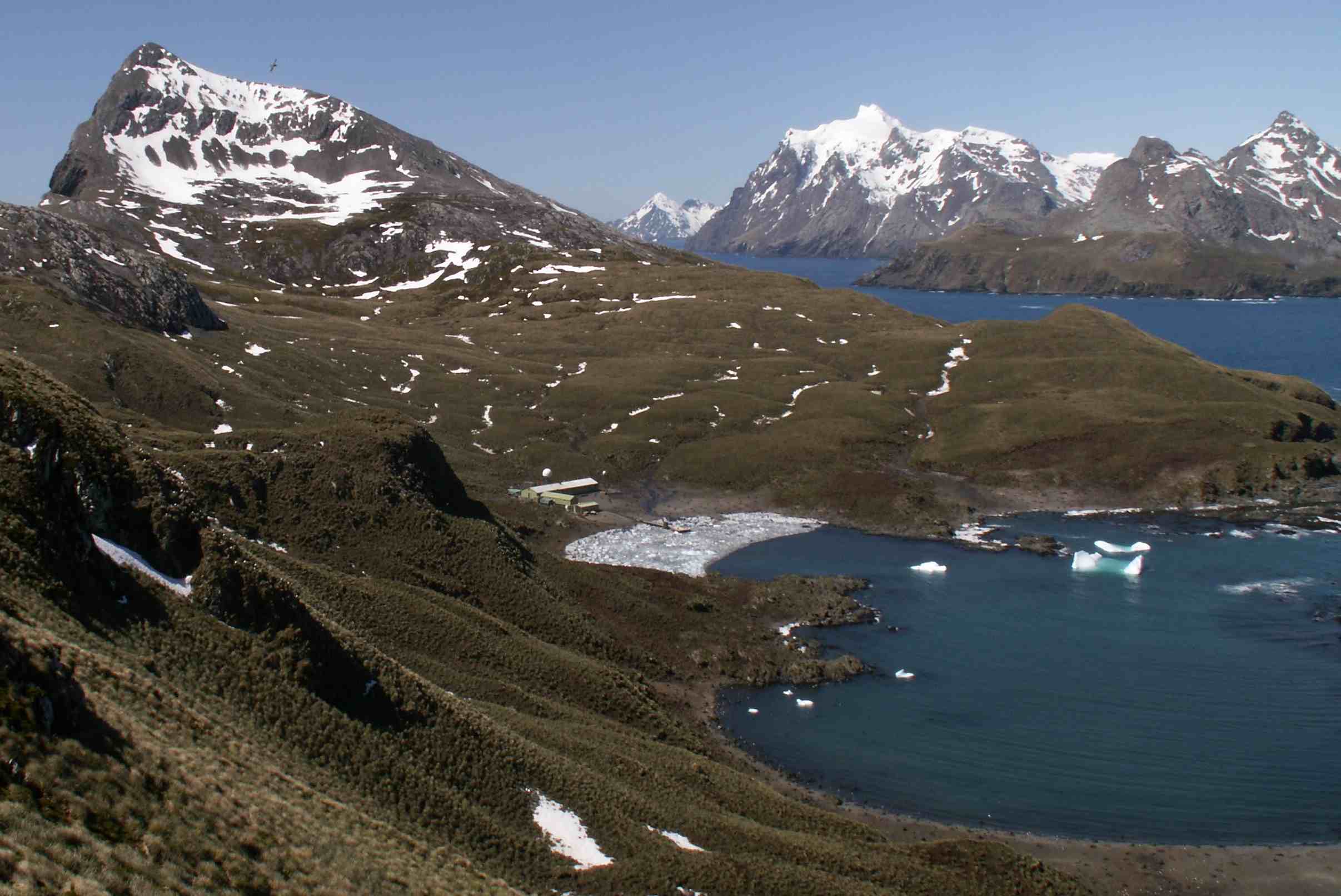
View of Bird Island, South Georgia, where one of the British Antarctic research stations is located. (Source: British Antarctic Survey)

View of Bird Island, South Georgia, where one of the British Antarctic research stations is located. (Source: British Antarctic Survey)

Mentioned earlier today, here is the recording of the BBC World Service’s thirty minute broadcast to the British Antarctic Survey. I was able to receive a relatively strong signal at 21:30 UTC on 9,890 kHz from the World Service’s Wooferton transmission site.

Click here to download the full recording as an MP3, or simply listen via the embedded player below.  I will also post this on the Shortwave Radio Audio Archive.

Catch the BBC’s annual broadcast to the British Antarctic Survey Team

Halley VI: The British Antarctic Survey's new base (Source: BBC)

Halley VI: The British Antarctic Survey’s new base (Source: BBC)

Every year, the BBC broadcasts a special program to the 41 scientists and support staff in the British Antarctic Survey Team.

The BBC will play music requests and send special messages to the team of 41. It’s guaranteed to be quirky, nostalgic and certainly DX worth catching.

The British Antarctic Survey celebrates today (their longest, darkest winter day) with the same enthusiasm as Christmas. The BBC noted:

The base commanders rise early to cook breakfast for their staff, presents are exchanged, there are sports and even, weather permitting, a mad streak in the snow! Feasting continues before they gather round a shortwave set to listen to the traditional broadcast packed with greetings from their family and friends back home together with music requests and messages from the British Antarctic Survey and a few celebrities. Finally the Antarctic horror movie The Thing is screened. For those who know the plot, perhaps it is just as well there are no longer sledge dogs in Antarctica…

The great part? You too can catch the broadcast if you’re in the right part of the world to hear it.  I’ll attempt to record either the Ascension Island or Woofferton broadcast myself, if conditions make it possible.

The program will air today, June 21, 2013 at 21:30 UTC on the following frequencies:

  • 7,350 kHz; Ascension; 207°
  • 9,890 kHz; Woofferton; 182°
  • 5,965 kHz; Dhabayya; 203°

Many thanks to Sheldon Harvey for the reminder and for especially confirming the broadcast time.  Even though this event happens on the same day each year (ironically on my birthday) I often forget to catch it myself.

Please submit your recordings of this broadcast to the Shortwave Radio Audio Archive.