Category Archives: Radios

Reports on Hack of HT Radios/ICOM Responds

by Dan Robinson

The explosions/detonations of HT radios targeting the militant group Hezbollah in Lebanon continue to make headlines, with latest reports digging into the origins of the units and containing reaction from ICOM.  This story is one of those rare occasions when the radio manufacturing industry is thrust into the spotlight.

Reuters reported that:

“The lethal hack of Hezbollah’s Asian-branded pagers and walkie-talkies has sparked an intense search for the devices’ path, revealing a murky market for older technologies where buyers may have few assurances about what they are getting. While supply chains and distribution channels for higher-margin and newer products are tightly managed, that’s not the case for older electronics from Asia where counterfeiting, surplus inventories and complex contract manufacturing deals can sometimes make it impossible to identify the source of a product, analysts and consultants say.”

The Reuters report also noted:

“For Icom, one problem is that it stopped making the IC-V82 model in question a decade ago, around the time it started introducing holographic stickers as a protection against counterfeit products, the company said. The company has long warned about imitation products, especially of its older models. In fact, more than 7% of firms in Japan reported business losses from counterfeit products in 2020, according to the latest available report by the Japan Patent Office, with around a third of cases linked to China. Icom has urged that customers only use its official distributor network to ensure they are buying genuine products.”

This earlier Reuters report was published in The Jerusalem Post.

Other reports were by Kyodo (see: https://english.kyodonews.net/news/2024/09/9d7c5ea04e62-exploding-walkie-talkies-in-lebanon-may-be-product-of-japanese-firm.html, Bloomberg (appearing on the TIME website (https://time.com/7022598/lebanon-walkie-talkies-explosion-japan-icom/) and BBC (https://www.bbc.com/news/articles/cz04m913m49o).

Another report, which quotes Ray Novak, ICOM U.S. representative, appeared in The Washington Post.   It said ICOM was “[investigating the allegations, but early signs pointed to the walkie-talkies being counterfeit]”.  ICOM had issued three statements on its website as of mid-September 20th.

Guess the Receiver Shown in SSGB

Identify the Radio!

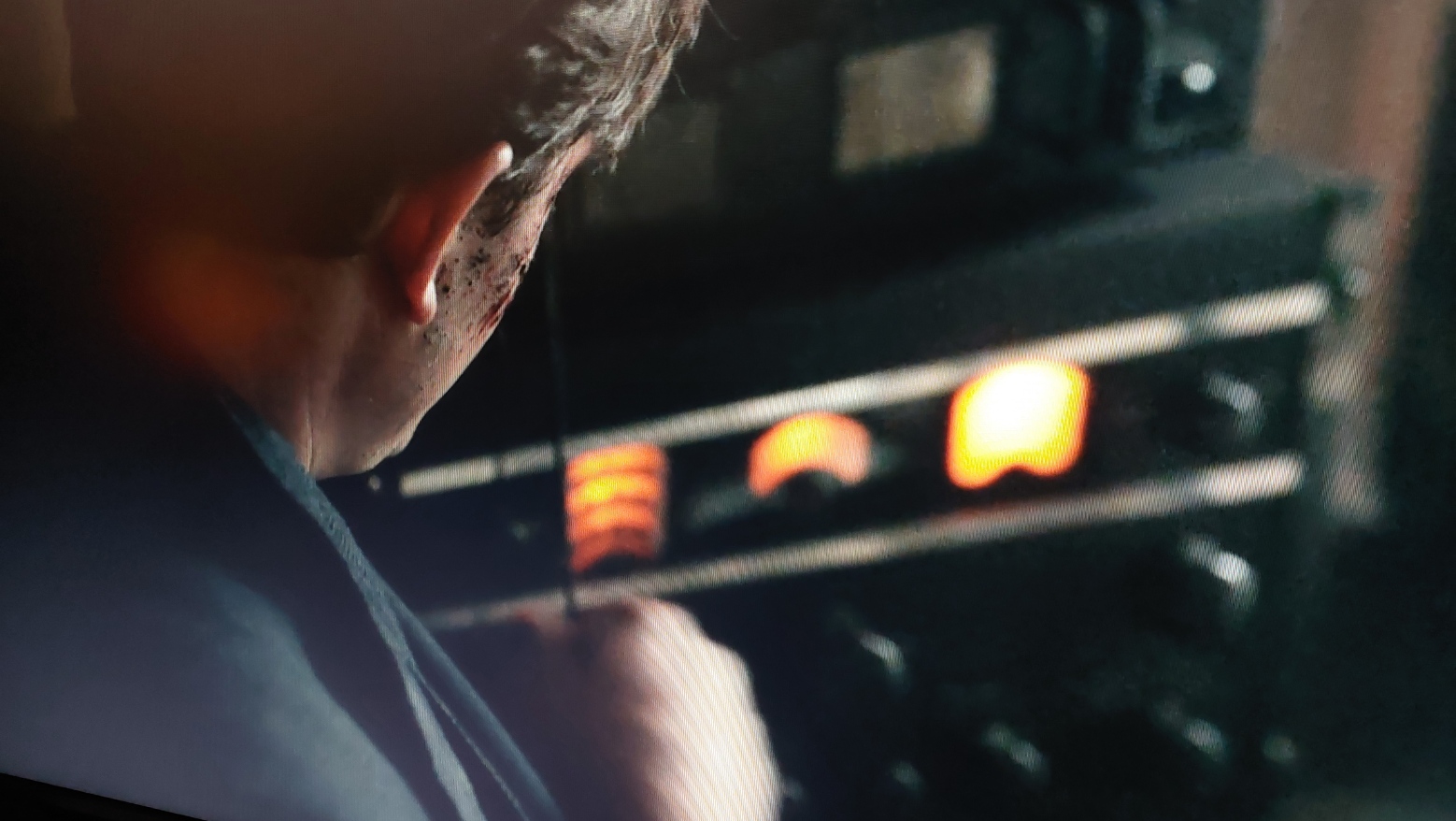
SS-GB is a British mini-series from 2017 in which a British homicide detective investigates a murder in a German-occupied England in a parallel universe where the Nazis won World War II.  The show reminds one of the fantastic Man in the High Castle which ran from 2015 and 2019 and similarly created a world in which Germany and Japan had won WWII.  In one scene, the detective, played by British actor Sam Riley, is shown listening to a radio — which model will surely be immediately recognized by most of us who have been in the SWL hobby for many years . . . see how long it takes for you to win the prize!   

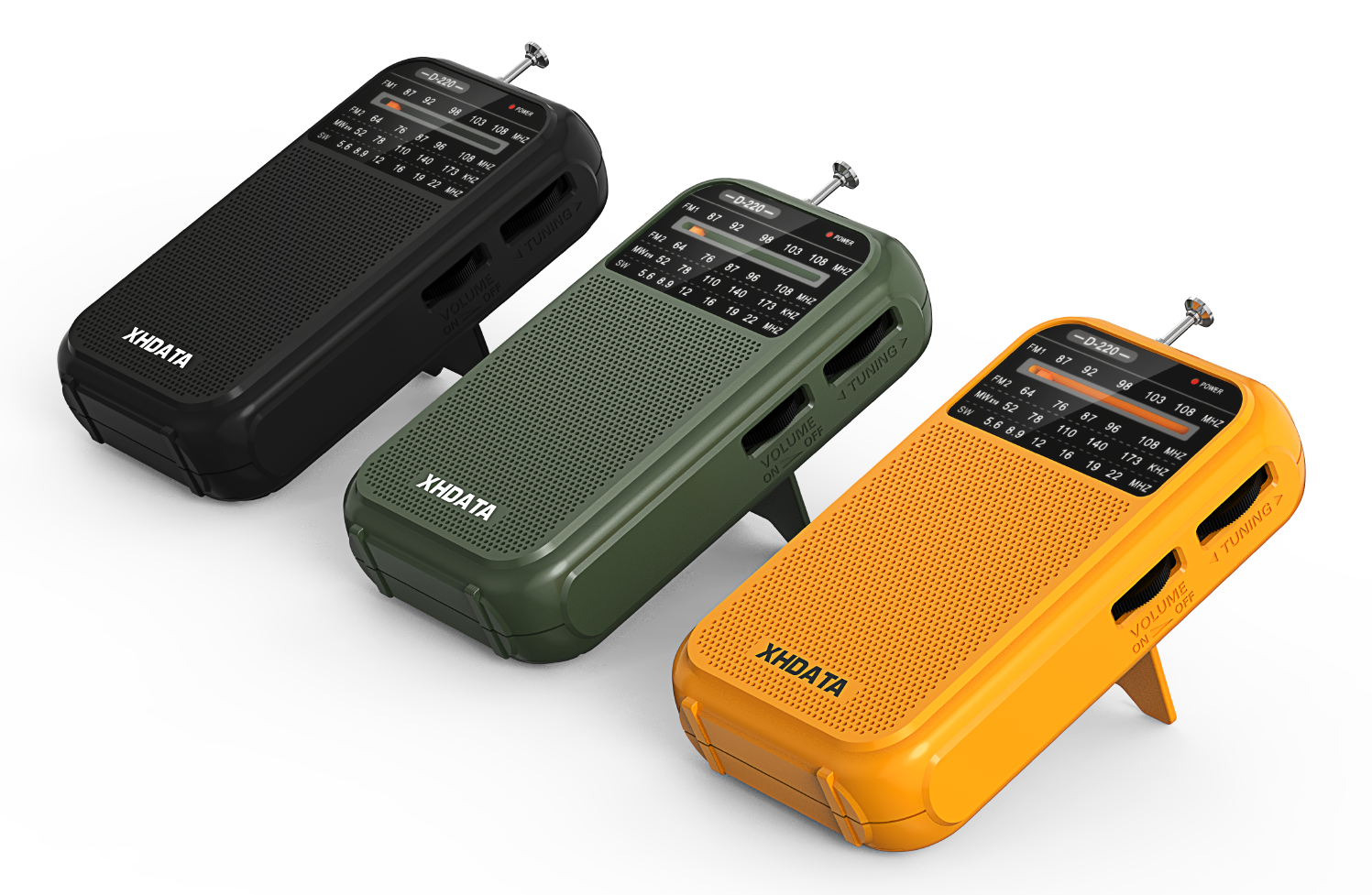
Steffen shares some XHDATA D-220 tricks

XHDATA D-220 PortableMany thanks to SWLing Post contributor, Steffen Schultz, who writes:

Hello Thomas,

As a regular reader of your blog, I was fascinated by the reports on the XHDATA D-220 [affiliate link] and ordered a black one. I was not disappointed. Of course it’s not a DXing machine, but finally we have a device wich reaches the reception quality of the old pocket radios again I used to carry around in my childhood. I still have a Philips D1220 from the 80s, which is even less sensitive than the XHDATA D-220.

This reminded me of my early radio days, when I would try to use the simplest methods to manipulate analog radios to do things that were not intended by the manufacturer. For example, by moving the band selector switch to an intermediate position, it was possible to get some radios to receive frequencies outside the intended range. Of course, I couldn’t resist and experimented with the D-220. It takes a bit of patience and sensitivity, but the radio really does hold some secrets.

Medium wave reception with the telescopic antenna

When I was listening to a weak station on medium wave and slowly moved the switch to short wave, the medium wave station got louder for a moment before the slide switch clicked into the correct position. In fact, the radio seems to switch to the telescopic antenna when you move the band selector a little toward short wave. A finger test on the antenna confirmed my suspicion. I also tried connecting a long wire, but that was counterproductive with all the men-made noise inside my house. Extended shortwave reception

A similar trick can be used to change the shortwave frequencies. If you slightly move the band selector from the shortwave position towards medium wave, the receiver switches to a different shortwave frequency range, covering between about 3000 and 7000 kHz. Now I was able to receive shortwave radio from Germany on 3975 kHz without any problems, and of course South Korea via England on 3955 kHz was no problem either.

I have not yet found out if the two FM bands can also be manipulated in this way, an intermediate position of the band selector seems to have no effect here. Perhaps one of the readers has discovered something?

73 and best regards
Steffen
Wittstock/Germany

Thank you for sharing these D-220 tips/hacks, Steffen!

Aaron Explores: Why a Dedicated Radio Enhances the Live Baseball Experience

Many thanks to SWLing Post contributor, Aaron Kuhn, who shares the following guest post:


Live Baseball on the Radio: Radio Selection Considerations

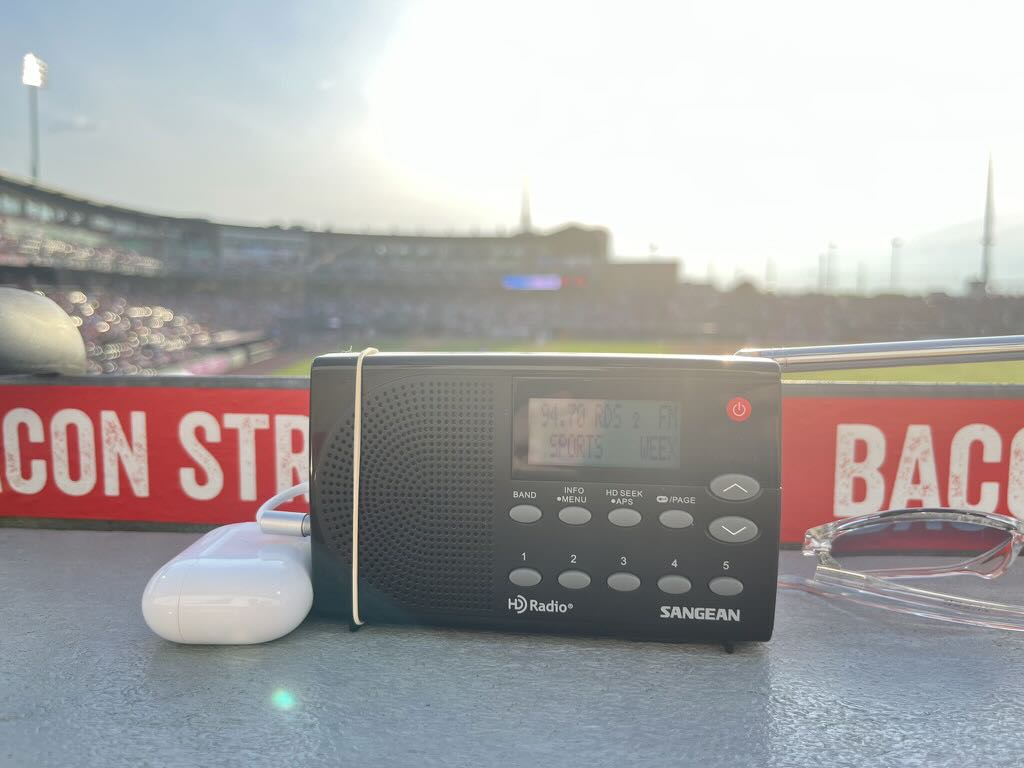
The authors own Sangean Portable + AirPod Pros + a Bluetooth Transmitter rubber banded to the radio back, Coca Cola Park – Allentown, PA

In recent years, I’ve enjoyed attending minor league baseball games in my region. One of my favorite aspects of live baseball is bringing a radio to listen to play-by-play commentary. Experiencing the game in person while hearing the commentary in my ear offers the best of both worlds.

Over the years, I’ve brought various portable and ultra-portable radios to games, and I’ve realized that certain criteria make for a good “Live Baseball Radio.” Whether it’s form factor, size, or features, a live sporting event presents specific considerations and trade-offs for the radio you choose to bring.

“I’ll just stream the game on my phone”

While there are many options for internet streaming on a smartphone, like the free game audio feeds from MiLB.com, streaming game audio on a smartphone is not ideal for live baseball due to one major issue: latency.

Ideally, you want the action you see to match as closely as possible with the play-by-play you hear. With internet streaming, you’re subject to internet latency and buffering, leading to audio delays that you cannot fix. This makes streaming better for listening to games from afar, but not for live baseball.

Selecting the Ideal Radio

Picking a radio to bring to a game involves considerations that become obvious only after you’ve tried it a few times. Hopefully you can learn from my past mistakes and be more informed.

AM, FM, or AM/FM?

There are no fixed rules about the frequency’s baseball teams use for broadcasting. Some teams are on AM radio, some on FM, and some simulcast on both. Some teams don’t broadcast on free-to-air radio at all, opting for streaming-only solutions. Choosing a radio that receives both AM and FM is your best bet to ensure you can use it at different stadiums.

Many ultra-portable “pocket” radios support only FM, which might leave you without audio if your local team is on AM. Conversely, vintage pocket transistor radios might leave you stuck with AM-only signal receiving capability, missing the FM signal.

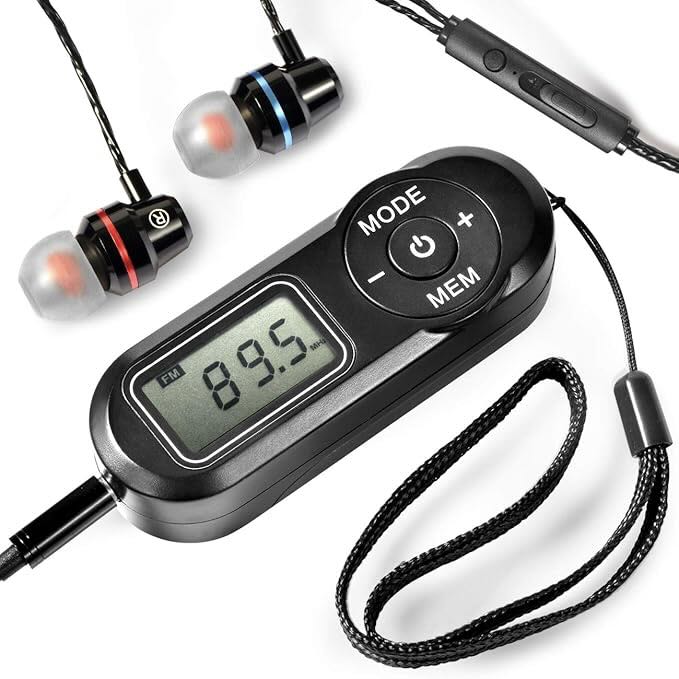
Amazon Product Listing Photo for “ZHIWHIS” Ultra-Portable

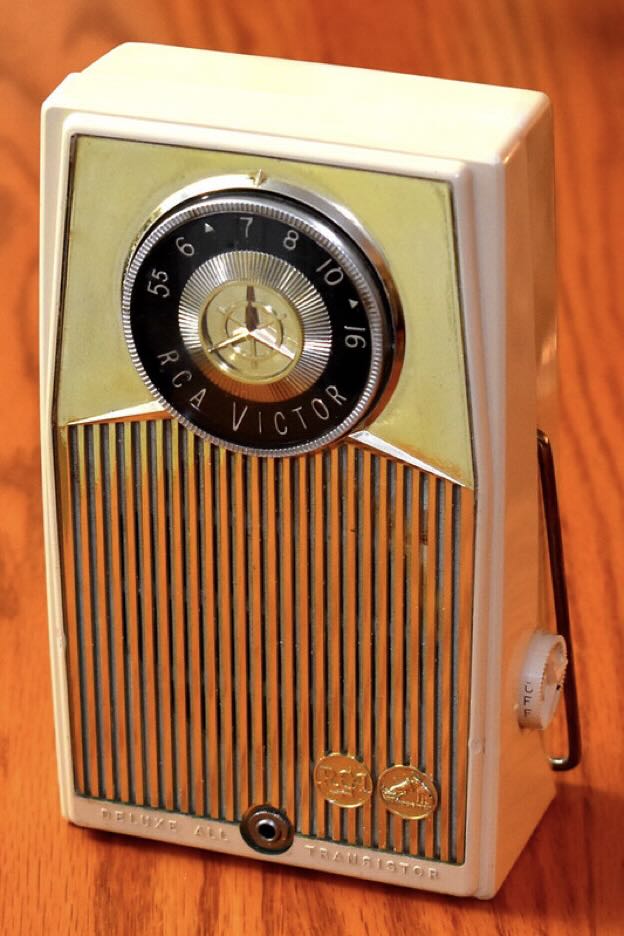
Vintage RCA Transistor Radio, Photo by Joe Haupt – https://www.flickr.com/photos/51764518@N02/49435844673/

HD Radio

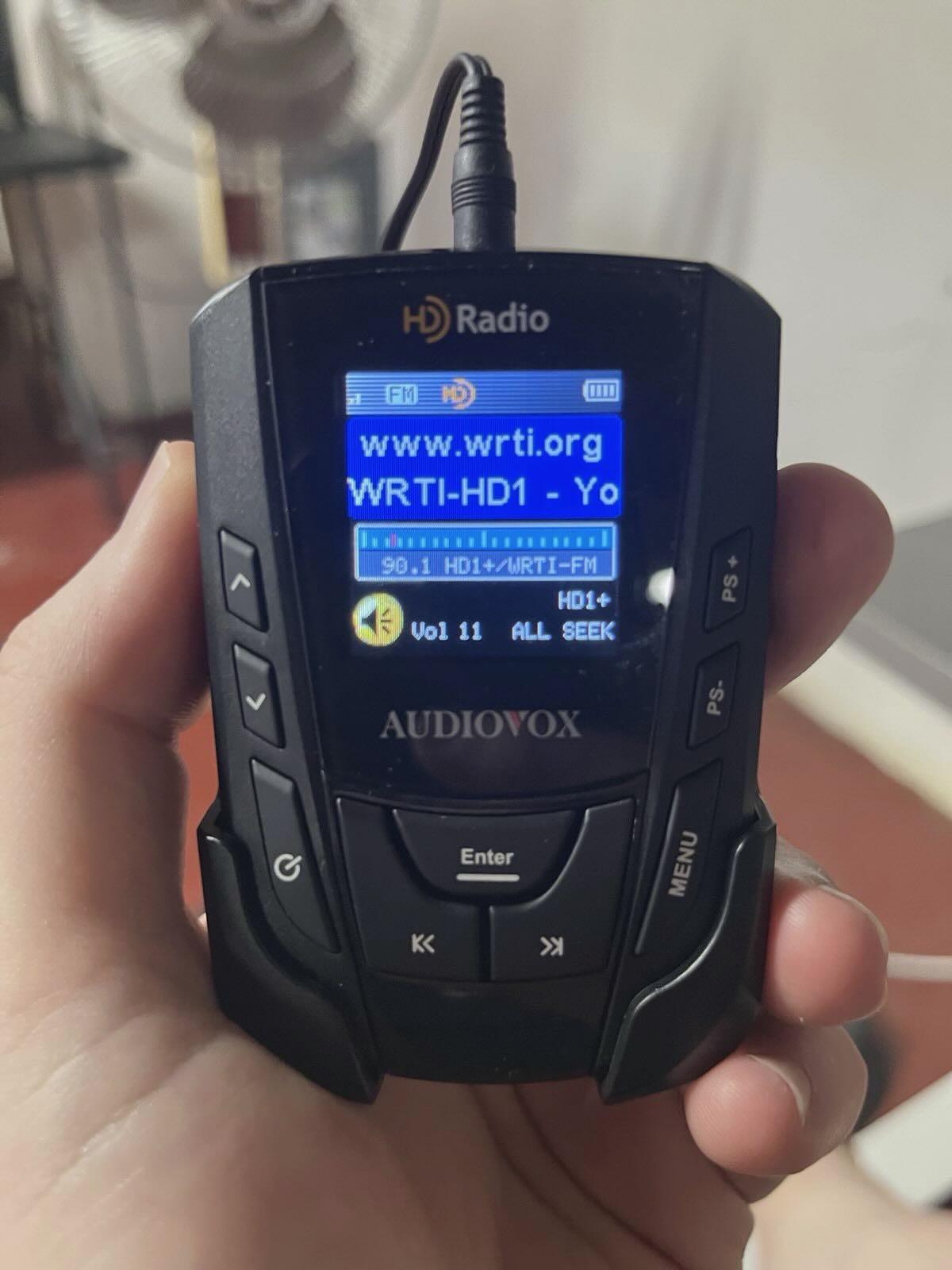
The Author’s recent ill-fated radio choice for a live game

While HD Radio seems like a great idea for live baseball, the HD signal suffers from similar issues as streaming a game: latency

I recently picked up an ultra-portable FM HD Radio for a great deal secondhand, only to take it to the ballpark and realize the HD Signal was delayed by nearly 20 seconds. Worse yet – the radio offered no way to turn off the HD signal and revert to analog! The radio was unusable for watching the game as play-by-play in my ear was nearly four pitches behind what I was seeing live.

If you choose a radio with HD Radio features for the ballpark, check the broadcast delay on the HD signal before the game, and ensure you can turn off the HD Radio features if necessary.

Radio Size and Antenna Considerations

Any radio can be portable if you try hard enough, but space is often limited at live sporting events. Stadium seating varies at some ballparks, you can spread out a blanket on a hillside, sit at a picnic table, or even watch the game from a pool (better check that IPX rating!). However, you’ll likely be using your radio while seated in your ticketed seat. Some stadiums offer spacious, modern seating, while older stadiums may have small, cramped seating.

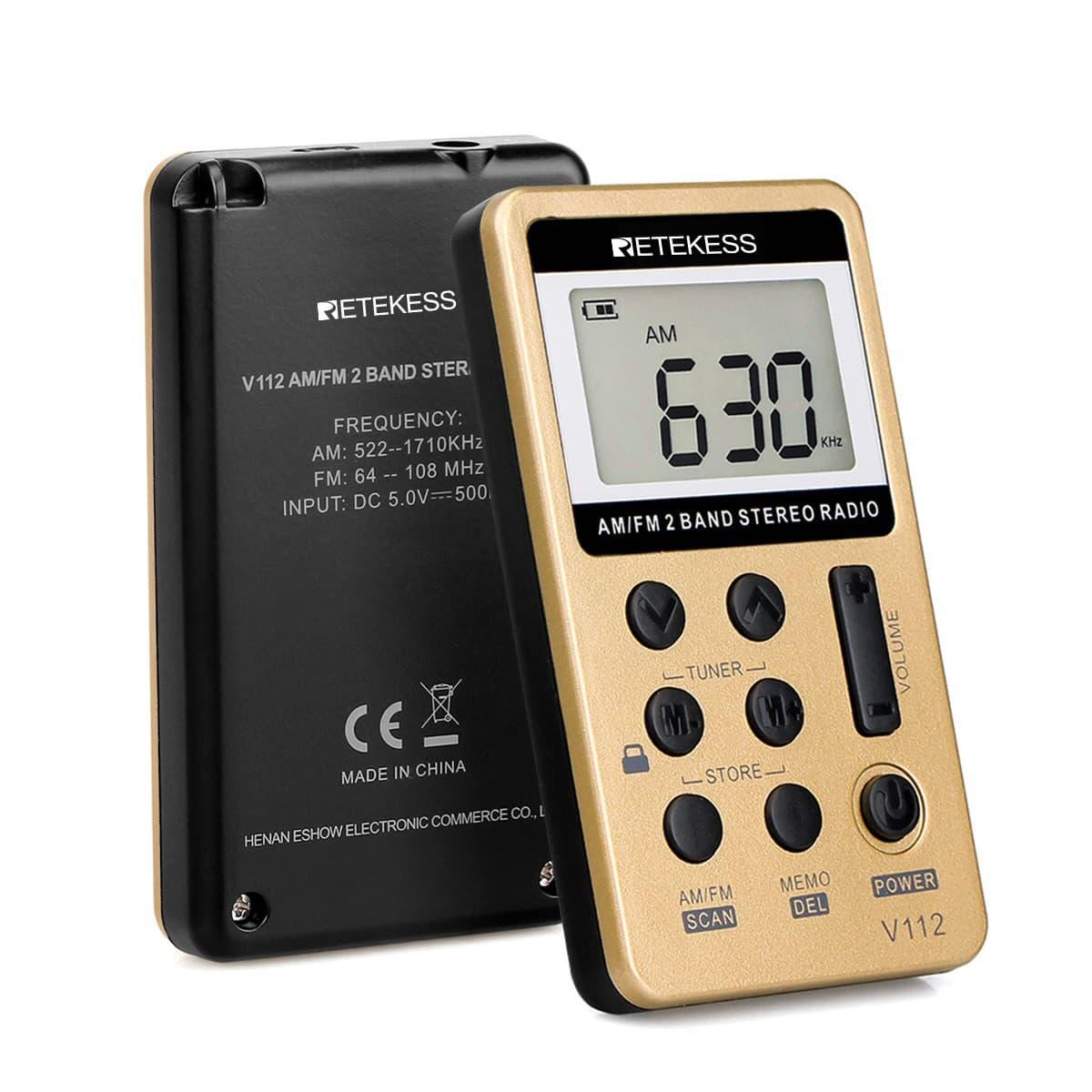
Antennas on radios are another consideration. In cramped stadium seating, you may not have the luxury to fully extend the antenna for the best signal without poking the person in front of you or next to you. You might want to consider a radio without an external antenna, such as one like the Retekess V112, which uses the headphone cable as the antenna. You may also need to stand up and sit down repeatedly to let people through the aisle rows to their own seats, which is where going “antenna-less” can be useful.

Retekess Product Image for V112 Model

While a headphone-wire antenna setup may be a perceived undesirable feature for dedicated radio hobbyists, pocketability and ease of use in a crowd can be beneficial at a crowded game. Many stadiums are moving towards bag restrictions or not allowing bags at all, making the proposition of transporting even a modest-sized portable radio to a game a chore. A pocket-sized radio you can stick on a lanyard, wear into the park, or stick in a pocket may be the difference between being annoyed all game carrying around a radio, or just enjoying it.

On the flip side, if you plan on pairing your radio with a Bluetooth transmitter to use Bluetooth earbuds or headphones, you may want to select a radio with an antenna. The short cable run on many Bluetooth transmitters may not provide adequate reception for units that use connected headphones as the antenna.

Speaker or No Speaker

If you’re not using the radio for tailgating, consider whether you need a speaker on the radio. Many pocket radios omit a speaker to reduce weight and cost. If you need to unplug your headphones during the game, it might be better to avoid a speaker that could blast game audio accidentally and disrupt your neighbors. Ditching the speaker is also likely to save weight and battery life.

Cost Considerations and Final Thoughts

Choosing the right radio for live baseball involves considering factors like frequency options, latency issues, size, portability, and whether you need a speaker.

Everyone’s finances and purchasing abilities differ, but there are many adequate radio options available for under $20 USD that check a lot of these boxes, making it possible to have a dedicated radio for live sports without spending a lot of money. As radio hobbyists, we sometimes want the best for our listening experiences, but taking an expensive radio to a live sporting event can be risky due to cramped quarters, constant movement, and the potential for spills or accidents.

In my opinion, it’s better to enjoy the game with a “lesser radio” than to spend the entire game worry about damaging an expensive radio. After all, cleaning mustard out of your expensive radio’s speaker grill is not fun post-game entertainment. Focus on enjoying the day and the live sporting experience while enhancing it with the wonder of live ballpark radio – no matter what you bring along.

Dan Robinson Reviews the New Tecsun S-2200X Portable Receiver

Many thanks to SWLing Post contributor and supporter, Dan Robinson, who shares the following review:


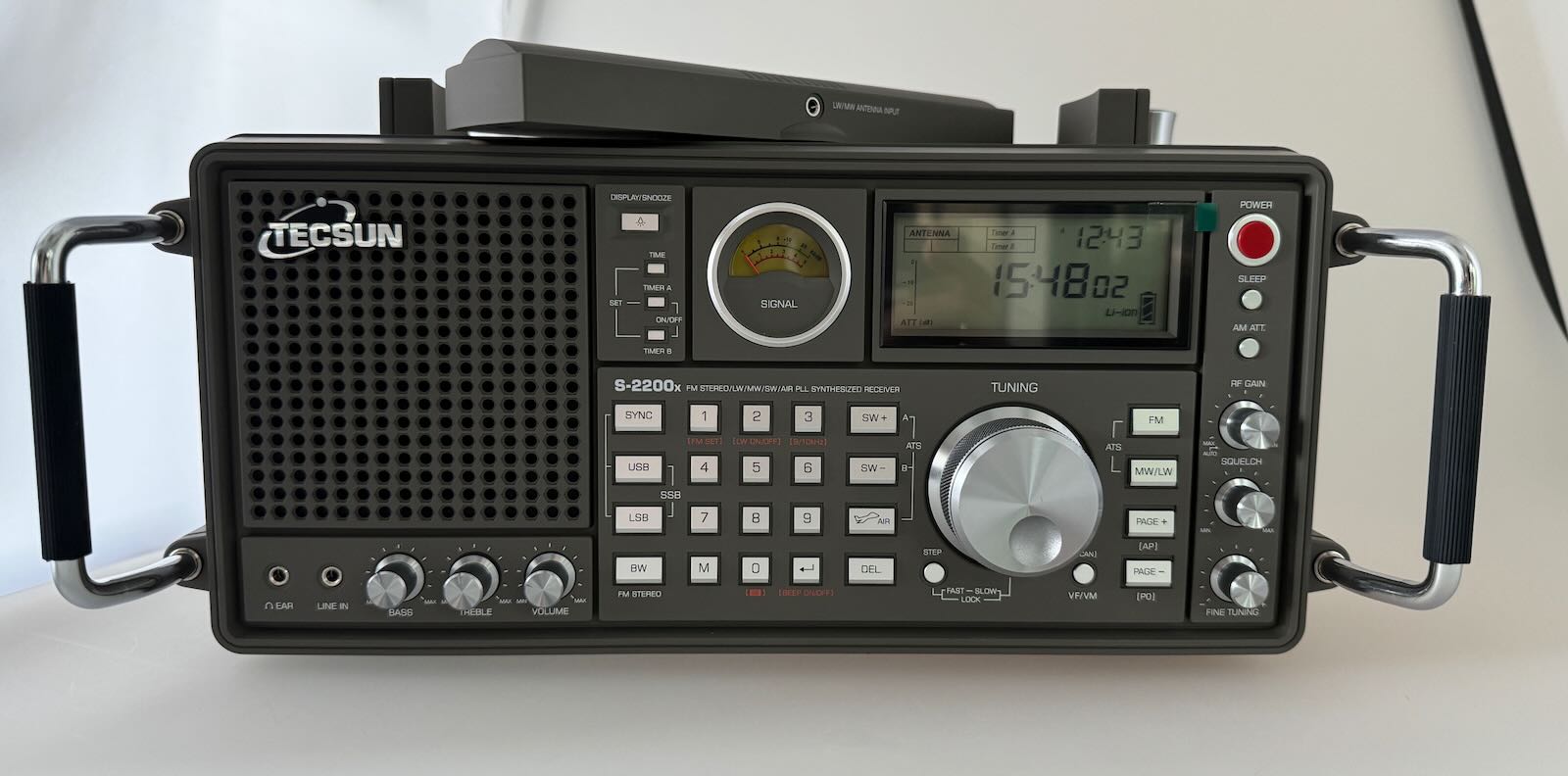
Tecsun Delivers The S-2200X – New Life For A 16-Year-Old Cabinet Design

by Dan Robinson

Note: Please see an addendum of updates at the end of this post.

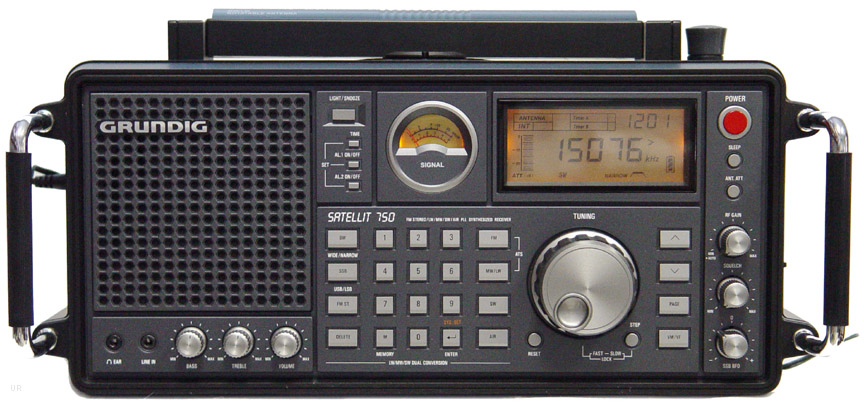
Some months ago, I learned from Anon-co that Tecsun planned to release an update to the S-2000 receiver, which for the past 16 years also sold under other names such as the Grundig Satellit 750 and later the Eton Satellit 750 and Eton Elite 750.

To say that this radio was long in the tooth is an understatement.

I remember seeing one when they first came out back in 2008 and I was never very impressed.  To me, the radio looked like a toy, and the performance did not impress.  The standout feature was the top-mounted rotatable antenna for MW/LW reception.  That was popular with those of us who own the Panasonic RF-2200 and it’s a great tool for MW.

Grundig Satellit 750

While popular with a certain segment of the listening hobby – beginners liked the 750 and even some veteran SWLs appreciated the retro design — the receiver was plagued by annoying issues, such as the famous wobbly tuning knob.  It also had limited selectivity, no synchronous mode, and mediocre SSB.

In 2013, The Monitoring Times (Larry Van Horn) took another look at the radio with the following memorable comments:

[MONITORING TIMES 2013]

“Needless to say some folks were not happy with our review of the 750 including Etón. In retrospect, over four years later, I would not change one single word I wrote in that review.  I believe we honestly gave a fair assessment of the unit that was shipped to us for review. If you read my previous review closely, you would see that most of my concerns back then had to do with quality control issues and most in our industry fully acknowledge that we were seeing some nasty stuff coming out of China back in 2008.”

So, measuring from 2008 when the first Eton 750 came out we’re now in 2024 and Tecsun has decided to preserve the cabinet design of the original radio while substantially upgrading the internals.

Enter the S-2200x

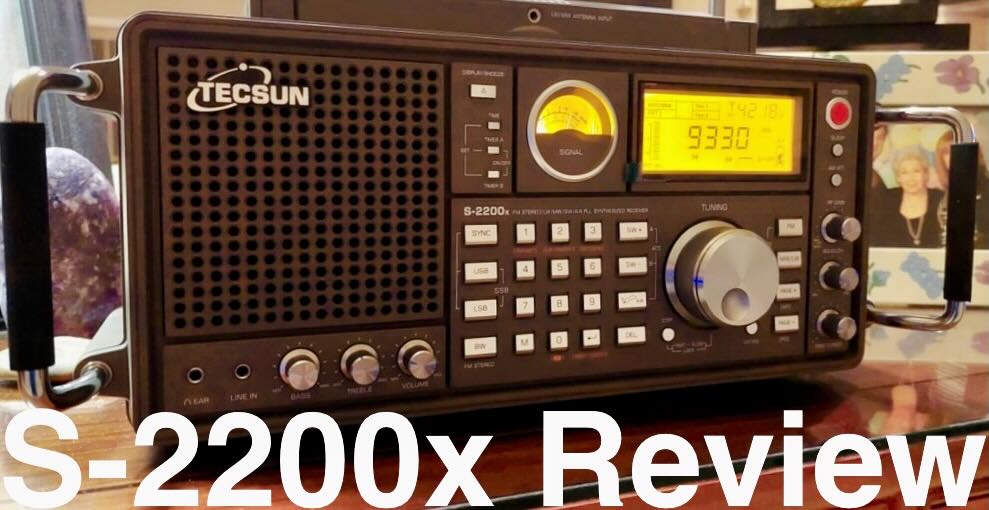
Photo by Anon-Co

Reviewers have obtained units from the first production run.  Tecsun has provided long-needed upgrades that put this radio on the same playing field as the very popular H-501 and PL-990 portables.

The 2200x adds a dedicated SYNC mode with its own front panel button.  AIR band is retained, though sadly coverage doesn’t extend up to give us the NOAA WEATHER frequencies.

My initial testing of the S-2200x shows that performance is excellent on SW, AM, and FM.  In contrast with portables from other manufacturers, SSB performance is excellent – in USB and LSB, tuning is smooth with no “warbling” and using the fine tuning control is a pleasure. Continue reading

Weird question . . . from the old retrocrank

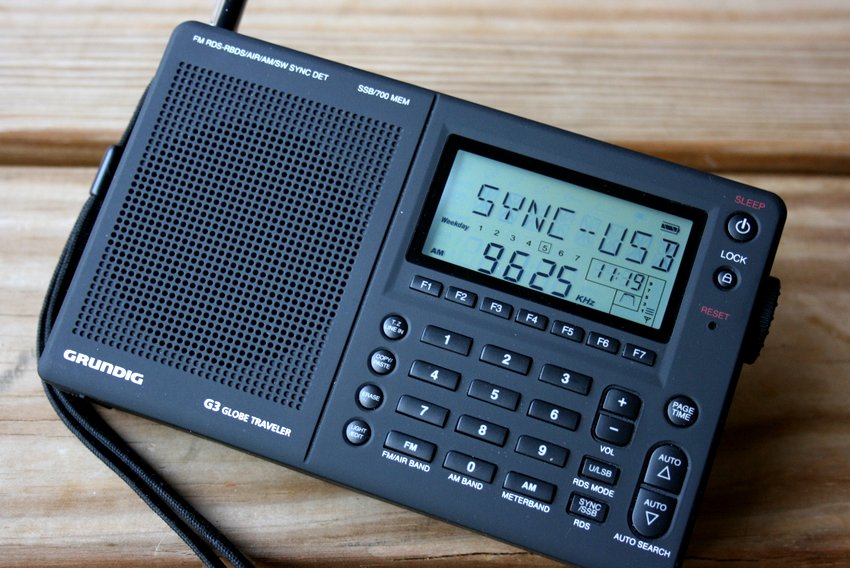
The Grundig G3 sported a Dual Conversion PLL Digital tuner with smooth tuning and no discernible muting between frequency steps.

Like some others of my age (roughly) who have posted here, I vastly prefer radios that do NOT mute between tuning steps . . . that provide smooth, continuous tuning.

So, does anyone know of any true, new, currently in production, radios with an analog receiver? Could be AM, FM, and/or shortwave?

And, if there are any, obviously I am interested in the ones that you think work well.

Cheers, Jock

Checking out the XHDATA D-808

By Jock Elliott, KB2GOM

Size matters . . . especially when it comes to antennas. In general, the more aluminum or wire you can get up in the air (presuming, of course, that it is properly designed), the more signal you are going to pull in. A radio friend has a 560-foot loop erected on his property, and its performance is, well, impressive.

I’ve had my share of high-performance antennas over the years, and I enjoyed them.

Lately, however, I have yearned for simplicity. So when I encountered the phrase “Ultralight DXing” a couple of years ago, it had a kind of magic allure to it.

At first, I was intrigued: “What the heck is that?” I wondered. After poking around on the internet, I discovered that at the heart of ultralight DXing was the notion of having a whole lot of fun trying to hear distant radio stations (usually on the medium wave band) with tiny, shirt-pocket-sized radios.

Gary DeBock got the whole ultralight DXing thing rolling in 2007. He already had deep experience in DXing, having worked 144 countries as a ham radio operator with a 1-2 watt transmitter he had built. That was his apprenticeship in radio propagation. Then in 2007, he wondered if it would be possible, using his skill and knowledge of propagation, to hear Japanese and Korean broadcasters from his home in Washington State using – wait for it – a cheap pocket radio: a Sony Walkman SRS 59. At 1 am on an autumn night, he put propagation and operating skill to work and heard a couple of medium-wave stations from Japan and one from Korea.

In November 2007, he posted his results on the internet and got a lot pushback, the upshot of which was: “How could you possibly do this?

To which he replied (in essence), “Try it and see for yourself.

Some people did try for themselves, some with notable success. For example, one DXer from Canada logged 300 stations in 30 days. The idea caught fire, and ultralight DXing was born, concentrating on medium wave stations because there are lots of them to DX. (Ultralight DXers have their own forum, which can be found here: https://ultralightdx.groups.io/g/main )

In the intervening years, ultralight DXers have experimented with exotic antennas and achieved some astonishing results, but for me, the soul of ultralight DXing is simplicity: a tiny radio, a pair of headphones, and a comfortable place to sit.

In 2021, DeBock published an “Ultralight Radio Shootout,” and when I encountered it online, I saved it (I’m a bit of a pack rat with interesting files). Earlier this year, I was rummaging through my computer when I rediscovered the Shootout and found that DeBock thought very highly of the XHDATA D-808.

Now, here’s the weird part: strictly speaking, the XHDATA D-808 is not an ultralight radio. A radio must be no bigger than 20 cubic inches to be considered an “official” ultralight radio. The D-808 is actually around 27 cubic inches.

Curious, I contacted the XHDATA folks, asking if they would like to send me one for review, which they did, without charge.
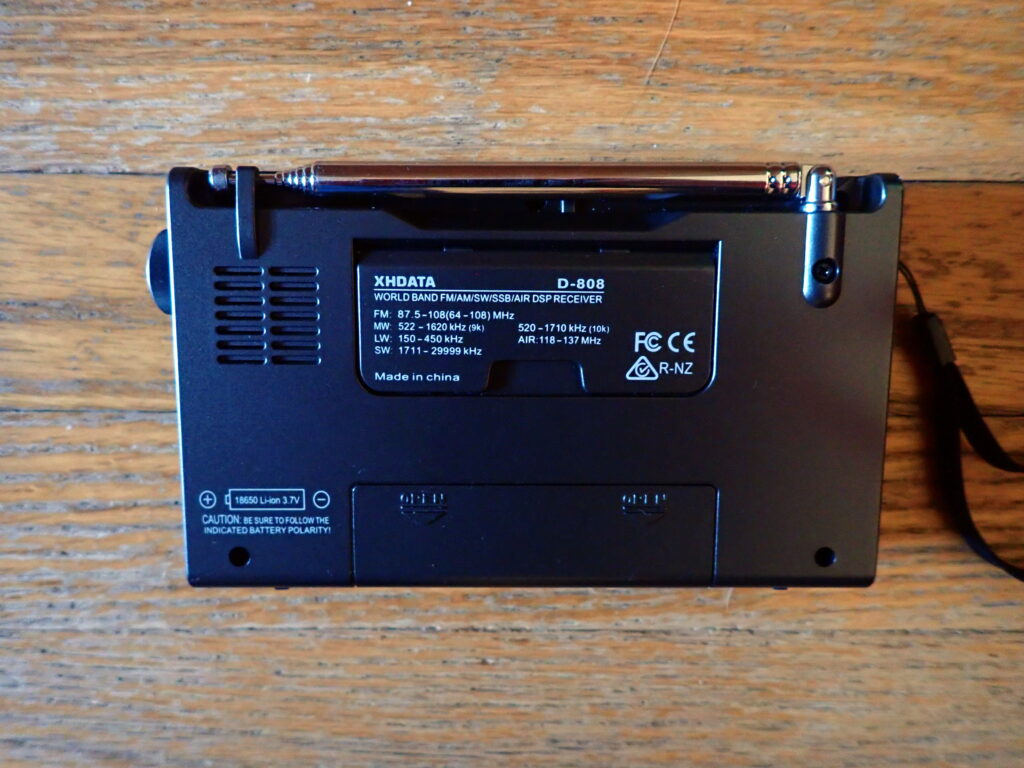
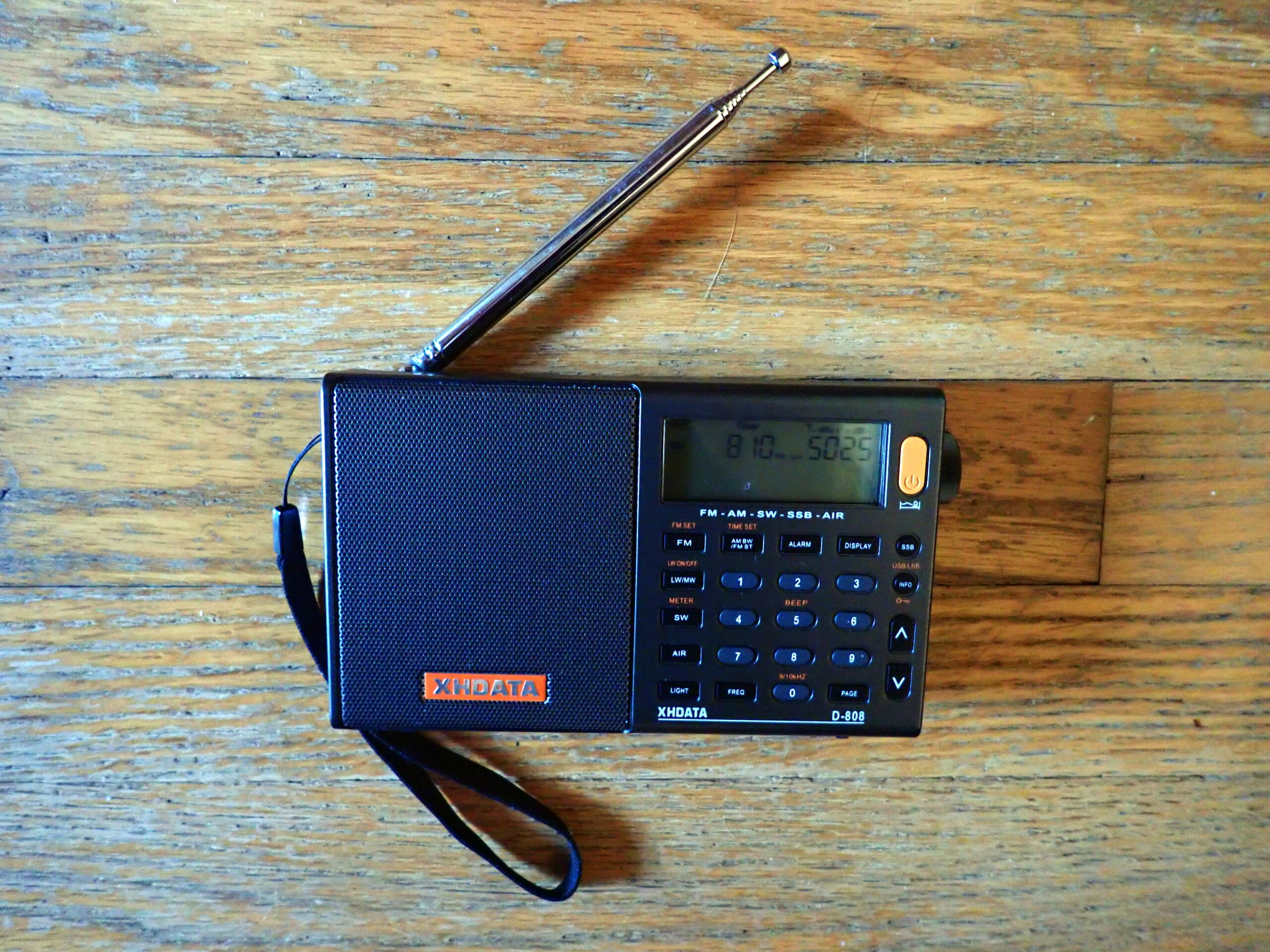
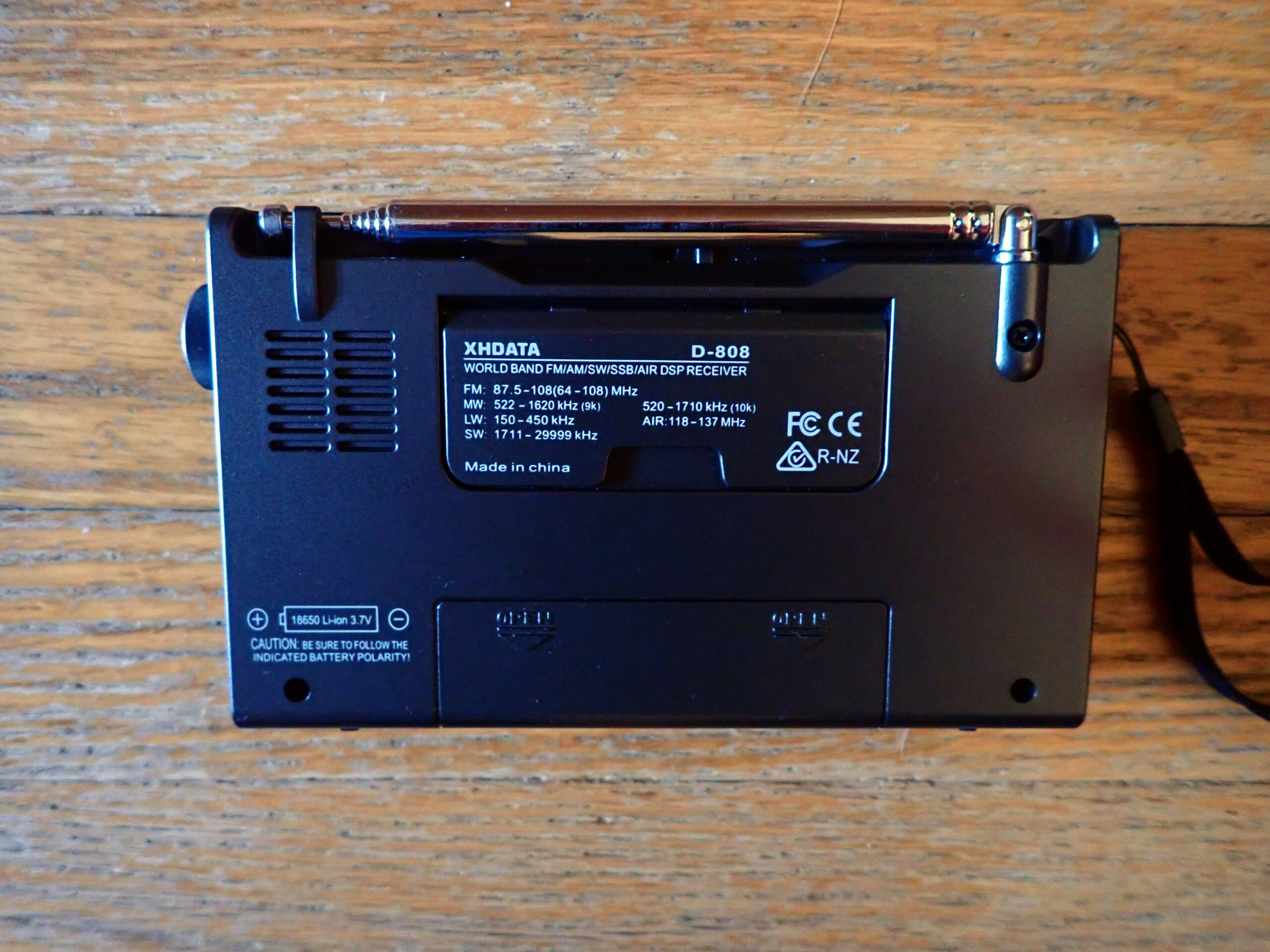
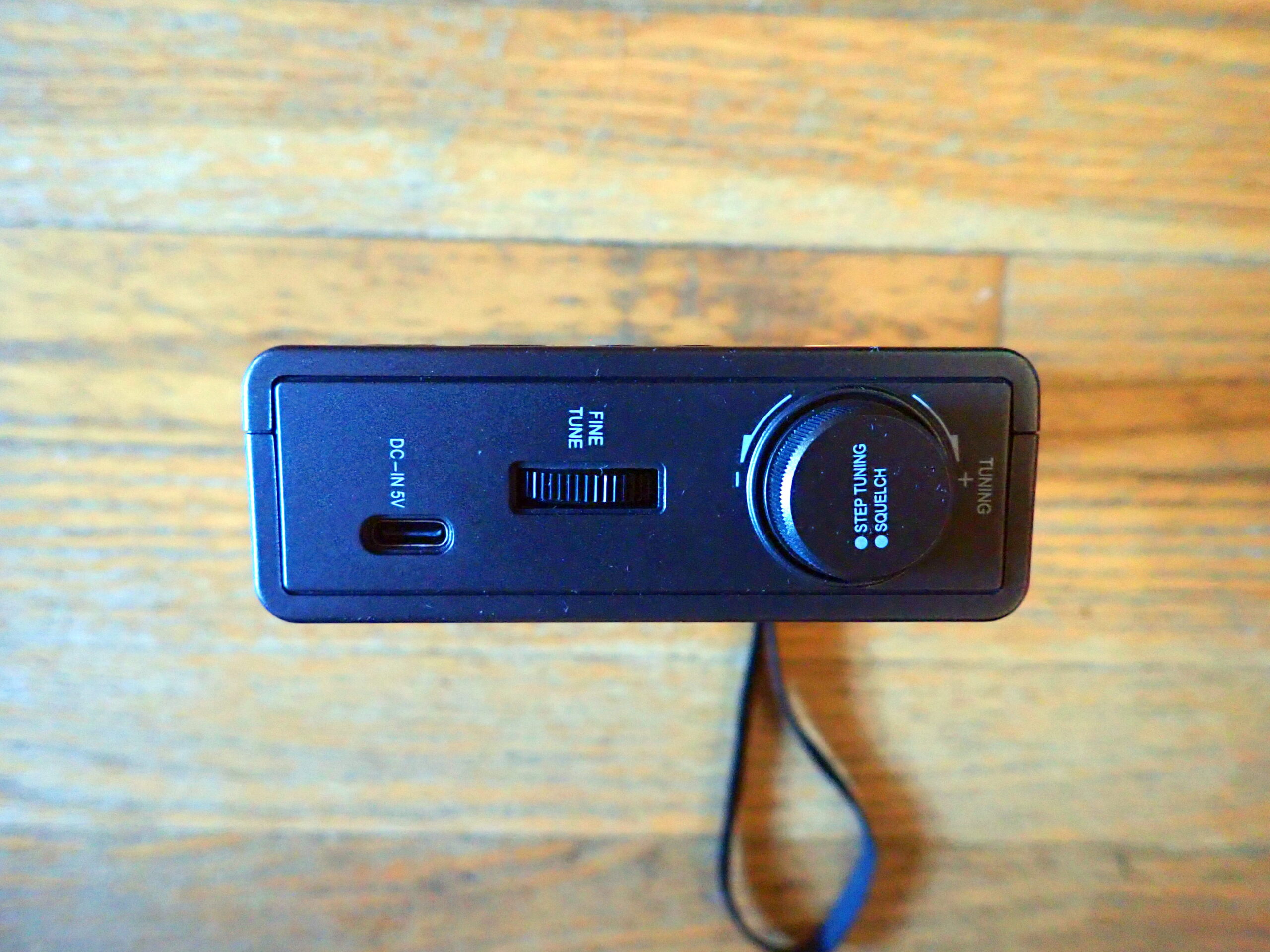
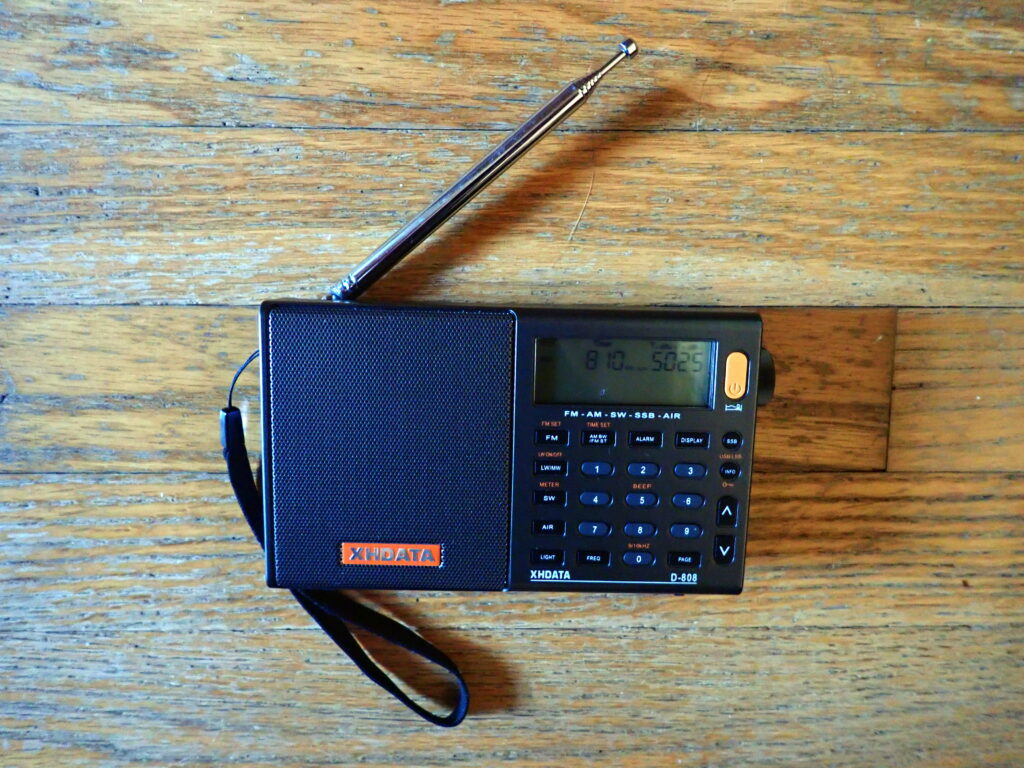
The D-808 measures just under 6 inches wide, 3.5 inches high, and 1.25 inches deep and weighs about a half a pound. It receives:  FM: 87.5 – 108 (64-108) MHz, LW: 150 – 450 kHz, MW: 522 – 1620 kHz (9k Step) 520 – 1710 kHz (10k step), SW: 1711 – 29999 kHz (including single sideband), and AIR: 118 – 137 MHz. It is powered by an 18650 battery that can be recharged by a USB cable.

Others have written extensively about the D-808, but my overall verdict is that it is indeed, a neat little radio for listening in general. Because it has a larger internal ferrite rod “loopstick” antenna, it can do a better job of pulling in faint medium wave stations than some of the “official” ultralights with smaller internal antennas. In addition, the D-808 has a longer telescoping antenna that makes it easier to hear faint shortwave stations.

On the face of the D-808 are 24 buttons that control various functions, and they pretty much “work as advertised.” There is, however, one small issue that some users may find confusing. Just below the orange power button is a circular button marked SSB. Push it, and it engages single-sideband mode and can be used on medium wave as well as shortwave signals. Below that button, in tiny orange letters is an indication: USB/LSB. It refers to the INFO button below, NOT to the SSB button above. If you press the SSB button, hoping to switch between upper sideband and lower sideband, it will not work, and you will think the radio is broken (I spent several minutes searching the manual, trying find out what was wrong). When SSB is engaged, press the button marked INFO between to switch between sidebands, got it?

Playing around with the D-808 on a rainy Saturday morning, I found that it is a “hot” receiver – for its size – on medium wave, shortwave, and FM. Using the UP and DOWN buttons to search for stations, and I found that it would, indeed, find interesting stuff to hear that I could not hear so readily on “official” ultralight radios with smaller antennas. It’s a small, fun radio that virtually begs me to find a comfy chair, clap on the headphones, and tune around to see what’s out there.
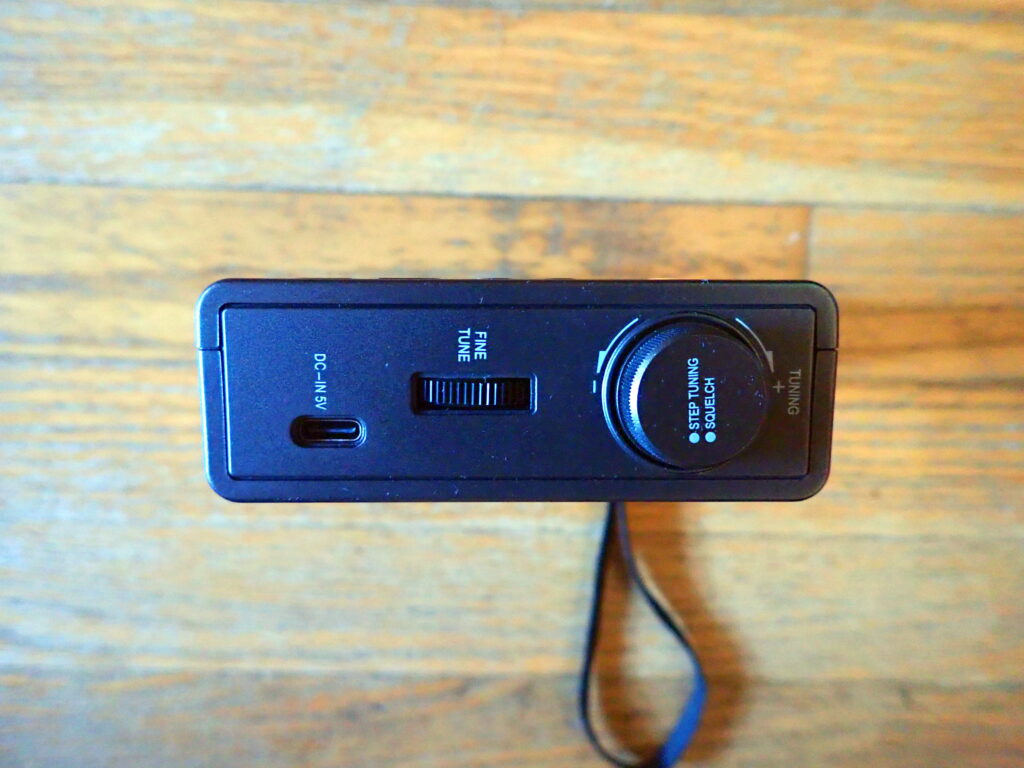
Having said that, if this were a trip to Santa’s lap, there are a couple of things I would change about the D-808. The first is the soft muting that occurs between tuning steps, which is accompanied by a mechanical “clunk, clunk, clunk” at each step in both the main and fine tuning knobs. It’s like driving down a highway with expansion cracks or tar strips every 20 feet . . . it’s annoying. My personal preference is for smooth, continuous tuning, and, even when a radio has jumps between tuning steps, it is possible to deliver a smooth, “clunkless” tuning experience such as in the CCrane EP-PRO or the Tecsun PL-880. You can, however, get around the clunking by directly entering the frequency you want using the keypad (be sure to press the FREQ button first) or by using the UP and DOWN seek buttons to search for stations . . . the radio simply quiets itself until it find the next signal. Second, while the D-808 seems to just sip power from the 18650 battery, I prefer portable radios that are powered by AA batteries, since they are so readily available in so many places. In the grand scheme of things, that is a relatively minor consideration.

Bottom line: the D-808 packs a whole lot of fun and pleasing performance into a package that can be slipped into a jacket pocket. Even more important, it delivers the simplicity of an ultralight: a radio I can grab, kick back in an easy chair, slide on the headphones, and tune around for a bit of radio fun, and I can heartily recommend it.

Check out the XHDATA D-808 at XHDATA.

Check out the D-808 at Amazon.com (affiliate link).