Shortwave listening and everything radio including reviews, broadcasting, ham radio, field operation, DXing, maker kits, travel, emergency gear, events, and more
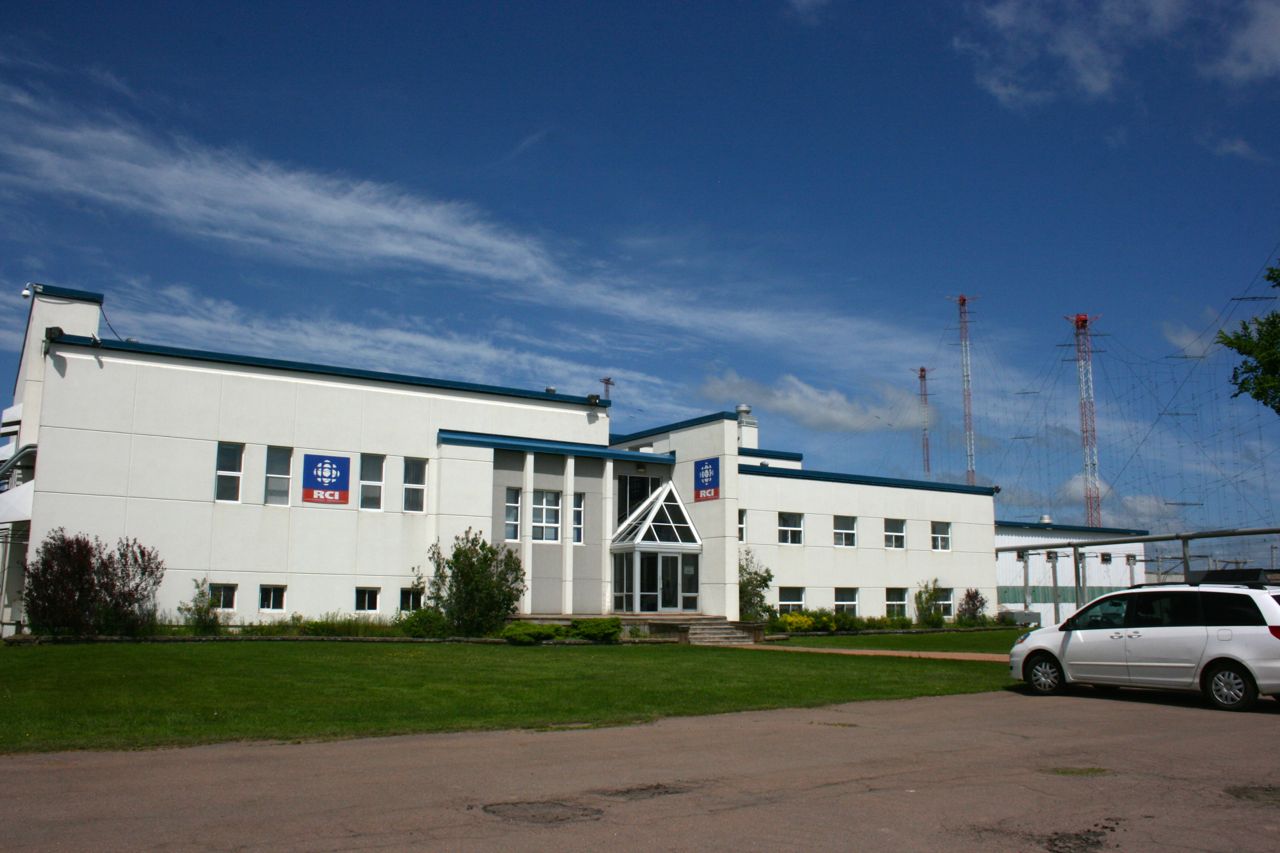
The transmitter building of Radio Canada International, Sackville, NB.
I spent the summer of 2012 in an off-grid cabin on the eastern coast of Prince Edward Island, Canada. That summer, I listened as two of my favorite shortwave broadcasters left the air within weeks of each other: Radio Netherlands Worldwide and Radio Canada International.
Ironically, though I was only a geographic stone’s-throw from the RCI Sackville transmitter site, I struggled to hear any Sackville signals as my location was too close for skywave propagation and a little too far for ground wave. Though I paid a visit to the transmitter site only two days prior, I was unable to hear or record RCI’s final broadcast.
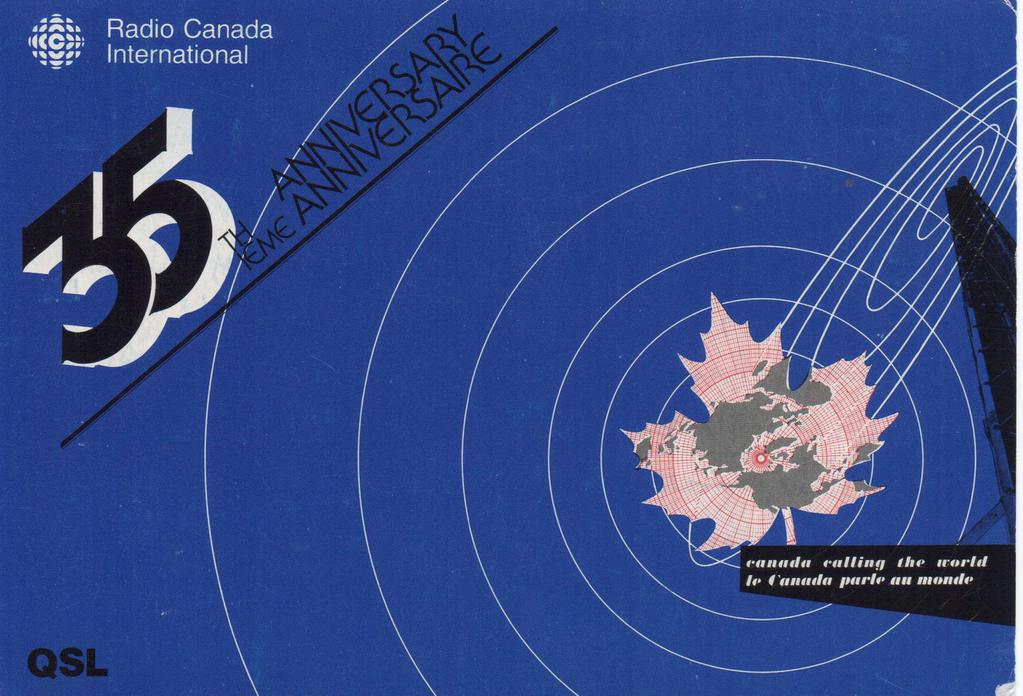
Unlike RNW’s final broadcasts, RCI’s ended without fanfare and quite abruptly. This week, I heard a recording of that final RCI broadcast for the first time. My friend, Rajdeep Das, recorded it on June 24, 2012 in Kolkata, India. Rajdeep has kindly shared his recording with the Shortwave Radio Audio Archive and here on the SWLing Post.
This is a short 10 minute recording, beginning at 1550 UTC, June 24, 2012 on 11,675 kHz. Listeners will note that the broadcast ends abruptly during the mailbag program–obviously the Sackville transmitters were turned off prematurely.
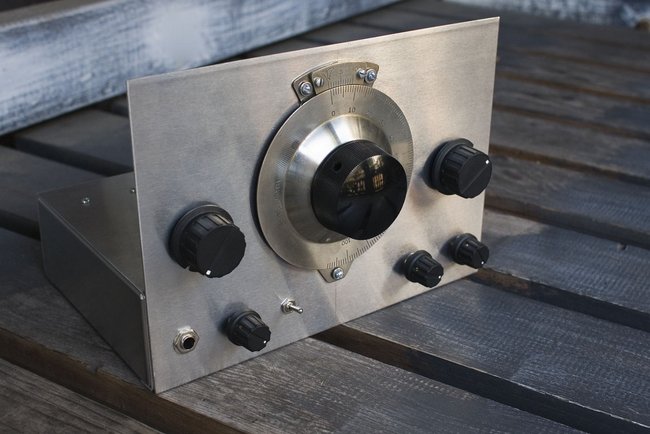
“I was quite pleased with the fidelity. Of course, the skirts on a regen are quite broad, even though the nose of the selectivity curve is fairly narrow. The signal was a bit lower in level and noisier at the beginning of the show but by the time it got to this segment, it was a nice strong signal. Sorry – no S-meter here, so that is the best I can do!”
Dave, thanks for sharing this video! Sproutie did a brilliant job tuning in a program from across the continent. I’m also most impressed with Sproutie’s audio. Amazing!
This recording was made on February 2, 2015 on 9395 kHz starting at 1800 UTC. Although Radio Poland formally left the shortwaves in 2013, their service is now relayed by Global 24 Radio.
[Update: Please note that this survey has been closed, but the audio samples–labeled Radio A and Radio B–will remain to allow others the opportunity to make an evaluation prior to reading the PL-680 review.]
The results from the PL-680/PL-660 reader surveys (here and here) have been pouring in! As of this posting, well over 200 readers have participated by listening to and evaluating the two receiver comparison surveys. Thank you!
Yesterday evening, I spent time comparing the Tecsun PL-660 and PL-680 with medium wave reception in mind. I recorded dozens of samples and picked four broadcast recordings I felt best represented receiver performance. Note that this will be my final survey before I post the PL-680 review later this week.
To participate in this survey, start by simply listening, then fill out the form that follows with your choice of “Best Radio” for each broadcast. All of these medium wave samples were recorded in the evening hours, which I believe is more indicative of receiver sensitivity, selectivity and AGC. Notice that I indicate distance to target station (as the crow flies).
Audio Samples
750 AM – WSB Atlanta, Georgia, USA (171 mi/275 km)
As I’ve mentioned before, @K7al_L3afta lives in an urban area of Morocco and his shortwave radio listening is plagued with radio interference (RFI). Still, he seems to snag some interesting catches on the shortwaves just like this one which he said he caught by “turning the tuning knob randomly.”
[Update: Please note that this survey has been closed, but the audio samples–labeled Radio A and Radio B–will remain to allow others the opportunity to make an evaluation prior to reading the PL-680 review.]
The results from the PL-680/PL-660 reader survey have been pouring in! As of this posting, over 160 readers have participated by listening to and evaluating the AM shortwave audio samples. Thank you!
This morning, I spent time comparing the Tecsun PL-660 and PL-680 with synchronous detection in mind. Time permitting, I hope to publish at least a medium wave audio survey, too, before I post the PL-680 review later this week. I doubt I will post an SSB reception survey since my digital recorder injects a bit of noise into those recordings.
To participate in this survey, start by simply listening, then fill out the form that follows with your choice of “Best Radio” for each broadcast. Please note that I include two recordings per broadcast, but ask that you choose the best radio overall for each broadcast.
For example: if you feel that Radio A is better in the first recording of Radio Australia, but Radio B is slightly better in the second recording (again, of Radio Australia), you still need to chose which radio is best overall in the Radio Australia recordings set.
You’ll note that signal stability varies between the two recordings; this is simply the nature of shortwave radio. Also note that each recording was made within one minute of the other in each set.
Audio Samples
Radio Australia 9,580 kHz
Below I’ve provided two recordings of Radio Australia on 9,580 kHz. In both recordings, I have the PL-660 and PL-680 in normal AM mode for the first half of the recording–you will hear a het (hetrodyne–which sounds like a high-pitch tone) in the upper sideband. About halfway through the recording, I switch each radio into lower sideband sync, which effectively removes the het sound.
I have provided two recordings for each radio since QSB (fading) was fast and deep. Indeed, you’ll note in the second set of recordings that the radios had more difficulty maintaining the sync lock.