Category Archives: Shortwave Radio

WSTL while you WELK

Fastradioburst23 here to let you know about our next imaginary Stations offering on Sunday 5th March 2023 on 9395 kHz at 2300 hrs UTC. This week it’s a KBIN special featuring WSTL and WELK. Tune in and enjoy some whistling, accordion tunes and even maybe some yodelling. Enjoy!

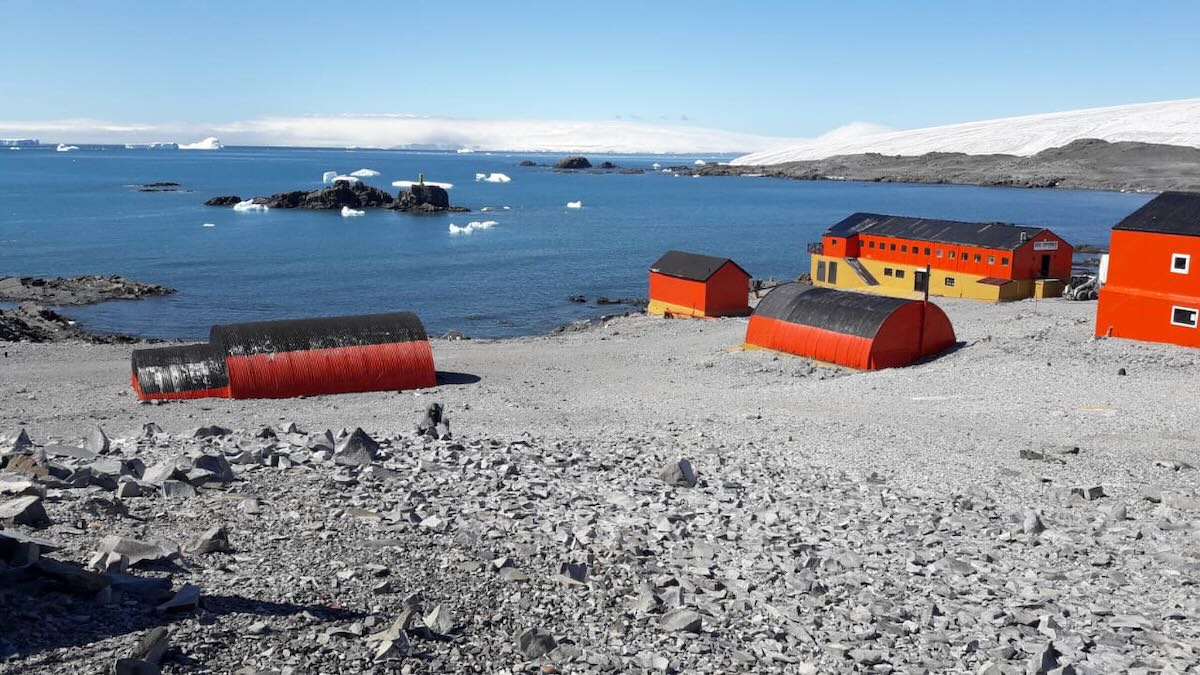
LRA 36 (Arcangel San Gabriel, Antarctica) Test Broadcasts on March 1st and 4th, 2023

Many thanks to SWLing Post contributor, Adrian Korol, who shares the following details for the next two LRA 36 test broadcasts. Note that the first one is later today (Wed, Mar 1):

LRA 36 Radio Nacional Arcangel San Gabriel.
Next Test Broadcast from Antartica:

      • Wednesday March 1st, 21:00 to 23:00 UTC
      • Saturday March 4th 21:00 to Sunday, March 5th 03:00 UTC

Frequency/Mode: 15476 kHz USB

Correct Reports = eQSL
email : [email protected]

Please upload your LRA36 listening video to YouTube, IG, Twitter, FB, or Tik Tok.

Thank you for the tip and photos, Adrian!

Bob Zanotti’s presentation to the Fairlawn Amateur Radio Club (Part 2)

Many thanks to SWLing Post contributor, Bob Zanotti (HB9ASQ), who has, at my request, shared a video recording of a presentation he gave to the Fairlawn ARC last year.

This is part two. If you missed part one, you can view it by clicking here. Thank you, Bob! Enjoy:

Radio Waves: The DLARC, NASA Citizen Science, PopShopRadio DRM to Europe, Hackers Disrupt Russian Radio, and Afghan Radio Closures

Radio Waves:  Stories Making Waves in the World of Radio

Welcome to the SWLing Post’s Radio Waves, a collection of links to interesting stories making waves in the world of radio. Enjoy!

Many thanks to SWLing Post contributors Trevor Robbins and Dennis Dura for the following tips:


Digital Library Of Amateur Radio And Communications Is A Treasure Trove (Hackaday)

Having a big bookshelf of ham radio books and magazines used to be a point of bragging right for hams. These days, you are more likely to just browse the internet for information. But you can still have, virtually, that big shelf of old ham books, thanks to the DLARC — the digital library of Amateur Radio and Communications.

A grant from a private foundation has enable the Internet Archive to scan and index a trove of ham radio publications, including the old Callbooks, 73 Magazine, several ham radio group’s newsletters from around the globe, Radio Craft, and manuals from Icom, Kenwood, Yaesu, and others.

There are some old QST magazines and the index to newer ones. You can find catalogs and military documents. We miss a lot of these old magazines and newsletters. For example, RCA’s “Ham Tips” is something you won’t find anything like anymore. Most of the material is in English, but there are some other languages represented. For example, the Dutch version of Popular Electronics is available. There’s also material in Afrikaans, Japanese, German, and Spanish. [Continue reading at Hackaday…]

Ham Radio Operators, We Need Your Help During Solar Eclipses! (NASA)

Ham Radio operators, we’re calling you! Members of the Ham Radio Science Citizen Investigation (HamSCI) will be making radio contacts during the 2023 and 2024 North American eclipses, probing the Earth’s ionosphere. It will be a fun, friendly event with a competitive element—and you’re invited to participate.

Both amateur and professional broadcasters have been sending and receiving radio signals around the Earth for over a century. Such communication is possible due to interactions between our Sun and the ionosphere, the ionized region of the Earth’s atmosphere located roughly 80 to 1000 km overhead. The upcoming eclipses (October 14, 2023, and April 8, 2024) provide unique opportunities to study these interactions. As you and other HamSCI members transmit, receive, and record signals across the radio spectrum during the eclipse, you will create valuable data to test computer models of the ionosphere.

For more information, go to https://hamsci.org/festivals-eclipse-ionospheric-science

DRM to Europe (DRM Consortium Newsletter)

The Canadian pop music station PopShopRadio in British Columbia has just announced that they will use the DRM standard to broadcast their best pop music towards Europe on the 5th March 2023 at 2000-2100 CET (GMT+1) on 5875 kHz (85kW) from Wooferton in the UK.

This radio station is specialised in transmissions of well-known pop music from the 60s and 70s or even before that. They are collecting the best tunes from various countries and offer them to the world using shortwave. This time round they wish to also use the DRM standard in SW to be able to reach distant parts of the globe in much better sound quality.

For more details please click here and here.

Hackers Disrupt Russian Radio (Radio World)

Air raid sirens broadcast in a dozen cities

Radio stations in several Russian cities were disrupted on Feb. 22 by the sound of air raid sirens and a warning of imminent missile strikes.

The broadcasts were reportedly heard in Belgorod, Chelyabinsk, Kazan, Magnitogorsk, Nizhny Novgorod, Novouralsk, Pyatigorsk, Stary Oskol, Syktyvkar, Tyumen, Ufa, and Voronezh, among other cities. Recordings of the broadcast were shared on the social media network Telegram and reported on by Meduza.

Meduza, an independent news agency now based in Latvia, was forced to move its operations out of Russia during the media crackdown that followed Russia’s February 2022 invasion of Ukraine. [Continue reading at Radio World…]

Radio Closures Hit Afghanistan Hard (Radio World)

Only 223 stations remain on air 18 months after Taliban regained control of the country

In the 18 months since the Taliban retook full control of Afghanistan, 177 radio stations have gone off the air in the country, displacing about 1,900 journalists and other employees.

In a statement released on World Radio Day 2023, the Afghan Independent Journalists Association noted that during the Islamic Republic period from 2004–2021, there were as many as 401 radio stations operating in Afghanistan. As the Taliban Insurgency increased its control of the country, about 56 stations went off the air before the Taliban took control and reinstated the Islamic Emirate of Afghanistan in August 2021.

Since then, around 120 stations have ceased broadcasting due to economic pressures. The AIJA stated that only 223 stations currently operate in the country.

With these stations going dark, more than 1,900 journalists and media workers are now unemployed in the country, include 1,075 women. [Continue reading at Radio World…]


Do you enjoy the SWLing Post?

Please consider supporting us via Patreon or our Coffee Fund!

Your support makes articles like this one possible. Thank you!

LRA 36 (Arcangel San Gabriel, Antarctica) Test Broadcast Today at 20:00 UTC

Many thanks to SWLing Post contributor, Adrian Korol, who shares the following tip and schedule for the LRA 36 broadcast today:

LRA36 Radio Nacional Arcangel San Gabriel from Base Antartica Esperanza:

Saturday, 25 February 2023
From 20:00 to 24:00 UTC
On 15476 kHz (USB)

Thanks for the tip, Adrian!

Tune into the Japanese Jukebox

Good day SWLIng Post community, Fastradioburst23 here to let you know about our next imaginary Stations offering on Sunday 26th February 2023 on 9395 kHz at 2300 hrs UTC. This week it’s JNHK and it’ll be an hour of a distinctive Japanese flavour. Tune in and enjoy the sound of Japan wherever you are.

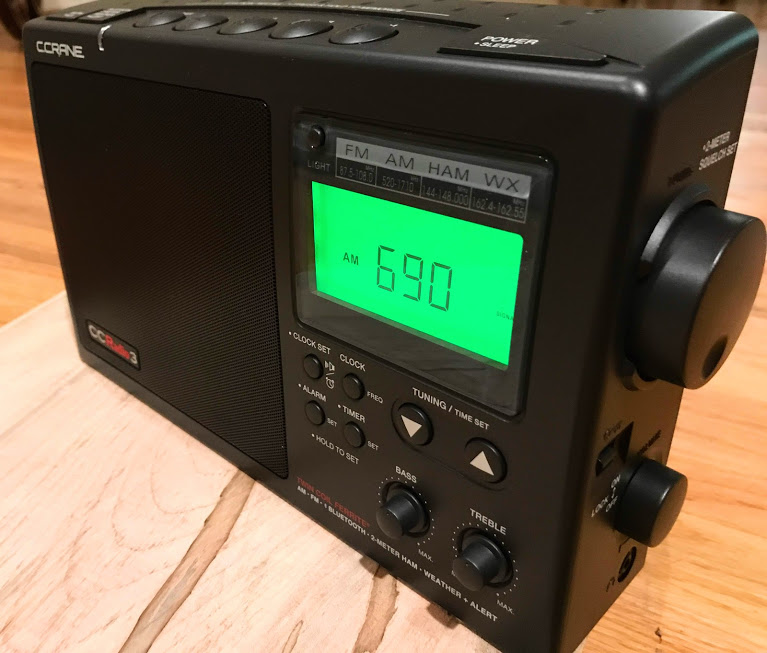
The CCrane Skywave SSB 2 and long wire antennas

By Jock Elliott, KB2GOM

Frequently when people write about attaching a long wire to a portable shortwave receiver, readers will comment that you need to worry about desensitizing or overloading the receiver or ever harming the front end of the receiver. Clearly that can be a concern.

But recently I noticed something on the CCrane website in the FAQ section that shows clearly that CCrane has thought about and dealt with this consideration:

Q: When  using the 2-wire adapter and wire attached, why am I not noticing any improvement on shortwave?

A: To see any difference using the 2-wire adapter you will need to have a wire that is more than 30 feet long (we recommend 60-100’) with a good ground wire. Insulated wire will last longer and should be stranded so it is more flexible. If you do not have a good ground, you are actually inputting noise. If you look at the 2-wire adapter (included) you will see an antenna icon and a ground (G) marking. You need to connect them properly when using an external antenna. When a plug is inserted into the antenna jack of the radio the internal rod antenna is disconnected. (See page 30 of the Instruction manual.)

If you check out my review of the CCrane Skywave SSB 2 you will read that I heard a noticeable improvement when connecting the SSB 2 to a 45-foot end fed wire.

Note, though, that if you plan to attach a wire to the SSB 2’s whip antenna, use the 23-foot reel antenna that comes with the radio.