Category Archives: Shortwave Radio

An update from Radio Kahuzi

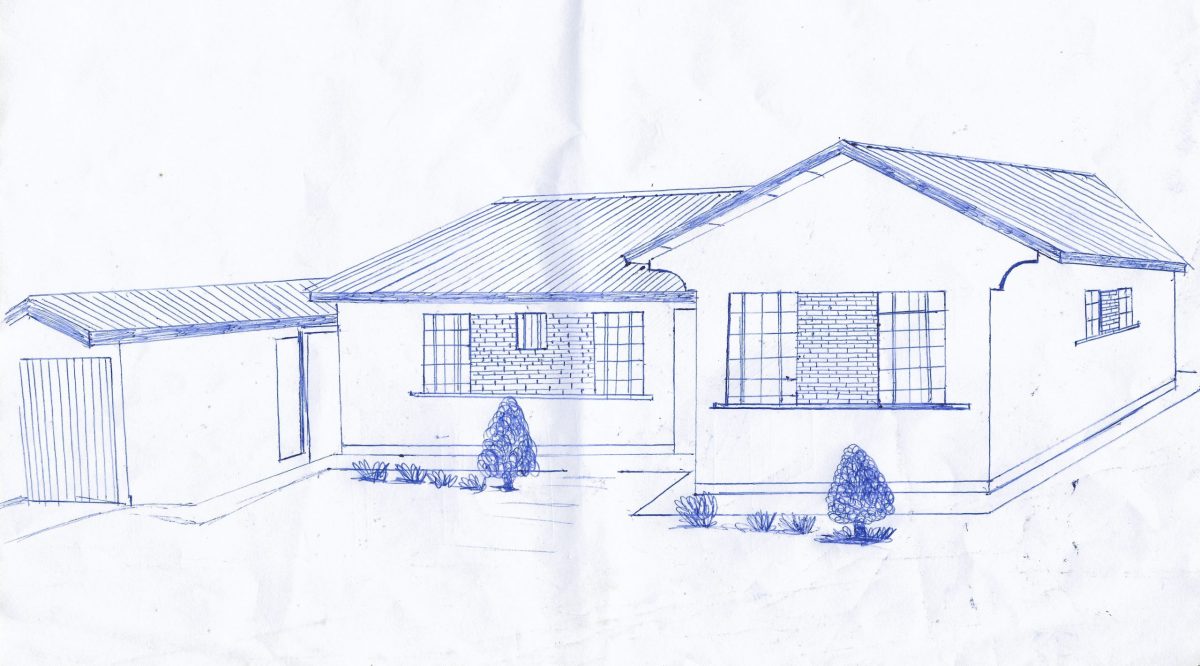
Drawing of the new studio building for Radio Kahuzi

Many thanks to SWLing Post contributor, Dan Robinson, who writes:

SWLing Post readers have no doubt been wondering, along with the rest of us, about the status of Radio Kahuzi, the religious missionary station in Democratic Republic of Congo.

The station has been off the air for months, following a lightning strike in 2020 and various ongoing problems with power supply there in DRC.

Now, a note from Richard McDonald, founder of Radio Kahuzi, who says that they hope to be back on the air soon, though no timeline is provided.

For those who are not familiar with the station, it used a slightly off frequency of 6210.2 kHz in the 48 meter band. This was within the area of European pirate stations, and various broadcasters transmitting to North Korea and Iran, but propagation was usually such that Radio Kahuzi could be heard at European SDR sites in the hour or so before station sign off in the 1800 to 1820 UTC range.

Unclear from the note sent by McDonald is what power the station will be using when it does
finally return to the air. Previously power was in the 500 to 750 watt range. McDonald provided a drawing of what appears to be the new studio building for Radio Kahuzi [see image at top of page].

Hi Daniel and our faithful Dxers !

Thank you for your interest and encouragement for Radio Kahuzi and BESI ! The Lord is GOOD and we are recovering from the malaria and the yearly flu; finding another Normal !

We received the repair parts Monday 1 Feb 2021 DHL from Mike Axmon and Son Set Solutions that we were not able to find locally, to repair our SW Transmitter, after a Lightning Strike that took out four Radio Stations the same day.

We hope the partial repair will now be complete to bring back the functions that thus far were uncontrolled after initially replacing the six transistors, etc. !

At the same time, SNEL is being converted to a Cash Power system at the Studio, and our Antenna will be re positioned Next Door.

A New Prime Minister will be installed soon, as the government is being transitioned, while we are all still in Lock Down with little changes being made backward and forward, locally and world-wide !

We trust you are all well and making progress where ever you are !

Keep Looking UP !

In His Love and Care,

Richard and Kathy McDonald, Directors

BESI / Radio Kahuzi / Bukavu, D R Congo

Many thanks, Dan, for the update!

Rob compares horizontal and vertical SWL random wire antennas

Many thanks to SWLing Post contributor, Rob Zingarelli, who shares the following guest post that originally appeared on his blog in October, 2020:


Shortwave Antenna: Vertical or Horizontal?

by Rob Zingarelli

This is a question that has circled around on the fringes of my consciousness for years now, but one that I’ve never quite found time to test.  And it is a simple question: When using a random wire antenna with a portable shortwave receiver, is it better to string the wire vertically or horizontally, or does it even matter? Mostly this is a question when out camping, because arranging a 19′ wire vertically is usually a good bit more involved than just stringing it out along some nearby bushes.

Before going any farther, I want to point out that this is an exercise in ordinary backyard shortwave listening with relatively inexpensive equipment.  There are many, many better-engineered and more costly solutions to the technical challenge of shortwave scanning, and this does not address any of those sophisticated approaches.  This is for the person who opens up the box and wonders about the best way to hang the included long-wire auxiliary antenna.

Equipment:  Tecsun PL-660 SW/AM/FM/Air Band receiver, with its included 19′ random-wire antenna.  Internal battery power used.

Conditions & Time: Clear local weather.  hamqsl.com’s nowcast of band conditions were fair from 3.5-14.35 MHz, and poor for higher frequencies, with SFI = 72, SN = 26, A = 5, K = 1.  Time was 21:00-21:30 UTC, or 4-4:30 pm local CDT.

Procedure:  Out in the backyard (typical residential neighborhood, well-spaced ~150′ between houses, above-ground power lines 125′ away), suspend random wire from ground to its full length.  This was achieved using a length of paracord over a tree limb, with the tree trunk ~30′ from the radio’s location.  With the PL-660’s antenna gain control set to “Normal” (i.e., the mid-setting of Local-Normal-DX) and the bandwidth set to narrow, use the receiver’s automatic scan function to see how many stations were received.  Make notes of the number of transmissions detected, reception characteristics and quality, and any perceived noise levels.  Re-orient the antenna to a low horizontal position, over two sawhorses approximately 3′ high (see picture), and repeat.
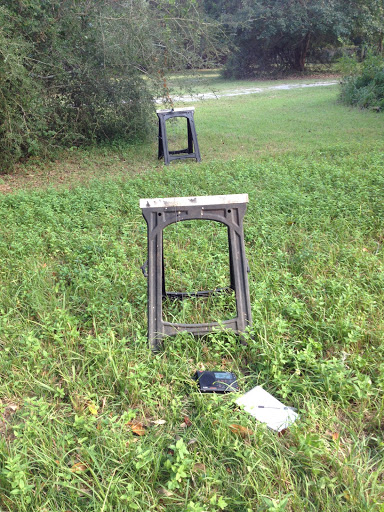
Sawhorses spaced ~17′ apart. Radio and notepad can be seen on ground in front of the near sawhorse.

Results:  For the vertical antenna orientation, 32 stations were detected between 5959 – 15730 kHz.  Nearly all were intelligible, with those at the lower end more steady and those a the higher end much more variable in strength.  For the horizontal antenna orientation, 21 stations were detected between 9265 – 1570 kHz.  Similar overall signal quality was heard for the received stations in either antenna orientation.  More noise was noticeable at the lower frequencies between the stations for the vertical antenna orientation.  However, this was significantly below the received signal levels, and not an issue in the overall listening quality.

Conclusions & Discussion:  Suspending the wire antenna vertically worked better, especially at the lower frequencies.  Getting a wire up 21’+ vertically is usually not as convenient as stringing it horizontally, but it may be worth the extra effort, depending on the location, campsite, nearby trees, etc.  The overall conditions were typical for fall camping weather, with fair-to poor radio propagation conditions, so this result should be broadly applicable for how SW portables are often used.  This result may change with propagation and radio noise conditions, both for atmospheric and local noise sources.  Testing will continue as propagation conditions improve with solar cycle 25 getting underway.

——-

Addendum, 10/12/20: While writing this up yesterday evening, it occurred to me that I hadn’t tested the PL-660’s built-in whip antenna.  This comparison is important, because sometimes the wire antenna is too cumbersome to deploy.  So, how does the whip antenna compare?

Conditions & Time: Overall, very similar to yesterday.  hamqsl.com reports fair conditions from 3.5–14.35 MHz, and poor for higher frequencies.  SFI = 72, SN = 26, A = 3, K = 1.  Same time of day as yesterday’s testing.

Procedure: Repeat of yesterday, with the whip antenna added to the test.  The whip was oriented vertically.

Results: For the vertical 19′ wire, 31 stations were found by the auto-scan function between 2380 – 15770 kHZ.  Electrical noise was low but audible in the 3 MHz region, fading to none at higher frequencies, and not a significant source of interference with any stations.  For the horizontal wire, 15 stations were found between 9265 – 13630 kHz.  Electrical noise was barely audible.  With the whip in use only 1 station was found.  Switching the antenna gain to its DX (most sensitive) setting, 6 stations were found.

Revised Conclusions:  Adding to yesterday’s conclusions, the whip antenna functioned but was vastly inferior to the wire antenna in either configuration, even with the gain set to DX.  Today’s results with the wire antenna were, unsurprisingly, very similar to yesterday’s, given that the ionospheric and weather conditions were nearly identical.  Noise was not a factor in receiving for any of these antennas or configurations, but did noticeably increase for the vertical wire antenna.


Thank you for sharing this, Rob! It’s experiments like this that help us determine, especially, what antenna setups work at our own particular locations since RFI characteristics can vary so much.  I’m guessing had your horizontal wire been elevated to even 20′ off the ground it might have produced better results, but sometimes this can be difficult to achieve. I like how you used the auto search function to determine the number of stations you could receive with each setup and it was a great addition to include the built-in telescoping whip.

Thank you again for sharing your results with us!

“Voice of America Marks 79th Anniversary”

(Source: VOA News)

Voice of America is 79 years old today [February 1, 2021].

Its 1942 debut was unpretentious — a live, 15-minute shortwave radio broadcast transmitted into Germany from a small studio in New York City.

Now, the U.S.-funded but independent VOA reaches more than 280 million people across the globe each week in more than 40 languages.

Its stories, covering the range of the human existence in the Unites States and countries throughout the world, appear on digital, television and radio platforms and can be accessed on mobile phones and social media. VOA stories are carried on a network of more than 2,500 affiliate stations.

In the first broadcast in 1942, a little more than seven weeks after the United States officially entered World War II, listeners first heard an American patriotic song, “The Battle Hymn of the Republic.”

Then, announcer William Harlan Hale said, “We bring you Voices from America. Today, and daily from now on, we shall speak to you about America and the war. The news may be good for us. The news may be bad. But we shall tell you the truth.”

It is a credo that since 1976 is embedded in the VOA Charter, which by law requires the organization to “serve as a consistently reliable and authoritative source of news.” It says VOA news must “be accurate, objective and comprehensive.”

VOA is part of the U.S. Agency for Global Media, the government agency that oversees all non-military, U.S. international broadcasting.

VOA’s professional journalists produce dozens of stories every day without interference from the U.S. government.

Radio Northern Europe International Show #14

Many thanks to SWLing Post contributor, Roseanna, with Radio Northern Europe International who shares the following announcement:


Hei alle,
RNEI show #14 is now on air complete with TIAEMS for February 2021!

February marks a year since the first RNEI broadcast on 6070 kHz, the 15th of February 2020 ?
To celebrate this we are starting the show with an acoustic version of the first song we played on RNEI followed by music like:

 A cute song from Beni Holm
• More great songs from Vionavega, BEHM and ISÁK
• Our second ever song from Estonia ??
• One of my favourite dance songs for the data section from LOKE

The extras for this show are:
 An MFSK 64 Song playlist embedded into the final song for all Editions of the show.
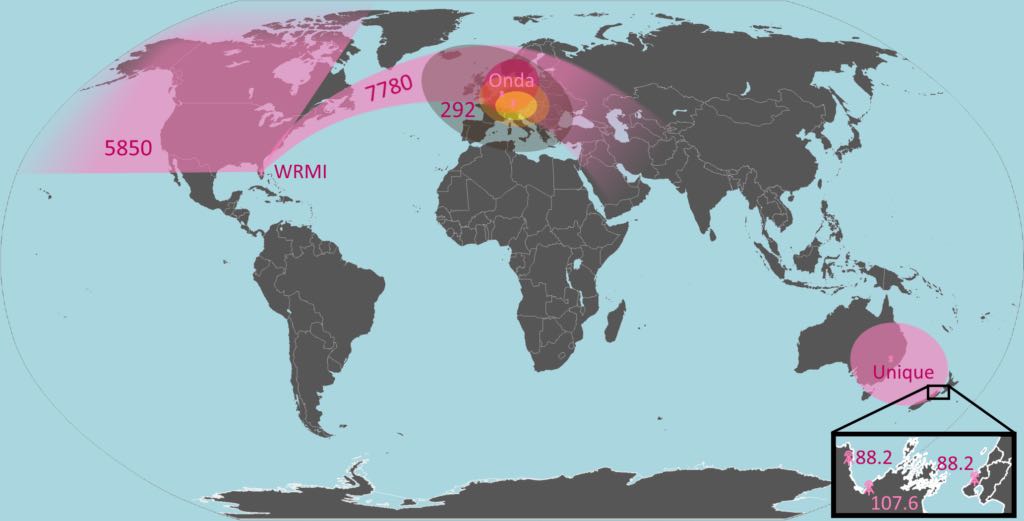
 HamDRM with our Animated HTML Playlist for WRMI, Onda and Channel 292 versions.
 Comb Stereo encoding for all Shortwave broadcasts compatible with any radio, for more information please see https://rnei.org/stereo/
 30 minutes of calming music on the WRMI edition to fill the extra time, hopefully you don’t fall asleep haha!

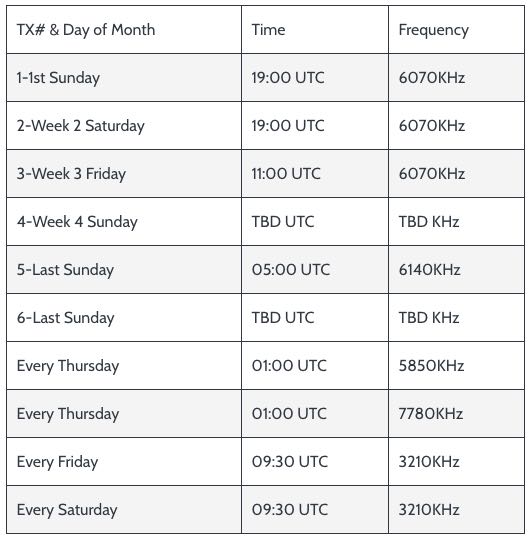
You can find our full up to date frequency schedule here: (https://rnei.org/listen)

Can’t tune into a radio or just want the music without the extras? We also have Spotify Playlists of all of our broadcasts available here: RNEI Spotify Profle

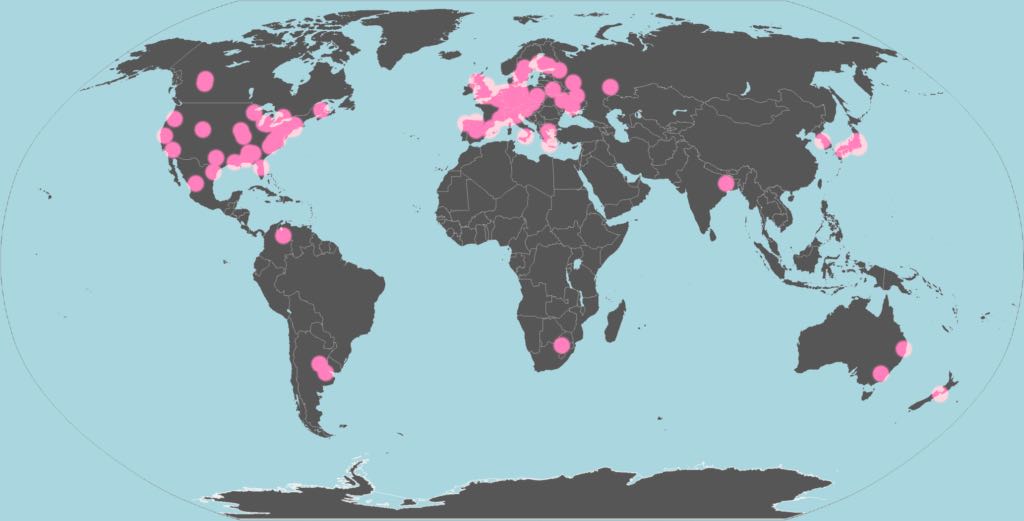
We thought we’d give a little shout-out, in the form of a map, for all of our listeners around the world, we love you all ?


Wishing you lovely listeners all the best for February,
– Roseanna

Radio Waves: NRAO Turns Scope System Into Planetary Radar, WBCQ Seeks Engineers, Deep Space Network Upgrades, and 2021 Propagation Summit

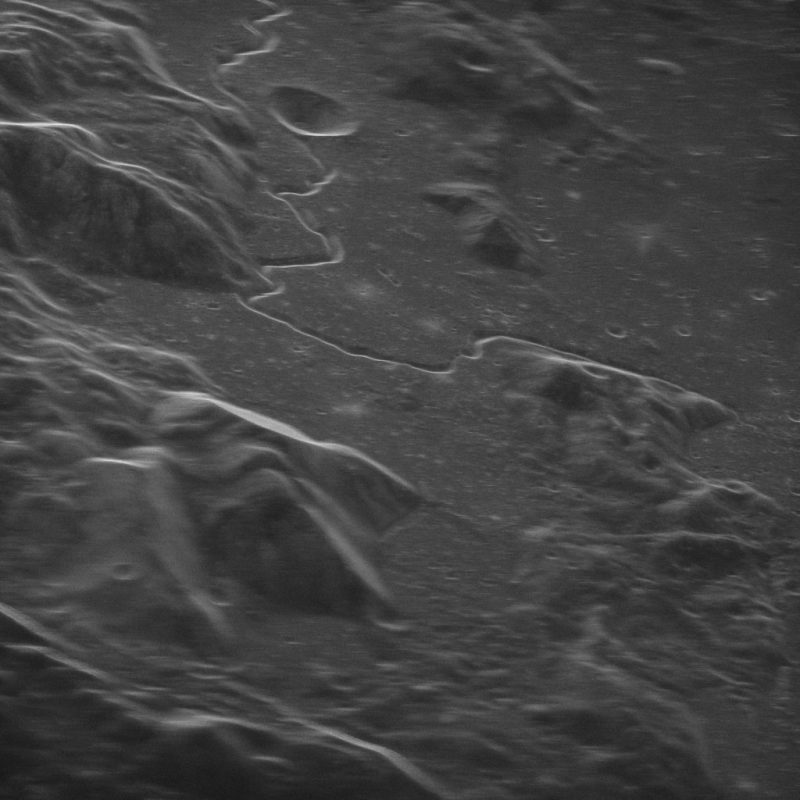
GBT-VLBA radar image of the region where Apollo 15 landed in 1971. The snake-like feature is Hadley Rille, a remnant of ancient volcanic activity, probably a collapsed lava tube. The crater at top, alongside the rille, is called Hadley C and is about 6 kilometers in diameter. This image shows objects as small as 5 meters across.
(Credit: NRAO/GBO/Raytheon/NSF/AUI)

Radio Waves:  Stories Making Waves in the World of Radio

Because I keep my ear to the waves, as well as receive many tips from others who do the same, I find myself privy to radio-related stories that might interest SWLing Post readers.  To that end: Welcome to the SWLing Post’s Radio Waves, a collection of links to interesting stories making waves in the world of radio. Enjoy!


Successful Test Paves Way for New Planetary Radar (NRAO)

The National Science Foundation’s Green Bank Observatory (GBO) and National Radio Astronomy Observatory (NRAO), and Raytheon Intelligence & Space conducted a test in November to prove that a new radio telescope system can capture high-resolution images in near-Earth space.

GBO’s Green Bank Telescope (GBT) in West Virginia — the world’s largest fully steerable radio telescope — was outfitted with a new transmitter developed by Raytheon Intelligence & Space, allowing it to transmit a radar signal into space. The NRAO’s continent-wide Very Long Baseline Array (VLBA) received the reflected signal and produced images of the Apollo 15 moon landing site.

The proof-of-concept test, culminating a two-year effort, paves the way for designing a more powerful transmitter for the telescope. More power will allow enhanced detection and imaging of small objects passing by the Earth, moons orbiting around other planets and other debris in the Solar System.

The technology was developed as part of a cooperative research and development agreement between NRAO, GBO, and Raytheon.

“This project opens a whole new range of capabilities for both NRAO and GBO,” said Tony Beasley, director of the National Radio Astronomy Observatory and vice president for Radio Astronomy at Associated Universities, Inc. (AUI). “We’ve participated before in important radar studies of the Solar System, but turning the GBT into a steerable planetary radar transmitter will greatly expand our ability to pursue intriguing new lines of research.”

Using the information collected with this latest test, the participants will finalize a plan to develop a 500-kilowatt, high-power radar system that can image objects in the Solar System with unprecedented detail and sensitivity. The increased performance also will allow astronomers to use radar signals as far away as the orbits of Uranus and Neptune, increasing our understanding of the Solar System.

“The planned system will be a leap forward in radar science, allowing access to never before seen features of the Solar System from right here on Earth,” said Karen O’Neil, the Green Bank Observatory site director.

“Raytheon’s radar techniques could ultimately improve our ability to explore the Solar System,” said Steven Wilkinson, Principal Engineering Fellow at Raytheon Intelligence & Space. “Working with the astronomy community allows us to apply decades of radar know-how to a project that provides high-resolution images of near-Earth objects.”

“We are excited to be partnering with Raytheon and applying their radar expertise to transform our observatories’ telescopes in new science areas,” said AUI President Adam Cohen.

The National Radio Astronomy Observatory and the Green Bank Observatory are facilities of the National Science Foundation, operated under cooperative agreement by Associated Universities, Inc.[]

WBCQ: Radio transmitter engineers wanted

WBCQ Radio is seeking radio transmitter engineers to work at our 500KW shortwave station. Come to northern Maine and get away from it all. Nice working environment, good pay, great people, fun work with BIG transmitting and antenna equipment. Contact Allan and Angela Weiner at 207-538-9180. Please send resumes to [email protected].

Deep Space Network upgrades and new antennas increase vital communication capabilities (NASA)

NASA’s Deep Space Network, commonly referred to as the DSN, has welcomed a new dish, Deep Space Station 56, to its family of powerful ground listening stations around the world.

The now-operational 34-meter antenna joins the network’s Madrid Deep Space Communications Complex located 60 kilometers west of Madrid, Spain while other dishes within the network undergo critical upgrades.

The new dish is part of an ongoing series of enhancements to the DSN, which traces its roots back to January 1958 when the U.S. Army’s Jet Propulsion Lab was tasked with standing up a series of communications stations in Nigeria, Singapore, and the U.S. state of California to support orbital telemetry operations for the Explorer 1 mission.

This precursor to the Deep Space Network was transferred to NASA along with the Jet Propulsion Lab on 3 December 1958. The DSN was then formally commissioned by the U.S. space agency as a way to consolidate the pending deep space communication needs through centralized locations to avoid each mission having to create its own ground listening station(s).

The three Deep Space Network ground locations are spaced roughly 120 degrees from each other in Canberra, Australia; Goldstone, California; and Madrid, Spain. The location of the three facilities ensures deep space missions with a line of sight to Earth can communicate with at least one of the locations at any time.

Updates throughout the decades have increased the network’s capabilities, most notably for the two Voyager probes that continue to operate and send back science data having both long-passed out of the heliosphere and into the interstellar medium.

The network, nonetheless, is showing its age, with upgrades and refurbishments needed to ensure continuous operations. Part of this initiative is the recent addition of the new dish, Deep Space Station 56 (DSS-56), at the Madrid complex.

“After the lengthy process of commissioning, the DSN’s most-capable 34-meter antenna is now talking with our spacecraft,” said Bradford Arnold, DSN project manager at the Jet Propulsion Laboratory.[]

2021 Propagation Summit Session Recordings Available (ARRL News)

YouTube recordings and PDF files from the 2021 Propagation Summit hosted on January 23 by Contest University are available. More than 1,000 logged in for the sessions. Each presentation begins approximately on the hour. You can advance the video to the presentation you wish to view.

  • 11 AM – “Update on the Personal Space Weather Station Project and HamSCI Activities for 2021” by Dr. Nathaniel Frissell, W2NAF
  • 12 Noon – “Solar Cycle 25 Predictions and Progress” by Carl Luetzelschwab, K9LA
  • 1 PM – “Maximizing Performance of HF Antennas with Irregular Terrain” by Jim Breakall, WA3FET
  • 2 PM – “HF Propagation: What to Expect During the Rising Years of Solar Cycle 25,” by Frank Donovan, W3LPL.

Slides decks are available for each presentation in PDF format: FrissellLuetzelschwabBreakall, and Donovan. []


Do you enjoy the SWLing Post?

Please consider supporting us via Patreon or our Coffee Fund!

Your support makes articles like this one possible. Thank you!

The 2021 34th Winter SWL Fest is virtual this year!

If you’ve thought about attending the annual Winter SWL Fest, but found it difficult to make the travel arrangements, this year you can get a taste of the Fest by attending virtually.

You’ll find the program below, but click here to view it at the Winter SWL Fest site, and click here to register (only $5 for both days including all presentations and the hospitality room).

The event takes place February 27-28, 2021. I strongly encourage you to attend!


2021 Winter SWL Fest Program and Forums Schedule

2021 34th “VIRTUAL” WINTER SWL FEST PROGRAM 

All sessions except the “Shindig” nominally one-hour but may run longer or shorter at the option of the presenter.

This schedule, accurate as of January 16th, is subject to change.

Friday February 26th, 2021 (UTC)

1800 UTC / 1300 EST / 1000 PST / 1900 CET / 0500 (Sat.) AEDT

The Well-Equipped Scannist – A Scanner For Every Purpose – Tom Swisher

. . . and the gadgets, doohickeys and trinkets to enhance your scanning pleasure.

2000 UTC / 1500 EST / 1200 PST / 2100 CET / 0700 (Sat.) AEDT

Easy Antennas for SWLs Who Want to Become HF Hams – Skip Arey

Communicating is just as much fun as listening. Can your shortwave receiving wires do the job or should you be rethinking your station’s antennas?  Uncle Skip will show you how to get on the air without mortgaging your house to do it.

2300 UTC / 1800 EST / 1500 PST / 0000 (Sat.) CET / 1000 (Sat.) AEDT

The Annual Free Radio Forum – Larry Will

Including:

— News, FCC actions or lack thereof

— Shortwave free radio year in review

— Everyone’s still doing the 6850-6980 area

— …But! There’s been a noticeable diversity in frequency use because of lousy DX

— …Noticeably in the 4000-4100 KHz and 5100-5200 KHz areas

— Most active stations

— Gallery of interesting QSLs and SSTVs from the past year

— Medium wave free radio, the world above 1700

— North American Pirate Radio Hall of Fame inductees for 2021

— Resources for the free radio listener

— archive.org

— swlingpost.com

— hfunderground

— free radio network

— Free Radio Weekly (25 years!)

Preparations are underway to simulcast this forum on WBCQ 6160 kHz. Watch this space!

 Saturday, February 27th, 2021 (UTC)

0100 UTC / 2000 (Fri.) EST / 1700 (Fri.) PST / 0200 CET / 1200 AEDT

The Shortwave Shindig in Exile – David Goren

From a secret location, David’s annual freeform celebration of the medium. This time it shapes up like this:

0100 – Shortwave-related music videos, a look at the recent Brooklyn Pirate Radio Sound Map update, and a review of radio-related bits and bobs from the past year.
0200 – Live on WRMI! (frequencies TBA) – with music, Meet the Archivist w/ Thomas Witherspoon and other special features.
0300 – A Replay of “Shortwaves/Long Distance” – the 2017 two-hour broadcast featuring the top submissions to NASWA’s and Wave Farm’s call for shortwave-related music and sound compositions.

1800 UTC / 1300 EST / 1000 PST / 1900 CET / 0500 (Sun.) AEDT

QRP General Coverage Transceivers: Bridge Between Transmitting and Listening – Thomas Witherspoon
We’ve seen an amazing array of full-featured general-coverage QRP transceivers hit the market in the past few years–during the doldrums of the solar cycle, no less. These rigs provide SWLs and even DXers a means to easily escape RFI and to experiment with portable listening posts. We’ll take a look at a number of QRP general-coverage transceivers I consider to be truly worthy, with a particular focus on the innovative Icom IC-705.

2000 UTC 1500 EST / 1200 PST / 2100 CET / 0700 (Sun.) AEDT

Mr. Robinson’s Neighborhood…er, Basement – Dan Robinson

Premium Receivers In A Time of Plummeting Shortwave
With All India Radio GOS in English all but gone from shortwave and Brazil shifting to DRM, among other depressing developments, Dan takes a look at the used receiver market in 2021, including premium receivers, and discusses the Japanese Buyee site.

2300 UTC / 1800 EST / 1500 PST / 0000 (Sun.) CET / 1000 (Sun.) AEDT

The Addictive Quality of Curiosity – Mark Fahey, Live from Freemans Reach, Australia

This building in the sleepy rural village of Freemans Reach in southeast Australia rarely needs heating. 18 receivers running 24x7x365 provide continuous coverage from 1kHz to 12.8GHz. Can the quest for knowledge ever be satisfied? This presentation is a live dive into the presenter’s Sisyphean obsession to monitor the world’s culture.

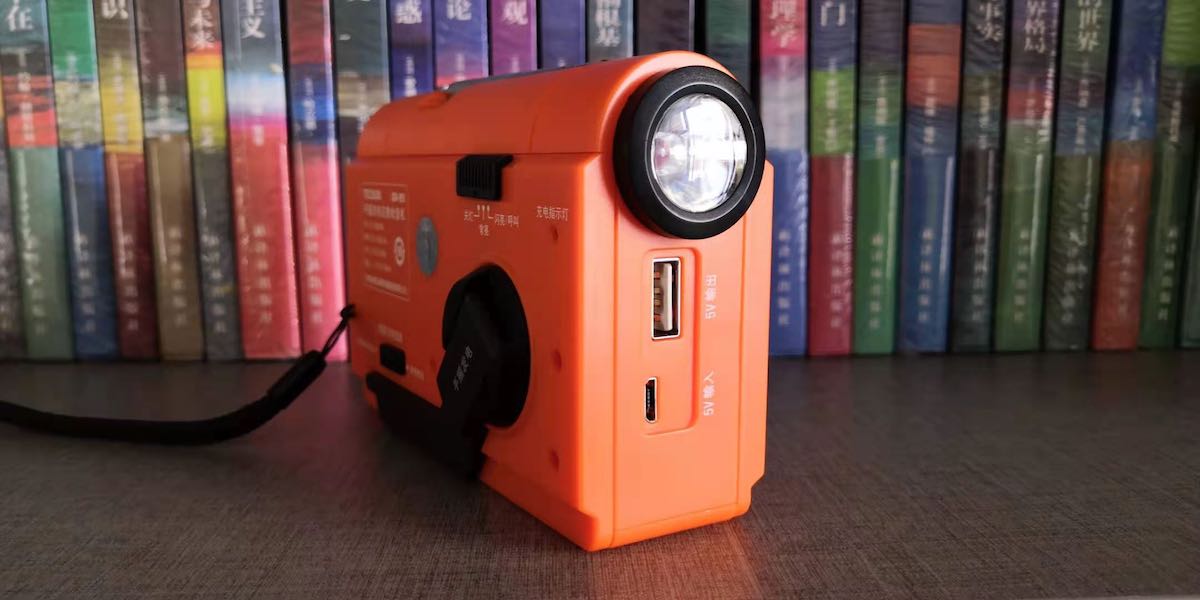
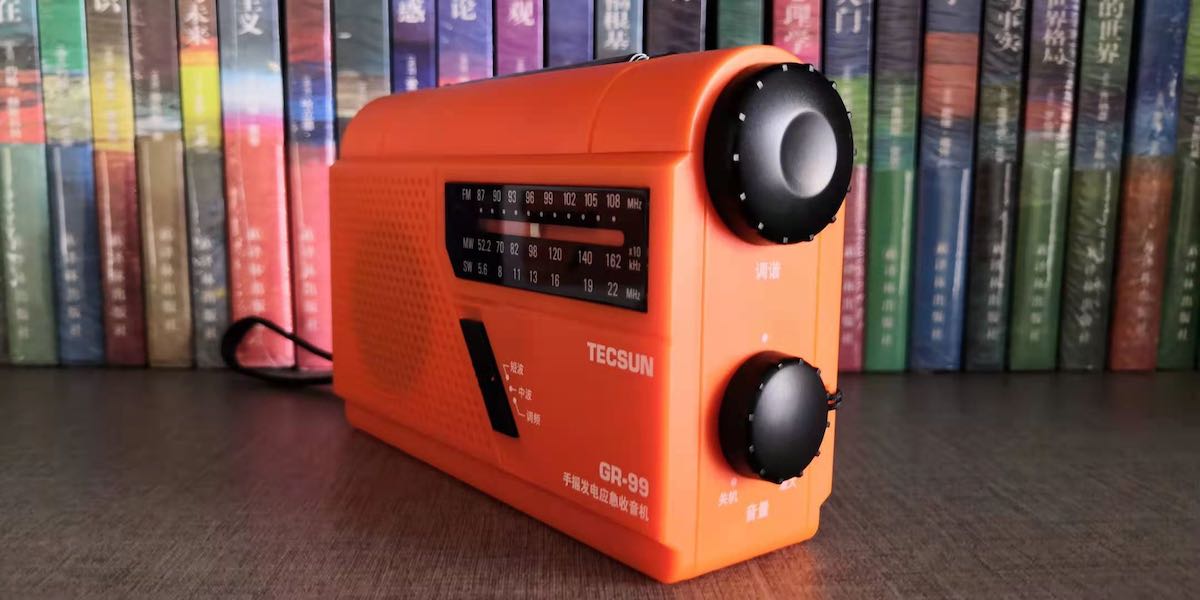
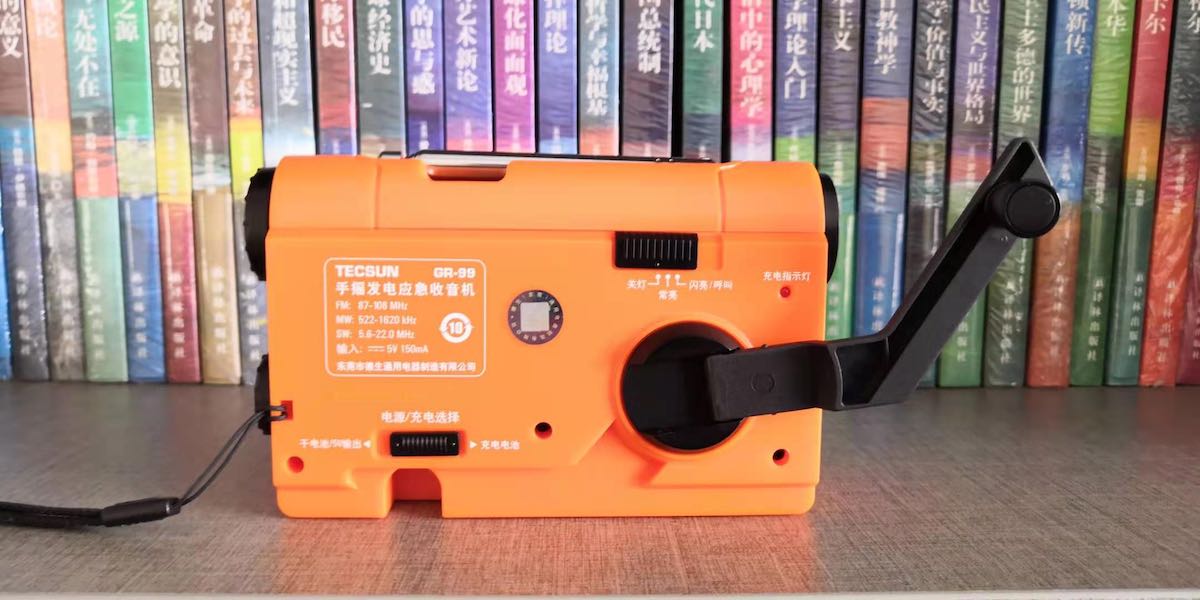
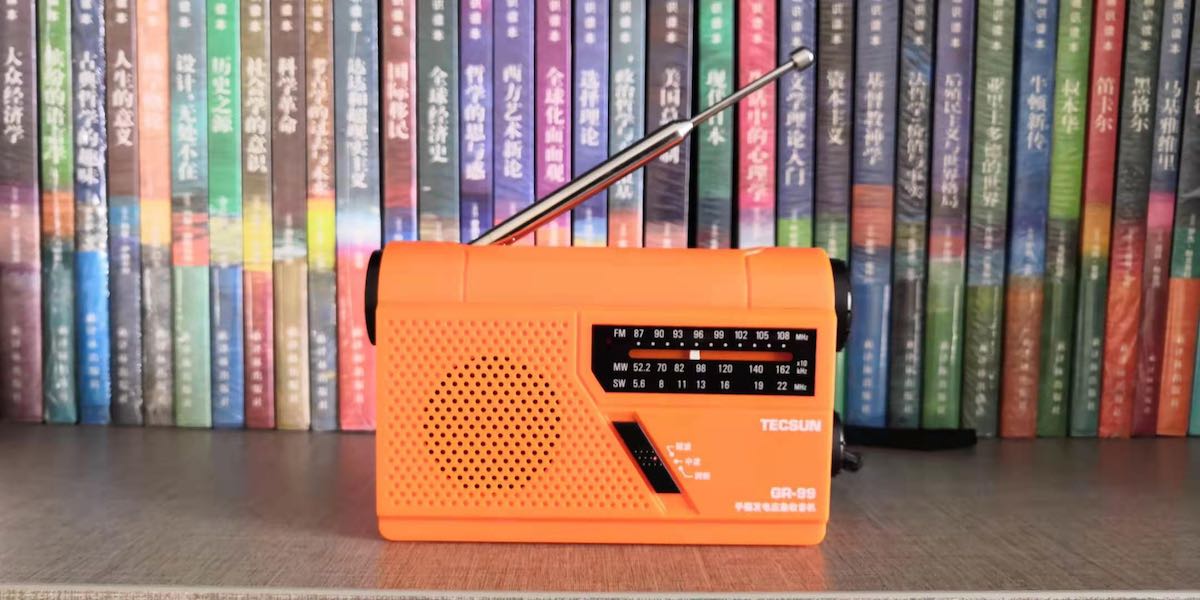
Photos of the new Tecsun GR-99 emergency radio

Many thanks to SWLing Post contributor, Mei Tao, who writes:

Hi Thomas:

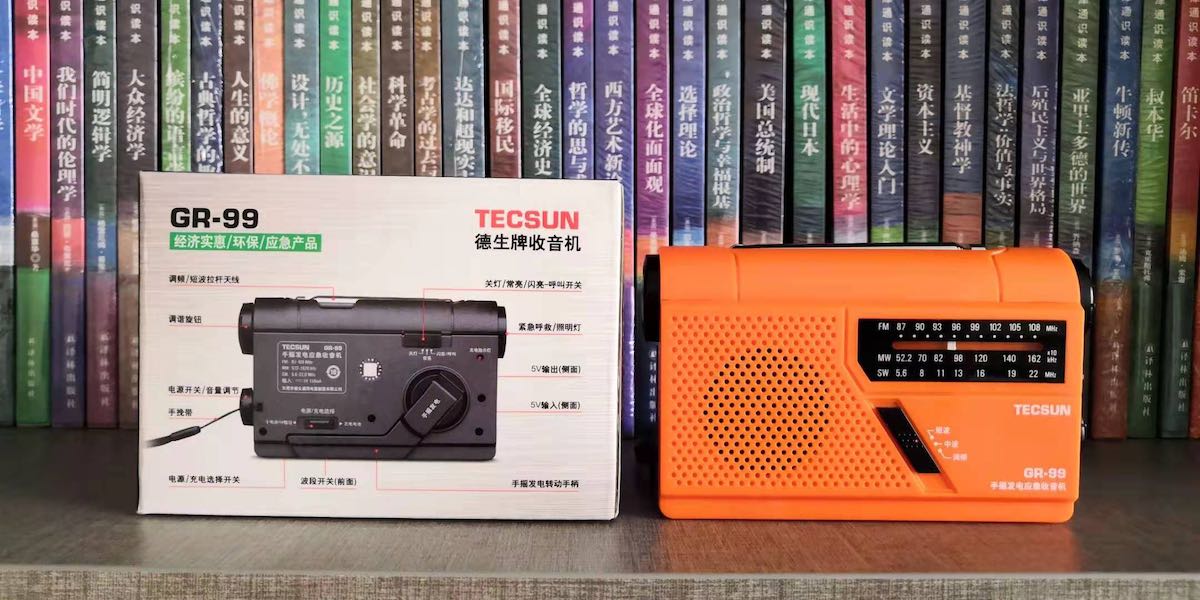
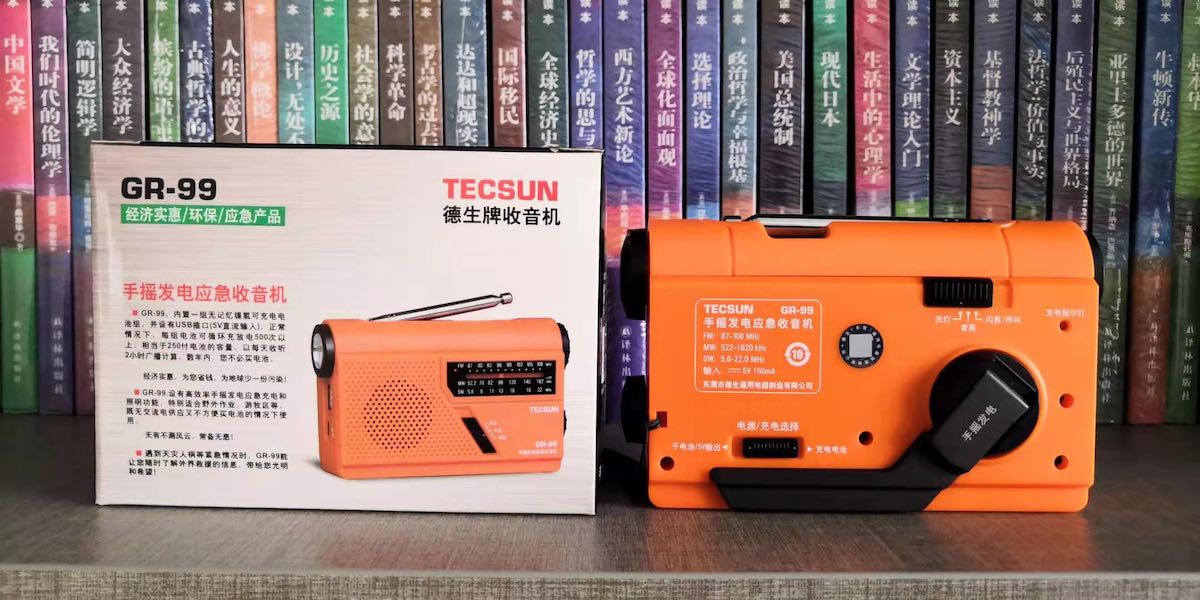
I’m happy to tell you that yesterday [January 29, 2021] Tecsun released a new model Emergency Radio. I’ve included some photos:

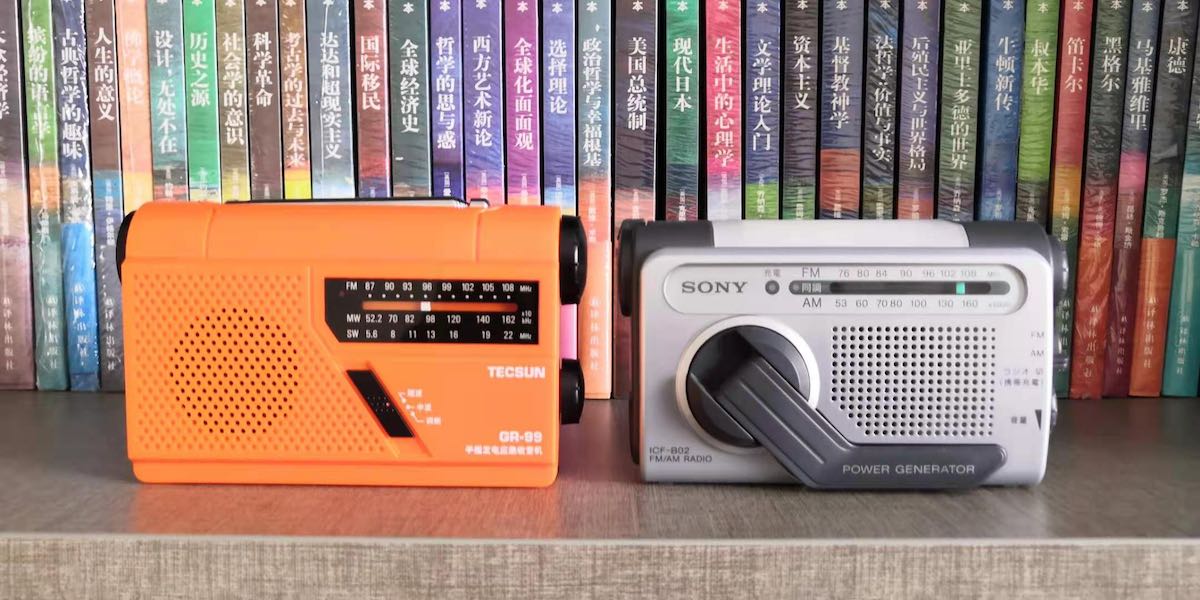
The GR-99 includes FM, AM and SW bands. As most of today’s radios, it is also based on the DSP chip which offers good performance. It can be powered by the built-in Ni-MH battery and two AA batteries.

This radio also features hand crank power generator which can charge your device such as smartphone through the micro-USB cable. In case of emergency, GR-99 with flashlight and SOS alarm can give you a hand.

Nearly a month ago, I helped to test the prototype of this radio and gave them my advice. Now it’s great to see it on sale.

At last, provide you with a photo of me, almost two years ago. I took this selfie with my radios.

Oh I must admit that several radio in this photo were my friends’.

Sincerely

Mei Tao

Ha ha!!! I love the photo, Mei Tao–absolutely brilliant!

I’m happy to see that not only is Tecsun still producing an emergency radio with an analog dial (which requires less of the battery than a digital display), but also is still including the shortwave bands.

Thank you very much for reporting on this early production run Tecsun radios, Mei Tao!