Many thanks to SWLing Post contributor, Dennis Dura, who shares the following promo from Airspy:
 This summer, we offer 20% OFF on #Airspy products from June 28th until July 4th 2021.

Many thanks to SWLing Post contributor, Dennis Dura, who shares the following promo from Airspy:
This summer, we offer 20% OFF on #Airspy products from June 28th until July 4th 2021.
 Many thanks to SWLing Post contributor, Frank Sturzaker, who writes:
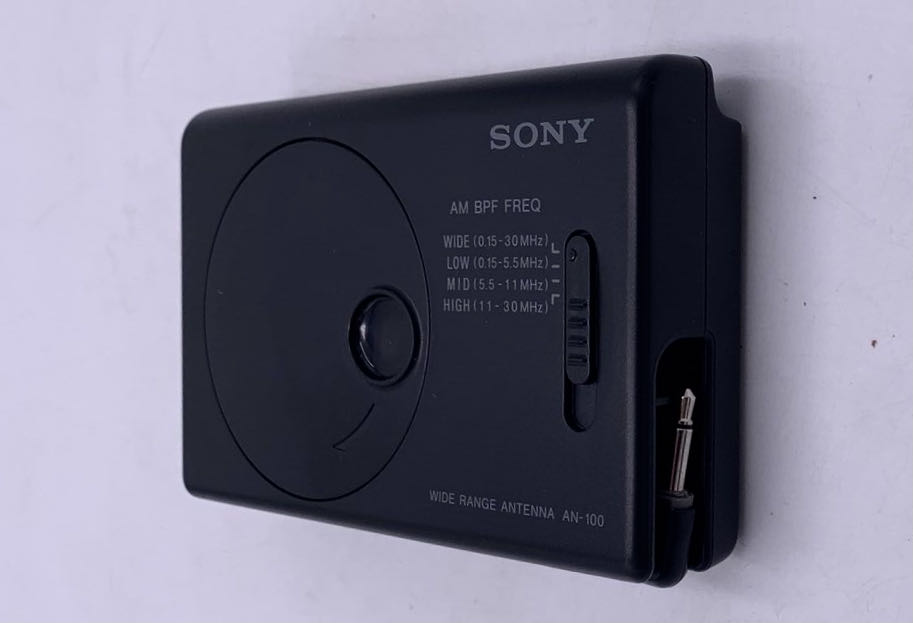
I am a new SW listener in the UK and am using an elderly Sony ICF SW100E picked up from selling website here in the UK fairly cheaply as a starter. It gets excellent reviews and seems to do what is required very well. A couple of weeks ago I also picked up a non-working Sony AN-100A external antenna at a charity / thrift store here in the UK. Cheap because not working.
The antenna section simply pulled out of the plastic case so I opened it up to have a poke about inside to try to solve the problem.
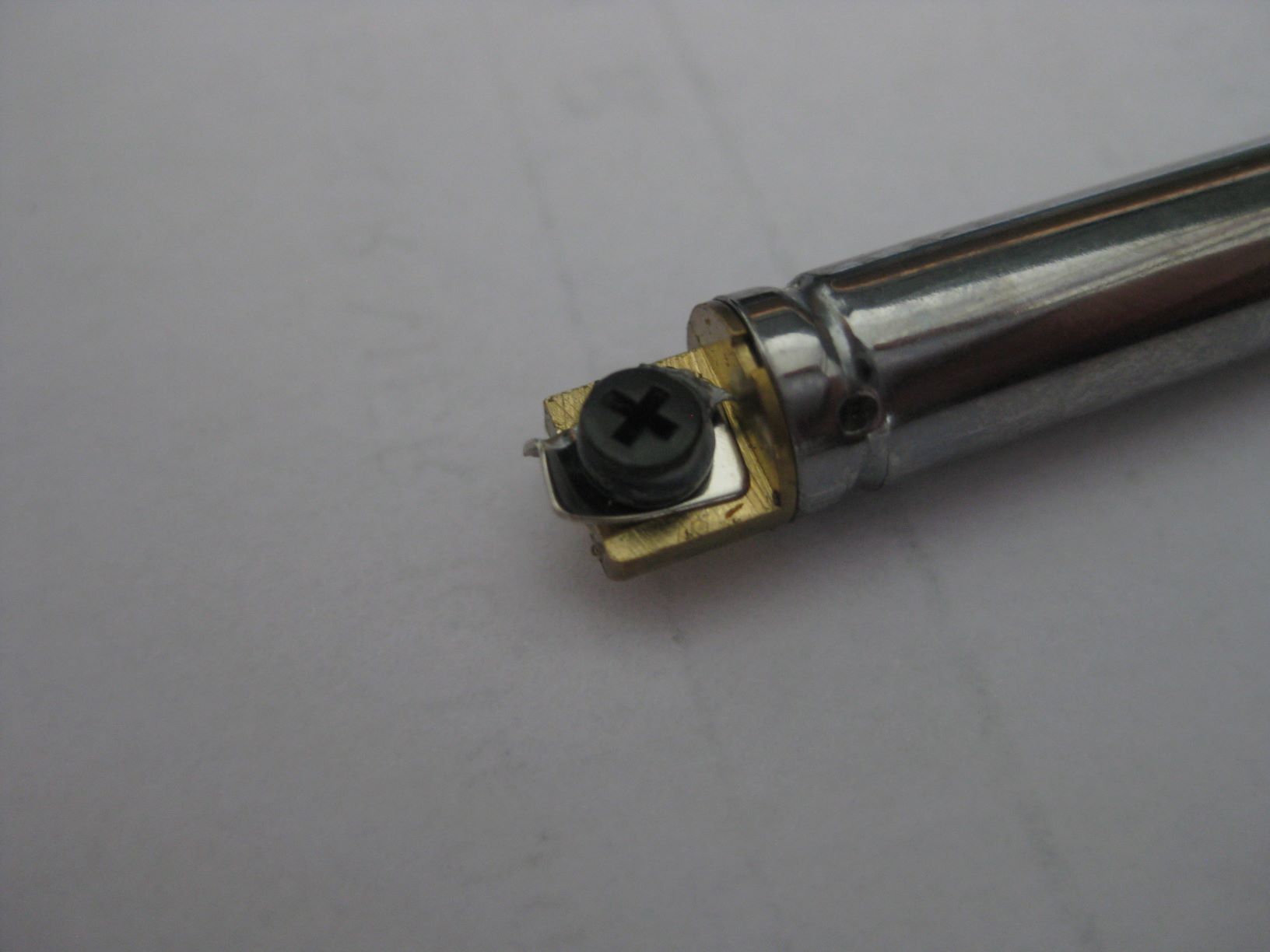
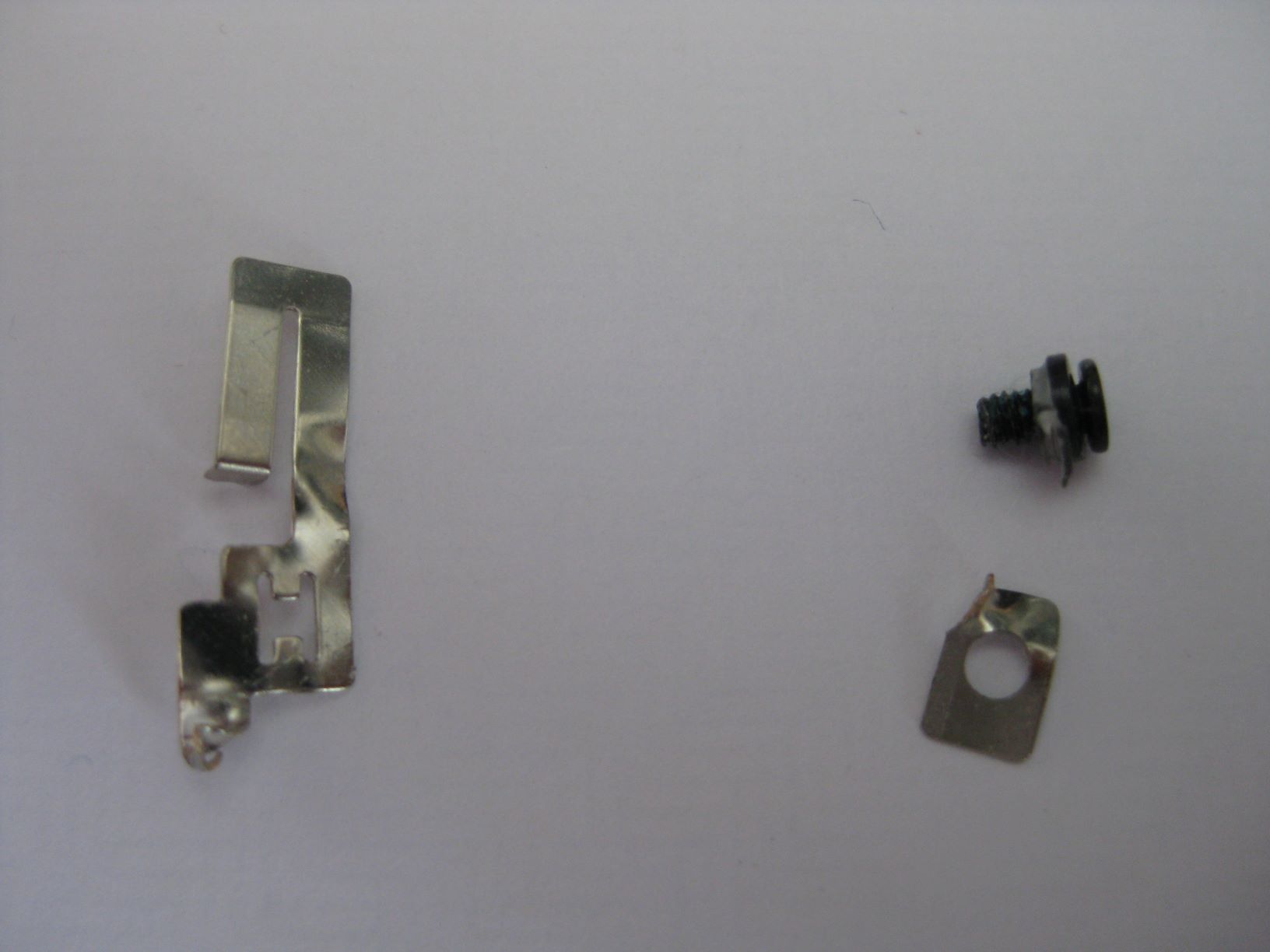
The antenna has been “ripped” from however it was mounted and has taken the thin metallic shaped piece / strip that somehow connects it to the circuit board and twisted it. I would guess that this has happened when trying to rotate the extended antenna when the extending sections had become too stiff to rotate – the pieces visible from outside the unit would not rotate inside the fixed section that sits in the unit.
1 – This is what I bought (although the antenna itself was in the correct place in the case):

2 – This is a close up of the base of the antenna when first bought:
3 – The two halves of the case with the antenna in place but about 0.5″ short of where it should be:

4 – A close up of the ‘loose pieces’ from inside the case and the bottom of the antenna – on the right are the pieces that were left on the antenna and on the left is the this metal piece that makes contact with the circuit board from the antenna
5 – Photo of antenna screw hole in rear of case from inside – the broken plastic is obvious round the screw hole:

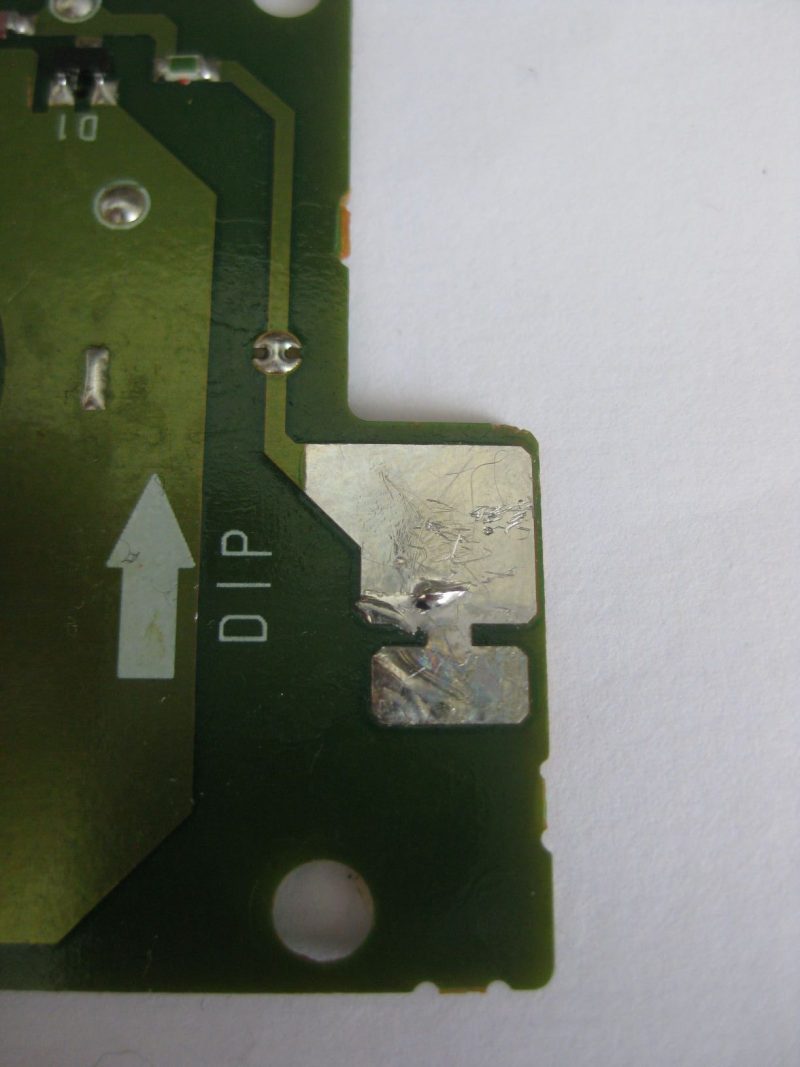
6 – Photo of underside of circuit board showing the flat metallic area where the metallic strip from the antenna makes contact:
My questions about how it all fits together (as a starter) are:
If someone can help then great. I repeat, I am not an electronics wizard – a master with a soldering wand I am not!!!
I could go at this like a bull at a gate but advice would be appreciated if there is any out there.
Post readers: if you can offer Frank some advice, please comment. Also, if you own an AN-100E and could share some internal photos, that might help him sort out how it was originally attached inside.
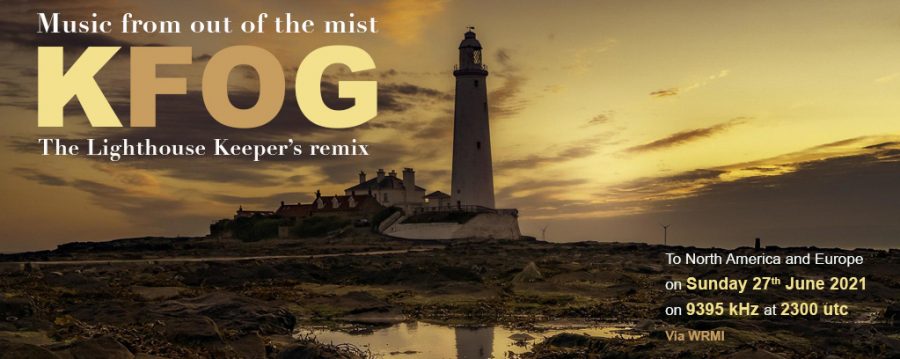
I’ve just learned that KFOG will broadcast a special remix edition via WRMI (9395 kHz) on Sunday June 27, 2021, at 2300 UTC.
Many thanks to SWLing Post contributor, Carlos Latuff, who shares the following video of sounds he heard on HF. Carlos adds, “Are we in the Twilight Zone or Lost in Space? They sound like effects from a 60’s/70’s sci-fi movie!”
Those sounds are wild! The stuff of Star Wars.
My only guess is that it’s a form of OTH RADAR? I’m sure an SWLing Post reader will sort this out in short order! Please comment!
 Many thanks to SWLing Post contributor, Ulis (K3LU), who shares the following note via his Twitter feed:
“Comrade Africa” – a historic look at the GDR’s (Radio Berlin International) Cold War era shortwave broadcasts to Africa via the BBC World Service:
Click here to listen to the documentary at the BBC World Service.
Because I keep my ear to the waves, as well as receive many tips from others who do the same, I find myself privy to radio-related stories that might interest SWLing Post readers. To that end: Welcome to the SWLing Post’s Radio Waves, a collection of links to interesting stories making waves in the world of radio. Enjoy!
Many thanks to SWLing Post contributors Tracy Wood, Bill Patalon, Dennis Dura, and Mike Agner for the following tips:
Ham radio hobbyists will test their emergency preparedness skills alongside All Day Radios’ Grand Opening celebration in Ramona next weekend.
The Amateur Radio Field Day, a national emergency preparedness activity sponsored by the American Radio Relay League (ARRL), will be held in Ramona from 11 a.m. Saturday, June 26 and continues for 24 hours until 11 a.m. Sunday, June 27.
All Day Radios co-owner Peter Von Hagen will coordinate his Grand Opening in sync with Field Day from Friday through Sunday. The store is at 2855 state Route 67 between Dye Road and Hope Street, and Field Day will be held next door.
Von Hagen said the object of Field Day, held annually the fourth weekend in June, is to communicate on as many stations on amateur bands as possible to test the capabilities of communications equipment. Operators will be using backup sources of power such as solar power and batteries, he said.[…]
The demand for software defined radios, especially in the commercial applications, such as telecommunication, transportation, and commercial aviation, has been affected to a great extent. Due to precautionary measures undertaken by many countries to stop the spread of COVID-19, several public/private development activities have been stopped, resulting in a drop in demand for software defined radios. However, this trend seems to vary from country to country. For instance, the demand for software defined radios in Europe and the Asia Pacific has been affected by the pandemic owing to the stoppage of development activities.
Based on application, the commercial segment of the software defined radio market is projected to witness the substantial growth during the forecast period
In terms of application, the market is segregated into commercial and defense. The rising usage of SDRs in commercial applications including aviation communication, marine communication, transportation, telecommunication is supporting the segment growth. Software defined radios are predominantly used in Air Traffic Control (ATC), transportation, and telecommunication applications. They are easily upgradable and provide high data transmission rate that further enhances its usage for commercial segment.
Cognitive/ Intelligent radio sub segment of the software defined radio market by type is projected to witness the highest CAGR owing to increasing improvements in cognitive radio products.[…]
The FCC has sent another reminder to licensees of analog low power television stations regarding the July 13 drop-dead date. If an analog LPTV has not applied for a digital CP by that date its license will be cancelled and those that have Construction Permit’s but will not be ready to broadcast digitally will need to file a waiver request but still will be required to turn off their analog signal on the 13th and cease operation until ready to begin operating with their digital facilities.
This will of course affect the thirty something LPTV’s on analog channel 6 operating as radio stations on 87.75 MHz. While some of these signals will be moving to other channels, many will be remaining on channel 6 and have spent the past few years seeking loopholes to continue to broadcast an analog audio signal past the digital conversion deadline. Venture Technologies Group, which owns five affected stations, threw the door wide open this week with the grant of a six month STA for its KBKF-LD San Jose CA. KBKF-LD, which is leased to Educational Media Foundation to air its “Air 1” network, will be permitted to continue to offer an analog audio signal on 87.75 FM in its ATSC 3.0 digital video signal.[…]
From: Risto Kotalampi
Hi all,
Hard-Core-DX has been a pioneer in connecting shortwave listeners for nearly 30 years now. In its core it has been emailing lists and web sites and some other experiments which have either spun to become popular on their own (e.g. various ham related spotting sites or Online Log which is very popular in Finland) or not. Today we wanted to try to branch out into chat using Slack.
This is not the only chat there is… IRC, Facebook, Whatsapp etc have small circles for shortwave listeners but they have all been closed systems and not enabling an environment that can be used across devices and have conversations about any topics we choose. In the corporate world Slack has revolutionized communications amongst colleagues and partners in different companies. Much of work in U.S.A. small companies happens nowadays in Slack and not so much in emails.
Hard-Core-DX has signed up and created it’s very own Slack service.
If you want to join the HCDX Slack, please click this link and create your own HCDX Slack account:
https://join.slack.com/t/hard-core-dx/shared_invite/zt-rn83gamf-_UCfo9LYUVmoIBhb0~3cSg
Some basic rules of the Slack service:
Please consider supporting us via Patreon or our Coffee Fund!
Your support makes articles like this one possible. Thank you!

 Many thanks to SWLing Post contributor, Dan Robinson, who shares the following guest post:
by Dan Robinson
It is rare — no super rare — that we get any good news these days about shortwave broadcasting. Remember the excitement a few years ago when Guinea returned to shortwave? Then, Nigeria returned but has now become worryingly intermittent.
Today, a station returned to shortwave, one that was absent for some time.
CFVP, the low power relay of 1060 kHz AM in Calgary, Alberta returned to 6,030 kHz with the help of amateur radio operators. The station had been off the air through 2019 — the last time it was reported was in late 2018 when it was relaying CKMX 1060 AM in Calgary.
According to a note posted on the World of Radio group:
“two engineers from Bell Media, Dale and Gerry, who are also hams, VA6AD and V6QCT respectively, rebuilt the transmitter (partially with ham radio parts) and repaired the connection to the antenna with a temporary matching network…the temporary matching network means that not all the 100 watts are going into antenna.”
According to Harold Sellers, who is acting as eQSL manager for the re-activated shortwave station, CFVP 6030 was back on the air as of 0900, though I was unable to hear it until later on June 19th. Best reception was via SDR sites in southern Alberta, northern Montana, Idaho and up in Edmonton, Alberta.
Programming consisted of straight comedy routines from Funny 1060 AM, the Calgary station that carries old recordings of standup comedians, with local IDs and ads mixed in every few minutes. I made a video showing CFVP reception on one of the SDR sites, changing between 6,030 kHz and 1060 kHz which was also audible at SDR locations.
Earlier this year, in March, DX’er Don Moman reported the following, which proved to be true:
” . . .They had a transmitter problem which has been fixed, but they have also identified an antenna issue. The problem [was] troubleshooting and testing the antenna and matching network in the point blank presence of a 50kw AM transmitter. Testing/ repair on CFVP radiator will be done when the 50kw signal can be powered down or off, to enable more accurate testing. Bell will not power down or shut down during ratings periods which are long and frequent. Having said that, repair will likely happen with the above taken into consideration, as well as warm weather. Best guess: Before next winter at the latest, this spring the earliest.”
In August, Harold Sellers reported that the ground at the base of the shortwave tower was under water, and that grounding rods and ground wire needed replacement, and later that the tower grounding had been replaced/fixed. The transmitter also had issues but was repaired and back out at the site.
I quickly sent a reception report to the email address provided by Harold Sellers, and was pleased to receive back a eQSL which Harold said was the second one sent out to those who heard the station on its re-activation day.

Those of us who began our listening in the 1960’s (some much earlier than that!) remember the great days when Canada had a number of regional stations on shortwave. QSLs from some of those, including a 1983 QSL from CFVP/Calgary, are attached to this article.


A screenshot of CFVP as it was being heard on reactivated 6,030 kHz is also shown.

Interestingly, the Wikipedia listing for CKMX shows 6,030 kHz as being active — it’s not known, however, whether the Wikipedia listing was ever updated to note that 6,030 kHz was off the air for nearly 2 years.