Shortwave listening and everything radio including reviews, broadcasting, ham radio, field operation, DXing, maker kits, travel, emergency gear, events, and more
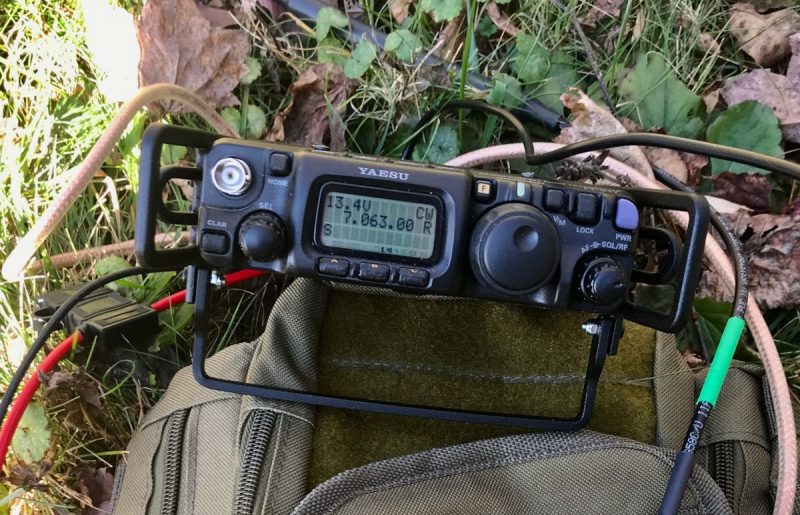
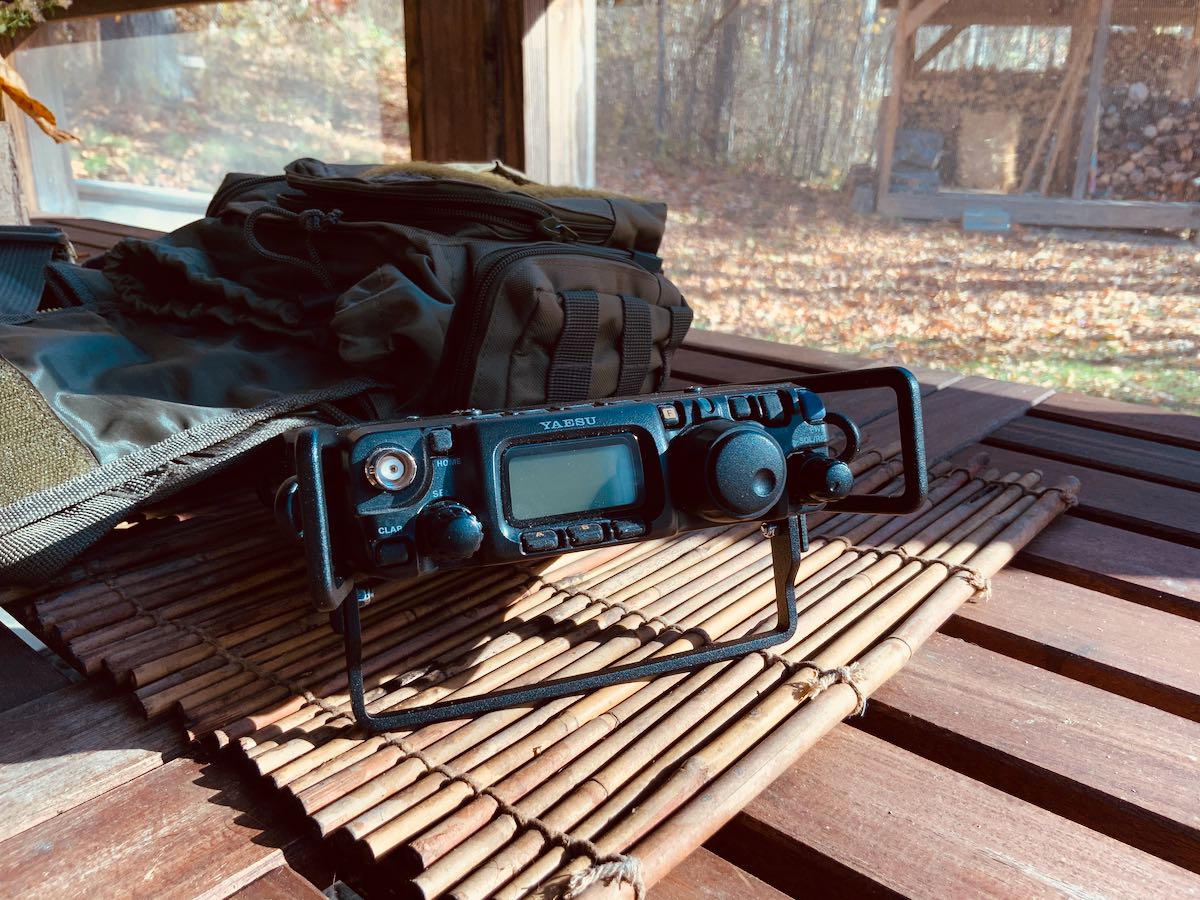
I recently re-acquired a Yaesu FT-817ND general coverage QRP transceiver. I wrote a post with some info about this radio and how it came into my possession over at QRPer.com, if you’re interested.
My question here: Have any folks in the SWLing Post community ever used the FT-817 or FT-818 series transceivers for serious shortwave broadcast listening?
I originally owned a first production run FT-817 back in 2000 when I lived in the UK. I did quite a bit of SWLing with it then, but I never compared it with other radios. I do recall feeling it was a very capable general coverage transceiver, though, and remember logging a number of broadcasters (although I can’t seem to find those logs these days). Of course, propagation was quite a bit better back then, too!
Please comment if you use or have used the FT-817/818 for shortwave listening!
Many thanks to SWLing Post contributor, Kris Partridge, who writes:
Last night I sent the link to the SWLing Droitwch item to a former colleague. He replied this morning, reply below, and includes a couple of useful links. I’m very sure the SWLing Post knows about MB21.
Thinking that maybe the item on Crowbourgh will be of interest to SWLing readers. It contains the ‘magic’ word “Aspidistra” ! Lot of SW history there.
Many thanks to SWLing Post contributor, Dave Porter, who writes:
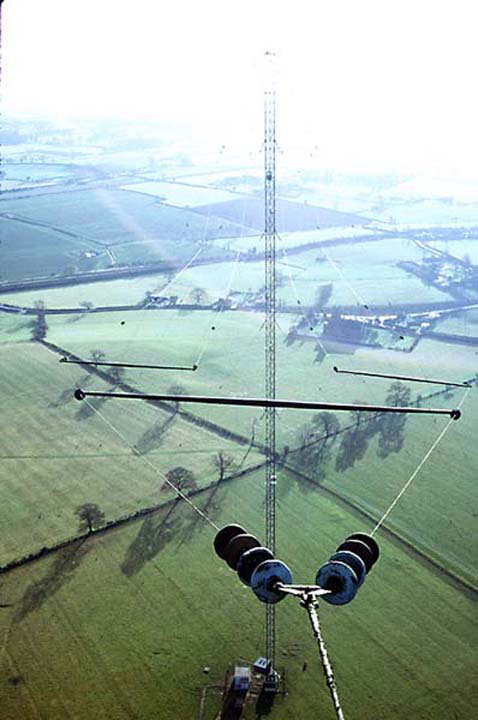
This picture [above] has just emerged, photographer unknown but most likely a rigger from the top of one of the 700′ masts there!
This was taken at Droitwich sometime after colour photography came in (late 1960’s) and before 1986 when the four wire Tee was replaced by a new design developed by BBC Antenna Engineer Tony Preedy, G3LNP that improved upon the 11-j85 Ohms driving point impedance giving a few more ohms and less capacitive reactance for the 2 x 250kW B6042 transmitters and a greater radiation efficiency.
Tony’s present LF array does not look so symmetrical as it comprises four separate Tee wires with the drops as a square box rather than the centre-joined drops of this one.
Tony also developed a low profile Tee antenna over 3 x 17m wooden telegraph poles for MF at up to 1 kW that was used when planning restrictions were enforced. Efficiencies were up to 40% at the 1500 kHz end of the band. However, if used by birds as an overnight roost it could provoke VSWR trips on solid state transmitters, the fix was to use a sliding reduced power detector that wound down the power to a level that did not trip the VSWR monitoring. Old tube transmitters were not affected!
The operating frequency for this LF Tee was 200 kHz at that time, now the antenna is on 198 kHz
Wow–thank you, Dave, for sharing this photo. We truly appreciate your impressive knowledge of UK broadcasting and history! And, wow! The views those riggers took in!
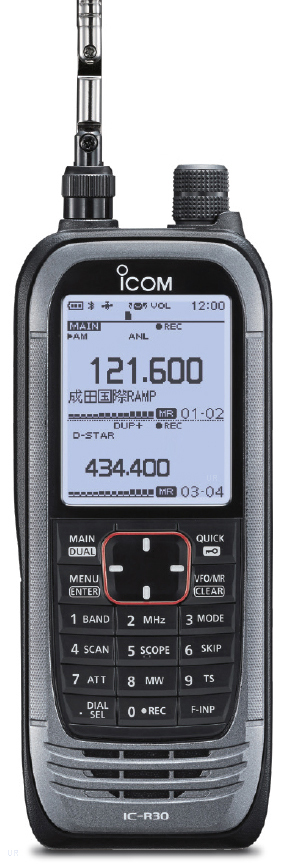
Changes from version 1.10: Fixed the problem of when the ANL of the band that is not used is ON, while the Dualwatch function is OFF, the received DCR audio may not be output from the speaker.
Radio Waves: Stories Making Waves in the World of Radio
Because I keep my ear to the waves, as well as receive many tips from others who do the same, I find myself privy to radio-related stories that might interest SWLing Post readers. To that end: Welcome to the SWLing Post’sRadio Waves, a collection of links to interesting stories making waves in the world of radio. Enjoy!
Many thanks to SWLing Post contributors Troy Riedel, Dennis Dura, Mike Hansgen, and Eckhard Hensel for the following tips:
Exciting new technologies promise to make radio more accessible and engaging than it has ever been. This includes app-based platforms that enable broadcasters to engage with listeners like never before, software that lets producers edit sound as easily as a text document, and a ‘radio station in a bucket’ that turns a mobile phone onto a broadcast hub.
That’s according to radio futurologist James Cridland, who believes that while innovations like these point to a bright future for the over 100-year-old medium, it’ll take more than adopting cool new tech to succeed in the increasingly splintered and diverse arena that radio is evolving into.
“Radio is more than just AM and shortwave, more than big, old fashioned transmitters. Radio is a shared experience with a human connection,” he said during a recent webinar on the future of radio hosted by Fabrik, a South African-developed software platform for broadcasters and community groups.
“That shared experience is something that [streaming music service] Spotify can’t offer. It’s something that somebody’s CD player can’t offer,” he said, adding that this also applied to radio stations who just play non-stop music. “There’s no human connection there. There’s no real shared experience.”[…]
Pittsburgh radio station KDKA will celebrate 100 years of radio broadcasting in November, and Pennsylvania radio amateurs will honor that milestone in a multi-station special event. KDKA dates its broadcasting history to the airing of the Harding-Cox presidential results on November 2, 1920, and the station has been on the air ever since. The special event, which will involve the operation of four stations, will run through the entire month of November.
“More than 100 years ago, many experimenters started delving into a new technology known as wireless, or radio,” said Bob Bastone, WC3O, Radio Officer for the Skyview Radio Society in New Kensington, Pennsylvania. Bastone explained that many of those early pioneers were radio amateurs. “One hundred plus years later, many amateur radio operators are still contributing to wireless technology, while also serving their communities and enhancing international goodwill. Congratulations to KDKA Radio, also known in the early years as amateur radio stations 8XK, 8ZZ, and W8XK.”
Special event stations K3K, K3D, K3A, and W8XK will set up and operate at several locations in Pennsylvania during November. Stations will determine their own modes and schedules. Visit the W8XK profile on QRZ.com for information on certificates and QSLs.
What became KDKA initially began broadcasting in 1916 as amateur radio station 8XK, licensed by the Federal Radio Commission (FRC), the predecessor to the FCC. At the time, amateurs were not prohibited from broadcasting. The small station was operated by Dr. Frank Conrad, who was Westinghouse Electric and Manufacturing Company assistant chief engineer. The transmitter ran 75 W, and the broadcasts gained some popularity in Pittsburgh.
During World War I, amateur radio operation was suspended due to national security concerns. After the war, 8XK was reorganized as a commercial AM radio station, KDKA. The first transmissions of KDKA originated in a makeshift studio on the roof of Westinghouse K Building in East Pittsburgh.
Ham radio clubs participating in the centennial special event include the North Hills Amateur Radio Club in Pittsburgh — which is planning to operate from KDKA’s 1930s’ transmitter site, where an original tower pier still stands. A 1920s’ transmitter site, in Forest Hills, will serve as another operating location. In addition to the North Hills ARC and Skyview Radio Society, other clubs taking part include the Panther Amateur Radio Club, Steel City Amateur Radio Club, the Wireless Association of South Hills, the Butler County Amateur Radio Public Service Group, and the Washington Amateur Communications Radio Club.
Individual radio amateurs will operate from their own stations, and a small group of hams is planning a portable operation from South Park in suburban Pittsburgh.
Stations will invite the public to visit, while observing the required social distancing protocols.
“We amateur radio operators look forward to contacting thousands of other hams around the world to celebrate this huge milestone in the commercial broadcasting industry,” said Bastone. Contact him for more information. — Thanks to ARRL Public Information Officer and Allegheny County ARES Emergency Coordinator Bob Mente, NU3Q, for providing the information for this story.[…]
Radio programming from around the world is available on the internet or through apps.
Americans may not be able to travel the world because of the pandemic, but thousands of foreign radio stations are easily accessible online to bring the world to you.
For Dorothy Parvaz, a radio editor in Washington, D.C., foreign radio was her first introduction to the world beyond Tehran, where she lived until 12. “Listening to radio signals coming in from other countries was just like seeing the world in a way we couldn’t on TV, ” she said. “If I wanted to find music, I went to the apartment downstairs, where one of the kids always got a good signal somehow. We heard Pink Floyd for the first time together.”
Sangean ATS-909X2 once again available for preorder
Many thanks to Eckhard Hensel who notes that the ATS-909X2 is once again on the Sangean EU retailer site for pre-order. The price is €329.00 and they expect the product to ship in the first quarter of 2021.

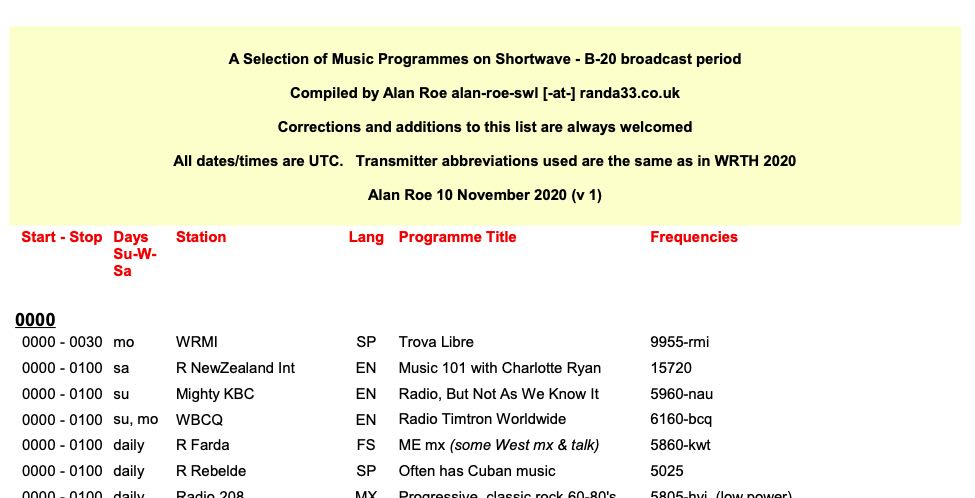 Many thanks to SWLing Post contributor, Alan Roe, who shares his much anticipated B20 broadcast season guide to music on shortwave.