Category Archives: Shortwave Radio

Radio Waves: Quantum Sensors, Sinking Mi Amigo, Submarine Radio Network, and Video Games Over The Air

Radio Waves:  Stories Making Waves in the World of Radio

Because I keep my ear to the waves, as well as receive many tips from others who do the same, I find myself privy to radio-related stories that might interest SWLing Post readers.  To that end: Welcome to the SWLing Post’sRadio Waves, a collection of links to interesting stories making waves in the world of radio. Enjoy!

Many thanks to SWLing Post contributors Kim Elliott and Dennis Dura for the following tips:


Scientists create quantum sensor that covers entire radio frequency spectrum (Phys.org)

A quantum sensor could give Soldiers a way to detect communication signals over the entire radio frequency spectrum, from 0 to 100 GHz, said researchers from the Army.

Such wide spectral coverage by a single antenna is impossible with a traditional receiver system, and would require multiple systems of individual antennas, amplifiers and other components.

In 2018, Army scientists were the first in the world to create a quantum receiver that uses highly excited, super-sensitive atoms—known as Rydberg atoms—to detect communications signals, said David Meyer, a scientist at the U.S. Army Combat Capabilities Development Command’s Army Research Laboratory. The researchers calculated the receiver’s channel capacity, or rate of data transmission, based on fundamental principles, and then achieved that performance experimentally in their lab—improving on other groups’ results by orders of magnitude, Meyer said.

“These new sensors can be very small and virtually undetectable, giving Soldiers a disruptive advantage,” Meyer said. “Rydberg-atom based sensors have only recently been considered for general electric field sensing applications, including as a communications receiver. While Rydberg atoms are known to be broadly sensitive, a quantitative description of the sensitivity over the entire operational range has never been done.”[]

Forty years ago today Sheerness lifeboat crew rescued Radio Caroline DJs from the sinking Mi Amigo (Kent Online)

It was the original ‘ship that rocked.’ But 40 years ago today (Thursday)the Mi Amigo, home to original pop pirates Radio Caroline, finally disappeared beneath the waves in a violent force 10 storm.

In a daring rescue which lasted 12 hours in appalling weather, the crew of the Sheerness lifeboat saved the lives of everyone onboard – including the ship’s canary.

Leading the operation was colourful RNLI coxswain Charlie Bowry, who was later presented with the Institute’s coveted silver medal.

It was during the day that the radio station’s 60-year-old ship started dragging its anchor and drifted 10 nautical miles onto the Long Sand sandbank off Southend.

As the tide rose, the ship started to float free. But the bottom of the boat began being buffeted on the seabed with such a force the steel plates sprung a leak and water gushed into the engine room.

When the bilge pumps couldn’t cope, the three British DJs and a Dutch engineer called the Coastguard who dispatched Sheerness lifeboat the Helen Turnbull.[]

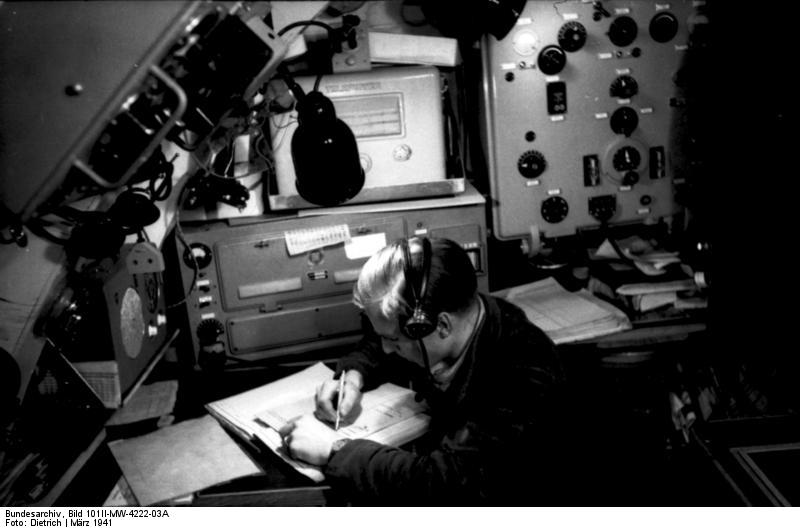
The Radio Network that Allowed Communication with Submarines (Interesting Engineering)

Communicating with covert fleets during WWII required some special equipment.

What do you do when you need to communicate with a crew of 50 sailors submerged in a submarine in an undisclosed location across the world’s oceans? That was a difficult question to answer for Navy leaders in WWII.

Radio waves don’t easily travel through saltwater, which meant that getting active communication with a submarine crew meant making the submarine surface an antenna. This was the obvious solution, but it made a previously covert submarine now a visible target.

[…]Engineers tasked with finding a more covert solution soon discovered that radio waves with low frequencies, around 10 kHz, could penetrate saltwater to depths up to around 20 meters. They realized that if the transponders on submarines were switched to these frequency ranges, then they communicate with leadership on land.

The problem with this idea was that creating and broadcasting these low-frequency radio waves required massive antennas. Essentially, the lower the frequency of a radio wave, the longer and larger the antenna is required to be.[]

You Could Download Video Games From the Radio in the 1980s (Interesting Engineering)

Certain radio programs broadcast the raw data to video games for viewers to download.

[…]In 1977, the world’s first microprocessor-driven PCs were released. These were the Apple II, the Commodore PET, and the TRS-80. All these machines had one thing in common – they used audio cassettes for storage.

Hard drives at the time were still quite expensive, and everyone at the time had access to cheap audio cassettes. Early computer designers actually flaunted cassette storage as it aided in the early adoption of personal computers. As PCs became more common, so to did the emergence of their use as video game machines.

As the 1980s rolled around, engineers at the Nederlandse Omroep Stichting, NOS, a Dutch broadcasting organization, realized something incredible. Since computer programs and video games were stored on audio cassettes, it meant that their data could be transmitted with ease over the radio. They started taking programs and video games and setting up broadcasts where people could “download” games onto their own personal computers.

The audio that was transmitted would’ve sounded reminiscent of a dial-up modem booting up.

[…]NOS started a radio program specifically for transmitting gaming data called “Hobbyscoop,” and it became incredibly popular. The company even created a standard cassette format called BASICODE to ensure computer compatibility.

Eventually, transmitting games through computers became so popular that radio shows popped up all around the world. A Yugoslovik station called “Ventilator 202” broadcasted 150 programs between 1983 and 1986. As the practice evolved, it became less of a novelty and rather a practical way for people to share calculation programs, educational tools, encyclopedias, and even flight simulators.[]


Do you enjoy the SWLing Post?

Please consider supporting us via Patreon or our Coffee Fund!

Your support makes articles like this one possible. Thank you!

AirSpy YouLoop passive magnetic loop antenna now shipping

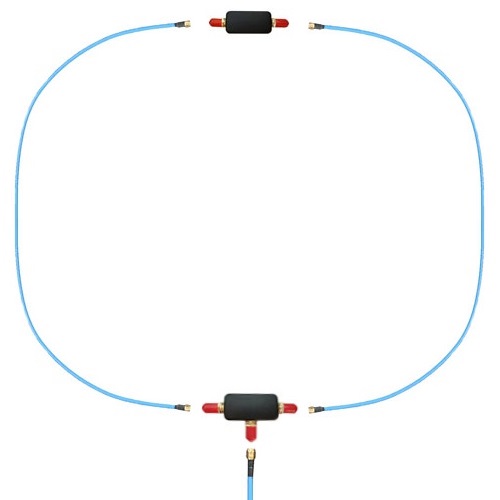
Many thanks to SWLing Post contributor, Michael Agner (KA3JJZ), who notes that AirSpy  now has the YouLoop passive mag loop antenna posted on their retail websites.  You can grab one for $30 – $35 US, depending on your location. That’s a fantastic deal in my book.

Click here to check out the YouLoop at Airspy.com.

Click here to check out the YouLoop at Airspy.US ($29.95 + shipping).

Click here to search for other AirSpy distributors.

Note that the YouLoop only works well with high dynamic range SDRs and receivers like the AirSpy HF+ Discovery.

Searching for the perfect dual-band mobile and radio inventory in the wake of shut-downs

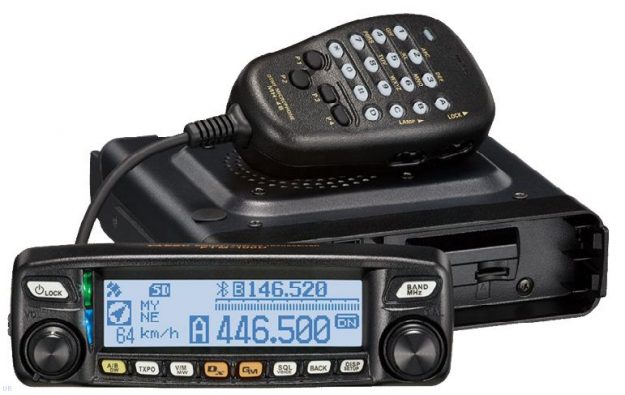
The Yaesu FT-100DR

As we here in North America are about to see how deep the Covid-19 pandemic is going to go, some of us are trying to turn lemons into lemonade and make the most of our social distance.

My buddy, Eric (WD8RIF), has inspired me to add another item to my growing Social DX Bucket List: install a dual-band mobile radio in my 2018 Subaru Forester.

I had planned to install a mobile rig shortly after purchasing the Forester, but frankly, I’m a “below 30 MHz” kind of guy, so most of my radio funds support HF gear.  When I’m taking a long trip, or wanting to join a local net however, I really miss the luxury of a proper mobile VHF/UHF radio.


Eric has pretty much convinced me the Yaesu FT-100DR is a solid choice at $299 US. At least, it’s the rig he plans to acquire.

He also discovered, last week, that new units of the FT-100DR are completely out-of-stock here in the US.

This prompted me to contact a couple of friends who work in the ham radio retail world–I was curious if radio inventory, in general, is running low.

Turns out, things are okay for now

It seems the shortage of FT-100DR units is pretty specific to this transceiver model and the back-order started before the Coronavirus outbreak and consequent shutting down of factories and supply chains across the globe. Likely, there’s a shortage of a specific part that has brought production to a halt.

In general, ham radio transceiver inventory is healthy for now, but supply chains and import of new units has been slowed or halted by the pandemic. Both of my friends believe production has started again in China (albeit slowly) which would coincide with what Anna recently told us. It’ll take a while for production and supply chains to ramp-up and inventory filled locally.

I wouldn’t be surprised if inventory of lower-cost handheld and mobile VHF/UHF transceivers starts to dwindle. As posted earlier today, there’s been a significant uptick of new ham radio licensees. Newly minted hams might be looking for a first radio.

My advice?

If you’re planning to purchase a new transceiver in the near future, and you feel financially secure enough to do so, bite the bullet! I would also recommend supporting your domestic ham radio retailers like (here in the US) Universal Radio, GigaParts, DX Engineering and Ham Radio Outlet. Your purchase will support them through what is obviously going to be difficult financial times ahead for small businesses.

Otherwise, just sit tight for a while! You may find a deal on the used market. One of my favorite places to check is QTH.com’s classifieds.

Speaking of the used market, this is an excellent time to post the gear you’ve been planning to sell!

Dual band mobile suggestions?

If I find a deal on a used FT-100DR, I might snag it (after giving Eric the opportunity, of course). Otherwise, I think I’ll wait until later this year and simply invest in the mounts, antenna, and wiring in the meantime.

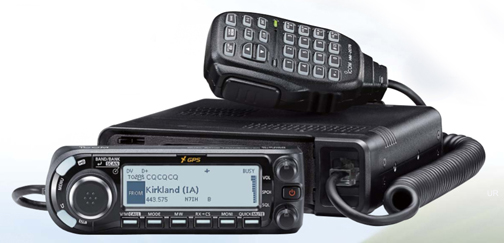
The Icom ID-4100A also seems like a solid choice.

In truth, even the FT-100DR doesn’t really satisfy all of the features I’d like in a mobile radio. Here are the features an ideal dual-band radio would offer:

  • Compact remote head
  • Bluetooth
  • VHF/UHF analog
  • GPS
  • APRS
  •  DMR (because where I live, it’s the best repeater network by far)
  • Extended receiver coverage
  • Easy to program

Yeah, I’m essentially looking for a unicorn. DMR mode would be amazing, but I’m not sure there’s a single DMR/analog mobile with remote head. Please correct me if I’m wrong. I’d love your suggestions and experience.

Also, are you considering making any major radio purchases over the next few months. or do you plan to wait until the economy begins to recover? Please comment!

Radio Nostalgia Trip: RCI Shortwave Listener’s Digest from July 26, 1982

Over at the Shortwave Radio Audio Archive, we receive some truly amazing recordings from our devoted contributors.

How many of you remember Ian McFarland’s Shortwave Listener’s Digest on Radio Canada International? It was certainly one of my favorite DX and SWL shows!

Our good friend Tom Laskowski recently sent in the following recordings of the Shortwave Listener’s Digest recorded (in part) on July 26, 1982 starting around 21:30 UTC on 15,325 kHz.

Tom notes:

Here are two more back to back episodes from my collection of recordings of Shortwave Listener’s Digest from Radio Canada International, this time from July 26 and August 02, 1982.

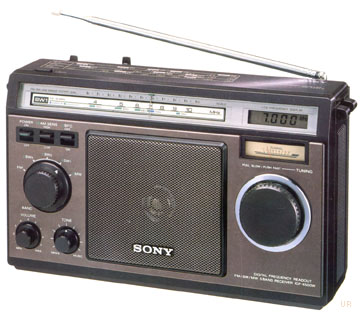
This program’s highlights are: ANARC 1982 Convention promo, Larry Magne’s test of the Sony ICF-6500W, a look at underseas intercontinental cables with Walter Foster of Teleglobe Canada, Glenn Hauser’s DX tips.

The second program highlights are: coverage of the 1982 ANARC convention with guest co-host Bab Zanotti of Swiss Radio Intl., interview with David Meisel about the solar cycle, a rundown of the awards given out at ANARC 82.

This recording is chock-full of shortwave nostalgia. How many of you remember some of the folks featured and mentioned in this show?

Use the embedded player below to listen to the full recording or click here to listen at the Shortwave Radio Audio Archive.

Note that there have been some other amazing recordings posted on the archive recently.  Here’s a small sampling:


Do you enjoy the SWLing Post?

Please consider supporting us via Patreon or our Coffee Fund!

Your support makes articles like this one possible. Thank you!
Social Distancing: Nothing new to us radio geeks

by Victor Rodriguez

Photo by Victor Rodriguez

Let’s face it: COVID-19 is certainly disrupting “business as usual” across the planet. It’s hurting economies, and of greater concern, hurting people.

Besides washing our hands frequently and not touching our faces, one of the most effective means of slowing/halting the spread of the Coronavirus is by exercising social distancing.

Simply staying home, and if you must go out, keeping your distance from others, makes sense––and since contact between people is how the virus spreads, it will help slow the spread of it. Many in our radio community are older now, so we want to be sure they are not subject to the lung damage or hospitalization (or worse) that can come from contracting the highly-contagious virus, especially among those over 65 or those with other health issues.

But there’s an adjustment we have to make to do this.  All around us, large gatherings are being canceled, universities and schools and suspending in-person classes, and business are closing their doors. Many governments and companies are making their employees telecommute from home. Airlines are cancelling flights and some country-to-country travel has even been banned. This is temporary, but nonetheless these are changes to which we must adapt.

Covid-19 global cases (Source: Johns Hopkins University)

Cancellations due to the coronavirus have even hit our radio world: almost every radio convention and gathering on the horizon has been cancelled or rescheduled for a later date. I was looking forward to attending and presenting at my first Ozarkcon QRP conference in early April, but it, too, has been canceled. To help keep track of event cancellations, the ARRL has even created a dedicated page to list all of the canceled ham radio events.

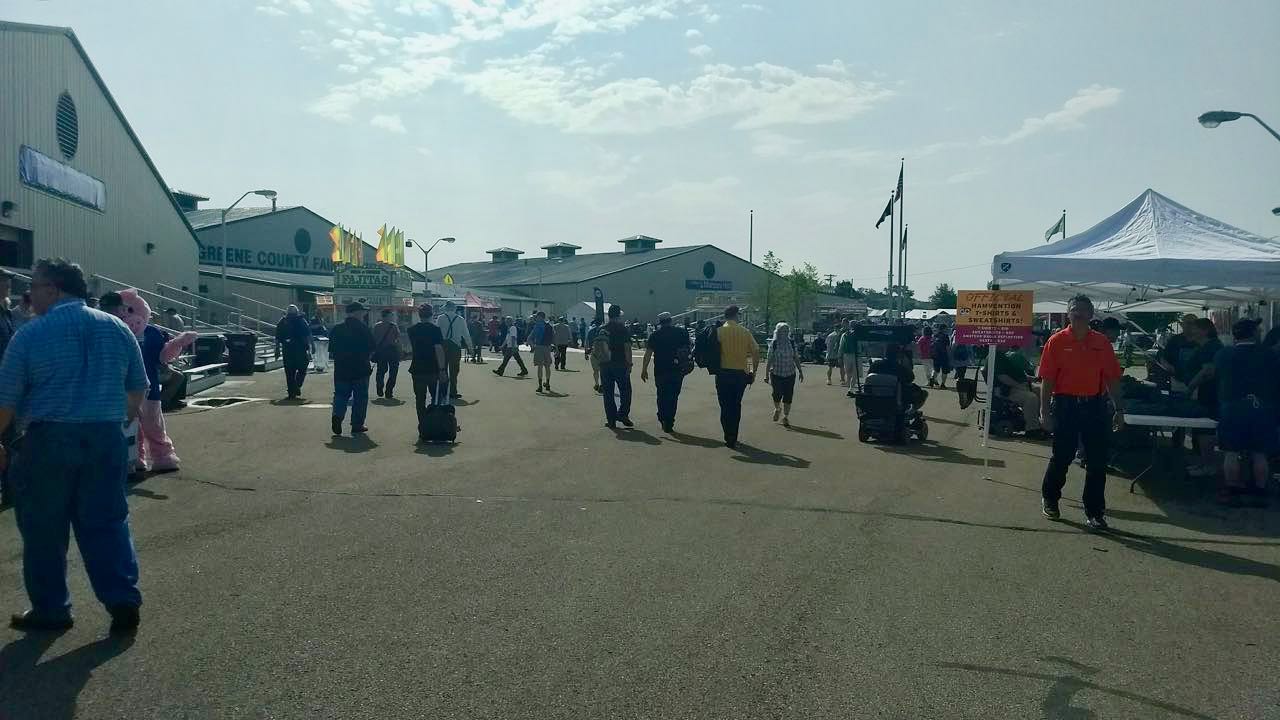
One very conspicuous omission (at time of posting) is the 2020 Hamvention in Xenia, Ohio. I suspect it will eventually cancel as well along with all of the various associated meetings held in conjunction with Hamvention. Frankly, even if Hamvention does manage to weather the COVID-19-prevention closures, I would expect attendance to be dismal this year. [Update: Hamvention cancelled several hours after this post was published]

Part of the Hamvention Food Court area.

Hamvention attracts a large group of international attendees and vendors and the average age of those at Hamvention is Covid-19’s target demographic (60+). True, it’s two months out yet, but most large vendors have to make flight plans now while things are very much in flux. We’ll see how it all plays out in the coming days.

But why temporary social distancing and exercising a little preparedness triggers some individuals to go to extremes or (worse) try to profit from the panic, I’ll never know.  I have been witness to some pretty wacky behaviors recently, like the couple I saw Thursday who were buying twenty jugs of Chlorine Bleach. Since a simple 10% bleach solution is recommended for virus disinfection, unless they own an Olympic-sized swimming pool with an algae overgrowth, or are trying to disinfect an entire hospital, what could they want with so much of it?

Social DX

Meanwhile, social distancing, for us radio geeks, is less a form of restriction and isolation or  than it is an opportunity. 

Those of you who know me well know that I can be quite talkative when I’m with others, especially those who share my love of radio. Many might even assume I’m an extrovert.  But if anything, I’m perhaps a socially-comfortable introvert. And in truth, it’s easy for me to adjust to staying in.  Like so many SWLs, I enjoy the chance to escape to my radio to tune out the fuss…and tune in the world. A cheerful chat, or listen, over a distance, is my idea of a good time. This is true”social DXing,” if you ask me!

For the next few weeks, here’s what my Social DX Bucket List includes (completed items have a strike through)…

  • Clean the sticky residue off the rest of my radios
  • Explore Weather Fax a bit more
  • Activate and chase a few parks in the Parks On The Air program
  • Tinker with my uBITX V6 code
  • Learn more Linux command line
  • Chase more HF pirates (since many of them will also have more free time!)
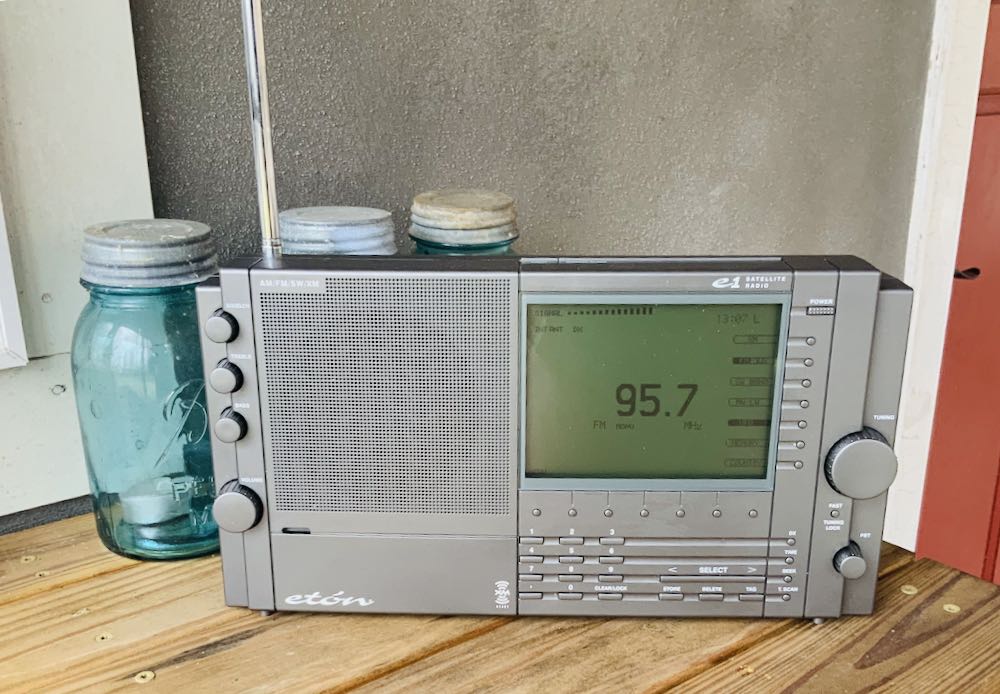
  • Take my recently-acquired Eton E1 to the field
  • And perhaps add a few ATNOs (All-Time New Ones) to the logs
  • Deploy a loop on ground (LOG) antenna
  • Make a CW only Parks On The Air activation
  • Start piecing together a QRP EME station

Yes, I definitely welcome a little social DX!

Are you under quarantine or self-imposed social distancing to avoid COVID-19? What are your plans during this time? Please comment!


Do you enjoy the SWLing Post?

Please consider supporting us via Patreon or our Coffee Fund!

Your support makes articles like this one possible. Thank you!
NASB meeting postponed

(Source: National Association of Shortwave Broadcasters)

IMPORTANT ANNOUNCEMENT: The CEO of EWTN, owner of WEWN shortwave, announced on March 13 that they will not be able to host any meetings in the near future due to the COVID-19 coronavirus situation. As of now, there is no way to know how long the virus is going to be around or how transmittable it may become, so we are trying to take appropriate measures. NASB Board member Glen Tapley of WEWN said: “As much as we are looking forward to hosting the meeting and getting together with everyone, we are going to have to hold off on hosting NASB. Travel plans of attendees should not be finalized at this point. We will stay in contact and keep an eye on the coming weeks and months and hopefully be able to host NASB later this year.” So please do not make airline or other travel reservations, at least until we are able to announce new plans later this year. For those who have already made reservations, we hope that you will be able to cancel or change them due to the coronavirus circumstances. We are sorry for this change of plans, but we hope that the situation will soon improve.

Click here for more info at the NASB website.