The Franconia Ridge, a section of the Appalachian Trail. (Photo source: Paulbalegend at en.wikipedia)
On this blog, I often write about selecting the “right” radio for home, boating, preparedness, off-grid living, or, of course, travel. As a result, sometimes I like to go through the mental exercise of imagining a scenario that might be, well, a touch extreme.
After all, as I’ve often said, SWLers come from such interesting walks–even hikes–of life, and often pose the most intriguing questions.
Indeed, I occasionally receive rather “extreme” questions from our readers, questions that push the limits of the hobby in the most exhilarating way, demanding highly specific needs in a radio. And (I readily admit) I thoroughly enjoy these questions. Such queries give me a chance–and good excuse, really–to be imaginative and innovative, to push beyond mere practical or monetary constraints to consider unique environments, weather conditions, durability needs, power requirements, and/or resource availability…all great fun.
If you enjoy this kind of brain game, too, check out our virtual challenge that follows–and, oh, and did I mention…
This time, there’s a prize
The CountyComm GP5/SSB
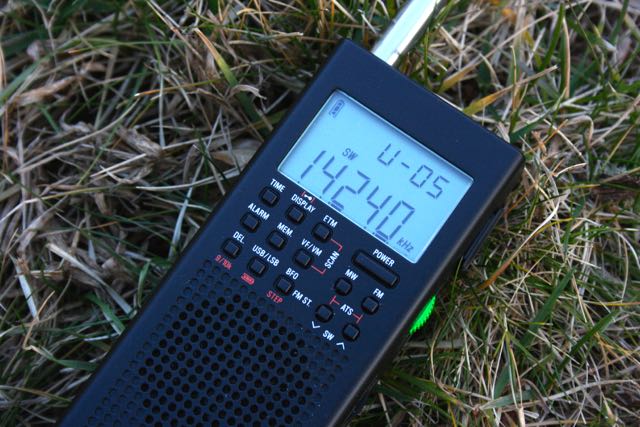
Dennis Blanchard (K1YPP), Appalachian Trail thru-hiker and author of Three Hundred Zeroes, which chronicles his adventures on the trail, will select his favorite entry in this reader challenge, and Universal Radio will reward the entrant with a new CountyComm GP5/SSB portable receiver! Woot!
So, should you agree to take it on, you’ll need to complete and submit your entry by August 8, 2015 at 06:00 UTC.
Thru-hiking the Appalachian Trail
[This scenario is based on an actual reader question.]
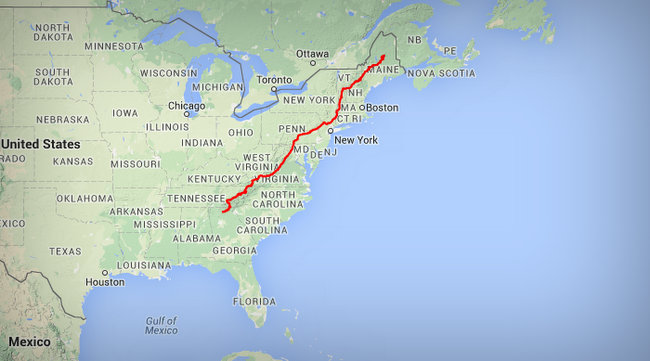
Virtual Location: The Appalachian Trail
Accommodation? Tents, hammocks, and lean-tos on the trail; occasional hotel or hiker guest houses
Electricity? Other than rest days, you’ll be completely off-the-grid
Internet? You can choose to carry a smart phone with you on this hike. Since most of the trail is in rural, remote areas, Internet access will be sporadic on your journey.
Your budget? $300 US must cover all of your radio requirements (radio, antenna, batteries, battery chargers, and all accessories)
Your radio(s)–??? You’re searching for portable radio gear that can receive shortwave, AM (medium wave), and FM. You’ll also need NOAA weather radio functionality to help you plan each day on the trail and make accommodations for frequent spring and summer thunderstorms (and occasional spring snow or sleet).
Virtual scenario: Imagine you’re a recently-retired stockbroker fulfilling a lifelong dream of thru-hiking the Appalachian Trail. You have cleared out most of the year for uninterrupted hiking, starting in Georgia and ending in Maine. You’re covering all of your logistics, travel, and living expenses while on the trail.
Being an avid shortwave radio listener, you see this hike as an opportunity to spend quality time listening to radio–while hiking and camping–in remote areas that are completely removed from urban radio interference you experience at home.
Although you’re looking forward to “unplugging” from the world of stock trading, you’re still keen on listening to international and local news so you’ll know what’s happening in the world of finance and business.
It goes without saying that you’ll carry all of your supplies–your food, camping supplies, clothing, etc.–and all on your back. Minimizing your backpack weight is clearly of utmost importance.
Limitations
Rather than making this virtual challenge more restrictive, these limitations are designed to make the challenge more fun and set a level playing field for all respondents.
- Again, you’re limited to a (virtual) budget of $300 US to procure your supplies; ideally, this includes shipping costs of the purchase
- You can select new, used or homebrew/kit gear, but must base your choices on reality (i.e., actually find item(s) online and document the price and time of availability). If you “shop” eBay, make sure you’re using the final purchase price, not the current or opening bid. If you do locate something used on eBay, QTH.com, QRZ.com or at Universal Radio, for example, include the link! (Just to add to the fun.) If you enter a homebrew radio, it should be based on something you’ve either built or used and must include a photo. Of course, you can use multiple radios, but keep in mind the amount of space and weight these will take up in your backpack.
- Your main objective is to listen to international and local broadcasters and NOAA weather radio. If you’re a ham radio operator, by all means, you’re invited to include a transceiver in your trail kit (indeed, many do have AM/FM/SW reception), but keep in mind that our accomplished A.T. thru-hiker judge will base his decision on the best set up for listening to NOAA weather radio and international, local and broadcasters.
- Remember, you’ll be stuck with this radio once you hit the trail! So choose something you’ll love to operate, and don’t forget your vital accessories. Note that there are many points of the Appalachian Trail that are in proximity to towns and cities; you can get additional supplies there as needed.
About the Appalachian Trail…
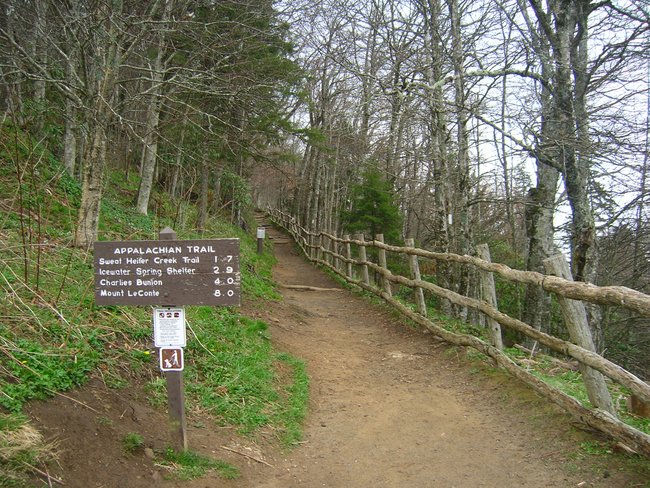
If you’re not familiar with the Appalachian Trail, you’ll find a wealth of information about it at the Appalachian Trail Conservancy’s (ATC) website. The following is an ATC description of the trail:
The Appalachian Trail is one of the longest continuously marked footpaths in the world, measuring roughly 2,180 miles in length. The Trail goes through fourteen states along the crests and valleys of the Appalachian mountain range from the southern terminus at Springer Mountain, Georgia, to the Trail’s northern terminus at Katahdin, Maine.
Known as the “A.T.,” it has been estimated that 2-3 million people visit the Trail every year and about 1,800–2,000 people attempt to “thru-hike” the Trail. People from across the globe are drawn to the A.T. for a variety of reasons: to reconnect with nature, to escape the stress of city life, to meet new people or deepen old friendships, or to experience a simpler life.[…]
FUN FACTS
- The Trail is roughly 2,180 miles long, passing through 14 states.
- Thousands of volunteers contribute roughly 220,000 hours to the A.T. every year.
- More than 250 three-sided shelters exist along the Trail.
- Virginia is home to the most miles of the Trail (about 550), while West Virginia is home to the least (about 4).
- Maryland and West Virginia are the easiest states to hike; New Hampshire and Maine are the hardest.
- The total elevation gain of hiking the entire A.T. is equivalent to climbing Mt. Everest 16 times.
- The A.T. is home to an impressive diversity of plants and animals. Some animals you may see include black bears, moose, porcupines, snakes, woodpeckers, and salamanders.
- Some plants you may encounter include jack-in-the-pulpit, skunk cabbage, and flame azalea.
HIKERS
- About 2 to 3 million visitors walk a portion of the A.T. each year.
- The A.T. has hundreds of access points and is within a few hours drive of millions of Americans, making it a popular destination for day-hikers.
- “Thru-hikers” walk the entire Trail in a continuous journey. “Section-hikers” piece the entire Trail together over years.
- “Flip-floppers” thru-hike the entire Trail in discontinuous sections to avoid crowds, extremes in weather, or start on easier terrain.
- 1 in 4 who attempt a thru-hike successfully completes the journey
- Most thru-hikers walk north, starting in Georgia in spring and finishing in Maine in fall, taking an average of 6 months.
- Foods high in calories and low in water weight, such as Snickers bars and Ramen Noodles, are popular with backpackers, who can burn up to 6,000 calories a day.
You’ll want to do your research before choosing gear for the Appalachian Trail Virtual Challenge! The more thought you’ve put behind your choices, the more likely your entry will be selected by our judge. Speaking of which…
Our judge
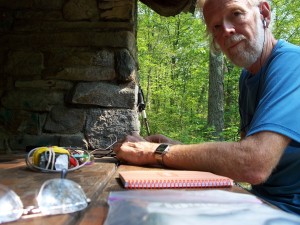
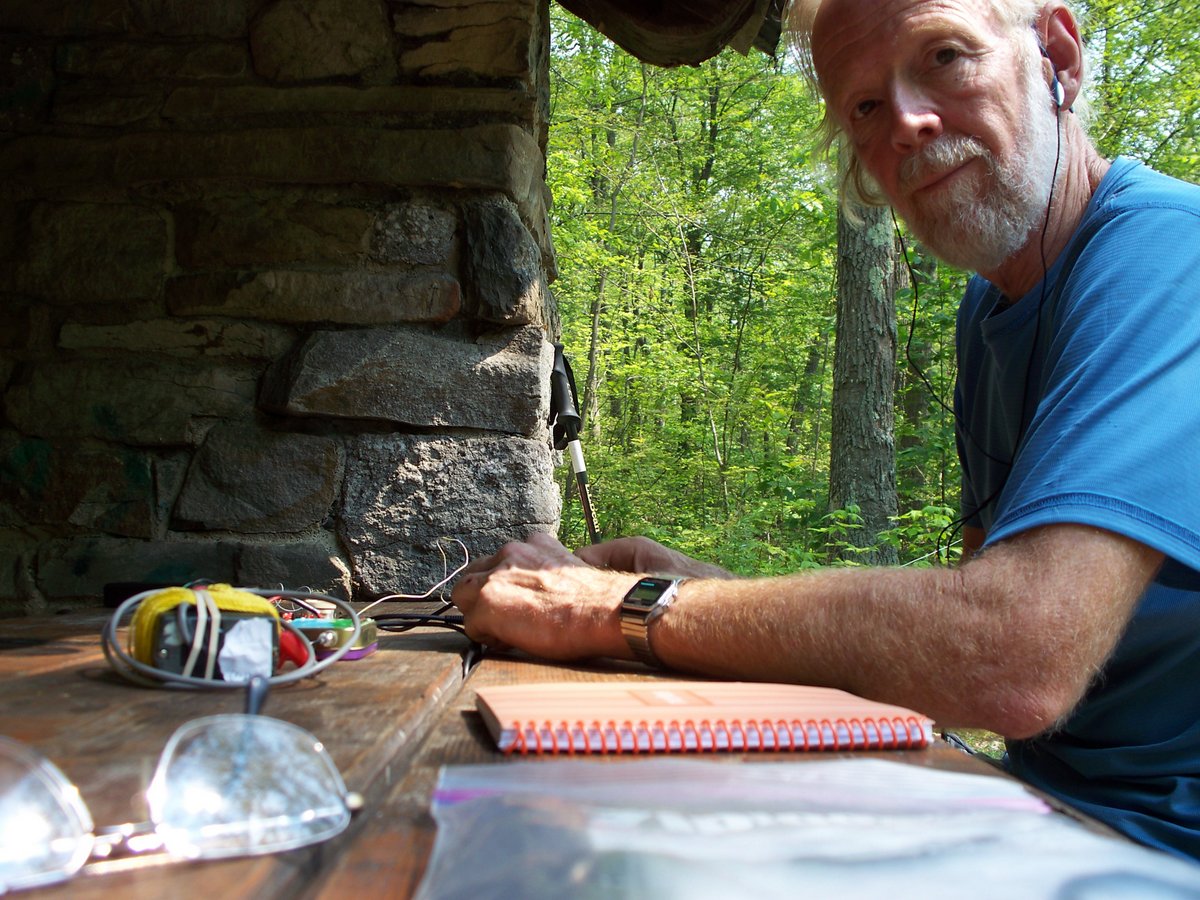
Dennis operating his trail-friendly QRP transceiver on the Appalachian Trail. (Photo: K1YPP)
Dennis Blanchard (K1YPP) is uniquely qualified for this challenge since he thru-hiked (which is to say, hiked in entirety) the Appalachian Trail in 2007, and carried at least one radio with him on much of the trip. He understands the advantages and limitations of operating from the trail. If you have no concept what it would be like to plan for and hike the trail, you might consider checking out his interesting and informative book, Three Hundred Zeroes, which chronicles his adventures on the trail. Dennis has kindly agreed to pick his favorite entry from reader responses. Click here to read an interview I posted with Dennis on my ham radio blog, QRPer.com.
The selection process
Once our A. T. reader challenge closes on August 8, 2015, I’ll share all the entries with our kind judge. Depending upon the number of responses, of course, Dennis should have a favorite picked within one to two weeks of the challenge’s close. We’ll announce the winner here on the SWLing Post, and shortly after, Universal Radio will reward the selected entrant with the new CountyComm GP5/SSB!
And note…we’ll also share a number of stand-out entries here with our readers!
If you wish to enter this reader challenge, please use the form below to submit your entry (or click here for the form). Entries must be received by August 8, 2015.
Good luck and have fun!
Feel free to comment on this post if you have any questions.

 Many thanks to SWLing Post contributor, Richard Cuff, who shares the following article from The Saturday Paper. The article speaks to how important radio