Category Archives: Vintage Radio

Radio Waves: AM/FM Receiver Sales Stabilize, Asheville Radio Museum Adds Model HS2, Legacy remains of WSY, and Farewell to WCFW

Radio Waves:  Stories Making Waves in the World of Radio

Welcome to the SWLing Post’s Radio Waves, a collection of links to interesting stories making waves in the world of radio. Enjoy!


AM/FM Receiver Sales Have ‘Stabilized’ Even As Audio Turns Up On More Devices. (Inside Radio)

Anyone who has tried to find an AM/FM receiver in a big box retailer knows they are not as easy to find as they once were. It is little surprise then that the Consumer Technology Association expects fewer to sell this year. But at roughly five million units now sold each year, CTA expects that number to hold steady in the years to come, in part due to the role radio plays during emergencies.

“That category has stabilized,” said Rick Kowalski, Director of Industry Analysis and Business Intelligence at CTA. “It’s a low number relative to other categories, but there’s a steady demand, just in terms of people having an AM/FM radio for those situations where you might need a battery-powered radio as a backup.”

CTA forecasts 4.7 million traditional radio receivers will be sold this year in the U.S. That is six percent lower than the five million units sold in 2021. “Looking out in the next five years. It’s not going to get much lower than that,” Kowalski said in an interview.

CTA projects 24.5 million smart speakers will sell this year, or roughly five-times as many as traditional radio receivers. But in what may be a surprise to many, that estimate is actually two percent lower than the 25 million smart speakers that CTA says were sold last year. [Continue reading…]

“Bringing it home” Asheville Radio Museum adds local piece of history to its collection (WLOS)

ASHEVILLE, N.C. (WLOS) — The Asheville Radio Museum has added a new piece of history to its’ collection!

It’s a 1922 radio receiver built by an Asheville-based business.

The model HS2 radio the museum procured is only one of two known to exist.

Collector and restorer Robert Lozier found that it was the first name brand radio built in North Carolina.

News 13 spoke to the director of media communications Peter Abzug about why this radio is so significant.

“Having this radio here, in Asheville, where it was built is really significant,” he said. “It’s bringing it home. Although the company itself didn’t last for years and years, it did employ people and it was a significant part of Asheville’s history, and something we can be very proud of.”

Click here to watch the video at WLOS.

Legacy remains of WSY, Alabama’s first radio station (Alabama News Center)

Innovation is at the historic heart of Alabama Power, beginning with its founding in 1906 and Capt. William Patrick Lay’s vision of electrifying the state by harnessing the power of Alabama’s rivers.

But the company’s embrace of another cutting-edge technology, just 16 years after Alabama Power’s incorporation, is also historic.

One hundred years ago this year, on April 24, 1922, Alabama Power hit the airwaves with the state’s first operating radio station. WSY (an acronym for “We Serve You”) began broadcasting from rented space in a building on Powell Avenue in Birmingham.

The 500-watt AM station was initially designed as a company tool, to provide better communications among employees – especially those in the field and at remote generating plants. In fact, radio technology was so new – regularly scheduled radio programming in the United States started only in 1920 – Alabama Power engineers had to design and build most of WSY’s transmitting equipment.

“We began assembling the set … with intentions of using it for purposes of operation of the system exclusively,” wrote George Miller, the employee in charge of the station, in the July 1922 issue of the company’s Powergrams. “The broadcast feature came up, though, and materially changed our plans.”

Indeed, a month before the station went on the air, The Birmingham News published a do-it-yourself piece about “how to make your own radiophone receiving set” so local residents could pick up WSY when it began broadcasting.

Interest in the station was so strong that within weeks it began offering entertainment programs, according to “Developed for the Service of Alabama,” the centennial history of Alabama Power, written by noted historian Leah Rawls Atkins.

Dee Haynes, with the Alabama Historical Radio Society, recalled one story that underscores WSY’s popular embrace. Soon after WSY went on the air, earpieces began disappearing from the handsets of payphones all over Birmingham, apparently because people were swiping them to use in home-built receiving sets. [Continue reading…]

FAREWELL TO FM: A Grandson’s Recollections of His Family’s Legacy Radio Station, WCFW (Volume One)

For 54 years, WCFW has been a beloved independently owned radio station on 105.7FM. But for lifelong Eau Claire resident Parker Reed, it has been more than that: it’s his family’s life, love, and legacy.

A catchy jingle – featuring the melody “WCFW, where FM means fine music” – came across a young radio station owner’s desk in 1969.

It was short, simple, and it worked. The owner paid $25 for it, and more than 50 years later that same jingle – which has aired thousands of times on 105.7FM radio – exemplifies the values of WCFW in Chippewa Falls and the couple who have owned it for over half a century: simplicity and consistency.

My grandparents, Roland and Patricia Bushland, have owned and operated WCFW since its inaugural broadcast on the airwaves on Oct. 20, 1968. Earlier this summer, they decided to end their 54-year stint in radio, selling the legacy station to Magnum Media – a Wisconsin-based media organization owned by Dave Magnum who now owns 25 radio stations across the state and will take over operations of the quaint, easy-listening station later this fall.

It’s a bittersweet moment – for the community, yes, but especially for our family, for whom the station has been an integral part of our lives for decades.

“It’s hard to not have mixed feelings about it, because it was our life for so long,” said my grandmother, Patricia Bushland. “When you start something, and you’re the only people who ran it all those years, you get attached to it. But after so many years, I’m thrilled to death that someone new is coming in, and we can finally take a break.”

When my grandfather, Roland, was young, he would draw pictures of radio towers during school – as his life too began with radio, front and center. My great-grandfather Roy Bushland owned and operated multiple Bushland Radio Specialties storefronts in Chippewa Falls and Eau Claire since the early 1930s – a business where my grandfather got his start in 1952 after he graduated Chippewa Falls High School as salutatorian. [Continue reading…]


Do you enjoy the SWLing Post?

Please consider supporting us via Patreon or our Coffee Fund!

Your support makes articles like this one possible. Thank you!

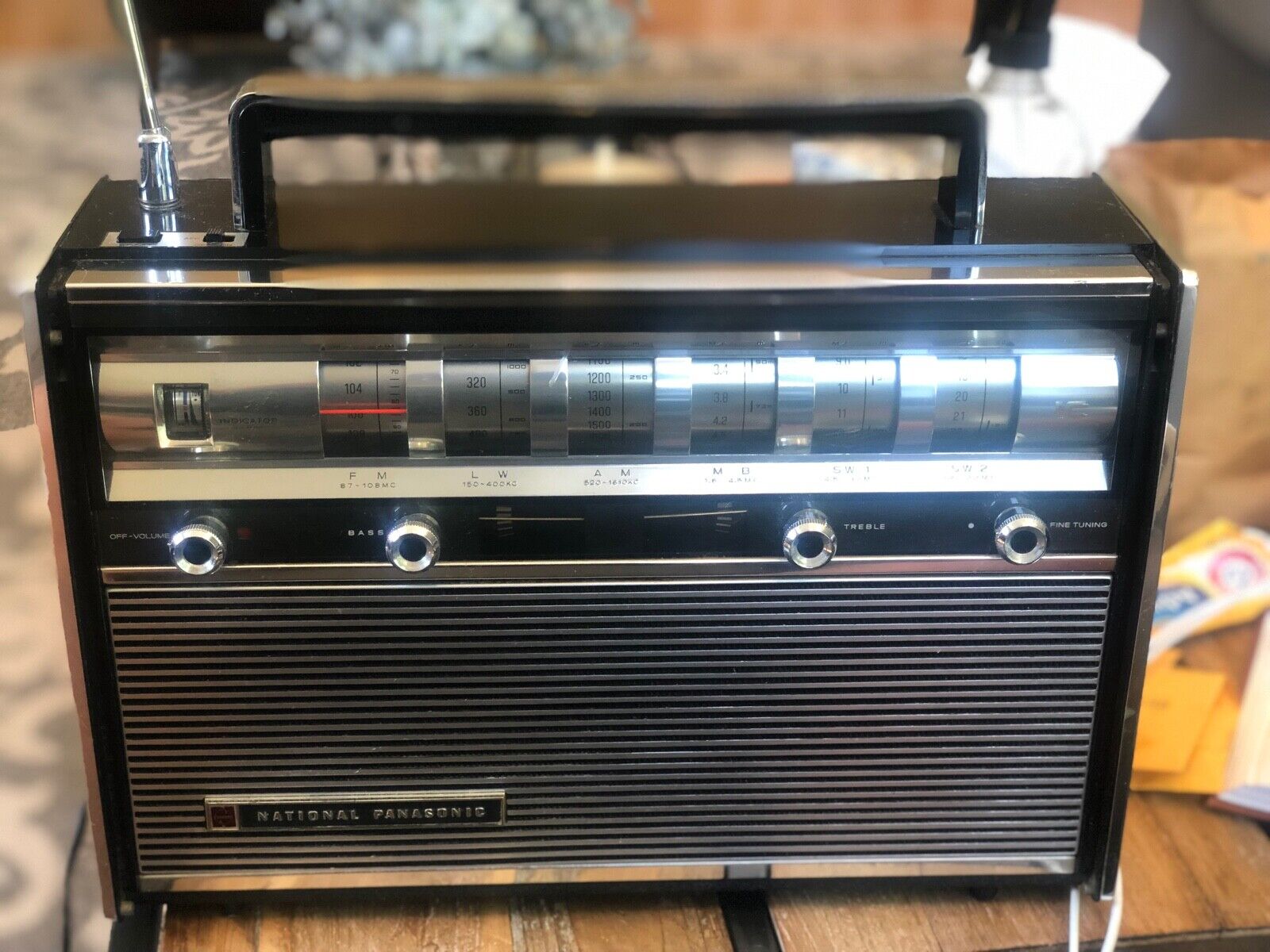
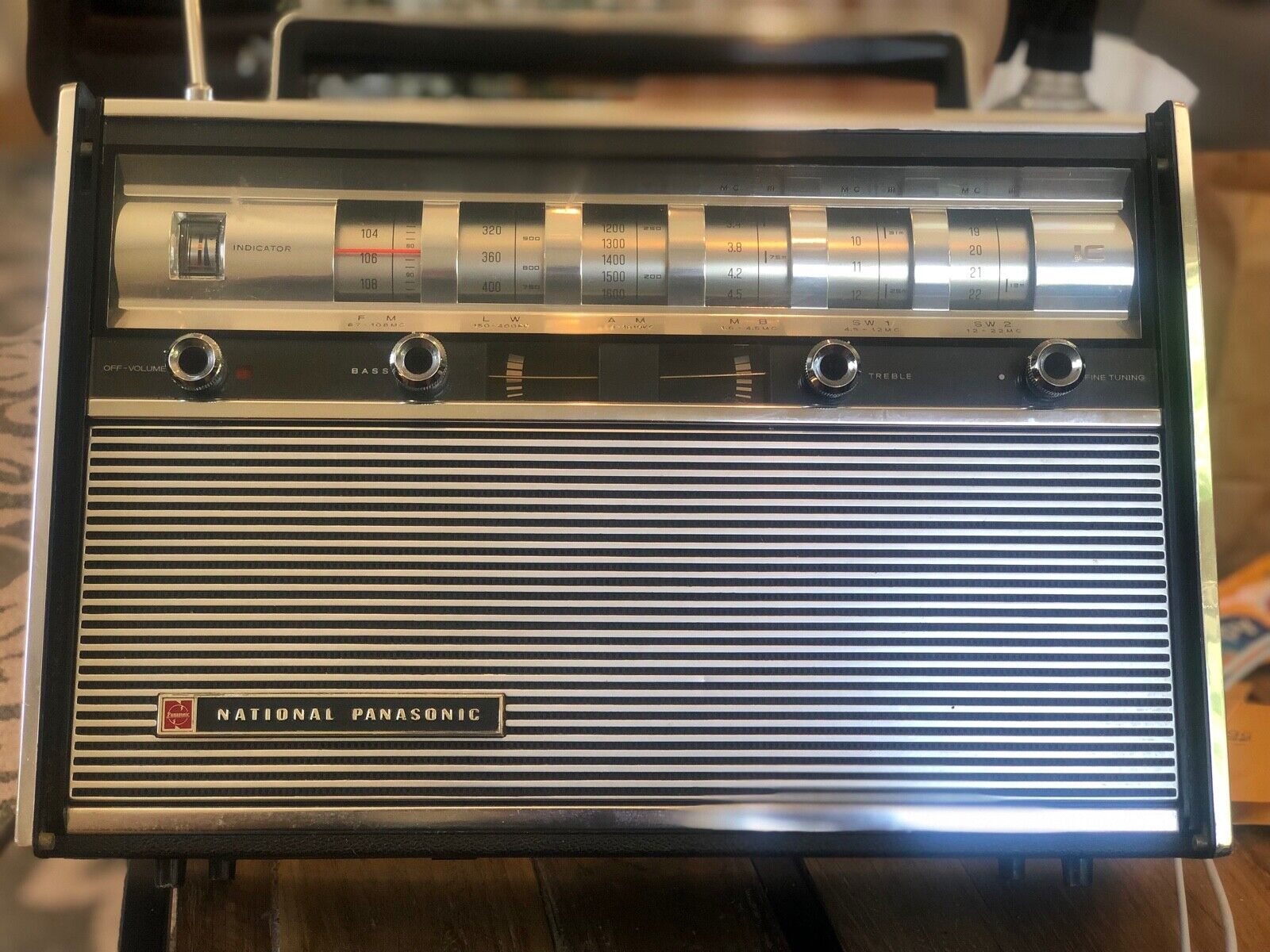
Julian spots a Panasonic RF-3000A on eBay

Many thanks to SWLing Post contributor, Julian, who writes:

Thomas,

I stumbled across this listing for a Panasonic RF-3000A so I thought I’d share it in case some SWLingers interested in or who collect vintage solid state radios are interested in the following listing for a Panasonic RF-3000A for US$125.00.

73
Julian

Click here to view on eBay.

Thank you for the tip, Julian! I don’t think I’ve ever seen this model of Panasonic before. At first blush, it looks like a Barlow Wadley.

Based on the description of the radio, it sounds like it might need a little work. I think a re-capping would be in order and I’m sure the pots and switches need an application of Deoxit.

Perhaps our resident Panasonic collectors will let us know if this radio is rare or common? I doubt it’s exceptionally rare since there have been 3 offers made on it in the past. Please comment!

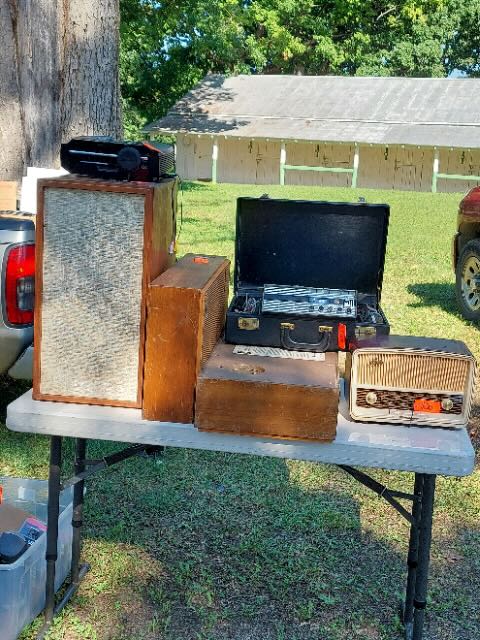
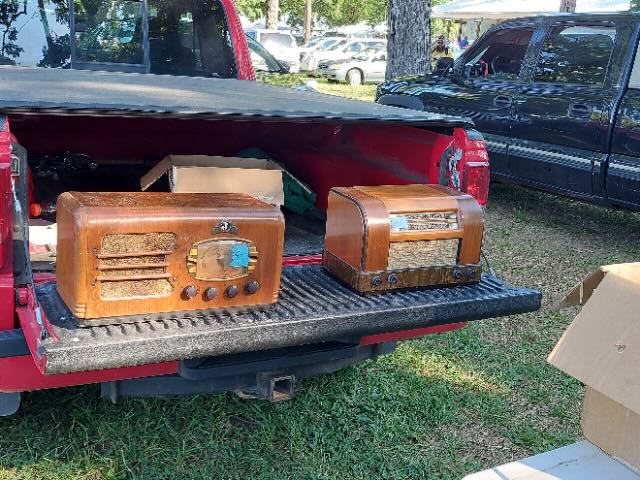
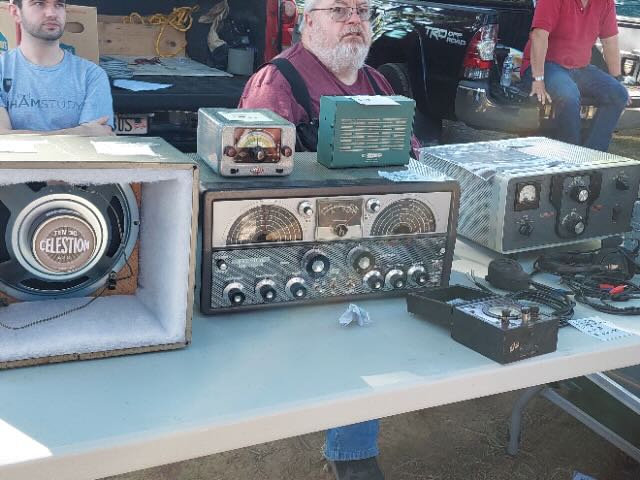
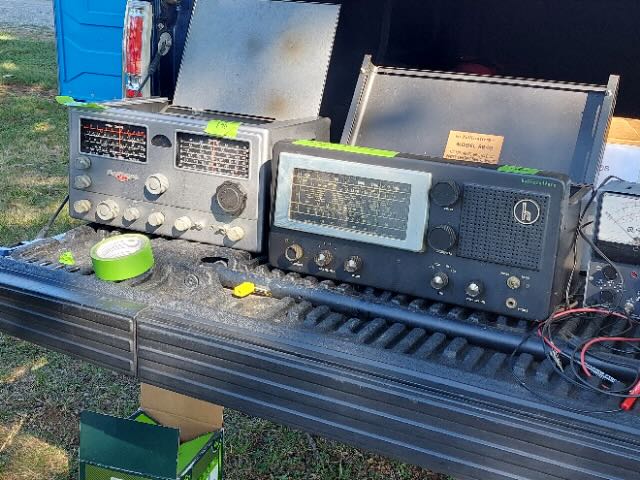
Dan shares a few photos from the Berryville Hamfest

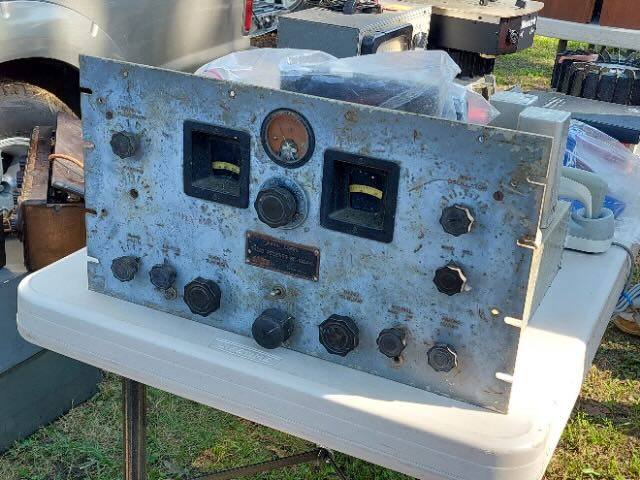
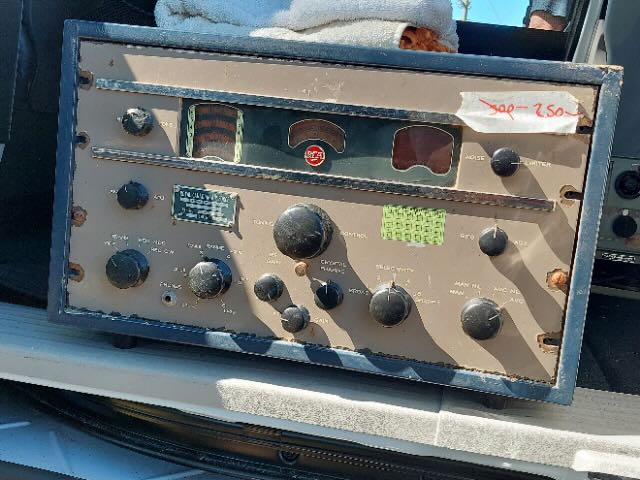
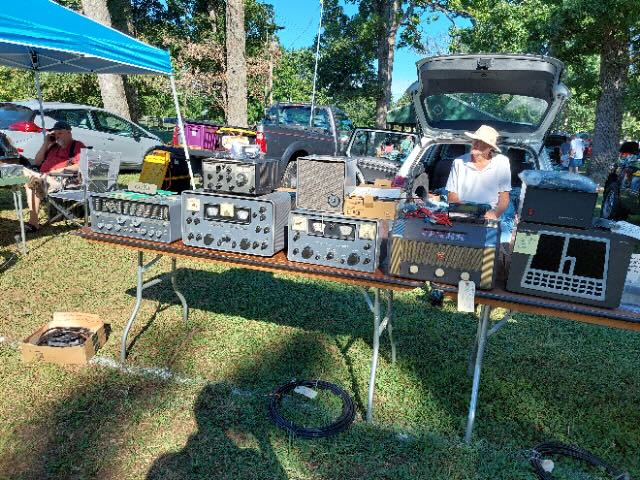
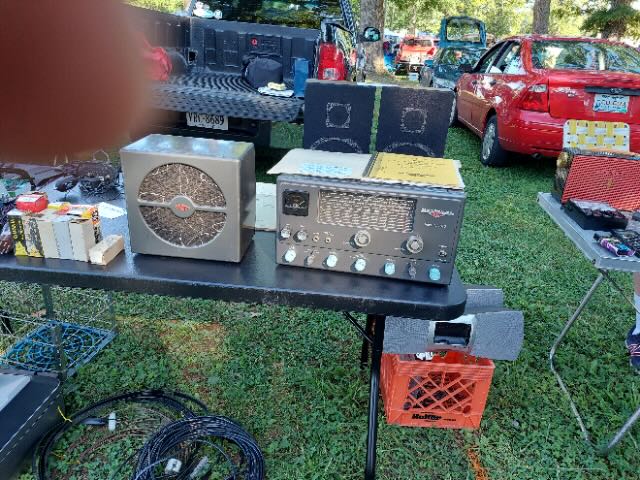
Many thanks to SWLing Post contributor, Dan Robinson, who shares the following photos from the Berryville Hamfest.

Dan notes that the resolution is not great in these photos, but I believe we can still see enough detail to know that this hamfest had many vintage treasures:

Thank you once again for sharing these, Dan!

Click here to see images from previous Berryville Hamfests.

Wlodek Shares an Air Raid-Prompted Radio Comparison

Many thanks to SWLing Post contributor and friend, Wlodek (US7IGN), who writes from Kiev:

Hello!

Because of another air raid alert, I can’t sleep and I decided to make a small comparison of the receivers of the 60s and the modern one.

Of course, you can not compare their size and weight, as well as some features.

This Chinese XHDATA D-808 was given to me by a friend for comparison. When he was just choosing a good receiver, I advised him to buy an old Sony 7600 series or Panasonic B65, for example. But he decided that modern technology is better at handling the task of receiving. But it turned out to be not so clear:

Click here to view on YouTube.

Radios:

73 de US7IGN!

Thank you for sharing this, Wlod. I wish the circumstances for the radio comparison were better–even though I know air raids have sadly become a fact of life for many in Ukraine, I can’t imagine sleeping through them. 

Your short comparison is interesting too. I consider the D-808 to be an excellent little DSP portable, but the audio simply can’t compare with your vintage radios. Indeed, the vintage receivers seem to handle the QRM a bit better than the D-808 as well.

Thank you for sharing this and wishing you the very best, OM.

Fun with “The Radio Boys”

By Jock Elliott, KB2GOM

Back in April of this year (2022), I accidentally discovered The Radio Boys series of books, many of which are available for free if you have an Amazon Kindle.

These books, I believe, are intended for young adults, and, in my mind, they very much resemble The Hardy Boys series of books: a group of high school friends have adventures and discover the wonders of radio together. Think “The Hardy Boys go all-in for radio,” and you have the right idea.

If you are looking for sophisticated plots, deep character development, and a lyrical turn of phrase, you will be disappointed. But if you a looking for a light-hearted adventure with deep enthusiasm for radio, I think you will be pleased.

But what makes these books really cool is that they were written and copyrighted 100 years ago, in the early 1920s. Yes, some of the language and attitudes are somewhat antiquated, but what is fascinating is the window they offer on radio a century ago.

My knowledge of radio history is very limited, but it is my understanding that radio was just beginning to be popular in American culture in the early 1920s, The Radio Boys books reflect this. The first book, The Radio Boys’ First Wireless Or Winning the Ferberton Prize, gives fairly detailed instructions for making your own radio receiver with materials you could get (in the early 1920s) from the local hardware store.

At various points in the books, The Radio Boys extol the virtues of radio: people could hear concerts in the comfort of their own homes or listen to baseball games; if there were radios in cars, travelers could keep track of weather reports; it was a novelty when a minister broadcast the church service; college professors could broadcast their lectures, and so forth. I find the books offer a charming perspective on what we take for granted today.

And, if you have an Amazon Kindle, many of The Radio Boys books are available at no cost.

Click here to check out some of The Radio Boys titles on Amazon.com.

Radio Nostalgia: Bob’s first radio

Many thanks to SWLing Post contributor, Bob Colegrove, who shares the following guest post:


My Very First Radio

By Bob Colegrove

Sears and Roebuck Co., Silvertone, Catalog No. 8003, Model No. 132.818-1

I don’t remember much from 1949.  I was seven years old and still in the first grade.  I do remember being gifted a radio by my mom and dad on my birthday.  It was a Sears and Roebuck Co., Silvertone, Catalog No. 8003, Model No. 132.818-1.  I don’t really remember asking for it.  I’m sure mom and dad did not have a clue as to how consumed I would become with radio over my lifetime.  In truth, this was not the radio that got me totally absorbed, rather that function would be filled in 1958 by the Howard Radio Co. Model 308 combination MW/SW radio-phonograph console which had been relegated to the basement in favor of the TV set.

In 1949 television was on the cusp of success, and AM radio was still the one-way Internet of its time.  I recall my mother listening to countless soap operas during the afternoon.  The Howard was still in the living room and we listened to all the popular programs at night.  Anyway, the Silvertone was mine.  It took up residence in my room and I could independently explore the wonder of five local stations broadcasting in Indianapolis at that time.  There were no parental guidance settings on the Silvertone, nor was there any need.

The Silvertone was not a world-class radio with all the sensitivity, bells and whistles I would later desire.  Below WXLW, 950 kc it was deaf.  It was, in fact, one tube short of an “All American Five.”  However, one of its four tubes was dual function, if you counted the detector.  It was what was called an “ac-dc” radio.  This meant it could be powered by either 110 Vac or Vdc.  Granted, there were a couple communities in the US which were still serviced by dc power at this late date, but that fact certainly did not warrant advertising.  The whole thing always seemed to me no more than a marketing ploy on the part of manufacturers to cover for the lack of an expensive isolation transformer in the circuit.  Given the fact that electrical standards of the time did not provide for polarized outlets and power cords, these things could be quite hot, and it’s amazing so many tinkers, myself included, are around to talk about it.

One Tube Short of an “All American Five”  

The dial was very crude, and the tiny tuning knob swept all 107 available channels in a 180-degree twist of the variable condenser.  My mom, always handy with a paint brush, took to marking favorite stations  with a dab of nail polish.  1430 kc was WIRE and 1070 kc was WIBC.  Perhaps she got the idea from Bill Halligan who used little red dots on the controls to indicate the setting that would likely produce some noise.

The printed media were sizeable and substantive in the 1940s.  The Indianapolis Star’s morning edition for Friday, April 13, 1945 was particularly mournful as the U.S. woke up to the news that the president had died the day before.  I was later given to understand that many stations broke from the normal schedule for a few days to play somber music.  Notwithstanding, the first section still bore the quintessential hourly radio program schedule from 6 am to midnight for each of the four local stations.  We always kept clippings of station logs for each day of the week.

My interest in baseball grew over the next couple years, and the Silvertone played an important role in my keeping up with the local AAA team.  The static on a summer night was atrocious.  Further, in those days, the broadcasters were not compelled to fill the air with chatter between pitches.  There were no recitations of mindless statistics and no color commentators to describe the nuances of sliders and curve balls.  Consequently, between pitches there were often long pauses of nothing but dead air.  If you happened to tune in during a pause you had little idea where WISH, 1310 kc was on a hopelessly crude dial.

Most minor league broadcasters did not travel with the team.  When the team went on the road, they used an old Model 15 clickety-clack Teletype machine in the studio.  A local guy at the distant ballpark would observe a pitch or play, and quickly type a cryptic message on his Teletype.  On the radio you would first hear the receiving Teletype spring to life in the studio as the message came in.  The announcer would quickly interpret it, and then embellish the play with some excitement as best he could.

Teletype Model 15
Copyright Museums Victoria (Licensed as Attribution 4.0 International
https://creativecommons.org/licenses/by/4.0/)

During those times, it was not too uncommon for the Teletype to suddenly go down during the game.  What to do?  An announcer was suddenly left to his own creativity to fill in airtime.  Possible solutions were to describe the lengthy process of extricating a stray animal from the field, or a sudden cloudburst and consequential rain delay.  An intrepid announcer went on as nothing happened, making up the play-by-play over the interval.  Invariably, when the Teletype came back up, he found himself not quite in sync with the game and possibly a few runs behind.  At that point the challenge was to patch in the necessary play and go on to complete the game to the satisfaction of an otherwise unsuspecting audience.

Well, after 73 years, I’ve seen my share of radios.  In the meantime, the Internet has made it possible to DX the entire world at any time on a fifty-dollar Kindle – excellent fidelity, no interference, no noise, no fading.  But, after all these years, I still cherish those static-filled ballgames and teletype machines heard on the Silvertone a long time ago.

Quietly Waiting for the Next Pitch