Category Archives: Vintage Radio

Guest Post: The Prof finds a Nova Tech Pilot II RDF receiver

Many thanks to SWLing Post contributor, The Professor, who shares the following guest post:

A 1960s Signal Sniffer

by The Professor

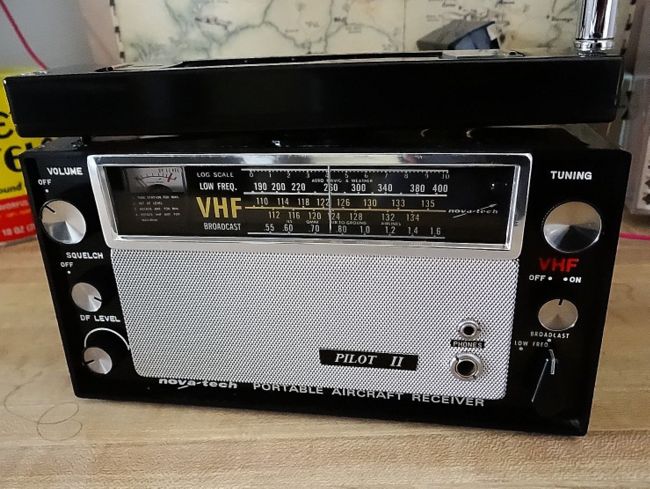
I just recently purchased a radio that on eBay that looks very intriguing, especially if you happen to DX AM Radio. It’s a mid-60s portable made in Japan – a Nova Tech Pilot II . However, wasn’t just a grab ën go to the beach kind of transistor set. This radio has a serious side. It’s actually an RDF – a “radio direction finder.”

I have seen these kinds of radios before, somewhere. Only the ones I’ve noticed were older and had more of a military look. Although I’ve never actually attended a hamfest, I’m sure these types of receivers might be found at a gathering like that.
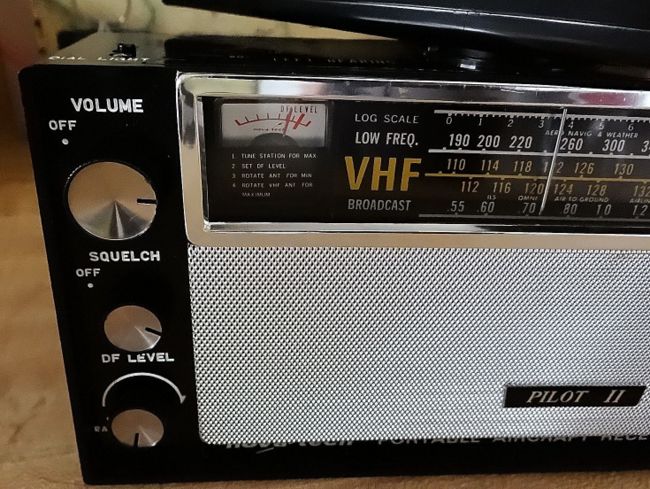
But this is a smaller and frankly more stylish version of RDF. Not to go into too much detail about something I know little about, but before GPS became ubiquitous, devices like this would commonly assist in the navigation of ships and aircraft by pinpointing “beacon” transmitters at specific known locations.

As you might imagine, this type of technology was (and probably still is) a strategic tool for military purposes. In fact, one of more “infamous” incidents of using radio direction finders was when they were utilized by the Japanese in the bombing of Pearl Harbor. Their bombers just honed in on the signal of a Honolulu AM station (KGU at 760kHz) as their beacon.
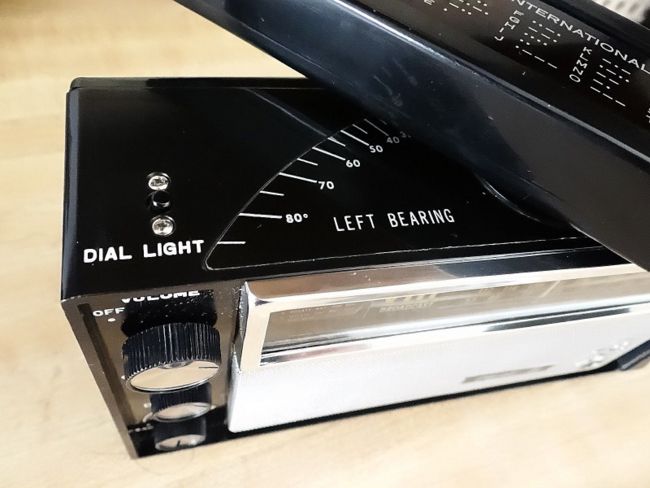
So, this radio has three bands which were traditionally used by beacon transmitters. Besides the medium wave band, it also has a section of the longwave spectrum, and the VHF airband. Other models included the old marine band (around 3 to 5MHz). A later model also included the CB frequencies, and another included a VHF police band (called the Nova Tech Action!!).

So, no shortwave on this one. No FM either, but I have plenty of radios with those bands (like almost all of them). Of course, there’s not much to find on this side of the world on longwave these days, and listening to aircraft communications has its fans but it’s not something I’ve done much. But this thing has a unique toolset for medium wave DXing. And after doing a little research online I’ve discovered that the big rotating double ferrite on top is only one of the attributes it offers for AM DXing purposes.
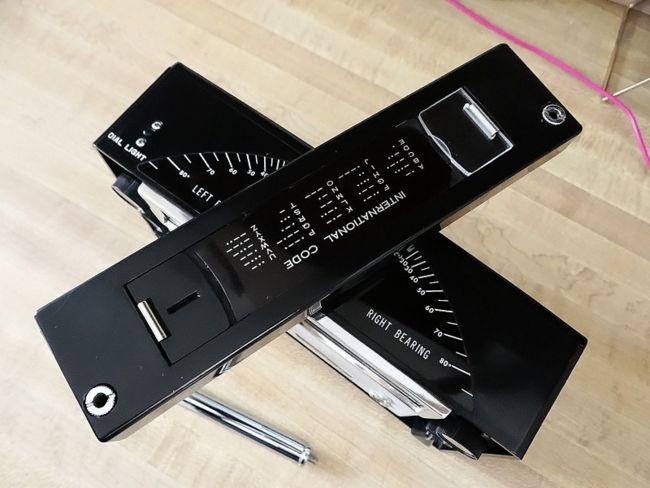
For one, it has an RF amplifier in the front end to help pull those weak signals up out of the noise floor. For another, it has a pure RF gain function called “DF” (direction finder), which when turned on shuts down the AGC (automatic gain control) and allows you to tweak the RF gain any way you like. And it also has a very accurate tuning meter. That all sounds good to me.

So, I haven’t actually seen my Nova Tech in the flesh yet, and it will be probably a couple of weeks before I get a chance to give it a test drive. But I’m pretty confident in my purchase at this point. More than a few people have spoken glowingly of the AM DXing capabilities of this set. But one of the reasons I decided to go ahead and bid on this device was that not only did the dealer have an excellent eBay rating, but he says he also fully serviced the radio electronically and physically restored most of its original beauty. Apparently, it was cleaned up, recapped, and even a transistor was replaced. And he also aligned the AM band IF and re-peaked the antenna trim for AM and the airband.
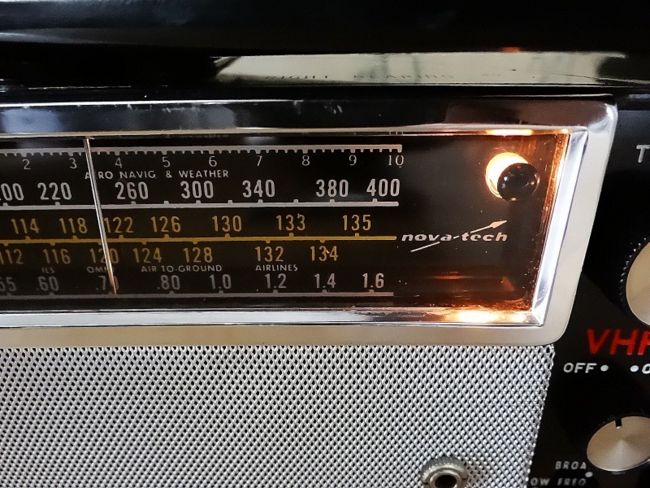
Although this radio is still a twinkle in my eye at this point, I thought I’d mention it here in hopes some of the fine readers of this blog might have something to say about DXing with direction finding radios. And I was especially hoping that a few people might have personal experience with these 60s era Nova Tech receivers. I also noticed online that there are U.K. versions of these RDFs that were branded as “Bendix” radios.

All insights offered as comments are appreciated, and once I spend some time with this radio I’ll be sure to offer some of my own.

I always find it so much fun to await the arrival of an interesting old radio I’ve purchased on eBay, especially one that I’d never heard of before.


Thanks for sharing your find, Professor! I was not at all familiar with the Nova Tech Pilot II. I love the Transoceanicesque design! No doubt, it’ll be a handsome addition to your collection, and I’m willing to bet a MW DX machine as well! 

“The Shape of Water” features a benchmark Cold War receiver

Many thanks to SWLing Post contributor, Dan Hawkins, who writes:

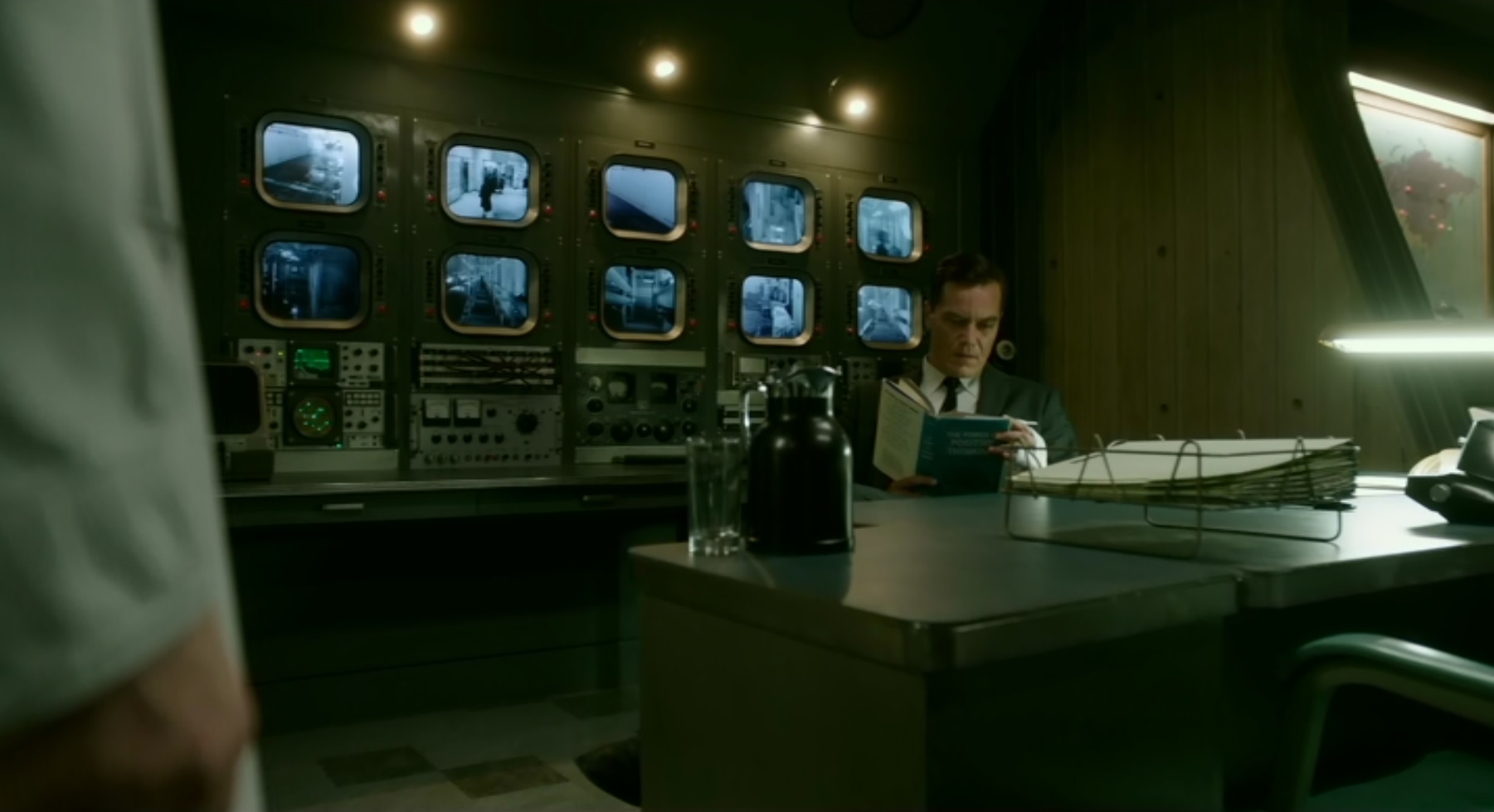
The Academy Award for Best Picture of 2018 goes to Guillermo de Toro’s “The Shape of Water.

This celebrated shortwave radio appears several times in the move as a prop for the Cold War-era control room of Richard Strickland (played by Michael Shannon).

Oh what a celebrated shortwave radio indeed! How could it be a Cold War without this benchmark boat anchor?!? Thanks for this fantastic addition to to our growing archive of radios in film, Dan!

Post readers: Anyone recognize or–better yet–own this amazing machine? Please comment!

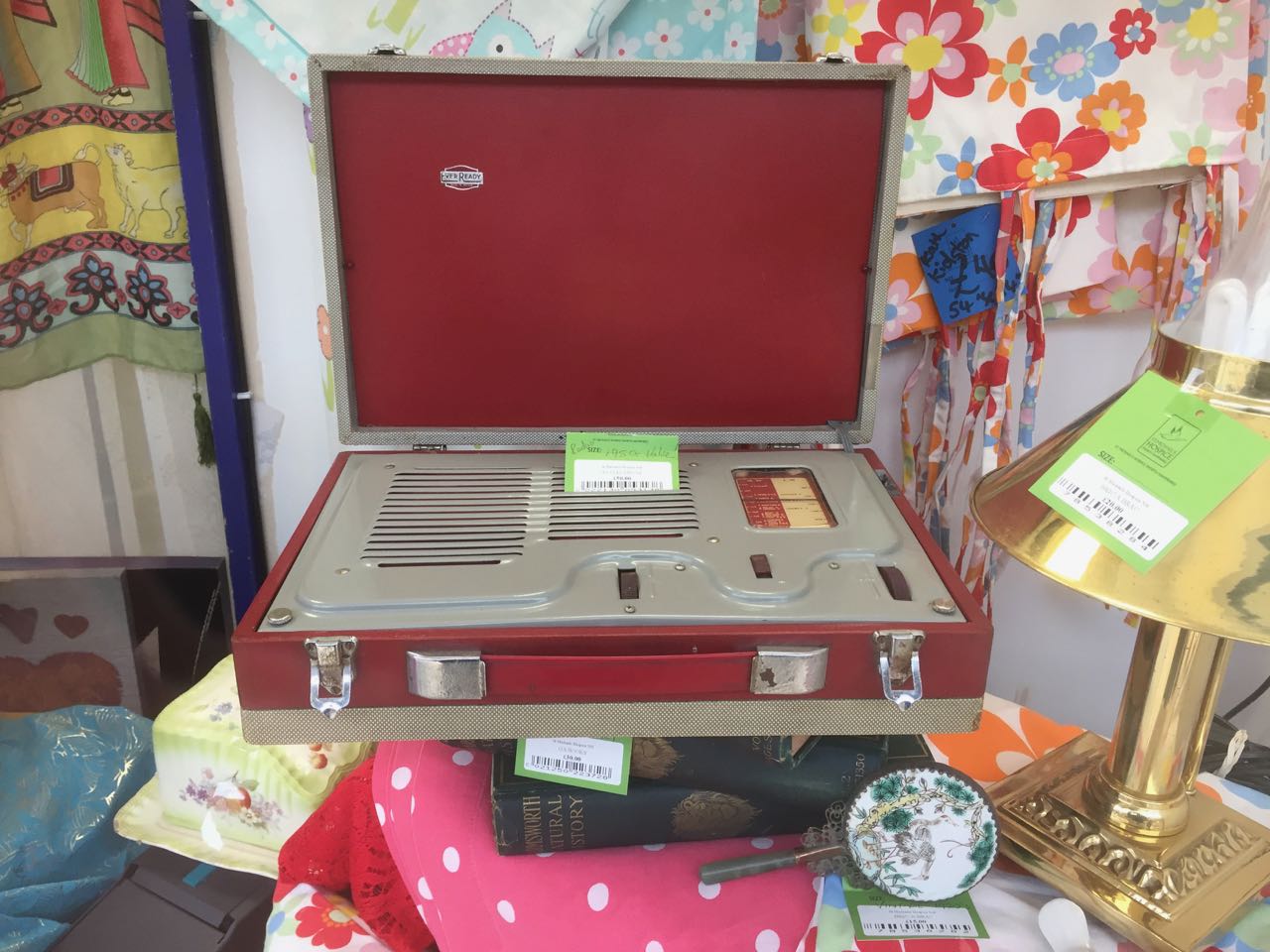
Ever Ready Model N attache case radio spotted in charity shop

The 1955 British Ever Ready Model N. Click to enlarge. (Photo: Mark Hirst)

Many thanks to SWLing Post contributor, Mark Hirst, who writes:

A vintage radio appeared briefly in one of my local charity shops.

A little Googling turned up this video (part 1 of 2) showing an example in operation:

Click here to view Part 1 on YouTube.

Click here to view Part 2 on YouTube.

Wow–thanks for sharing Mark!  So did you grab this radio?  I don’t think I could have resisted!

I love how the radio turns on as the case is opened and that the MW and LW antennas are in the lid.  Brilliant!

Radios spotted in The Walking Dead series

Many thanks to SWLing Post contributor, Balázs Kovács, who notes that he discovered, “some radio equipment in the latest episode of The Walking Dead series”:

Can anyone ID the rigs above?  Please comment!

I’ll add this post to our ever growing archive of radios in film.

Vintage Radio: How to read a logging scale

Many thanks to SWLing Post contributor, Charlie Liberto (W4MEC) for the following guest post:


Vintage receiver frequency counter…sort of

by Charlie Liberto (W4MEC)

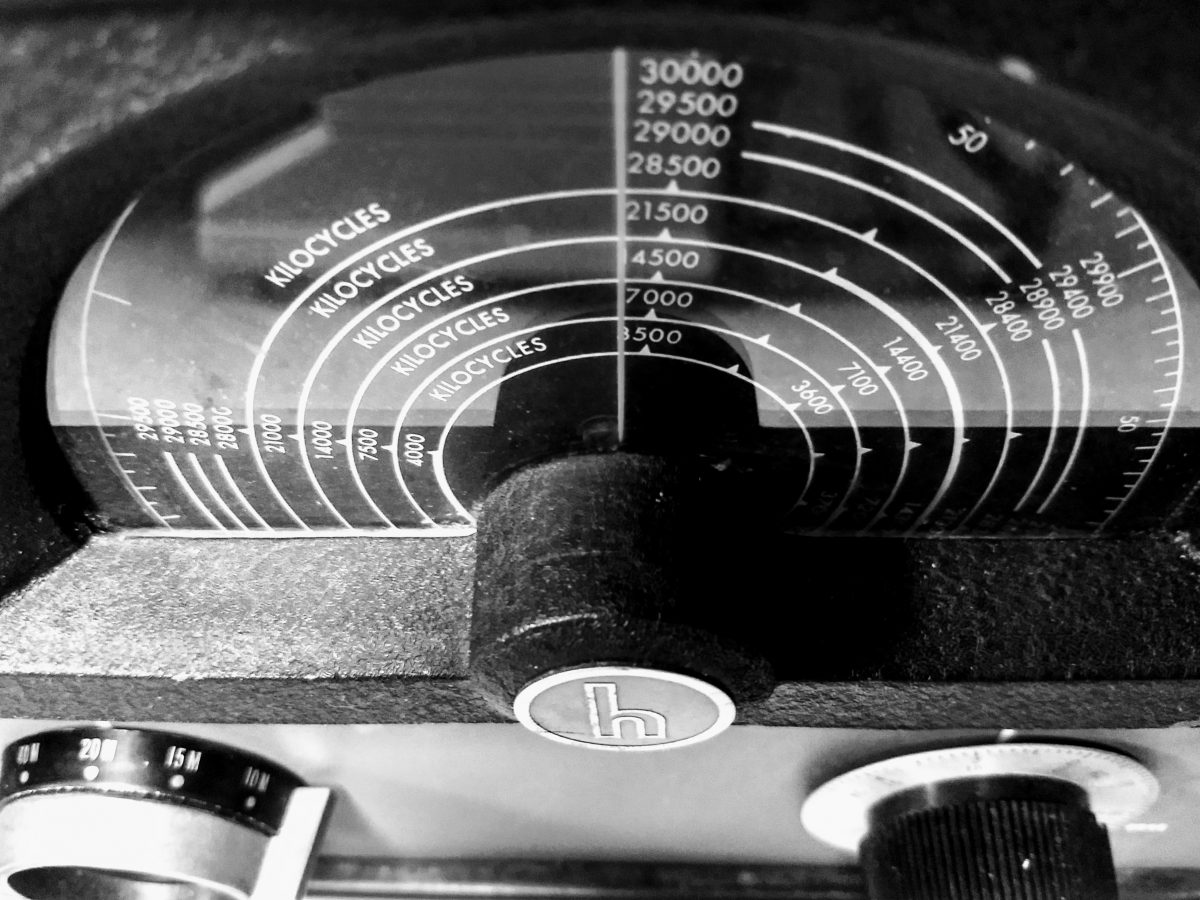
You probably know what a log book is, and maybe a logarithm, but do you know what a ‘Logging Scale’ was meant for? If you are a modern SWL’er, and have a receiver built in the last 40 years or so, you probably don’t have that mysterious 0 to 100 range on your dial, as shown at the top of the picture of the Hallicrafters S20-R main dial, and you may not have a dial at all, peering without question at a digital display of your received frequency.

The Logging Scale on older and vintage receivers had two functions: to let you find a station you might be looking for, when you knew the frequency it would be on, and to determine the frequency of a station, but you had to have known references. How to do that on those old scales that may have had 50 kHz or even 500 kHz hash marks between whole Megahertz numbers, or in that era, KC or MC numbers? The process is fairly straight forward, but did require you to know the operating frequency of at least 2 stations on the band of interest, and the closer they were to the mystery frequency, the better.

Let’s say you are looking for WLMN that is supposed to begin its operation day on 6025 kHz. and your receiver has a mark every 250 kHz between 5 and 7 MHz, that’s pretty iffy as to setting the dial. Now, you know that station WABC is on 5500 kHz, and station GXYZ is on 6525 kHz, so, tuning in WABC you note what number the pointer on the dial is over on the logging scale, maybe it is 40. Then you tune to GXYZ and you find it on 70 on the logging scale. The known difference in frequency between WABC at 5500 kHz and GXYZ at 6525 is 1025 kHz, and the logging scale number difference is 40 to 70 or 30 divisions. Take the 1025 kHz separating your two known stations, divided by the 30 logging scale divisions and you get 34.167 kHz per division. Some more math, the station you are looking for, WLMN is on 6025 kHz, which is 525 kHz away from WABC at 5500 kHz., divide 525 kHz by the logging scale frequency versus division number of 34.167 kHz which equals approximately 16. Take that 16, add it to WABC logging scale number of 40, and you should expect to hear WLMN on logging scale 56 on the dial.

Of course you can flip this process around. If you heard WLMN, but did not know it’s frequency, the same procedure worked backwards to interpolate the logging scale 56 into kHz, added to the WABC frequency/log number, or subtracted from GXYZ numbers, and you would figure out WLMN was on 6025 kHz.

What did this process do? It ‘calibrated’ your receiver dial to known checkpoints by using known frequencies of stations, such that you had a better idea of where you were frequency wise, but it did have it’s limitations. Older receiver dials usually had the lower frequencies divisions of a band close together, and as you tuned to higher frequencies on the same band, hash marks for frequencies got farther apart, while the logging scale stayed linear. This was because builders used the simpler straight line capacitance variable capacitor for tuning, instead of the straightline wavelength or straight line frequency style which would have made the dial more linear. If you used two stations on the low end to set a logging scale reference, chances are it will be quite a bit off in the frequency versus logging scale number on the high end of the dial. So, if you could find two stations that bracketed the one you were examining, that would assure the most accuracy.

After all that, you are probably saying thank God and a lot of engineers for a digital readout.


Thank you, Charlie, for an excellent tutorial and example of using dial logging. I’ve had a number of vintage radios over the years with logging scales and it took some digging to discover how they worked. While digital radios make the process as easy as pie, vintage radios are worth the extra effort! 

Mark spots a vintage radio in “Travelers”

Many thanks to SWLing Post contributor, Mark Hirst, who adds the following to our growing archive of radios in film. Mark writes:

I’d spotted this radio in the Netflix time travelling series Travelers early on, but it was never in focus to nail a decent image.

In spite of that, it does have a distinctive design that SWLing readers might recognise.

Click to enlarge.

Sitting in the book case next to the stacked books, I’m guessing it’s ornamental rather than functional.

Mark, you obviously have a knack for detecting radios in film!  Thank you for sharing!

Post readers: Can anyone ID this radio?  I love the design–guessing it’s a Bakelite chassis?