The Siru Innovatios SDR20 multi-touch portable SDR

Siru-Innovations-SDR20-4

A few weeks ago, at the Four Days In May conference (held alongside the Dayton Hamvention) I met Jarkko Mäkivaara from the Finnish company Siru.

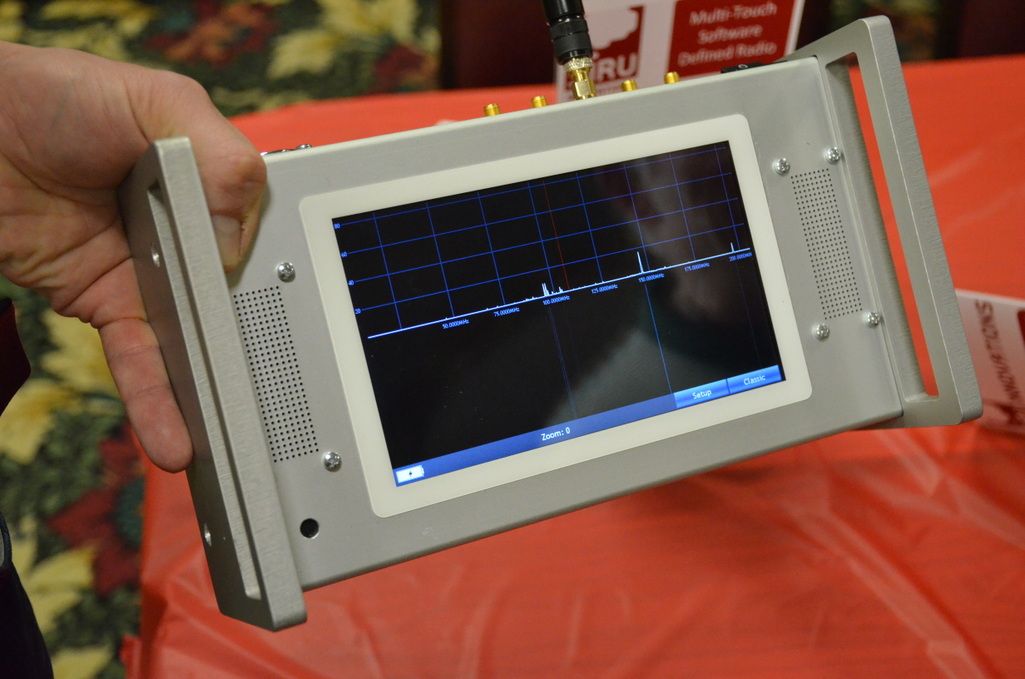
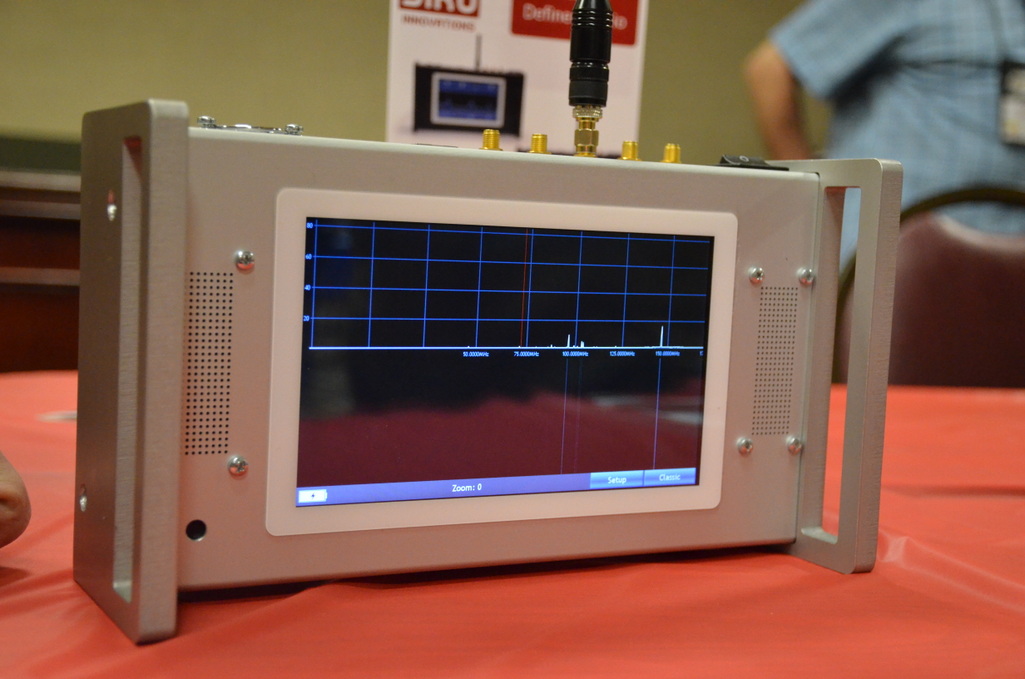
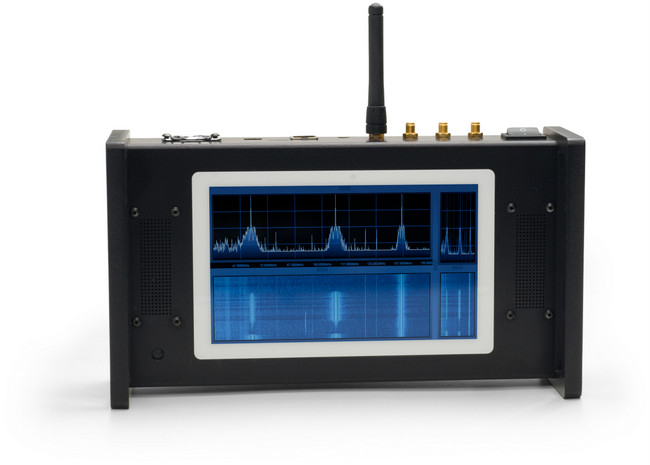
Jarkko was demonstrating the SDR20: a radio that immediately grabbed my attention from across the room. The SDR20 is a fully portable, robust, multi-touch portable SDR transceiver.
Siru-Innovations-SDR20-5

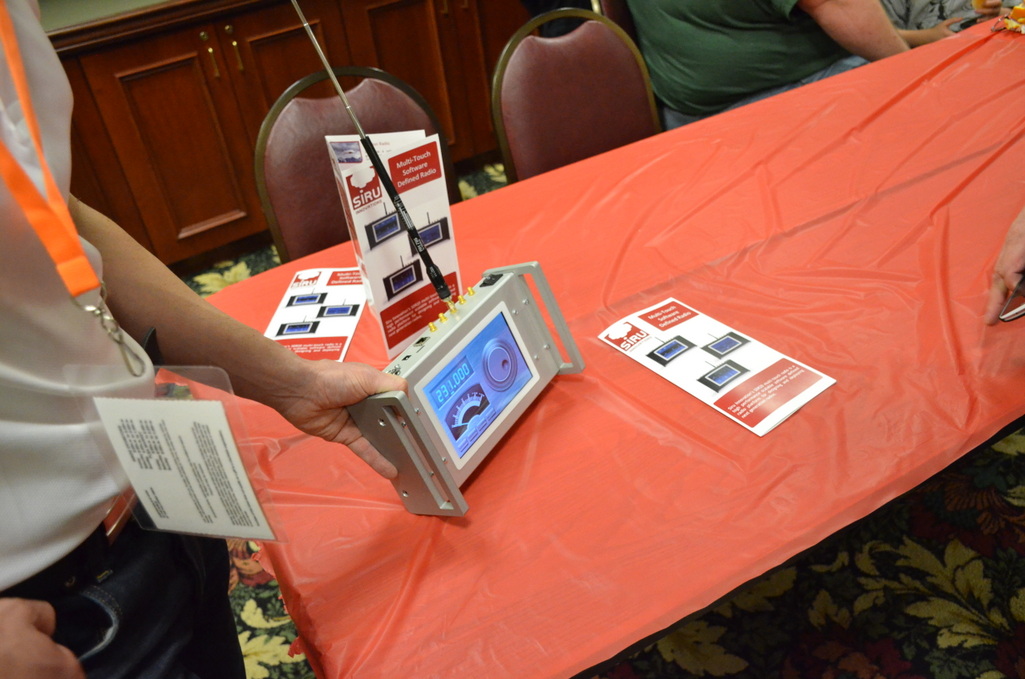
The screen on the SDR20 is as responsive as an iPad and fully developed around SDR functionality. While Jarkko didn’t have an HF signal of any sort inside the hotel convention room, I was able to play with the interface a bit, which I found rather intuitive.
(Source: Siru)

(Source: Siru)

The SDR20’s product brochure lists some of its features:

  • 2-channel transceiver operation
  • Two methodologies for implementation: IQ Mod / Demod and Direct Down and Direct Up (DDC, DUC) conversion
  • Up to 200MHz bandwidth per channel
  • 100mW transmit power. Higly efficient 1kW exciter available separately.
  • Frequency range covers DC to 2.5 GHz
  • State of the art Altera Cyclone SOC-FPGA (Including dual-ARM9 Cortex)
  • Graphics Prosessor accelerated Multi-Touch screen with a slick user interface
  • GNURadio, C++ API/Python, VHDL/Verilog/High Level Synthesis sandbox
  • High-speed ethernet interface for computer connection
  • Internal clock 20 PPS
  • Coherent operation with external clock source (GPS, Rubidium etc.)
  • Rugged and stylish enclosure / Rack mount

Of course, the SDR20 is truly designed for industrial and government/military applications, thus it carries a price tag reflective of those markets: €3,395.00 (about $3,800 USD).
Siru-Innovations-SDR20-1

Still, seeing the SDR20 gives me hope that multi-touch, portable SDRs will become more commonplace as capacitive screens, processors, DSP chips and solid state storage continue to decline in price.  Indeed, I wouldn’t be surprised if Siru is able to lower the price on future iterations of their portable SDR line.

If you would like to take a look at some of the SDR20’s specifications, check out this PDF product sheet and the video embedded below.  Of course, you’ll find even more information and updates on Siru’s website. The SDR20 has shipped to Beta testers and should begin full production in the fall.

https://vimeo.com/122629896

Nigeria’s Freedom Radio shortwave frequencies

Nigeria-Map2

Regarding a previous article posted about Nigeria’s Freedom Radio broadcasting on shortwave, SWLing Post contributor, Richard Langley writes:

According to swskeds, current schedule is:

  • 05:00-06:00 UTC Sunday to Saturday 7415 kHz from Ascension

  • 18:00-19:00 UTC Sunday to Saturday 12050 kHz from Ascension

Many thanks, Richard!

Note that we’re not sure if the frequency listed in the article (9,940 kHz) is correct.  Have any readers heard Freedom Radio on this frequency?

Socotra Island: Myke posts tracks from 2013 travels

MykeMyke Dodge Weiskopf, over at ShortWaveMusic, writes:

“Hello friends: Long time no see. I’ve finally posted the final 21 tracks from our 2013 season on Socotra Island: transmissions from Eritrea, China, Iran, and Tajikistan. Enjoy.”

For more information about Myke’s on-going project, ShortWaveMusic, check out his website. Great to see a new post from you, Myke!

Nigeria’s Freedom Radio to broadcast via shortwave

Nigeria-Map2

(Source: Albawaba)

Residents of Nigeria’s north-east have lived in isolation for two years. Terrorists frequently target phone lines in order to cut off communication. Traders avoid the region. Journalists live under threat.

But a new radio programme is now bringing important information to three states – Borno, Adamawa and Yobe – which have been under a state of emergency since May 2013 and turned by the army into a battleground against Islamist terrorist group Boko Haram.

[…]Most radio stations in north-eastern Nigeria are government-owned and broadcast in Hausa or English. For the tens of thousands of Kanuri-speaking people, there is no independent source of information, only state-sanctioned news and Boko Haram propaganda.

“Boko Haram controls people by inducing fear. Without alternatives, people are very much under the influence of Boko Haram’s propaganda,” says Wada. “Through Dandal Kura, we try to work against the propaganda by giving listeners objective information.”

Dandal Kura, which means “the big hall” in Kanuri, was initially set up in January as a three-month pilot project funded by United States development agency USAID. Since April, the programme is managed and run by Freedom Radio, a private broadcaster based in Kano.

[…]What is special about Dandal Kura is not only the language. The programme is transmitted by shortwave, on 9940 kHz, instead of the commonly used FM frequency band.

Shortwave is especially important in rural areas across Africa where FM waves hardly reach, but shortwave radios are easily available for an affordable price. In northern Nigeria they can be bought at any marketplace for about 600 Naira (3 dollars).

There is another key advantage: The shortwave transmission system is located hundreds of kilometres away – on the Atlantic island of Ascension – which means it cannot be destroyed by Boko Haram.

An FM transmitter, in contrast, would have to be installed on the ground in northern Nigeria.

“If we had set up FM transmitters, there would have been a high chance that Boko Haram would take them out,” says Smith, who has experience in setting up radio stations in African conflict zones, including Somalia and Central African Republic.

Click here to read the full article at Albawaba.

Used CommRadio CR-1 at Universal Radio for $379

The CommRadio CR-1

The CommRadio CR-1

While browsing the Universal Radio used equipment index during lunch, I noticed Universal currently has a used CommRadio CR-1 (not the CR-1a) for $379.95. In my opinion, that’s a brilliant price for a used CR-1 in good condition.

You can buy used gear with confidence from Universal Radio; they back their items with a 60 day warranty and have excellent customer service

Click here to see my review of the CommRadio CR-1 and click here to view Universal Radio’s used radio index.

James’ vintage transistor radio collection

In response to my recent post about the vintage Arvin 68R58 transistor radio, SWLing Post reader, James Patterson, has shared photos of his collection in New Zealand. James has captioned each photo below:


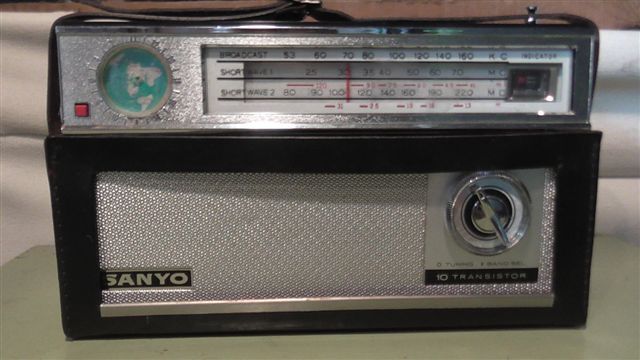
Sanyo

This portable Sanyo was bought at a “Second Hand” shop. It had badly corroded battery connections. I repaired it and it works fine now.

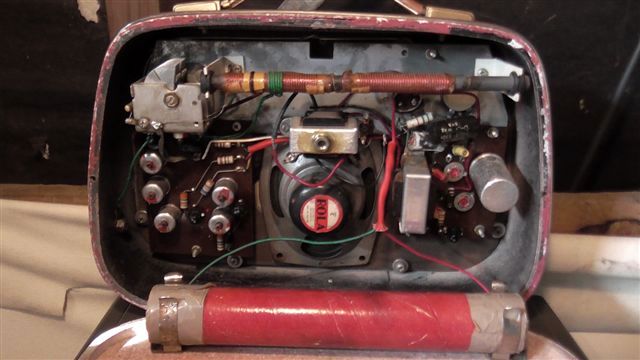
Very early National portable with twin speakers, broadcast [band] and [shortwave. Works very well.

Very early National portable with twin speakers, broadcast [band] and [shortwave. Works very well.

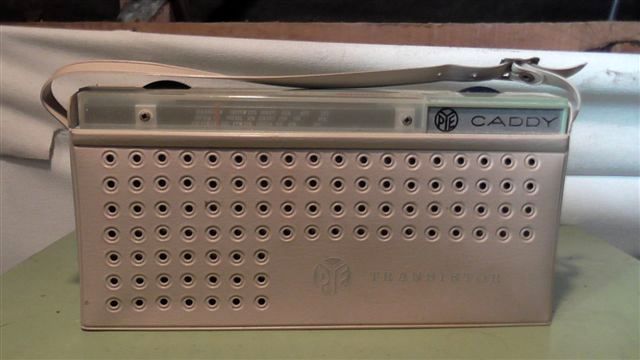
This PYE Caddy was actually made here in New Zealand. I believe the design was from the UK though. It still works very well.

This PYE Caddy was actually made here in New Zealand. I believe the design was from the UK though. It still works very well.

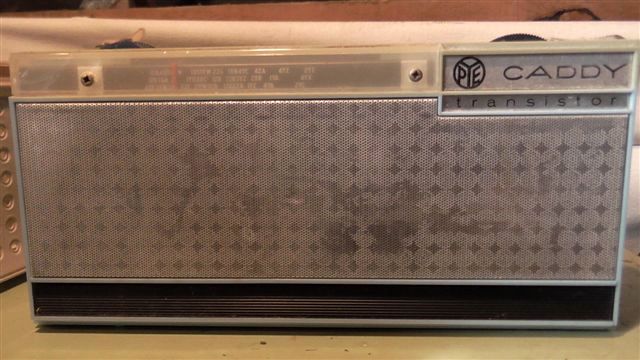
The PYE Caddy without the plastic cover.

The PYE Caddy without the plastic cover.

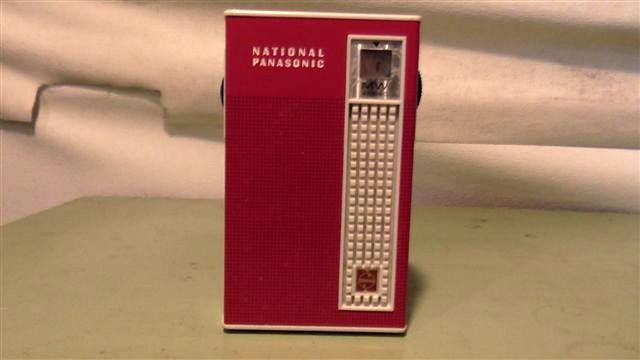
Very popular in their day, the RED National Panasonic pocket AM Transistor 6. Works well.

Very popular in their day, the RED National Panasonic pocket AM Transistor 6. Works well.

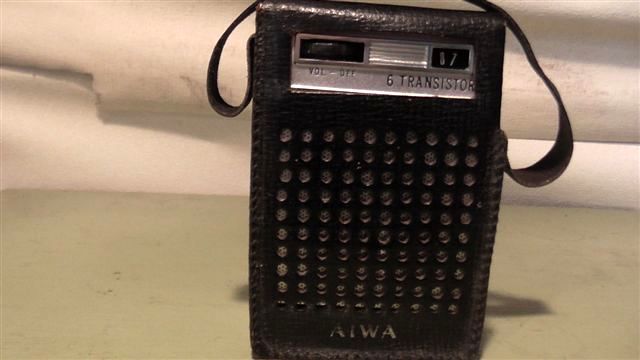
Very early AIWA pocket Transistor 6. Still works well.

Very early AIWA pocket Transistor 6. Still works well.

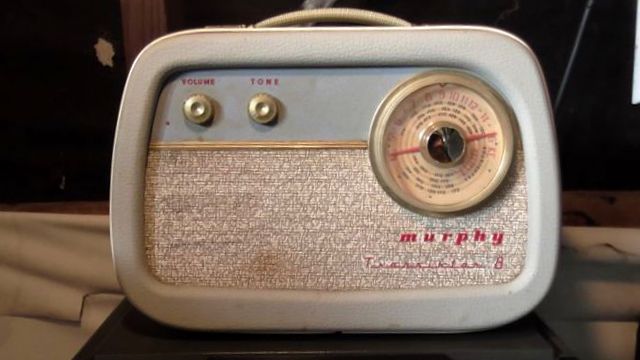
The "Murphy 8" Transistor radio. Broadcast band only. Wooden case in fab condition. Works very well.

The “Murphy 8” Transistor radio. Broadcast band only. Wooden case in fab condition. Works very well.

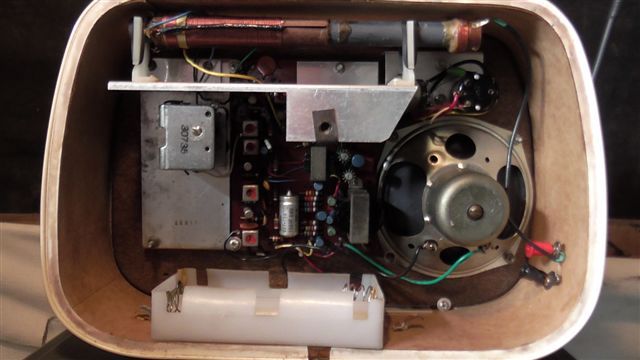
Murphy8-BackOpen

This is the rear view of the “Murphy Transistor 8.” I gave it a new battery holder.

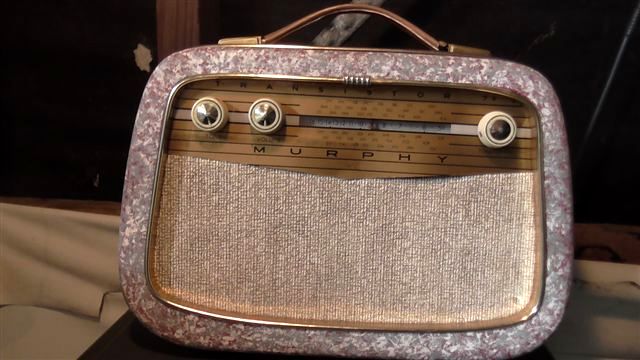
This is a "Murphy Transistor 7+"  Im not sure what the "+" means because it does have only 7 transistors. Very good performer for its age. Wooden case is identical to the previous Murphy 8.

This is a “Murphy Transistor 7+” Im not sure what the “+” means because it does have only 7 transistors. Very good performer for its age. Wooden case is identical to the previous Murphy 8.

This is the rear view of the "Murphy Transistor 7 plus." All very original, and works fine.

This is the rear view of the “Murphy Transistor 7 plus.” All very original, and works fine.

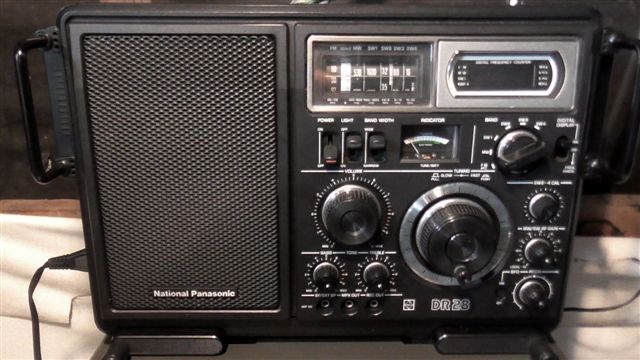
This National Panasonic DR 28 is not part of my early AM Transistor radio collection. It is, however, part of my Short Wave Radio collection.

This National Panasonic DR 28 is not part of my early AM Transistor radio collection. It is, however, part of my shortwave radio collection.


Many thanks, James, for sharing photos from your collection! You certainly have some gems in there. I was not at all familiar with the New Zealand-made PYE Caddy, in fact. I’m curious if other radios were made in New Zealand in the past.

I bet you and I might agree that the Panasonic DR-28 (a.k.a. RF-2800 in North America) hardly feels “vintage,” but at 37 years old it certainly qualifies by most standards–hard to believe. The RF-2800 pops up on eBay quite often and has certainly held its value well. (Click here to search.)

Seeing the DR-28/RF-2800, in fact, is making me lust even more after the venerable Panasonic RF-2200! Alas…so many radios!

Aaron’s shortwave website

Analog Radio DialSWLing Post reader, Aaron Hyde, has created a new shortwave radio related website. Aaron writes:

The site I am working on is a blog mainly there to help people in purchasing shortwave listening equipment. The blog will contain product information, reviews and online bargains that may otherwise be ignored.

My website can be found here: http://swcheap.blogspot.com/

Many thanks, Aaron and good luck with your new site!