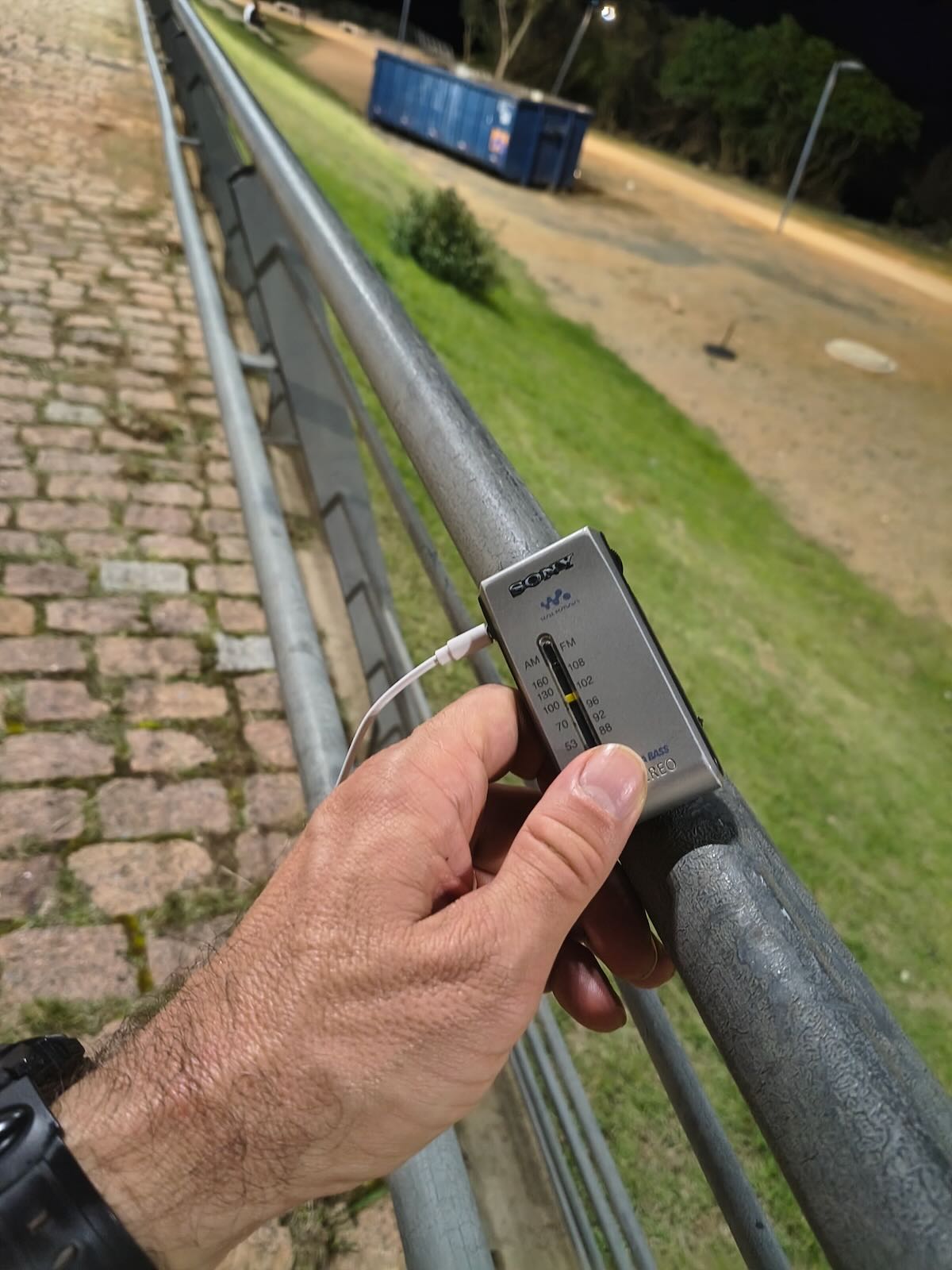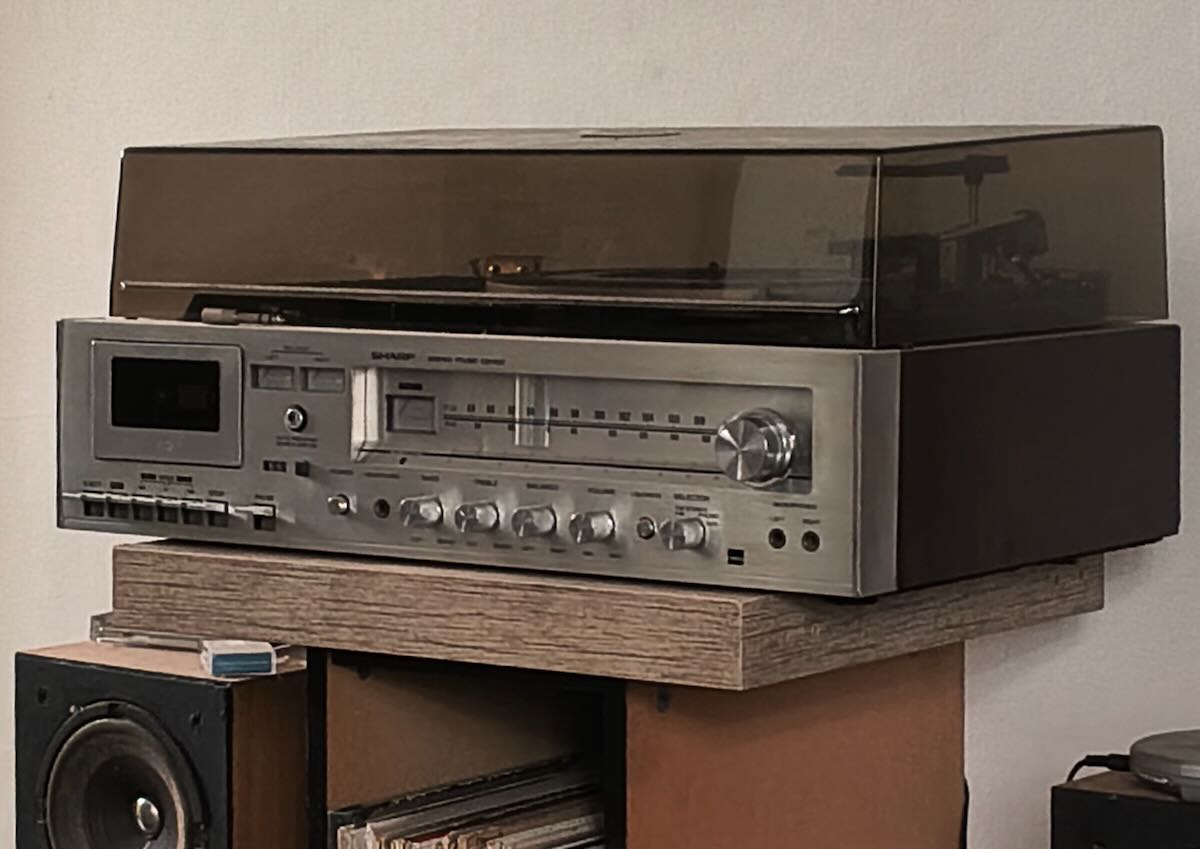
We love you telephone thing, listening in…

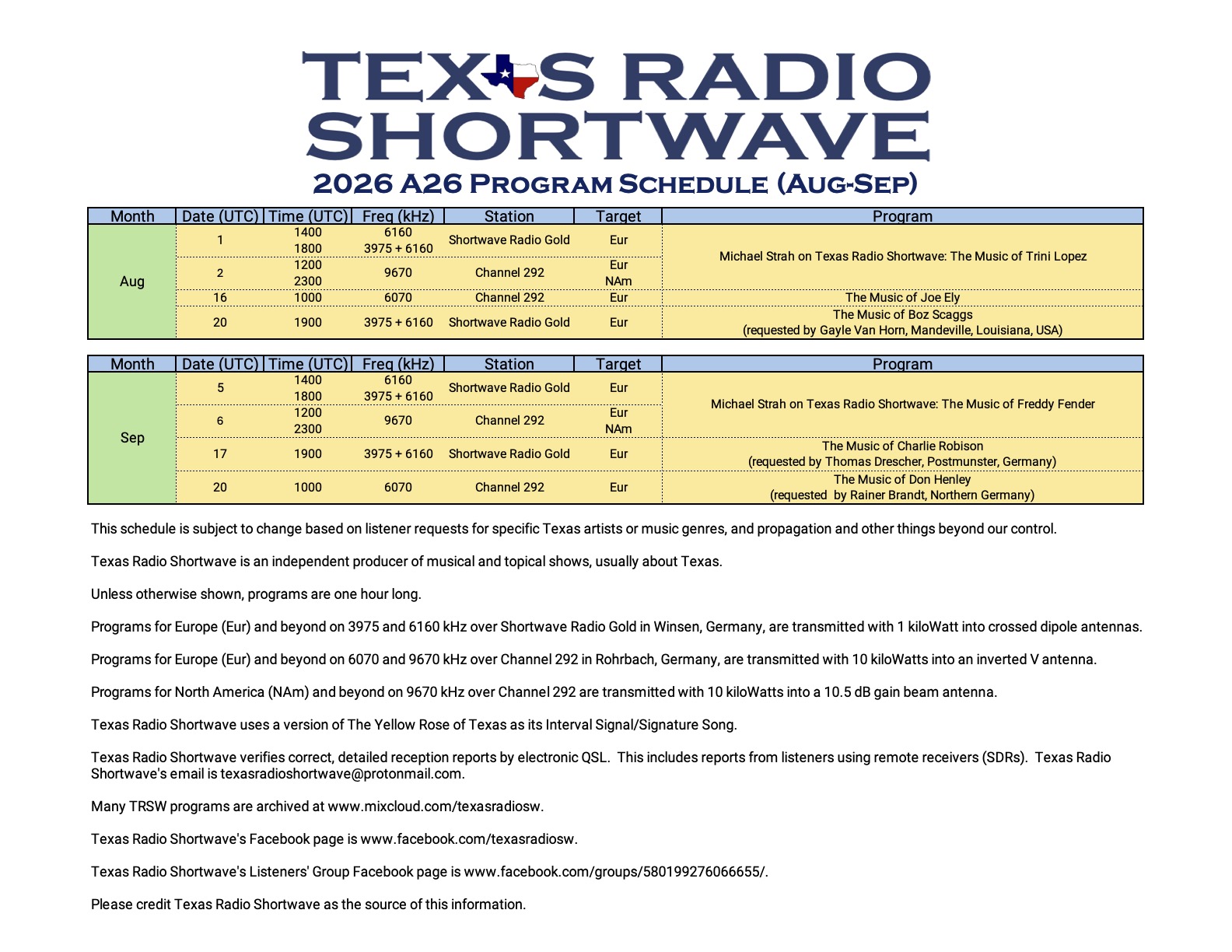
Greetings all SWLing Post community, here’s what Imaginary Stations crew will sending up into the atmosphere next week. There’ll be another telephone tribute via shortwaveradio.de called Skybird Telegraph & Telephone Co. 2 on Saturday 1st November 2025 at 1200 hrs UTC and then again on Sunday 2nd November 2025 at 1000/1400/2200 hrs UTC on 3975 kHz and 6160 kHz.

Expect all sort of phone related tunes, an interview with a telephone answering machine, a report about the furthest tin can telephone call ever, dialing tones from all around the world and the all-time top 10 of missed calls, all subject to availability of course and if there’s any snow on those telegraph wires.

Fab fact: By the way do you know why the telephone is sometimes known as “The blower”? Early telephone handsets and local exchange apparatus used to produce audible “blowing” noises (clicks and hums and the suction-like sound of magneto generators). Wonderful! 

Get connected and tune in for more telegraph and telephone madness!

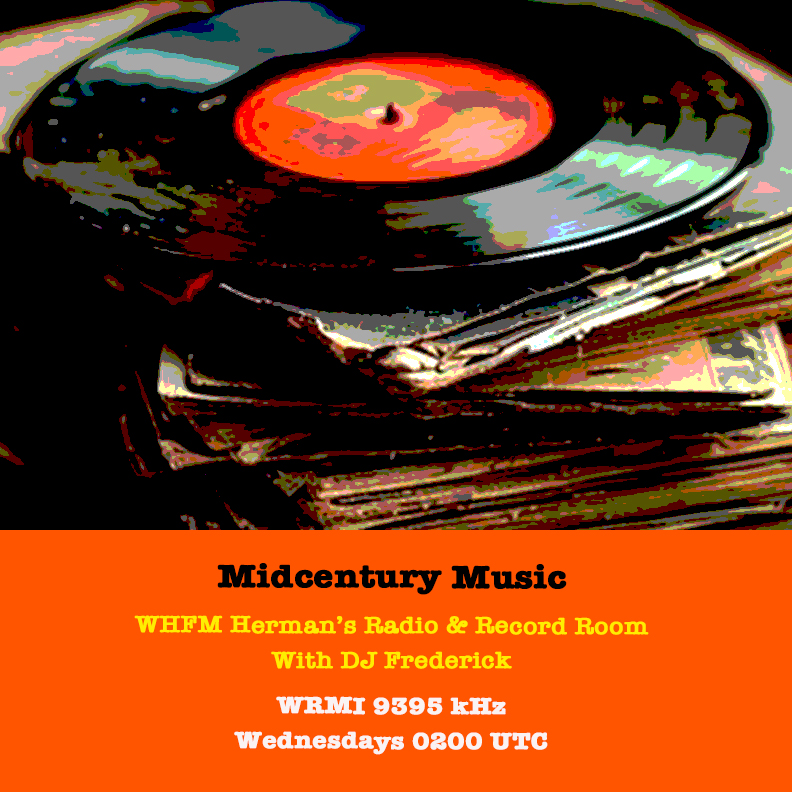
On Wednesday 5th November 2025 at 0300 UTC via WRMI we bring you another KBIN. The show is some recycled radio including mixes from some of our Imaginary Stations favourite shows so tune in and catch yourself another great value for money transmission.

More on Skybird Telegraph & Telephone Co. below:

For more information on all our shows, please write to us at [email protected] and check out our old shows at our Mixcloud page here.

FastRadioBurst23

Carlos’ Illustrated Radio Listening Report and Recording of NOAA via USCG, October 27, 2025)

Many thanks to SWLing Post contributor and noted political cartoonist, Carlos Latuff, who shares the following illustrated radio listening report of a recent NOAA broadcast.


Carlos notes:

Hurricane Melissa, NOAA HF Voice Broadcast via USCG Chesapeake VA, 13089 kHz USB

Click here to view on YouTube.

The radiofax of destruction: Hurricane Melissa approaching Jamaica.

NOAA Surface Analysis, NW Atlantic. USCG Boston, Mass.
9110 kHz, Oct 27, 22h15 UTC
Received in Porto Alegre, Brazil
Xhdata D808 receiver, telescopic antenna.


New 300 kW Weekly Broadcast of VORW Radio International to East Asia!

Hello listeners! I have some news about a new weekly broadcast of VORW Radio International for listeners in East Asia and beyond!

Beginning Thursday the 30th of October and continuing every Thursday – my radio program will now be heard across East Asia thanks to a 300 kW Transmitter in Paochung, Taiwan.

The broadcast is beamed to Japan and the Korean Peninsula but it should be audible across all of East Asia, South Asia, Southeast Asia, the Pacific and perhaps into the Americas as well!

The program is 1 hour in length and the aim of this radio show is to provide good music and news commentary to listeners worldwide. Oftentimes, listener music requests are taken and played – and all are invited to participate.

Here is the broadcast schedule for this new airing:

Thursdays 0900 UTC  – 9705 kHz – Paochung 300 kW – East Asia, Southeast Asia, South Asia, Pacific

Reception reports (which will be verified with an E-QSL) and additional feedback are most welcome at [email protected]

I hope you can listen in!

John

Voice of Hope Africa Is Off the Air

Voice of Hope antenna farm (Source: Voice of Hope Africa)

Many thanks to SWLing Post contributor Dan Greenall, who writes:

Hi Thomas

I just heard on the latest program of Wavescan that the Voice of Hope Africa from Lusaka, Zambia is now off the air. It has been a few months since I heard them on a KiwiSDR from that area so I guess that explains why. Too bad since there are so few African broadcasters remaining.

Listen to their podcast here: https://www.podomatic.com/podcasts/wavescan

Here are a couple recordings of the station I made back on January 6 of this year on 4965 kHz using a Kiwi located on Reunion Island:

73

Dan Greenall, Ontario, Canada

Surprisingly Capable: Mario Checks Out the Raddy RF750 Plus

Many thanks to SWLing Post contributor Mario Filippi, who shares the following review:


Raddy RF750 Plus AM/FM/SW/NOAA Radio

by Mario Filippi

I purchased one of these tiny radios several months ago. It’s my daily go-to AM broadcast band  radio.  So far, it performs excellently on AM.  Using the rotatable ferrite antenna,  I’ve received stations as far away as Chicago and Detroit at night.  FM broadcast band capability is also excellent in my experience for such a small radio.  As for SW, the only luck I’ve had is with powerful broadcasters when the Raddy’s telescoping antenna is connected to an outdoor ham antenna.  It receives local NOAA WX as good as any other radio I’ve owned.

Raddy 750 Plus

The case is all metal, feels nice and hefty in the hand.  A shade under a half-pound in weight. 3 3/4 inches high (approx. 9 cm) with attached rotatable antenna.   The speaker size is exceptional for such a small radio and the audio’s very acceptable to the ear.  The speaker grill can be used to tune the radio manually by the way. The fit and finish are excellent.  Has a rechargeable battery with included USB charging cord.  Excellently-written 25-page owner’s manual in English.

?I use the Raddy app to control the radio.  You can opt not to use it though.  You’ll definitely need to read the manual then, due to the plethora of options.

Raddy’s SmartPhone App Works Great

All said, since I bought this radio mainly for daily AM broadcast reception and occasionally checking NOAA weather, I’m very pleased.  Price is very reasonable, mine was under $40 at the time.

Wonder if anyone else has one of these radios and what their opinion is?  Thanks for reading and 73’s.

You can purchase the Raddy RF750 on Amazon.com or at Radioddity.com (affiliate links).

Astrad “Mikado” F8-TR17-B205: Mark discovers this USSR radio at his local charity shop

Many thanks to SWLing Post contributor Mark Hirst, who writes:

This gem arrived in the charity shop where I volunteer yesterday, a radio made in the USSR (Minsk) in around 1975.

It was in fantastic external condition, although after checking it out discovered that the band changing control on the right hand side had been disconnected.

I suspect something went wrong with the very mechanical way it switched frequencies (shown in the video below), which rotated individual circuit boards into play.

Somebody seems to have opened it up, set it permanently on VHF, and then disconnected the control to prevent any further changes.

It was evidently sold in the UK as it has BBC radio stations on the dial and I even found a UK service manual for it.

I was tempted for a while, but I’m learning these days that this sort of thing just ends up as clutter.

Hard to believe that only five years after this electro-mechanical radio was made, Sony would release the ICF-2001 !

Mark

Manual:
https://archive.org/download/Trader_ASTRAD_B205/b205_text.pdf

Radio Museum:
https://www.radiomuseum.org/r/minsk_radi_astrad_f8_tr17_b205f8tr17.html#

YouTube – Astrad “Mikado” F8-TR17-B205:
https://www.youtube.com/watch?v=osDxKNdun98

Algeria on Shortwave – Then and Now

Many thanks to SWLing Post contributor Dan Greenall, for sharing the following guest post:


Algeria on Shortwave – Then and Now

by Dan Greenall

In the early 1970s, Radiodiffusion-Television Algerienne ran a modest shortwave service (no English) mainly for North Africa, the Middle East, and Europe. A copy of their schedule from the 1972 World Radio TV Handbook is shown.

As a fledgling DXer in 1971, I was fortunate to hear their signal on 9510 kHz from my listening post in southern Ontario, Canada. Even better, they responded to my request for a QSL with this attractive card.

Fast forward a quarter century to 1996. The international service of Radio Algiers could be heard at times here in eastern North America on 15160 kHz with broadcasts that included English. Here is a brief recording from November 3 of that year that I am lucky to have saved.

In July 2022, two new 300 kW transmitters located at Ouargla and Bechar were put on the air after several years of planning. These were to be used for the Radio Coran service in Arabic, but in May 2023, Ifrikya FM (the African Voice) was born with the objective of providing a pan-African voice by broadcasting educational, informative, and cultural programming from an African perspective.

Although there is no English, they can be spotted on shortwave on 13640 and 13855 kHz after their 1900 UTC sign on. If you can hear the same programming on these two frequencies, you will know you have them.

Here are two recordings made on October 19, 2025 using a KiwiSDR near Sao Paulo, Brazil. They were made one hour apart, the first at 2000 UTC and the second at 2100 hours.

13855 was noticeably stronger than 13640 on this receiver.