Dave’s FM station empire

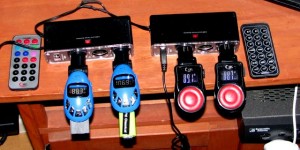
FMMegaplexDave Schmarder (N2DS) enjoys making radios and featuring them on his website, http://makearadio.com. What you may not know is that he also runs his own FM stations empire…and you can too:

I thought your visitors might be interested in my FM stations empire. I bought a bunch of mp3 players with built in fm transmitters that are usually used in a car and adapted them for home use. They all cost me under $4 each, plus a TF card for a couple bucks for each music transmitter.

At the moment I have 8 transmitters running, mostly with usb sticks looping music, but also a transmitter hooked to my tv cable box and another one to my internet radio.

This allows me to be anywhere in my little house and listen to these audio sources using a small Tecsun FM radio. During the summer I could sit on my porch and listen without dragging my radios or iPad outside.

Perhaps some of your visitors might be interested in having their own fm radio megaplex. Here is the link: http://www.n2ds.com/musiccenter/musiccenter.htm

73, Dave
N2DS

Thanks, Dave!

I’ve often thought of broadcasting 1930’s and 40’s music over a micro shortwave transmitter in my house. I would love to know if any readers have done this. Admittedly, it would take a pretty committed shortwave radio geek. Anyone? Anyone?

RootIO: community powered micro radio stations

RootIOThanks, Benn, for sharing this:

Radio continues to be a powerful tool for community information, and the RootIO project amplifies it by mixing its power with new mobile and Internet technologies. RootIO is an open-source tool kit that allows communities to create their own micro radio stations with an inexpensive smartphone and transmitter, and to share, promote, and collaborate on dynamic content. The project will be piloted in Uganda in partnership with the Uganda Radio Network, UNICEF Uganda and UNICEF Innovation Unit.

http://www.knightfoundation.org/grants/20123667/

http://rootio.org/

https://twitter.com/RootioRadio

CommRadio is introducing the CR-1, a new tabletop shortwave receiver

The CommRadio CR-1

The CommRadio CR-1

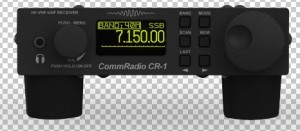
US-based CommRadio is introducing a new tabletop, SDR-based, shortwave receiver this year: the CR-1. Their website has a few specifications and the video I’ve embedded below.

The CR-1 receives the full medium wave and shortwave spectrum (.5-30 MHz), plus some portions of VHF and UHF (FM broadcast band, Aircraft, Marine, NOAA weather radio, GMRS and FRS services).

The receiver architecture is a dual conversion super-heterodyne design with low-IF , I-Q digital sampling, 16 bit DSP with digital audio CODEC.  Their website also mentions DSP algorithms for all demodulation: DSB-AM, SSB, CW, WBFM, NBFM and channel filtering.

Other impressive features:

  • Can be powered from USB or a 6-18 VDC power source (from a separate 2.1mm jack).  The CR-1 possibly has the most flexible power source I’ve ever seen in a shortwave receiver!
  • The knobs are black anodized machined aluminium and front panel is powder coated machined aluminium; case is 20 gauge powder coated steel
  • Three antenna inputs
    • BNC for HF/MW
    • 3.5 mm audio jack (rated at 1000 Ohm, for roll-up antennas or telescoping whip),
    • BNC for VHF and UHF
  • Very portable size!

Full specs are available on their website: commradio.com

We will also keep you posted with any future updates.

The truth about portable amplified shortwave antennas

In the past week, I have had no less than 3 email inquiries from readers regarding which amplified antenna to purchase for their portable shortwave radio.  My short answer? None.

In my opinion, there’s one fatal flaw with amplified antennas: they amplify noise just as much as they do the signal you wish to hear.
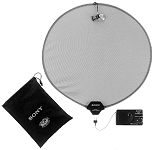
The Sony AN-LP1 is the best amplified antenna I've ever used, but that's not saying a lot.The only portable amplified antenna I’ve had any results with is the Sony AN-LP1 (now only available in Japan), and I attribute this success mainly to the fact that a suction cup, mounted at the top of the loop, allows it to be mounted on a window. Even then, results are often only marginally better than with the telescopic whip.

There may have been a time when portable amplified antennas made sense–a time prior to noisy AC adapters, flat screen TVs, and other consumer electronics which spew RFI (Radio Frequency Interference), polluting our shortwave bands. Today, however, you’ll be disappointed with the results of one of these, particularly if you travel–turning on the amplified antenna in a hotel room will increase the noise you hear two-fold, while weak broadcasters will remain lost in the static.
RollUpAntennaReelSangean

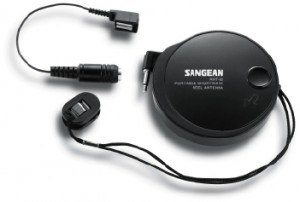
The Sangean ANT-60 is inexpensive and vesatile

So what can you do to improve the performance of your portable while traveling or at home? I’m still a fan of the roll-up antenna; like the Sangean ANT-60.  They’re inexpensive ($12 US), packable, and versatile–the clip on the end of the reel allows the antenna wire to be clipped to curtains and blinds. Place it near a window, or even hang it outside. Antennas love being outside–just take it down when not in use.

In lieu of buying a roll-up antenna, you could simply attach an alligator clip to the end of a 20′ (6 meters) length of wire.  The alligator clip can then attach to the end of your telescopic antenna, and you now have the same properties of a roll-up antenna for pennies. This is possibly the most cost-effective way to improve the performance of your portable shortwave radio. One note of caution: don’t get too generous with the length of your antenna wire. Some portable radios lack a robust front-end and a wire that’s too long could actually overload the receiver. Some Grundig G5’s were even sensitive to static discharges over a wire antenna. If uncertain, I would not exceed 20 feet in length (6 meters).
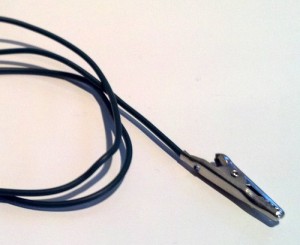
An alligator clip offers serious bang-for buck--especially if you already have the parts lying around

An alligator clip offers serious bang-for buck–especially if you already have the parts lying around!

I’ll never forget:  one of the first email questions I received on SWLing.com was from a fellow listener in Washington state who wanted to hear stations better on his Sony portable. I suggested the alligator clip/antenna wire. He wrote back enthusiastically, “This is the most cost-effective improvement I have ever made to anything!” He was so encouraged with the performance improvement, he invested in a tabletop and a proper outdoor antenna with grounding.

So, I urge you to try a roll-up antenna or the alligator clip antenna before you waste money on a portable amplified antenna.  Just my two cents.

Short Wave or Short Range?

Examples of Dedicated Short Range Communications (Source: Technologijos)

Examples of Dedicated Short Range Communications (Source: Technologijos)

Readers Benn and Mike agree with others who’ve commented on the questionable accuracy of the article posted earlier today from Talking Points Memo. Most likely, Toyota’s autonomous vehicle technology system is not based on shortwave (or high frequency) technology. Benn writes:

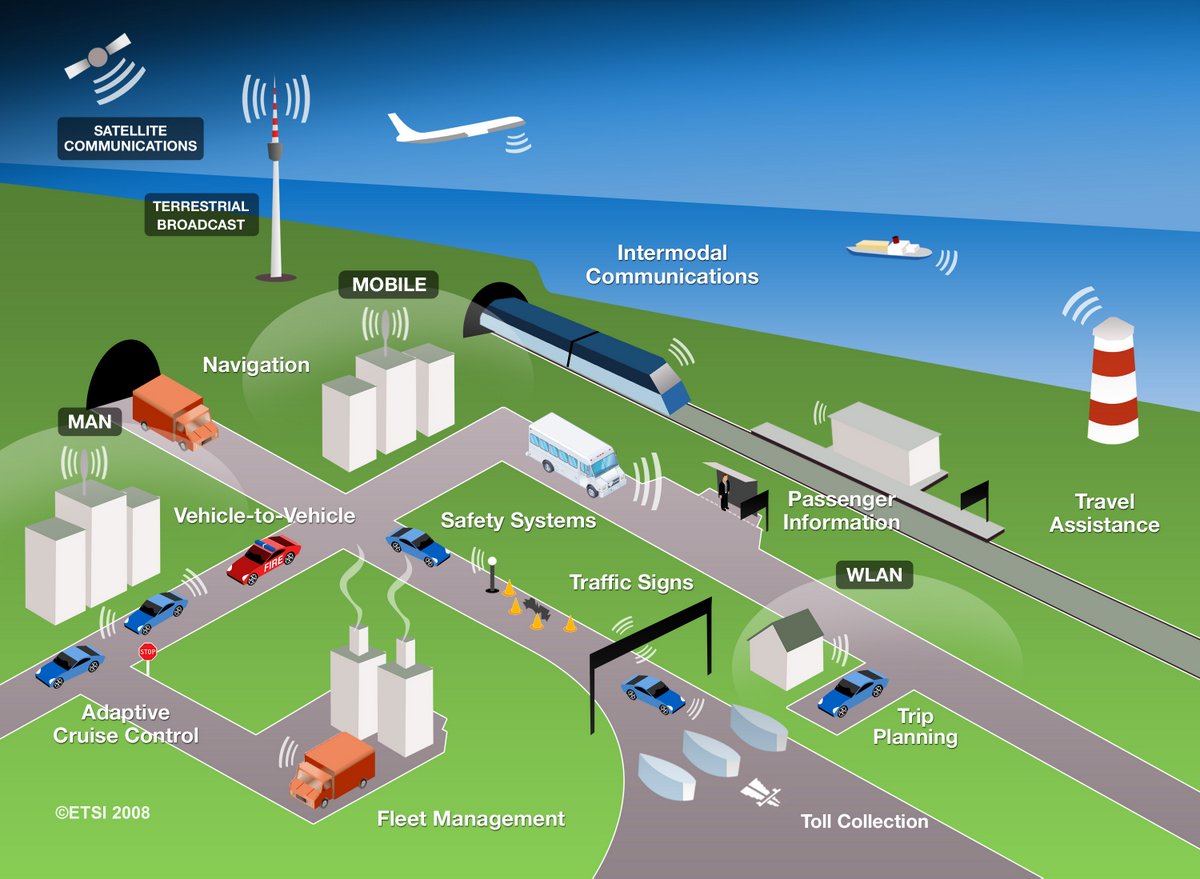
What may have happened is that Toyota’s media people confused Short Range with Short Wave. Officially the 5.9 GHz system they referred to is called Dedicated Short Range Communications (DSRC). That’s what the FCC named it when they allocated that band.

The FCC is into dry technical facts and not marketing. DSRC is too geek of a term. The government had to come up with a name that sounded more 21st Century, like Apple invented it or something. So it’s now the awesome Dept of Transportation Service Mark called IntelliDrive.

The irony is that an autonomous vehicle system must rely on near-range, or short-range communications; anything long-range wouldn’t make a lot of sense.

It’s too bad it’s not shortwave–!  Don’t get me wrong, shortwave isn’t suited to this use. But I like to imagine how good propagation and band openings might affect road traffic. (Perhaps a car in Seattle would tell one in New York local driving conditions???) Plus, on a more serious note, if a vital first-world technology relied heavily upon HF communications, perhaps proper regulations would be put in place to protect our spectrum from the copious amounts of locally-generated RFI we deal with daily…Oh, it’s fine to dream.

Pirate Radio Recordings: Two short UNID broadcasts

1-RadioListening2

“Wow–those were short!”

I was travelling Saturday night, but had the foresight to set my WinRadio Excalibur to record the pirate spectrum. There were few pirates on the band–less than I would have expected to hear on a holiday weekend in the US–and some of them were plagued by a local broadcaster whose spurious emissions wiped out the whole band at times.

I did catch a couple of interesting unidentified broadcasts, most likely transmitter tests as both were very short.  The first broadcast came on around 3:10 UTC (Jan 20) and consisted of two songs, ending with the Tardis sound effect from Dr. Who. Click here to download the MP3 file, or listen in the player below:

The second broadcast came on just after 7:00 UTC and consisted of only one song–no IDs at all. I would suspect this was the same pirate; however, the first broadcast had a tinny sound that this broadcast lacked. Indeed, their USB signal was quite amazing (wish s/he would have broadcast a full show).  Click here to download the recording, or listen via the player below:

Please comment if you think you can ID these broadcasts.